
Last updated: July 17, 2026
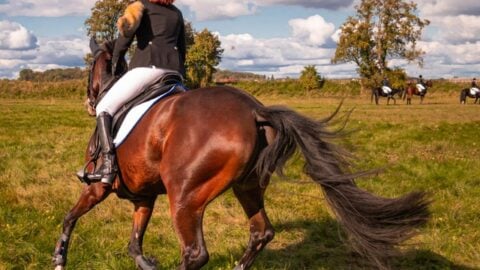
I’ve spent 30+ years around Thoroughbreds and other breeds at Louisiana tracks and on the trail, and the honest answer to “how far can horses run without stopping” is that there is no single number. It depends mostly on the gait. At a full gallop, most horses can usually sustain about 1–3 miles before they need to slow down significantly. At a canter, that may stretch to roughly 3–5 miles, while a fit horse can often trot around 10–15 miles before needing real rest. A conditioned horse can walk for hours, but heat, terrain, fitness, and individual ability all change those limits.
A horse that can gallop all-out for a mile is doing a completely different kind of work from one settling into a steady, ground-covering trot for ten. This guide focuses on continuous effort without stopping; if you’re asking how far a horse can travel across an entire day with walking, trotting, and rest breaks, that’s a different question covered in my daily horse travel guide.
How Far Can a Horse Run Without Stopping, By Gait
When people say a horse is “running,” they usually lump several very different efforts together. But a trot, a canter, and a gallop are not remotely the same workload, and the distance a horse can sustain drops fast as the speed climbs.
The ranges below assume a generally healthy, conditioned horse. An unfit horse, a horse carrying extra weight, or one working in heat, hills, or deep footing may need to slow down much sooner.
| Gait | Speed Range | Distance Without Stopping | Why |
|---|---|---|---|
| Walk | 3.5–4 mph | Hours | Low-impact, aerobic work; this is the gait a horse is built to sustain the longest |
| Trot | 8–12 mph | 10–15 miles (fit horse) | Efficient and mostly aerobic; this is the best gait for covering ground steadily |
| Canter | 10–17 mph | 3–5 miles | More demanding than a trot; fatigue builds faster, especially in heat or deep footing |
| Gallop | 25–30+ mph | 1–3 miles | A very demanding effort powered largely anaerobically; even elite racehorses are not built to hold it for long |
Those are working ranges, not hard ceilings. A well-conditioned endurance horse can push the trot and canter numbers farther than the average trail horse, while an unfit horse may come up short of them. For a full breakdown of speed by gait, including breed-specific benchmarks, see my horse gaits speed guide.
Horseman’s Perspective: I’ve seen plenty of horses willing to keep cantering long after they should have backed down to a trot or walk. Willingness and capacity are not the same thing. The riders who keep horses sound over time are the ones who quit a stride early, not a stride late.
On a practical level, weather and footing can change these numbers faster than most people realize. A conditioned trail horse I rode in Louisiana could comfortably trot 8 to 10 miles on a cool morning, but on a humid summer afternoon that same horse might need a walk break after 5 or 6.
What Determines How Far a Horse Can Run Without Stopping
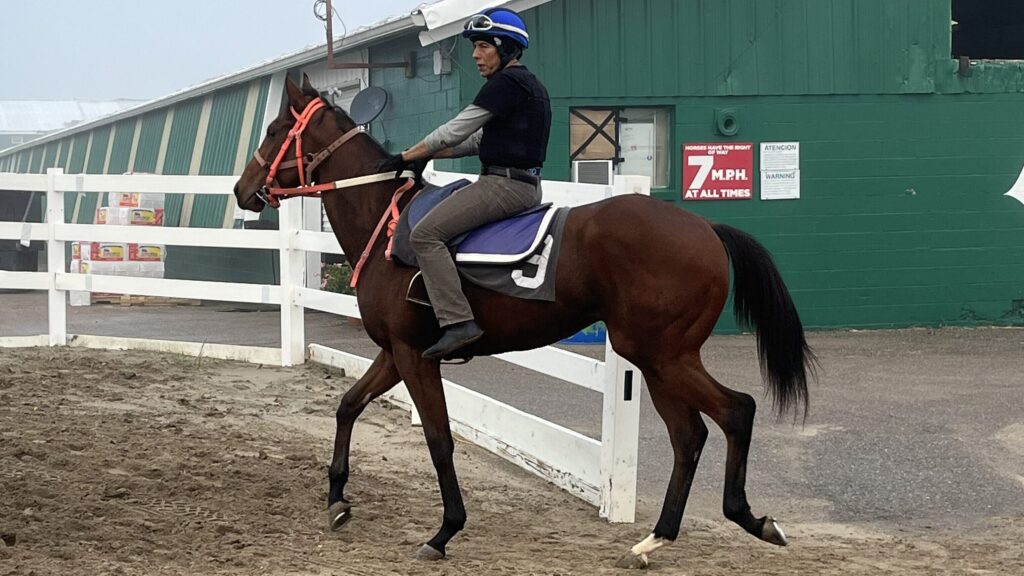
The ranges above move around based on a few big variables:
- Conditioning: this is the biggest factor by far; a horse in regular work can stay comfortable at a gait much longer than an unfit one
- Breed and build: Arabians and other endurance-bred horses have a real advantage for sustained trot and canter work, while Quarter Horses are built more for short bursts of speed than distance
- Terrain and footing: hills, deep sand, mud, and rough ground all shorten the safe distance
- Heat and humidity: hot weather can cut endurance quickly, especially if the horse is not acclimated
- Rider weight and load: more weight means more cardiovascular and musculoskeletal strain over the same distance
How Far Can a Racehorse Run Without Stopping?
A racehorse can usually run farther at a gallop than the average horse, but not nearly as far as many people assume. Thoroughbreds are trained for short, intense efforts at speed, and even the best of them are generally racing over distances in the neighborhood of a mile to a mile and a quarter, like the Kentucky Derby at 1 1/4 miles. That does not mean they are built to keep flat-out galloping far beyond that; it means they are conditioned to deliver a peak effort over a defined distance.
That’s an important distinction horsemen understand and casual readers often miss. A racehorse may be exceptionally fit, but that fitness is specialized. Racehorse fit and endurance-horse fit are not the same thing any more than a sprinter and a marathoner are the same athlete. As a racehorse owner, I’ve learned that the goal is not to find out how far a horse can be pushed — it is to understand the distance where that individual horse performs best and stays healthy.
Horseman’s Perspective: People see a Thoroughbred breeze or race and think that horse could just keep doing that for miles. It doesn’t work that way. What you’re watching is a carefully managed burst of speed, backed by plenty of slower work before and after it.
How Far Can an Endurance Horse Run Without Stopping?
Endurance horses are the closest thing to an exception, but even here the phrase “without stopping” needs context. The Tevis Cup is a 100-mile endurance ride, but those horses are not galloping 100 miles. They are carefully managing pace, hydration, recovery, and terrain over many hours.
That is what endurance training really shows: how much farther a horse can go when the rider protects the horse’s energy instead of spending it too quickly. A well-managed endurance horse can stretch trot and canter distances well beyond what most pleasure horses can do, but it still has limits, and those limits are respected all day long through pacing, walk breaks, and vet checks.
How Far Can a Horse Run in a Day?
This question often gets confused with how far a horse can run without stopping. A horse cannot gallop all day, but a properly conditioned horse can cover significant daily mileage by combining walking, trotting, controlled pacing, and rest. If that is the version of the question you’re really asking, see my guide to how far a horse can travel in a day.
Why Horses Need to Stop
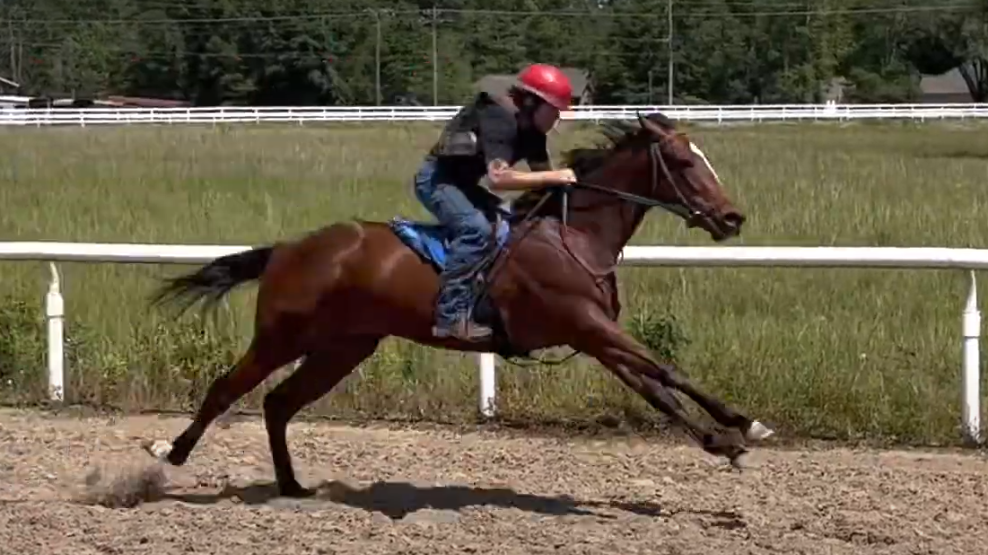
Past these distances, a horse is not proving toughness so much as getting into dangerous territory. At a gallop especially, the effort is powered largely anaerobically, meaning the horse is using energy faster than it can comfortably replace it. The farther you push past a horse’s sustainable range, the more the risks go up: dehydration, heat stress, tying-up, metabolic trouble, and in rare but real cases, catastrophic cardiovascular strain.
That subject deserves more than a passing mention, so I cover it separately in my article on what happens when a horse is run past its limits.
Stop immediately if a horse shows any of these after exertion:
- Heavy, labored breathing that does not begin easing within several minutes
- Staggering, stumbling, or obvious loss of coordination
- Reluctance or refusal to keep moving
- Unusual anxiety or sudden dullness compared to that horse’s normal post-work behavior
- Signs of dehydration, such as tacky gums, dark urine, or a slow skin-pinch response
If you see those signs, stop, cool the horse if you can, offer water, and call your veterinarian. For a full breakdown of dehydration symptoms, see 10 signs your horse is dehydrated.
Horses vs. Humans Over Long Distances
Over very long distances, humans can sometimes out-endure horses. A horse wins the sprint every time, but humans are unusually efficient at cooling themselves through sweating over hours of effort, which is why runners have occasionally beaten horses in ultra-distance events such as Wales’ Man versus Horse Marathon. It is the exception, not the rule, but it does show that “how far can it run” and “how fast can it run” are two different questions.
FAQs: How Far Can Horses Run Without Stopping
How far can a horse gallop without stopping?
Most horses can usually sustain about 1-3 miles at a full gallop before they should slow down significantly. The exact distance depends on conditioning, footing, heat, and the kind of horse you’re talking about, but galloping is one of the most demanding efforts a horse can make.
How far can a horse canter without stopping?
A typical range is around 3-5 miles before a horse needs to drop to a trot or walk. A fit, well-conditioned horse may go farther, while an unfit horse or one working in heat may need a break sooner.
How far can a horse trot without stopping?
A fit horse can often cover around 10-15 miles at a trot before needing real rest. That is one reason the trot is the backbone of most distance riding: it covers ground efficiently without the strain of a sustained gallop.
Can a horse run itself to death?
Although rare, horses can suffer fatal consequences from extreme exertion, especially when heat stress, dehydration, or metabolic problems are involved. That is why experienced riders and trainers back off well before a horse reaches obvious distress. For a fuller explanation, read what happens when a horse is run past its limits.
Can a horse outrun a human over long distances?
Not always. Horses easily beat humans in a sprint, but over very long distances and in the right conditions, humans can sometimes out-endure them because we cool ourselves so efficiently through sweating.
About Miles Henry
Racehorse Owner & Author | 30+ Years in Thoroughbred Racing
Miles Henry (legal name: William Bradley) is a professional horseman based in Folsom, Louisiana. He holds Louisiana Racing License #67012 and has spent over three decades managing Thoroughbreds at premier tracks including Fair Grounds, Delta Downs, and Evangeline Downs.
Expertise & Hands-On Experience: Beyond the track, Miles has decades of experience in specialized equine care, covering everything from hoof health and nutrition to training protocols for Quarter Horses, Friesians, and Paints. Every guide on Horse Racing Sense is rooted in this “boots-on-the-ground” perspective.
30 of their last 90 starts
Equibase Profile.

Connect with Miles: