
Last updated: October 15, 2026
Plan a trail ride, read about the Old West, or watch a horse move out across a pasture, and sooner or later you wonder how fast that horse is actually going. The answer changes a lot from one gait to the next, and a horse walking down a trail and a racehorse breaking from the gate are two very different things.
Below, I’ll break down the speed of each gait, why some horses walk faster than others, how fast a horse really travels over a long ride, and what speeds up or slows down a horse in any gait.
Table of Contents
Horse Speed by Gait
The walk and trot ranges below come from Montana State University Extension. Canter and gallop speeds vary more across sources, so treat those figures as approximate. The racing figure reflects fit racehorses over short distances.
| Gait | Beats | Typical speed | Common use |
|---|---|---|---|
| Walk | 4-beat | 3.5 to 5 mph | Trail riding, warm-up, cool-down |
| Trot | 2-beat diagonal | 7 to 10 mph | Covering ground, conditioning |
| Canter or lope | 3-beat | 10 to 17 mph | Controlled faster work |
| Gallop | 4-beat | 25 to 30 mph | Short bursts of speed |
| Racing gallop | 4-beat | About 40 mph or more | Racing over short distances |
A collected canter or a slow Western lope can be much slower than the range above, and an extended trot can be much faster. The gait sets the rhythm, but the rider and the horse’s fitness decide the speed within it.
How Fast Does a Horse Walk?
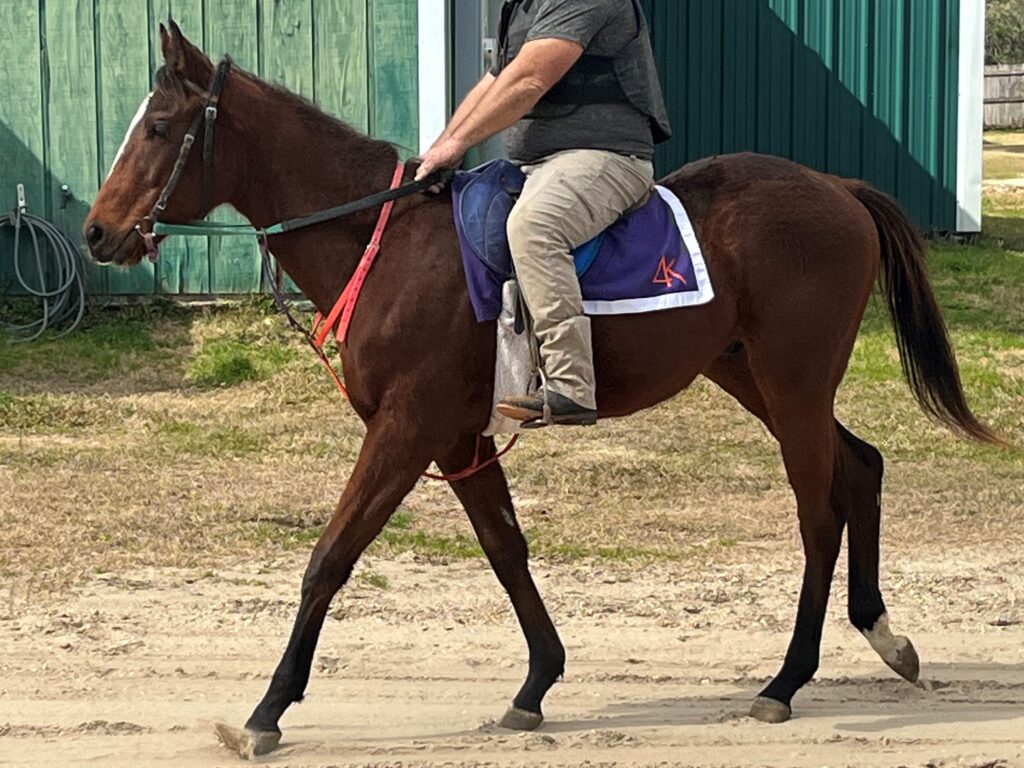
A horse walks at about 3.5 to 5 mph, according to Montana State University Extension, so 4 mph is a good average to plan around. The walk is a four-beat gait with no moment of suspension, and it’s generally an efficient, low-effort gait, which is why it makes up most of a long trail ride.
Not every horse walks at the same speed, though. A few things make the difference:
- Stride length. A horse with a long, reaching stride covers more ground with every step. On a group trail ride, you’ll often see shorter-strided horses jog to keep up with a big walker.
- Attitude. A horse headed home almost always walks faster than one headed out.
- Terrain. Hills, mud, sand, and rocks slow the pace.
Gaited horses have faster intermediate gaits
Gaited horses can cover ground faster than an ordinary walk, but not by walking faster. They have extra intermediate gaits, separate from the regular four-beat walk, that fill the speed range where other horses would trot. The Tennessee Walking Horse‘s flat walk is noticeably faster than an ordinary walk, and Horse Illustrated puts its running walk at 10 to 20 mph when it’s extended. That’s a different gait from a trail-riding walk, so don’t expect every Walker to cruise at 20 mph. The Paso Fino covers ground at several speeds, too, as you can see in the Paso Fino’s gaits.
How Fast Does a Horse Trot?

A horse trots at about 7 to 10 mph on average, and a big extended trot can go much faster, according to Montana State. The trot is a two-beat gait, with diagonal pairs of legs moving together and a brief moment when all four feet are off the ground. That brief suspension is what bounces you in the saddle, and it’s why riders post.
Ask a horse to go faster and eventually it changes gait. In a study published in the Journal of Experimental Biology, horses on level ground held a trot up to about 11 mph and switched to a gallop at roughly 13 mph. The switch happened close to the speed where trotting started costing the horse more energy than galloping, though energy isn’t the only reason horses change gait. Under saddle, most riders ask for a canter long before a horse reaches that point.
Harness racing is the big exception. Standardbreds are bred and trained to hold a trot or pace at speeds most horses could only reach at a gallop.
How Fast Does a Horse Canter?
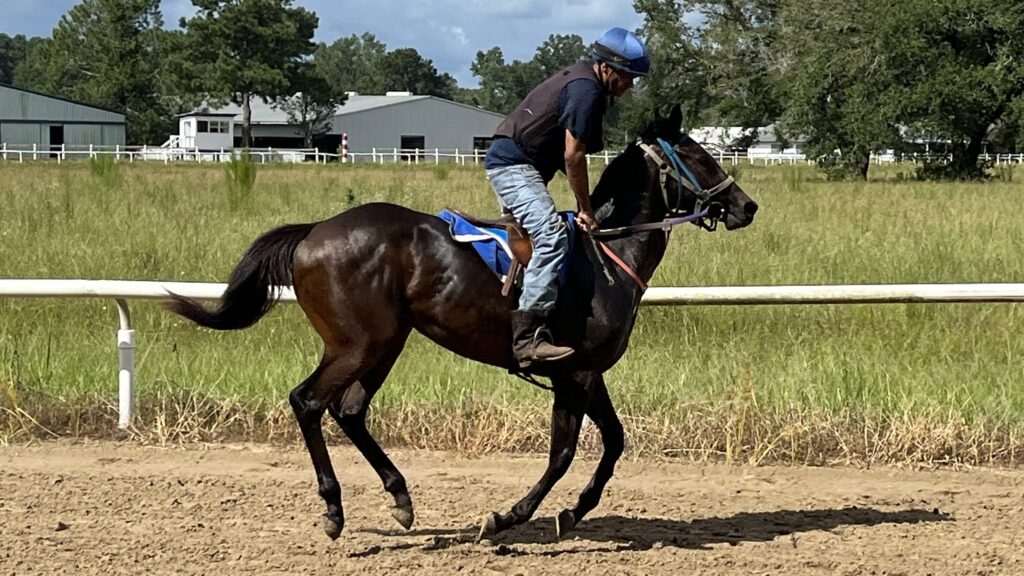
A canter usually runs about 10 to 17 mph, but it has the widest range of any gait. A Western lope is usually slower, often around 8 to 12 mph, and a slow, collected lope can be barely faster than a brisk trot, while a forward canter on the track can approach gallop speed. The canter is a three-beat gait, and the horse leads with one front leg, so on a circle to the left, it should be on the left lead.
Many riders find a comfortable canter easier to sit than a trot. How long a horse can hold it depends on its fitness, pace, footing, and the work you’re asking it to do, and I cover those limits in how far a horse can run without stopping.
How Fast Does a Horse Gallop?

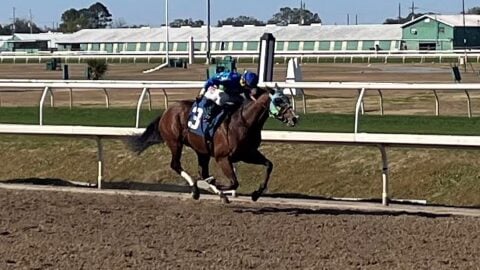
A typical horse gallops at about 25 to 30 mph, though a fit horse asked for a serious gallop can go faster. At the gallop, the canter’s three beats break into four, the stride stretches out, and the horse spends a moment with all four feet off the ground. Racehorses go much faster. According to Guinness World Records, the fastest recorded racehorse speed is 43.71 mph, set by the Thoroughbred filly Winning Brew over two furlongs at Penn National in 2008.
Top speed only lasts a short distance, even for a fit racehorse. If you want to compare breeds and records, I cover how fast a horse can run in detail, along with the fastest horse breeds.

How Fast Does a Horse Travel Over a Long Ride?
Gait speed tells you how fast a horse is moving, but it doesn’t tell you how quickly you’ll finish a ride. Most trail rides involve plenty of walking, some trotting when the ground allows, and stops for water, rest, or obstacles. Your average speed while moving will often be close to walking pace, while your overall trip average will be lower once you include breaks.
At an average walking speed of 4 mph, a 12-mile ride takes about three hours of moving time, not counting stops. Allow extra time for hills, rough footing, breaks, and any stretches where you need to slow down, and walk the last mile or so to let your horse cool down. For longer trips, your horse’s conditioning, hydration, and recovery matter much more than its top speed, which is what decides how far a horse can travel in a day and how long it takes a horse to travel 20 miles.
What Affects How Fast a Horse Moves
Several things decide how fast two horses move in the same gait:
- Fitness. A conditioned horse can hold a faster pace for longer, and it recovers sooner afterward.
- Hills. In the Journal of Experimental Biology study, a 10 percent incline lowered the speed where horses switched from the trot to the gallop by about 13 percent.
- Footing. Deep sand, mud, and rocky ground slow a horse down and raise the risk of injury at speed.
- Build and breed. Long legs and a long stride favor speed, and breeds like the Thoroughbred and Quarter Horse are built for it. How a horse uses its body matters, too, which is the idea behind stride efficiency in racehorses.
- Heat and humidity. Hot, humid weather makes it harder for a horse to cool itself, so it tires sooner.
- Rider and tack. A balanced rider and a well-fitted saddle help a horse move freely.
For trail riding, plan around a comfortable pace rather than your horse’s top speed. A sound, conditioned horse on good footing covers ground efficiently, but the distance, terrain, and recovery time all affect how quickly you’ll get there.
About Miles Henry
Racehorse Owner & Author | 30+ Years in Thoroughbred Racing
Miles Henry (legal name: William Bradley) is a professional horseman based in Folsom, Louisiana. He holds Louisiana Racing License #67012 and has spent over three decades managing Thoroughbreds at premier tracks including Fair Grounds, Delta Downs, and Evangeline Downs.
Expertise & Hands-On Experience: Beyond the track, Miles has decades of experience in specialized equine care, covering everything from hoof health and nutrition to training protocols for Quarter Horses, Friesians, and Paints. Every guide on Horse Racing Sense is rooted in this “boots-on-the-ground” perspective.
30 of their last 90 starts
Equibase Profile.

Connect with Miles: