
Last updated: June 22, 2026
Any links on this page that lead to products on Amazon are affiliate links and I earn a commission if you make a purchase. Thanks in advance – I really appreciate it!
Most people overestimate how much land a horse actually needs. The answer depends less on total acreage and more on pasture quality and management.
While looking for land to build on, my son asked me how many acres he would need for a horse. I told him it depends on pasture quality, climate, and management. In many cases, the amount of land a horse needs has less to do with total acreage than with how much of that acreage can consistently produce quality forage.
What follows covers how much land you actually need, including for broodmares, the difference between good and poor pasture, and how management can reduce acreage requirements. The figures are grounded in Gulf South conditions but adjusted for other climates where the numbers differ meaningfully.
How many acres does a horse need?
- Minimum: 1–2 acres per horse — depending on pasture productivity and management.
- Common starting point: productive pasture often supports one horse on about 2 acres, with roughly 1 additional acre needed per horse as numbers increase.
- Pasture quality matters more than acreage — good land can support more horses than poor land with more acreage.
- Broodmares: 2–3 acres per mare-and-foal pair — higher in dry or low-quality pasture regions.
- Management can increase capacity — rotation, dry lots, and hay feeding extend carrying capacity.
Bottom line: Many horse owners find that about 2 acres per horse is a realistic starting point — more if the land is marginal or the climate is dry.
Table of Contents
Why Horse Acreage Isn’t Just About Land Size
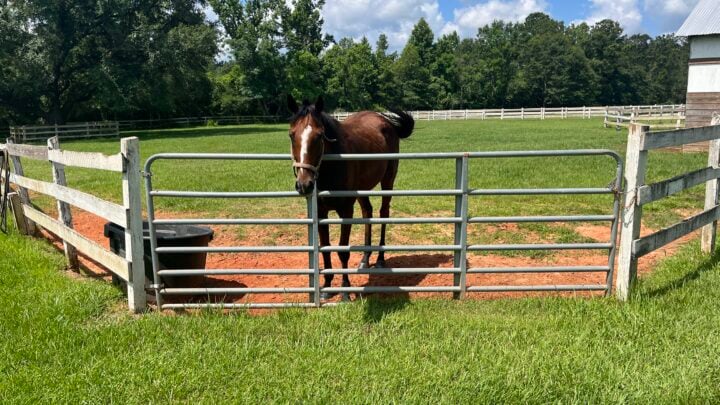
The first thing people ask is how many acres, but the more useful question is how many productive grazing acres. I have a six-acre field on one of our Louisiana properties that has a stand of pine trees and several low spots that stay wet after rain. I would not graze more than three horses on it comfortably. We have another property with a clean, well-drained four-acre pasture that supports four horses without strain. Same region, similar rainfall — very different carrying capacity.
Horses are grazing animals built to spend most of their waking hours eating. A typical horse consumes roughly 2–2.5% of its body weight in forage daily — around 20–25 pounds for a 1,000-pound horse. Over a year, that adds up to approximately 7,000–9,000 pounds of forage per horse. How much a given acre produces varies widely: a well-managed pasture in a long-season climate like the Gulf South will yield considerably more than the same acreage in a drier or colder region. That gap is why acreage alone can’t tell you much without knowing the land.
How Many Acres Does a Horse Need? The Standard Rule Explained
A widely cited guideline in Extension grazing resources and among horse owners is about two acres for the first horse and roughly one additional acre per horse after that. Under productive pasture conditions, many horse owners find that about five acres can support four horses with active management. In drier climates, on thinner soil, or without active management, add another acre per horse and you are closer to a realistic working number.
Think of these numbers as a range, not a fixed rule. One acre can be enough for a single horse if the grass is genuinely lush, the climate is cooperative, and you are actively managing the land. But it leaves almost no margin for a dry stretch, a wet season that kills off a section of grass, or any future horses. Two acres gives you flexibility — and if you are buying land specifically for horses, planning around the minimum is a mistake I have watched people make more than once.
| Number of Horses | Lower Range (Good Pasture Conditions) | Typical Range (Average Pasture Conditions) | Management Level Required |
|---|---|---|---|
| 1 horse | 1 acre | 2 acres | Low–Medium — 1 acre needs active rotation and hay supplementation; 2 acres gives more margin |
| 2 horses | 2 acres | 3 acres | Medium — rotation between sections helps significantly at the low end |
| 3 horses | 3 acres | 4–5 acres | Medium–High — supplement with hay when pasture thins seasonally |
| 4 horses | 4–5 acres | 6–7 acres | High — active rotation and sacrifice paddock essentially required |
| 4 broodmares | 8–10 acres | 10–12 acres | High — management-based estimate; nursing mares need more forage year-round |
One qualifier worth stating plainly: these figures are based on Gulf South conditions with a long growing season. Horse owners in the arid Southwest, the northern Great Plains, or anywhere with a short grass season should treat the “recommended” column as their floor, not their target.
How Many Acres Broodmares and Foals Need
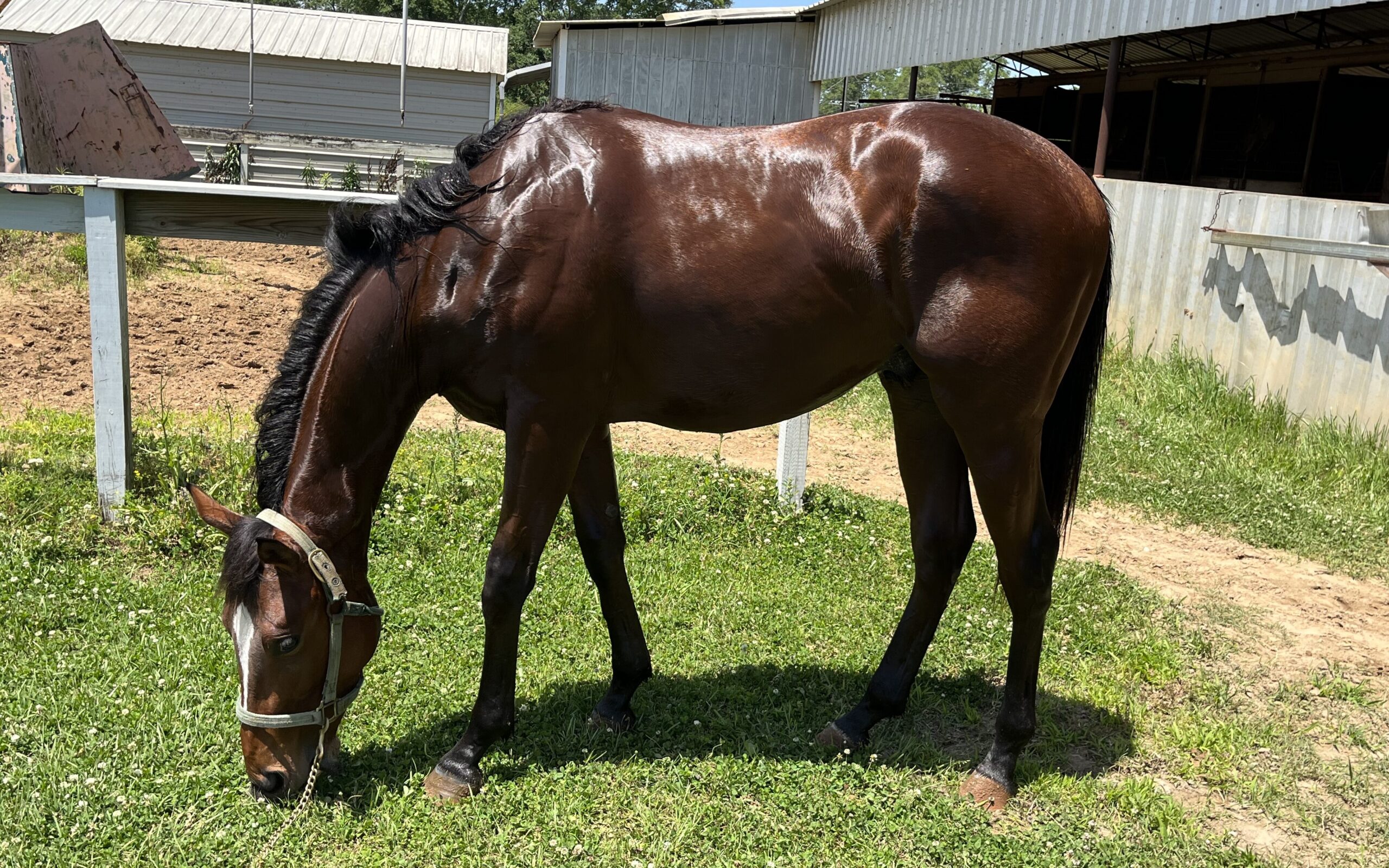
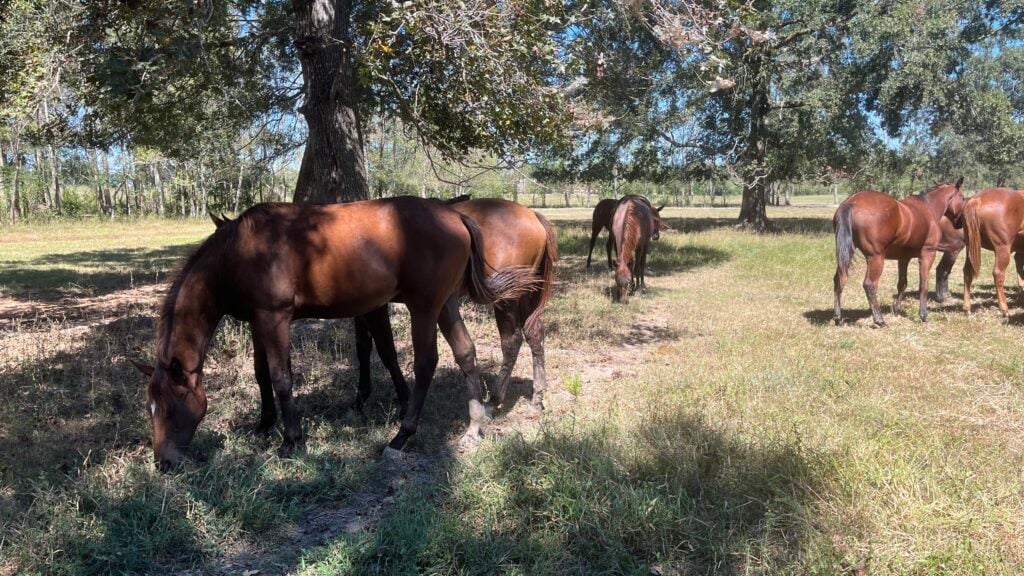
A friend of mine here in Louisiana runs four broodmares on 10 acres and does well with it. He pulls in solid breeder’s fees through the Louisiana Bred incentive program and keeps his mares in good shape year-round. That works out to roughly 2.5 acres per mare, and in our part of Louisiana the long growing season helps make those numbers workable.
What makes it work isn’t just the acreage — it’s how he manages it. He rotates mares between sections, gives pastures time to rest, and isn’t afraid to lean on hay when grass slows down. Without that kind of rotation and feeding plan, 10 acres would get tight in a hurry with four broodmares.
If you are raising foals with the intention of selling or racing them, factor in that the foal will need its own space by weaning time — typically around 4–6 months. Plan for the foal as a separate animal from that point when calculating your land needs.
Breeders fees and land requirements in Louisiana: Louisiana has a strong regional breeding program through the Louisiana Bred incentive, which makes keeping broodmares financially viable even on smaller operations. The key is that your land needs to support the mares in good condition year-round — a thin, stressed mare is a poor producer. If you are seriously considering a broodmare operation, plan for 2.5–3 acres per mare, active pasture management, and enough supplemental hay budget to carry you through dry or wet stretches when grass production drops.
What Makes Land Good or Bad for Horses?
Not all pasture land is equal. In Louisiana, drainage is the first thing I look at — and it tends to be the deciding factor in Gulf Coast and humid-climate operations generally. When horses stand on wet ground consistently, their hooves soften and become prone to abscesses and white line disease. Low spots that hold water after rain are a problem even if they look like productive grass from a distance. A smaller field with good drainage is more useful than a larger field that stays wet half the year.
Grass species matters too. Bermuda grass is the workhorse of Gulf South horse pastures — it tolerates heat, recovers quickly from grazing, and provides good nutrition. Bahia grass is another option, less nutritious but very durable. Perennial ryegrass, Kentucky bluegrass, and orchardgrass are common in cooler climates but struggle in Louisiana summers. Overseeding with ryegrass in the fall can extend your grazing season into the cooler months, which is a practical move in most Gulf South operations.
Weeds, excessive shade from trees, and competition from brush all reduce usable grazing area. When I evaluate a piece of land for horse use, I am not looking at total acreage — I am looking at how many clean, productive grazing acres are actually there.
Factors that reduce effective grazing acreage:
- Low spots and poor drainage — wet ground damages hooves and kills grass root systems
- Heavy tree cover — horses graze under trees but canopy shade limits grass production significantly
- Weed pressure — fields with heavy thistle, dock, or cogongrass need remediation before use
- Drought — even productive Gulf South pastures can go dormant in a dry August
- Overgrazing — once bare spots develop, erosion follows and recovery is slow
How to Support More Horses per Acre with Land Management
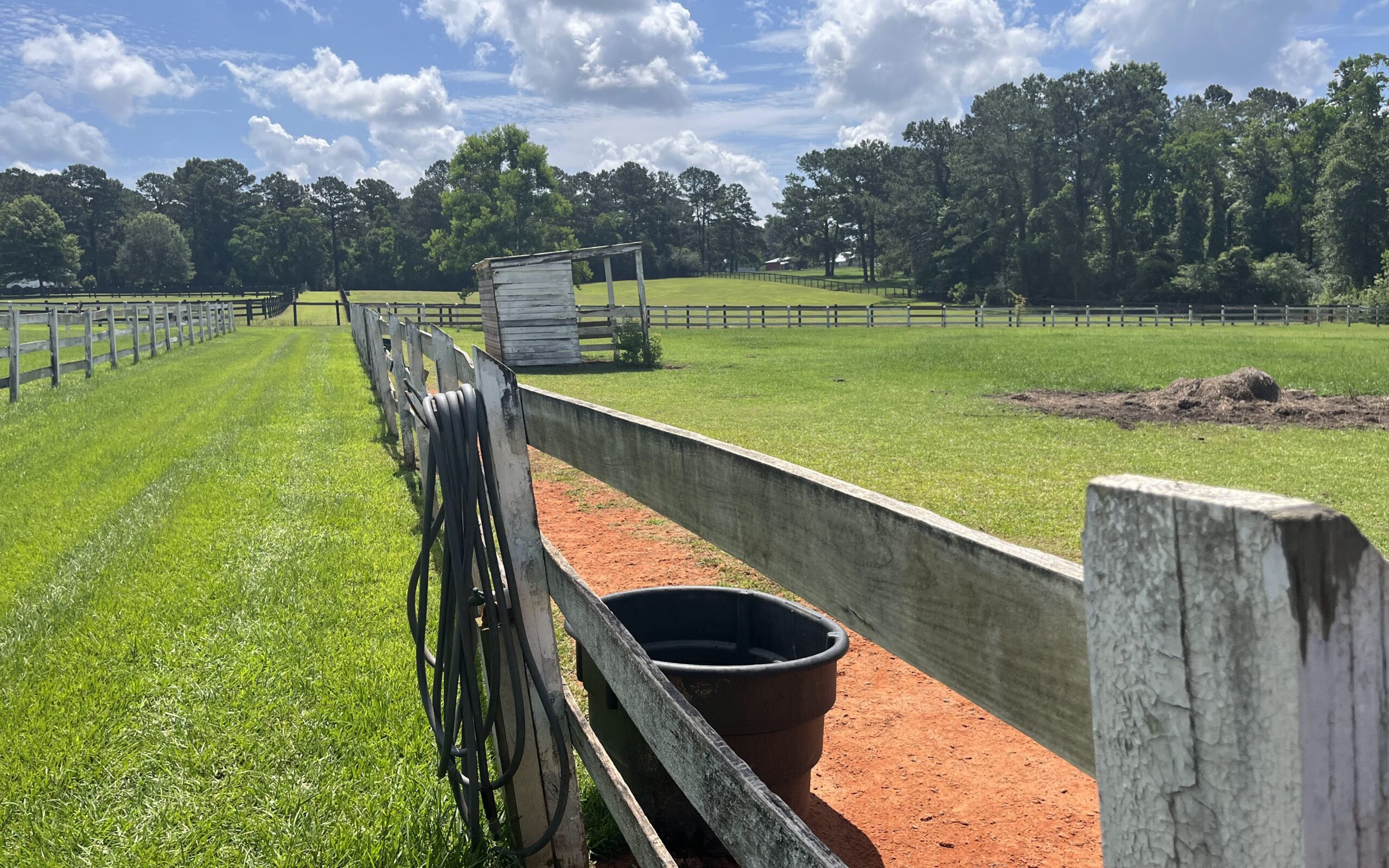
Good land management can meaningfully increase how many horses a piece of property supports. The most effective tools are pasture rotation, sacrifice paddocks, and timed supplemental feeding — and the combination matters more than any one piece.
Pasture rotation means dividing your land into sections and moving horses between them on a schedule — typically pulling horses off a section when grass drops below 3–4 inches and not returning until it recovers to 6–8 inches. This prevents overgrazing, allows root systems to recover, and keeps your carrying capacity higher across the full year. On a four-acre property, dividing into two two-acre paddocks and rotating on a two- to three-week cycle can dramatically improve how much forage the land produces annually.
A sacrifice paddock — a small area with no grass, used as a dry lot — is where you put horses when the main pasture needs rest. Horses in the sacrifice paddock get hay rather than grazing. This feels counterintuitive if your goal is to minimize hay costs, but protecting your pasture during recovery pays back many times over in reduced hay bills and better horse condition across the full season.
Manure management matters too. Manure left to accumulate reduces grazing area, spreads parasites, and creates mud patches that damage grass. Dragging or harrowing the field after horses are moved off a section helps break up manure and redistribute nutrients. It is one of the simplest, highest-return management tasks and gets skipped more than it should.
Horseman’s Perspective: The biggest mistake I see people make when they get their first horse property is putting horses on all the pasture at once and running it down. Once a field gets overgrazed and bare, it takes a full growing season or more to recover in Louisiana. The people who manage their land well — rotate properly, use a dry lot when the pasture needs rest, feed hay before the grass runs out rather than after — can carry significantly more horses on the same acreage as someone who runs the land without a plan. That gap is as real as any difference in acreage.
Dry Lots and Exercise Space for Horses
Horses kept primarily for riding or competition and stabled at night need a different calculation than horses living out on pasture full-time. A stabled horse that gets turned out daily for a few hours needs less pasture acreage — but it still needs consistent turnout space and structured exercise.
For our stalled horses, we ride five days a week and use a walking wheel daily. If you do not have a walking wheel, lunging on rest days keeps a stabled horse from getting stiff and sour. A horse that is stabled and not exercised regularly develops joint stiffness, muscle wasting, and behavioral problems that are much harder to fix than they are to prevent.
A dry lot for turnout — even a quarter acre of well-fenced ground — gives a stabled horse daily movement without requiring productive pasture acreage. If you are planning a small property and want to minimize the grazing land you need to maintain, a dry lot plus regular structured exercise is a legitimate approach. It requires more work from you but less land. At the tracks where I have run horses — Fair Grounds, Delta Downs, Evangeline Downs — that combination is standard when turnout space is tight.
Zoning and Legal Requirements for Horse Property
Before you buy land for horses, check the zoning requirements for horse property in your area. In most parishes and counties, horses must be kept on land zoned for agricultural use. Residential zoning — even rural residential — may prohibit keeping horses, limit the number of animals per acre, or require minimum lot sizes larger than you might expect. Requirements vary enough by location that checking with your parish or county planning office before you buy is worth the phone call.
Louisiana specifically has agricultural tax exemption programs that apply to horse properties, which can meaningfully reduce your property tax burden if you qualify. Check with your parish assessor’s office. Beyond zoning, horses need to be current on vaccinations, and your fencing must meet a basic standard of containment — both for the horses’ safety and for liability if a horse gets out onto a road.
If you are planning a broodmare operation with the intent to earn breeders fees, there may be additional registration requirements through the Louisiana Thoroughbred Breeders Association or the Louisiana Quarter Horse Breeders Association depending on your breed. That paperwork is worth getting right from the start.
How Much Land Does a Donkey Need Compared to a Horse?
Donkeys are considerably lower-maintenance than horses when it comes to land. A single donkey can often do well on roughly half an acre of pasture, and two donkeys — which is the better arrangement since they are social animals — can generally manage on one acre. Donkeys still depend on pasture quality, but their grazing pressure is significantly lower than horses, and they do not pace fence lines the way horses can.
One thing to be aware of: donkeys are browsers as well as grazers and will strip bark from trees if given access to them. If your property has trees you want to keep, fence them out of the donkey’s area.
FAQs
How many acres do you need for one horse?
The minimum is 1 acre, but 2 acres is the more practical starting point for most horse owners. One acre can work with excellent, well-managed pasture and supplemental hay, but it leaves almost no margin for dry spells, overgrazed sections, or adding a second horse later. If you are buying land specifically to keep horses, plan for at least 2 productive grazing acres for the first horse — and more in drier climates or on thinner soil.
Can a horse live on 1 acre?
Yes, a single horse can live on 1 acre if the pasture is fertile and well-managed and the diet is supplemented with hay when grass is insufficient. In the Gulf South, where the growing season is long, 1 acre can support a horse reasonably well for much of the year. During dry spells or winter dormancy, supplemental hay fills the gap. Active management — including pasture rotation and a sacrifice paddock — makes 1 acre more viable, but it is a tight margin.
How many acres do 4 horses need?
Four horses need a minimum of 4–5 acres of productive grazing land, and 6–7 acres gives more comfortable management room. The standard rule is 2 acres for the first horse and 1 acre per additional horse, assuming good pasture quality and active land management. Four broodmares with foals need 8–10 acres minimum, and active management makes a significant difference at those numbers.
What type of land is best for horses?
Horses do best on flat to gently sloping land with good drainage, productive grass species, and no significant weed pressure. In Louisiana and the Gulf South, Bermuda grass and Bahia grass are the most durable and practical pasture grasses. Perennial ryegrass works well as a winter overseed to extend grazing into the cooler months. Avoid low-lying areas that hold water — wet ground softens hooves and creates conditions for abscesses and white line disease.
How many acres do broodmares need?
A broodmare and foal pair generally needs 2–3 acres as a starting point, with the higher end more appropriate in drier climates or on less productive land. For a small broodmare operation with 4 mares, plan for 8–10 acres of well-managed pasture. Active management — rotation, sacrifice paddocks, and supplemental hay — is what makes those numbers work year-round.
Does a horse need a barn or shelter?
Not all horses require a barn, but they do need some form of protection from extreme weather — heavy rain, intense sun, and strong winds at minimum. A three-sided run-in shed is often sufficient for horses kept outdoors full-time in mild climates like Louisiana. Horses kept for racing or showing are typically stabled, but horses kept for breeding or general use can live outdoors year-round with appropriate shelter.
Final Summary: How Many Acres Does a Horse Need?
My Recommendation: Plan on about 2 acres for the first horse and 1 additional acre for each horse after that. Adjust upward if pasture quality is poor, drainage is an issue, or you are in a dry climate.
- Pasture quality matters more than total acreage — productive grazing land determines how many horses a property can truly support.
- The “2 + 1 acre rule” is a baseline, not a guarantee — it assumes average conditions and active land management.
- Drainage is critical in humid regions — wet ground reduces usable acreage and increases hoof health risks.
- Management can significantly increase carrying capacity — rotation, rest periods, and hay feeding improve pasture productivity.
- Broodmares require more land — plan roughly 2.5–3 acres per mare-and-foal pair in most conditions.
- A sacrifice paddock helps protect pasture — using a dry lot during stress periods prevents long-term overgrazing damage.

If someone asks me how much land they need for a horse, I usually tell them to start by looking at the grass, not the acreage. Two acres of productive pasture can outperform five acres of poor ground. For many people in Louisiana, two to four well-managed acres is a practical target for one or two horses. If you are building a broodmare operation, plan for enough land to rotate pastures and give them time to recover. In the long run, good pasture management saves more money than squeezing one more horse onto the same field.
About Miles Henry
Racehorse Owner & Author | 30+ Years in Thoroughbred Racing
Miles Henry (legal name: William Bradley) is a professional horseman based in Folsom, Louisiana. He holds Louisiana Racing License #67012 and has spent over three decades managing Thoroughbreds at premier tracks including Fair Grounds, Delta Downs, and Evangeline Downs.
Expertise & Hands-On Experience: Beyond the track, Miles has decades of experience in specialized equine care, covering everything from hoof health and nutrition to training protocols for Quarter Horses, Friesians, and Paints. Every guide on Horse Racing Sense is rooted in this “boots-on-the-ground” perspective.
30 of their last 90 starts
Equibase Profile.

Connect with Miles: