
Last updated: July 14, 2026
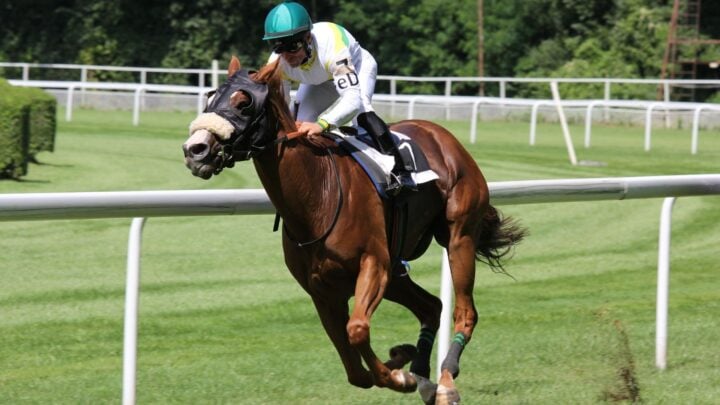
What is the most expensive horse in the world? Fusaichi Pegasus is widely cited as the highest-priced horse ever sold, at about $70 million. Justify follows at roughly $60 million based on breeding-rights valuation, and Shareef Dancer sold for $40 million in 1983.
Those figures reflect breeding value more than race earnings, which is why Thoroughbreds dominate the top of the list.
| Horse | Reported Price / Value | Breed | Why It Drew a Huge Figure |
|---|---|---|---|
| Fusaichi Pegasus | ~$70 million | Thoroughbred | Kentucky Derby winner with enormous commercial stallion appeal |
| Justify | ~$60 million (breeding valuation) | Thoroughbred | Undefeated Triple Crown winner; breeding-rights deal, not a simple sale |
| Shareef Dancer | $40 million (1983) | Thoroughbred | Irish Derby winner by Northern Dancer at peak bloodstock demand |
| Annihilator | ~$19 million (reported) | Standardbred | Historical reporting is inconsistent; frequently cited on expensive-horse lists |
| The Green Monkey | $16 million | Thoroughbred | Pedigree and 2-year-old workout hype — never won a race |
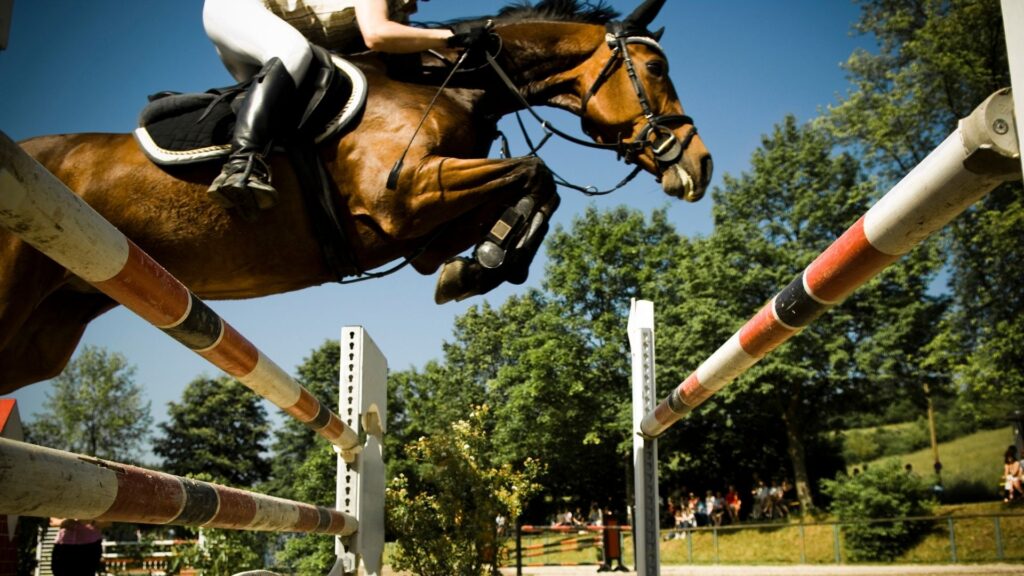
| Palloubet d’Halong | $15 million | Selle Français | Grand Prix show jumper bought for elite international competition |
| MHS Going Global | $13.5 million | Irish Sport Horse | Top-level international jumping résumé |
| Seattle Dancer | $13.1 million (1985) | Thoroughbred | Highest-priced Thoroughbred yearling at public auction |
| Padron | $11 million | Arabian | Major halter champion and influential breeding sire |
| Totilas | ~€9 million | Dutch Warmblood | Global dressage superstar — rare crossover into mainstream price discussions |
| Moonin The Eagle | $2.1 million | Quarter Horse | Record-level Quarter Horse racing stallion at auction |
A note on reported figures: Horse-sale records combine public auctions, private transactions, syndications, and breeding-rights valuations — these are not the same kind of transaction, and the numbers are not directly comparable. Where a figure reflects valuation rather than a completed sale, this article says so.
Table of Contents
The Most Expensive Horses Ever Sold or Valued
1. Fusaichi Pegasus — about $70 million
Fusaichi Pegasus is still the horse most people point to when they ask about the most expensive horse ever sold. He was reportedly transferred to Coolmore in a deal valued at about $70 million — widely cited as the highest-priced horse transaction ever recorded, and covered extensively in Blood-Horse and major bloodstock trade publications at the time.
That number only makes sense if you think like a breeding market investor rather than a race fan. Fusaichi Pegasus was not just a Kentucky Derby winner. He was a colt the market believed could become a global commercial sire, and that breeding upside — projected across ten or fifteen years of stud fees — is what pushed the figure into a range most horses never approach. The race was the audition. The breeding deal was the real transaction.
2. Justify — about $60 million valuation

Justify belongs near the very top of any modern list, but his case requires careful wording. He is discussed as a valuation tied to breeding-rights deals rather than as a single public sale or straightforward private transaction. That distinction matters because readers often assume every big number on a list like this came from a single auction ring or bill of sale.
From a racing perspective, his value is easy to understand. He was undefeated, won the Triple Crown, and retired with exactly the résumé commercial breeders dream about. In this market, that combination can create tens of millions of dollars in value almost overnight.
3. Shareef Dancer — $40 million
Shareef Dancer sold for $40 million in 1983, making him one of the most famous bloodstock deals ever recorded. He won the Irish Derby and came from the Northern Dancer line — a sire whose commercial influence on the Thoroughbred market in the 1980s was so dominant that his sons and grandsons commanded premiums that seem almost irrational in retrospect. Buyers were paying for both race performance and elite stallion appeal, and the Northern Dancer connection amplified both.
A 1983 sale price of $40 million adjusts to well over $100 million in today’s dollars. By any measure, Shareef Dancer belongs in the same conversation as the horses above him on this list.
4. Annihilator — reported around $19 million
Annihilator often appears on expensive-horse lists, especially broader historical roundups, and is usually described as a Standardbred pacer sold for roughly $19 million. He was a harness racing horse rather than a Thoroughbred — the distinction matters because the harness racing bloodstock market is smaller, less publicly documented, and historically less covered by mainstream racing media than Thoroughbred transactions. That is why the reporting around his sale is less consistent than it is for horses like Fusaichi Pegasus or Shareef Dancer. Readers who arrive specifically looking for Annihilator should know he belongs in the conversation, but with the caveat that the figure is harder to verify.
5. The Green Monkey — $16 million
The Green Monkey became one of the most expensive horses ever sold despite never winning a race. That single detail is the central fact in his story — and why his name still circulates in bloodstock conversations years after his racing career ended quietly.
He brought $16 million as a 2-year-old in training because buyers fell in love with his pedigree, his physical presence, and his workout impressions at the Calder sales. His career is a near-perfect example of how the racehorse market often pays for projection rather than performance — and how projection doesn’t always become performance.
Miles’s Take — projection vs. performance: The Green Monkey story is one I find genuinely instructive, even at the level I operate at. When I’m evaluating a horse for a claiming race, I’m looking at what the horse has actually done — past performances, times, how it finished, what class it was competing against. The Keeneland and Calder sales operate in a completely different psychology. Buyers at the elite 2-year-old sales are paying for what a horse looks like it could become based on bloodlines and a timed workout. That projection is sometimes correct and sometimes spectacularly wrong. The Green Monkey’s workout numbers were extraordinary. His race results were not. The same disconnect between trial performance and race performance shows up regularly in the claiming market too — a horse that breezes beautifully and races poorly is a story I’ve seen plenty of times at Fair Grounds. The scale is different. The pattern is the same.
Highest-Priced Thoroughbred Yearling at Public Auction
Seattle Dancer — $13.1 million
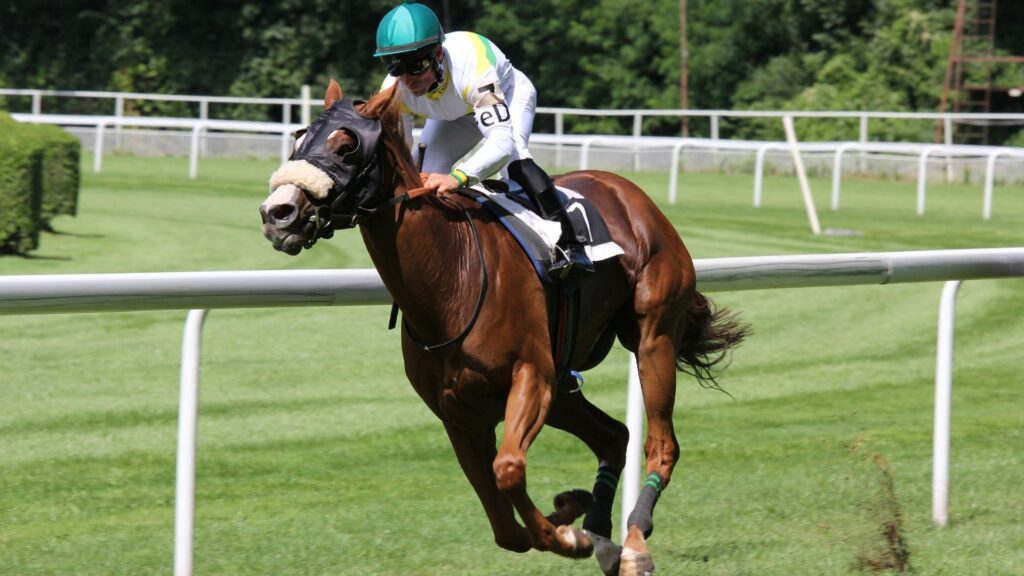
Seattle Dancer remains the highest-priced Thoroughbred yearling ever sold at public auction, bringing $13.1 million at Keeneland in 1985. That precision matters — “highest-priced yearling at public auction” is a more defensible claim than “most expensive yearling ever sold,” because private transactions above that figure may exist but are not publicly documented.
At the yearling stage, buyers are purchasing a physical specimen, a bloodline, and an expectation. There is no race record to evaluate. Seattle Dancer’s price reflected his pedigree — he was by Nijinsky II out of a mare by My Bupers, in a market still feeling the pull of the Northern Dancer era — and the competitive bidding environment of the 1985 Keeneland July sale.
Record Prices in Today’s Dollars
Inflation adds important context because it helps compare old bloodstock deals with modern ones honestly. A horse that sold for a record amount in the early 1980s would command an even more startling figure in today’s dollars — which is one reason older names still belong in conversations about the most expensive horses ever.
| Horse | Original Figure | Modern Context | Why It Matters |
|---|---|---|---|
| Shareef Dancer | $40 million in 1983 | Exceeds $120 million in today’s dollars | One of the largest horse transactions ever by any inflation-adjusted measure |
| Seattle Dancer | $13.1 million in 1985 | Would exceed $37 million today | Puts the yearling auction record in its proper historical context |
| Fusaichi Pegasus | ~$70 million in 2000 | Approximately $125 million today | Still the largest horse transaction ever by any measure |
Why Racehorses Usually Top the List
As an owner, I’ve seen firsthand that a horse’s price is rarely about speed alone. For a horse-racing audience, the key takeaway is simple: the market pays most aggressively for future breeding power. A top jumper or dressage horse can command an enormous figure based on competitive résumé and prestige. But an elite Thoroughbred colt with classic form and a fashionable pedigree can generate breeding revenue for years at stud fees that regularly exceed $100,000 per mare — sometimes much more. That compounding income is what drives the biggest numbers in the horse market.
What drives a racehorse’s value:
- Pedigree — especially if the sire line is commercially in demand
- Major wins — Kentucky Derby, Triple Crown races, Grade 1 events, or major European classics
- Stallion potential — the breeding shed is where the biggest long-term money is made
- Market timing — a horse is worth more in a strong breeding cycle than a weak one
- Scarcity — there are very few elite colts with both race results and commercial bloodlines in the same package
Most Expensive Horses Outside Thoroughbred Racing
Racehorses sit at the top of the global market, but other disciplines produce spectacular numbers. The difference is that these horses are priced on immediate sport performance, proven competitive results, and prestige within their discipline — not on the breeding-economics model that drives Thoroughbred stallion valuations into the tens of millions.
| Horse | Price | Discipline | Why It Stood Out |
|---|---|---|---|
| Palloubet d’Halong | $15 million | Show jumping | One of the most famous jumping transactions ever reported |
| MHS Going Global | $13.5 million | Show jumping | Elite Irish Sport Horse with top international credentials |
| Padron | $11 million | Arabian show / breeding | Major halter champion and exceptional breeding influence |
| Totilas | ~€9 million | Dressage | Global dressage superstar; rare crossover into mainstream price discussions |
| Moonin The Eagle | $2.1 million | Quarter Horse racing | Record-level figure within Quarter Horse racing circles |
Most Expensive Dressage Horse
Totilas — commonly reported around €9 million
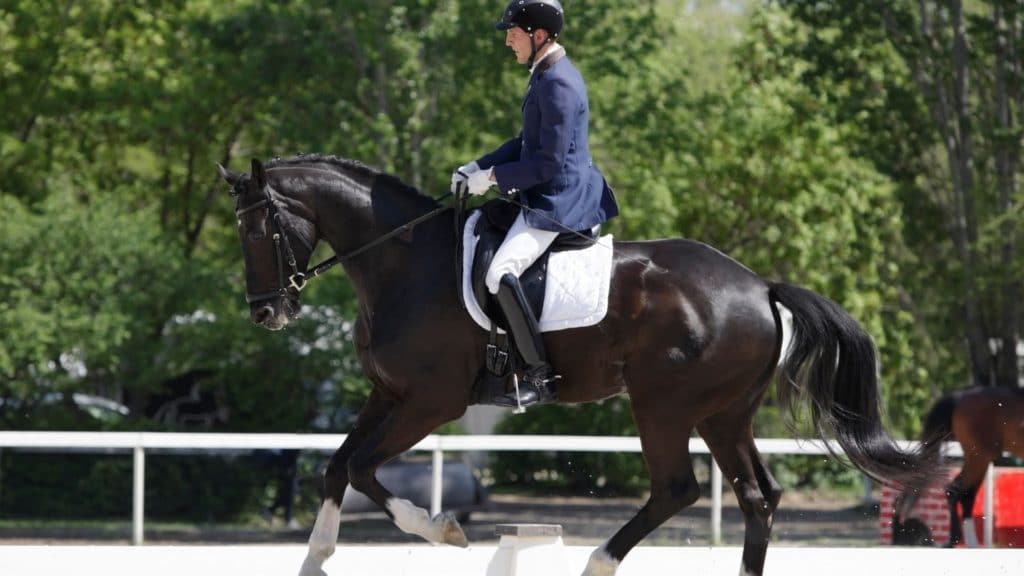
Totilas is generally considered the most expensive dressage horse ever sold, with reports commonly placing the transaction around €9 million, though higher estimates have circulated. He was one of the few dressage horses famous enough to break into mainstream sports coverage, and his price reflected star power as much as pure competitive ability. That is the safest way to frame it — discussions of Totilas sometimes blur the line between confirmed sale price and estimated broader worth.
Most Expensive Arabian Horse
Padron — $11 million
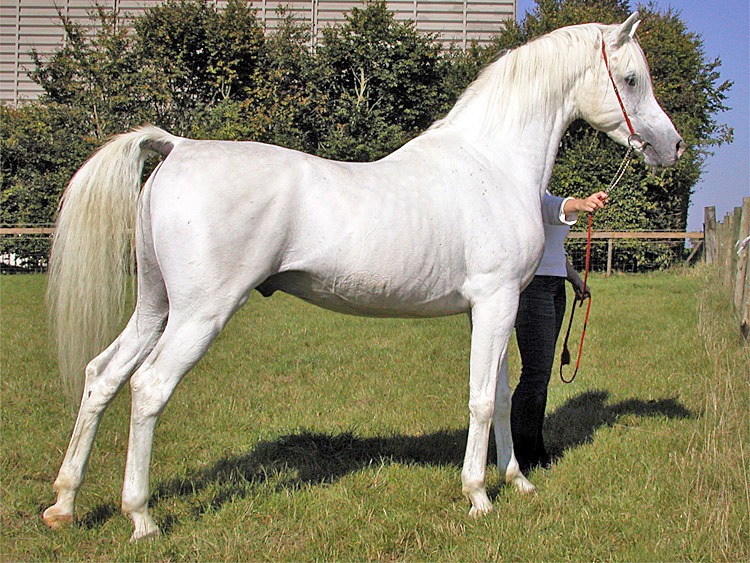
Padron is commonly cited as the most expensive Arabian horse actually sold, at $11 million. That precision matters because Arabian-horse discussions regularly mix completed sales with reported offers and broader value estimates.
Marwan Al Shaqab — reported offers, not a confirmed sale
Marwan Al Shaqab is mentioned frequently in value discussions because reported offers around $20 million have circulated for years. An offer is not a completed transaction. For readers who want the clearest answer on what has actually changed hands, Padron remains the safer reference point as the highest-priced Arabian horse with a documented sale.
Most Expensive Quarter Horse
Moonin The Eagle — $2.1 million
Moonin The Eagle is one of the best examples of how racing value works outside the Thoroughbred world. He sold for $2.1 million having already proven himself on the track — which meant buyers were purchasing not just a talented racehorse but sire potential backed by actual performance. The same logic that drives Thoroughbred stallion valuations into the tens of millions operates in the Quarter Horse market at a different scale, with the same fundamental drivers: speed, a proven record, and the expectation of breeding success.

Highest Stud Fees in Racing
Stud fees are the clearest illustration of how a racehorse’s value extends far beyond prize money. Some stallions generate more revenue in a single breeding season than their entire racing career earnings. The horses who command the highest fees are those whose runners have proven the fee is justified — and breeders will keep paying as long as the offspring keep winning.
| Stallion | Peak Reported Fee | Era | Why Breeders Paid It |
|---|---|---|---|
| Frankel | £200,000+ | 2010s–present | Unbeaten in 14 races; became one of the most successful sires in European racing history |
| Tapit | $300,000 | 2010s | Dominant North American sire; multiple champions and exceptional commercial demand |
| Dubawi | £250,000+ | 2010s–present | Global elite sire with top-class runners across multiple continents and major sire sons |
| Galileo | €600,000 | 2000s–2021 | The most influential European sire of the modern era; his fee reflected near-monopoly status |
| Storm Cat | $500,000 | Late 1990s–2000s | The highest stud fee in North American racing history at the time; dominant commercial sire |
| Northern Dancer | $1 million (private) | 1980s | The foundation of modern Thoroughbred breeding; his fee was effectively unlimited by market demand |
Miles’s Take — what stud fees mean for the rest of the market: These numbers are a long way from the horses I buy and race at Fair Grounds and Evangeline Downs. But they explain something I see at every level of the sport: why the breeding shed matters more than the purse. When I’m looking at a horse’s pedigree in a claiming race, I’m often tracing back through sires that stood for five or ten thousand dollars a cover. The horses at the top of that stud fee table — Galileo at €600,000, Northern Dancer effectively priceless by the end — those fees compound through every generation that follows. A horse that goes back three generations to a Northern Dancer son carries market value in its pedigree that has nothing to do with what it did on the track. That’s why pedigree analysis matters even at the claiming level, and why the gap between a $50,000 claimer and a $70 million stallion purchase is really just a question of how far down that breeding tree you’re reading.
Key Takeaways: Most Expensive Horses Ever Sold
- Fusaichi Pegasus (~$70 million) is the horse most widely cited as the highest-priced transaction ever — a Kentucky Derby winner valued for his commercial breeding potential
- Justify’s ~$60 million figure is better described as a breeding-rights valuation than a single sale — the distinction matters
- Shareef Dancer ($40 million in 1983) adjusts to over $120 million today — one of the largest horse deals ever by any inflation-adjusted measure
- Seattle Dancer ($13.1 million, 1985) remains the highest-priced Thoroughbred yearling at a documented public auction
- The Green Monkey ($16 million) never won a race — the clearest example of how the market pays for projection that doesn’t always become performance
- Racehorses dominate the top of the market because breeding income — especially elite stud fees — can make an elite colt worth vastly more than his prize money alone
- Not all reported figures are equivalent — auctions, private sales, syndications, and valuations are different transactions; treat them accordingly
Frequently Asked Questions
What is the most expensive horse in the world?
Fusaichi Pegasus is the horse most commonly cited as the most expensive horse in the world, sold in a deal valued at about $70 million. He won the 2000 Kentucky Derby and was transferred to Coolmore for his breeding potential — racing success was only part of what drove the price.
What is the most expensive racehorse ever sold?
Same horse, Fusaichi Pegasus at about $70 million, but the wording matters: this figure is widely reported as a completed transfer to Coolmore rather than an unconfirmed offer or estimate, which is why it holds up as the benchmark sale rather than just the benchmark valuation.
What is the most expensive horse breed?
Thoroughbreds dominate the highest prices because racing success and breeding income combine to create enormous commercial value. An elite Thoroughbred stallion can generate breeding revenue across ten or more years, with top sires covering over a hundred mares a season. No other breed produces the same compounding return on investment.
What is the most expensive horse sold at public auction?
Seattle Dancer remains the benchmark public-auction Thoroughbred yearling sale at $13.1 million, set at Keeneland in 1985. This figure specifically covers Thoroughbred yearlings at documented public auctions — other horse categories and private transactions may have produced higher figures that are less consistently documented.
Why are racehorses often worth more than show horses?
Elite racehorses, especially stallion prospects, can generate major long-term breeding revenue in addition to their race earnings. A top stud fee has historically reached $300,000 to $600,000 per mare, and a stallion may cover 100 or more mares per season. That revenue model creates valuation multiples that show jumping, dressage, or other sport horses cannot match because their breeding market is smaller and less commercially structured.
Was Justify really sold for $60 million?
It is more accurate to describe Justify as having a breeding-rights valuation in that range rather than as a simple public or private sale. The distinction matters for readers comparing horse-price records — a syndication or breeding-rights deal is structured differently from a direct purchase.
What is the most expensive dressage horse ever sold?
Totilas is generally considered the most expensive dressage horse ever sold, with reports commonly placing the transaction around €9 million. Some higher estimates have circulated, but that figure is the most consistently cited in serious coverage of the sale.
What is the most expensive Arabian horse actually sold?
Padron is usually cited as the most expensive Arabian horse actually sold, at $11 million. Marwan Al Shaqab has been the subject of reported offers around $20 million, but an offer is not a completed transaction — Padron remains the clearer documented benchmark.

About Miles Henry
Racehorse Owner & Author | 30+ Years in Thoroughbred Racing
Miles Henry (legal name: William Bradley) is a professional horseman based in Folsom, Louisiana. He holds Louisiana Racing License #67012 and has spent over three decades managing Thoroughbreds at premier tracks including Fair Grounds, Delta Downs, and Evangeline Downs.
Expertise & Hands-On Experience: Beyond the track, Miles has decades of experience in specialized equine care, covering everything from hoof health and nutrition to training protocols for Quarter Horses, Friesians, and Paints. Every guide on Horse Racing Sense is rooted in this “boots-on-the-ground” perspective.
30 of their last 90 starts
Equibase Profile.

Connect with Miles: