
Last updated: September 29, 2026
Any links on this page that lead to products on Amazon are affiliate links and I earn a commission if you make a purchase. Thanks in advance – I really appreciate it!
Your horse’s shoes still look pretty good, but the calendar says the farrier’s due. Can you safely stretch it another week or two?
Quick answer: Most shod horses are reset or reshod about every 4 to 8 weeks, with many horses falling around the 6-week mark. Racehorses and horses in hard work often need a shorter cycle. Still, the calendar is only a starting point. Hoof growth, shoe wear, loose clinches, and your farrier’s assessment tell you when your horse actually needs attention.
The right schedule depends on the horse, the work he’s doing, the ground he’s on, and how fast his feet grow. In my experience, many shoeing problems start when owners wait until a shoe is loose or a horse is uncomfortable. Here’s how to judge the interval, spot trouble before a shoe comes off, and handle the timing issues that come with racehorses.
Table of Contents
Typical Reshoe Intervals
Use these as starting points, then adjust with your farrier based on how your horse’s feet actually grow and wear.
| Horse and workload | Typical interval | Why |
|---|---|---|
| Racehorses in training | About 4 to 5 weeks, sometimes sooner | Race plates wear quickly, and a loose or shifted shoe creates more risk at speed. Timing also has to work around race entries. |
| Barrel, rodeo, and other hard-working horses | About 4 to 5 weeks | Hard work, especially on firm ground, can wear shoes down faster |
| Show and performance horses | About 4 to 6 weeks | Consistent hoof balance and shoe fit matter for performance |
| Regular trail or arena horses | About 5 to 7 weeks | Moderate wear; growth and balance set the pace |
| Light-use horses | About 6 to 8 weeks | Slower wear, but the hoof keeps growing |
A reset doesn’t always mean a new set of shoes. If the old shoes still fit and have enough wear left in them, your farrier may pull them, trim and balance the feet, and reset the same shoes. Once they’re worn thin, bent out of shape, or no longer fit the foot, it’s time for new ones.
Why Shoes Can’t Stay On Indefinitely
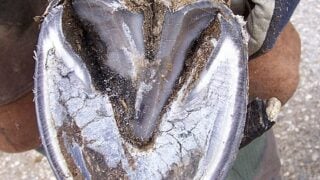
The hoof wall keeps growing under the shoe, roughly a quarter to three-eighths of an inch a month in many horses. The shoe stays nailed in the same place while the foot grows and changes around it. Over a few weeks, the toe can get longer, the heels may start to run forward, and the shoe can end up sitting farther back under the foot than it should. Shoes wear too, especially on hard ground or in hard-working horses.
Once the foot grows past where the shoe was fitted, the horse isn’t really standing on the same foot your farrier balanced a few weeks earlier. The longer toe generally delays breakover, the point where the foot rolls over as it leaves the ground, which changes how he moves. The clinches can also loosen as the wall grows out. None of that happens overnight, which is why a shoe can look fine while the foot underneath is gradually getting out of balance.
What Shortens or Stretches the Interval
- Hoof growth rate. Some horses grow a lot of foot, and some don’t. Young horses often grow faster than older ones, and many horses grow more in warm months than in winter. The first few shoeing cycles with a new horse tell you a lot. Notice how much growth your farrier takes off, and whether the feet already look long before the next appointment.
- Season. Faster summer growth can shorten the interval, while slower winter growth may let it stretch a little. Talk to your farrier before changing it.
- Footing and weather. Wet, muddy ground can soften the hoof and loosen clinches. Hard, rocky, or abrasive ground can wear shoes faster. In south Louisiana, feet can go from soft and wet to hard and dry in the same season, so I watch shoes more closely when the weather changes fast. Horses in the same barn can end up on different schedules for exactly these reasons, which is why I look at the horse, not just the date.
- Workload. A horse in daily hard work on firm ground wears through shoes much faster than one doing light riding.
- Shoe type. Aluminum shoes and race plates are lighter than steel but wear faster. Pads, bar shoes, and therapeutic shoeing may need their own schedule.
- Hoof balance and conformation. Horses with long toes and low heels, flat feet, uneven wear, or conformation challenges may do better on a shorter cycle, since a little extra growth can throw their balance off faster. Follow the schedule your farrier recommends for that horse’s feet.
Horseman’s Take: When you have several horses on shoeing schedules, keeping the appointments straight becomes part of good horse management. My farrier and I use recurring days and check in about a week ahead to move up any horse that needs it. If you’re starting out, set a reminder about three and a half weeks after each shoeing. That’s when I start watching the feet more closely, instead of waiting for something to look obviously wrong.
Signs Your Horse Needs the Farrier Sooner
Don’t wait for the date on the calendar if you see any of these:
- Raised clinches or loose nails. If the clinches have lifted off the wall or a nail moves when you press on the shoe, the shoe is working loose.
- A shoe that’s shifted or sitting too far back. A shoe that has moved sideways, twisted, or no longer supports the heels needs attention. So does one that’s sitting noticeably farther back under the foot as the hoof grows forward.
- A long toe or overgrown foot. The wall has grown well past the shoe, the toe looks noticeably longer than it did after shoeing, or the foot no longer looks balanced from the side.
- Heavy or uneven shoe wear. Thin spots, worn-through toes, or one branch wearing much faster than the other.
- Cracks or chips starting at the nail holes or ground surface.
- Stumbling, overreaching, or repeated pulled shoes. Long toes can contribute, but footing, fatigue, how the horse moves, and shoe fit can too. Bring it up with your farrier rather than assuming there’s only one cause.
- A change in how the horse moves. A shorter stride or reluctance to go forward can come from a foot that’s out of balance. If it comes with lameness, call your vet too.

Most of these show up during daily hoof picking. My guide to how to clean horse hooves covers what to check each time.
What Happens at a Reset
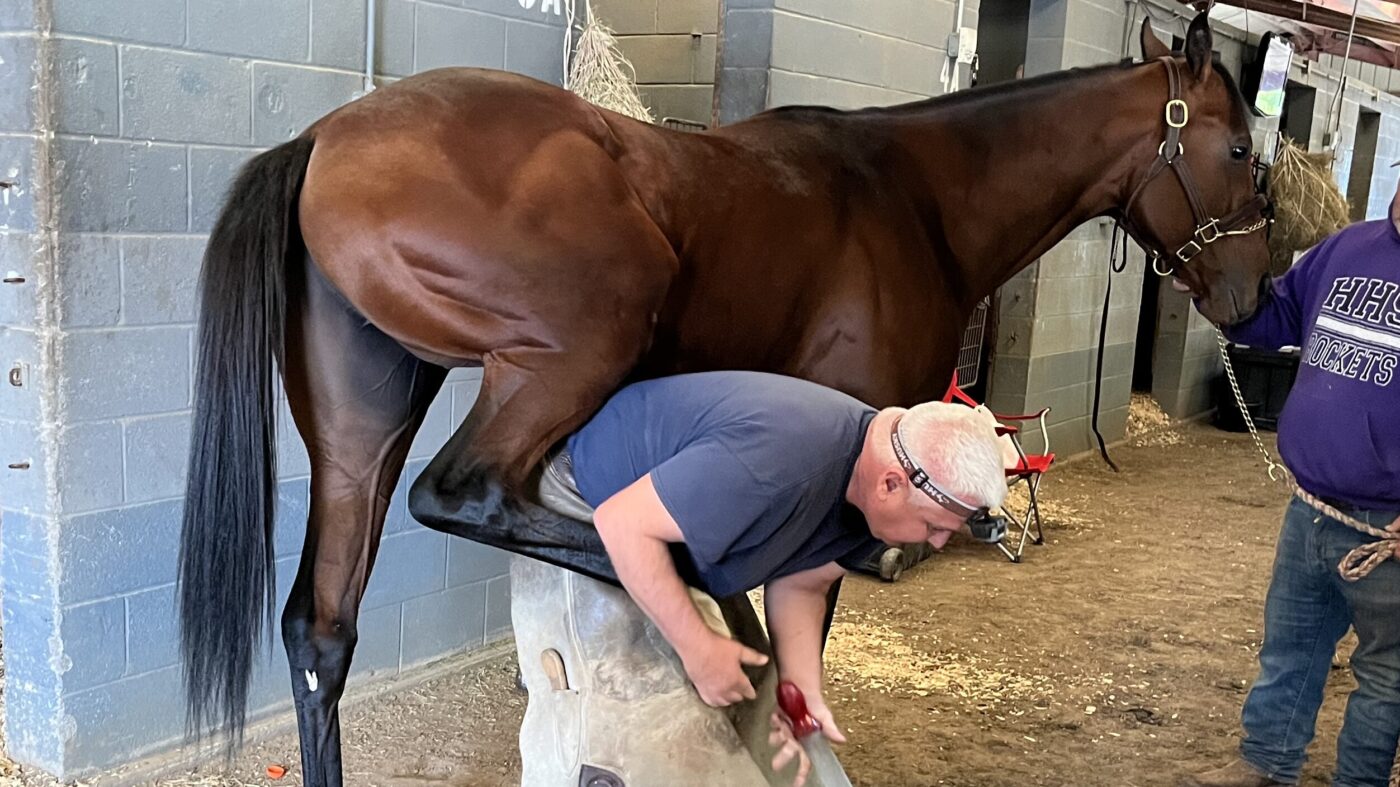
During a reset, the farrier pulls the old shoes, trims the extra growth, and balances the foot. Then he shapes either new shoes or the old ones if they’re still suitable, fits them hot or cold depending on his method and the horse’s needs, nails them on, and finishes the clinches. Afterward, watch your horse walk off and ask what the farrier noticed in the old shoes’ wear. Uneven wear can tell you how the horse is traveling and whether anything needs watching before the next visit.

A good farrier is worth the search. The American Farriers Association has certification programs and a farrier directory that can help you find someone in your area. Prices vary widely by region, number of horses, travel, shoe type, and whether the horse needs routine or corrective work. At my barn, where I keep several horses on a standing schedule, routine work runs about $75 per horse, with hay or barn labor sometimes offsetting part of it. That’s my local arrangement, not a national price guide, and corrective or therapeutic shoeing costs more. Either way, keeping a horse on an appropriate schedule is usually cheaper and easier than waiting until a loose shoe, damaged hoof wall, or imbalance creates a bigger problem.
What to Do When a Horse Loses a Shoe
Losing a shoe happens to almost every owner sooner or later. The goal isn’t to avoid every lost shoe. It’s to handle it quickly so a missing shoe doesn’t turn into a damaged hoof.
- Keep the horse quiet and off hard, rocky, or abrasive ground. Don’t ride or work him until you’ve checked the foot and talked with your farrier, especially if he’s sore or has torn hoof wall.
- Check the foot. Look for nails left in the wall and for torn or cracked hoof wall where the shoe came off.
- Protect the foot with a hoof boot if you have one that fits, especially if you’ll have to wait.
- Call your farrier to get it replaced as soon as practical.
- Call your vet if the horse is lame, a large piece of wall tore away, or a nail may have gone into the foot.
If you find the shoe, save it. Your farrier may be able to reuse it, and the wear pattern shows how that foot has been loading. If a horse keeps pulling shoes, talk with your farrier about fit, breakover, footing, the work he’s doing, and whether the schedule needs to change.
Reshoeing Racehorses
Racehorse shoeing is a little different because you’re not just maintaining a hoof. You’re keeping an athlete ready to train at speed several days a week. In the U.S., racehorses usually train and race in lightweight aluminum race plates, which wear faster than steel, so most race barns keep them on a tight schedule. Timing matters too. A horse that needs a shoe change right before a race creates a problem for everyone, so the farrier’s visits get planned around entries.
There are rules on the shoes, too. Under the Horseracing Integrity and Safety Authority’s shoeing rules, which apply in both training and racing, front shoes on dirt can’t have a toe grab, though a full outer rim of 2 millimeters or less is allowed. Hind shoes on dirt can have a rim or a toe grab of up to 4 millimeters. On turf, traction devices aren’t allowed at all. Synthetic tracks have their own limits, and those have changed over time, so check the current rules with your trainer and farrier before a horse runs on either surface.
Horseman’s Take: One of my horses pulled a shoe shortly before a race at Fair Grounds, and the trackside farrier had to put it back on. Looking back, moving him to a tighter schedule likely would have prevented it. Since then, I check the shoes myself on race mornings instead of leaving it to the groom. I look for three things: clinches still flat against the wall, no give when I press on the shoe, and no nail head that has risen or looks loose. If anything’s off, the farrier gets called before the horse goes to the paddock, not after.

How Often to Reshoe a Horse FAQ
How often should a horse be reshod?
Most shod horses are reset or reshod about every 4 to 8 weeks, with many horses around the 6-week mark. Racehorses and horses in hard work usually need a shorter cycle. Let hoof growth, shoe wear, and your farrier’s assessment set the actual schedule.
What happens if I wait too long between shoeings?
The foot keeps growing, so the toe gets longer, the balance shifts, and the clinches loosen. That raises the risk of a pulled or shifted shoe and can change how the horse moves. If your horse grows foot slowly, ask your farrier before stretching the schedule.
What’s the difference between a reset and new shoes?
In a reset, the farrier pulls the shoes, trims and balances the feet, then puts the same shoes back on if they still fit and have enough wear left. New shoes replace ones that are worn thin, bent, or no longer fit the foot. Both include a trim.
What should I do if my horse loses a shoe?
Keep the horse quiet and off hard ground, check the foot for leftover nails or torn wall, protect it with a hoof boot if you can, and call your farrier. Call your vet if the horse is lame or the foot is damaged.
After years of keeping horses shod, I’ve learned there isn’t one magic number for every horse. A 5-week schedule might be perfect for one horse and too long for another. Pay attention to the feet, keep your farrier involved, and don’t wait until a loose shoe forces the issue.
About Miles Henry
Racehorse Owner & Author | 30+ Years in Thoroughbred Racing
Miles Henry (legal name: William Bradley) is a professional horseman based in Folsom, Louisiana. He holds Louisiana Racing License #67012 and has spent over three decades managing Thoroughbreds at premier tracks including Fair Grounds, Delta Downs, and Evangeline Downs.
Expertise & Hands-On Experience: Beyond the track, Miles has decades of experience in specialized equine care, covering everything from hoof health and nutrition to training protocols for Quarter Horses, Friesians, and Paints. Every guide on Horse Racing Sense is rooted in this “boots-on-the-ground” perspective.
30 of their last 90 starts
Equibase Profile.

Connect with Miles: