

Last updated: July 5, 2026
Male and female racehorses differ in more than speed. From race conditions and weight allowances to management and breeding value, sex shapes how a horse is trained, raced, and valued. Here’s what really matters when you compare males and females.
Are male racehorses faster than female racehorses? Usually yes on average, but elite Thoroughbred performance is more about genetics, conditioning, and race conditions than sex alone. Research published in the FASEB Journal found no significant sex-based performance difference at the elite level when controlling for conditioning and genetics. Fillies and mares also receive a sex allowance in open races, and several of the greatest female racehorses in history have beaten males at the top level.
Table of Contents
The Physical Differences — What the Research Shows
Male horses are generally larger than females on average and tend to have greater speed potential at the population level, which is why they hold most major open-company records. But that average does not tell the whole story. In elite Thoroughbred racing, the gap narrows enough that conditioning, genetics, class placement, and race setup often matter more than sex itself.

That is why the best answer is not “males always win” or “females are equal.” Research published in the FASEB Journal found no significant sex-based difference in elite Thoroughbred performance when controlling for other factors. The real answer is that sex matters at the population level, but individual quality matters more once you get to the top of the sport.
Three fillies have won the Kentucky Derby — Regret (1915), Genuine Risk (1980), and Winning Colors (1988). Zenyatta went 19 for 20 and won the 2009 Breeders’ Cup Classic against the best males in North America. Ruffian was unbeaten in 10 starts. These are outliers, but they demonstrate that the ceiling for female racehorses is not fundamentally lower than for males — exceptional horses are exceptional horses.
How Racing Rules Account for the Difference
Racing rules reflect that average difference. In most overnight races, fillies and mares receive a sex allowance — typically 3 pounds for 2-year-old fillies and 5 pounds for fillies and mares aged 3 and older before September 1, then 3 pounds thereafter. That allowance helps level the field when females compete against males in open company. Most tracks also write races specifically for fillies and mares, giving female horses more placement options and often better opportunities than open races at the same level.

How the sex allowance and restricted conditions work:
- Sex allowance in open races — fillies and mares typically receive a 3–5 lb weight concession when running against males; this compensates for average differences in muscle mass and cardiovascular capacity
- Sex-restricted conditions — races written exclusively for fillies and mares exist at most tracks; these races reduce the competitive pool and often offer better purse-to-competition ratios at the claiming and allowance levels
- Weight-for-age scale — in weight-for-age races, males carry more weight as the scale increases with age, further reflecting the recognized average difference
- Practical effect — a competitive mare with the sex allowance and access to restricted conditions has more placement options than a comparable gelding; this is a structural advantage that experienced trainers and owners specifically look for
Male vs Female Racehorses — Side by Side
The differences between male and female racehorses go beyond raw speed. Competitive options, management demands, racing rules, and what happens after the racing career all differ meaningfully by sex — and by whether the male is intact or gelded.
| Category | Fillies and Mares | Geldings | Colts and Stallions |
|---|---|---|---|
| Speed records | Less common in open-company record books, but top females can still compete at the highest level | Similar athletic potential to intact males, with no breeding premium attached | Hold most major open-company records on average |
| Physical profile | Often slightly smaller on average; sex allowances help offset the average difference in open races | Same basic physical potential as other males after castration | Greater average size and speed potential on average |
| Race opportunities | Open races plus sex-restricted races — more placement options overall | Open races only | Open races, with breeding-related selection pressure on the best individuals |
| Management | Some mares are affected by the estrous cycle; others show little change; veterinary-guided hormone management is available when needed | Usually the easiest to manage and most predictable in daily training | Often require the most experienced handling, especially if intact |
| Long-term value | Broodmare value can add retirement upside, particularly with black type or strong pedigree | No breeding value; post-racing worth depends on riding or companion prospects | Stallion value can be very high, but only for elite performers with strong pedigrees |
| Best-known examples | Zenyatta, Winx, Rachel Alexandra, Ruffian, Regret | John Henry, Funny Cide, Lava Man | Secretariat, Frankel, American Pharoah |
Mares and Fillies in Competition
Mares and fillies have a real competitive path because they can run in both open races and sex-restricted races. The sex allowance in open company helps offset the average physical difference, while restricted conditions create more placement options. For many owners, that combination makes a sound mare easier to place than a comparable gelding or colt. At the Louisiana circuit, the claiming conditions written specifically for fillies and mares are often less competitive than open claiming races at the same claiming price.

The main management consideration is the estrous cycle. Some mares show little change during heat, while others can become harder to train or more reactive. When that becomes an issue, trainers often use veterinary-guided hormone management to reduce unwanted estrus behavior during the racing season. The key point is not that every mare is difficult — it is that mare management sometimes requires more individual attention.
Horseman’s Perspective: My filly Seamus’s Girl was one of the best examples of how the restricted-conditions structure benefits female horses at the claiming level. At Louisiana tracks, the filly-and-mare conditions at the $10,000–$20,000 claiming level are genuinely softer than the open conditions at the same price. She ran in spots where I knew the competition field going in. That kind of matchmaking is harder to execute with a gelding because you’re always in the open pool. The sex allowance and restricted conditions aren’t just rule technicalities — they’re a real competitive tool that experienced trainers use actively. For more on the class level structure and how claiming conditions are written, that article covers the full picture.
Geldings — Why They Are Often Easier to Manage
Gelding a colt removes most of the testosterone-driven behavior that can make intact males harder to train and race consistently. That does not make a horse faster by itself, but it often makes the horse easier to focus, easier to gate, and more predictable in daily handling. That is why many talented colts are gelded during training — the speed does not change, but the management problem often becomes much simpler.
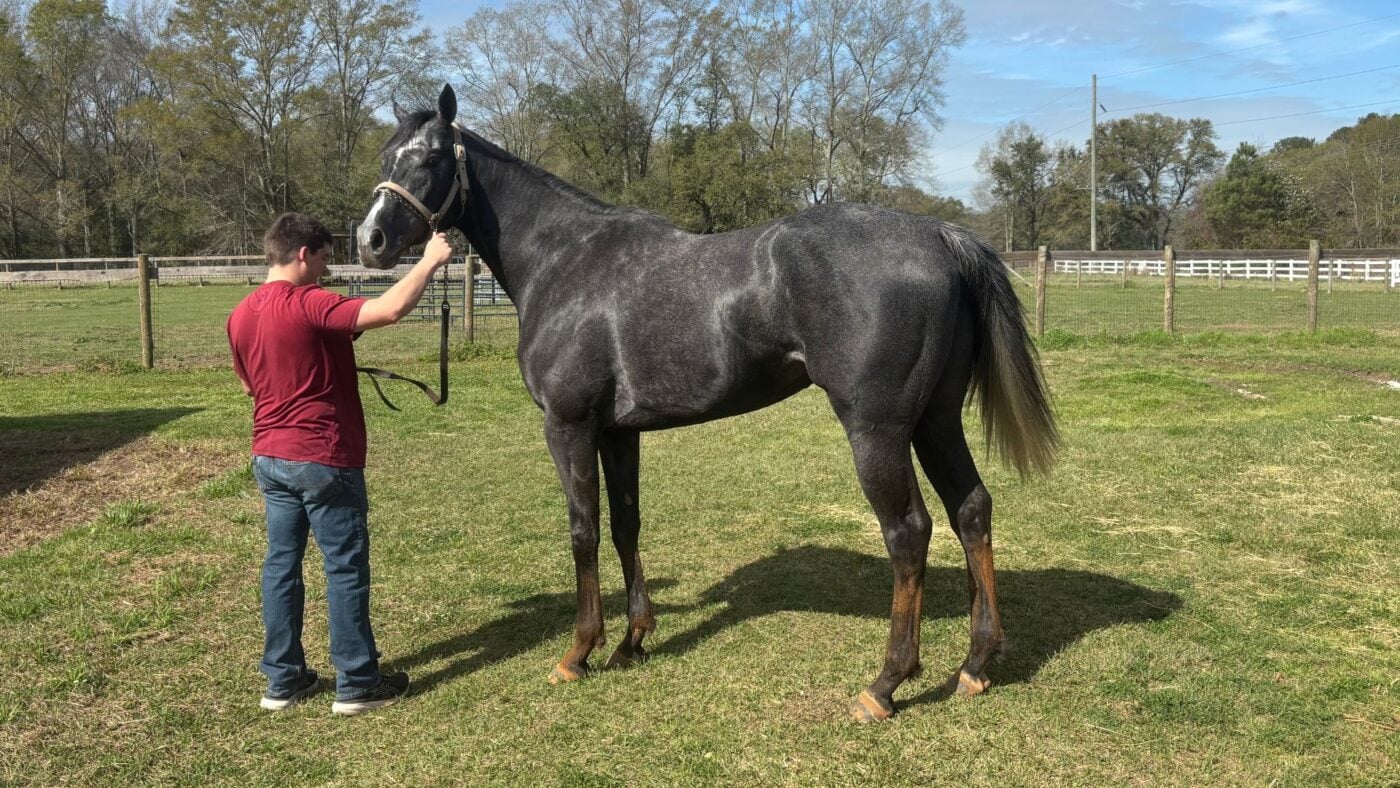
The trade-off is permanent: a gelding has no breeding value, so his post-racing worth depends on soundness, temperament, and what kind of second career he can have. For owners and trainers, the main advantage is straightforward — a gelding usually gives you fewer distractions and a more manageable horse day to day. Some of the most durable racehorses in history were geldings: John Henry raced until age nine; Funny Cide won the Kentucky Derby and Preakness; Lava Man held multiple track records.
Colts and Stallions — The Performance Ceiling
Colts and stallions hold most major speed records because the physical attributes that favor speed — muscle mass, cardiovascular capacity, testosterone-driven competitive drive — are present in full. The greatest racehorses in history are predominantly male: Secretariat, Man o’ War, Frankel, with Winx among the notable exceptions. At the elite level, the physical advantages males carry on average and the tendency of the strongest males to run in open company together mean they dominate the record books — though individual exceptions are well documented.

Intact males often require more experienced handling, and stallions can be more distracting in the barn and paddock. When a colt keeps racing into older age, it usually means one of two things: either he is still competitive, or his breeding value has not been high enough to justify retirement to stud. Either way, the horse should still be evaluated on current form, soundness, and class placement — not on the assumption that stallion status alone makes him better.
Greatest Female Racehorses That Beat the Males
The best female racehorses in history are a direct counterargument to any blanket claim about male superiority. These horses competed against and beat the best males of their generation — not as exceptions that prove the rule, but as evidence that the performance ceiling for female racehorses is not fundamentally lower.

| Horse | Record | Signature performance against males |
|---|---|---|
| Zenyatta | 19 wins from 20 starts | Won the 2009 Breeders’ Cup Classic in a come-from-last performance against the top male horses in North America — one of the most replayed races of the modern era |
| Winx | 33 wins from 43 starts | Set a world record of 25 consecutive Group 1 victories; dominated Australian and international racing against all competition for four seasons; see our article on the world’s fastest racehorses |
| Rachel Alexandra | 18 wins from 21 starts | Won the 2009 Preakness Stakes against males; named Horse of the Year — the first filly to win that honor since Lady’s Secret in 1986, a 23-year gap; full history in our guide to great female racehorses |
| Regret | 9 wins from 11 starts | First filly to win the Kentucky Derby (1915); see our Triple Crown history guide for more on Classic race records |
| Ruffian | 10 wins from 10 starts before injury | Undefeated in 10 starts, considered one of the fastest horses ever timed; broke down in the 1975 match race against Foolish Pleasure — a race that ended careers while beginning a lasting debate about whether she was faster than the males of her era |

Ownership Differences — What Gender Means in Practice
For people who own or are considering owning racehorses, gender affects daily management, competitive placement, and long-term value in ways that go beyond the speed comparison. After 30 years owning racehorses on the Louisiana circuit, the gender question that matters most isn’t which is faster — it’s what each gender type means for how you manage the horse, where you can run it, and what it’s worth when its racing career ends.

What gender means for racehorse owners:
- Mares and fillies — access to restricted conditions and the sex allowance create more placement flexibility; broodmare value at retirement adds a financial dimension geldings don’t have; estrous management adds complexity and cost but is well-understood and manageable with the right trainer
- Geldings — generally the most manageable horses in a claiming barn; consistent temperament, easiest to place in open company, no hormonal distractions; the deep pool of sound claiming geldings at Louisiana tracks makes them accessible and evaluable; see our complete guide to buying a racehorse
- Colts and stallions — higher management demands and a breeding premium priced into purchase that most claiming-level horses never realize; evaluate them on race record and soundness, not theoretical stud value; understand pedigree and bloodlines before paying a colt premium

FAQs: Male vs Female Racehorses
Are male racehorses faster than female racehorses?
On average, yes — males hold most major speed records and are more frequently competitive at the highest levels of open company racing. But research published in the FASEB Journal found no significant sex-based difference in elite Thoroughbred performance when controlling for conditioning and genetics. Individual ability, training, and class level are stronger predictors of racing success than gender alone.
Has a female horse ever won the Kentucky Derby?
Yes — three fillies have won the Kentucky Derby. Regret won in 1915, becoming the first female winner. Genuine Risk won in 1980. Winning Colors won in 1988. No filly has won since, but the historical record demonstrates that female horses are capable of winning America’s most prestigious race against male competition.
What is the sex allowance in horse racing?
The sex allowance is a weight reduction given to fillies and mares when they compete against males in open races. In most U.S. jurisdictions, the standard allowance is 3 to 5 pounds depending on race conditions. The allowance exists because females typically carry less muscle mass than males of comparable age — the weight reduction compensates for the average physical difference and helps level the competitive field.
Why do colts sell for more than fillies at the sales?
Colts carry a premium because of stallion potential. An elite colt with a strong race record and a fashionable pedigree can generate substantial breeding income over a decade or more. That upside is priced into the purchase price at the sales. Fillies have broodmare value at retirement, but the earning ceiling for a commercial stallion is typically much higher than for a broodmare.
How does a mare’s estrous cycle affect racing performance?
Some mares become more difficult to train and handle when they come into heat, which occurs roughly every 21 days during the spring and summer breeding season. The effect varies significantly between individuals — some mares show almost no behavioral change, others are more reactive. Hormone therapy (commonly Regu-Mate) is widely used at the track to suppress the cycle during the racing season and is generally effective.
What determines a racehorse’s speed beyond gender?
The main factors are genetics and breeding, conditioning and training quality, race conditions (distance, surface, class level), jockey strategy, and individual temperament. Gender influences average physical attributes but is one variable among many. A well-conditioned mare at the right class level with the right conditions will outperform a poorly conditioned colt at the same class level.
Are geldings faster than mares?
Not inherently — gelding removes testosterone-driven behavioral issues but does not reduce a horse’s speed or cardiovascular capacity. A gelded horse retains the same physical attributes as an intact male of comparable ability. The competitive difference between a gelding and a mare of similar class is primarily in race conditions available (mares can enter sex-restricted races, geldings cannot) and management demands, not in raw speed.
Key Takeaways: Male vs Female Racehorses
- Males hold most open-company speed records on average, but the gap narrows at the elite level — research shows no significant sex-based difference in elite Thoroughbred performance when controlling for conditioning and genetics
- Racing rules acknowledge the difference — sex allowances and sex-restricted conditions give mares and fillies more placement options
- Gelding usually changes management more than speed — castration removes testosterone-driven behavior without reducing athletic potential
- Mares are not a problem category — some are affected by the estrous cycle, while others show little change; veterinary-guided management is available when needed
- The best female racehorses can beat males at the top level — Zenyatta, Winx, Rachel Alexandra, and Regret demonstrate that the ceiling is not determined by sex
- For owners, gender matters most for placement, handling, and retirement value — class and soundness are stronger predictors of performance at the claiming level than sex
About Miles Henry
Racehorse Owner & Author | 30+ Years in Thoroughbred Racing
Miles Henry (legal name: William Bradley) is a professional horseman based in Folsom, Louisiana. He holds Louisiana Racing License #67012 and has spent over three decades managing Thoroughbreds at premier tracks including Fair Grounds, Delta Downs, and Evangeline Downs.
Expertise & Hands-On Experience: Beyond the track, Miles has decades of experience in specialized equine care, covering everything from hoof health and nutrition to training protocols for Quarter Horses, Friesians, and Paints. Every guide on Horse Racing Sense is rooted in this “boots-on-the-ground” perspective.
30 of their last 90 starts
Equibase Profile.

Connect with Miles: