
Last updated: September 18, 2026
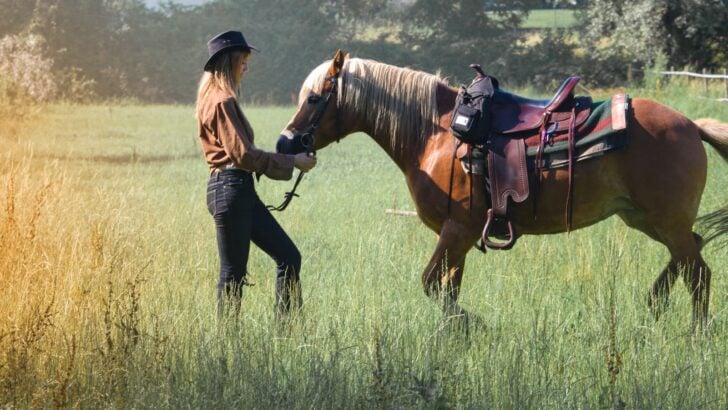
Bringing a new horse home is exciting, but it also raises an important question: what needs to be ready before he arrives, and what should you actually do in that first week? A little preparation makes those first few days easier for both of you, and it’s the difference between catching a problem early and missing it entirely.
Before a horse arrives at its new home, prepare a safe stall or paddock away from resident horses, confirm the health documents your state or facility requires, and have clean water and familiar hay ready. Keep him separate from your other horses at first, keep his feed unchanged for the first several days, and introduce turnout, herd contact, and riding slowly. Watch his appetite, manure, temperature, attitude, and soundness closely during the first week.
I’ve brought horses home from sales, claiming races, and other barns over the years, and an organized first week sets the tone for everything that follows. Below is the routine I use.
Table of Contents
Before the Horse Arrives
Before bringing a new horse home, I make sure his stall or paddock, feed, water, paperwork, and basic supplies are ready. He’s tired, he’s in unfamiliar surroundings, and I don’t yet know what normal looks like for him here – so I don’t assume he’ll act exactly as he did at his previous barn.
- A safe stall or paddock set up away from resident horses
- The health documents your state, destination, or facility requires – typically a current negative EIA/Coggins test and, when required, a Certificate of Veterinary Inspection
- Familiar hay and feed on hand, so the trailer ride isn’t the only change he’s dealing with
- Clean water, a thermometer, a simple arrival log, and your veterinarian’s contact information
- Insurance confirmed and active before the trailer leaves, if you plan to insure your horse
On that last point: we once bought a promising yearling at a sale and secured coverage immediately. On the drive home, we were involved in a serious accident, and the horse sustained a life-threatening injury. Because the policy was already active, we were protected. I don’t treat insurance as something to arrange later anymore.
If you’re hauling the horse any real distance yourself, see my guide to preparing a horse for a long trip. And before he arrives, walk your stall and turnout area as if you’re bringing home a horse that will test every weak spot – a new horse may pace, kick, rub, or spook before he understands your routine. My guide to safe horse fencing covers what to look for.
First 24 Hours: Unload, Observe, Let Him Settle
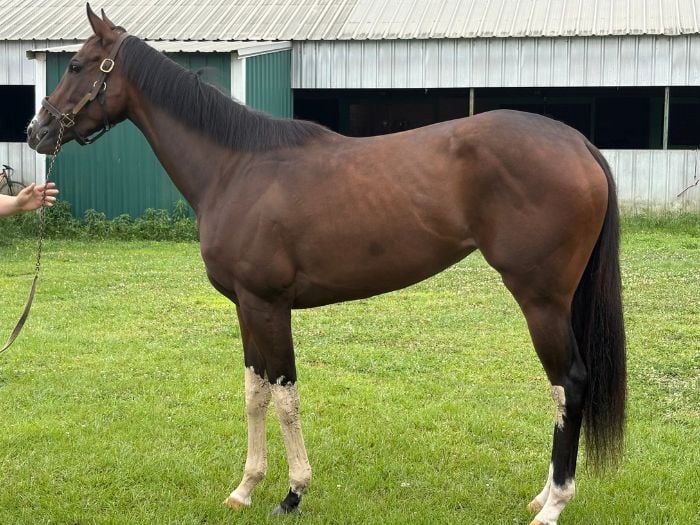
We don’t just put a new horse in a stall and walk away. Once he’s safely unloaded, I give him time to look around and settle, then watch how he moves, breathes, drinks, passes manure, and reacts to ordinary handling. I’m comparing what I see with what I was told about him and beginning to learn what’s normal for that individual horse in his new setting.
Before he settles in, I do a thorough physical check – more than grooming. Run your hands over his body for heat or swelling, and don’t skip the less obvious areas: ears, under the jaw, sheath or udder, under the tail. I’m not trying to diagnose the horse myself – I’m establishing a baseline and giving the veterinarian, farrier, or seller better information if a question comes up later.
We once noticed an abnormal amount of irritation and debris in a new arrival’s ears during that first check. That gave us a reason to call the veterinarian, follow the treatment plan, and keep his equipment separate while we sorted out what we were dealing with. Catching something unusual early is the point of that first inspection.
Don’t rush turnout with resident horses, full herd contact, hard work, bathing, clipping, or riding on day one. Let him eat, drink, move normally, and settle before you ask for more.
Keep the New Horse Separate at First
Paperwork matters, but it can’t tell you whether a horse was exposed to illness shortly before travel or is starting to develop a problem after a sale, show, or busy boarding barn. I keep a new arrival separate from resident horses until I’ve had time to watch his temperature, appetite, manure, attitude, and respiratory signs.
The right isolation period depends on where the horse came from, his recent exposure risk, local disease activity, and whether your farm can truly keep horses apart. Colorado State University’s animal biosecurity program recommends roughly 7 to 30 days, based on perceived risk, with temperature checks every 12 hours and no direct or nose-to-nose contact with resident horses.
- Separate space: No nose-to-nose contact, no shared water or feed containers
- Dedicated equipment: Buckets, feed tubs, grooming tools, and halters assigned to the isolation area
- Recorded temperature: Once he’s cooled out after travel, then about every 12 hours
- Handling order: Feed, water, and turn out resident horses first, then the isolated horse last – wash hands and change footwear before returning to the main barn
On our farm, two weeks is a practical starting point for a healthy, low-risk arrival, but I don’t treat 14 days as a universal rule—a horse from a sale, racetrack, or uncertain history may need more time. If the horse develops skin irritation, hair loss, fever, coughing, or other changes during isolation, contact your veterinarian rather than guessing. If the problem appears consistent with dermatophilosis, see my guide to rain rot for background and care considerations.
Make Changes Slowly
Whenever possible, keep a new horse on the same hay and concentrate at first. A trailer ride, a new stall, unfamiliar water, and a different routine are enough changes at once—if you also change his forage and grain on day one, it’s much harder to tell what is behind poor appetite or loose manure.
When you do need to change feed, make the switch gradually, and get your veterinarian or an equine nutritionist involved for a hard keeper, a senior, or any horse with a history of colic, ulcers, laminitis, or metabolic trouble. For the actual transition schedule I use, see my feeding guide. Treat a move onto richer pasture the same way – start with controlled exposure and increase grazing time gradually, especially for easy keepers.
Some horses hesitate over unfamiliar water after a move. Keep plain, clean water available at all times, and watch the whole horse—not just the bucket. A horse that is drinking much less than normal, eating poorly, producing less manure, or showing any sign of discomfort deserves prompt attention. Call your veterinarian if those changes persist, occur together, or come with colic signs, fever, dullness, coughing, nasal discharge, or difficult breathing.
Introduce Turnout, Herd Mates, and Riding Gradually
Let horses see and smell each other through a safe, well-spaced fence before any direct contact. Then introduce the newcomer in a turnout area large enough for horses to move away from each other, without tight corners or narrow gates. Some squealing and posturing is normal herd behavior; repeated chasing, trapping, hard kicking, or fresh injuries mean the arrangement needs to change.
My grandson wanted to ride a new horse within days of bringing him home. I told him we weren’t working from a calendar – we were watching the horse. If he’s eating, drinking, moving normally, and settling into his routine, we can begin quiet handling. If he’s tense or reactive, we give him more time.
Start with quiet handling and simple groundwork rather than climbing straight in the saddle. An unfamiliar, tense, or fresh horse can be dangerous to lunge – if you’re unsure of the horse’s history, fitness, or reaction to a new place, get help from a qualified trainer. My guide to horse riding safety for kids covers how to involve younger riders safely during this stage.
Call Your Vet If You See These Signs
Contact your veterinarian promptly for:
- Fever, coughing, nasal discharge, difficult breathing, or swollen lymph nodes
- Colic signs, diarrhea, reduced manure, loss of appetite, or poor water intake
- Lameness, swelling, wounds, or a horse that’s clearly sore
- Marked lethargy, neurologic signs, or a sudden behavior change
- Known exposure to a contagious disease
This article reflects practical horse-management experience and is intended for general educational purposes. Contact your veterinarian promptly for fever, colic signs, lameness, dehydration, suspected disease exposure, or any sudden change in your horse’s condition.
FAQs
How long should a new horse be isolated?
For routine new-horse management, this is usually called isolation. Keep a new horse separate from resident horses for a period based on its recent travel, exposure history, local disease concerns, and your veterinarian’s advice. Many farms use about two weeks for a healthy, low-risk horse, while higher-risk situations may call for longer.
What should I do as soon as a new horse arrives home?
Let him settle, offer familiar hay and clean water, and watch how he moves, breathes, drinks, and passes manure. Do a thorough physical check for heat, swelling, or anything unusual, and start a simple log of temperature and behavior. Avoid turnout with resident horses, hard work, or riding until he’s had time to settle.
How soon can I introduce a new horse to the herd?
After the appropriate isolation period, let horses become familiar through a safe fence first, then introduce the newcomer in a turnout area large enough for horses to move away from each other. Some squealing is normal; repeated chasing, trapping, or injuries mean the arrangement needs to change.
Should I ride my horse the first day I bring him home?
Not usually on the first day. Give the horse time to eat, drink, move normally, and show signs of settling before asking for work. Start with quiet handling and simple groundwork rather than a fixed schedule – let the horse’s behavior, soundness, and safety guide the pace.
More From Our Barn
About Miles Henry
Racehorse Owner & Author | 30+ Years in Thoroughbred Racing
Miles Henry (legal name: William Bradley) is a professional horseman based in Folsom, Louisiana. He holds Louisiana Racing License #67012 and has spent over three decades managing Thoroughbreds at premier tracks including Fair Grounds, Delta Downs, and Evangeline Downs.
Expertise & Hands-On Experience: Beyond the track, Miles has decades of experience in specialized equine care, covering everything from hoof health and nutrition to training protocols for Quarter Horses, Friesians, and Paints. Every guide on Horse Racing Sense is rooted in this “boots-on-the-ground” perspective.
30 of their last 90 starts
Equibase Profile.

Connect with Miles: