
Last updated: September 19, 2026
Finding the right horse is exciting, but this is also where many buyers get in trouble. The horse may look great, ride well, and come with a story you want to believe – but you don’t really know what you’re buying until you’ve had a proper pre-purchase exam.
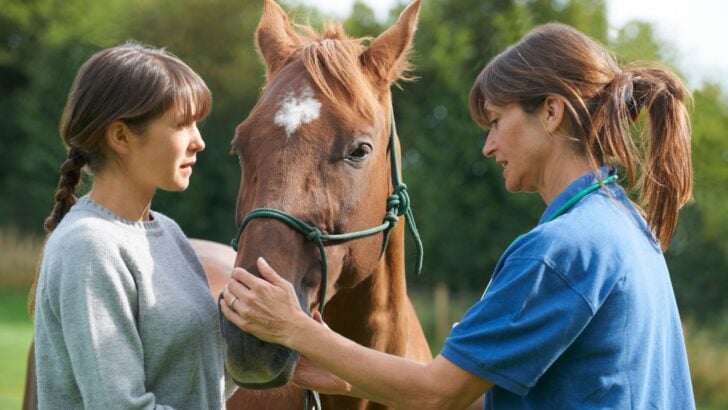
What is a horse pre-purchase exam? A pre-purchase exam, often called a PPE or vet check, is an examination performed for the prospective buyer. Your veterinarian documents the horse’s health and soundness findings on that day, then helps you understand what those findings could mean for your intended use. A basic exam usually includes a physical examination and a movement evaluation; flexion tests, radiographs, bloodwork, endoscopy, ultrasound, and other diagnostics are added when the horse, its history, your goals, or the initial findings justify them. A PPE can’t guarantee future soundness or performance, but it gives you much better information before you buy.
This guide covers what to prepare before the exam, what usually happens during it, which findings deserve a closer look, and how to use the results to make a practical buying decision.
I’ve bought horses where the PPE confirmed what I hoped to see, and I’ve bought horses where the exam uncovered questions I needed to answer before moving forward. The goal of this guide isn’t to scare you away from an imperfect horse – it’s to help you understand what you’re accepting before you sign the papers.
Table of Contents
What a PPE Can – and Can’t – Tell You
Your vet isn’t simply deciding whether the horse looks sound that day. The exam is designed to document the horse’s current health and soundness findings, identify concerns that may affect the job you’re buying the horse for, and help you understand what further testing might be worthwhile. A PPE can’t uncover every future problem or guarantee continued soundness. It’s a snapshot, not a warranty, and the final decision about whether the risk fits your plans is yours to make.

Before the PPE: Set Your Goal and Budget
The best PPE starts before your veterinarian ever arrives. The more information you gather beforehand, the more useful the exam becomes.
- Define the job. Tell your vet whether you want a trail horse, children’s horse, broodmare, barrel prospect, hunter, racehorse, or another type of partner. “Sound enough” means something different for each job.
- Set a diagnostic budget. Decide what you can spend on the PPE and what findings would make you add radiographs, ultrasound, endoscopy, bloodwork, or another test.
- Choose a veterinarian who represents you. Ask whether the vet has previously treated the horse or has a professional relationship with the seller. That information helps you decide whether to use that vet, involve a second veterinarian, or choose someone else.
- Ask for records early. Request available veterinary, farrier, dental, vaccination, deworming, competition, and treatment history. Come with questions about any gaps or patterns.
- Attend when you can. If the veterinarian and seller permit it, attending the exam lets you watch the horse move and ask questions while the details are fresh.
- Know the horse’s recent routine. Ask about turnout, feed, medication, supplements, shoeing, workload, injections, and when the horse was last ridden or hauled. Details that seem minor can matter when interpreting what you see that day.
What I’ve learned: One thing I always tell buyers is don’t let excitement rush the process. The nicest-looking horse in the barn still needs the same questions asked as every other horse.
Download a Printable PPE Buyer Checklist
Want a practical page to bring to the appointment? This printable checklist gives you space to note the horse’s intended use, disclosed history, questions for the veterinarian, recommended diagnostics, likely maintenance, and your own deal-breakers.
Download a Printable PPE Buyer Checklist (PDF)
Use it to organize your questions and compare the findings with your goals. It’s a buyer’s note sheet, not a substitute for your veterinarian’s written PPE report.

What Usually Happens During a Pre-Purchase Exam
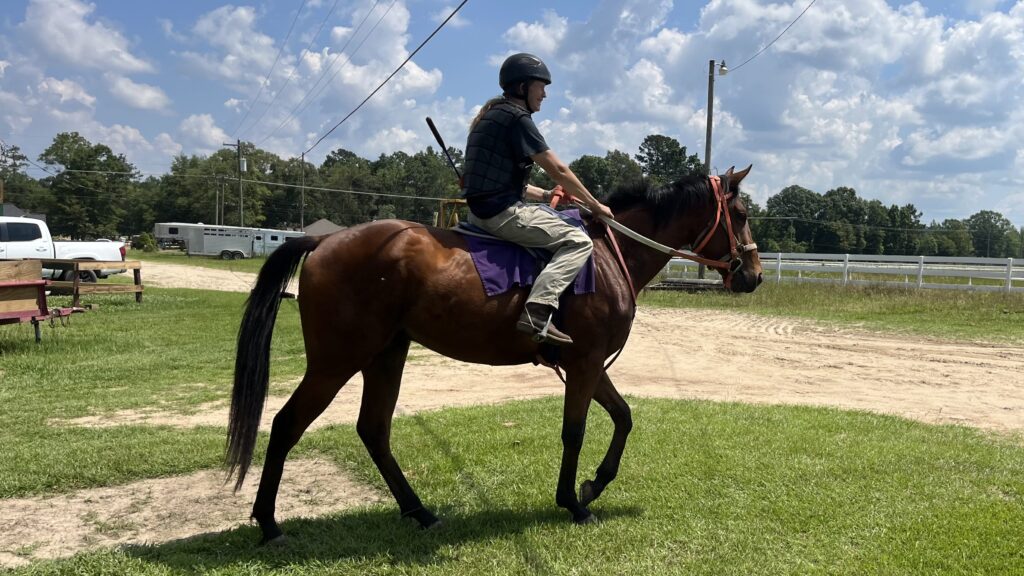
The exact scope should be agreed on before the appointment. A basic PPE often includes identification of the horse, a review of available history, a general physical examination, and a soundness evaluation at the walk and trot. Your vet may watch the horse on a hard surface, on a circle, and sometimes under saddle or doing the work you intend for it. Flexion tests are commonly included when appropriate.
From there, you and your vet decide whether added diagnostics are worth the expense. Common options include radiographs, ultrasound, endoscopy, bloodwork or drug testing, reproductive testing, and more specialized imaging. The right level of testing depends on the horse’s intended job, history, purchase price, competition level, initial findings, and your tolerance for uncertainty. There isn’t one fixed package that fits every buyer or every horse.
Cost follows the same logic – it varies widely by region, the veterinarian, travel, and the diagnostics you add. Who pays, and what a fair budget looks like for your situation, is covered in the FAQ below and in our pre-purchase exam cost guide.
My approach: I decide before the appointment what job I expect the horse to do and what level of maintenance I can realistically afford. That helps me have a useful conversation with the vet instead of adding tests blindly, or declining a test that could have changed my decision.
PPE Findings That May Change Your Decision
Not every finding is a deal-breaker, and few horses come back with a completely clean report. These are the areas that most affect a buyer’s decision – what they can mean, and what’s worth asking about.
Soundness, Lameness, and Foot Concerns
Uneven strides, reluctance to turn, a short stride, or sensitivity to hoof testers can point to a problem somewhere in the foot or limb. The cause may be relatively manageable, or it may warrant more diagnostics before you commit. Let your vet identify whether the concern involves the heel region, coffin joint, soft tissues, hock, stifle, back, neck, or somewhere else – one gait observation alone isn’t enough to identify the cause.
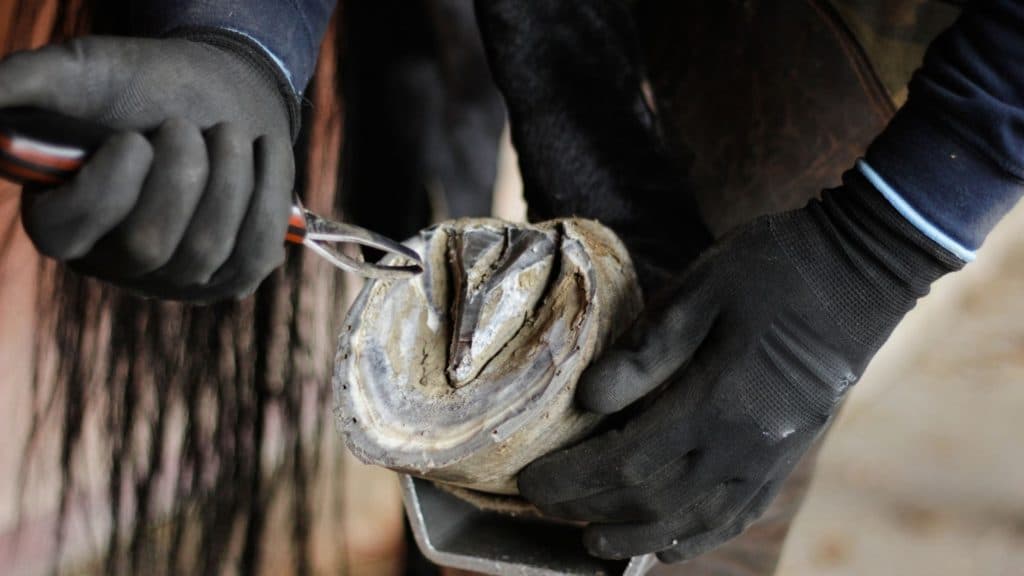
Long toes, low or underrun heels, uneven wear, poor hoof-pastern alignment, or a history of specialty shoeing deserve a closer look too. None of those features, by themselves, tells you whether a horse will stay sound or suit the job you have in mind – but they can affect how the horse loads the limb and may mean more involved farriery or monitoring over time.
If your vet identifies a lameness or meaningful asymmetry, they may recommend pausing to discuss what the finding means and whether additional diagnostics are worthwhile. Depending on where the concern appears to be, that workup could include radiographs, ultrasound, diagnostic analgesia (often called nerve blocks), or more advanced imaging.
Ask your vet:
- What have you found so far, and how significant is it for this horse’s intended job?
- Would more diagnostics change my decision, or just give us more detail?
- What are the likely management needs and unknowns if I proceed?
How I look at X-rays: I don’t ask whether an image looks perfect. I ask whether the finding matches the horse’s age, workload, history, and the job I expect him to do. A young prospect and a retired trail horse don’t carry the same risk profile for the same finding.
History of Injections, Surgery, or Specialty Shoeing
A history of joint injections, surgery, corrective shoeing, or regular medication deserves an honest conversation. It may reflect a manageable maintenance plan, a previous injury, the demands of the horse’s former job, or a condition likely to require ongoing expense. The records and current exam matter more than the treatment name alone. For a closer look at what injections can mean in a horse’s history, see our guide to horse joint injections.
I’ve learned not to automatically walk away from a horse because it has a maintenance history. Some good horses require management. The real question is whether I’m comfortable owning that management responsibility.
Ask your vet:
- Do treatment records align with today’s findings?
- What ongoing care might this horse reasonably need?
Behavior and Performance
Resistance under saddle, head tossing, reluctance to go forward, girthiness, bucking, or a noticeable change in attitude can have many causes, including tack fit, training, management, a rider-horse mismatch, and pain. Mention anything you’ve seen to your vet, especially if it’s repeatable or tied to a specific type of work. Stable vices like cribbing should be disclosed too, though a vice on its own isn’t a pain diagnosis – it carries its own welfare and management considerations worth understanding separately.
I’ve seen a horse’s attitude under saddle turn out to have a physical component, including foot pain or back discomfort. I’ve also seen behavior improve once tack, conditioning, turnout, or training changed. If something feels consistently off, don’t write it off as “just behavior” – describe exactly what you’re seeing and ask your vet whether it changes the scope of the exam.
Respiratory Concerns for Performance Horses
A cough or abnormal breathing pattern isn’t something I’d ignore, especially in a performance horse. It doesn’t automatically mean the horse has a serious problem, but it does mean I’d want my vet to help me understand what I’m seeing before I buy. For a horse headed into demanding sport or racing, that may mean upper-airway endoscopy or other respiratory testing – ask what the test can and can’t tell you for that particular horse. See our guide to EIPH and nosebleeds in horses for one condition that testing can help evaluate.
When I bought my yearling, I chose to have his airway evaluated because I expected him to have real athletic potential. It gave me more information about his upper airway at that time and helped me decide how comfortable I was moving forward – it wasn’t a guarantee that he’d never develop a respiratory issue later.
Ask your vet:
- Were any abnormal lung sounds detected?
- Would you recommend airway scoping for this horse and its intended job?
Breeding Considerations
If you’re buying a mare or stallion primarily for breeding, ask for a reproductive exam tailored to that horse and your plans. The right workup may include a reproductive-history review, physical exam, ultrasound, laboratory testing, breeding-soundness evaluation, or other tests your vet recommends.

Other Areas to Discuss During a PPE
Depending on the horse’s history, intended use, and findings during the exam, your vet may also discuss these areas:
- Eyes: Cataracts, prior or active recurrent uveitis, and other eye findings can affect vision, comfort, and safety. Ask your vet what they see on exam day, whether there’s evidence of past disease, and what uncertainty or future monitoring the finding may involve.
- Heart: Murmurs or irregular rhythms can matter more for performance horses. Ask whether a finding could affect the horse’s workload or fitness.
- Dental health: Sharp points, missing teeth, or uneven wear can cause pain or weight loss. See our guide to floating teeth and equine dental care.
- Digestive health: Low body condition, recurrent colic, poor appetite, or chronic loose manure should be discussed before you buy. These signs don’t diagnose ulcers or any other specific condition on their own, but they may affect the scope of the exam and the uncertainty you’re willing to accept.
- Neurologic signs: Incoordination, weakness, toe dragging, or abnormal responses during a neurologic exam can be serious safety concerns. Several conditions can cause these signs, including EPM, so a horse with suspected neurologic deficits needs a thorough veterinary assessment before you decide whether the risk is acceptable.
- Skin: Lumps, melanomas, or sarcoids may need monitoring or treatment and can affect future options, including resale. See our guide to common horse skin conditions.

How to Use the Results
One mistake buyers make is treating a PPE as a pass-or-fail exam. It isn’t. Plenty of good horses have minor findings, and some horses with a clean exam can still develop problems later. The question isn’t “is this horse perfect?” – few are. The real question is whether the issues your vet finds fit your goals, budget, and plans for the horse.
Don’t rush or skip a useful diagnostic simply to save money at the front end. At the same time, don’t order every possible test without first asking whether the result would change your decision. Be straightforward with the seller, take time to review the report, and be willing to step back if the findings don’t fit the horse you need or the risk you can accept. See our guide to buying your first horse to make sure you’re prepared for long-term care, not just the purchase.
Questions to Ask When a PPE Finds Something
| Finding or History | Why It Matters | Useful Question for Your Vet |
|---|---|---|
| Uneven movement, a short stride, or a response after flexion testing | May warrant more workup, depending on the severity, the full examination, and the intended use | How does this finding affect the job I’m buying the horse for? |
| Past injections, surgery, or specialty shoeing | May signal expected maintenance, a prior injury, or a manageable history | What ongoing care might this horse reasonably need? |
| Radiographic change | An imaging finding may or may not be clinically meaningful | Does this match the physical exam and how the horse moves? |
| Cough, respiratory noise, or slow recovery | May matter greatly for a high-performance prospect | Is additional respiratory testing likely to change my decision? |
| Eye, heart, or neurologic finding | Can affect safety and the horse’s usable career | What are the immediate safety concerns and long-term unknowns? |
| Recurrent colic, poor condition, skin masses, or reproductive concern | Could add management, cost, or diagnostic uncertainty | What should I understand before I accept this risk? |
Before You Buy: PPE Checklist
- Define your riding or breeding goals.
- Hire an independent vet not affiliated with the seller.
- Agree on the scope. Discuss the basic exam and movement evaluation with your vet, then decide in advance when you’d add flexion tests, radiographs, bloodwork, ultrasound, endoscopy, or other diagnostics.
- Watch the horse move when practical. Ask your vet what movement evaluation is appropriate for the horse and the available facilities. Depending on the situation, that may include in-hand observation on a firm surface, circles, flexion tests, ridden work, or discipline-specific evaluation.
- Review the horse’s veterinary, farrier, and training records for patterns.
- Discuss the findings with your vet. The question isn’t whether the horse is perfect – it’s whether the issues fit your goals, budget, and plans.
- Consider negotiating a trial period. When evaluating barrel horses, I’ve leased them for a month before committing to buy – it’s given me time to confirm suitability and avoid costly surprises.
The mistake I see buyers make – and how I avoid it: I’ve passed on horses I really liked because the maintenance history didn’t match what I wanted to take on. Walking away from the wrong horse is sometimes the best buying decision you can make.
FAQ
Who pays for a horse pre-purchase exam?
Usually the buyer pays, since the veterinarian is working on the buyer’s behalf. Sellers may provide records or allow access to the horse, but the buyer generally chooses the veterinarian and covers the cost of the exam.
Can the seller be present during a pre-purchase exam?
Often, yes, but the veterinarian performing the PPE is working for the prospective buyer. The seller may need to provide history, records, handling, or access to the horse. Before the appointment, make sure everyone understands who authorized the exam, who’ll receive the report, and whether you can speak privately with the veterinarian about the findings.
Should I test the horse for drugs during a PPE?
That’s worth discussing with your veterinarian, particularly when the horse’s behavior, movement, treatment history, purchase price, or intended work raises concern. Your vet can explain what type of testing is available, what its limits are, and whether the results would change your decision.
Is a pre-purchase exam worth it for a lower-cost horse?
Yes. The purchase price is only one part of what a horse may cost you over time. A PPE can identify existing concerns, help you decide whether the horse fits your plans, and give you a better basis for deciding how much risk you’re willing to take on. See our pre-purchase exam cost guide for typical pricing.
Should I always get radiographs (X-rays) during a PPE?
Not necessarily. Radiographs can be especially useful for an athletic prospect, a horse with a relevant history, or a horse with a concerning exam finding, but the right views and timing depend on the horse and its intended job. Ask your veterinarian whether images could reasonably change your decision, the price you offer, or the management you’re prepared to take on.
What are the biggest reasons buyers walk away after a PPE?
Usually it’s not one single finding. It’s when the horse’s needs don’t match the buyer’s goals. A competitive rider may accept risks a casual trail rider shouldn’t, and a maintenance-heavy horse may not fit someone looking for a simple, low-cost partner.
Can I try a horse before committing to buy?
Sometimes, if the seller agrees and the terms are put in writing. A trial or lease period can help you assess behavior, soundness, rideability, and fit in your own program, but it doesn’t replace a PPE. I’ve done this with barrel horses and found it genuinely useful.
Can a horse pass a PPE and still have problems later?
Yes. A PPE is a snapshot of the horse’s condition on that day. It can identify existing concerns, but it can’t predict every future injury or health problem. That’s why matching the horse to your intended use is just as important as the exam itself.
What if the vet finds minor issues – should I still buy the horse?
That depends on your goals. Some issues are manageable with proper care; others carry more long-term risk. Discuss each finding with your vet and weigh it against your intended use, budget, and risk tolerance.
Thinking of buying a horse? Before you even call the vet, watch this five-minute video on catching red flags yourself.

A good PPE doesn’t hand you a simple yes-or-no answer. It gives you a clear picture of the horse on that day and helps you decide whether the likely risks, maintenance, and unknowns fit the horse you want to buy. If the findings raise questions, slow down, ask what additional testing would change your decision, and be willing to walk away from a horse that doesn’t fit your goals or budget.
If your vet identifies a concern, our guide to PPE findings that may justify walking away can help you sort out when to investigate further, negotiate, or move on.
Key Resources
- AAEP Pre-Purchase Examination Guidelines
- Merck Veterinary Manual: Prepurchase Examination of Horses
- AAEP Principles of Veterinary Medical Ethics: Equine Addendum
About Miles Henry
Racehorse Owner & Author | 30+ Years in Thoroughbred Racing
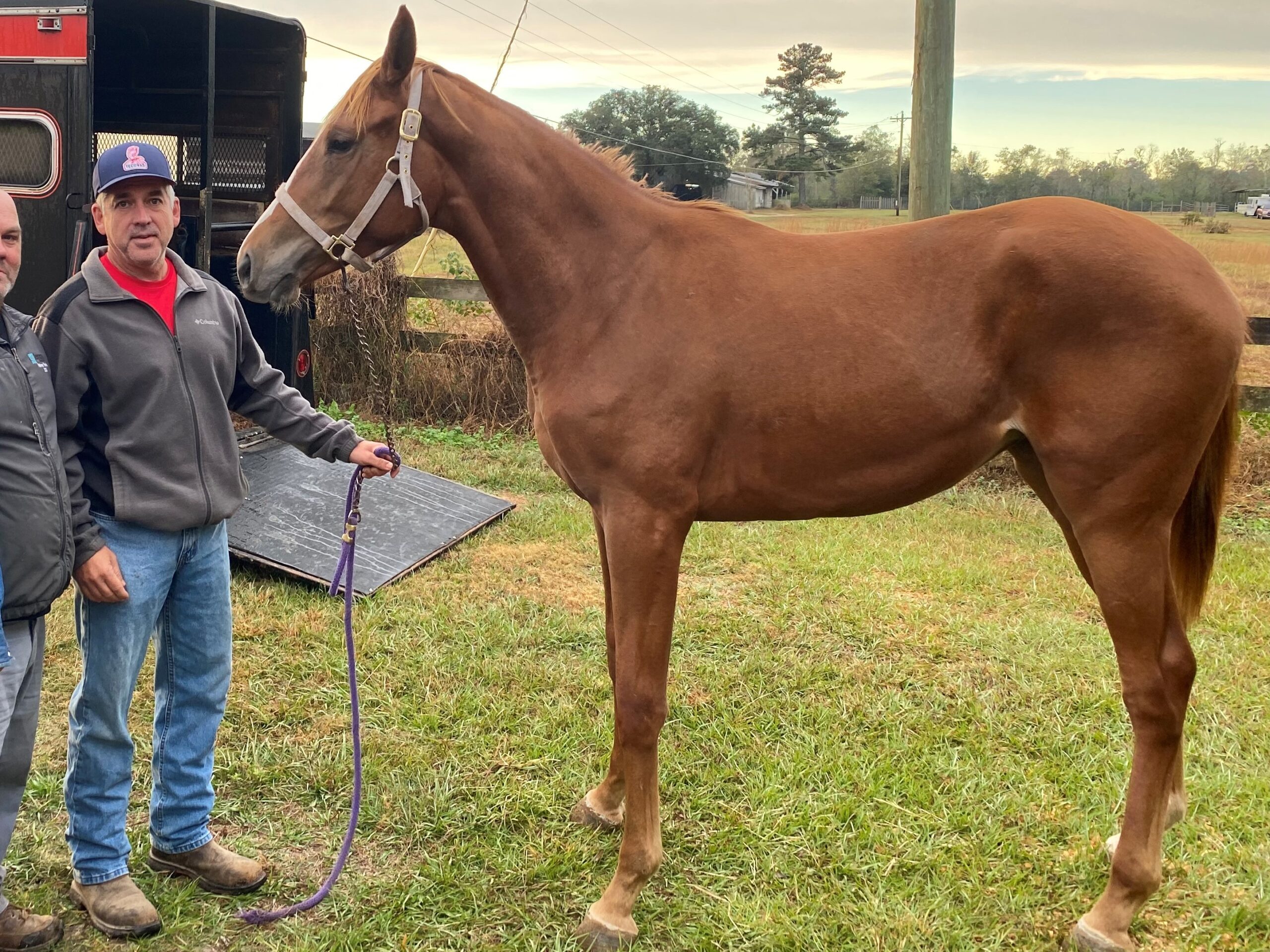
Miles Henry (legal name: William Bradley) is a professional horseman based in Folsom, Louisiana. He holds Louisiana Racing License #67012 and has spent over three decades managing Thoroughbreds at premier tracks including Fair Grounds, Delta Downs, and Evangeline Downs.
Expertise & Hands-On Experience: Beyond the track, Miles has decades of experience in specialized equine care, covering everything from hoof health and nutrition to training protocols for Quarter Horses, Friesians, and Paints. Every guide on Horse Racing Sense is rooted in this “boots-on-the-ground” perspective.
30 of their last 90 starts
Equibase Profile.

Connect with Miles: