
Published on: March 26, 2026
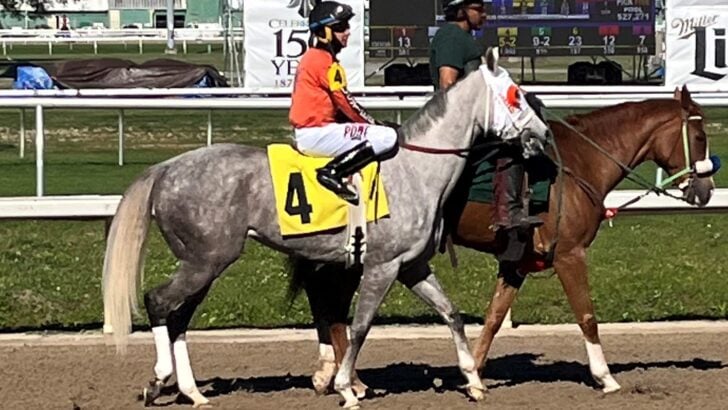
Racehorse earplugs are soft inserts that go in a horse’s ears to help keep them calm during racing. After I claimed Seamus’s Girl, trained by W. Bret Calhoun, a jockey pointed out something I hadn’t noticed: she was wearing earplugs, so deep I almost missed them. She wore them for a specific behavioral reason, and once I understood it, I saw the horse in a whole new way.
The lesson? Earplugs are invisible unless someone points them out, and they often solve very specific problems. This guide explains the different types trainers use, what problems they fix, how they compare to blinkers, and what you need to know when you see them in your barn.
I’m a licensed Louisiana racehorse owner (#67012) with horses at Fair Grounds, Evangeline Downs, and Delta Downs — over 30 years making equipment decisions at the barn. This article is part of our Racehorse Equipment Guide.
Table of Contents
Types of Racehorse Earplugs
| Type | Material | Noise Reduction | Common Use | Removable Mid-Race? |
|---|---|---|---|---|
| Loose plugs | Cotton, foam, or sheepskin | Moderate — muffles but doesn’t block | Standard Thoroughbred use; paddock through finish | No — stay in; may pop out if horse shakes head |
| Tied / pull-out plugs | Sheepskin or foam on a string | Moderate — same muffling as loose plugs | Standard in Standardbred harness racing; some Thoroughbreds (notably Baffert’s barn) | Yes — jockey or driver pulls string at a designated point mid-race |
| Ear hood with rubber cone inserts | Cloth hood with internal rubber cones | High — rubber cones seal better than loose plugs | Extremely reactive horses; more common in harness racing | Sometimes — cones may have pull strings; hood itself usually stays on |
| Ear bonnet (no inserts) | Knit or lycra fabric over the ears | Low — dampens rather than muffles | Mild sensitivity; fly protection; common in British and Irish racing | N/A — not a sealed insert; not the same as earplugs |
The most common type in American Thoroughbred racing is the simple loose plug — cotton or sheepskin, inserted before the horse leaves the barn, worn from paddock to finish. Some trainers, including Bob Baffert’s barn, use a tied version with a string connecting both plugs so the jockey can remove them at a specific moment. In harness racing, pull-out plugs are the norm and are often called live by announcers when the driver removes them in the stretch.

I don’t use these exact earplugs, but they look very similar to the ones I have in the barn.
When Trainers Use Earplugs — Behavioral Profiles
Earplugs don’t improve a horse the way fitness or class does. What they do is remove a specific auditory trigger that’s been costing the horse. The behavioral profile — what the horse is responding to and why — determines whether earplugs are the right tool and which type to use.
| Behavioral Profile | What You See | How Earplugs Help |
|---|---|---|
| Herd-instinct responder | Slows mid-race when horses approach from behind — “waits” for the pack rather than racing away from it | Muffles approaching hoofbeats; removes the auditory trigger for the herd-joining response; horse runs its own race |
| Crowd-reactive horse | Nervous, sweating, hard to rate pre-race; burns energy in post parade; arrives at gate mentally spent | Muffles crowd noise and loudspeakers; horse conserves energy through paddock and parade; arrives at gate calm and fresh |
| Gate-reactive horse | Tense, resistant, or difficult to load; agitated by gate sounds, adjacent horse movement, crew noise | Reduces sharpness of gate sounds; horse loads more calmly and breaks more cleanly |
| Big-event horse | Races well normally but regresses in high-crowd environments — Breeders’ Cup, Kentucky Derby, major Saturday cards | Reduces the elevated noise of the big occasion to something closer to a normal race-day experience |
Why Horses Are So Sensitive to Sound
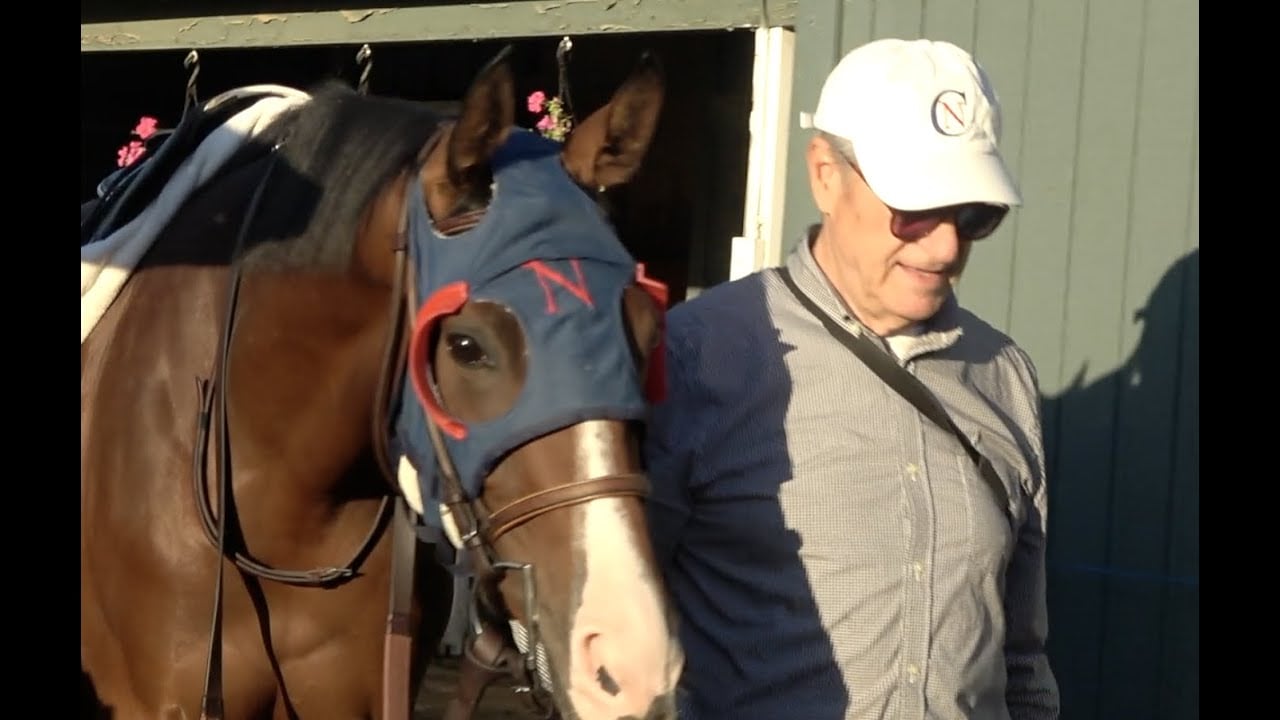
Horses can hear a wider range of frequencies than humans — including many higher-pitched sounds we can’t register — and can detect sounds from greater distances. Their ears rotate independently up to 180 degrees, letting a horse pinpoint the direction of a sound without moving its head. This is a prey-animal survival adaptation that becomes a liability on a racetrack, where the auditory environment is intense and unpredictable.
A horse in the paddock is processing crowd noise, loudspeakers, hoofbeats, metal sounds, and the concentrated energy of dozens of horses and handlers simultaneously. For horses with a strong herd instinct or a negative association with a specific sound, that environment costs energy and focus before the race even begins. Earplugs reduce the sharpness of that input — not by silencing it, but by softening the edge enough that the horse stops reacting to it and starts conserving energy for the race.
Earplugs vs Blinkers vs Shadow Roll
Earplugs are often discussed alongside blinkers, but they solve completely different problems. Blinkers manage what a horse sees; earplugs manage what it hears; a shadow roll manages what it sees at ground level. A horse can have problems with any one of these inputs, or all three simultaneously. Understanding which sense is causing the behavioral issue is what determines which tool — or which combination — is right.
| Equipment | Sense Managed | Behavioral Problem It Solves | Can Be Combined? |
|---|---|---|---|
| Blinkers | Vision — lateral and rear | Drifting toward other horses; losing focus in the stretch; reacting to crowd movement | Yes — commonly used with shadow rolls and earplugs |
| Shadow roll | Vision — downward | Shying at shadows, puddles, rail gaps, or track markings at ground level | Yes — commonly used with blinkers; can be used with earplugs |
| Earplugs | Hearing | Crowd anxiety; herd-response slowing; gate nervousness; whip-sound reactivity | Yes — addresses a different sense from visual equipment; can be layered |
| Pacifier hood | Hearing and general visual overload | Extreme pre-race anxiety; horse burning energy before the gate | Yes — used pre-race, removed at gate; separate from race equipment |
The practical point for owners: if your horse has both a visual distraction problem and a noise sensitivity, it may need both tools. Each one addresses a different input, and their effects don’t overlap. For more on how blinkers work and when trainers choose different types, see our guide on why racehorses wear blinkers and how trainers use them. For shadow rolls, see our article on what a racehorse shadow roll does.
The Pull-Out Earplug Strategy
The pull-out earplug lets trainers use noise reduction as a timed tool rather than a static one. The horse gets the calming benefit through the pre-race process and the early part of the race — when crowd noise, gate sounds, and initial acceleration create the most anxiety — and then the plugs are removed at a specific moment to give the horse a final, alert burst of energy for the stretch drive.
In Standardbred harness racing, this is standard practice. Drivers typically pull the plugs around the three-quarter pole when they want maximum effort in the final quarter. The announcement “pulls the earplugs” from the race caller signals exactly this moment — it’s one of the few cases where earplug use is publicly visible and real-time trackable. In Thoroughbred racing, the pull-out approach is used by some trainers — Baffert’s barn is the most prominent example — but it’s less standardized and not announced.
Famous Examples: American Pharoah, Zenyatta, and Others
American Pharoah arrived in Bob Baffert’s barn over-reactive and difficult. Before his first race at Del Mar, he overheated and ran poorly as the heavy favorite. Baffert made several changes, one of the most significant being sheepskin earplugs made by hand in the barn — pairs sewn together on a string for optional removal. The colt settled, won his next two starts, and dominated his Triple Crown preps. Baffert noted that without the plugs, a car driving past the barn caused the colt to tense immediately; with them in, he relaxed again right away.
Zenyatta wore cotton earplugs from early in her training — not just on race days. Trainer John Shirreffs noticed she was distracted by yelling around the barn and by the sound of a rider hitting a horse with a whip. The plugs went in and stayed in for virtually every public appearance throughout her career. Her famously calm, deliberate demeanor was partly temperament and partly consistent noise management.
Dortmund, Baffert’s stablemate to American Pharoah at the 2015 Kentucky Derby, wore string-tied plugs that jockey Martin Garcia would pull just before the start — because Dortmund was motivated by noise during a race rather than calmed by muffling it. Two horses on the same card, same trainer, completely different earplug protocols based on completely different behavioral needs.
What Owners Need to Know
This is the section most earplug guides skip — and it’s the one that matters most if you’re an owner. Here’s the practical reality of earplug use from an ownership perspective.
When you claim a horse, you receive the basic equipment documentation — but earplug use often doesn’t make it into the paperwork, as my experience with Seamus’s Girl demonstrated. The information lives with the trainer, the exercise riders, and the jockeys who work with that horse every day. If you’ve just claimed a horse and you want to know its full equipment picture, ask the people who were in the barn — not the ones who processed the claim paperwork.
| Situation | What to Do | Why It Matters |
|---|---|---|
| You’ve just claimed a horse | Ask the jockeys and exercise riders — not just the trainer — whether the horse uses any noise management equipment | Earplug use rarely appears in claim documentation; the people who handle the horse daily know what it wears and why |
| Your horse is anxious in the paddock or post parade | Watch what specifically triggers the anxiety — is it the crowd, the sounds, other horses, the gate? The trigger determines the tool. | Earplugs help noise-triggered anxiety; blinkers help visual distraction; using the wrong tool wastes a start and delays the real fix |
| Your horse slows mid-race when challenged from behind | Watch replays for the herd-instinct pattern — consistent pace moderation as horses come up from behind | This is the Seamus’s Girl pattern; earplugs that muffle approaching hoofbeats can address it specifically |
| Your horse is in earplugs and running flat in the stretch | Compare fractional times before and after earplug use; if the horse is calm but not firing late, consider a pull-out protocol | The calming effect can suppress competitive drive in the stretch; timed removal restores alertness when it matters most |
| You’re changing trainers with a horse already in earplugs | Document the earplug type, insertion depth, and timing protocol before the transfer | The new trainer needs to know this equipment detail; it won’t be in any official record they receive |
FAQs: Racehorse Earplugs
Do racehorses wear earplugs?
Yes. Earplugs are used in both Thoroughbred and Standardbred racing, though they’re more standardized and publicly visible in harness racing where pull-out plugs are common and sometimes called by track announcers. In Thoroughbred racing, trainers including Bob Baffert have used earplugs on American Pharoah, Abel Tasman, and other high-profile horses. The practice is more common than most fans realize — but because there’s no program notation, it’s largely invisible outside the barn.
Are racehorse earplugs listed in the program or past performances?
No. There is no standardized notation for earplugs in U.S. Thoroughbred racing programs, Equibase past performances, or the Daily Racing Form — no ‘E’ symbol, no declaration requirement, no historical record. This is fundamentally different from blinkers, which are declared and tracked. Everything you know about a horse’s earplug use comes from the barn, not the form.
What are racehorse earplugs made of?
Racehorse earplugs are made from cotton, foam, or sheepskin. Cotton and sheepskin are the most common in Thoroughbred racing — soft enough to be tolerated and effective at muffling without fully blocking sound. Some trainers make plugs by hand; Bob Baffert’s stable sews sheepskin plugs in pairs on a string for optional mid-race removal. Rubber cone inserts inside ear hoods provide more noise reduction for extremely reactive horses.
Why would a horse slow down when other horses come up behind it?
This is a herd-instinct response — the horse hears approaching hoofbeats and instinctively moderates its pace to let the horses catch up and form a group, as it would in a natural herd setting. On a racetrack, that means slowing down when challenged rather than racing away from the challenge. Earplugs that muffle the sound of approaching hoofbeats can reduce or eliminate this response, allowing the horse to run its own race rather than moderating pace for company.
What is the difference between earplugs and an ear bonnet?
Earplugs are inserts placed inside the ear canal that provide actual noise reduction. An ear bonnet (without inserts) is a knit or fabric covering over the outside of the ear that provides minimal sound dampening — more like a filter than a blocker. Ear bonnets are common in British and Irish racing and serve partly as fly protection. Ear hoods with rubber cone inserts inside them provide significantly more noise reduction than a simple bonnet and are closer to true earplugs.
What does it mean when a harness driver pulls the earplugs?
In Standardbred harness racing, many horses race with pull-out earplugs connected by a string. Drivers typically pull them around the three-quarter pole when they want the horse fully alert for the stretch drive. The plugs keep the horse calm and energy-efficient through the early race; removing them gives the horse a burst of sensory awareness that often triggers a stronger effort. Track announcers sometimes call this moment live — ‘pulls the plugs’ — as a signal that the driver is asking for maximum effort.
Did American Pharoah wear earplugs?
Yes. American Pharoah wore sheepskin earplugs throughout his career, made by hand in Bob Baffert’s stable. The change was made after his difficult early period when he was over-reactive. Without the plugs, a car driving past the barn caused the colt to tense immediately; with them in, he settled right away. The earplugs were part of several management changes that helped transform an ornery, unfocused colt into a Triple Crown winner.
Can earplugs hurt a horse’s performance?
Yes, if the calming effect suppresses competitive drive in the stretch. Some horses benefit from running the whole race muffled; others perform better when the plugs are removed at a specific point, restoring full sensory alertness for the final drive. A horse that consistently runs flat in the last furlong despite apparent fitness may be over-muffled. The pull-out protocol addresses this — calm through the parade and early race, full alertness when it counts.
Conclusion
Earplugs are one of the most underappreciated tools in a trainer’s kit — not because the concept is complicated, but because the problems they solve are harder to see than visual distraction. A horse drifting wide on the turn is obvious. A horse moderating its pace because it hears hoofbeats approaching from behind is not — until someone who knows the horse points it out.
The framework is straightforward: identify the specific auditory trigger, confirm the problem is noise rather than vision or temperament, choose the least invasive type that addresses it, and decide whether a pull-out protocol makes sense for that horse. For most horses, loose plugs worn throughout are the right starting point. For horses where the calming effect blunts the stretch drive, timed removal restores the competitive edge at the moment it matters.
For owners: the information about a horse’s earplug use lives at the barn. Ask the jockeys. Ask the exercise riders. The people who handle your horse every morning know things that will never appear in any official record — and knowing what your horse wears, and why, is part of knowing what you own.
For more on the full sensory-management toolkit in horse racing, see our guides on why racehorses wear blinkers, what a shadow roll does, and the complete racehorse equipment guide.
Sources
- Paulick Report — The six-dollar earplugs that brought us a Triple Crown: paulickreport.com
- Sports Illustrated — American Pharoah wore earplugs in Louisville: si.com
- Equibase — Race results and horse profiles: equibase.com
About Miles Henry
Racehorse Owner & Author | 30+ Years in Thoroughbred Racing
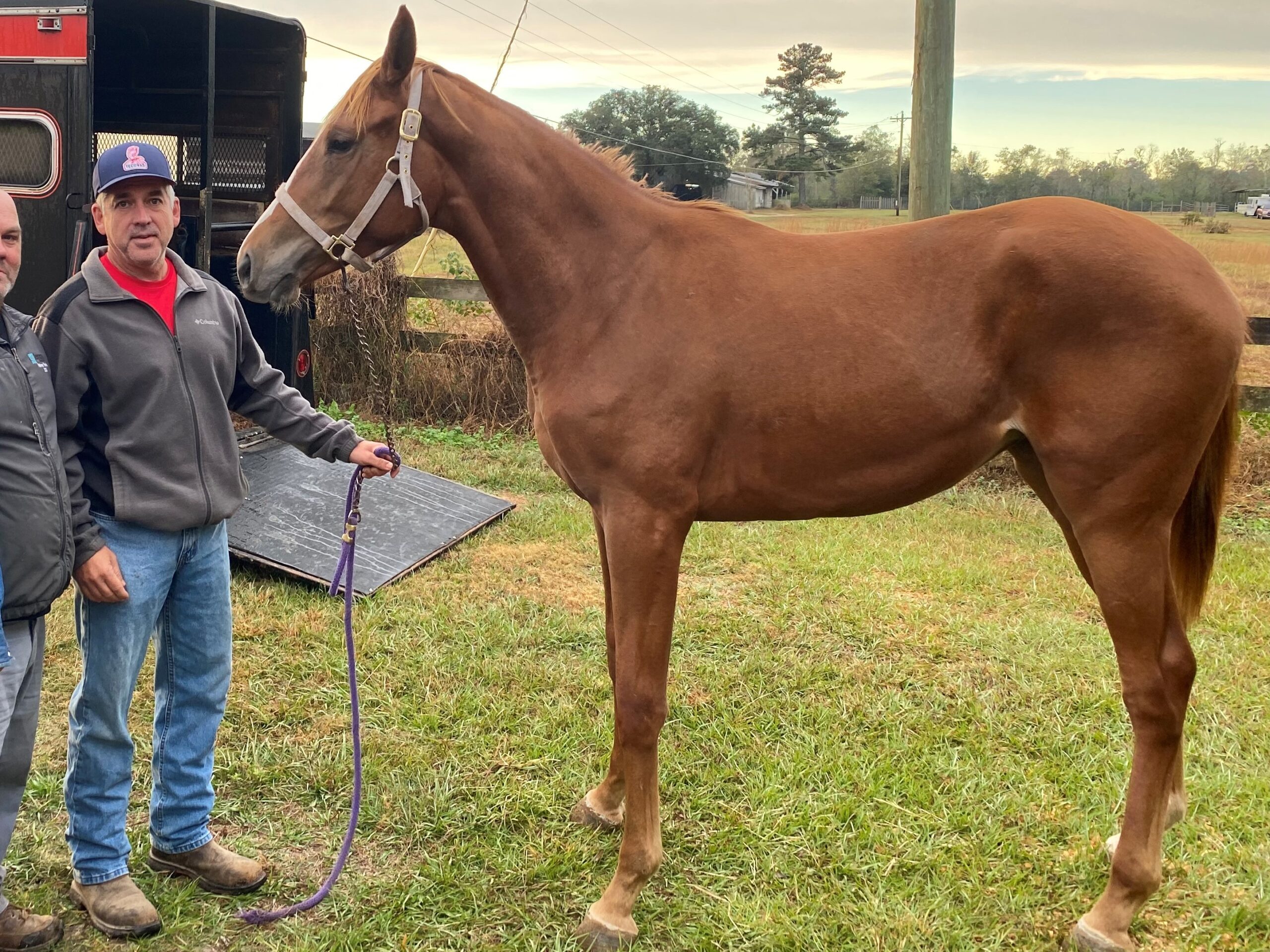
Miles Henry (legal name: William Bradley) is a professional horseman based in Folsom, Louisiana. He holds Louisiana Racing License #67012 and has spent over three decades managing Thoroughbreds at premier tracks including Fair Grounds, Delta Downs, and Evangeline Downs.
Expertise & Hands-On Experience: Beyond the track, Miles has decades of experience in specialized equine care, covering everything from hoof health and nutrition to training protocols for Quarter Horses, Friesians, and Paints. Every guide on Horse Racing Sense is rooted in this “boots-on-the-ground” perspective.
30 of their last 90 starts
Equibase Profile.

Connect with Miles: