
Last updated: March 30, 2026
Why does my horse slow when challenged? Often it’s not fitness — it’s herd instinct.
Herd instinct in racehorses is a natural behavioral drive to stay with other horses. It can cause consistent race patterns that might look like inconsistency, lack of effort, or underperformance — but are actually predictable responses to company and competition.
- Own or have claimed a racehorse that underperforms its morning works in races
- Watch replays and can’t explain why a horse stops progressing in the stretch
- Have a horse labeled “inconsistent” that actually runs the same pattern every time
- Are trying to decide whether a behavioral problem can be managed — or whether it’s a fundamental limitation

Most racehorses don’t lose because they lack speed.
They lose because instinct overrides ability.
I claimed a mare — Seamus’s Girl, trained by W. Bret Calhoun — and didn’t know she wore earplugs until a jockey pointed them out in the paddock. The plugs were buried deep in her ears. When he explained why, everything about her past performances suddenly made sense: she was hearing horses approach from behind and slowing down to let them catch up. The earplugs muffled that auditory trigger. She stopped waiting for company and started racing.
That’s one version of herd instinct. There’s another version — harder to fix — that I watched play out with a different horse entirely.
Most owners misdiagnose this — and spend months fixing the wrong problem.
I’m a licensed Louisiana racehorse owner (#67012), with horses at Fair Grounds, Evangeline Downs, and Delta Downs, and over 30 years of hands-on experience evaluating racehorse behavior in both the barn and race replays. This guide covers the three distinct patterns herd instinct produces in racing and what owners can realistically do about each one.
Table of Contents
What Is Herd Instinct in Racehorses?
Herd instinct in racehorses is the behavioral expression of a survival mechanism horses have carried for millions of years: the drive to stay with the group. In the wild, a horse that strayed too far or lagged behind the herd risked being picked off by predators. Research in equine herd behavior confirms this impulse is hardwired — present from birth — and like any natural trait, some horses have it stronger than others.
On the racetrack, this instinct sometimes works against what we ask of a racehorse. Most horses have enough competitive drive that it doesn’t limit performance. But for horses with a strong herd instinct, it can be the main reason they don’t perform as expected — not a lack of ability, desire, or training.
- Slowing when challenged from behind — your horse senses rivals coming and eases up instead of pushing forward.
- Refusing to lead or open a gap — even with the speed, the horse won’t break away from the pack; it runs best with company.
- Running better in company than when clear — the horse gives its best effort when others are nearby, but can “deflate” if left alone in front.
Understanding these patterns is key: herd instinct is a biological signal, not a training problem. Identifying which pattern a horse shows allows trainers and owners to manage it effectively rather than fight against it.
The Biology Behind It
Horses evolved as prey animals, and their survival depended on staying with the herd. A group detects danger earlier than a lone horse, and a running herd is harder for predators to single out. Evolution strongly favored horses that stuck together — strayers were more likely to be caught, while those that stayed survived to reproduce. This herd behavior persists in racehorses today because it is biological, not learned, and it sits within a broader pattern of equine behavior and stress that training can influence but rarely eliminates completely.
The practical effects are easy to see: horses instinctively synchronize alarm responses, match the pace of nearby companions, and experience real psychological stress when separated. Research in equine herd behavior confirms these responses are hardwired and mediated by the same stress-response system that drives other Thoroughbred racehorse behaviors and stress patterns. That’s why herd instinct and stress issues often overlap and can compound each other on the racetrack.
Key takeaway for owners and trainers: herd instinct is a genuine biological signal — not a flaw, a lack of desire, or a training failure. Treating it as a character problem can increase stress without solving performance issues.

The Three Patterns: How Herd Instinct Shows Up in Racing
Herd instinct in racehorses is not one behavior — it’s a family of related behaviors that share the same root cause but present differently in the race and require different management responses. Identifying which specific pattern a horse shows is the first and most important diagnostic step.
| Pattern | What It Looks Like on Replay | Trigger | Distinguishing Feature |
|---|---|---|---|
| Slowing when challenged | Horse races competitively while in the pack, then visibly decelerates or flattens as rivals approach from behind in the stretch | Auditory or visual signal of approaching horses — hoofbeats behind, rivals pulling alongside | Happens specifically when horses come from behind; horse may run fine when on the lead or in the clear |
| Refusing to lead | Horse drops to the rear regardless of jockey instructions; when forced to the front, loses focus or shortens stride; performs best when tracking other horses | Psychological discomfort with separation from the group — the instinct not to be the “isolated” horse at the front | Consistent across races and riders; not correlated with fatigue; happens early in the race when the horse is fresh |
| Running better in company | Horse produces best effort when racing alongside or within range of rivals; when clear, doesn’t extend further; may actually slow when a long lead develops | Competitive response to proximity — needs rivals in sight or range to activate maximum effort | Positive version of herd instinct; horse is using rivals as a motivator; distinct from the refusing-to-lead pattern which is avoidant |

Pattern 1: Slowing When Challenged From Behind
This is the most common and most actionable pattern. The auditory trigger — approaching hoofbeats — is exactly what racehorse earplugs are designed to muffle. The horse races well through the early portions, then visibly moderates pace as rivals move up from behind in the stretch. It’s not a fitness problem — the same horse often works faster in the mornings than horses that beat it in races. It’s a behavioral response to a specific auditory stimulus.
The replay signature is distinctive: watch for a horse that is racing with purpose through the first half, then appears to level off or slightly decelerate exactly as the stretch drive begins and challengers emerge. This is different from a horse that simply runs out of fitness — a horse running out of gas will often show shortened stride or physical strain well before challengers arrive. The herd-instinct horse looks like it stops trying, specifically when challenged. For more on reading race replays to diagnose behavioral causes, see our guide on why horses drift during races — the same replay-analysis framework applies to both drifting and pace moderation.
Pattern 2: Refusing to Lead or Open a Gap
This is the harder pattern to manage — and the one I watched cost a genuinely talented horse its entire racing career.
A horse with strong herd instinct isn’t trying to win alone — it’s trying not to be alone.
Some horses with strong herd instinct are physically capable of winning races they will never win — because their instinct prevents them from ever running clear of the field.
The refusing-to-lead pattern is distinguishable from a horse that is simply being ridden conservatively or needs a specific setup. The key diagnostic question is: what happens when the horse is asked to go to the front in a race where it has the physical advantage to do so? A horse with tactical preferences will respond to the jockey and extend when asked. A horse with genuine refusing-to-lead herd instinct will not — it will shorten stride, look around, or drop back regardless of urging.

Pattern 3: Running Better in Company Than When Clear
This is the most nuanced pattern — and in some horses, it’s actually a manageable racing trait rather than a pure liability. Some horses genuinely produce their best effort when they have rivals to run against. They draw energy from competition. When given a clear lead, they don’t extend further — they relax, shorten stride, and coast. They need the proximity of other horses to stay fully engaged.
The practical implication for race management: these horses are often best suited to tactical setups where they run in the second or third flight and make one late run at the leaders, rather than being sent to the front. Their competitive instinct is working for them — they’re using the herd proximity as fuel — but only in the right tactical context.
How to Diagnose Which Pattern Your Horse Has
What Each Pattern Looks Like on Replay
- Pattern 1 — Slowing when challenged: Ears rotate backward toward pursuing horses at the exact moment pace flattens. Horse looks physically fine — no shortened stride, no labor — but simply stops gaining. Happens in the stretch specifically when challengers emerge, not earlier.
- Pattern 2 — Refuses to lead: Horse never fully engages when asked to leave the field. Jockey urging produces head-shaking or short-striding rather than acceleration. Horse looks around at rivals rather than focusing forward. Consistent regardless of jockey or position entering the stretch.
- Pattern 3 — Better in company: Horse runs close to rivals and matches their pace well. When given a clear lead, stride shortens and pace levels off — horse coasts rather than extends. Performance correlates directly with how close rivals are, not with fitness or class.
Pattern diagnosis comes from replay analysis across multiple starts — not from a single race, and not from training observations alone. A horse may show one pattern in some conditions and a different one in others. Here’s the systematic approach:
- Slows specifically when horses appear from behind → Pattern 1 (auditory trigger)
- Won’t go clear even when asked and physically able → Pattern 2 (psychological)
- Runs close to rivals well, stops extending when alone → Pattern 3 (motivational)
- Pattern varies race to race or correlates with fatigue → Rule out physical cause first — call the vet
- When does the pace change happen? — At the moment rivals appear from behind (Pattern 1) or at the moment the horse is asked to leave the group (Pattern 2)?
- Is it consistent across jockeys? — If the same pattern appears with different riders, it’s behavioral not tactical. If it varies by jockey, it may be a communication or training issue.
- What are the ears doing? — Ears rotating backward toward pursuing horses at the moment of pace change = Pattern 1. Ears flat or unfocused when in front = Pattern 2 or 3.
- How does the horse work alone vs in company? — Pattern 3 horses often work significantly better when galloping alongside other horses than when breezing alone.
- What happens in a race where no one challenges? — A Pattern 2 horse will still not extend clear even with a soft lead. A Pattern 1 horse may win wire to wire if never challenged.
- Does the pattern worsen under fatigue? — If so, rule out physical causes first. Fatigue-related drifting or pace moderation may indicate soreness rather than herd instinct.
| Diagnostic Question | Pattern 1 Answer | Pattern 2 Answer | Pattern 3 Answer |
|---|---|---|---|
| When does pace change happen? | When rivals appear from behind in the stretch | When horse reaches the front or is asked to leave the group | When horse opens a clear lead and rivals fall back |
| Consistent across jockeys? | Yes — same pattern regardless of rider | Yes — consistent across riders | Varies — may respond to tactical riding |
| Works alone vs in company? | May work well alone — trigger is rivals approaching | Often poor alone; much better in company | Consistently better in company than alone |
| Wins wire to wire when unchallenged? | Yes — can win if never challenged | Rarely — won’t extend even on a soft lead | Sometimes — but won’t dominate; others catch up late |
| Primary management tool | Earplugs (muffle auditory trigger) | Race placement; honest assessment of limitation | Tactical running style; stalker/closer setup |
Equipment and Management Responses
The management approach depends entirely on which pattern the horse shows. There is no universal fix for herd instinct — and applying the wrong tool to the wrong pattern wastes starts and can increase the horse’s stress without improving performance.
For Pattern 1 — Earplugs
Racehorse earplugs are the primary equipment tool for the slowing-when-challenged pattern, because the trigger is auditory. By muffling the sound of approaching hoofbeats, earplugs reduce the intensity of the signal that activates the herd-joining response. The horse may still be aware that rivals are approaching — a muffled signal is not zero signal — but the trigger is damped enough that the behavioral response is reduced or eliminated.
Key points for earplug use with Pattern 1 horses: the plugs need to be in place throughout the race, not just pre-race. Unlike crowd-anxious horses where the primary benefit is pre-race calming, the Pattern 1 horse needs the auditory dampening in the stretch when rivals are approaching — which is during the race. Pull-out plugs timed to the final quarter are not the right protocol here; the plugs should stay in.
For Pattern 2 — Training, Placement, and Honest Assessment
The refusing-to-lead pattern is the hardest to manage with equipment because the trigger is psychological rather than sensory. Earplugs won’t change a horse’s unwillingness to be separated from the group (for Pattern 1 horses where the trigger is auditory, see our guide on how earplugs affect racehorse performance). Blinkers won’t change it either. The management toolkit here is primarily behavioral and placement-based:
- Training exercises that build confidence alone — solo gallops extended progressively using positive reinforcement techniques; the horse learns that being at the front or alone is not a threat
- Gate schooling with solo breaks — horse learns to break and extend forward without immediately looking for the group
- Race placement in smaller fields — fewer horses means less “group” to stay with; some Pattern 2 horses manage better in small fields where the herd dynamic is weaker
- Try different running style placement — if the horse won’t lead, don’t force it; assess whether it can be effective as a stalker running second or third and making a late run
- Honest assessment of severity — if the pattern is deeply wired and training hasn’t moved it after multiple attempts, race placement decisions become the primary management tool
For Pattern 3 — Tactical Setup
Pattern 3 horses don’t need to be fixed — they need to be understood. A horse that runs better in company is exhibiting classic racehorse pack behavior: it performs best when tracking rivals, not when leading them. The management response is tactical, not remedial. Set the horse up to run from off the pace, make one run at the leaders in the stretch, and win through competition rather than wire to wire.
What Herd Instinct Means for Race Placement
Race placement decisions for horses with strong herd instincts require thinking about the race shape before entry — not just class, distance, and surface. The key variables are field size, likely pace scenario, and running position.
| Pattern | Preferred Field Size | Preferred Pace Scenario | Running Position | Avoid |
|---|---|---|---|---|
| Pattern 1 — Slowing when challenged | Any — but small fields reduce number of challengers | Fast early fractions that string out the field — rivals spread out rather than coming in a wave | On or near the lead; wire-to-wire preferred; minimize time being challenged from behind | Slow pace races where the whole field comes at once in the stretch |
| Pattern 2 — Refusing to lead | Smaller fields — less group to anchor to | Competitive pace that requires sustained effort throughout | Second or third flight stalking position; needs horses ahead to follow | Wire-to-wire setups; races that require the horse to open a gap and maintain it |
| Pattern 3 — Better in company | Competitive fields — needs rivals in range | Honest pace that sets up a genuine stretch drive | Stalker or closer; one-run setup; leave in range of leaders | Runaway leads; races where the field spreads out so far the horse loses its “target” |
Related Guides:
- Behavior & Stress in Racehorses — the full behavioral framework this article is part of
- Racehorse Earplugs — equipment for Pattern 1 (auditory trigger)
- Why Racehorses Wear Blinkers — for horses showing both herd instinct and visual distraction
- Why Horses Drift During Races — separating herd instinct from visual drift
- Why Racehorses Spook and Act Nervous — behavioral overlap with herd anxiety
- Positive Reinforcement in Horse Training — building solo confidence for Pattern 2 horses
Common Misdiagnoses of Herd Instinct
Because herd instinct doesn’t show up in the vet report or the speed figures, it gets labeled as something else. Some horses labeled “inconsistent” are actually consistent — just in a pattern nobody identified. It’s also easily confused with drifting and visual distraction problems, which share some surface behaviors but have different causes and different fixes. These are the most common misdiagnoses:
| What It Gets Called | Why It’s Wrong | The Tell That Separates Them |
|---|---|---|
| “No heart” or “a quitter” | A quitter stops trying under fatigue regardless of race position. A herd instinct horse stops making ground specifically when rivals appear — and may run fine when unchallenged. | Does the horse respond to being challenged by fresh horses late, or does it stop regardless of what’s around it? |
| “Bad ride” or jockey problem | A jockey problem varies by rider. Herd instinct is consistent across multiple jockeys and running styles — the same pattern appears whoever is in the irons. | Watch three replays with different jockeys. Same pattern? Behavioral. Varies by rider? Tactical or communication issue. |
| Wrong distance or class | A distance or class limitation shows as a horse that tires and shortens stride progressively. Herd instinct shows as a horse that looks fine physically but stops gaining — or actually slows — at a specific point in the race triggered by rivals. | Does the horse’s form improve in smaller fields or unchallenged lead scenarios at the same distance? If so, it’s behavioral, not physical. |
| Fitness or training problem | Fitness problems are consistent across all race shapes. A horse with herd instinct often has excellent morning works and flat race figures when conditions don’t trigger the instinct — the gap between morning and afternoon is itself a tell. | If the horse outworks its race record consistently, the issue is more likely behavioral than physical fitness. |
| Visual distraction or drifting | Drifting is directional — the horse moves toward a specific visual stimulus. Herd instinct pace moderation is not directional; it’s about pace, not path. Some horses show both, which is why replay analysis matters. | Is the horse running straight but slowing, or running crooked? Straight + slowing = herd instinct. Crooked = possible visual distraction. See our guide on why horses drift. |
Why Herd Instinct Causes Racehorses to Slow Down or Not Pass
Why Racehorses Slow Down in the Stretch
When a racehorse slows in the stretch despite apparent fitness, herd instinct is one of the most common causes — and one of the least checked. The horse hears or senses rivals approaching from behind and instinctively regulates pace to let them catch up, exactly as it would in the wild. It doesn’t slow because it’s tired. It slows because its instinct says: stay with the group.
Why Racehorses Won’t Pass or Hang in the Stretch
This is why some horses appear to hang in the stretch — they stop progressing when they should be finishing strongest. The behavior is situational and repeatable. Once you recognize the pattern, it explains race results that otherwise don’t make sense. A horse that consistently underperforms its morning works in races with tight, late-running fields is worth examining through this lens before assuming fitness or class. Note that horses appearing to hang under pressure sometimes show directional drifting as well — that’s a different issue (visual distraction) that can occur alongside herd instinct but requires a separate fix.
For horses that also show visual distraction problems alongside herd instinct — losing focus when rivals appear rather than just moderating pace — blinkers may be part of the solution alongside earplugs. The two tools address different senses and can be used together. The complete racehorse equipment guide covers how trainers layer equipment decisions when more than one behavioral issue is present.
FAQs: Herd Instinct in Racehorses
What is herd instinct in racehorses?
Herd instinct in racehorses is the evolutionary impulse to stay with and within a group — a survival behavior from when horses were prey animals whose safety depended on collective movement. On a racetrack, it manifests as horses slowing when challenged from behind, refusing to open a lead when clear, or running significantly better in company than when isolated from the field.
Why do racehorses slow down when other horses come up behind them?
This is a herd instinct response — the horse hears or senses approaching rivals and instinctively moderates its pace to let them catch up, the way a horse in the wild would slow to keep the group together. It’s not a fitness problem or a lack of desire. The trigger is typically auditory (approaching hoofbeats) and can often be reduced by earplugs, which muffle the sound of rivals approaching from behind.
Why won’t my horse run to the front or open a lead?
A horse that consistently drops to the rear or refuses to extend away from the field may have a strong refusing-to-lead herd instinct pattern. These horses are psychologically uncomfortable being separated from the group — being at the front means being isolated, which triggers a genuine stress response. This is one of the harder herd instinct patterns to address because it doesn’t have a straightforward equipment solution. Training exercises that build solo confidence and honest race placement decisions are the primary management tools.
Can earplugs help with herd instinct?
Yes — specifically for the slowing-when-challenged pattern, where the trigger is the auditory signal of horses approaching from behind. Earplugs muffle that signal enough to reduce or eliminate the herd-joining response. They are less useful for the refusing-to-lead pattern, where the trigger is psychological rather than sensory. For the Pattern 1 horse, earplugs should stay in throughout the race — not be removed at the gate — because the critical moment is in the stretch when challengers arrive.
Is herd instinct the same as a horse lacking desire or being a quitter?
No — and confusing the two is one of the most common and costly misdiagnoses in racehorse management. A horse responding to herd instinct is not quitting. It is responding to a genuine biological signal. Treating herd instinct as a discipline problem leads to more aggressive riding and training pressure, neither of which changes the underlying behavioral cause. The horse ends up more stressed and the pattern remains unchanged.
What does it mean when a horse runs better in company than when clear?
This is the Pattern 3 herd instinct expression — the horse uses rivals as competitive motivation and produces best effort when running alongside or within range of other horses. When given a clear lead, it relaxes and doesn’t extend further. These horses are often best suited to stalker or closer running styles where they track rivals and make one late run, rather than wire-to-wire setups that require them to maintain a lead without competition in range.
How do I tell if my horse has herd instinct or a physical problem?
Watch replays across multiple starts for pattern consistency. A physical problem (soreness, asymmetry) typically worsens under fatigue and often produces drifting or shortened stride, regardless of race position or proximity of rivals. A herd instinct problem is triggered by specific race situations — rivals approaching from behind, reaching the front, or being isolated from the field — and is consistent across starts and jockeys. If the pattern varies unpredictably or correlates with fatigue, rule out physical causes first with a veterinary evaluation.
Why does my horse stop or slow down when another horse comes up beside it?
This is a classic Pattern 1 herd instinct response — the horse hears or senses a rival pulling alongside and instinctively moderates pace to stay with the group rather than race away from it. It’s not quitting, not lack of fitness, and not a desire problem. The trigger is typically the sound of approaching hoofbeats. Racehorse earplugs are the primary tool for this pattern because they muffle the auditory signal that activates the herd-joining response. Watch replays for the ear rotation tell: ears turning back toward the challenger at the exact moment pace flattens.
Can herd instinct be trained away?
Pattern 1 (slowing when challenged) can often be managed effectively with earplugs and race placement. Pattern 3 (running better in company) is usually a running style trait that can be worked with rather than against. Pattern 2 (refusing to lead) is the hardest to change through training — exercises that build solo confidence help some horses, but for horses with deeply wired herd instincts, the pattern may be a fundamental behavioral limitation that determines which discipline they’re suited for.
| Pattern | Trigger | Primary Fix |
|---|---|---|
| 1 — Slows when challenged | Auditory — approaching hoofbeats | Earplugs + strung-out field setup |
| 2 — Refuses to lead | Psychological — separation from group | Solo confidence training + stalker placement |
| 3 — Better in company | Motivational — uses rivals as fuel | Tactical stalker/closer setup — work with it |
Conclusion
The three patterns look similar on the surface but require completely different responses. Pattern 1 — slowing when challenged — is the most actionable, most directly addressable with earplugs, and the most commonly misread as a fitness problem. Pattern 2 — refusing to lead — is the hardest and may ultimately determine whether a horse belongs on a racetrack at all. Pattern 3 — running better in company — is often a running style to work with, not a problem to fix.
If you misidentify the pattern, you waste starts. If you identify it correctly, you change how you place the horse — and sometimes whether it belongs in racing at all.
The mistake isn’t that people don’t see herd instinct. It’s that they see it and call it something else.
- Slowing when challenged from behind → Earplugs (muffle auditory trigger) + race placement favoring strung-out fields
- Refusing to lead or open a gap → Solo confidence training + stalker/closer placement + honest limitation assessment
- Running better in company than when clear → Tactical stalker setup + honest-pace races + one-run closer positioning
- Any pattern before equipment → Rule out physical causes first — stress and behavioral patterns that worsen with fatigue warrant a vet check
Sources
- Rutgers Equine Science Center — The Basics of Equine Behavior: esc.rutgers.edu
- ScienceDirect — Equine social behavior and herd dynamics: sciencedirect.com
- The Horse — Equine behavior and performance reference: thehorse.com
- Equibase — Race replays and past performances: equibase.com
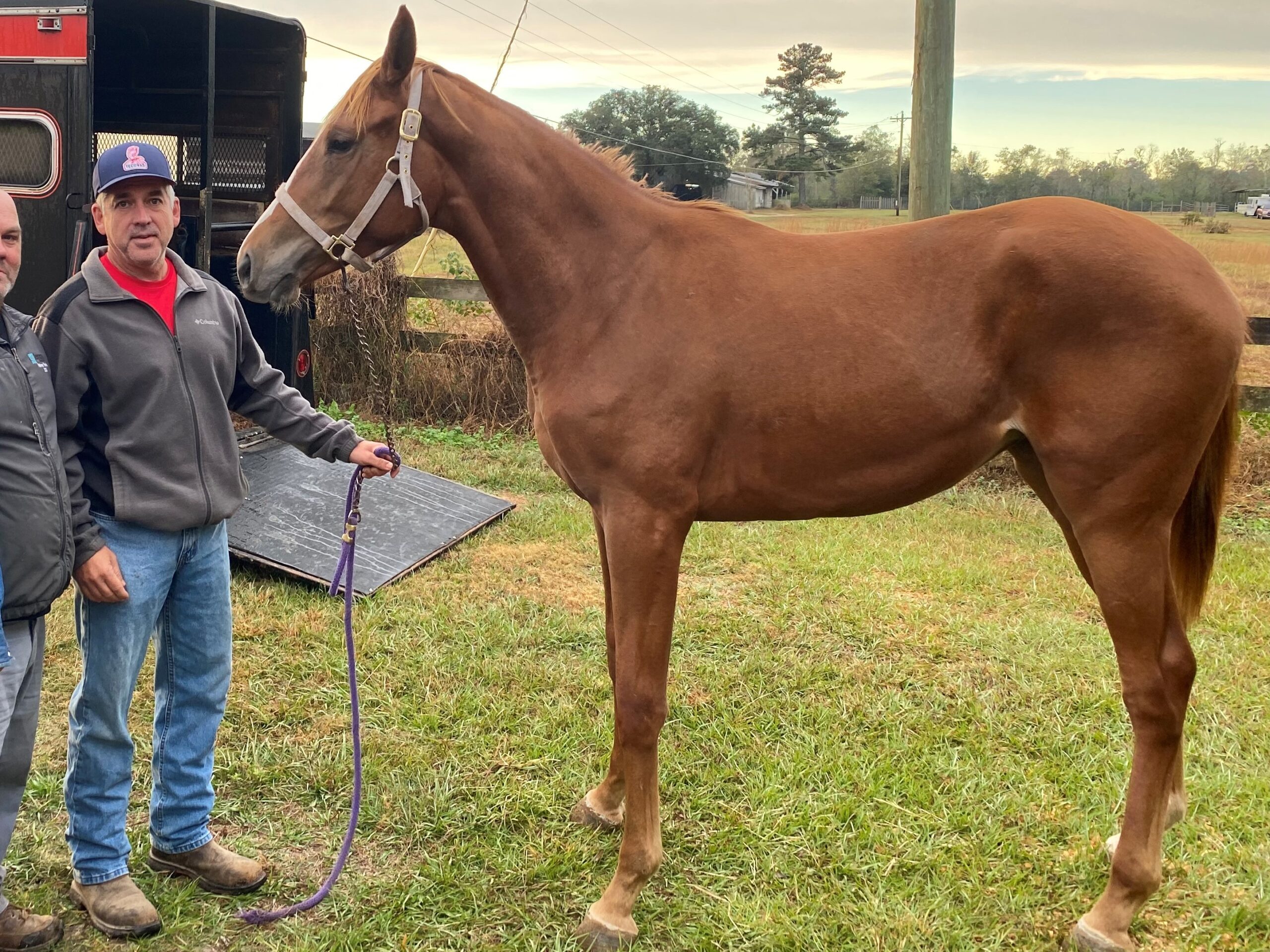
About Miles Henry
Racehorse Owner & Author | 30+ Years in Thoroughbred Racing
Miles Henry (legal name: William Bradley) is a professional horseman based in Folsom, Louisiana. He holds Louisiana Racing License #67012 and has spent over three decades managing Thoroughbreds at premier tracks including Fair Grounds, Delta Downs, and Evangeline Downs.
Expertise & Hands-On Experience: Beyond the track, Miles has decades of experience in specialized equine care, covering everything from hoof health and nutrition to training protocols for Quarter Horses, Friesians, and Paints. Every guide on Horse Racing Sense is rooted in this “boots-on-the-ground” perspective.
30 of their last 90 starts
Equibase Profile.

Connect with Miles: