

Last updated: October 14, 2026
Any links on this page that lead to products on Amazon are affiliate links and I earn a commission if you make a purchase. Thanks in advance – I really appreciate it!
Every barn has one: the tack room where the saddles sit on overturned buckets, the bridles hang in a tangle on one nail, and you can’t find a hoof pick at five in the morning. A messy tack room wastes time, and it’s hard on your gear, too, since leather that stays piled up, damp, or dusty doesn’t last.
Below, I’ll cover what belongs in a tack room, how to organize one step by step, the racks that make the biggest difference, ideas for small spaces, keeping leather dry, and planning a layout if you’re building one.
Table of Contents
What to Store in a Tack Room
A tack room holds the gear you use around your horses: saddles, bridles, halters, lead ropes, saddle pads, blankets and fly sheets, leg wraps, grooming tools, fly spray, and first aid supplies. If you’re not sure what all belongs there, here’s a rundown of everything that counts as horse tack. Feed and anything else that attracts rodents are better kept somewhere else, which I’ll get to below.
How to Organize a Tack Room, Step by Step
Whether you’re starting from scratch or finally tackling a room that got away from you, the process is pretty much the same:
- Empty it out. Pull everything out of the room so you can see what you have and clean the floor, walls, and shelves.
- Sort and purge. Toss broken gear, return borrowed items, and sell or donate tack that doesn’t fit any horse you own.
- Group by category. Make piles for riding tack, grooming supplies, horse clothing like blankets and fly sheets, first aid, and cleaning supplies.
- Put everyday gear within easy reach. Your saddle, bridle, grooming kit, and anything else you use daily go closest to the door. Seasonal items, like winter blankets, go farther back or on higher shelves, as long as they’re secure and you can get them down safely.
- Install your hardware. Put up saddle racks, bridle holders, blanket racks, hooks, and shelves before you move anything back in.
- Label everything. Labels on bins, shelves, and bridle hooks help everyone in the barn put things back where they belong, especially if you share the space.
If you keep medications in the tack room, label them clearly, store each one the way its label directs, keep them away from heat and feed, and check expiration dates a couple of times a year. Some products need a cooler spot than a summer tack room can give them.
Tack Room Organization Ideas
A few pieces of hardware do most of the work. These are the ones I’d buy first.
Saddle Racks and Stands
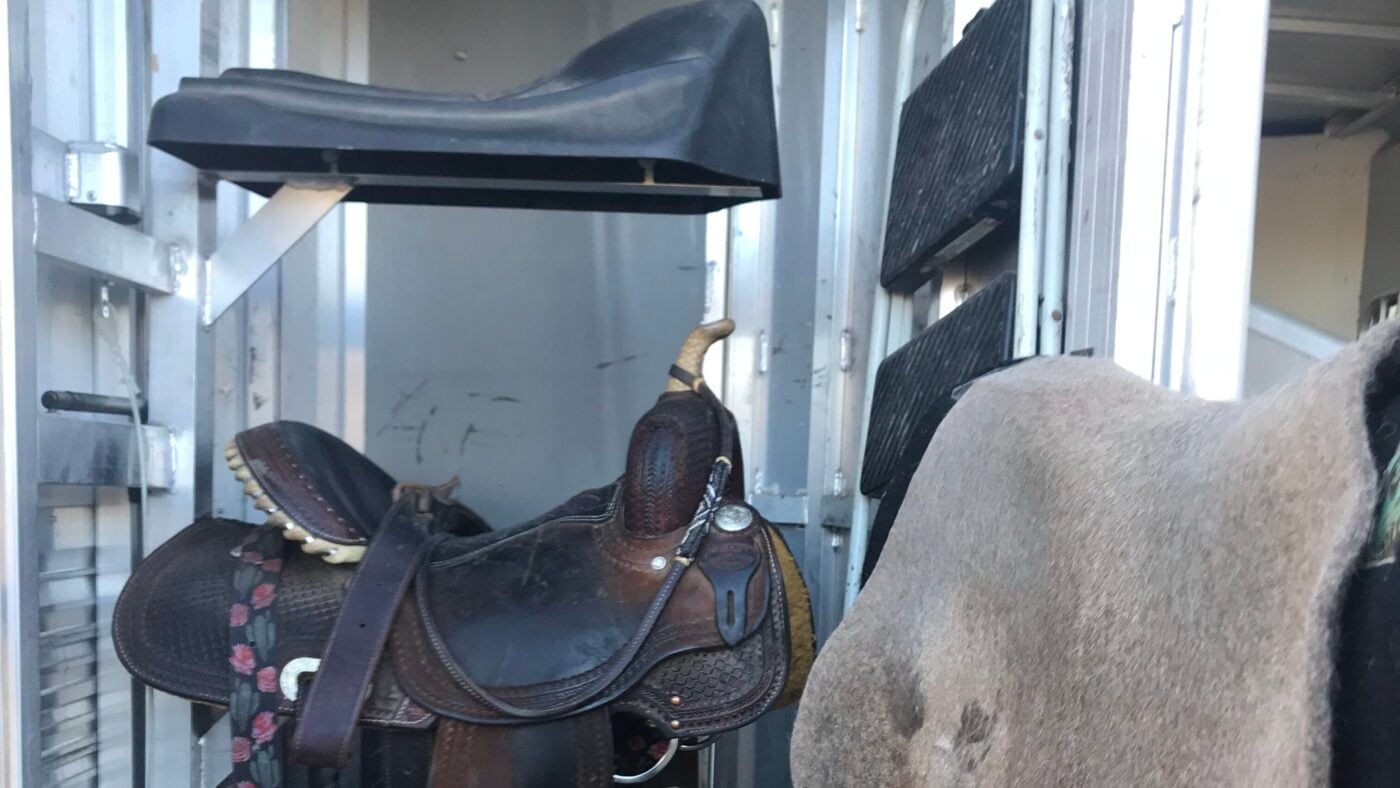
Saddles need a rack or stand that supports them properly and keeps them off the floor, where dirt and moisture get to the leather. Wall-mounted racks free up floor space, and folding models tuck out of the way when they’re empty. Multi-saddle racks help when you’re short on room, but check the height before you buy one, since the top saddle can be awkward to lift down. For an older saddle or one you really want to protect, give it a stand that supports it properly rather than squeezing it onto a crowded rack. A pad rack or a bar under each saddle rack gives sweaty saddle pads a place to air out, too.

Bridle and Halter Holders

A nail or narrow hook can put too much pressure on one spot and can leave the crownpiece creased over time. A bridle holder with a rounded top spreads the weight and helps the headstall keep its shape. Give each horse its own holder, with the halter and lead rope on the same peg or one right next to it, and you’ll spend a lot less time untangling gear.
Blanket Racks
Horse blankets, fly sheets, and cooling sheets take up a lot of room, and a blanket thrown in a corner can stay damp and develop an odor. Wall-mounted swing-arm racks let you hang several blankets and swing them flat against the wall when you’re done. Their most important job is giving wet blankets and pads a place to dry. Just make sure anything you fold or pack away is completely dry first, or you’ll trap the moisture in with it.

Pegboards, Hooks, and Bins for Small Items
Small gear is usually what turns a tack room into a mess. A pegboard wall with hooks holds bits, spare reins, leg wraps, and spurs where you can see them. Clear plastic bins with labels keep grooming tools, fly masks, and spare parts sorted on a shelf. A mesh basket or a row of hooks keeps boots and fly masks together so they don’t end up scattered across the floor.
Whips and Helmets
A wall-mounted whip holder keeps crops and lunge whips from bending or getting stepped on. Helmets need a stable, dry spot away from heat, where they won’t fall or get crushed. A simple shelf works fine, which is where we keep ours, or you can use a helmet holder.
Grooming Kits
Keep each horse’s grooming tools in its own caddy or tote so you can grab it and go. Separate kits cut down on sharing brushes between horses, which can spread skin problems, though you still need to clean the brushes regularly.

Small Tack Room Ideas
When space is tight, every inch counts. Use the walls for fixed storage, save the easy-to-reach spots for everyday gear, and move seasonal equipment out of the way:
- Stack your saddles. A multi-saddle rack holds two or three saddles in the footprint of one.
- Add a shelf above the door. It’s a good spot for things you rarely need.
- Use stackable bins with lids. They keep dust off small gear better than open shelves.
- Use the back of the door. An over-the-door organizer holds grooming tools, fly spray, and small first aid supplies.
- Add a rolling cart. A cart with drawers can hold grooming supplies and roll into the aisle when you need it.
- Rotate seasonal gear. Wash winter blankets and make sure they’re completely dry, and store them in clean, dry, pest-free bins or a cool, dry storage area for the summer.
The same ideas work in a horse trailer’s tack compartment, where saddle racks mounted on the walls and hooks on the door make the most of a tiny space.
Keep Your Tack Room Dry, Clean, and Well Lit
Moisture encourages mold, and heat and direct sun can dry out and damage leather. UF/IFAS Extension notes that even tack that only gets used now and then can grow mold in humid weather, and it recommends storing tack where you can pull moisture out of the air, with a dehumidifier or an air conditioner. Here in south Louisiana, humidity is a constant concern, so if your tack room stays damp, pair moisture control with good ventilation and fix any leaks.
- Keep air moving. A small window or vent and a fan keep air moving so the room doesn’t get stale, though a fan alone won’t pull moisture out of the air. See our guide to barn fans and ventilation.
- Don’t over-oil. UF/IFAS warns that too much oil, or corn and vegetable oils, can encourage mold on leather stored in high humidity.
- Cover your saddles. A saddle cover keeps dust and dirt off between rides.
- Keep feed out. Store feed in its own room or in sealed, rodent-proof bins. Practical Horseman points out that clean tack quickly collects dust when it’s stored in a feed room.
- Light it well. Choose good barn lighting that lets you find what you need and check your gear for wear without shadows.
Once the room is organized, it’s much easier to keep your gear clean. Wipe down anything that touches sweat after you ride, and give saddles and bridles a thorough cleaning a few times a year. Here’s how to clean horse tack.
Tack Room Size and Layout
If you’re building a barn or a stand-alone tack room, plan it around the gear you’ll actually store, with some room to grow. Count your saddles and blankets, and think about where grooming supplies and a first aid cabinet will go. Needs vary a lot. As one example, an owner’s 12-by-24-foot tack room holds four to six saddles along with blankets and other tack, with a wider door to make carrying saddles easier.
- Put it near the grooming area. The less distance you carry a saddle, the better.
- Make the door wide enough. A wider door makes it much easier to carry a saddle in and out.
- Plan for height. A taller ceiling gives you room for vertical storage like stacked racks and high shelves.
- Close in the ceiling. A ceiling over the tack room keeps hay dust and debris from drifting onto your gear, even if the rest of the barn is open overhead for ventilation.
- Lock it up. Tack is expensive, so a solid door and a good lock are worth it.
A good tack room doesn’t have to be fancy. Get your gear off the floor, give everything a home, keep it dry, and you’ll spend less time looking for things and more time with your horse.
About Miles Henry
Racehorse Owner & Author | 30+ Years in Thoroughbred Racing
Miles Henry (legal name: William Bradley) is a professional horseman based in Folsom, Louisiana. He holds Louisiana Racing License #67012 and has spent over three decades managing Thoroughbreds at premier tracks including Fair Grounds, Delta Downs, and Evangeline Downs.
Expertise & Hands-On Experience: Beyond the track, Miles has decades of experience in specialized equine care, covering everything from hoof health and nutrition to training protocols for Quarter Horses, Friesians, and Paints. Every guide on Horse Racing Sense is rooted in this “boots-on-the-ground” perspective.
30 of their last 90 starts
Equibase Profile.

Connect with Miles: