
Last updated: September 28, 2026
Any links on this page that lead to products on Amazon are affiliate links and I earn a commission if you make a purchase. Thanks in advance – I really appreciate it!
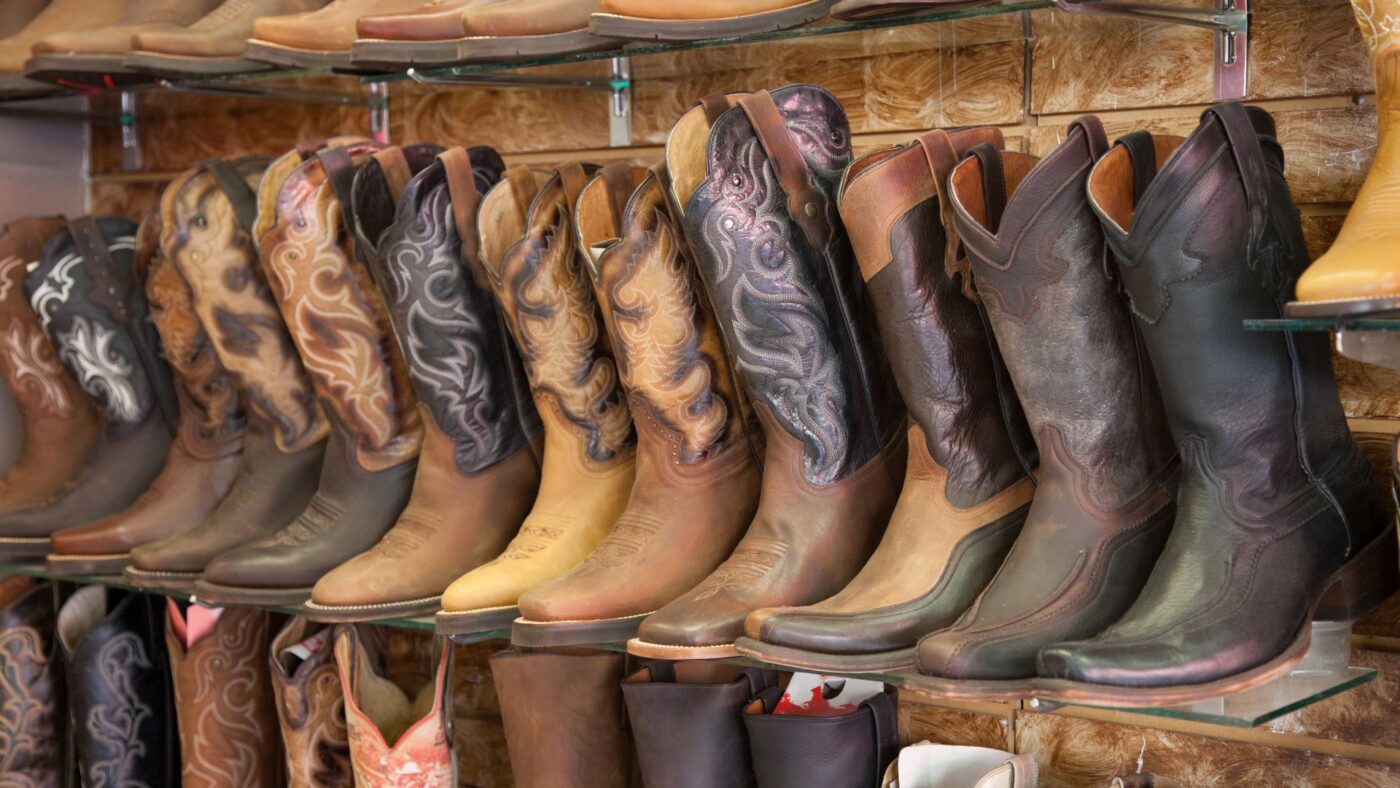
Walk into a western store and most of the boots look alike at first. But if you’re trying to pick a pair for riding, barn work, walking, or wearing with slacks, the small differences between them matter more than they seem.
Quick answer: The main cowboy boot styles are classic western, roper, stockman, buckaroo, and shortie or ankle boots. You’ll also see boots sold by purpose, like work, riding, or dress boots. A boot’s heel, toe, shaft, and sole tell you far more about whether it suits riding, barn work, walking, or going out.
Here’s how to tell the main styles apart, how they compare, which ones fit work, riding, and dress, and how to choose a pair that fits the way you’ll actually wear it.
Table of Contents
What Makes Cowboy Boots Different
After years around barns and racetracks, I’ve learned that the best cowboy boot depends less on the brand than on what you’re asking the boot to do. Every style is a different mix of the same four things:
- The heel. A taller, angled cowboy heel helps keep your foot from sliding too far through the stirrup, but it’s harder on you when you’re standing all day. A lower, flatter roper or walking heel is easier to walk and work in. According to Tecovas’ heel guide, a roper heel runs about an inch, while a walking heel is a bit taller and wider for stability.
- The toe. Pointed and snip toes look sharp and slip into a stirrup easily. Round, square, and broad square toes give your toes more room, which matters when you’re on your feet all day.
- The shaft. A taller shaft protects your leg from brush and the saddle. A shorter one is lighter, cooler, and easier to get on and off.
- The sole. A smooth leather sole moves easily in and out of a stirrup. Rubber soles usually grip better on hard or damp ground, which is why they’re common on western work boots. If you ride, make sure the boot and heel suit your stirrups.

Cowboy Boot Styles Compared
Sizes and heel heights vary by brand, so use these as general guidelines.
| Style | Best use | Main advantage | Watch out for |
|---|---|---|---|
| Classic western | Riding and everyday western wear | Traditional look with a heel that works in a stirrup | The taller heel can tire your feet on long walking days |
| Roper | Walking, ranch chores, and some riding | Low heel and roomy toe are easy to wear all day | Less of a traditional riding heel |
| Stockman | A mix of ground work and riding | Stable block heel with a taller western shaft | Names and specs vary a lot by brand |
| Buckaroo | Riding, brush, and making a statement | Tall shaft covers more of your leg | Hotter and heavier, and often pricier |
| Shortie or ankle | Everyday wear with jeans | Light and easy to get on and off | Much less leg protection |
One thing to know: “Work,” “riding,” and “dress” are usually purpose labels, not separate boot shapes. A stockman can be a good work-and-riding boot, and a polished classic western can double as a dress boot. Look at the heel, sole, toe, and construction before you buy, not just the label.
Classic Western Boots
This is the boot most people picture: a tall shaft, often with decorative stitching, an angled cowboy heel, and a pointed or snip toe. It’s a strong all-around choice if you want a traditional western look and a boot that can work in the saddle. Traditional leather soles can take some breaking in, but they’re common on western riding boots because they move easily in and out of the stirrup.
Roper Boots
Ropers were designed around roping, where riders may need to get off a horse quickly and move on the ground. That’s why they have a low, flat heel, a shorter shaft, and usually a round toe, which makes them one of the easiest cowboy boots to walk in.
Horseman’s Take: Break new ropers in before you rely on them for a long day. I learned that at Delta Downs after wearing a stiff new pair of Justin ropers through a fourteen-hour track shift. By the end of the day, both heels were blistered and I was limping. Start with a few shorter wears and make sure the heel pocket’s right before you commit to them.
Stockman Boots
Stockman boots sit between a traditional western boot and a roper. They usually have a taller western-style shaft, a shorter, wider block heel, and a roomier toe box. The wider heel feels steadier on the ground but still works in a stirrup, which makes stockmans a good choice when you’ll be off your horse as much as you’re on it. Not every boot maker uses the name the same way, so check the specs.
Buckaroo Boots
Buckaroos are the tall, showy boots, with shafts of 14 inches or more, a tall angled riding heel, and often plenty of decoration. Their tall shafts come out of western range-riding traditions and cover more of your lower leg, which is worth something in heavy brush or deep mud. Today, a lot of people choose them as much for the look as for the protection.

Shortie and Ankle Boots
Shorty, shortie, or ankle boots cut the shaft down to about 4 to 6 inches, so they’re lighter, easier to pull on, and easy to wear under jeans. The trade-off is that they don’t give you the leg protection of a tall western boot. Zippers are a separate feature, not a style. A zip boot can be short or tall, and the side zip just makes it easier to get on and off. See my guide to the best cowboy boots with side zippers.
Boots by Purpose: Work, Riding, and Dress
These labels describe what a boot is built to do. Any of the styles above can show up in one of these roles.
Western Work Boots
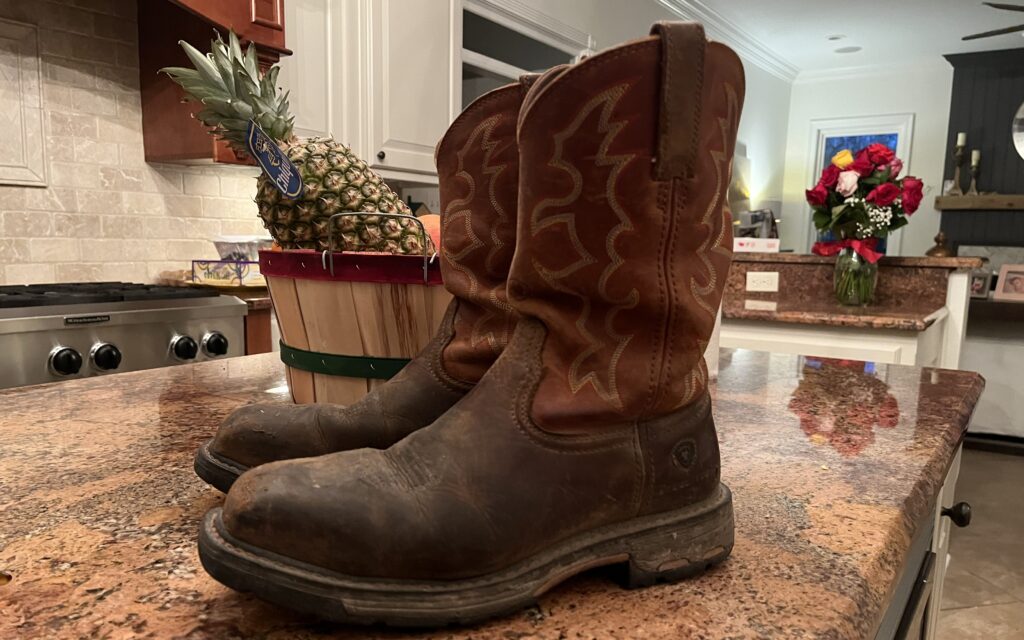
Work boots keep the western shape but swap the slick leather sole for a rubber one that grips, and usually add a lower walking heel and a roomier toe. That makes them a better choice for barn chores, job sites, and long days on hard or damp ground than a traditional leather-soled boot. Many come with a safety toe or waterproofing, but if your job requires toe protection, check the specific model’s ASTM rating rather than assuming every work boot has one.
Horseman’s Take: I’ve worn my Ariat WorkHogs for years around the barn, and these days my Ariat Sierras are my main boot for heavy farm work. On a wet barn aisle, I want a rubber sole under me, not slick leather. I break down my picks in my guide to the best cowboy work boots for barn and farm work.
Riding Boots
If you spend most of your time horseback, look for a defined heel that helps keep your foot from passing too far through the stirrup, plus a sole that moves freely in and out of the stirrup. Traditional western boots often use a smooth leather sole for that reason. Many classic westerns, stockmans, and buckaroos suit western riding when the heel, sole, fit, and stirrups all work together. I’ve worn my Ariat Amos boots for more than two years, and you can read how they’ve held up in my Ariat Amos review.
Dress Boots
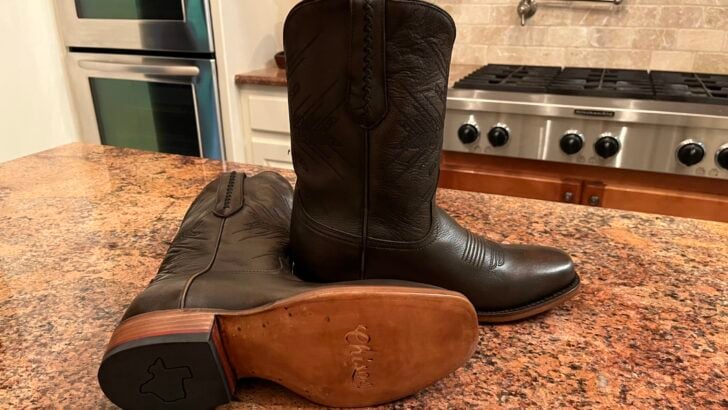
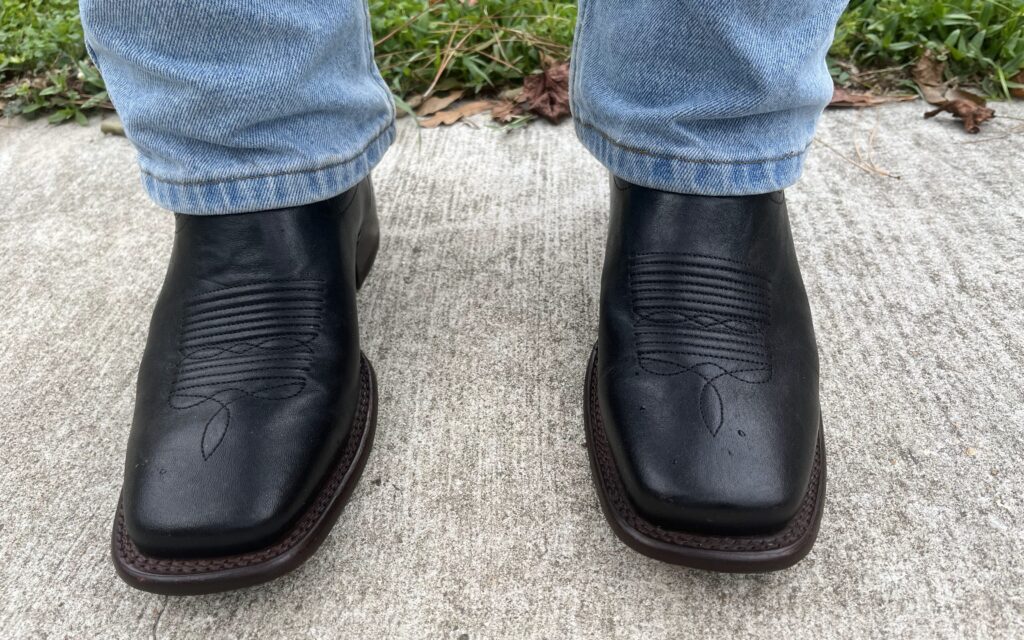
A dress boot is usually a classic western with a more refined finish: polished full-grain leather or exotics like ostrich, a slimmer profile, a narrower toe, and often a slanted heel. I wear cowboy boots with slacks regularly, usually my Chisos or my black Tecovas, depending on the color of the pants. For a suit, pick clean, polished leather and a toe shape that doesn’t look bulky under the pant leg. My guide to wearing cowboy boots with slacks or a suit covers the details.

The Tecovas link below is an affiliate link. I may earn a commission if you buy through it, at no extra cost to you.
How to Pick the Right Cowboy Boot
Start with how you’ll spend most of your time in them:
- If you ride: a well-fitting classic western, stockman, or buckaroo with a defined heel, an appropriate sole, and a fit that works with your stirrups. See my guide to the best cowboy boots for horse riding.
- If you work around horses: a stockman or a western work boot with a rubber sole, and a safety toe if the job calls for it.
- If you walk or stand all day: a roper or stockman with a low, wide heel and a roomy toe.
- If you dress up: a dress western boot in polished leather or exotics.
- For everyday wear: shorties or zip boots if easy on and off matters most, or ropers and stockmans if you want more support.
Fit matters more than the label on the box. A new cowboy boot should hold your instep securely, allow a little heel slip at first, and leave enough room that your toes aren’t cramped. If the boot slides a lot at the heel or pinches across the ball of your foot, try another size or a different last. And if you want a pair to last, a welted sole can usually be replaced when it wears out.
Types of Cowboy Boots FAQ
What’s the difference between roper boots and traditional cowboy boots?
Ropers are cowboy boots with a shorter shaft, a low, wide heel, and usually a round or square toe. Traditional western boots have a taller shaft and a more angled heel, which gives them a classic riding-boot profile.
What type of cowboy boot is most comfortable?
Ropers, stockmans, and western work boots are usually the most comfortable for walking and standing, because they tend to have lower, wider heels and roomier toe boxes. The best style is still the one that fits your foot.
What cowboy boots are best for horseback riding?
Choose a boot with a defined heel, a secure fit, and a sole that works safely with your stirrups. Classic westerns, stockmans, and buckaroos can all work, but check the actual boot and stirrup combination rather than buying by label alone.
Can you wear cowboy boots with a suit?
Yes. A clean, polished leather boot with a slimmer profile works well with slacks or a suit. Let the pant leg fall over the shaft, and skip bulky work-boot styles for formal settings.
Once you understand the heel, toe, shaft, and sole, sorting through a wall of cowboy boots gets a lot easier. Choose the boot that fits your real day, whether that’s riding, work, walking, or dressing up, then let fit make the final call. The right pair should be useful, not just look good on the shelf.
About Miles Henry
Racehorse Owner & Author | 30+ Years in Thoroughbred Racing
Miles Henry (legal name: William Bradley) is a professional horseman based in Folsom, Louisiana. He holds Louisiana Racing License #67012 and has spent over three decades managing Thoroughbreds at premier tracks including Fair Grounds, Delta Downs, and Evangeline Downs.
Expertise & Hands-On Experience: Beyond the track, Miles has decades of experience in specialized equine care, covering everything from hoof health and nutrition to training protocols for Quarter Horses, Friesians, and Paints. Every guide on Horse Racing Sense is rooted in this “boots-on-the-ground” perspective.
30 of their last 90 starts
Equibase Profile.

Connect with Miles:
Bil
Thursday 9th of November 2023
Thank you for sharing.