
Last updated: July 7, 2026
Any links on this page that lead to products on Amazon are affiliate links and I earn a commission if you make a purchase. Thanks in advance – I really appreciate it!
Finding the right cowboy work boot is about more than getting the Western look. If you spend long days in barns, paddocks, or around livestock, your boots need traction, durability, and protection that hold up through a full shift.
How I chose these boots: These five picks are based on decades of experience with work boots around Louisiana racetracks, barns, and horse properties, combined with hands-on evaluation of each model’s features, traction, toe protection, comfort, and waterproofing. No brand paid for placement; Amazon affiliate links are included where available.
Best cowboy work boots at a glance:
- Best overall: Ariat WorkHog Wide Square Toe — ASTM F2413-rated, 4LR cushioning, grips wet concrete
- Best budget: Justin Driller — flexible out of the box, steel or soft toe, under $175
- Best waterproof: Wolverine Rancher Wellington — sealed seams, composite toe, genuine all-day dry
- Best premium: Tony Lama 3R Stockman — premium leather, traditional riding heel, light duty barn
- Best for daily farm work: Ariat Sierra Steel Toe — 18 months of real-world testing, proven on wet concrete and mixed terrain
Safety note: For livestock, construction, or industrial work, verify boots carry an ASTM F2413 rating before buying.
Table of Contents
What Makes a Cowboy Boot a Work Boot?
Traditional cowboy boots were built for riding. Slick leather soles, pointed toes, and a high heel kept your foot in the stirrup. They’re fine for the saddle and the dance floor. They’re not fine for twelve hours on concrete barn aisles, wet paddocks, or construction sites.
A cowboy work boot keeps the Western silhouette but replaces the riding-specific features with job-site ones: oil- and slip-resistant rubber outsoles, safety-rated toe caps, cushioned midsoles for shock absorption, and real waterproofing with sealed seams rather than treated leather. The heel is lower for walking stability. The toe box is wider — square toe designs give your foot room to spread over a long shift without cramping.
| Feature | Traditional cowboy boot | Cowboy work boot |
|---|---|---|
| Sole | Slick leather — riding-focused | Oil/slip-resistant rubber — traction on concrete, mud, wet |
| Toe cap | Pointed or snip — stirrup clearance | Square or round with safety toe option (ASTM F2413) |
| Heel height | 1.5″+ for stirrup security | 1″–1.25″ for walking stability and reduced ankle strain |
| Midsole | Cork or hard leather | EVA or gel — shock absorbing for concrete and mixed terrain |
| Waterproofing | Treated leather — water resistant at best | Sealed Goodyear welt or direct-attach construction |
| Safety rating | None | ASTM F2413 for toe protection; some models EH-rated |
Horseman’s Perspective: I prefer square-toe boots for any day that involves more walking than riding. When you’re on your feet for 14 hours, your toes need room to spread. Pointed toes are for stirrups; square toes are for work. The wider toe box prevents cramping, the reinforced heel keeps your foot secure, and a rubber sole gives you traction in mud without collecting half the pasture on your way through.
Which Boot Fits Your Job? Quick Decision Guide
Not every boot fits every chore. I don’t wear heavy steel toes to walk the fence line, and I don’t wear soft toes when I’m handling green horses. Match the boot to the job.
| Job type | Top pick | Key features | Safety rating | Miles’ note |
|---|---|---|---|---|
| Daily ranch / barn | Ariat WorkHog Wide Square Toe | 4LR cushioning, Duratread sole, full-grain leather | ASTM F2413 composite or steel | Best all-day comfort on concrete |
| Cattle / livestock handling | Justin Driller | Oil-resistant outsole, stiffer shank, J-Flex comfort | ASTM F2413 steel or soft | Better for gates and heavy stock work |
| Wet / muddy conditions | Wolverine Rancher Wellington | 100% waterproof sealed seams, lug sole, composite toe | ASTM F2413, EH-rated | Legitimately waterproof — not just treated leather |
| Riding + light ground work | Tony Lama 3R Stockman | Premium leather, traditional heel, Cushion Comfort insole | No safety toe | Save these for the saddle and arena |
| Daily farm / barn work | Ariat Sierra Steel Toe | Full-grain leather, Duratread sole, ATS cushioning, steel toe | ASTM F2413 steel | 18 months tested; lighter than WorkHog, proven on wet ground |

Top Cowboy Work Boot Picks
These are the boots I see most often at the track and in feed stores. Each one has earned its place through durability, safety, or value — not just marketing.
1. Ariat WorkHog Wide Square Toe — Best Overall
The WorkHog is the best all-around choice for most ranch and barn use. It has strong cushioning, a wide toe box, and a rubber outsole that performs well on wet concrete and mixed terrain. If you spend long hours on your feet, this is the most comfortable option in this group.
Key features:
- Wide square toe — room for all-day comfort without cramping
- Duratread outsole — oil and slip-resistant, flexible enough for occasional riding
- 4LR (ATS Max) cushioning — four layers of shock absorption for long shifts on concrete
- Composite or steel safety toe — ASTM F2413 rated
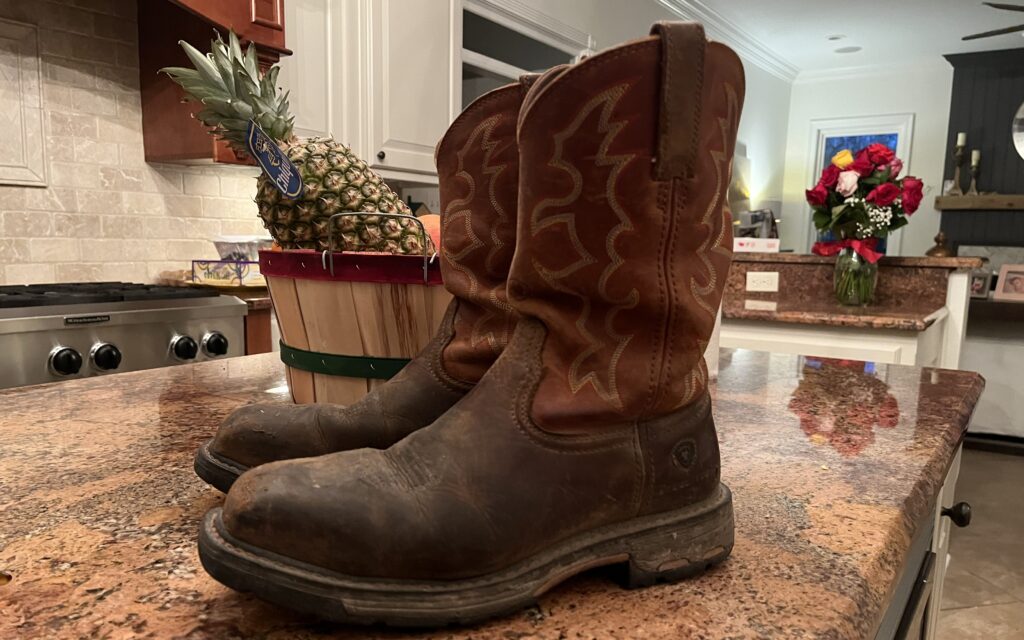
Horseman’s Perspective — Fair Grounds, 2019: A two-year-old filly I was unloading reared and came down with her full weight on my right foot. I was wearing WorkHogs with a composite safety toe. Without that protection, I’d have been looking at broken bones and weeks off work. If you handle livestock, safety-rated toe protection is not optional.
Best for: Ranch work, barn chores, all-day wear, light riding
Safety: ASTM F2413, electrical hazard rated in select models
Check current price on Amazon
2. Justin Driller — Best Budget
The Justin Driller is a dependable work boot with a traditional Western look. It wears well, breaks in quickly, and handles everyday work without feeling bulky. Thicker leather and a stiffer shank than the Stampede make it better for actual gate and livestock work.
Key features:
- Square toe with traditional Western look; flexible right out of the box
- Rubber sole that grips wet concrete and oil
- J-Flex Flexible Comfort System; removable orthotic insole
- Steel or soft toe — ASTM F2413 rated options available
Best for: Budget-conscious buyers, cattle work, mixed barn and riding use
Safety: ASTM F2413 steel toe, electrical hazard rated
Check current price on Amazon
3. Wolverine Rancher Wellington — Best Waterproof
There is “waterproof lining” and there is “waterproof construction.” I bought a pair of boots once that claimed to be waterproof, but the welt stitching was not sealed. First rainy morning in the paddock, I felt the cold seep through. The Wolverine Rancher uses sealed seams, and in wet Louisiana conditions that distinction matters.
Key features:
- 100% waterproof sealed-seam construction
- CarbonMAX composite toe — lighter than steel, warmer in cold
- Oil and slip-resistant lug sole; moisture-wicking lining
Best for: Wet conditions, muddy work, Louisiana winters, wash rack and paddock use
Safety: ASTM F2413, electrical hazard rated
Check current price on Amazon
4. Tony Lama 3R Stockman — Best Premium
The Tony Lama 3R is the premium pick for people who want a better riding crossover boot. It is softer, more refined, and better suited to saddle use than heavy-duty ground work. Save it for riding, arena work, and lighter ranch chores.
Key features:
- Premium full-grain or full-quill ostrich leather; double-stitched welt
- Leather sole and stacked heel — traditional riding construction
- Cushion Comfort insole system; square toe with moderate width
- No safety toe — not for livestock or construction environments
Best for: Serious riders, show work, light ranch tasks, anyone who wants premium craftsmanship
Safety: Traditional riding boot — no ASTM rating; not OSHA-compliant for toe-hazard environments
Check current price on Amazon
5. Ariat Sierra Steel Toe — Best for Daily Farm Work
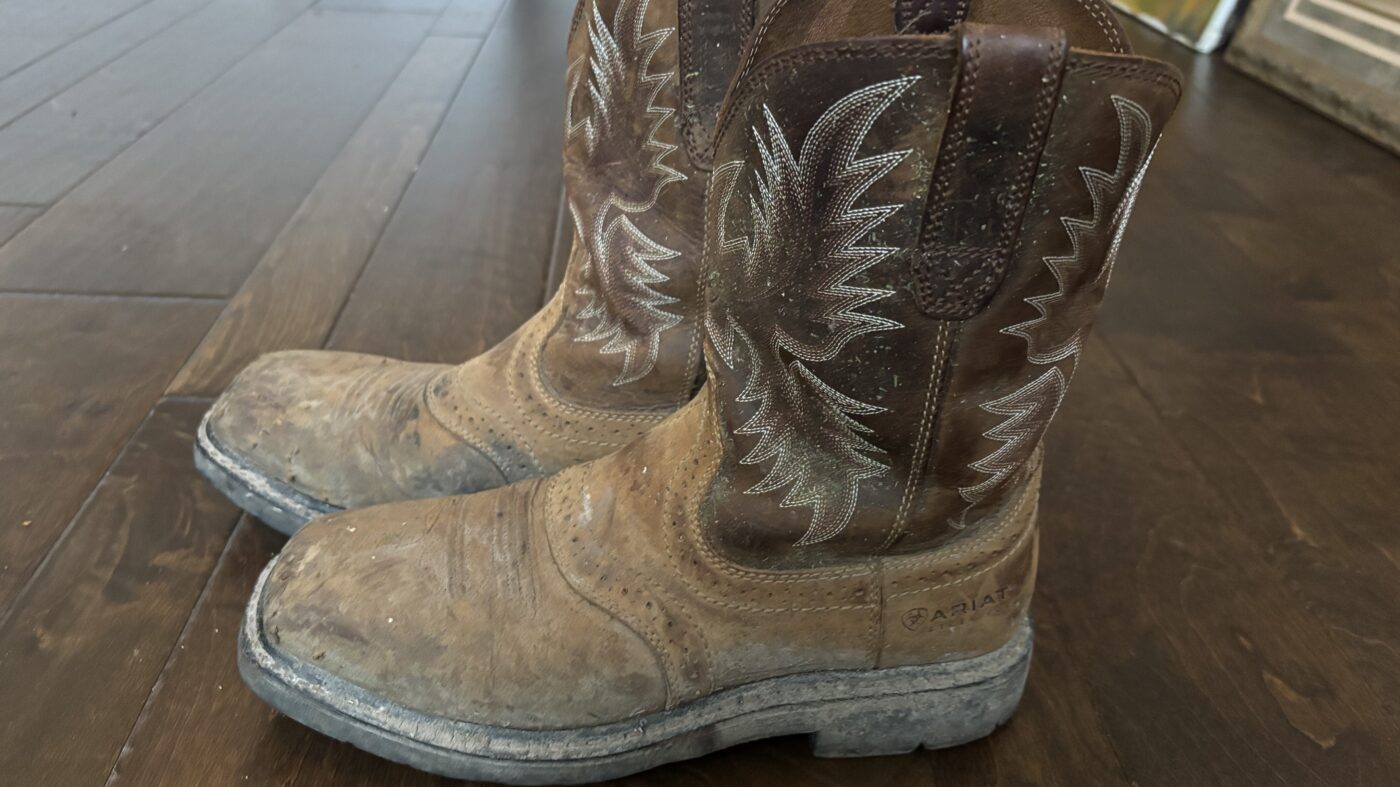
I have worn the Ariat Sierra Steel Toe through 18 months of daily farm work and it holds up better than most boots at this price. The steel toe has taken real hits, the Duratread sole keeps its grip on wet concrete and mud, and the boot stays comfortable through a full shift without the break-in punishment you get from stiffer leather work boots. It is not as cushioned as the WorkHog, but it is lighter and easier on your feet for mixed ground work where you are moving around more than standing still.
Key features:
- Square toe with full-grain leather upper — durable and breaks in without hot spots
- Duratread outsole — oil and slip-resistant on concrete, gravel, and wet ground
- ATS technology — lightweight cushioning for mixed-terrain work days
- Steel safety toe — ASTM F2413 rated; has taken livestock weight without injury
Best for: Daily farm and barn work, mixed terrain, anyone who wants a proven Ariat work boot at a lower price than the WorkHog
Safety: ASTM F2413 steel toe
Check current price on Amazon | Read my full Sierra Steel Toe review
Can You Ride Horses in Cowboy Work Boots?
Sometimes, but it depends on the boot. The features that make a boot good for ground work can work against you in the saddle.
| Feature | For riding | Against riding |
|---|---|---|
| Heel | Most work boots have a 1” heel — adequate for keeping your foot in the stirrup | Lower than a traditional riding boot; less security in a deep-seat saddle |
| Rubber outsole | Grips the stirrup pad in wet conditions | Aggressive lug soles can catch on stirrups and are hard to release quickly in a fall — a safety concern |
| Square toe | Fits most stirrups comfortably | Wider toe can reduce feel through the stirrup compared to pointed or rounded toes |
| Shaft height | Standard work boot shaft (10”–12”) provides decent leg protection | Lower than a tall riding boot; less ankle and calf support for extended riding |
| Safety toe | Protects against stirrup pressure and hoof strikes while on the ground | Steel toe adds weight that can fatigue legs in the saddle over a long ride |
For occasional riding between ground chores, the WorkHog or Justin Driller work fine. For extended riding or arena work, a dedicated riding boot is the safer and more comfortable choice. If you want one boot that does both, the Tony Lama 3R is the closest to a genuine crossover.
Safety note on lug soles and stirrups: Aggressive rubber lug soles — common on waterproof work boots — can catch in the stirrup and be difficult to release in a fall. If you ride regularly, check that your boot sole can clear your stirrup easily before trusting it in the saddle. A smooth rubber outsole like the Duratread is safer for riding than a deep lug pattern.

Boot Care and Break-In
A good boot still needs care. I learned that at Delta Downs in 2015: bought a pair of stiff Justin ropers and wore them for a fourteen-hour track shift without breaking them in first. By hour six I had blisters on both heels. By hour ten I was limping. Break new boots in gradually before trusting them for long days.
Break-in sequence:
- Wear new boots for 1–2 hours at a time for the first week — light chores only, not full shifts
- Apply leather conditioner (Bick 4 or Lexol) to soften stiff leather — avoid mink oil on work boots, it can soften sole stitching
- Wear thick work socks during break-in to reduce friction and help mold the boot to your foot
- Flex the sole at the ball of the foot to loosen it before wearing
- Address hot spots immediately with moleskin — a blister starting at hour two becomes a serious problem by hour ten
Daily maintenance: Brush off mud and manure before it dries — dried mud pulls moisture from leather and causes cracking. Condition monthly, more often in wet climates. Inspect welt stitching every few weeks. Replace insoles annually or when cushioning compresses. For more detail, see our complete boot break-in and care guide.
FAQs: Cowboy Work Boots
Are cowboy work boots good for ranch work?
Yes, when they have the right features. Look for oil- and slip-resistant rubber outsoles, ASTM F2413-rated safety toes, and cushioned midsoles for shock absorption. Traditional cowboy boots with leather soles are not appropriate for heavy ranch work — they lack traction on concrete and wet ground and provide no certified toe protection.
What is the most comfortable cowboy work boot for long shifts?
The Ariat WorkHog Wide Square Toe is one of the most comfortable options for long shifts. The 4LR (ATS Max) cushioning system reduces fatigue on concrete in a way that most competitors do not match. The wide square toe also allows natural toe splay, which prevents cramping over 10-12 hour shifts.
Are waterproof cowboy work boots worth it?
Yes, if you work in wet fields, paddocks, wash racks, or muddy conditions. Wet feet blister fast and lead to fungal issues. True waterproof boots use sealed seams and waterproof membranes — not just treated leather. The Wolverine Rancher Wellington is the best example of genuine waterproofing in a Western work boot.
Can you ride horses in cowboy work boots?
Sometimes. Boots with a heel of at least 1 inch and a smooth rubber outsole like the Ariat WorkHog work for occasional riding. Aggressive lug soles can catch in stirrups and are hard to release in a fall. Steel toes add weight that fatigues legs over long rides. For regular riding, a dedicated riding boot is safer and more comfortable.
What is the difference between cowboy work boots and casual western boots?
Cowboy work boots use oil- and slip-resistant rubber outsoles, ASTM F2413-rated safety toes, and cushioned EVA midsoles for shock absorption. Casual western boots have slick leather soles, no safety ratings, and minimal internal support for heavy labor. They are designed for appearance and comfort in low-demand situations, not for barns, job sites, or livestock work.
Key Takeaways
- Match the boot to the job: No single boot is best for everything — the WorkHog for all-day barn use, the Wolverine Rancher for wet conditions, the Tony Lama for riding
- Safety rating is not optional: If you handle livestock or work around heavy equipment, ASTM F2413 toe protection is the minimum standard
- Rubber outsole over leather: Leather soles belong in the saddle or at the dance; rubber is mandatory for concrete, gravel, and wet barn aisles
- Break in before you work: Never wear new work boots for a full shift — a week of short wears before a long day prevents the kind of misery that ends careers early
- Waterproof means sealed seams: Treated leather slows moisture; sealed construction stops it — know the difference before buying
The best cowboy work boots are the ones that fit your job, fit your foot, and hold up when the day gets long. If you work around horses, livestock, wet ground, or long hours on concrete, choose a boot that is actually built for those conditions — the right pair will feel right at the end of the day, not just at the start.
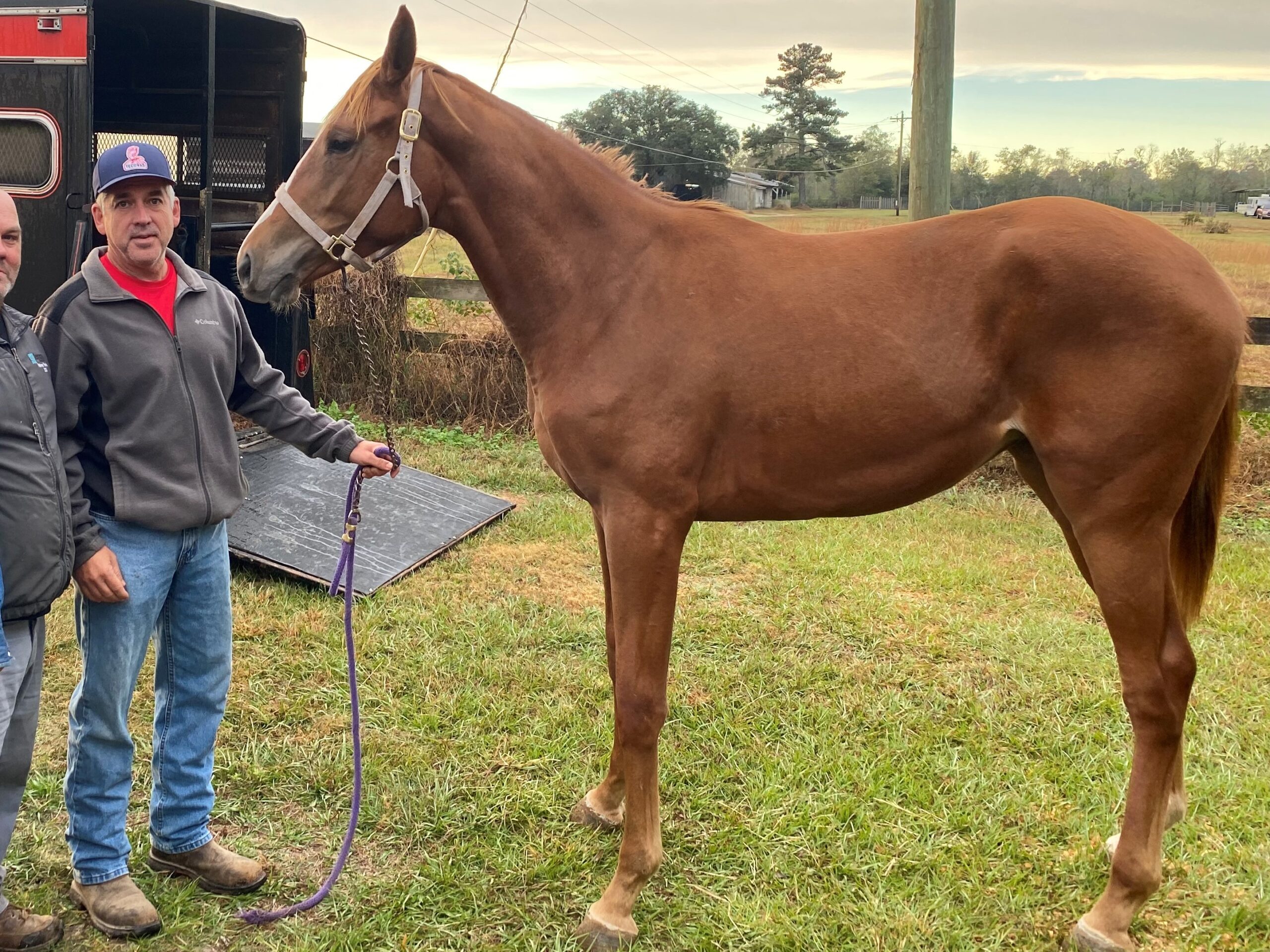
About Miles Henry
Racehorse Owner & Author | 30+ Years in Thoroughbred Racing
Miles Henry (legal name: William Bradley) is a professional horseman based in Folsom, Louisiana. He holds Louisiana Racing License #67012 and has spent over three decades managing Thoroughbreds at premier tracks including Fair Grounds, Delta Downs, and Evangeline Downs.
Expertise & Hands-On Experience: Beyond the track, Miles has decades of experience in specialized equine care, covering everything from hoof health and nutrition to training protocols for Quarter Horses, Friesians, and Paints. Every guide on Horse Racing Sense is rooted in this “boots-on-the-ground” perspective.
30 of their last 90 starts
Equibase Profile.

Connect with Miles: