
Last updated: September 14, 2026
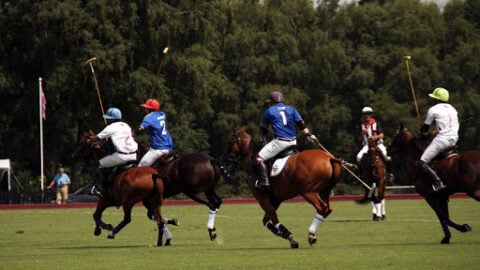
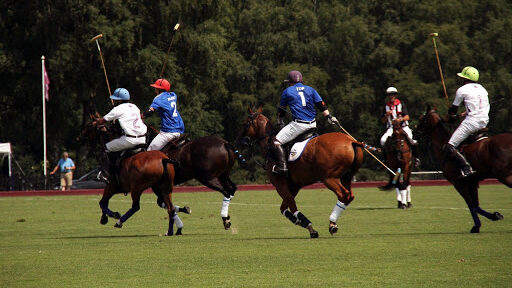
Polo still has a reputation as a game for royalty and the ultra-wealthy—and at the high-goal level, it can be. But the sport itself is far more global than that stereotype suggests. You’ll find organized polo in more than 80 countries, from Argentina and England to the United States, Spain, India, Australia, and the UAE.
Argentina is the country most closely associated with elite polo. It has the deepest concentration of top players and high-level polo ponies, while England, the United States, and Spain host many of the sport’s best-known club tournaments. Polo is played worldwide, but the strongest concentration of high-goal competition remains in Argentina, the UK, the U.S., and parts of continental Europe.
That still doesn’t make “the best” a one-answer question. A national team, a current professional team, and a famous polo club or tournament venue are three different things. Below, I’ll break down where polo is strongest, which clubs carry the most prestige, and how to think about the teams that are winning now.
Table of Contents
Where Is Polo Most Popular?
Argentina is where polo has its deepest roots at the top of the sport. It produces a remarkable number of elite players, breeds and trains exceptional polo ponies, and hosts the Argentine Open at Palermo—the tournament many polo people treat as the season’s ultimate test.
But Argentina isn’t the only place that matters. England has its established summer high-goal circuit, Florida anchors the American winter season, and Sotogrande in southern Spain is one of Europe’s major late-summer polo destinations. The UAE has also become an important investment and competition hub, particularly as it prepares to host the XIII FIP World Polo Championship in December 2026.
| Country or region | Why it matters in polo | Well-known hubs and events |
|---|---|---|
| Argentina | The deepest pool of elite players and polo ponies, plus the sport’s most demanding top-level competition. | Buenos Aires, Palermo, Argentine Open, Triple Crown. |
| England | One of polo’s traditional high-goal centers, with a concentrated and prestigious summer season. | Windsor, West Sussex, Cartier Queen’s Cup, British Open. |
| United States | A large club base, college polo, and a major winter high-goal circuit. | Wellington, Florida, National Polo Center, U.S. Open Polo Championship. |
| Spain | A major European destination that attracts strong international fields during the late summer. | Sotogrande, Santa María Polo Club, high-goal summer tournaments. |
| UAE and the Middle East | Growing club investment, international player recruitment, and an increasingly visible place on the global calendar. | Dubai, Ghantoot, Al Habtoor, Desert Palm, XIII FIP World Polo Championship host in 2026. |
The Federation of International Polo lists 86 national associations as members. That doesn’t mean every country has Argentina’s depth or England’s high-goal tradition, but it does show how widely the game is organized today. For the full history of how polo traveled from Central Asia and Persia into the modern international sport, see my guide to where horse polo originated.
Why Argentina Dominates Polo
Argentina’s advantage isn’t just that it produces great players. It’s also about the horses. Anybody who has owned and managed performance horses knows that the rider or player is only part of the equation; the quality, soundness, athleticism, and preparation of the horse change what’s possible on the field.
Argentine polo has built an entire system around that reality. The country has generations of experienced horsemen, a deep breeding base, and a culture in which elite players regularly develop long strings of polo ponies rather than relying on one standout horse. At the highest level, a player needs several fast, handy, well-conditioned mounts to play a full match, and the best Argentine operations are set up to produce and manage that kind of horsepower.
That’s why Argentina is still the benchmark when people talk about polo talent. It doesn’t automatically mean an Argentine national team wins every tournament, or that an Argentine-sponsored club team wins every season. It means the country has the deepest overall base of elite players, horses, horsemen, and major competition.
Where Is Polo Played Around the World?
Polo is played across the Americas, Europe, Asia, Oceania, Africa, and the Middle East. The level of competition varies widely—from small local clubs and university programs to high-goal tournaments that bring together many of the best players in the world.
- South America: Argentina is the clear leader, but Brazil, Chile, and Mexico also have active polo communities and competitive events.
- North America: The United States has a broad club structure, college polo, arena polo, and major outdoor high-goal circuits. Canada and Mexico also have active club scenes.
- Europe: England, Spain, France, Italy, Germany, and Switzerland all support organized polo, with England and Spain standing out at the highest outdoor level.
- Asia: India and Pakistan have long polo traditions, while other Asian countries support developing club and arena-polo scenes.
- Oceania: Australia and New Zealand both have established clubs and active amateur competition.
- Africa and the Middle East: South Africa, Kenya, Egypt, the UAE, and other countries have polo communities, with the UAE becoming especially important because of club investment and international events.
So if you’re asking where polo is played, the short answer is nearly everywhere people have the horses, land, club structure, and money to support it. If you’re asking where the sport is played at its very highest level, the answer narrows quickly to Argentina, England, the United States, Spain, and a growing Middle Eastern circuit.
The Global Polo Calendar
One thing that stands out to anybody involved with performance horses is how much serious polo follows the seasons. When one major circuit starts to wind down, another is already getting going somewhere else. Top players, grooms, and horses may spend much of the year moving between countries rather than competing in a single local season.
- Spring and summer in England: The English high-goal season generally runs from late spring into mid-summer, with the Cartier Queen’s Cup and British Open among its best-known events.
- Late summer in Spain and parts of Europe: Sotogrande becomes a major destination for high-goal polo and international teams.
- Southern Hemisphere spring in Argentina: Argentina’s major season culminates with the Triple Crown and Argentine Open at Palermo.
- Winter and spring in Florida: Wellington’s high-goal season includes the U.S. Open Polo Championship at the National Polo Center.
That constant movement makes horse management a bigger part of polo than many newcomers realize. You’re not just moving players and tack. You’re shipping a string of equine athletes, keeping them fit, managing recovery, and trying to have each horse ready to play when the competition matters.
The Most Prestigious Polo Clubs in the World
“Best polo club” is a little tricky because polo clubs don’t compete as permanent teams the way football clubs do. A club’s reputation comes from its history, fields, facilities, the tournaments it hosts, and the caliber of players and teams it attracts. There’s no official worldwide club ranking, but these are among the names most closely associated with top-level polo.
- Guards Polo Club, Windsor, England: Guards is one of the best-known clubs in English polo and hosts the Cartier Queen’s Cup, a marquee event of the English high-goal season.
- Cowdray Park Polo Club, West Sussex, England: Cowdray hosts the Gold Cup for the British Open Polo Championship, one of the sport’s most respected annual tournaments.
- Santa María Polo Club, Sotogrande, Spain: Santa María is central to Spain’s high-goal summer season and regularly draws elite international talent to southern Spain.
- National Polo Center, Wellington, Florida: The National Polo Center is the hub of American high-goal polo and hosts the U.S. Open Polo Championship during the Florida season.
- Campo Argentino de Polo, Palermo, Buenos Aires: Palermo is a historic tournament venue rather than a club in the same sense as Guards or Cowdray, but it belongs on any list because it hosts the Argentine Open, the centerpiece of the Argentine Triple Crown.
There are plenty of excellent clubs beyond those five. But if a new polo fan wants to understand where the biggest outdoor events are played and where the strongest fields tend to gather, those venues are a good place to start.
Best Polo Teams in the World
There isn’t one official world ranking that settles this question. Polo teams change with the season, patrons change teams, and a lineup that dominates in Argentina may not even enter the biggest U.S. or English tournament. The best way to judge current strength is to look at results in major high-goal events, such as the Argentine Open, the U.S. Open, the British Open, and the Cartier Queen’s Cup.
Leading current professional teams
Recent winners give a better picture than a made-up permanent ranking. In 2026, Pilot won the U.S. Open Polo Championship in Wellington, beating BTA 15–10 in the final. Pilot’s lineup included Curtis Pilot, Mackenzie Weisz, Lorenzo Chavanne, and Camilo “Jeta” Castagnola. Balanz Capital won the 2026 Cartier Queen’s Cup in England, another major result in the current high-goal season.
In Argentina, the strongest recent teams are measured by their performances in the Triple Crown, especially the Argentine Open. The winning team there has earned its place against the deepest concentration of elite players and horses anywhere in the game. Still, calling any one club team “the best in the world” only makes sense if you attach a season and tournament to that claim.
Best national polo teams
National-team polo is a separate conversation. Argentina has won the FIP World Polo Championship five times, more than any other country, and remains the strongest country overall for player depth and polo pony breeding. But championship results can be unpredictable, particularly because national-team competitions don’t always mirror the same lineups and horsepower seen in the biggest professional tournaments.
At the XII FIP World Polo Championship in Wellington in 2022, Spain won its first title by beating the United States 11–10 in sudden-death overtime. The U.S. reached that final after defeating defending champion Argentina 9–8 in overtime in the semifinal. As of September 2026, Spain is the winner of the most recently completed FIP World Polo Championship; the XIII tournament is scheduled for the UAE in December 2026.
Miles’ take: Argentina is still the benchmark if you’re talking about player depth, polo pony breeding, and the standard of the Argentine Open. But that doesn’t mean Argentina wins every international event, and it doesn’t mean one Argentine club team is automatically the world’s best every season. In polo, “best” depends on whether you mean national-team results, a specific high-goal season, or the overall depth of a country’s talent and horsepower.
Who Sponsors Polo?
Putting together a competitive polo team is expensive. Anyone who has owned performance horses knows how quickly the numbers rise once you factor in feed, veterinary care, farrier work, training, transportation, insurance, staff, and facilities. Polo multiplies that reality because competitive players need a string of capable mounts, not just one good horse.
That cost structure is one reason polo has long attracted luxury and lifestyle sponsors. Major tournaments have been associated with brands such as Cartier, Rolex, Jaeger-LeCoultre, Piaget, BMW, Audi, Porsche, and Maserati. The draw isn’t necessarily a massive television audience. It’s access to a smaller, affluent group of patrons, business owners, equestrians, and social guests connected to the sport.
If you’re curious about the practical side of the expense, read my breakdown of what it costs to play polo.
FAQ
Where is polo most popular?
Argentina is generally considered polo’s leading country for elite players, polo pony breeding, and the depth of its high-level competition. England, the United States, and Spain are also major high-goal centers, while organized polo is played in more than 80 countries worldwide.
Where is polo played?
Polo is played across the Americas, Europe, Asia, Oceania, Africa, and the Middle East. The Federation of International Polo lists 86 member national associations, although the depth of competition varies widely from local clubs to major high-goal circuits.
What is the best polo team in the world?
There is no official single world ranking for professional polo teams. The strongest team changes by season and tournament. Argentina remains the leading country for player depth and polo ponies, while recent major winners include Pilot, which won the 2026 U.S. Open Polo Championship.
What are the best polo clubs in the world?
There is no formal worldwide club ranking, but Guards Polo Club and Cowdray Park in England, Santa María Polo Club in Sotogrande, the National Polo Center in Wellington, and Campo Argentino de Polo at Palermo are among the sport’s most recognized high-level venues.
Why is Argentina considered the best polo country?
Argentina has the deepest pool of elite polo players, a renowned polo pony breeding and training culture, and the Argentine Open at Palermo. It is widely viewed as the sport’s benchmark for top-level outdoor polo.
Is polo still only played by wealthy people?
High-goal polo is expensive because players maintain multiple horses and pay substantial training, travel, staff, and competition costs. However, many local clubs offer lower-goal, arena, university, youth, and introductory polo that is more accessible than the sport’s elite level.
Polo may still look like a rich person’s sport from the outside, and at the top level it often is. But underneath that image is a truly international game with serious depth in Argentina, long-standing prestige in England, major infrastructure in the United States, a strong European season in Spain, and growing investment in the Middle East.
Argentina remains the clear answer if you’re asking which country has the deepest polo culture, strongest player pool, and best supply of elite polo ponies. But if you’re asking who has the best club, team, or national side right now, the answer changes with the tournament, the season, and the horses each lineup brings to the field.
About Miles Henry
Racehorse Owner & Author | 30+ Years in Thoroughbred Racing
Miles Henry (legal name: William Bradley) is a professional horseman based in Folsom, Louisiana. He holds Louisiana Racing License #67012 and has spent over three decades managing Thoroughbreds at premier tracks including Fair Grounds, Delta Downs, and Evangeline Downs.
Expertise & Hands-On Experience: Beyond the track, Miles has decades of experience in specialized equine care, covering everything from hoof health and nutrition to training protocols for Quarter Horses, Friesians, and Paints. Every guide on Horse Racing Sense is rooted in this “boots-on-the-ground” perspective.
30 of their last 90 starts
Equibase Profile.

Connect with Miles: