Last updated: September 30, 2026
Any links on this page that lead to products on Amazon are affiliate links and I earn a commission if you make a purchase. Thanks in advance – I really appreciate it!
Spurs aren’t just cowboy gear. You’ll see them on western riders, dressage riders, jumpers, eventers, and people training racehorses. If you’ve ever wondered why spurs are used in horseback riding, or whether they hurt the horse, it helps to know what they’re actually meant to do.
Quick answer: Spurs are used to reinforce a rider’s leg cue when a horse needs a more precise response. A spur should back up a cue the horse already understands, not replace correct leg aids, force him forward, or cause pain. Used with a steady leg and good timing, spurs can be a subtle communication tool. Used carelessly, they can confuse or hurt a horse.
I’ve seen spurs used in ranch work, everyday riding, and racehorse training, and the principle is always the same: they’re there to whisper, not shout. Below, I’ll explain how they work, how riders in different disciplines use them, when to leave them off, and how to choose and fit a pair fairly.
Table of Contents
Why Are Spurs Used?
A spur extends your heel aid. It lets you give a more specific signal without stronger leg pressure or exaggerated movement. The goal isn’t more force. It’s clearer communication.
On a horse that already understands your leg, a brief, deliberate touch can back up a request to respond more promptly, move away from the leg, or hold a more precise response. You still ask with your leg first, and the spur is only a light backup. Like every riding aid, it works through timing: give the cue, then release the instant the horse responds.
Horseman’s Take: If you have to dig a spur in to get a response, you don’t have a spur problem. You have a training problem. A well-trained horse should respond to your leg first, with the spur only there to back it up.
How Different Riders Use Spurs
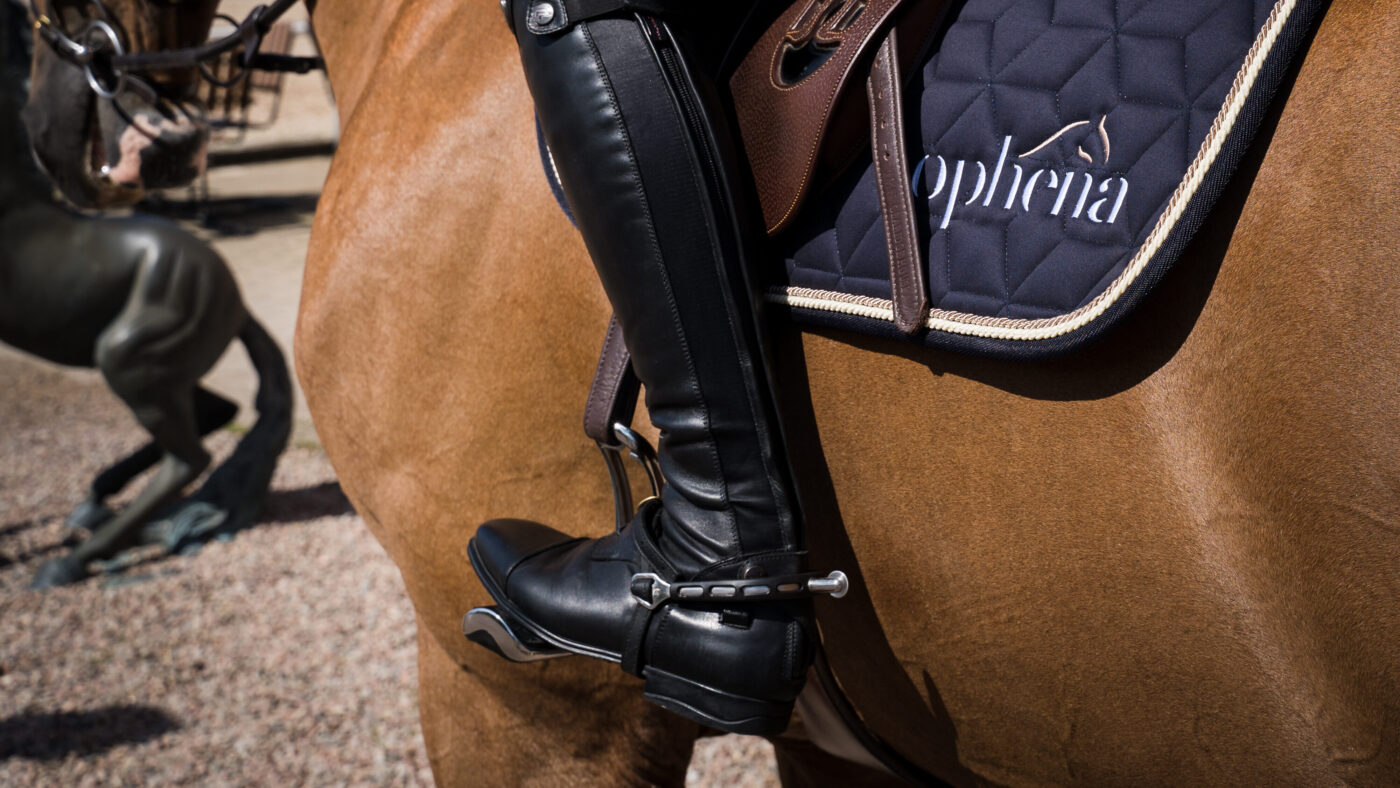
Spurs show up in nearly every discipline, but the style of spur and the job it does can look different. The common thread is that the horse should already understand the leg. The spur just makes a quiet cue more distinct.
| Discipline | How riders may use spurs | What matters most |
|---|---|---|
| Western and ranch work | To back up a cue for a prompt response, moving sideways, rating a cow, or changing direction quickly while handling cattle | A quiet leg and a horse that already moves off leg pressure |
| Dressage | To refine the leg aid for a more precise response in lateral work, transitions, and collection | Correct fit, a quiet lower leg, and equipment your competition rules allow |
| Jumping and eventing | To back up a leg aid when the rider needs a prompt response while staying balanced | Never using a spur to punish a horse or to make up for an unsteady leg |
| Racehorse training | Where the rules allow it, some exercise riders use a spur as a quiet backup while schooling or conditioning a horse that understands the cue | Timing, restraint, and knowing the individual horse; stronger equipment is no substitute for training or soundness |
| Pleasure and trail riding | To make an already-understood cue clearer without repeated, heavy leg pressure | Plenty of horses go perfectly well without spurs, and there’s no need to wear them just because others do |
Young horses call for extra care. Experienced trainers may use a mild spur while schooling a young horse, but only after he understands basic leg pressure, and only when the rider can apply it quietly and release right away. A green horse that ignores the leg, rushes, kicks out, or gets anxious needs education and a careful look at his comfort, not stronger equipment.
Why Do Cowboys Wear Spurs?
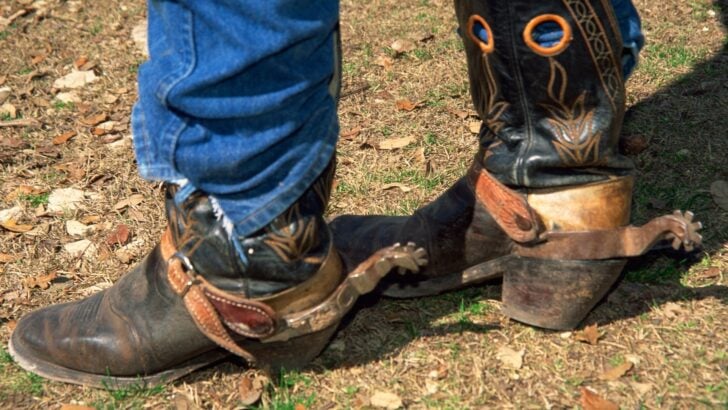
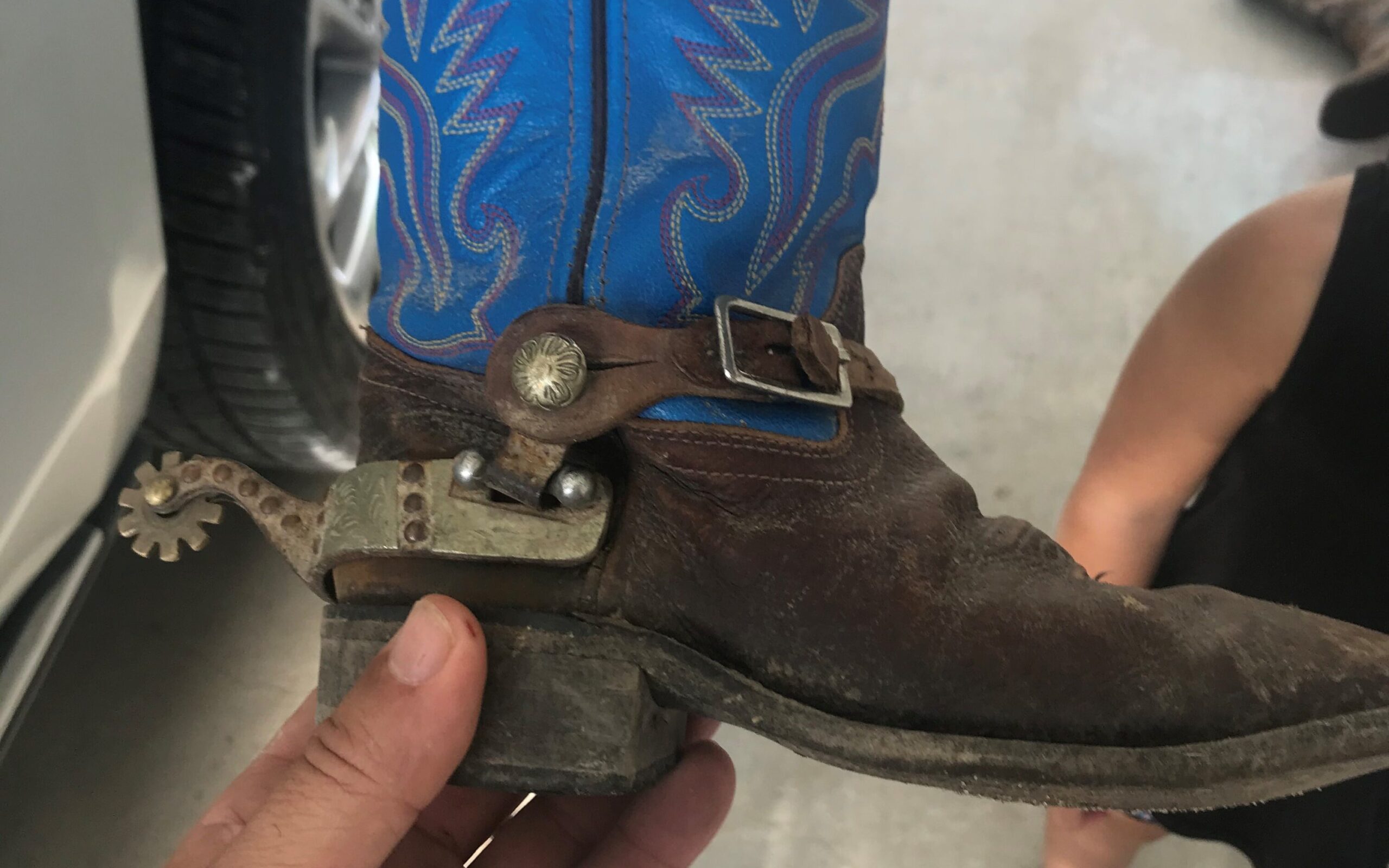
Cowboys wear spurs for the same basic reason riders in other disciplines do: to back up a quiet leg cue. In cattle work, a horse may need to move sideways, rate a cow, or change direction quickly while the rider’s hands are busy with a rope, rein, or gate. On a horse that already knows leg pressure, a spur can make those cues smaller and clearer without big, loud legs. Cowboy boots don’t come with spurs built in, though. Riders strap them on.
Do Spurs Hurt Horses?
Used correctly, spurs shouldn’t hurt a horse. He should feel a brief cue, not pain. Used badly, they can. An unsteady leg, a spur that’s too long or too sharp, poor fit, or jabbing out of frustration can rub off hair, make a horse sore, or break the skin. The rider’s timing and leg control matter most, but the spur’s design and condition matter too.
If a horse that normally responds to your leg turns dull, resistant, or reactive, don’t reach for stronger spurs. Rule out pain, saddle fit, fatigue, and confusion in his training first.
For a first pair, choose a modest shank with a rounded or blunt contact point, and inspect rowels now and then for burrs or sharp edges. If you compete, check your association’s current rules before buying or showing in a pair, since many restrict sharp or serrated rowels. If a horse shows rub marks, swelling, tenderness, or broken skin where the spur touches, stop using them and figure out why.
When to Leave the Spurs Off
Spurs are optional, and in plenty of situations they’re the wrong tool:
- Green riders. If you’re still working on a steady leg and a quiet seat, spurs will magnify every bump and wobble. Master your basic cues first.
- Green horses. A young or unschooled horse needs to understand leg pressure before you add a spur.
- A sore, reactive, or anxious horse. More pressure won’t fix pain, fear, confusion, or gaps in training, and it can make the problem worse.
- When you’re angry. If your temper’s up, you’ve lost the control spurs require. They should never be used to teach a horse a lesson.
- When your trainer says wait. If your instructor says you’re not ready, ride without them.
My rule of thumb: if you can’t keep a quiet leg and release pressure the instant your horse responds, you’re better off riding without spurs.
Choosing a Mild Spur
This section contains affiliate links. I may earn a commission if you buy through them, at no extra cost to you.
If you and your horse are ready for spurs, start conservatively. A shorter shank makes accidental contact less likely, and a blunt or rounded end avoids focusing pressure on one small spot. Roller-ball spurs, like the Coronet Soft Touch roller-ball spurs, have a smooth ball instead of a pointed rowel. They’re a sensible mild option, but no spur is beginner-proof. Your leg control and timing still matter most.
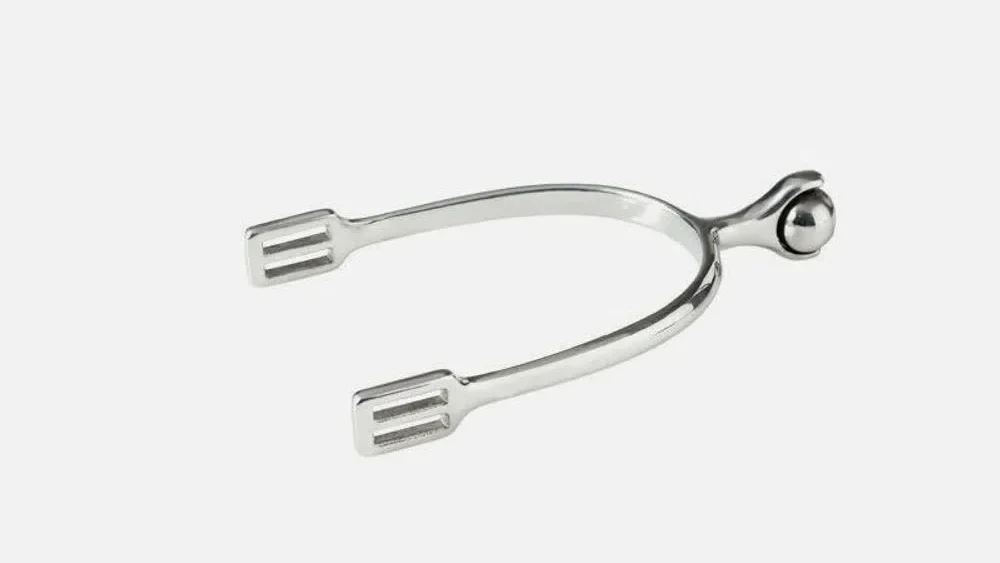
Whatever you choose, pair it with good horsemanship: light contact, a clear release as soon as the horse tries, and a trainer watching your first few rides.
Do You Need Special Boots for Spurs?
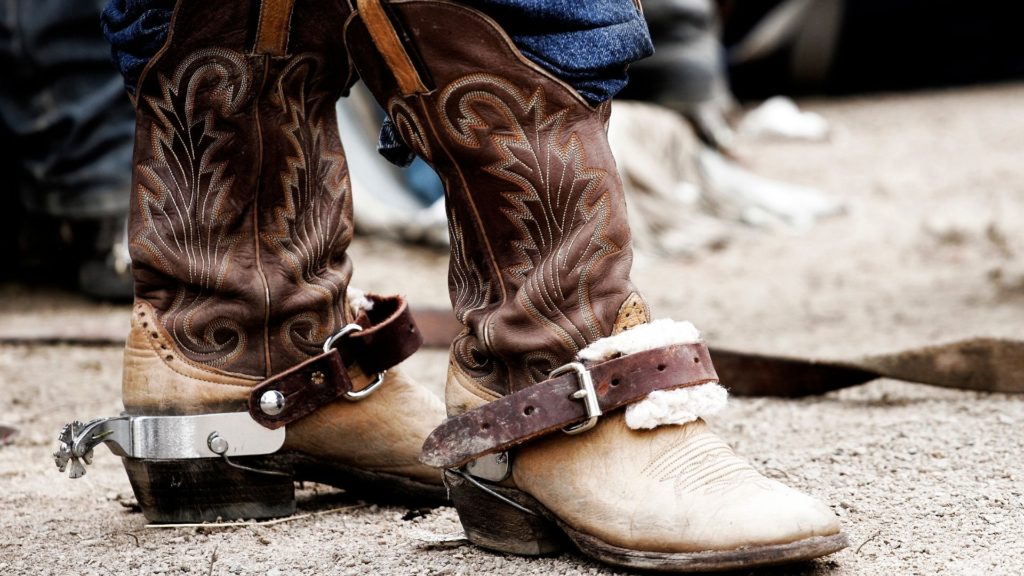
A spur has three main parts: the heel band, which wraps around the back of the boot; the shank, which sticks out behind the heel; and on many western spurs, the rowel, a small wheel that turns at the end. Leather straps hold it in place.
To wear spurs, you need a riding boot with a defined spur ledge, the small shelf at the back of the heel that supports the heel band and keeps the spur from sliding down. Most western riding boots have one, but many fashion boots and some work boots don’t. English riding boots are made to hold English-style spurs.
Before you buy a pair, make sure the heel band fits your boot and the straps buckle without pinching. A spur that slips, twists, or sits too low can touch the horse by accident and send a mixed signal. My favorite boots for riding are Justin Ropers, and my guide to the best cowboy boots for horse riding covers other western options.
How to Put Spurs on Riding Boots
- Attach the straps to the spurs. The leather straps fasten to the buttons on each side of the spur’s heel band.
- Set the heel band on the spur ledge. Wrap it around the back of the heel, with the shank pointing straight behind the boot.
- Buckle the strap over the top of your foot. Put the buckle on the outside of each boot.
- Check the fit. The spur should stay in place without slipping below the ledge, twisting, or pinching the boot.
- Walk before you mount. Take a few steps and make sure both spurs sit evenly and do not slide or rotate.
Replace cracked or stretched straps. A loose spur can shift, touch the horse when you don’t intend it to, and send a mixed cue.
Tips for Riding With Spurs
- Learn from a trainer first. Misused spurs can sour a good horse.
- Only use them on horses that already respond to leg cues.
- Ask with your leg first. The spur should only back up a cue the horse already knows.
- Keep your heels and legs quiet so you don’t touch the horse without meaning to.
- Use them when you need them, not every ride.
Horseman’s Take: My son-in-law rides every day but only puts his spurs on when he works cows. His horse knows it, too. When the spurs go on, the horse gets excited, because he knows a fun day of work is coming.
Where Spurs Came From
Spurs go back more than 2,000 years, long before cowboys, and the western spur came to the American cowboy through the Spanish and Mexican vaquero tradition. For more on how working cowboys dressed, see my article on what Old West cowboys wore.
What Are Jingle Bobs?
Jingle bobs are small metal pendants that hang from a western spur and jingle when you walk. They’re a traditional style detail, not something you need to ride. If you like the sound, Kelly Silver Star jingle bob spurs are one example.
Spurs FAQ
Why are spurs used in horseback riding?
Spurs are used to reinforce a rider’s leg cue with a light, deliberate touch, helping a trained horse respond more clearly and precisely. They refine communication; they are not meant to punish a horse, replace correct leg aids, or make him go faster by force.
Are spurs cruel to horses?
Not when they’re used correctly by a trained rider on a trained horse. The horse should feel light pressure, not pain. Misused spurs can make a horse sore or break the skin, so learn from a trainer, choose blunt or roller-ball designs, and never use them out of frustration.
Why wear spurs if my horse already listens to my leg?
You may not need them. Riders use spurs to make an already-trained response quicker and lighter, especially in ranch work or events that need precise, quiet cues. If your horse does what you ask with your leg alone, there’s nothing wrong with riding without them.
Do cowboy boots come with spurs?
No. Cowboy boots and spurs are separate pieces of equipment. Most riding boots have a spur ledge at the back of the heel so a spur can sit securely.
Can beginners use spurs?
Usually not. Wait until you have a steady lower leg and can give consistent basic cues, and ask your trainer when you’re ready.
Do you need special boots to wear spurs?
You need a boot with a spur ledge, the small shelf at the back of the heel. Most western riding boots have one, but many fashion boots and some work boots don’t.
Whether you ride western, dressage, jumpers, eventing, or racehorses, spurs are meant to refine communication, not add power. On a horse that understands the leg, and with a rider who can use them quietly, they make a cue lighter and clearer. If that foundation isn’t there yet, leave them in the tack room and work on the basics first.
About Miles Henry
Racehorse Owner & Author | 30+ Years in Thoroughbred Racing
Miles Henry (legal name: William Bradley) is a professional horseman based in Folsom, Louisiana. He holds Louisiana Racing License #67012 and has spent over three decades managing Thoroughbreds at premier tracks including Fair Grounds, Delta Downs, and Evangeline Downs.
Expertise & Hands-On Experience: Beyond the track, Miles has decades of experience in specialized equine care, covering everything from hoof health and nutrition to training protocols for Quarter Horses, Friesians, and Paints. Every guide on Horse Racing Sense is rooted in this “boots-on-the-ground” perspective.
30 of their last 90 starts
Equibase Profile.

Connect with Miles: