
Last updated: July 9, 2026
Any links on this page that lead to products on Amazon are affiliate links and I earn a commission if you make a purchase. Thanks in advance – I really appreciate it!
Why Do Horses Trip? Quick Answer: One of the most common causes owners encounter is hoof imbalance — overgrown toes, poor breakover, or missed farrier cycles. Other causes include fatigue, poor conditioning, conformation, pain, and in serious cases, neurological disease. Occasional stumbling on uneven ground is normal. Repeated stumbling on flat surfaces, dragging toes, or sudden onset coordination loss requires veterinary evaluation.
What I Look For First as a Thoroughbred Owner: When one of my horses begins catching or dragging during training, I do not immediately assume the worst. I look for patterns. Did it begin after a shoeing cycle? Does it happen when the horse is tired but not early in a set? Is it only under tack? Does the horse feel different through turns or circles? Those observations usually narrow the problem faster than calling it “tripping” and hoping it resolves. Pattern recognition is what separates early intervention from delayed diagnosis.
Table of Contents
When Should You Worry About a Horse That Trips?
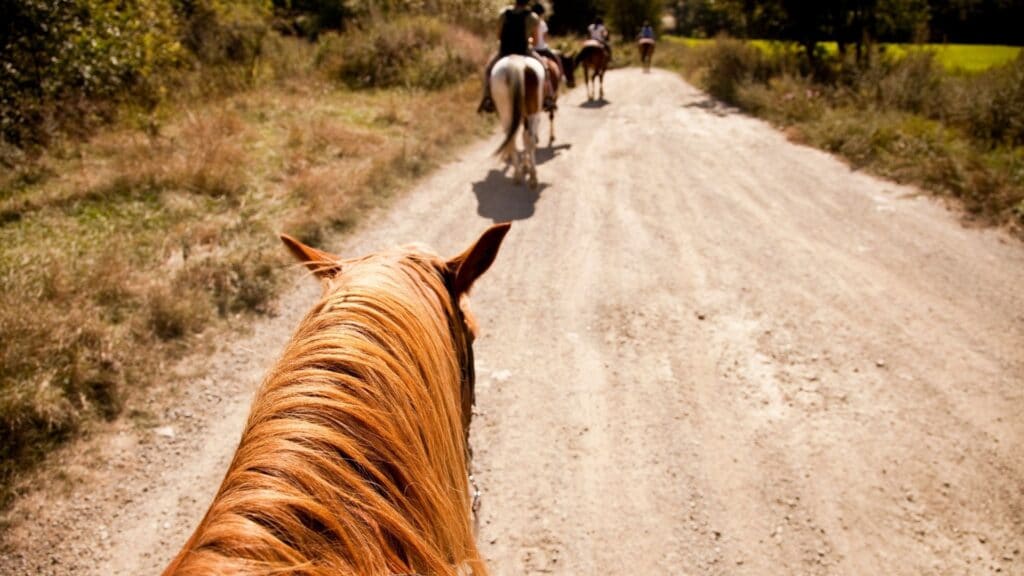
Most horses stumble at some point — a misstep on loose footing, a distracted moment on a familiar trail. That is normal. What is not normal is pattern stumbling: the same foot catching repeatedly, tripping on flat even ground, or a sudden change in how a horse moves.
| What you notice | Likely cause | First step |
|---|---|---|
| Trips only on trail or uneven ground | Distraction, footing, normal variation | Observe; check environment |
| Repeatedly catches the same foot | Hoof imbalance, conformation | Farrier evaluation |
| Drags toes or “daisy cuts” | Hoof problems, weakness, neurological | Farrier and vet evaluation |
| Stumbles more with a rider up | Fitness, saddle fit, back pain | Check tack and conditioning |
| Older horse suddenly tripping more | Arthritis, joint pain, neurological | Veterinary exam |
| Sudden onset with loss of coordination | Neurological disease, spinal issue | Call vet promptly |
7 Reasons Horses Trip: From Most Common to Most Serious
1. Hoof Imbalance (Most Common)
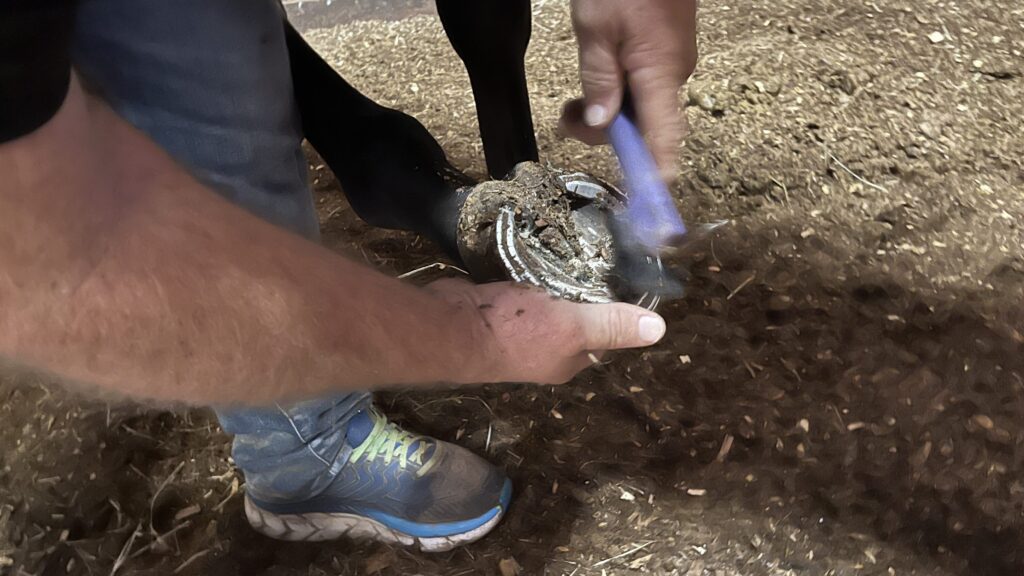
Overgrown toes are the first thing I check when a horse repeatedly catches a foot. Long toes delay breakover, making the horse appear lazy with its feet and prone to stumbling at the trot. I look at the breakover point, heel balance, and wear pattern. A mare I trained stopped catching at the slow trot after one farrier visit corrected an overgrown toe. Most horses need trimming or shoeing adjustments about every 6–8 weeks, though the right schedule depends on the horse, workload, and hoof growth rate. For more, see our guide on hoof pain in horses.
2. Fatigue and Poor Conditioning
A tired or unfit horse loses the muscular coordination needed to place its feet accurately. This shows up most at the end of a long workout or when a horse returns from a layoff. The legs go where gravity takes them rather than where the horse intends.
I saw this with a young Thoroughbred who had been off training for several weeks after a mild colic episode. When we brought him back, he stumbled repeatedly during works — not because anything was structurally wrong, but because his fitness base had dropped. We went back to basics: walking, then pole work, then gradual canter sets over about a month. The stumbling stopped as his conditioning returned. See how we approach racehorse training progression for more on building fitness incrementally.
3. Distraction and Inattention
Some horses simply check out. A bored or distracted horse drops its focus, drops its head, and stops picking up its feet properly. I have had geldings misstep on perfectly flat ground because they were tracking a deer at the tree line. Short direction changes, transitions, and varying the work usually bring them back. This is more a training issue than a soundness issue, but it is worth distinguishing from pain-related stumbling.
4. Conformation
Some horses are built in ways that increase tripping risk — toed-in or toed-out feet, long pasterns, shallow shoulder angles. A filly I trained had a turned-out front foot that caught a toe on flat ground when she fatigued. We could not change her conformation, but careful shoeing and strengthening work reduced the problem significantly. For more, see our article on horse conformation and soundness.
5. Chronic or Low-Grade Pain
Horses in pain compensate. A horse with hoof sensitivity, tendon irritation, or back soreness may shift weight, shorten stride, or alter gait in ways that produce toe-dragging or catching as a secondary effect. The pain is often subtle enough that the horse does not appear overtly lame — it just moves differently. A two-year-old in my barn stumbled repeatedly during training; a veterinary examination found a hoof bruise that had not been obvious to the eye. Resolving the bruise and adjusting her workload resolved the stumbling.
6. Joint Pain and Arthritis
Older horses frequently develop joint stiffness that affects gait. A horse with stifle or hock arthritis may drag a hind leg, shorten stride, or stumble — particularly in cold weather or at the start of a ride before the joints warm up. My mare Bella showed this pattern: slight hind leg dragging on cold mornings that improved after a longer warm-up. A veterinary examination confirmed mild stifle arthritis. With appropriate management and veterinary guidance, she became more consistent. For a detailed look at one of the most common joint issues in horses, see our article on stifle joint problems.
7. Neurological Disease (Most Serious)
When the nervous system is involved, stumbling looks different — inconsistent foot placement, crossing legs, dragging toes on multiple limbs, or losing balance in turns. One of my Thoroughbred geldings, Corked, began tripping in tight circles in a pattern that felt neurological rather than mechanical. A vet evaluation confirmed a mild EPM infection; early treatment allowed him to eventually return to safe riding, though outcomes vary with severity and timing. Neurological stumbling can also stem from cervical stenosis, wobbler syndrome, or other spinal conditions — only a vet can differentiate them. The UC Davis Center for Equine Health notes that early intervention significantly improves outcomes.
How to Find the Cause
When a horse is stumbling repeatedly, start with observation before calling anyone. Note when it happens — which gait, which foot, which conditions. That information guides your farrier and vet more than a general complaint of “he keeps tripping.”
A basic field check before calling the farrier or vet:
- Watch the horse walk away from you and toward you on flat ground — note which foot catches and when
- Check all four hooves for visible overgrowth, cracks, or thrush
- Pick up each foot and look for heat, sensitivity, or abscess signs
- Walk the horse on different surfaces — does stumbling change on soft vs hard ground?
- Note whether stumbling is worse under saddle than in hand — this points toward fitness, saddle fit, or back pain
- Record which conditions trigger it: gait, footing, time of day, early vs late in the ride
- Film the horse walking and trotting in hand and, if safe, under saddle — short video clips give your farrier and vet far more information than a verbal description
Once you have that picture, bring in the right professional:
Who to call and why:
- Farrier first — hoof imbalance is the most common cause and the easiest to fix; schedule an evaluation before assuming something more serious
- Veterinarian — if the farrier finds nothing, or if stumbling is sudden, worsening, or involves multiple limbs; also appropriate for older horses where arthritis or neurological causes are more likely
- Trainer — if the horse passes both farrier and vet evaluation clean, the cause may be training, fitness, or rider-related
When to Call the Vet
Call your vet promptly if your horse:
- Stumbles suddenly with no recent change in farrier schedule or workload
- Drags toes on more than one limb
- Crosses legs or shows abnormal limb placement
- Loses balance in turns or on circles
- Stumbles with any sign of weakness — leaning, difficulty rising, or falling
- Shows a head tilt, facial asymmetry, or difficulty swallowing alongside stumbling
These signs suggest neurological involvement or significant systemic disease. Do not ride until you have a veterinary evaluation. Do not wait to see if it improves on its own.
FAQs: Why Do Horses Trip and Stumble
Why does my horse trip when walking?
Stumbling at the walk usually points to hoof imbalance, low-grade pain, or fatigue. A horse with overgrown toes or poor hoof balance often stumbles at slow gaits because the delayed breakover causes the toe to catch. Check when your farrier last trimmed and book an evaluation. If hoof issues are ruled out, a veterinary lameness exam is the next step.
Why does my horse stumble more with a rider?
Adding a rider’s weight increases the demands on the horse’s balance, back, and hindquarters. A horse that manages on its own may stumble under saddle due to poor fitness, saddle fit problems causing back pain, or a rider’s position affecting balance. If stumbling only occurs under saddle, have a trainer evaluate your riding position and check saddle fit before assuming a soundness issue.
Can a bad saddle cause a horse to trip?
Yes. A saddle that pinches the withers, bears down on the spine, or sits too far back can cause significant back pain that alters gait and produces stumbling as a compensation. If stumbling began around the time you changed saddles or intensified workload, saddle fit is worth investigating.
Why is my old horse suddenly stumbling more?
In older horses, sudden increases in stumbling most commonly point to joint deterioration — particularly in the hocks, stifles, or coffin joint — or to early neurological changes. Both warrant veterinary evaluation rather than a wait-and-see approach. Age-related joint changes are manageable with appropriate veterinary guidance, but neurological conditions require prompt diagnosis.
Should I stop riding a horse that trips?
If stumbling is occasional and on uneven ground, you do not need to stop riding — but you should investigate the cause. If stumbling is frequent, on flat ground, involves multiple limbs, or has appeared suddenly, stop riding until you have a veterinary evaluation. Riding a horse with an undiagnosed neurological condition is a safety risk to both horse and rider.
Veterinary sources referenced: Merck Veterinary Manual — Disorders of the Foot in Horses | UC Davis Center for Equine Health — Equine Neurology
This article is for general educational purposes and is not a substitute for professional veterinary advice. Always consult your veterinarian for concerns about your horse’s health.
About Miles Henry
Racehorse Owner & Author | 30+ Years in Thoroughbred Racing
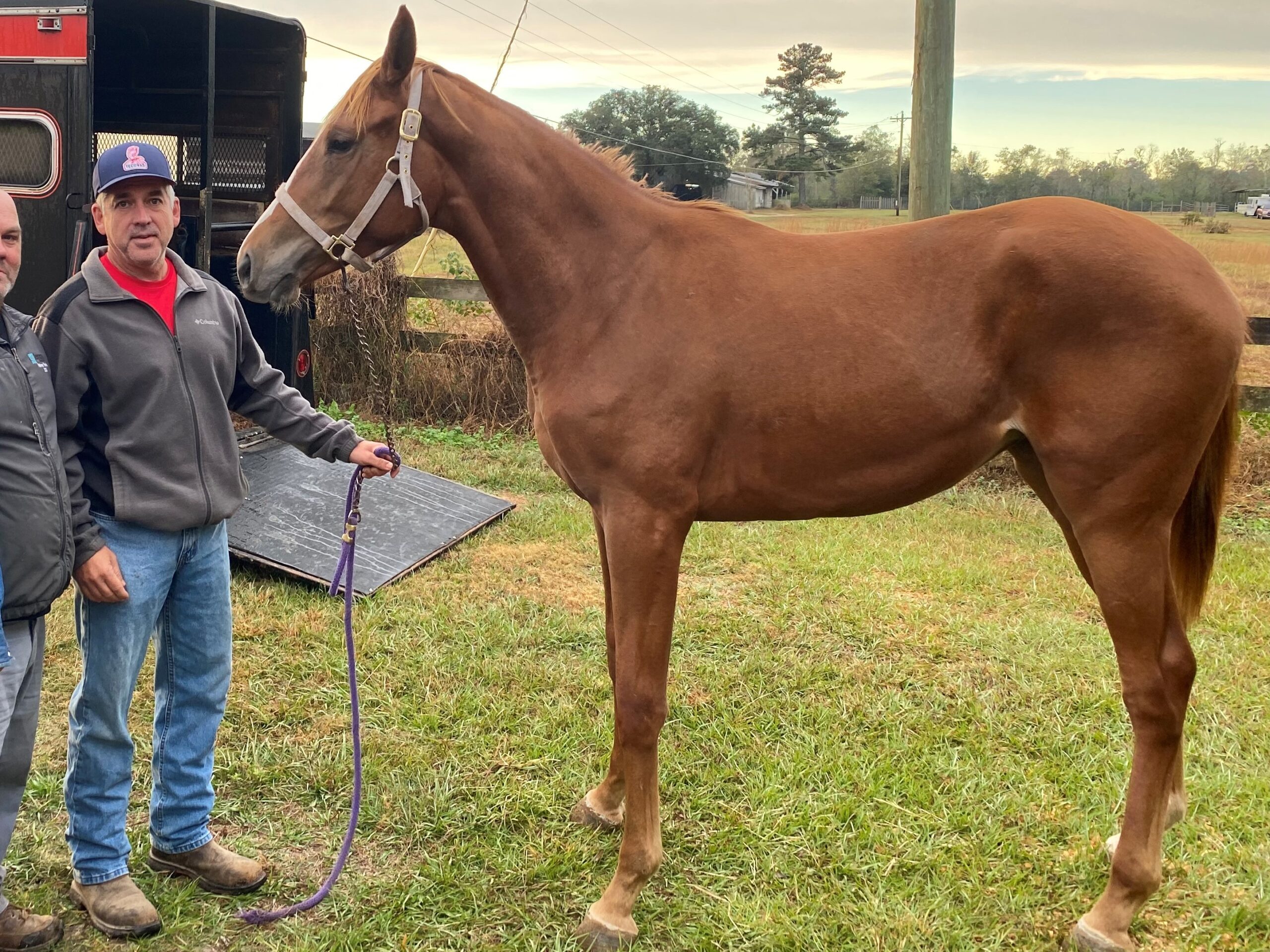
Miles Henry (legal name: William Bradley) is a professional horseman based in Folsom, Louisiana. He holds Louisiana Racing License #67012 and has spent over three decades managing Thoroughbreds at premier tracks including Fair Grounds, Delta Downs, and Evangeline Downs.
Expertise & Hands-On Experience: Beyond the track, Miles has decades of experience in specialized equine care, covering everything from hoof health and nutrition to training protocols for Quarter Horses, Friesians, and Paints. Every guide on Horse Racing Sense is rooted in this “boots-on-the-ground” perspective.
30 of their last 90 starts
Equibase Profile.

Connect with Miles: