
Last updated: June 7, 2026
What are the biggest horse races in the United States?
The biggest horse races in the United States are the Kentucky Derby, Breeders’ Cup Classic, Preakness Stakes, Belmont Stakes, Travers Stakes, Pegasus World Cup, Haskell Stakes, Pacific Classic, Arlington Million, Kentucky Oaks, Santa Anita Handicap, Arkansas Derby, and the All-American Futurity. The Kentucky Derby is America’s most famous race, while the Breeders’ Cup Classic is widely considered the sport’s championship event because it often determines Horse of the Year. Together, these races attract the largest audiences, betting pools, purses, and championship implications in American horse racing.
Most casual fans stop at the Kentucky Derby. Serious racing fans know the story is just getting started. By the time the Breeders’ Cup rolls around in November, the Derby winner often isn’t the horse everyone is talking about anymore. The biggest races in American horse racing stretch across the entire season, from the Pegasus World Cup in January to the Breeders’ Cup Classic in the fall, and each one helps determine who earns a championship, who becomes a breeding superstar, and who gets remembered.
About This Guide: I’ve followed every race on this list across decades of seasons as a racehorse owner — not as a journalist, but as someone who has studied track configurations and purse structures to make real-world decisions about horses I campaign. The rankings and commentary here reflect that practical experience, not a reordered list of historical purses.
Table of Contents
What Makes a Horse Race One of the Biggest?
Not all major races are important for the same reason. Some are famous because of history. Others matter because they decide championships. Some attract the largest betting pools; others offer the biggest purses. For this ranking, I considered four factors: historical significance, national audience and attention, purse size, and influence on championship outcomes — specifically Eclipse Award voting and the Horse of the Year race. A race that scores high on all four tends to be at the top. A race like the Santa Anita Handicap scores lower on current purse than it once did, but high enough on history and tradition to belong. Understanding how horse racing class levels work makes the stakes structure behind these races easier to follow.
If you’re new to racing, think of it this way: history first, championships second, purse third. That’s why the Kentucky Derby remains No. 1 even though it isn’t the richest race in America — and why the Breeders’ Cup Classic ranks ahead of both Triple Crown races despite being only a few decades old.
The Biggest Horse Races in America — At a Glance
| Race | Track | When | Purse | Distance | Division |
|---|---|---|---|---|---|
| Kentucky Derby | Churchill Downs, KY | First Saturday in May | $5 million | 1¼ miles | 3-year-olds |
| Breeders’ Cup Classic | Rotates annually | Late October/November | $7 million | 1¼ miles | 3yo & up |
| Pegasus World Cup | Gulfstream Park, FL | Late January | $3 million | 1⅛ miles | 4yo & up |
| Preakness Stakes | Pimlico / Laurel, MD | Two weeks after Derby | $2 million | 1 3/16 miles | 3-year-olds |
| Belmont Stakes | Belmont Park / Saratoga, NY | Five weeks after Derby | $2 million | 1½ / 1¼ miles* | 3-year-olds |
| Travers Stakes | Saratoga, NY | Late August | $1.25 million | 1¼ miles | 3-year-olds |
| Arlington Million | Colonial Downs, VA | August | $1 million | 1¼ miles turf | 3yo & up |
| Arkansas Derby | Oaklawn Park, AR | Late March/Early April | $1.25 million | 1⅛ miles | 3-year-olds |
| Santa Anita Handicap | Santa Anita Park, CA | Early March | ~$400,000 | 1¼ miles | 4yo & up |
| Pacific Classic | Del Mar, CA | August | $1 million | 1¼ miles | 3yo & up |
| Haskell Stakes | Monmouth Park, NJ | Mid-July | $1 million | 1⅛ miles | 3-year-olds |
| Kentucky Oaks | Churchill Downs, KY | Friday before the Derby | $1.5 million | 1⅛ miles | 3yo fillies |
| All-American Futurity | Ruidoso Downs, NM | Labor Day | $3 million | 440 yards | 2yo QH |
*Belmont runs at 1½ miles at Belmont Park; temporarily at 1¼ miles at Saratoga during renovation periods.
1. The Kentucky Derby
The Kentucky Derby is the most famous race in American sports. Run annually since 1875, it is the longest continuously held major sporting event in the country, predating both the World Series and the Super Bowl. Every year on the first Saturday in May, over 150,000 fans gather at Churchill Downs in Louisville, Kentucky to watch a field of up to 20 three-year-old Thoroughbreds compete over 1¼ miles on the dirt. No other race draws the same national attention from both committed racing fans and people who watch exactly one race per year.
As the first leg of the Triple Crown, the Derby sets the narrative for the entire spring — and often the entire season. The winner enters every subsequent race that year carrying a different kind of weight. Trainers plan campaigns around it. Owners dream about it. Breeders price stallions by it.
Miles’s Take — What the Derby Actually Teaches You: Every serious racing fan focuses on who wins the Kentucky Derby, but I’ve learned to pay closer attention to who runs well and loses. The horses that finish third through sixth in a competitive Derby field, at double-digit prices, often tell you more about the summer and fall championship picture than the winner does. The Derby is the beginning of the story, not the end. The horse that finishes second as the favorite and then chases the winner through August is frequently the most interesting betting angle of the summer.
Why It Matters: The Derby is the sport’s single biggest day — the purse, the crowd, the cultural moment, and the Triple Crown implications make it the anchor of the entire racing calendar. No other American race has the same reach outside the sport’s core audience. The betting trap: in a full field of 20, the public overloads the one or two horses with the best press. Pace collapses are frequent, and the double-digit closer who tracks the chaos is almost always available at a price the public has ignored.
2. The Breeders’ Cup Classic
While the Kentucky Derby is the most famous race, the Breeders’ Cup Classic is the most definitive. The Breeders’ Cup is an annual two-day championship event that rotates between premier U.S. tracks, bringing together the best horses from around the world. The centerpiece is the $7 million Classic, run over 1¼ miles, pitting the top three-year-olds against older, physically mature horses. The winner almost always locks up Horse of the Year. Legendary performances have come from American Pharoah, Flightline, and Zenyatta — the mare who won it twice against males.
Why It Matters: The Classic is horse racing’s actual championship. It decides who the best horse in America was that year, settles the age-group title races, and is the race trainers build entire campaigns toward from January. The Derby is the most famous; the Classic is the most important.
3. The Pegasus World Cup
The Pegasus World Cup takes place annually in late January at Gulfstream Park in Hallandale Beach, Florida. Open to horses four and older at 1⅛ miles on dirt, it is the sport’s first major Grade 1 race of the year and one of only two $3 million events on this list. The Pegasus is a “Win and You’re In” qualifier for the Breeders’ Cup Classic — the winner earns an automatic fees-paid berth into the fall championship. Past winners include Arrogate, Gun Runner, and Knicks Go.
Traditionalists often push back on the Pegasus ranking ahead of the Preakness and Belmont. My methodology is explicit: purse size, current championship pathway, and quality of competition outweigh historical prestige in this ranking. The Pegasus regularly attracts older horses at their physical peak, carries the third-largest purse on this list, and its “Win and You’re In” status gives the winner a direct line to Horse of the Year consideration. History favors the classics. Current economic weight and championship impact put the Pegasus here.
Miles’s Take — The Handicapping Pattern at Gulfstream: The Pegasus consistently rewards tactical versatility — the ability to sit just off the early pace rather than leading or closing from far back. Gulfstream’s stretch is honest but not long enough for pure deep closers, and the January timing means horses arriving off a fall layoff sometimes need one race to fire their best. The mega-purse era this race sparked also changed the sport in a way that matters to owners — it created financial incentive to keep superstar horses racing through their four- and five-year-old seasons rather than retiring them the moment the classics ended.
Why It Matters: The Pegasus is the sport’s biggest January statement — the first Grade 1 of the year, the first “Win and You’re In” qualifier, and the race that establishes the older horse division’s pecking order heading into spring. The betting trap: the public favorite is often a horse exiting a strong fall campaign at peak press coverage but coming off a longer layoff than the betting public prices in. A fresh, fit horse arriving under the radar at 6-1 or better has won this race repeatedly.
4. The Preakness Stakes
The Preakness Stakes is the second leg of the Triple Crown, held two weeks after the Kentucky Derby at 1 3/16 miles. Traditionally run at Pimlico Race Course in Baltimore, the Preakness is the shortest of the three classics. Pimlico’s tight, elongated oval with a short stretch favors horses that can control the pace from the front or press it from just off the leader — pure deep closers rarely win here without a pace collapse. The two-week turnaround from the Derby also rewards horses with tactical efficiency over those who burn energy scrapping for position early.
Track Bias Alert — Laurel Editions: When the Preakness moves to Laurel Park during Pimlico renovations, discard Pimlico speed-bias data entirely. Laurel has a completely different configuration — longer turns, different surface characteristics, more room for closers to operate. What works at Pimlico does not automatically transfer. Treat each Laurel edition as its own handicapping puzzle and focus on horses whose recent form shows comfort with Laurel’s specific layout rather than Pimlico tendency.
Why It Matters: The Preakness is the middle leg of racing’s greatest achievement. A horse that wins the Derby and Preakness enters the Belmont with a Triple Crown on the line — and that narrative drives the sport’s biggest annual mainstream audience spike.
5. The Belmont Stakes
The Belmont Stakes is the third and final leg of the Triple Crown. Nicknamed “The Test of the Champion,” it is traditionally run at 1½ miles at Belmont Park in Elmont, New York — the longest of the three classics and a genuine stamina test that has ended more Triple Crown bids than any other single race. During the current Belmont Park renovation, the race moves to Saratoga and shortens to 1¼ miles, which fundamentally changes how it should be handicapped.
Handicapping Note — Belmont at Saratoga: When the Belmont runs at Saratoga at 1¼ miles, discard historical Belmont stamina data entirely. The traditional Belmont favors marathon-distance pedigrees and the ability to sustain a grueling mile-and-a-half effort. The Saratoga edition is a completely different race — treat it exactly as you would the Travers Stakes. Pace setup, post position, and tactical running style matter far more than stamina breeding at 1¼ miles on Saratoga’s tighter turns.
Why It Matters: The Belmont is where Triple Crown dreams are won or lost. In years without a Triple Crown bid, it identifies which three-year-olds have the class and stamina to compete with older horses in the fall. Either way, it matters.

6. The Travers Stakes
The Travers Stakes — the “Midsummer Derby” — is the premier late-summer race for three-year-olds and the most important non-Triple Crown test of the season. Run annually in late August at Saratoga Race Course over 1¼ miles with a $1.25 million purse, it consistently draws the best three-year-olds from the Triple Crown trail. First held in 1864, it is one of the oldest stakes races in American racing. Past winners include Man o’ War, Secretariat, and Arrogate — horses that used the Travers to announce themselves as the best three-year-old in the country heading into fall.
Why It Matters: If the Derby crowns spring champions, the Travers identifies the best three-year-old in the country. Horses that peak later in the season use Saratoga in late August to announce themselves as Breeders’ Cup contenders, and the Travers winner carries strong Eclipse Award weight. To follow this season’s buildup, see the 3-Year-Old Division Watch. The betting trap: the public instinctively backs the Triple Crown trail horses — the Derby winner, the horses with big spring press. But those horses have run hard three times in five weeks. Fresh, specifically targeted entrants who bypassed the Triple Crown arrive at Saratoga rested and ready. The Travers produces more upset winners from outside the Triple Crown trail than almost any other Grade 1 on the calendar.
7. The Arlington Million
The Arlington Million holds a unique place in American racing history — it was the first Thoroughbred race in the world to offer a $1 million purse when it debuted at Arlington Park in Illinois in 1981. Following the closure of Arlington Park in 2021, the race moved to Colonial Downs in Virginia, where it has run since 2023 at its original 1¼-mile turf distance on what is the widest grass course in North America. Grade 1 status is maintained and the race carries a “Win and You’re In” berth for the Breeders’ Cup Turf.
The Turf Factor: Unlike the dirt marathons of the spring classics, the Arlington Million is a pure test of grass acceleration and stamina — which is exactly why it consistently attracts top European invaders. European horses are bred and trained specifically for turf and regularly arrive at Colonial Downs having raced on the continent’s finest courses. The Million is where the American turf division earns its international credibility, and it regularly produces the most competitive international fields of any U.S. race outside the Breeders’ Cup.
Why It Matters: The Arlington Million created the blueprint for the modern big-purse era and remains the premier American turf test at the classic distance. Its international field and Breeders’ Cup qualifier status keep it relevant in the championship picture every year.
8. The Arkansas Derby
The Arkansas Derby is one of the final major prep races on the Road to the Kentucky Derby, held annually in late March or early April at Oaklawn Park in Hot Springs, Arkansas. Open to three-year-old colts and geldings at 1⅛ miles on dirt with a $1.25 million purse, a strong finish here virtually guarantees a horse enough qualifying points to run at Churchill Downs. Notable winners include American Pharoah (2015), Smarty Jones (2004), and Curlin (2007).
Why Arkansas Over Florida? The Florida Derby has a legitimate claim to this spot — Gulfstream is a premier track, the purse is comparable, and the race has produced serious Derby contenders. Oaklawn edges it because of recent structural impact: the Arkansas Derby has become one of the most reliable modern pipelines for Triple Crown horses, with multiple Derby winners routing through Hot Springs in recent years. Oaklawn’s demanding winter-to-spring dirt surface is also a tougher proving ground than Gulfstream’s typically fast, speed-favoring track — which means horses that win in Arkansas tend to show up at Churchill physically ready.
Why It Matters: The Arkansas Derby is the last major gateway for Derby hopefuls. A horse that runs well here in early April can peak at Churchill Downs four weeks later, and it consistently produces serious Triple Crown contenders.
9. The Santa Anita Handicap
Santa Anita Park in Arcadia, California is one of the most picturesque racetracks in the world, and the “Big ‘Cap” is its signature event. First run in 1935, the Santa Anita Handicap is a Grade 1 dirt race for horses four and older at 1¼ miles. Its current purse of approximately $400,000 stands out sharply against everything else on this list — and it’s worth acknowledging directly. The Big ‘Cap no longer commands the purse of its mid-century peak. What keeps it here is sheer historical weight: past winners include John Henry, Affirmed, and Seabiscuit, and the race defined the West Coast stakes calendar for nearly a century. History earns it a place that current purse alone would not.
Why It Matters: Historical significance and track prestige, not current purse. The Santa Anita Handicap is where West Coast racing legends were made. No other early-season West Coast dirt race has comparable tradition.
10. The Pacific Classic Stakes
The Pacific Classic is the premier summer event on the West Coast, held annually at Del Mar in California in August. Open to horses three and older at 1¼ miles on dirt with a $1 million purse, it is a “Win and You’re In” qualifier for the Breeders’ Cup Classic. Since its 1991 inception, the race has produced iconic moments — Cigar’s shocking defeat to Dare and Go in 1996 when his unbeaten streak was snapped, and Flightline’s jaw-dropping 19-length demolition in 2022, one of the most dominant single performances in American racing history.
Why It Matters: The Pacific Classic is the most direct Breeders’ Cup Classic qualifier on the West Coast and typically provides the strongest performance signal for late-season older horses heading into fall.
11. The Haskell Stakes
The Haskell Stakes is a Grade 1 race held annually in mid-July at Monmouth Park in New Jersey, open exclusively to three-year-olds at 1⅛ miles on dirt with a $1 million purse. It is the primary summer rival to the Travers and often the first race where Triple Crown horses face horses who skipped the spring classics to develop at their own pace. Past winners include Rachel Alexandra, American Pharoah, and Skip Away.
Miles’s Take — Why Deep Closers Struggle at Monmouth: Monmouth’s main track rewards horses that can sit just off the pace and sustain it through a shorter stretch run. The stretch simply isn’t long enough for pure deep closers to fully unwind their best run. If the race pace is honest, a stalker who tracks the leader three lengths back and pounces at the top of the stretch wins here far more often than the horse making a sweeping move from last. When you see a deep closer installed as a short favorite at Monmouth, that’s the betting trap. The odds don’t reflect the surface’s structural bias against that running style.
Why It Matters: The Haskell is the first crossroads of the summer for three-year-olds — the result frequently reshapes the division picture heading into the Travers and Breeders’ Cup. For the current 3-year-old division outlook, see the Division Watch.
12. The Kentucky Oaks
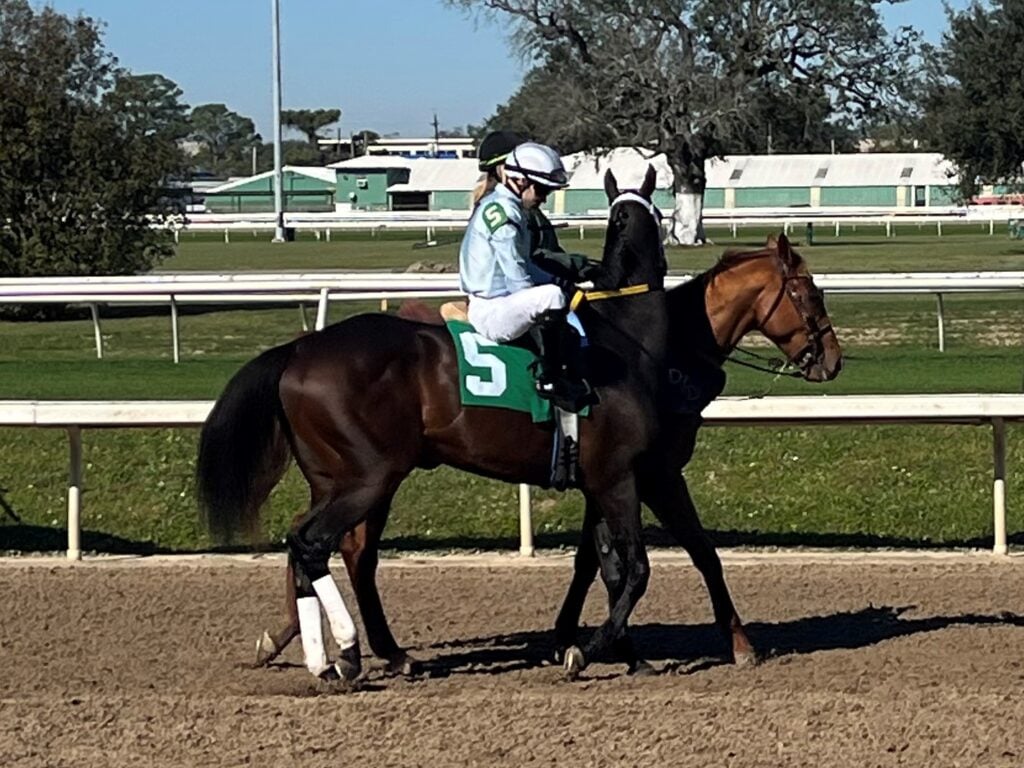
The Kentucky Oaks is the premier race for three-year-old fillies in the United States, held annually at Churchill Downs on the Friday before the Kentucky Derby at 1⅛ miles on dirt with a $1.5 million purse. The Oaks day has become a major cultural event — attendees traditionally wear pink in support of cancer awareness, and the race reliably draws as competitive a field as anything on Derby week. It is frequently overlooked by casual fans fixated on the following day, which is exactly why it presents better value for informed bettors.
Why It Matters: The Oaks is the championship race for the best three-year-old fillies in the country. Its winners frequently go on to dominate the older mare divisions the following year, and the race carries as much Eclipse Award weight for its division as the Derby does for colts.
13. The All-American Futurity
Not every major horse race features Thoroughbreds. The All-American Futurity is the richest and most prestigious Quarter Horse race in the world, held annually on Labor Day at Ruidoso Downs in New Mexico. Restricted to two-year-old Quarter Horses at a blistering 440 yards — over in roughly 21 seconds — the purse is $3 million. Only the ten fastest qualifiers from a massive trial process make the final.
The contrast with the Thoroughbred races on this list is complete: where American Pharoah’s 2015 Triple Crown required sustained speed and stamina across three races and five weeks, the All-American Futurity is one all-out explosion of gate acceleration. For fans who have only watched Thoroughbred racing, watching a Quarter Horse race for the first time is genuinely startling — the acceleration out of the gate is unlike anything in the sport. To learn more, visit the official All-American Futurity page.

Why It Matters: The All-American Futurity is the only race on this list that isn’t a Thoroughbred event — and that’s precisely why it belongs. A $3 million purse for a 21-second race is the most compelling proof that the biggest races in American racing aren’t all running the same kind of horse.
Key Takeaways: The 13 Biggest Horse Races in the U.S.
- The Kentucky Derby is the most famous; the Breeders’ Cup Classic ($7 million) is the most definitive — it decides Horse of the Year
- The Triple Crown — Derby, Preakness, Belmont — is the sport’s greatest achievement; only 13 horses have ever won all three in the same year
- The Pegasus World Cup ranks third by purse ($3 million), “Win and You’re In” Classic qualifier status, and the quality of older horses it consistently attracts
- The Travers Stakes (late August, Saratoga, $1.25 million) is the mid-summer championship race for three-year-olds and the race that most directly decides the Eclipse Award in that division
- The Arlington Million now runs at Colonial Downs in Virginia — Grade 1 status maintained, “Win and You’re In” for Breeders’ Cup Turf, the widest grass course in North America
- The Santa Anita Handicap earns its place through historical weight, not current purse — its ~$400,000 purse is the lowest on this list and acknowledged directly
- The All-American Futurity ($3 million, Labor Day) is the richest Quarter Horse race in the world — a completely different athletic event from Thoroughbred racing
- When the Belmont runs at Saratoga, discard historical stamina data — treat it as the Travers Stakes, not the traditional Test of the Champion
Frequently Asked Questions
What are the three races in the Triple Crown?
The American Triple Crown consists of the Kentucky Derby at Churchill Downs (1¼ miles), the Preakness Stakes at Pimlico Race Course in Baltimore (1 3/16 miles), and the Belmont Stakes at Belmont Park in New York (traditionally 1½ miles). During track renovations, venues may shift temporarily. Only 13 horses have ever won all three races in the same year.
What is the richest horse race in the United States?
The Breeders’ Cup Classic is the richest horse race in the United States with a $7 million purse. The Pegasus World Cup and the All-American Futurity both offer $3 million purses. The Kentucky Derby carries a $5 million purse. All four rank among the most valuable sporting events in the country.
What is the most famous horse race in America?
The Kentucky Derby is the most famous horse race in America and one of the most recognized sporting events in the world. Run annually on the first Saturday in May at Churchill Downs since 1875, it draws over 150,000 spectators and a national television audience that includes millions of casual fans who watch no other race during the year. For championship significance, the Breeders’ Cup Classic is generally considered the sport’s most definitive race — but the Derby is the most famous.
What is a Grade 1 stakes race?
A Grade 1 stakes race is the highest classification of Thoroughbred horse racing in North America, assigned by the American Graded Stakes Committee based on the quality of horses entered over a five-year period. Grade 1 races carry the largest purses, attract the best horses, and have the most significant impact on Eclipse Award voting and breeding value. All 13 races on this list are Grade 1 events except the All-American Futurity, which is the premier Quarter Horse stakes.
How do horses qualify for the Kentucky Derby?
Horses qualify for the Kentucky Derby by earning points in a series of designated prep races known as the Road to the Kentucky Derby, which runs from September through April. Points are awarded on a sliding scale based on finish position, with more points available in later, more prestigious preps. The 20 horses with the most points earn a starting spot. Key prep races include the Arkansas Derby, Florida Derby, Santa Anita Derby, and Louisiana Derby.
What is the difference between the Travers Stakes and the Haskell Stakes?
Both races are for three-year-olds, but they serve different roles. The Haskell (mid-July, Monmouth Park, 1⅛ miles, $1 million) is the earlier summer test — often the first meeting between Triple Crown horses and fresh challengers. The Travers (late August, Saratoga, 1¼ miles, $1.25 million) is more prestigious and carries stronger Eclipse Award implications. Horses often use the Haskell as a prep for the Travers, though connections with a strong horse sometimes point straight to Saratoga.
Where is the Arlington Million held now?
The Arlington Million is now held at Colonial Downs in New Kent County, Virginia, where it has run since 2023. It was originally held at Arlington Park in Illinois from 1981 until the track closed in 2021, then moved briefly to Churchill Downs for one year before permanently relocating to Colonial Downs, where it returns to its original 1¼-mile distance on turf. The race maintains Grade 1 status and is a Breeders’ Cup Win and You’re In qualifier for the Turf.
What is the Breeders’ Cup Win and You’re In program?
The Breeders’ Cup Win and You’re In Challenge Series awards automatic fees-paid entries into Breeders’ Cup races to horses that win designated qualifying races during the year. It reduces the financial risk of targeting the Breeders’ Cup and gives owners a realistic path to the year-end championship. Qualifying races include the Pegasus World Cup (Classic), Pacific Classic (Classic), and Arlington Million (Turf), among many others throughout the year.
About Miles Henry
Racehorse Owner & Author | 30+ Years in Thoroughbred Racing
Miles Henry (legal name: William Bradley) is a professional horseman based in Folsom, Louisiana. He holds Louisiana Racing License #67012 and has spent over three decades managing Thoroughbreds at premier tracks including Fair Grounds, Delta Downs, and Evangeline Downs.
Expertise & Hands-On Experience: Beyond the track, Miles has decades of experience in specialized equine care, covering everything from hoof health and nutrition to training protocols for Quarter Horses, Friesians, and Paints. Every guide on Horse Racing Sense is rooted in this “boots-on-the-ground” perspective.
30 of their last 90 starts
Equibase Profile.

Connect with Miles: