
Last updated: August 3, 2026
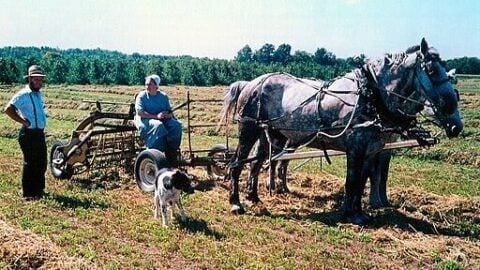
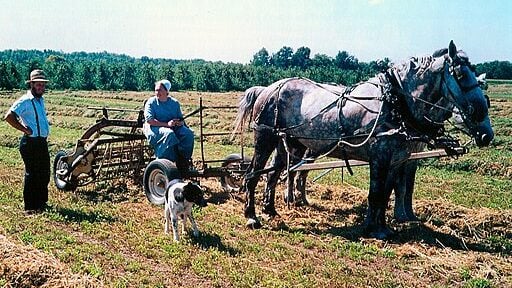
Amish horses are not a specific breed. They are working horses used for transportation, farm work, and reliability. Common examples include Standardbreds and American Saddlebreds for buggy work, along with Belgians, Percherons, and mules for heavier farm jobs.
I’ve spent decades buying, training, and managing horses, and I look at Amish horses the same way I look at any working animal: soundness, temperament, and the ability to stay reliable under daily demands matter most.
In this guide, we’ll look at the breeds Amish communities use, why those horses fit specific jobs, how they’re cared for, and what people often misunderstand about Amish horses.
Table of Contents
Common Horse Breeds Used by the Amish
Amish horse choices are practical: they buy what’s available, affordable, and suited to long miles on the road or steady work in the field. In most regions, that means retired or off-track Standardbreds and American Saddlebreds for buggies, plus heavy draft breeds like Belgians and Percherons for fieldwork.
| Use | Typical Breeds | Key Traits |
|---|---|---|
| Buggy Horses | Standardbred, American Saddlebred | Endurance, traffic-safe minds, efficient trot, manageable size |
| Field & Farm Work | Belgian, Percheron, mules | Heavy bone or hybrid vigor, pulling power, calm temperaments |
| Riding (Some Groups) | Standardbred, Saddlebred, mixes | Comfortable gaits, adaptable to light riding and farm chores |
Standardbred Buggy Horses
Standardbreds are the work trucks of Amish transportation — plain, efficient, and built to eat up miles at the trot. Many are retired or lightly used harness racers whose speed, stamina, and experience between shafts make them ideal for buggy work on busy rural highways.
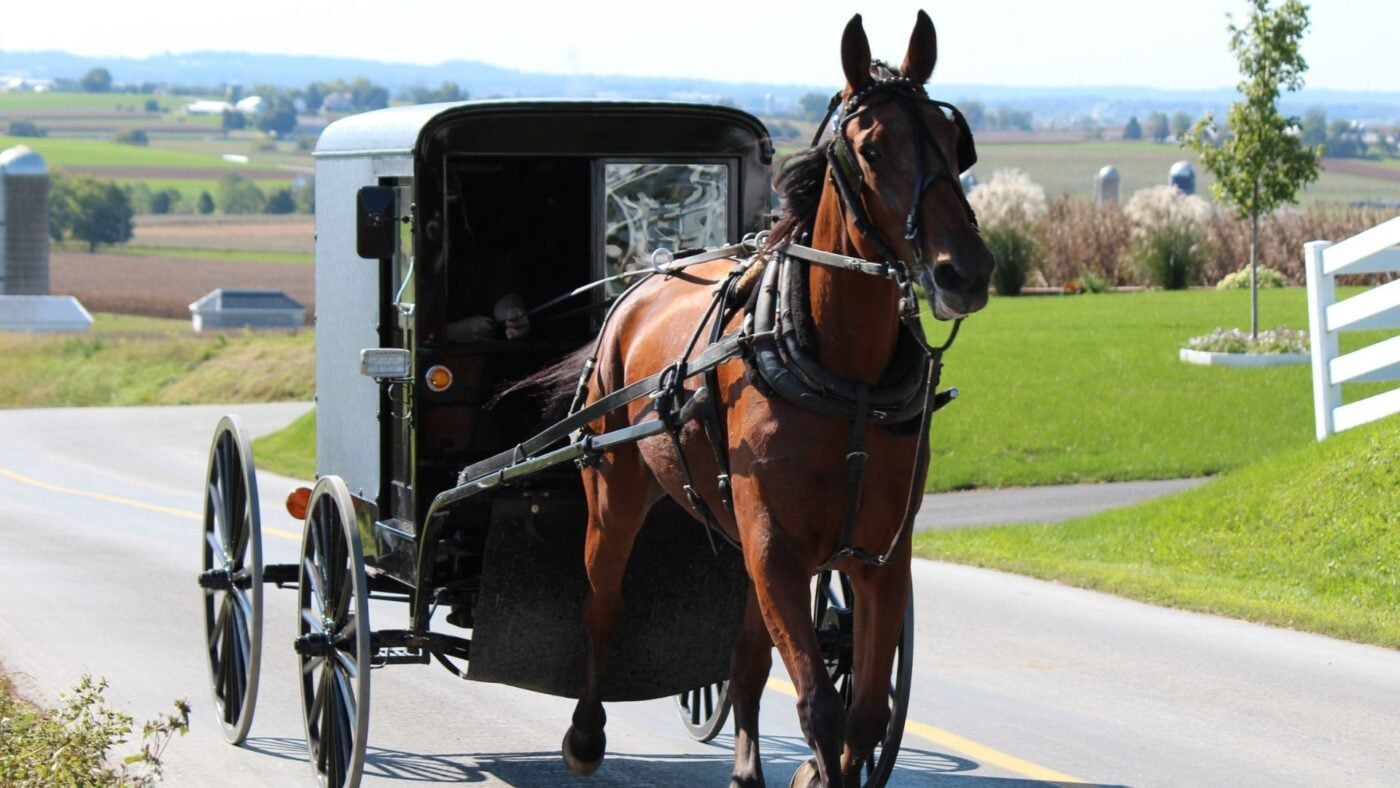
Standardbreds were developed in the United States during the 1800s specifically for trotting and pacing races. That selective breeding produced horses with exceptional stamina, level-headed temperaments, and the ability to maintain steady gaits over long distances. When their racing careers end — typically around age 8 to 12 — many Standardbreds transition to second careers, and Amish communities provide one of the best matches.
- Typical height: 15-16 hands; weight around 900-1,100 pounds.
- Strengths: Strong trot, steady temperament, used to harness and traffic noise from their racing days.
- Why Amish like them: Affordable, proven in harness, and easy to match to a family buggy.
Miles’s Take: A seasoned Standardbred buggy horse is closer to a low-level endurance athlete than a casual riding horse, which explains both their reliability and their higher risk of repetitive-strain issues.
American Saddlebreds in Amish Communities
American Saddlebreds show up in some Amish settlements for the same reason Standardbreds do — they’re available, bred to drive, and often come from show or driving homes that need to rehome them once their show career slows. When matched to the right family, a level-headed Saddlebred can make a comfortable buggy horse that also doubles as a light-riding horse on Sundays or visits.
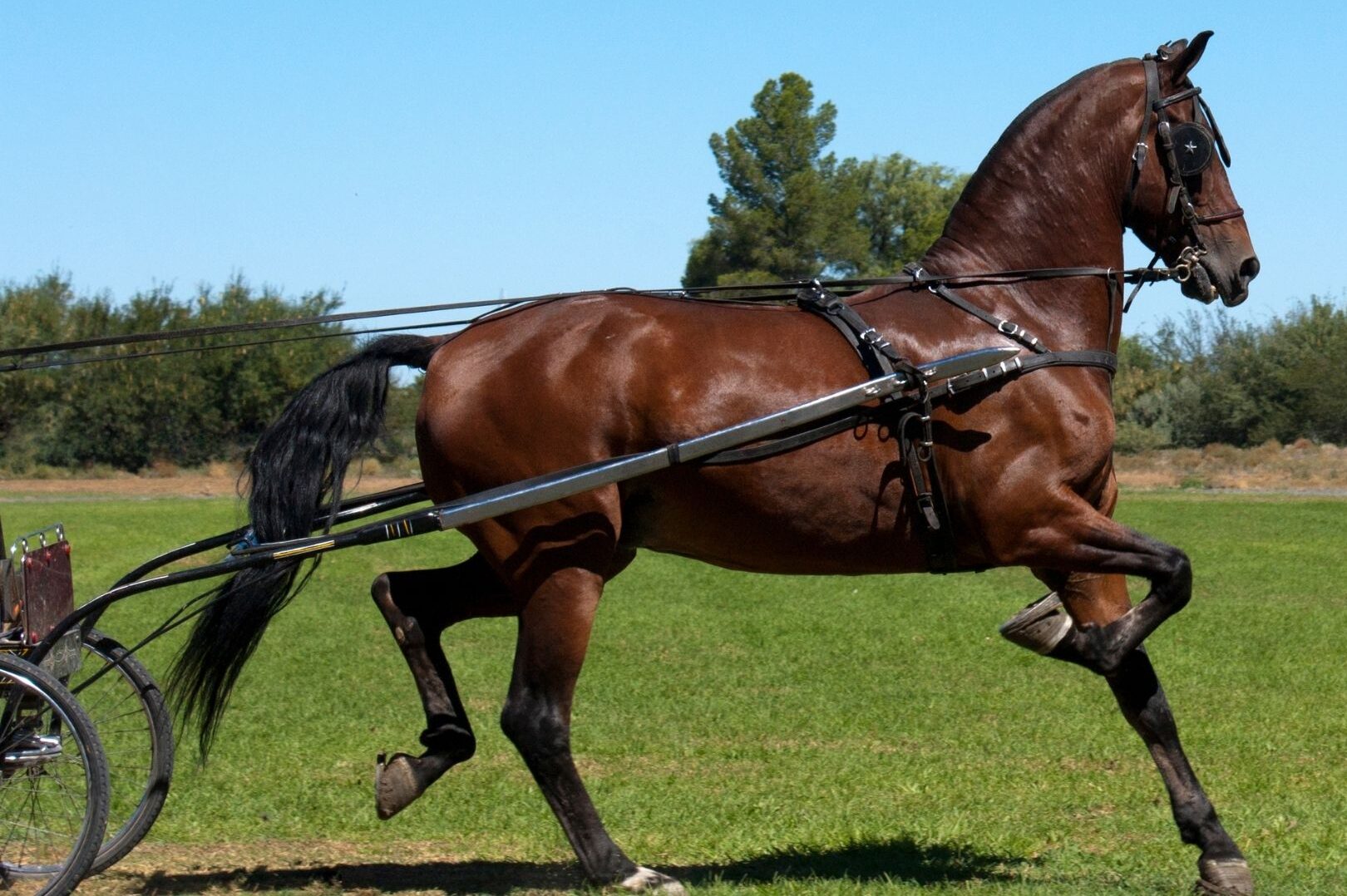
- Typical height: 15-16 hands; refined build with an upright neck.
- Strengths: Smart, versatile, naturally forward, and accustomed to harness and carriages.
- Why Amish like them: Strong enough for hills and heavier loads but more refined and comfortable to sit behind than some heavier types.
Belgian Draft Horses
Belgian drafts are the diesel engines of many Amish farms, bred to put a collar on and lean into the work all day. They’re heavily muscled, typically 16-17 hands, and can easily weigh around a ton, which makes them well suited to plowing, pulling loaded wagons, and hauling timber.
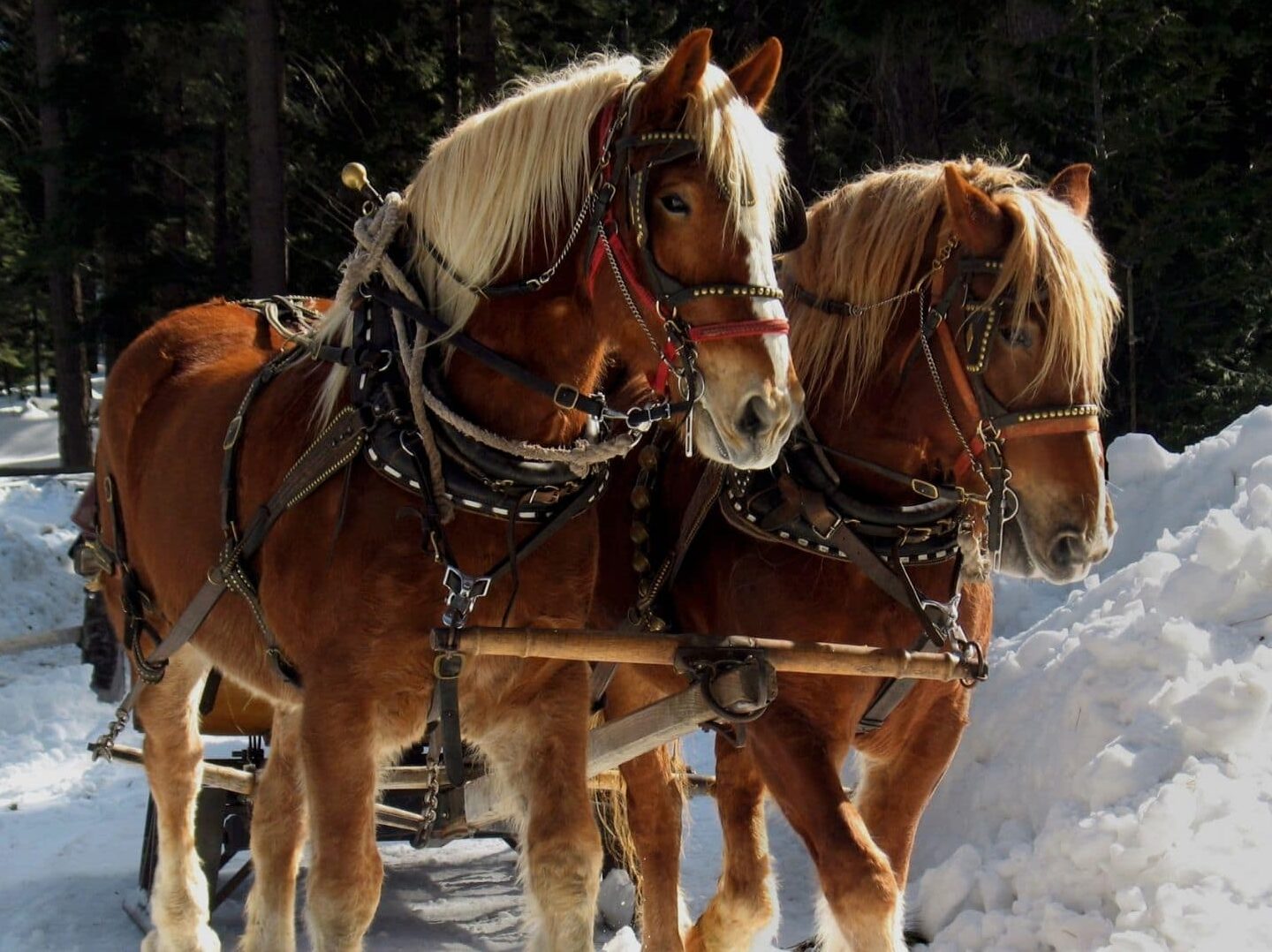
Belgians are typically chestnut with flaxen manes and tails, though you’ll occasionally see sorrels and bays. Their short, muscular build, broad chest, and powerful hindquarters make them ideal for pulling against resistance — exactly what plowing and hauling require. Unlike lighter breeds, Belgians can work all day in fields without exhausting themselves, provided they’re conditioned properly and given adequate rest.
- Temperament: Docile, willing, and generally easy to handle, even for younger family members under supervision.
- Why Amish like them: Reliable, long-lived workers that can handle heavy loads without constant mechanical repairs or fuel bills.
What surprises people about Belgians is their temperament. Despite their size, they’re gentle, calm, and easy to train. I’ve worked with Belgians that weighed over a ton but responded to voice commands as reliably as any riding horse. That docility matters when working around children, in tight spaces, or handling unpredictable farm situations.
Percheron Draft Horses
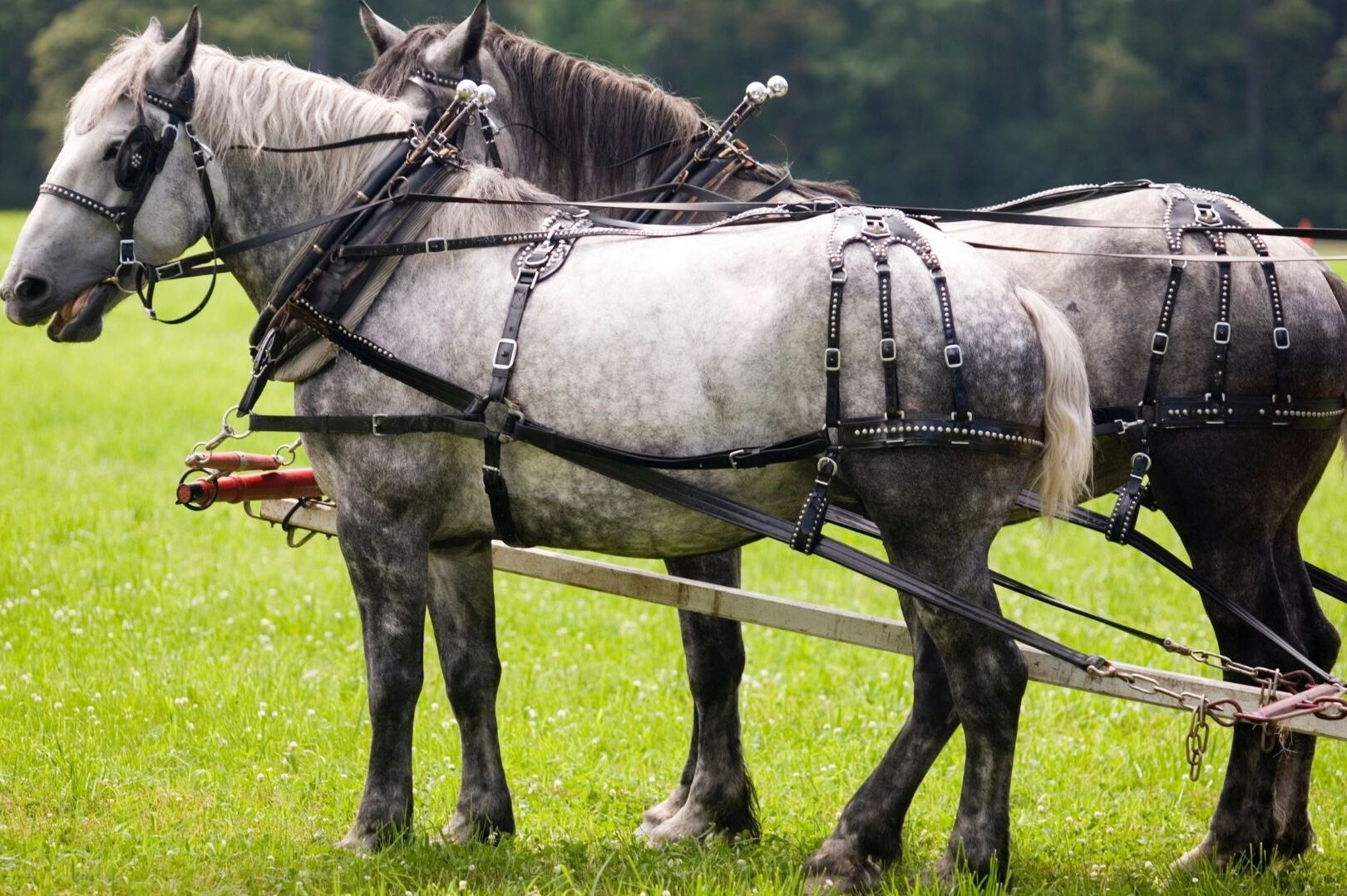
Percherons fill a similar niche to Belgians: big-boned, powerful, and steady-minded draft horses that originated in France. Most stand 16.2-17.3 hands and weigh well over 2,000 pounds, with the strength to pull multi-horse hitches in tough soil.
Percherons are versatile. They’re strong enough for heavy farm work but lighter and more agile than Belgians, which makes them useful for both field labor and occasional driving. Some Amish communities use Percherons for larger, multi-horse buggy teams where extra pulling power is needed but the full mass of a Belgian would be excessive.
- Temperament: Calm, people-oriented, intelligent, and typically easy to harness and work around.
- Why Amish like them: Their intelligence and willingness make them good partners in tight spaces around barns and fields.
Do the Amish Use Mules?
Yes — in many Amish communities, mules are an important part of farm work, and in some places they may be as common as draft horses. They’re valued for a mix of traits that make sense on a working farm: endurance, sure-footedness, patience, and enough size and strength to pull real loads.
How common mules are depends on the community. In some areas they’re widely accepted; in others, church district rules have limited or discouraged their use. That’s why one Amish settlement may rely heavily on mules while another uses mostly draft horses.
Miles’s Take: Mules get overlooked in most write-ups about Amish horses, but if you’ve spent time in Lancaster County, you know they can be a major part of the work picture. A good mule often thinks through a situation before reacting, which can be a real advantage in fieldwork. They don’t get enough credit.
How Amish Horses Are Selected for Work
The job determines what a family looks for in a horse. Buggy horses need to handle traffic, long road miles, and steady harness work with a calm mind and efficient movement. Farm horses need strength, patience, and the ability to pull consistently through heavier work. Some horses may serve more than one purpose depending on the farm, season, and community.
- Temperament: The horse has to stay level-headed around traffic, noise, other animals, and daily handling.
- Soundness: Buyers look for clean movement, solid feet, and no obvious signs of lameness or weakness.
- Build: The horse has to fit the job, whether that means pulling a buggy, hauling farm equipment, or doing both.
- Training: A horse that already knows harness work, shafts, or team work is usually more useful right away.
- Endurance: The horse has to hold up under steady use, not just look good for a day.
In my experience, the best working horses are the ones that stay honest in their bodies and minds. A horse can be plain, but if it is reliable, willing, and stays sound, that is the kind of horse that earns its keep.

How Amish Care for Their Horses
Horses are central to Amish life, both as transportation and as working partners. If a horse loses condition or soundness, the family feels it right away. That is why feeding, turnout, grooming, and hoof care stay part of the routine day after day.
Daily Care and Work Routines
Working horses do best on a steady schedule. Regular feeding, water, rest, and handling help them stay fit, alert, and easier to manage under harness.
Feeding and Nutrition
Quality forage — hay or pasture — forms the base of the diet, with grain or concentrate added for horses doing heavier work. Clean water and salt stay important for hydration and recovery, especially when the horse is working daily.
Shelter and Turnout
Simple barns or three-sided sheds give horses protection from weather, while turnout helps them move, relax, and stay mentally settled. That mix of shelter and movement supports long-term soundness.
Grooming, Maintenance, and Tail Care
Daily grooming removes dirt and gives the owner a chance to spot swelling, cuts, or other problems early. Hooves are picked daily, and drafts with feathering need extra attention to avoid skin trouble in the lower legs.
Many Amish horses have docked tails. Supporters see it as a way to reduce the risk of tails getting caught in harness or buggy equipment, while critics point out the loss of a natural fly defense. That debate is part of the broader welfare conversation around Amish horses.
Farrier work is equally important. Hooves are trimmed or shod every six to eight weeks to help prevent uneven wear, cracks, and lameness. Some Amish learn farrier skills themselves, while others rely on traveling farriers.
Welfare Questions and Misconceptions
Whenever Amish horses come up, the conversation usually turns to welfare. Some people assume the horse-and-buggy setup must be cruel by default, while others assume every Amish horse is cared for exactly right. The truth is somewhere in the middle: these are working horses, and like any working horse, their condition depends on the quality of the horseman, the workload, the footing, and the daily management behind them.
The biggest problem is usually not the horse itself but how it is used. A sound, well-conditioned horse can handle regular work, but too much pavement, poor harness fit, weak conditioning, or a heavy load can wear one down quickly. That is true whether the horse is pulling a buggy, working a farm, or doing any other kind of steady labor.
Critics are right to point out that some Amish horses do face hard use. Supporters are right that many Amish horsemen take soundness seriously because a horse that stays healthy is more useful and lasts longer. In other words, the welfare question is not really about breed or tradition — it is about management.
- Real concerns: Excessive mileage, hard pavement, poor conditioning, bad hoof care, and harness problems.
- Common misunderstanding: That every Amish horse is overworked or that the use of horses itself is the problem.
- Horseman’s view: The same basics matter here as anywhere else — soundness, fit, feed, rest, and honest daily observation.
If you want to judge a horse fairly, look at the animal in front of you and the work it is actually doing. That approach tells you more than assumptions ever will.
How Horses Fit Amish Culture and Practice
For the Amish, the horse is not just transportation — it is part of a way of life built around local travel, steady routines, and daily work that stays close to home. The horse and buggy naturally limit how far people go, which helps keep family, church, and community life centered around the settlement.
That does not mean the horse is treated as a symbol first and a working animal second. In practical terms, the horse has to earn its keep, and that means soundness, manners, and steady condition matter more than appearance. In Amish life, a good horse is simply one that does the job day after day without becoming a problem.
Frequently Asked Questions About Amish Horses
What is the most common Amish horse breed?
The most common Amish buggy horses are Standardbreds, often retired or off-track harness racers, while Belgians and Percherons dominate as field horses. In some communities, especially Lancaster County, Pennsylvania, mules are just as common as draft horses for fieldwork.
Do Amish farmers use mules?
Many do, though it varies by community. Mules are especially popular in Lancaster County, Pennsylvania, where they’re about as common as all draft-horse breeds combined. Some Midwestern communities, including parts of Ohio, historically avoided mules due to an 1865 Amish Ministers’ Conference ruling against crossing horses and donkeys.
Do Amish horses wear shoes?
Yes, when needed. Horses working on paved roads typically wear shoes for traction and hoof protection. Horses working soft ground often go barefoot. The decision depends on terrain, workload, and individual hoof condition. Winter conditions may require specialized shoes with traction devices.
Why do Amish cut horses’ tails?
Tail docking prevents tails from getting caught in harness equipment, reins, or buggy rigging. It’s a safety measure to reduce the risk of accidents and injuries during work. While practical, the practice is controversial among animal welfare advocates.
Are Amish horses abused or overworked?
Welfare varies widely between operations. Most Amish horsemen provide adequate care because healthy horses work better and last longer. However, some horses face excessive workloads, poor conditions, or inadequate care. Poor outcomes usually stem from management issues — especially excessive mileage on pavement — rather than intentional cruelty.
How long do Amish horses work?
Buggy horses often work 10 to 15 years, depending on care and workload. Draft horses working heavy farm labor may have shorter working careers due to physical demands. Well-managed horses can remain productive well into their teens or early twenties. Learn more about horse lifespan by breed.
Below is a video of Amish horses in action.

Key Takeaways
- Amish horses are working horses, not a breed. Standardbreds, Saddlebreds, Belgians, Percherons, and mules all play a role depending on the job.
- Mules are a bigger part of the picture than many people realize. In some Amish communities they are a major work animal, especially in Lancaster County.
- Welfare comes down to management. Workload, pavement, hoof care, conditioning, and harness fit matter more than the fact that the horse is Amish-owned or Amish-used.
Amish horses are not a special breed, but they are a special example of what good horsemanship can do when the job is clear and the management is honest. Whether you are interested in the breeds, the care, or the welfare questions, the main thing is the same: judge the horse in front of you and the work it is actually doing.
About Miles Henry
Racehorse Owner & Author | 30+ Years in Thoroughbred Racing
Miles Henry (legal name: William Bradley) is a professional horseman based in Folsom, Louisiana. He holds Louisiana Racing License #67012 and has spent over three decades managing Thoroughbreds at premier tracks including Fair Grounds, Delta Downs, and Evangeline Downs.
Expertise & Hands-On Experience: Beyond the track, Miles has decades of experience in specialized equine care, covering everything from hoof health and nutrition to training protocols for Quarter Horses, Friesians, and Paints. Every guide on Horse Racing Sense is rooted in this “boots-on-the-ground” perspective.
30 of their last 90 starts
Equibase Profile.

Connect with Miles: