
Last updated: July 31, 2026
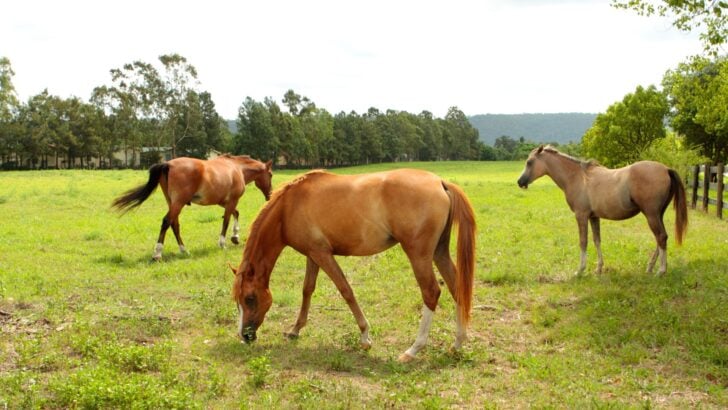
An Appendix Quarter Horse is a first-generation cross between a registered Quarter Horse and a Thoroughbred, registered through the AQHA’s Appendix program. The cross combines Thoroughbred height and stamina with Quarter Horse speed and athleticism.
My first racehorse was an Appendix gelding. He went from racing at Evangeline, running 870 yards, to barrel racing. That kind of range is what makes this cross worth a close look, but whether an Appendix horse fits your goals depends on how you plan to use the horse. This guide breaks down what makes Appendix horses different, where they excel, and what to check before you buy one.
Table of Contents
What Exactly Is an Appendix Quarter Horse?
The term “Appendix” confuses people because it sounds like a lesser category. It’s not. It’s simply a designation for horses with documented Quarter Horse and Thoroughbred parentage.
The Registration System Explained
When you cross a registered American Quarter Horse with a registered Thoroughbred, the offspring receives an AQHA registration number starting with “X” marking it as Appendix. The Appendix registry dates to 1949, when two rival Quarter Horse associations merged to form the AQHA and folded their Thoroughbred-cross horses into this new category, recognizing that the cross produced valuable horses for racing and performance.
Here’s where it gets interesting: Appendix horses can “advance” to full AQHA registration. If an Appendix horse earns sufficient performance points in AQHA-approved competitions (such as a Register of Merit) or meets specific racing requirements, such as a qualifying speed index, the “X” prefix drops, and they receive a permanent number, becoming fully registered Quarter Horses indistinguishable from horses with generations of Quarter Horse breeding.
This advancement system exists because performance can matter more than how much Thoroughbred blood shows up on paper. An Appendix horse that proves its Quarter Horse characteristics through competition earns full registry status.

Registration Requirements
To register an Appendix Quarter Horse with AQHA, you need:
- One parent registered with AQHA (can be Appendix or permanent)
- One parent registered with The Jockey Club (Thoroughbred registry)
- DNA-verified parentage
- Registration application and fees
- Color photos meeting AQHA specifications
The process is straightforward if both parents have proper documentation. Complications arise when Thoroughbred parentage can’t be verified or when unregistered horses claiming Quarter Horse heritage are involved.
How Appendix Horses Differ from Registered Quarter Horses
Adding Thoroughbred genetics often influences a Quarter Horse’s size, stride, athletic ability, and temperament, although individual horses can vary significantly. Understanding these differences helps you determine whether an Appendix horse suits your needs.
| Feature | Standard Quarter Horse | Appendix (QH x TB) |
|---|---|---|
| Average Height | 14.3 – 15.3 hands | 15.2 – 16.2+ hands |
| Muscling | Heavy, compact “bulldog” hindquarters built for explosive acceleration | Leaner, more refined, but keeps a powerful “sprint” engine |
| Stride | Short, quick, and powerful | Longer, ground-covering, and more fluid |
| Neck and Head | Shorter, thicker neck; broader forehead | Longer, more elegant neck; refined, “leaner” head profile |
Typical ranges–individual horses vary widely. A 14.3-hand Appendix or a 16-hand foundation Quarter Horse are both entirely possible.
Temperament and Energy Differences
Many Quarter Horses are known for their steady dispositions, while Thoroughbreds often bring more sensitivity and energy. Appendix horses can land anywhere between those traits depending on the individual horse, pedigree, and training — generally calmer than a hot Thoroughbred but hotter than a laid-back foundation Quarter Horse.
Practically, this means:
- Appendix horses may spook more readily than registered Quarter Horses
- They often need more exercise to stay mentally balanced
- They’re more sensitive to rider cues (good for advanced riders, challenging for beginners)
- They tend to be more forward-moving, which some riders appreciate and others find exhausting
In my experience, many Appendix horses benefit from more experienced handling than the quieter foundation Quarter Horses I’ve been around. They’re not difficult, but they’re less forgiving of inconsistent riding or training.
Performance Differences by Discipline
Racing (440-870 yards): Some Appendix horses can have an advantage at longer Quarter Horse race distances because their Thoroughbred influence may add stamina and a longer stride. My Appendix gelding excelled at 870 yards–a distance where pure Quarter Horses often tire but Thoroughbreds haven’t hit their stride.
English Disciplines (Jumping, Dressage, Eventing): The taller build, longer stride, and more athletic movement give Appendix horses advantages in hunter under saddle, jumping, and dressage. They move more like sport horses than compact western horses, which judges in English disciplines prefer.
Cutting and Reining: Here, Appendix horses can struggle. The longer stride and taller build make ultra-tight turns more challenging. Foundation Quarter Horses with their compact, low-to-the-ground build typically outperform Appendix horses in these disciplines requiring extreme agility in small spaces.
Barrel Racing and Pole Bending: Results vary. Some Appendix horses excel because their stride length covers ground quickly between barrels. Others struggle with the sharp turns. Success depends on the individual horse’s conformation and how much Thoroughbred influence shows in their build. For more on which breeds tend to hold up best in the pattern, see our guide to the best horse breeds for barrel racing.

Roping and Trail Riding: I’ve regularly seen Appendix horses used in roping and trail riding, and both disciplines tend to suit them well. A roping horse benefits from the same explosive burst a racing background builds, and a trail horse benefits from the extra stamina, covering more ground with less fatigue than a foundation Quarter Horse over a long day.
Ranch Work: Appendix horses can handle ranch work, but they typically don’t have the same innate cow sense as foundation Quarter Horses. The traditional Quarter Horse traits developed for cattle work–compact build, quick stops, and generations selected around livestock–tend to be less pronounced in some Appendix horses depending on their pedigree. They can be trained for cattle work, but it doesn’t come as naturally.
Should You Buy an Appendix or Registered Quarter Horse?
This depends entirely on your goals, experience level, and riding discipline.
Choose an Appendix Quarter Horse If:
- You compete in English disciplines. The Thoroughbred influence gives Appendix horses movement and build that performs better in hunter, jumper, and dressage classes.
- You race longer distances (550+ yards). The added stamina makes Appendix horses competitive at distances where pure Quarter Horses fade.
- You’re an experienced rider who appreciates sensitivity. If you want a horse that responds to subtle cues and enjoys forward movement, Appendix horses deliver.
- You want more height. If you’re a taller rider uncomfortable on compact horses, Appendix horses offer better fit.
- You trail ride long distances. The Thoroughbred stamina means Appendix horses handle 15-20 mile rides more comfortably than foundation Quarter Horses.
Choose a Registered Quarter Horse If:
- You’re a beginner or buying for a child. The calmer temperament and forgiving nature of foundation Quarter Horses often makes them a safer starting point for learning.
- You compete in cutting, reining, or ranch work. The compact build and innate cow sense of foundation Quarter Horses gives them clear advantages.
- You want lower maintenance energy levels. Foundation Quarter Horses are content with less exercise and stimulation.
- You race traditional quarter-mile distances. Pure Quarter Horses’ explosive acceleration is unmatched at 220-440 yards.
- You prefer a quieter, steadier ride. If you want a calm, predictable horse for casual riding, foundation Quarter Horses typically fit better.
The Middle Ground
Many Appendix horses, particularly those several generations removed from the Thoroughbred cross, show minimal differences from registered Quarter Horses. If an Appendix horse’s parents were both Appendix (or one Appendix, one registered QH), the Thoroughbred influence dilutes significantly.
Always evaluate the individual horse, not just the registration category. I’ve met Appendix horses with foundation Quarter Horse temperaments and registered Quarter Horses with Thoroughbred-like energy.
The Question I’d Ask Before Buying One
Before buying an Appendix horse, I’d ask myself one question: what job am I asking this horse to do? A tall, long-strided Appendix might be exactly what you want for jumping or distance riding, but that same build may not suit someone wanting a tight, low, quick barrel horse. Start with the job, then go looking for the horse built for it.
Miles’s Take: An Appendix horse isn’t a compromise between a Quarter Horse and a Thoroughbred. The right one can give you a combination of speed, athleticism, and versatility that’s hard to find elsewhere. But the wrong one can be a mismatch if you don’t understand what you’re buying.
Buying an Appendix Quarter Horse: What to Know

Price Differences
Appendix horses often sell for less than comparable registered Quarter Horses with permanent numbers, unless they have proven performance records–and price is heavily discipline-dependent besides.
Typical ranges:
- Unproven Appendix weanlings/yearlings: $1,500-$5,000
- Started Appendix horses (basic training): $3,000-$8,000
- Competition-proven Appendix horses: $8,000-$25,000+
- Elite performance Appendix horses: $25,000-$100,000+
Appendix horses excel in English disciplines often command higher prices in those markets because they compete directly with Warmbloods and sport horses costing $50,000+.
Where to Find Appendix Quarter Horses
AQHA Marketplace: The AQHA sales listings allow you to filter specifically for Appendix horses. This is the most reliable source for verified registration.
Racing Trainers: Many Registered Appendix Quarter horses start racing careers, then transition to other disciplines. Racing trainers often have Appendix horses available after their racing careers end, typically at reasonable prices.
English Discipline Trainers: Trainers specializing in hunters, jumpers, or eventing often work with Appendix horses and know when clients are selling.
Breeders Crossing Bloodlines: Some breeders intentionally produce Appendix horses for specific markets–racing, jumping, or performance. These breeders often have young stock available.

What to Check Before Buying
For the general pre-purchase process–vet exams, trial rides, questions to ask a seller–our full guide to checking a horse before you buy covers that ground. A few things are specific to an Appendix horse and worth checking on top of that:
- Verify registration: confirm the horse is actually registered as Appendix with AQHA. Some sellers claim “Appendix type” without proper papers, and verification is simple through AQHA’s online database.
- Understand advancement status: ask if the horse has earned advancement to permanent registration, and if not, whether it’s still possible based on age and competition eligibility.
- Assess Thoroughbred influence: look at how many generations removed from the Thoroughbred cross the horse is–one Thoroughbred grandparent shows less influence than one Thoroughbred parent.
- Evaluate for your discipline: don’t assume all Appendix horses suit all purposes. A cutting trainer can tell you if the build and movement fit that work; a jumper trainer can assess jumping potential.
Appendix horses can inherit Thoroughbred soundness concerns (particularly in feet and legs) alongside Quarter Horse genetic issues like HYPP (if Impressive-line bloodlines are present) or PSSM, so a thorough pre-purchase exam matters as much here as anywhere.
Caring for Appendix Quarter Horses: Any Differences?
Basic care follows the same fundamentals as any Quarter Horse–our comprehensive horse care guide covers the day-to-day basics. A few things shift with Thoroughbred influence in the mix:

Energy Management: The Appendix horses I’ve been around usually let you know when they’re bored. Mine wasn’t a horse you could leave standing in a stall all week and expect to ride quietly on Saturday–he needed a job. Plan on riding or turning out Quarter Horses and Appendix horses alike daily, but budget a little more for the Appendix. A bored, under-exercised Appendix horse can develop behavioral issues.
Hoof Care: Thoroughbreds often have thinner hoof walls and flatter feet than Quarter Horses. Some Appendix horses inherit this trait and may need more frequent farrier attention or supplementation to maintain hoof quality.
Weight Management: While Quarter Horses are typically easy keepers, Thoroughbred influence can create faster metabolisms. Some Appendix horses need more feed to maintain weight, particularly if in regular work.
Genetic Testing: Appendix horses should be tested for both Quarter Horse genetic conditions (HYPP, PSSM, HERDA) and monitored for Thoroughbred-associated concerns. The UC Davis Veterinary Genetics Laboratory offers comprehensive testing panels for both breed backgrounds.
Frequently Asked Questions About Appendix Quarter Horses
Are Appendix Quarter Horses good for beginner riders?
It depends on the individual horse. Ones closer to foundation Quarter Horse lineage tend to be steadier and better suited for beginners, while those with more Thoroughbred influence often need a more experienced rider.
Can an Appendix Quarter Horse advance to full registration with the AQHA?
Yes. Appendix Quarter Horses can achieve full AQHA registration by earning a Register of Merit, which requires at least 10 performance points in AQHA-approved events or a speed index of 80 or higher in AQHA-recognized races.
Do Appendix Quarter Horses make good barrel horses?
Some do, some don’t. Their longer stride can cover ground quickly between barrels, but that same build can make the sharp turns harder for horses with more Thoroughbred influence. It comes down to the individual horse’s conformation.
Are Appendix horses harder to train than Quarter Horses?
Not harder, just different. They tend to carry more energy and sensitivity, which rewards a rider who’s consistent and experienced. They’re not difficult horses, but they’re less forgiving of inconsistent handling than a steady foundation Quarter Horse.
Are Appendix horses good trail horses?
Often, yes. The added Thoroughbred stamina means many Appendix horses handle long trail rides more comfortably than foundation Quarter Horses, though they may need more forward-moving energy managed along the way.
What does the “X” prefix mean on AQHA papers?
It marks the horse as Appendix-registered–a first-generation cross between a registered Quarter Horse and a registered Thoroughbred. Once a horse earns a Register of Merit, the X drops and it receives a permanent number.
The Bottom Line on Appendix Quarter Horses
Appendix Quarter Horses aren’t better or worse than registered Quarter Horses—they’re simply different, and those differences matter depending on what you want to do with the horse.
If you need a horse for English disciplines, longer race distances, or a little more Thoroughbred length and stamina, an Appendix horse deserves serious consideration. If you want a steady, traditional stock-type horse for ranch work, cutting, or a beginner rider, a Quarter Horse is often the better starting point.
My Appendix gelding showed me what this cross can do. From 870-yard races to barrel patterns, he had the versatility that makes these horses valuable when the match between horse and rider is right.
The real lesson is simple: buy the horse in front of you, not just the label on the papers. Don’t assume Appendix horses are automatically “more athletic” or believe they’re “not real Quarter Horses.” Evaluate the individual horse, consider the pedigree, and choose the horse that fits the job you need done.
For a deeper look at the breed as a whole, see our complete Quarter Horse guide. If you’re still comparing options, our guide on choosing the best horse for beginners can help narrow it down.
References:
- The Ailing Append: Explores challenges and considerations within the Appendix registration process.
- Breeding a Thoroughbred to a Quarter Horse: Detailed guidance on AQHA-approved breeding combinations and registration procedures.
About Miles Henry
Racehorse Owner & Author | 30+ Years in Thoroughbred Racing
Miles Henry (legal name: William Bradley) is a professional horseman based in Folsom, Louisiana. He holds Louisiana Racing License #67012 and has spent over three decades managing Thoroughbreds at premier tracks including Fair Grounds, Delta Downs, and Evangeline Downs.
Expertise & Hands-On Experience: Beyond the track, Miles has decades of experience in specialized equine care, covering everything from hoof health and nutrition to training protocols for Quarter Horses, Friesians, and Paints. Every guide on Horse Racing Sense is rooted in this “boots-on-the-ground” perspective.
30 of their last 90 starts
Equibase Profile.

Connect with Miles: