
Last updated: September 10, 2026
There’s a reason you see American Quarter Horses everywhere—from working ranches and local trail rides to barrel races, show arenas, and racetracks. They’re practical, athletic stock horses with the power to work, the quickness to turn, and the versatility to fit a lot of different riders and jobs.
I grew up riding Quarter Horses on my family’s Louisiana farm, where they worked cattle in humid pastures and taught three generations of kids to ride. After years around both Quarter Horses and Thoroughbred racehorses, I’ve seen why people keep coming back to them: a well-matched Quarter Horse can be a useful, willing partner for an awful lot of jobs.
This guide covers what Quarter Horses are built to do, what they’re like to own, how the major types differ, and what I’d consider before bringing one home. If your main question is whether a Quarter Horse is a safe first horse, see my separate guide on Quarter Horses for beginner riders.

Quarter Horse fast facts
Typical height: About 14.3 to 16 hands | Typical weight: Roughly 950 to 1,200 pounds
Known for: Cattle work, Western events, sprint racing, trail riding, and ranch versatility | Registry: AQHA reports more than 7 million registrations worldwide since 1940.
Table of Contents
What Is an American Quarter Horse?
The American Quarter Horse is an American stock-horse breed developed for practical work: short races, cattle handling, ranch riding, and all-around usefulness. The name comes from the breed’s ability to excel in short races, especially around a quarter mile, where quick acceleration matters more than staying power over a long distance.
Most Quarter Horses are compact, deep-bodied, and heavily muscled through the hip and hindquarters. That build gives them the power to leave a starting gate quickly, stop hard, turn fast, and work a cow without feeling long or strung out. You’ll see variation within the breed, though. A leaner racing-bred horse may not look much like a big halter-bred horse, and a working ranch horse may be put together differently than a western pleasure horse.
The American Quarter Horse Association is the breed’s primary registry. AQHA reports more than 7 million registrations worldwide since 1940, which helps explain why Quarter Horses are common at ranches, trail barns, local shows, rodeos, racetracks, and family farms across the United States.
Typical Quarter Horse Conformation
A well-made Quarter Horse usually has a short to medium back, a deep heart girth, a broad chest, a strong hip, and a powerful hind end. Those traits don’t guarantee athletic ability or soundness, but they help explain why the breed is so comfortable in jobs that call for power, balance, and fast directional changes.
- Height: Many stand around 14.3 to 16 hands, although there are exceptions on either end.
- Weight: Most mature horses weigh roughly 950 to 1,200 pounds, depending on height, build, conditioning, and type.
- Colors: Sorrel and bay are common, but Quarter Horses can be found in black, brown, chestnut, buckskin, palomino, gray, roan, dun, and other recognized colors.
- Build: They are generally stocky and muscular, especially through the shoulder, loin, and hindquarters.
Conformation still needs to match the job. A horse built for halter competition, for example, may not be the horse I’d choose for a rider who wants to cover rough trail country all weekend. The papers may say Quarter Horse on both, but their bodies, training, and practical usefulness can be very different.

What Quarter Horses Are Built to Do
Quarter Horses are versatile, but they are not interchangeable. The horse that shines in a cutting pen may not be the right one for a weekend trail rider, and a quiet ranch gelding may not have the speed or training for a barrel futurity. What the breed offers is a large pool of horses bred for practical stock-horse work and Western performance.
Cattle and Ranch Work
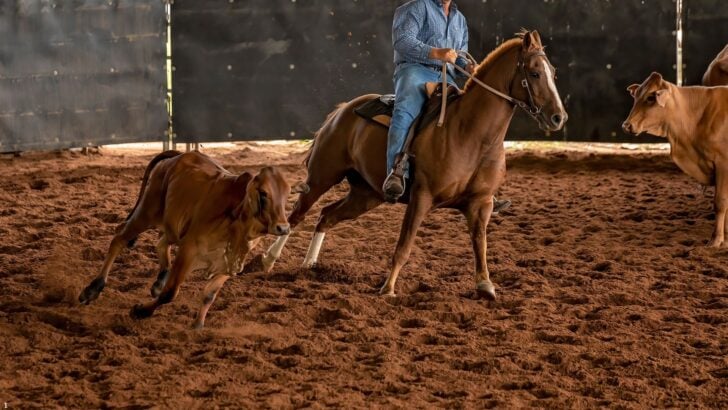
Quarter Horses are closely associated with ranch work, cutting, reined cow horse events, sorting, team penning, and roping. A good cow horse has the balance to stop and turn, the quickness to stay with a cow, and the mind to stay focused when things get fast.
Horse people often call that ability “cow sense.” Some bloodlines and individual horses clearly show more natural interest and aptitude with cattle than others, but training, exposure, athletic ability, and a rider who knows how to use that horse still matter. I’ve watched good stock horses lock onto a cow and make a rider’s job easier, but I would never assume every Quarter Horse has that kind of ability simply because of his registration papers.
For a closer look at the horses commonly used in that work, see my guide to ranch horse breeds.
Short-Distance Racing
Quarter Horse racing is built around explosive speed over short distances. A race-bred Quarter Horse leaves the gate hard, reaches speed quickly, and is asked to give everything over a short run rather than settle into the longer rhythm you see in Thoroughbred racing.
That doesn’t mean every Quarter Horse is a racehorse, any more than every Thoroughbred is suited to the same distance or class level. But the breed’s racing side is an important part of its history and explains the powerful hip, fast acceleration, and competitive bloodlines you’ll find in many pedigrees. Read more in my guide to Quarter Horse racing.

Western Performance Events
The breed is deeply established in reining, barrel racing, roping, western pleasure, ranch riding, cutting, working cow horse, trail classes, and a long list of local and national Western events. Different disciplines favor different types of Quarter Horses, so it pays to match the horse to the job rather than buy a general “Quarter Horse” and expect him to suit every event.
A barrel horse may be hotter, quicker, and more forward than a rider wanting a quiet trail horse enjoys. A big, slow-moving western pleasure horse may not suit someone who wants to rope calves or cover rough pasture. One breed can produce all of those horses, which is part of its strength—but it also means buyers need to look past the breed name.
Trail and General Riding
A solid Quarter Horse with miles outside the arena can make a very enjoyable trail and general riding horse. The best ones are sensible, fit enough for the terrain, comfortable to ride, and trained to handle gates, water, traffic, wildlife, other horses, and the ordinary surprises that come with being out in the world.
For casual riding, I’d choose a horse based on his actual trail record—not just because he looks like the kind of horse that ought to trail ride. A horse that has quietly crossed creeks, loaded in a trailer, stood tied at camp, and gone down the road with a loose rein tells you far more than a sale ad ever will.
Quarter Horse Types and Bloodlines
One reason people get confused about Quarter Horses is that the breed covers a lot of ground. You can put a halter horse, a racehorse, a cutting horse, and a ranch gelding side by side and see major differences in build, movement, and temperament. They may all be registered Quarter Horses, but they were developed for different work.
- Ranch and cow-horse types: Usually bred for practical movement, athleticism, cattle aptitude, and a workmanlike mind.
- Cutting and reined cow horse types: Often quick, catty, athletic, and responsive, with bloodlines selected for cow work and speed across short distances.
- Reining types: Built and trained for stops, spins, lead changes, and controlled speed.
- Barrel and speed-event types: Commonly more forward, quick, and athletic, with a strong racing influence in many pedigrees.
- Western pleasure and all-around types: Often selected for a particular way of moving, show-ring manners, and versatility across rail and pattern classes.
- Halter types: Bred heavily for muscle and visual presence; suitability for riding work depends on the individual horse’s structure, conditioning, and training.
An Appendix Quarter Horse generally refers to a horse with Quarter Horse and Thoroughbred breeding recognized through AQHA’s Appendix program. Those horses can bring more leg, speed, and scope, which may suit some performance jobs well. They can also feel different to ride than a heavier, traditional stock-type Quarter Horse.

Temperament and Everyday Handling
Many people are drawn to Quarter Horses because the breed is widely associated with a tractable, willing disposition. In the right individual, that can mean a horse that handles daily work without making everything a fight: he catches, leads, ties, stands for the farrier, loads, and goes to work when asked.
But I don’t like describing an entire breed as automatically calm. I’ve been around laid-back Quarter Horses, sensitive Quarter Horses, sharp young prospects, hard-working ranch geldings, and race-bred horses with plenty of engine. Training, pain, turnout, feeding, rider skill, past handling, and the individual horse’s temperament all show up in the way he behaves.
What I look for: A good-minded horse does not have to be dull. I want one that pays attention, moves when asked, and stays manageable when a dog barks, a gate slams, or another horse acts up nearby. That kind of sensible response is more useful than a breed stereotype.
If you are shopping specifically for a first horse or a child’s mount, temperament and proven history deserve much more weight than color, pedigree, or athletic potential. I cover that decision in detail in Are Quarter Horses Good for Beginners?
Is a Quarter Horse Right for You?
A Quarter Horse may be a good fit if you want a horse for ranch work, trail riding, Western events, casual riding, short-distance speed events, or an all-around job that rewards agility and a practical mind. The breed also offers a huge range of individual horses, which gives buyers more choices than they may have in a smaller registry.
Before you start shopping, be honest about the job you really want the horse to do. I’ve seen buyers get in trouble when they buy a horse for the picture in their head instead of the riding they’ll actually do every week.
- Do you want to trail ride, work cattle, show, rope, race, or do a little of everything?
- Will you ride regularly, or will the horse have long stretches between rides?
- Do you have a trainer or instructor available when you need help?
- Are you looking for a prospect to develop, or a finished horse that already knows his job?
- Can you handle a more forward, athletic horse, or do you need one that has already spent years packing quieter riders?
When Another Breed May Fit Better
Quarter Horses can participate in plenty of English and distance activities, but riders with a very specialized goal often look for a horse bred and trained for that specific job. A rider pursuing upper-level dressage, big-jumping competition, or serious endurance may prefer a horse with the movement, scope, or stamina that is more common in breeds developed around those disciplines.
That is not a knock on Quarter Horses. It is simply good horse shopping. The right breed and type depend on the rider, the discipline, the horse’s individual ability, and the level at which you want to compete.
Care and Management Considerations
Quarter Horses need the same solid basics as any other horse: appropriate forage, clean water, regular hoof care, dental and veterinary attention, turnout or exercise, and daily observation. The breed is not low-maintenance simply because many individuals are practical and easy to handle.
Weight and Forage Management
Many Quarter Horses are efficient keepers, especially when they are not in hard work. That can be a blessing when hay is expensive, but it also means some gain weight quickly on rich pasture or a ration that is too generous for their workload. In south Louisiana, I watch body condition closely when spring grass comes on because a horse can get too heavy before an owner realizes how much he has changed.
Use your hands as well as your eyes. You should be able to feel the ribs with light pressure without seeing them sharply. A cresty neck, fat pads, or ribs you cannot feel are reasons to reassess the horse’s forage, concentrate, turnout, and exercise plan with your veterinarian or equine nutrition professional.
For a deeper look at this subject, read my guide to preventing laminitis in horses.
Hoof Care and Daily Observation
Good feet are not optional for a horse that is expected to work. Keep a regular farrier schedule based on the individual horse’s growth, balance, footing, workload, and whether he is barefoot or shod. A schedule may be four weeks for one horse and closer to eight weeks for another, so I would follow the advice of the farrier and veterinarian who can see that horse’s feet in person.
Pick up the feet regularly and learn what is normal for your horse. Heat, an increased digital pulse, a foul smell, a sudden reluctance to turn, or a change in how he stands can be worth addressing before it becomes a bigger problem. My full guide to horse hoof care and maintenance goes into more detail.
Heat, Humidity, and Workload
In the Louisiana heat, I plan riding and work around the weather. Shade, clean water, ventilation, reasonable conditioning, and common sense matter more than trying to prove a horse can work through the hottest part of the day. Pay attention to how quickly your horse recovers after exercise, whether he is sweating normally, and whether his attitude or appetite changes in the heat.
A horse that suddenly tires more easily, sweats poorly, or seems uncomfortable deserves a conversation with your veterinarian. Do not assume it is simply laziness or a breed trait.
Routine Veterinary Care
Build a working relationship with an equine veterinarian before you need one in an emergency. Your veterinarian can help tailor vaccines, parasite control, dental care, nutrition, and wellness planning to your location, the horse’s age, travel schedule, and exposure risk.
The AAEP’s vaccination guidance is a useful starting point, but your horse’s actual plan should be based on where he lives and what he does. The same applies to deworming: a targeted program based on fecal egg counts and veterinary advice is more useful than blindly following an old calendar routine.
Health and Genetic Testing
Health history matters in any breed, and Quarter Horse buyers should also ask about genetic testing when the horse’s pedigree or intended use makes it relevant. A test result is not a substitute for a physical exam, soundness evaluation, or honest conversation about how the horse has been managed, but it can provide useful information for a buyer and veterinarian.
- HYPP: Hyperkalemic periodic paralysis is associated with descendants of the stallion Impressive. Ask for documented test results when that bloodline appears in the pedigree.
- HERDA: Hereditary equine regional dermal asthenia is a genetic skin disorder that is especially relevant in certain cutting-horse lines.
- GBED: Glycogen branching enzyme deficiency is a serious inherited condition that can be screened through genetic testing.
- MH and other panel conditions: Malignant hyperthermia and other conditions may be included in a breeder or buyer’s testing discussion, depending on the horse’s bloodlines and purpose.
The AQHA genetic-testing resources and the UC Davis Veterinary Genetics Laboratory are good places to review available tests and inheritance information. If a result affects a purchase or breeding decision, discuss it with an equine veterinarian and, when appropriate, a qualified genetics professional.
For riding horses, I’d also ask plain questions that often matter just as much: What maintenance does the horse need? Has he had recurring lameness? Has he ever tied up, foundered, colicked, or had surgery? How is he kept, fed, exercised, and shod? A complete answer matters more than a stack of papers by itself.
Buying a Quarter Horse
When you buy a Quarter Horse, buy the individual horse for the job you need today. A race-bred prospect, a finished reiner, a ranch gelding, and a quiet family trail horse can all carry Quarter Horse papers, but they should not be evaluated the same way.
- Match training to your goal: Buy a trail horse for trail riding, a trained show horse for your chosen event, and a cattle horse for cattle work. Retraining can be done, but it takes time, money, and the right help.
- Ask for a useful history: Find out what the horse has done in the past year, how often he has been ridden, where he has been hauled, and what maintenance or behavior issues the seller knows about.
- Watch normal handling: See the horse caught, led, groomed, saddled, mounted, and ridden—not just trotted out for five minutes in front of a buyer.
- Use an independent veterinarian: A pre-purchase exam can identify health and soundness findings relevant to the work you plan to do, but it does not certify a horse as safe or suitable for every rider.
- Bring experienced help: A trusted trainer, instructor, or seasoned horseperson can notice training gaps, movement issues, or mismatches that are easy to miss when you are excited about a horse.
For a detailed buyer-focused checklist—including first-horse red flags, trial-ride advice, kid-safe considerations, and beginner pricing—read my guide to choosing a Quarter Horse for a beginner rider. You may also find my first-horse buying guide and pre-purchase exam guide helpful before making an offer.

FAQs About American Quarter Horses
What are American Quarter Horses known for?
American Quarter Horses are best known for short-distance speed, cattle work, ranch versatility, and Western performance events such as reining, cutting, roping, barrel racing, and western pleasure. Individual horses vary widely by breeding and training.
How tall are Quarter Horses?
Many Quarter Horses stand about 14.3 to 16 hands tall. Height varies by bloodline, type, and individual horse.
Are Quarter Horses good for beginners?
Many well-trained Quarter Horses can suit beginners, but the individual horse matters more than the breed name. A sound, seasoned horse with a proven history carrying riders at your skill level is the safest kind of first horse. See the site’s detailed guide to Quarter Horses for beginner riders for a full buying checklist.
What are the different types of Quarter Horses?
Common types include ranch and cow-horse lines, cutting horses, reining horses, barrel and speed-event horses, western pleasure and all-around horses, halter horses, and racing-bred horses. They can differ substantially in build, movement, and temperament.
Do Quarter Horses need special care?
They need the same core care as other horses: forage, clean water, regular hoof and veterinary care, appropriate exercise, and daily observation. Some are easy keepers, so body condition and pasture management deserve attention.
What genetic tests should Quarter Horse buyers ask about?
Testing discussions may include HYPP, HERDA, GBED, malignant hyperthermia, and other conditions that may be relevant to a horse’s pedigree or intended use. Ask for documentation and discuss results with an equine veterinarian before making a purchase or breeding decision.
The Bottom Line on American Quarter Horses
American Quarter Horses have stayed popular because they are useful horses. The right one can work cattle, trail ride, compete in Western events, sprint down a racetrack, or spend a quiet afternoon carrying a rider around the farm. That range is hard to beat.
Still, the breed is broad enough that there is no single “typical” Quarter Horse. The best choice depends on the work you want to do, the horse’s individual build and mind, his training history, his soundness, and the help you have available. Buy for the horse you need—not the color, not the pedigree alone, and not the picture in your head.
About Miles Henry
Racehorse Owner & Author | 30+ Years in Thoroughbred Racing
Miles Henry (legal name: William Bradley) is a professional horseman based in Folsom, Louisiana. He holds Louisiana Racing License #67012 and has spent over three decades managing Thoroughbreds at premier tracks including Fair Grounds, Delta Downs, and Evangeline Downs.
Expertise & Hands-On Experience: Beyond the track, Miles has decades of experience in specialized equine care, covering everything from hoof health and nutrition to training protocols for Quarter Horses, Friesians, and Paints. Every guide on Horse Racing Sense is rooted in this “boots-on-the-ground” perspective.
30 of their last 90 starts
Equibase Profile.

Connect with Miles: