
Last updated: May 6, 2026
Any links on this page that lead to products on Amazon are affiliate links and I earn a commission if you make a purchase. Thanks in advance – I really appreciate it!
Bucked shins affect roughly 70% of young Thoroughbreds in race training, and about 12% of those cases progress to stress fractures in the forelimb cannon bone. It remains one of the most common reasons young racehorses are pulled from training in their first year — and one of the most preventable, provided the early warning signs are recognized, and workload is managed correctly.
What are bucked shins in horses? A stress injury of the cannon bone in young racehorses caused by repetitive concussion during early speed training. Also called shin buck in racing barns, it is one of the most common early-training injuries in Thoroughbreds.
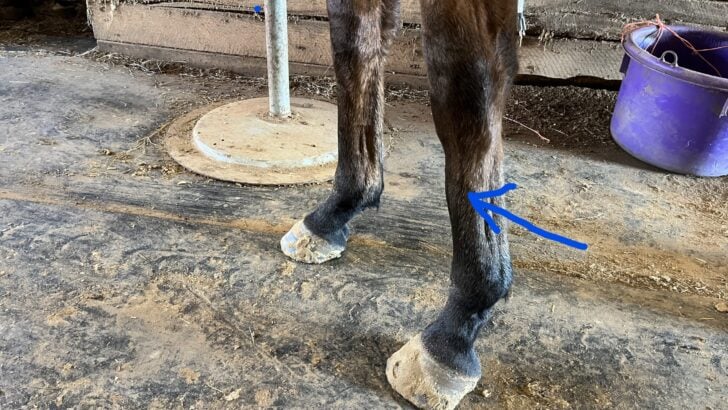
What it looks like: Heat and swelling on the front of the cannon bone, tenderness to pressure, and a shortened or guarded stride during work — often before any visible lameness.
Why it matters: Catch it early and most horses recover fully. Miss it, and continued training load can turn micro-fractures into a complete stress fracture — a much more serious injury that can sideline a horse for months or end a career.
I was walking through the barn last fall, thinking about how we had made it through the whole training season without a single bucked shin case. Usually by that point, I would have had at least one or two young horses sidelined. Something we changed in how we managed early racehorse training was clearly making a difference.
Veterinary Disclaimer: This article reflects 30 years of hands-on experience as a racehorse owner — it is not a substitute for professional veterinary advice. Always consult your veterinarian for diagnosis, treatment protocols, and return-to-training decisions on any horse with suspected shin buck or stress fracture.
Table of Contents
What Bucked Shins Are and How They Start
A fellow racehorse owner called me a few years ago because his horse had stopped wanting to move out of his stall. The vet ran a hand down both front legs and found heat and firm swelling on the front of the cannon bones — classic bucked shins. The horse had been breezing well, and the trainer had not noticed anything wrong until the horse told him himself.
Bucked shins — also called shin buck in racing barns throughout Louisiana and the Gulf South — are tiny stress fractures and acute inflammation on the dorsal surface of the third metacarpal bone, the cannon bone. Early on, the swelling is soft and warm. Left unaddressed, the bone lays down a periosteal reaction, and the area becomes hard and prominent, which is where the name comes from. The horse is in pain at that stage and will often pull the leg away sharply when you run your hand down the front of the shin.
The condition is part of what veterinarians call dorsal metacarpal disease. It occurs almost exclusively in young horses during their first months of speed work — the bone simply cannot adapt fast enough to the training load being placed on it. Repetitive impact during intense works and breezing is the primary driver.
Key signs of bucked shins — run these checks after every work:
- Heat on the front surface of one or both front cannon bones
- Swelling that is initially soft, later becomes firm and bony
- Pain when you apply pressure to the front of the shin — horse will flinch or pull the leg away
- Short choppy stride or reluctance to extend at the trot and gallop
- May not show obvious lameness in early stages — palpation is your best early-detection tool
If the condition is caught early and the horse is properly rested, most cases resolve fully. The danger is in pushing through it — micro-fractures under continued training load can result in a complete stress fracture, which can end a racing career or worse.

What Causes Horses to Shin Buck
We started our two-year-olds on the same schedule we have used for years, yet one still shin-bucked while the others stayed sound. Nothing was different in the program — the difference was in the horse. He simply was not ready for the workload at that stage of development. Not every horse adapts at the same rate, and bucked shins are the bone’s way of signaling that training stress has outpaced adaptation.

Overtraining
We have followed a training approach similar to the one outlined by Kentucky Equine Research, which emphasizes that bone is not static — it adapts directly to the type and timing of exercise placed on it. When workload is introduced correctly, the cannon bone responds by strengthening and remodeling over time. When it is not, the risk of a shin buck increases. For a deeper look at how we structure young horse conditioning, that article covers the full approach.
Training builds bone — but only if the bone has time to adapt.
That concept shows up clearly in practice. The horses that stay sound are not always the most talented — they are the ones whose training progression matches their ability to adapt. When that balance is off, the bone is simply asked to handle more stress than it is ready for.
Pushing a young horse too fast is the most common cause of bucked shins in Thoroughbreds. Bone remodeling takes weeks, not days. When workload increases faster than that process, the front of the cannon bone begins to break down under repeated impact.
A study of two-year-old Thoroughbreds in race training found that 56 of 226 horses developed bucked shins — nearly one in four — with most cases linked directly to the rate at which training intensity was increased. Our standard approach: thirty days of walk and slow jog work, then longer jogging sets with walk breaks, then structured jog-and-sprint intervals as fitness allows — always holding each step long enough for adaptation before moving to the next.
Miles’s Take — Slow Is Fast: Every year I see young horses come into our barn that were pushed too hard at their previous stop. The trainers were not trying to hurt them — they just did not want to fall behind schedule. The problem is that a horse that shin-bucks in month two loses four to six weeks of training and comes back more fragile than if you had spent that same time building the foundation correctly. Slow and steady in the first three months almost always produces a sounder horse at the six-month mark.

Genetics
Certain bloodlines seem to have weaker bone density in the cannon, and Thoroughbreds as a breed tend to have higher rates of bucked shins than Standardbreds or Quarter Horses. I have seen this play out firsthand.
More than 30 years ago I started in Quarter Horse racing — we pushed our two-year-olds hard with very few shin problems. When I later transitioned into Thoroughbreds, that contrast stood out immediately. Far fewer were ready for that kind of early workload, and trying to treat them the same way often led to shin bucking.
We had a filly in training several years ago who was as fast as any horse I had been around. She shin-bucked early, we backed off, brought her back carefully, and she bucked again. We got her sound a second time, and she won her first start — then shin-bucked a third time coming out of that race. At that point, we decided to retire her to the broodmare band rather than put her through another cycle of injury and recovery.
Her first foal was built the same way — exceptional speed, same fragility in the lower leg. That experience convinced me there was likely something in the bone density of that bloodline that careful training alone could not completely overcome. Genetics does not mean a horse cannot race — but it does narrow the margin for error. Some horses can handle a faster progression and stay sound. Others require a more conservative approach from the very beginning. The key is recognizing which type you are dealing with early and adjusting the workload before the shins start to tell you that you have gone too far.

Why Hard Tracks Increase Bucked Shin Risk
Surface firmness matters more than most trainers give it credit for. Each time a hoof strikes a hard surface, the force travels straight up the leg into the cannon bone. On a deep, forgiving track, that energy is partially absorbed. On a packed or sealed surface, it is not — and the bone pays the difference over hundreds of hoofbeats per workout.
Our training track at home has deep, soft footing, and I think it is a significant reason we go through most years without a bucked shin case. I have hauled young horses to facilities with firm training tracks and watched them come back slightly sore in the shins after a single workout. Evangeline Downs ran particularly firm for a stretch a few seasons back, and it showed in the number of young horses coming back after races with sore shins.
Surface warning signs to watch for:
- Track that sounds hollow or rings hard when you walk it
- Standing water that dries to a sealed, packed surface
- Training tracks that have not been harrowed or worked recently
- Horses returning from off-site works with more shin heat than they left with
How to Treat Bucked Shins in Horses
Before starting treatment, confirm what you are dealing with. Bucked shins and a full stress fracture require different protocols and carry very different prognoses — here is how to tell them apart.
| Factor | Bucked Shins | Stress Fracture |
|---|---|---|
| What it is | Micro-damage and periosteal inflammation on the dorsal cannon bone surface | Complete or near-complete fracture through the cannon bone cortex |
| Palpation finding | Heat, soft swelling, flinch response — bone shape intact | Localized sharp pain, possible bony step or deformity, severe response to pressure |
| Lameness | Often subtle early — shortened stride, not always obvious at walk | Moderate to severe — horse may be unwilling to bear full weight |
| Diagnosis | Clinical exam usually sufficient; radiographs if unsure | Radiographs required — do not assume from palpation alone |
| Recovery time | 4 to 6 weeks managed rest, then gradual return | 3 to 6 months minimum; some horses never return to full training |
| Risk if pushed through | High — bucked shins become stress fractures under continued load | Catastrophic — complete fracture, surgical risk, career-ending potential |
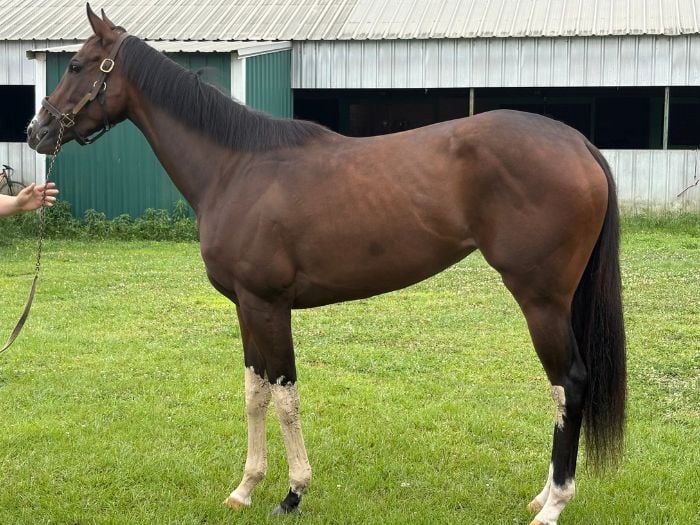
The moment you feel heat and swelling on the front of a cannon bone, the decision is made. Continuing to work through bucked shins is how minor cases become major ones — the treatment protocol starts with removing speed work, not after you have decided how serious it is.
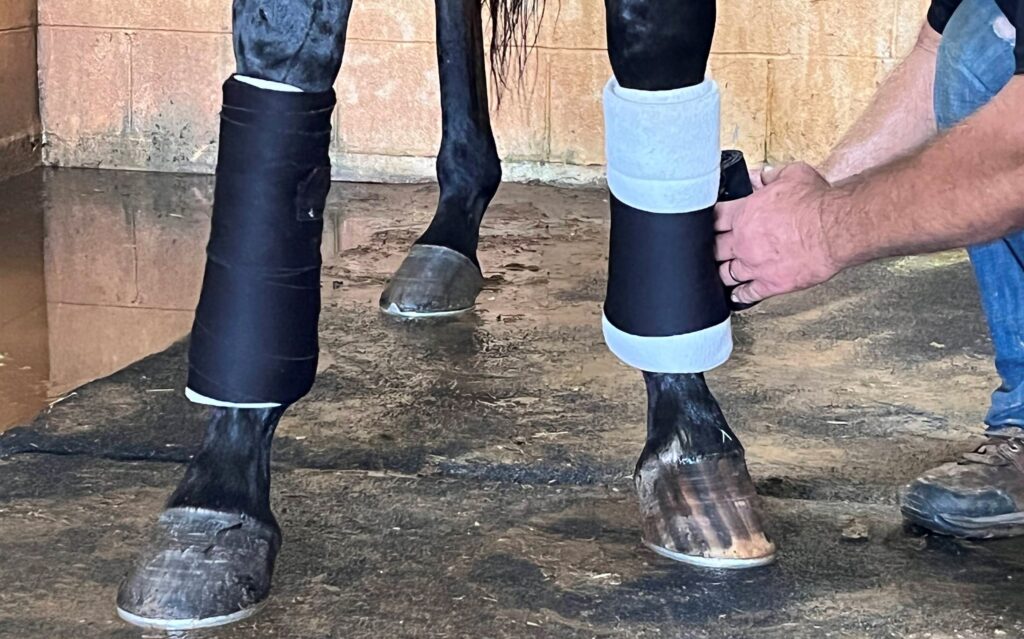
Our standard protocol: we rub the shins down with Super Green liniment — available at most tack shops — and start cold therapy immediately. At the first sign of heat or soreness, we will also apply a poultice and leave it on overnight to help draw out inflammation. That has been a consistent part of our routine for years whenever we catch heat early. For cold therapy, I prefer ice boots — a good set straps on in under a minute and gives consistent cold contact across the entire lower leg. We typically ice two or three times a day for the first week. Some horses also benefit from leg wraps between icing sessions to provide support and help manage swelling.
We have also seen good results with DMSO applied to the affected area. It penetrates quickly and helps reduce inflammation at the tissue level — but if you have not used it before, read up on proper application first, because it carries whatever is on the skin with it. I cover DMSO in more detail in my DMSO guide.
Bucked shin treatment protocol — what we do:
- Stop speed work immediately — this is the most important step; everything else supports the bone while it heals
- First week: Ice boots 2–3 times daily, poultice overnight if heat is significant, topical liniment, hand walk 20–30 minutes daily — do not stall rest completely
- Weeks 2–4: Continue hand walking, add paddock turnout if the horse stays calm, monitor for heat reduction daily
- Weeks 4–6: If heat is gone and horse is comfortable on palpation, begin slow reintroduction of jogging — no speed work until the vet clears it
- Throughout: Anti-inflammatory medication as directed by your veterinarian; always involve the vet early to confirm diagnosis and rule out a stress fracture
The balance to maintain during recovery is movement without impact. A horse standing in a stall for six weeks will not heal as well as a horse that is hand walked daily and turned out in a small paddock. You want circulation and low-level loading without the concussive force of trotting or cantering on a hard surface.
How to Prevent Bucked Shins in Performance Horses
The year we went without a single bucked shin case was the year we leaned hardest into early sprint work and soft-surface conditioning. It was not accidental — we had read the research and changed our program deliberately, and the results backed it up.
Understanding the research changed our approach more than any single vet visit. How we train racehorses in the first 90 days now looks completely different from what we did a decade ago, and bucked shin rates reflect it. Veterinarian Petrisor Baia DVM outlines the evidence well in his article Understanding the condition of bucked shins so we can take better care of our horses — the core finding is that short, sharp sprint intervals early in training stimulate bone remodeling more effectively than long slow work, producing a denser, more resilient cannon bone before the horse faces full training loads.
Prevention checklist for young horses in speed training:
- Introduce short sprints early — brief high-speed intervals stimulate bone density development better than long slow work
- Progress workload gradually — increase intensity and duration in small steps with recovery days between
- Train on the best surface available — deep, forgiving footing reduces impact force on every stride
- Palpate both front shins after every work — catching heat early gives you options; catching it late does not
- Use a heart rate monitor — fitness data tells you when a horse is genuinely ready for more work versus just tolerating it
- Individualize each horse’s program — some two-year-olds are ready to step up at 60 days, others need 90; use the horse in front of you, not the calendar
- Ensure adequate calcium and phosphorus in the diet — proper mineral balance supports bone development during the remodeling phase
Miles’s Take — The Sprint Protocol: We used to do a lot of long conditioning gallops in the early weeks. We switched to shorter, sharper work — a brief sprint at the end of an otherwise slow jog set. The sprint does not have to be fast. It just has to be fast enough to load the bone differently than a jog does. That single change, combined with soft-surface conditioning, is what got us through a full season without a bucked shin case. The research supports it, and our horses’ legs have confirmed it every year since.

Key Takeaways: Bucked Shins in Horses
- Palpate after every single work — heat on the front of the cannon bone is the earliest and most actionable warning sign; catching it on day three beats catching it on day thirty.
- Pull from speed work immediately — continuing to train through shin buck turns a 4-to-6-week recovery into a potential stress fracture and career-threatening injury.
- Movement, not stall rest — hand walking and controlled paddock turnout during recovery produces better outcomes than complete confinement.
- Short sprints prevent more shin bucks than long slow work — early brief speed intervals stimulate the bone remodeling that makes the cannon bone denser and more resistant to stress injury.
- Surface matters — firm, packed footing multiplies impact stress on the cannon bone; if your training track is running hard, your bucked shin risk is already elevated.
- Some horses are genetically predisposed — recognize those horses early and narrow their margin for error from the first workout.
- Never return to speed work without veterinary clearance — a horse that feels sound on palpation may still have incomplete bone remodeling; imaging is the only way to confirm the bone is ready.

Bucked Shins in Horses: Frequently Asked Questions
How long do bucked shins take to heal?
Most cases of bucked shins require four to six weeks of managed rest before returning to speed work. Do not confine the horse to a stall for the entire recovery period — daily hand walking and paddock turnout with controlled movement helps the bone heal correctly. Your veterinarian should confirm the horse is sound on palpation and free of heat before you reintroduce any galloping or breezing.
What is the shin on a horse called?
The shin of a horse is called the cannon bone, or the third metacarpal bone. It is the main weight-bearing bone in the horse’s forelimb, running from the knee down to the fetlock. Bucked shins — also called shin buck in many racing barns — specifically affect the dorsal, front-facing surface of this bone.
Can a horse race after bucked shins?
Yes, most horses that are properly rested and rehabilitated return to full training and racing after bucked shins. The key is complete healing before returning to speed work. Horses that are rushed back before the bone has fully remodeled are at significantly higher risk of a complete stress fracture, which is a much more serious and potentially career-ending injury.
Do bucked shins only affect two-year-olds?
Bucked shins are most common in two-year-old Thoroughbreds during their first six to eight months of speed training, but older horses entering speed training for the first time can also develop the condition. Once a horse has gone through the bone-remodeling process and developed a denser cannon bone — typically by age four or five — the risk drops significantly.
What is the difference between bucked shins and a stress fracture?
Bucked shins are micro-damage and periosteal inflammation on the dorsal surface of the cannon bone — painful and serious, but manageable with rest. A stress fracture is a complete or near-complete fracture of the cannon bone requiring extended rest, possible surgical intervention, and carries a real risk of ending a racing career. Bucked shins that are pushed through under continued training load can progress into stress fractures, which is why immediate rest at the first sign of heat is non-negotiable.
Is ice or heat better for bucked shins?
Ice is the correct treatment — not heat. Cold therapy reduces inflammation and manages swelling during the acute phase. Apply ice boots or cold packs for 15 to 20 minutes, two to three times daily, during the first week of recovery. Never apply heat to an acutely inflamed shin.
How do you treat bucked shins at home?
Stop speed work, apply ice boots for 15 to 20 minutes two to three times daily, use a topical liniment, and poultice overnight if heat is significant. Hand walk daily — do not stall rest completely. DMSO can help reduce inflammation at the tissue level. Always involve your veterinarian: confirm the diagnosis, rule out a stress fracture, and get clearance before any return to training.
What does a bucked shin feel like on palpation?
In the early stage, the front of the cannon bone will feel warm and slightly puffy, and the horse will flinch when you apply firm pressure. As the condition progresses, the swelling becomes harder and more prominent — the firm bony bump is the periosteal reaction. A horse with established bucked shins will often show a shortened stride before any swelling is visually obvious, so running your hand firmly down both cannon bones after every work is the most reliable early-detection method.
Can you prevent bucked shins in racehorses?
You can significantly reduce the risk with the right training approach, though you cannot eliminate it entirely — some horses are genetically predisposed regardless of program. The most effective prevention combines gradual workload progression, early short sprint intervals to stimulate bone remodeling, training on deep forgiving surfaces, and daily palpation to catch heat before it becomes a problem.
About Miles Henry
Racehorse Owner & Author | 30+ Years in Thoroughbred Racing
Miles Henry (legal name: William Bradley) is a professional horseman based in Folsom, Louisiana. He holds Louisiana Racing License #67012 and has spent over three decades managing Thoroughbreds at premier tracks including Fair Grounds, Delta Downs, and Evangeline Downs.
Expertise & Hands-On Experience: Beyond the track, Miles has decades of experience in specialized equine care, covering everything from hoof health and nutrition to training protocols for Quarter Horses, Friesians, and Paints. Every guide on Horse Racing Sense is rooted in this “boots-on-the-ground” perspective.
30 of their last 90 starts
Equibase Profile.

Connect with Miles: