
Last updated: May 6, 2026
Any links on this page that lead to products on Amazon are affiliate links and I earn a commission if you make a purchase. Thanks in advance – I really appreciate it!
Use Leg Wraps For:
- Stall Support: Standing wraps for overnight compression.
- Windpuffs: Managing minor filling/swelling without heat.
- Shipping: Full-leg protection during transport.
- Post-Exercise: Minor support after light work (if skilled).
Skip Wraps When:
- Unsure of Tension: Poor wrapping causes “bandage bows.”
- Active Heat: Never wrap an injury with active heat/inflammation.
- Wet/Muddy: Can trap bacteria and cause skin scald.
- Turnout: Unsupervised horses can snag or loosen them.
I’m Miles Henry, a Louisiana horse owner with over thirty years in the racing business. I’ve wrapped thousands of legs, from standing wraps for stall rest to shipping wraps for out-of-state sales. Done right, horse leg wraps keep horses sound, safe, and in training.
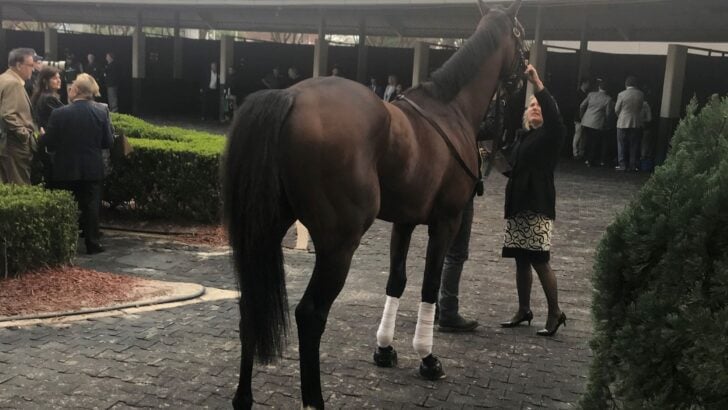
In 2023 at the Fair Grounds, a two-year-old colt fresh off a muddy gallop had windpuffs filling both fronts. My groom wrapped him overnight with standing wraps and quilted cotton, perfect even tension, two-finger rule. By morning gallop those legs were stone cold and tight. That colt went on to win his maiden special weight by three lengths. Polo wraps for horses and standing wraps aren’t cure-alls, but when you know the protocol, they keep horses in training.
Whether you’re shipping to sales, managing post-work filling, or supporting stall rest, this guide gives you my exact framework for using horse leg wraps safely. You’ll learn when wraps beat boots, my six-step wrapping protocol, and the red flags that mean “unwrap now and call the vet.”

Table of Contents
Decision Framework: Wraps vs. Boots vs. Ice
Before you reach for a polo wrap or standing bandage, ask yourself: Is this really a wrapping situation, or would boots, ice, or vet care be safer?
| Situation | Best Option | Why It Works | When to Skip |
|---|---|---|---|
| Stall Rest | Standing Wraps | This provides even compression to prevent fluid from pooling in the lower legs. | Avoid if there is acute heat or skin infections. |
| Post-Work (No Heat) | Polo or Standing Wraps | This supports healthy circulation and assists with controlled cooling. | Skip if the leg feels “hot” to the touch. |
| Post-Work (With Heat) | Ice Boots → Vet | This draws out active heat; always diagnose before applying compression. | Never wrap over active inflammation. |
| Shipping | Shipping Wraps | This ensures full coverage from the knee or hock down to the hoof. | Skip for short hauls under 30 minutes. |
| Trail / Turnout | Leg Boots | These are impact-resistant. For horses prone to overreaching, consider bell boots in addition to wraps or support boots. | Never use soft wraps unsupervised. |
| Tendon Rehab | Vet-Directed Only | This requires medical oversight to ensure specific custom healing protocols. | DIY wrapping can mask or worsen internal damage. |
Impact Protection: For horses prone to overreaching, consider bell boots in addition to wraps; wraps alone won’t prevent hoof impacts.
Stories from the Shedrow
The “Bandage Bow”: I once saw a green hand wrap a polo way too tight over a cold tendon. By the next morning, that horse had a “bandage bow”—inflammation caused purely by uneven pressure.
THE TAKEAWAY: Tension must be uniform. If you can’t get it even, don’t wrap it.
The Louisiana Slip: Down in Folsom, the humidity can make cotton quilts damp before they even touch the leg. I’ve seen wraps slide down and trip a horse in the stall because the moisture reduced the friction.
THE TAKEAWAY: Always start with clean, dry legs and keep your wraps in a climate-controlled tack room if possible.
How to Wrap Horse Legs (The Safety Protocol)
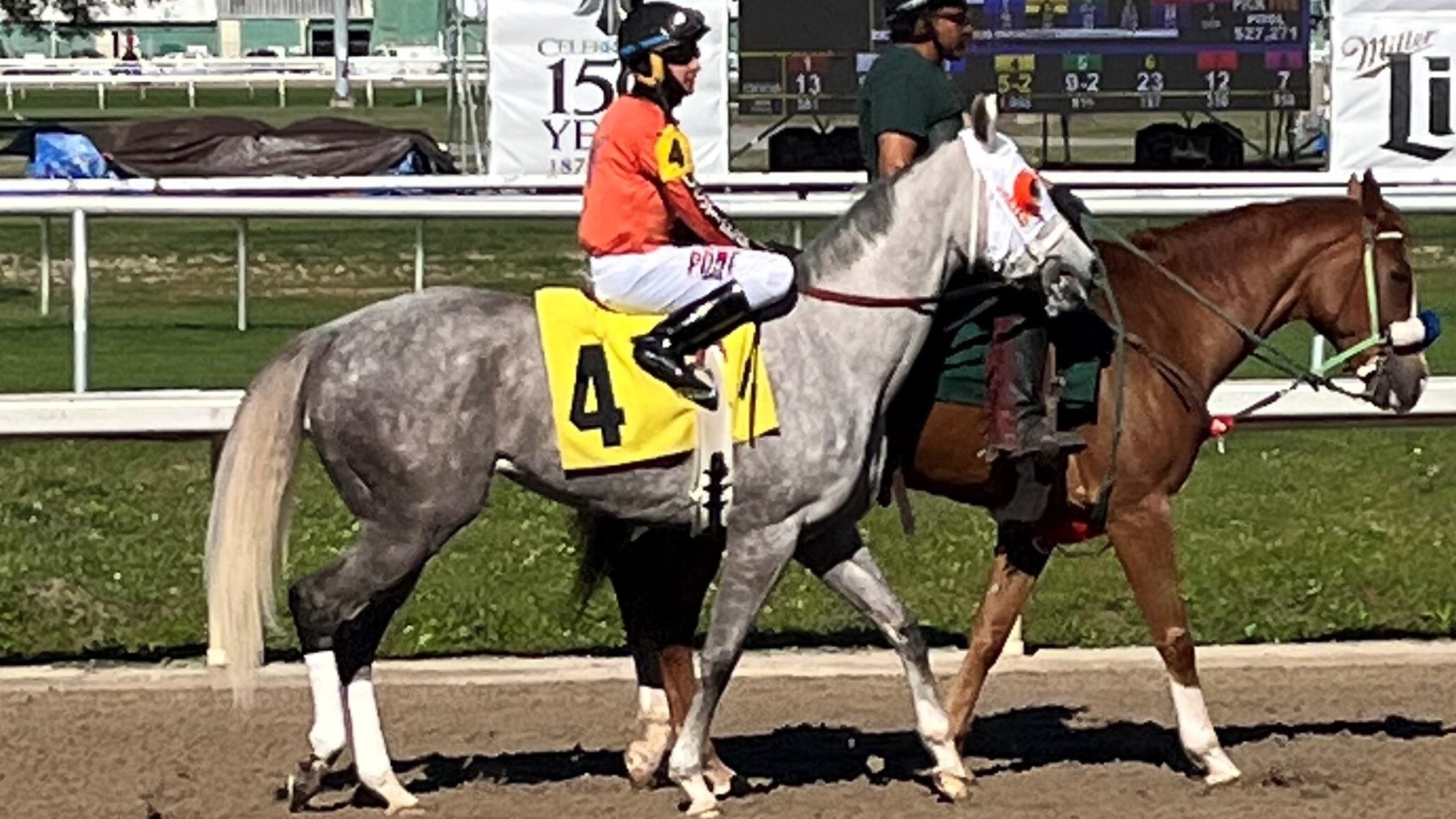
I’ve taught dozens of grooms how to wrap legs. The ones who master it follow this strict protocol every single time:
- Prep: Clean, dry leg. Grit causes “scratches” or skin sores.
- Padding: Apply the quilt smoothly with no wrinkles—wrinkles create pressure points. (Polo wraps go directly on the leg; standing/shipping wraps need padding.)
- Direction: Wrap front to back, outside to inside. This means:
- Left legs: Counter-clockwise (when looking at the leg from the front)
- Right legs: Clockwise
- Consistency: Overlap each turn by exactly 50%. This ensures even compression from top to bottom.
- Finish Smart: Never end your wrap over the tendon. Always secure the velcro on the outside or front of the cannon bone. If a horse hits its leg, you don’t want the closure digging into soft tissue.
- The Check: Use the two-finger rule at the top, middle, and bottom. Think “firm handshake,” not “strangling.” If you’re struggling to pull the velcro, it’s too tight.
Tension & Heat Risks
- Uneven Tension: This is the #1 cause of “bandage bows.” Pulling too tight at the bottom restricts circulation and compresses tendons.
- Wrapping Over Heat: If the leg is actively hot, wrapping traps inflammation. This can worsen the injury; always ice or call a vet first.
Hygiene & Timing
- Wet or Muddy Legs: Bacteria thrive under wraps. In Louisiana winters, “scratches” can develop overnight if you wrap damp skin.
- Leaving Wraps on Too Long: I pull mine every 12 hours. At the track, we “unzip” them in the morning to check for new heat or swelling.
Below is an instructional YouTube video on using standing wraps for horses.

Types of Horse Leg Wraps
| Wrap Type | Best For | Key Advantage | Main Risk |
|---|---|---|---|
| Polo Wraps | Light flatwork and keeping legs clean. | These are flexible, washable, and very forgiving for daily use. | Zero impact protection; can trap excessive heat. |
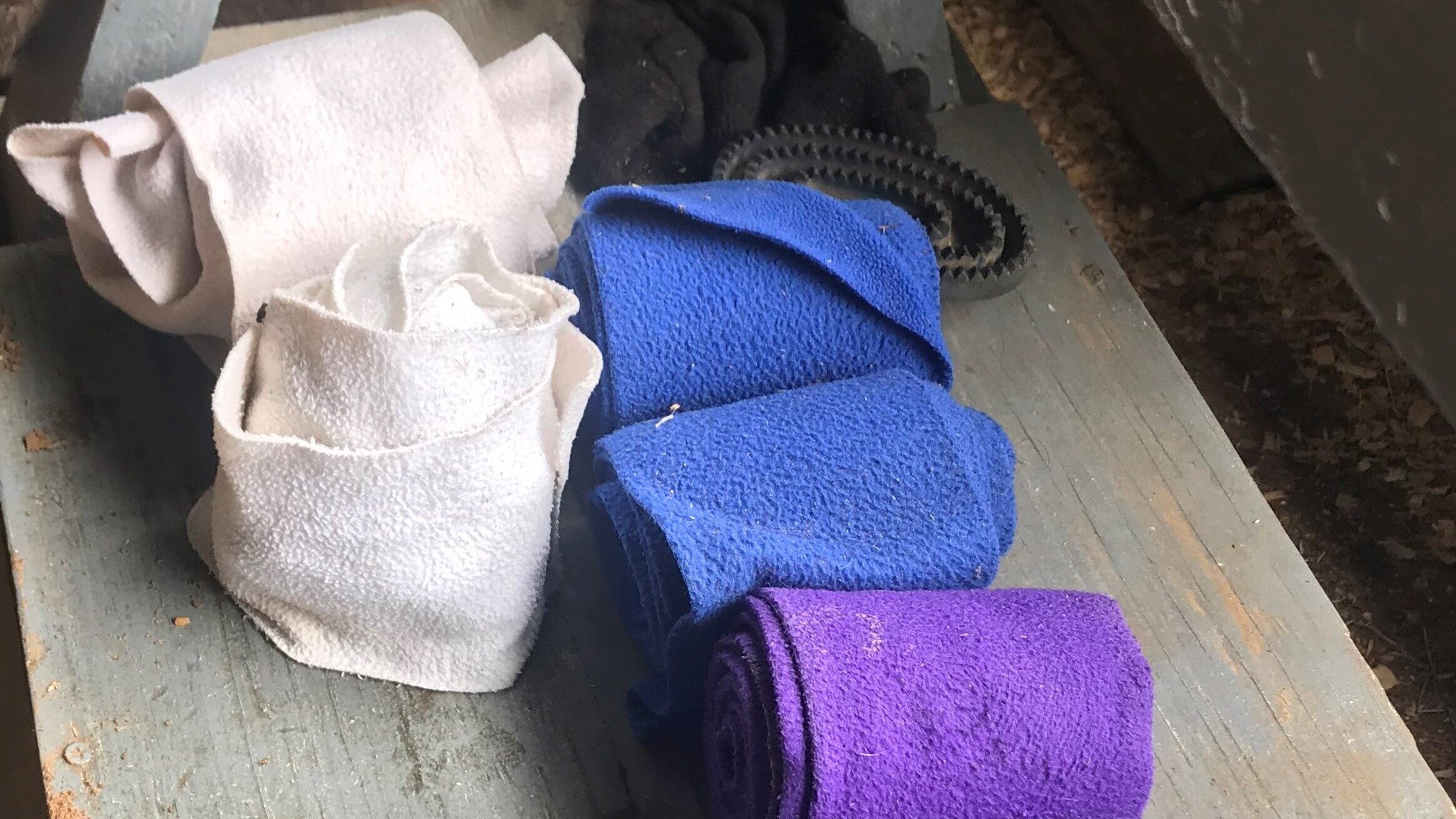
| Standing Wraps | Stall support and overnight compression. | These provide even compression when paired with proper quilted padding. | Time-consuming to apply; requires high-quality padding. |
| Shipping Wraps | Long-distance transport protection. | These offer full-leg protection from the hoof up to the knee or hock. | Significant heat buildup; unnecessary for short hauls. |
| Track Bandages | Racing barns and professional use only. | These provide a traditional racing fit with minimal bulk. | High risk of “bowing” a tendon if misapplied. |
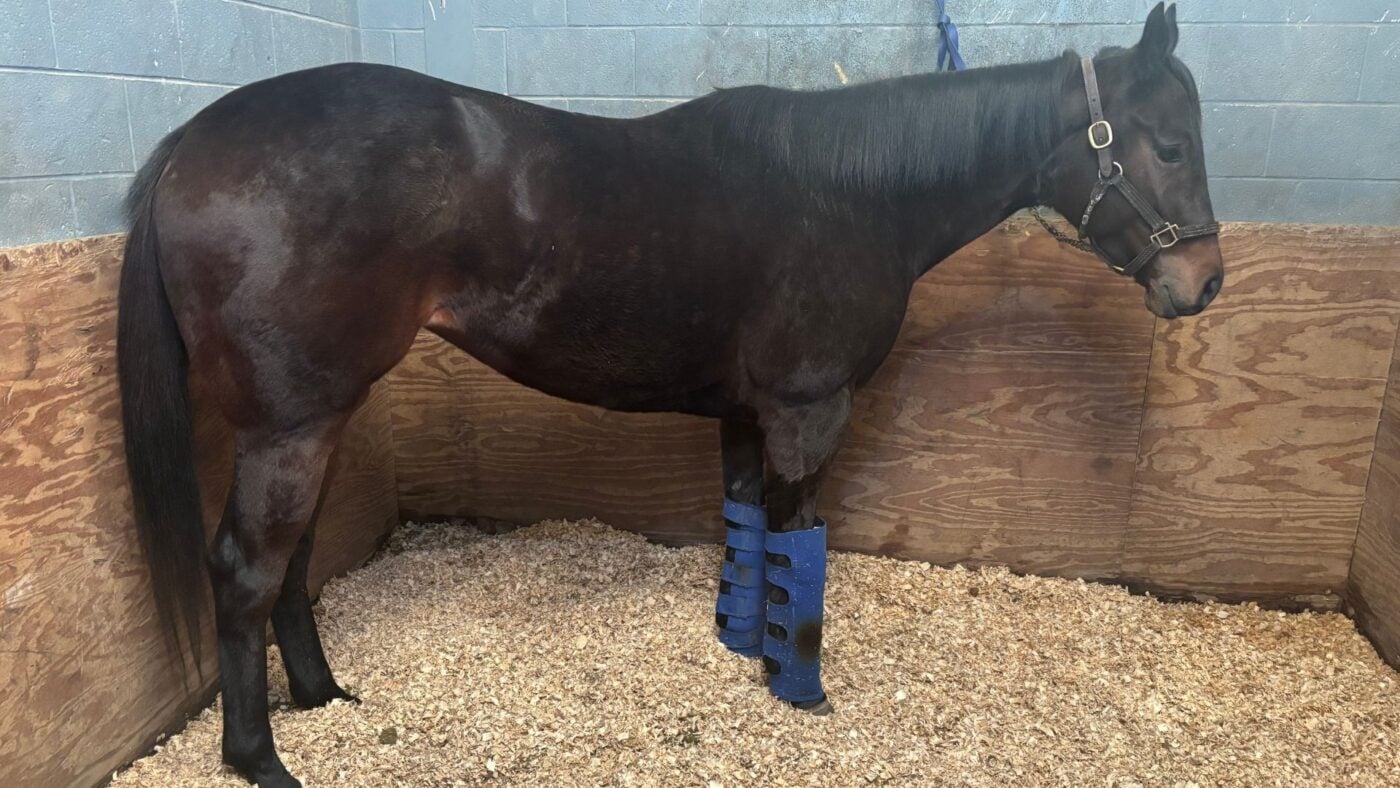
Wraps vs. Boots: Trainer’s Decision Matrix
Choose Wraps For:
- Stall Recovery: Use standing wraps for overnight compression, especially for horses prone to stocking up.
- Long Shipping: Essential for anything over an hour on the road.
- Custom Fit: Best when you need precise compression for unusual leg conformation.
Choose Boots For:
- High Activity: Use support boots for turnout, jumping, or trail riding.
- Impact Protection: Bell boots for overreach and leg boots for strikes.
- Beginners: Much safer while you are still mastering proper wrapping technique.
Frequently Asked Questions
Are polo wraps bad for horses?
Polo wraps aren’t inherently bad, but they provide no impact protection. I only use them for light flatwork or to keep a leg clean. In hot Louisiana summers, they can also trap heat, so monitor your horse carefully when using them.
How tight should standing wraps be?
Think of a firm handshake. Standing wraps should stay in place without restricting circulation. You should always be able to slide two fingers under the top, and if pulling the velcro feels like a struggle, it’s too tight.
Can wraps replace boots for riding?
For stall use, wraps are fine. But for turnout or high-impact riding, never rely on wraps alone. They can snag, unravel, and cause serious injuries if they come loose at speed. Use boots for protection in these situations.
How long can a horse wear standing wraps?
I remove standing wraps every 12 hours. At the track, we wrap at night and unwrap in the morning to let the legs breathe and check for any heat or swelling. Avoid leaving wraps on too long to prevent complications.
Can wraps cause bowing?
Yes. Uneven tension can cause “bandage bows,” which are real injuries that can end a career. Always apply wraps evenly and avoid pulling directly against the back of the leg.
Should beginners use wraps?
Beginners should practice with an experienced trainer 10–20 times before wrapping solo. For safety, use sport boots while learning to wrap to avoid mistakes that could injure the horse.
About Miles Henry
Racehorse Owner & Author | 30+ Years in Thoroughbred Racing
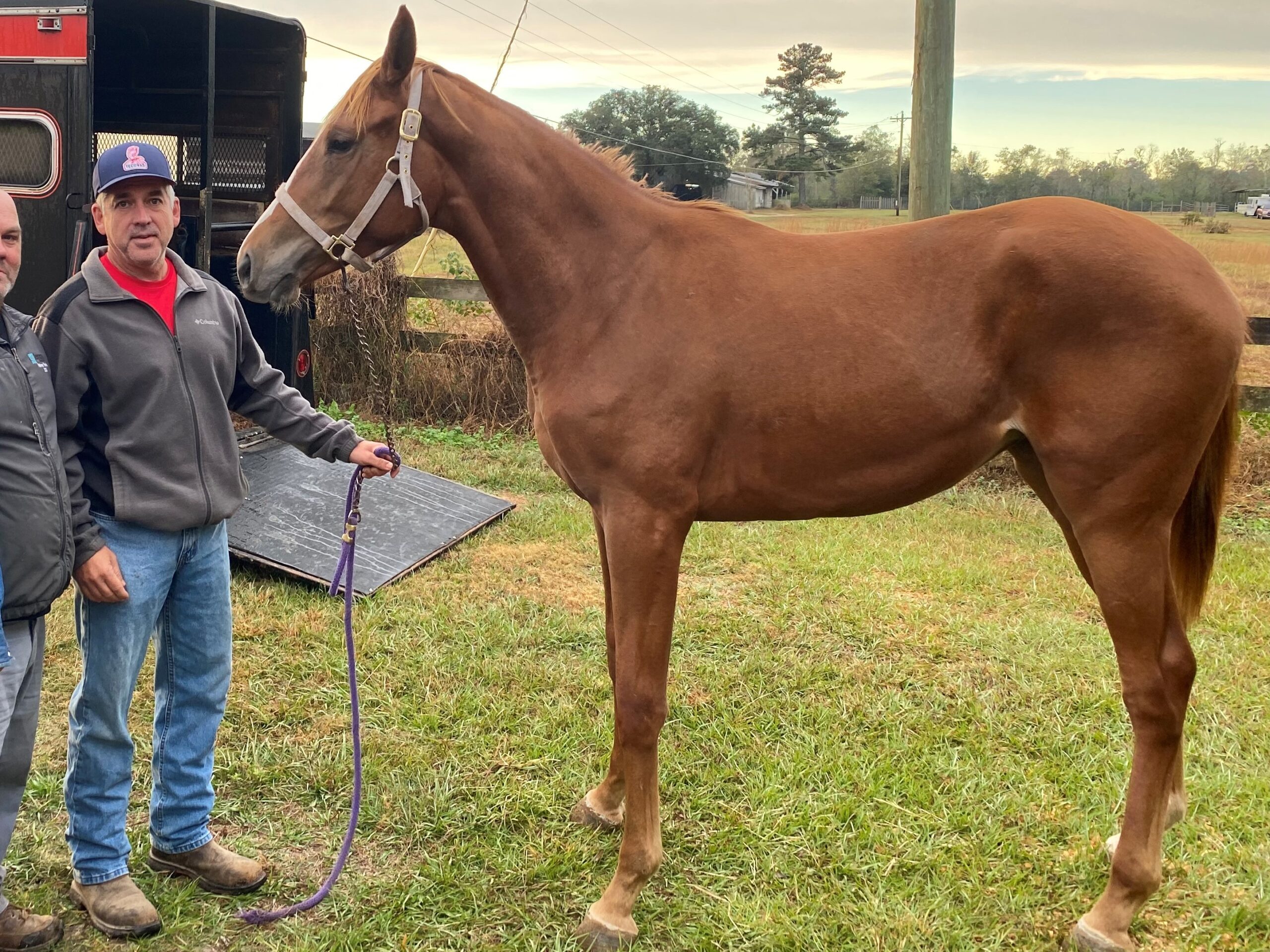
Miles Henry (legal name: William Bradley) is a professional horseman based in Folsom, Louisiana. He holds Louisiana Racing License #67012 and has spent over three decades managing Thoroughbreds at premier tracks including Fair Grounds, Delta Downs, and Evangeline Downs.
Expertise & Hands-On Experience: Beyond the track, Miles has decades of experience in specialized equine care, covering everything from hoof health and nutrition to training protocols for Quarter Horses, Friesians, and Paints. Every guide on Horse Racing Sense is rooted in this “boots-on-the-ground” perspective.
30 of their last 90 starts
Equibase Profile.

Connect with Miles: