
Last updated: July 19, 2026
What is the Haskell Stakes?
- Grade 1, $1 million, 1⅛ miles on dirt at Monmouth Park in Oceanport, New Jersey — run annually in mid-July
- The first major post-Triple Crown test — Triple Crown horses meet horses who bypassed the spring and specifically targeted this race
- Win and You’re In — the winner earns an automatic fees-paid entry into the Breeders’ Cup Classic
- Monmouth rewards tactical speed over deep closing — short stretch, fast surface; closers from four-plus lengths off the pace won only 13% of dirt routes in 2025
- Past winners read like a who’s who — American Pharoah, Rachel Alexandra, Authentic, Holy Bull, Point Given, Journalism
- The result reshapes the three-year-old division — whoever wins here enters the Travers and Breeders’ Cup Classic as the summer’s defining three-year-old
The Haskell Stakes is where the Triple Crown season ends and the Breeders’ Cup season begins. More than any other summer race for three-year-olds, it reveals which horses are ready to carry their form beyond the spring classics and into the fall championship season. The result doesn’t just tell you who’s best right now—it tells you who’s built for the second half of the season.
Responsible Gaming: Horse racing betting carries significant financial risk. This guide is for educational and handicapping purposes only. Never bet more than you can afford to lose. If you or someone you know has a gambling problem, contact the National Council on Problem Gambling at 1-800-522-4700.
Table of Contents
What Is the Haskell Stakes?
| Factor | Detail |
|---|---|
| Track | Monmouth Park, Oceanport, New Jersey |
| Grade | Grade 1 |
| Purse | $1,000,000 (held at this level since 1997) |
| Distance | 1⅛ miles (9 furlongs) on dirt |
| Eligibility | Three-year-old Thoroughbreds |
| Weight | 122 lbs. with allowances |
| Timing | Mid-July — bridge between Triple Crown and Travers Stakes |
| First run | 1968 as Monmouth Invitational Handicap; renamed 1981 |
| Grade 1 status | Since 1973, when the American Graded Stakes Committee was founded |
| Breeders’ Cup qualifier | Win and You’re In — automatic entry into Breeders’ Cup Classic |
| Track record | 1:46.24 — Cyberknife (2022) |
Who Was Amory Haskell?
The race was run as the Monmouth Invitational Handicap from 1968 through 1980 before being renamed for Amory L. Haskell, the Monmouth Park executive who led the track’s postwar revival. It became Grade 1 in 1973 — the same year the American Graded Stakes Committee was founded — and has operated as one of the premier three-year-old tests on the American calendar ever since.
Monmouth Park — The Surface That Shapes the Race
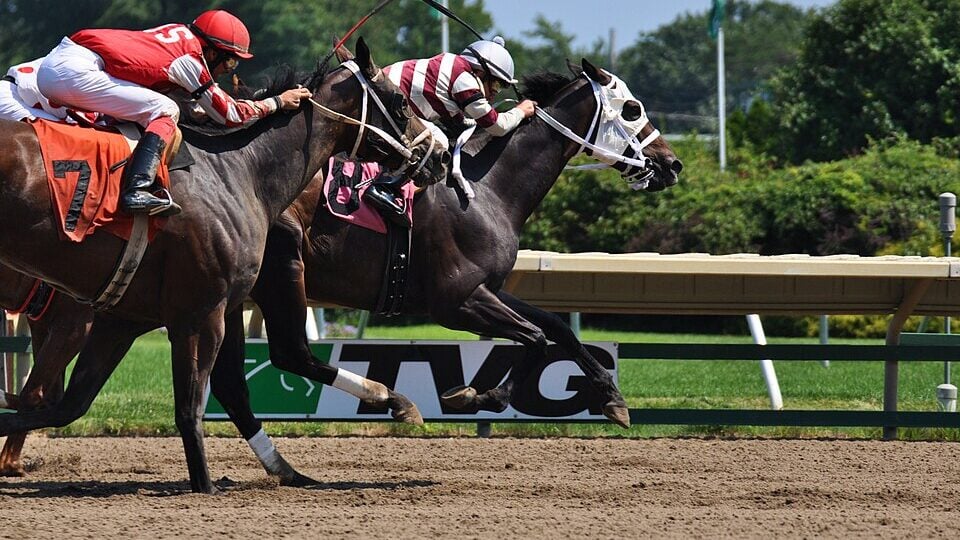
Monmouth Park’s 990-foot stretch is among the shortest of any major American racetrack. Belmont Park’s stretch runs approximately 1,097 feet. Churchill Downs runs approximately 1,234 feet. That 990-foot number is the single most important structural fact about the Haskell Stakes. A horse that needs time and room to build a closing run doesn’t have the real estate to get there from far back. The race is typically decided by horses that are within two to three lengths at the top of the stretch — not by horses making sweeping moves from ten lengths back.
According to America’s Best Racing’s 2026 Monmouth meet analysis, closers from four or more lengths off the pace won only 14 of 110 dirt routes in 2025 — just 13%. Front-runners and speed horses on or close to the pace won 65 of 110 — 59%. Stalkers between one and four lengths off the pace won 28%. The bias is structural and consistent across multiple meets; it does not soften meaningfully at Grade 1 level.
Miles’s Warning — The closer trap at Monmouth, and the exception: Every year a horse enters the Haskell with a closing run that worked at a longer track — big figures at Belmont or Saratoga where closers have room to unwind. The public bets it because the numbers are real. The surface doesn’t care about the numbers. In most years, back the horse that can track the pace within two lengths and sustain through a 990-foot stretch. But here’s the honest version: Journalism won the 2025 Haskell closing from seventh in a field of eight — a true deep closer. He did it because Gosger was out there alone on the lead with no pressure, set slow fractions, and had plenty left in the tank when Journalism came. The bias is structural. When the pace scenario gives a closer the fractions it needs, the bias can be beaten. Read the pace scenario first. The surface tells you the default — the pace scenario tells you whether the default applies.
Where the Haskell Fits the Three-Year-Old Calendar
| Race | Timing | Distance | Role in the Division |
|---|---|---|---|
| Kentucky Derby | First Saturday in May | 1¼ miles | Spring champion crowned |
| Preakness Stakes | Two weeks after Derby | 1 3/16 miles | Triple Crown leg 2 |
| Belmont Stakes | Five weeks after Derby | 1½ miles (traditional) | Triple Crown leg 3 — stamina test |
| Haskell Stakes | Mid-July (~6 weeks post-Belmont) | 1⅛ miles | First crossroads — Triple Crown horses meet fresh challengers |
| Travers Stakes | Late August | 1¼ miles | Mid-summer championship — Eclipse Award implications |
| Breeders’ Cup Classic | Late October / November | 1¼ miles | Horse of the Year decided — three-year-olds vs. older horses |
Triple Crown Horses vs. Fresh Challengers
The Haskell is the first race in the sequence where both paths — Triple Crown trail and fresh challengers — converge. A horse that ran all three classics arrives off six weeks of rest after the most compressed schedule in American racing: three hard races in five weeks. A horse that skipped the classics to target the Haskell arrives fresh, with a specific tactical plan for this surface. The result at Monmouth often tells you which horse has more left for the fall.
The most useful handicapping question in any Haskell isn’t which horse has the best speed figures — it’s which horse has the most useful speed figures given how it got here. American Pharoah ran the Triple Crown in 2015 and won the Haskell with authority. But most horses that ran all three classics arrive at Monmouth carrying fatigue their morning works don’t always show. A horse that emptied out in the Belmont stretch is a different proposition from one that finished strongly and jogged back sound. The six-week work pattern between Belmont and Monmouth is more informative than the spring form lines.
Miles’s Take — What I look for in a Triple Crown horse entering the Haskell: When I’m evaluating a horse that ran all three Triple Crown races, the first thing I look at is how it finished the Belmont. A horse that finished with energy and jogged back sound has a legitimate shot at Monmouth six weeks later if the works have been sharp and consistent. A horse that emptied out in the Belmont stretch is a different story. What I watch for from the outside is the trainer’s confidence — whether connections are pointing here aggressively or hedging. When a barn points a Belmont-tired horse at the Haskell because the purse is good and the Travers is six weeks away, that’s a different decision than pointing here because they genuinely believe it’s ready to run.
Fresh challengers who skipped the classics to target the Haskell are consistently underbet because the public fixates on Triple Crown press coverage. A horse that made a strategic spring skip and arrives at Monmouth with a tactical plan suited to this surface is often more dangerous than its odds reflect.
How to Handicap the Haskell Stakes
| Step | What to Evaluate | What You’re Looking For |
|---|---|---|
| 1. Count the speed horses | How many horses need the lead or press early? | One lone speed horse = soft fractions = closers get more opportunity (see Journalism 2025). Multiple speed horses = contested pace = stalkers are best positioned |
| 2. Identify the tactical stalkers | Which horses sit 1–3 lengths off pace and sustain? | Monmouth’s most reliable winner profile — look for horses that have won from this position at comparable distances |
| 3. Assess freshness | Triple Crown trail or specifically targeted fresh? | Triple Crown horses need a strong Belmont finish and consistent post-Belmont works; fresh horses need a tactical plan suited to this surface |
| 4. Check the works | What has the horse done in the 4–6 weeks since its last race? | Sharp, consistent works; flat or skipped works after the Triple Crown campaign are a warning sign |
| 5. Find the value | Where has the public mispriced the pace scenario? | Deep closers are consistently overbet by fans who saw big closing figures elsewhere; tactical stalkers at 8-1 or higher in a contested pace are the primary betting angle |
Undercard bias check on Haskell Day: Watch the first four or five races on the card before placing your Haskell bets. If front-runners are holding on consistently in the early races, the surface is playing fast and speed is being rewarded. If closers are finishing through tired leaders, the bias has softened — possibly from weather or track maintenance. The 2025 Haskell was a reminder: Journalism closed from seventh in a field where the lone speed horse Gosger set soft fractions without pressure. The surface didn’t change; the pace scenario did.
Recent Haskell Stakes Winners
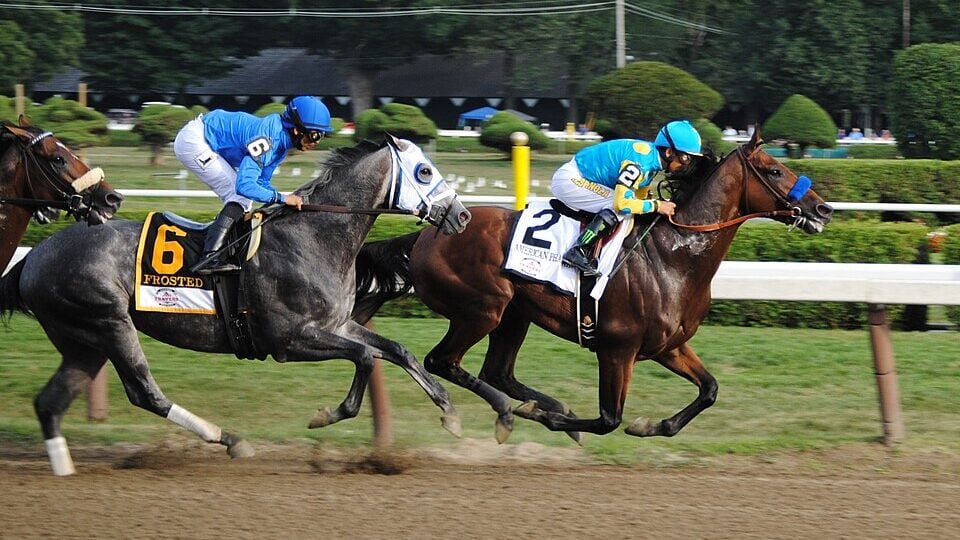
| Year | Winner | Trainer | Jockey | Path | What It Proved |
|---|---|---|---|---|---|
| 2025 | Journalism | Michael McCarthy | Umberto Rispoli | Preakness winner, Belmont runner-up | Lone soft pace neutralizes bias — read fractions before defaulting to speed |
| 2024 | Dornoch | Danny Gargan | Luis Saez | Belmont Stakes winner | Bias unchanged at Grade 1 level — stalking position still wins |
| 2023 | Geaux Rocket Ride | Richard Mandella | Mike Smith | Fresh challenger, Grade 1 debut | Specifically targeted fresh horse beats tired Triple Crown runners |
| 2022 | Cyberknife | Brad Cox | Florent Geroux | Arkansas Derby winner, skipped Triple Crown | Track record 1:46.24 — pure Monmouth presser template |
| 2021 | Mandaloun | Brad Cox | Florent Geroux | Kentucky Derby runner-up (via DQ) | 18¼-length margin — largest in modern Haskell history |
| 2020 | Authentic | Bob Baffert | Mike Smith | Fresh challenger, bypassed Belmont | Strategic spring skip beats depleted Triple Crown horses |
| 2019 | Maximum Security | Jason Servis | Luis Saez | Fresh challenger | Later won Saudi Cup — Haskell launched a global career |
| 2018 | Catholic Boy | Jonathan Thomas | Javier Castellano | Fresh — turf horse switching to dirt | Surface versatility rewarded on a speed-friendly oval |
| 2015 | American Pharoah | Bob Baffert | Victor Espinoza | Triple Crown winner | Record 60,983 crowd — exceptional horses transcend any bias |
| 2009 | Rachel Alexandra | Steve Asmussen | Calvin Borel | Preakness winner | Only filly in modern era to beat males; won by 6 lengths on sloppy track |
The pattern across these winners is instructive. Six of the eight came from either a stalking or pressing position — within three lengths at the top of the stretch. The two exceptions (Journalism 2025 and Rachel Alexandra 2009) both had specific pace scenarios that created the opportunity: Journalism had lone soft pace to close into; Rachel Alexandra benefited from a sloppy track that softened the speed bias. The surface isn’t unbeatable. It just requires the right setup.
Haskell Stakes Records
| Record | Horse / Person | Detail |
|---|---|---|
| Fastest time | Cyberknife | 1:46.24 (2022) — track record |
| Largest winning margin | Mandaloun | 18¼ lengths (2021, via disqualification of Hot Rod Charlie) |
| Most wins by trainer | Bob Baffert | 9 wins |
| Most wins by jockey | Mike Smith | 4 wins — most recently Geaux Rocket Ride (2023) |
| Largest crowd | American Pharoah’s Haskell | 60,983 (2015) — largest since 2015: 41,876 for Journalism (2025) |
| Only filly to win (modern era) | Rachel Alexandra | 2009 — won by 6 lengths, first filly since Serena’s Song (1995) |
| First running | Balustrade | 33-1 longshot, 1968 inaugural — Canadian jockey Eric Walsh |
The Breeders’ Cup Connection
The Haskell winner earns an automatic fees-paid entry into the Breeders’ Cup Classic through the Win and You’re In Challenge Series — which means the fall is already scheduled for whoever wins in July. The Classic becomes the natural destination, with the Travers Stakes at Saratoga in late August as the likely prep. Connections who genuinely believe their horse can win the Classic will ride aggressively at Monmouth. Those who are uncertain about the fall may ride more conservatively, setting up for the Travers as the priority. How a horse is ridden at Monmouth often signals which path the barn is actually planning. For the current year’s division picture and Haskell entries, see the 3-Year-Old Division Watch.
The Haskell is one of those races where purse, Breeders’ Cup bonus, and division statement all land in the same place at the same time. Winning here in mid-July tells the world your horse is the best three-year-old in the country right now. Losing to a fresh challenger who wasn’t on the Triple Crown trail reshapes everything the spring seemed to establish. Whoever wins here tends to carry real momentum through the Travers and into October.
Key Takeaways: Haskell Stakes
- Grade 1, $1 million, 1⅛ miles at Monmouth Park — mid-July, the first major post-Triple Crown three-year-old test and a Win and You’re In Breeders’ Cup Classic qualifier
- Monmouth’s 990-foot stretch is structural, not incidental — closers from four-plus lengths off the pace won 13% of dirt routes in 2025; tactical stalkers and pressers dominate year over year
- The bias can be beaten — but only by the right pace scenario — Journalism closed from seventh in 2025 because Gosger set soft fractions alone; read the pace scenario before defaulting to speed
- Triple Crown fatigue is real but not automatic — assess the Belmont finish and post-Belmont work pattern; a sharp work tab after the Belmont is the most reliable freshness signal
- Fresh challengers who targeted this race are consistently underbet — the public overweights Triple Crown press and underweights the strategic skip advantage
- Six of the last eight winners came from a stalking or pressing position — within three lengths at the top of the stretch; this is the profile Monmouth rewards most reliably
- Watch the undercard on Haskell Day — front-runners holding on confirms the bias; closers finishing through tired leaders means the surface has softened and the default is less reliable
- The Haskell winner typically targets the Travers Stakes in late August, then the Breeders’ Cup Classic — winning both the Haskell and Travers in the same summer is one of the strongest division statements a three-year-old can make
Frequently Asked Questions
What is the Haskell Stakes?
The Haskell Stakes is a Grade 1 Thoroughbred horse race for three-year-olds run annually in mid-July at Monmouth Park in Oceanport, New Jersey. The race is 1⅛ miles on dirt with a $1 million purse. It is the first major post-Triple Crown test of the three-year-old division and a Win and You’re In qualifier for the Breeders’ Cup Classic.
When is the Haskell Stakes run?
The Haskell Stakes is run annually in mid-July at Monmouth Park in Oceanport, New Jersey — roughly six weeks after the Belmont Stakes and approximately six weeks before the Travers Stakes. It falls at the midpoint between the Triple Crown trail and the fall championship season.
How much is the Haskell Stakes purse?
The Haskell Stakes carries a $1 million purse, a figure it has maintained since 1997 with only minor exceptions. The winner’s share is approximately $600,000. The race also carries a Win and You’re In bonus — the winner earns an automatic fees-paid entry into the Breeders’ Cup Classic, which is worth additional value beyond the purse.
Has a filly ever won the Haskell Stakes?
Yes. Rachel Alexandra won the Haskell Stakes in 2009, defeating a field of colts by six lengths on a sloppy track — the first filly to win the race since Serena’s Song in 1995 and the only filly to beat males in the modern era of the Haskell. Her performance came shortly after she won the Preakness Stakes, becoming the first filly in 85 years to win that race.
Where is Monmouth Park located?
Monmouth Park is located in Oceanport, New Jersey, near the Jersey Shore — approximately 60 miles south of New York City. The track was originally established in 1870 and is one of the oldest racing venues on the East Coast. It operates a summer meet from May through September, with the Haskell Stakes as its signature event each July.
Why does Monmouth Park favor speed horses?
Monmouth Park’s 990-foot stretch is among the shortest of any major American racetrack, combined with a fast surface and tight turns. Horses that need a long run to build momentum simply don’t have enough real estate to close from far behind. Data from the 2025 Monmouth meet shows closers from four or more lengths off the pace won only 13% of dirt routes, while front-runners and pressers combined for roughly 59%. This structural bias exists at all levels including Grade 1 company, though a soft pace scenario can neutralize it.
What is the difference between the Haskell Stakes and the Travers Stakes?
Both are Grade 1 races for three-year-olds, but they serve different roles. The Haskell (mid-July, Monmouth Park, 1⅛ miles, $1 million) is the earlier summer test — the first meeting between Triple Crown horses and fresh challengers on a speed-favoring surface. The Travers (late August, Saratoga, 1¼ miles, $1.25 million) is more prestigious, carries stronger Eclipse Award implications, runs at a longer distance, and is staged at a track that rewards different running styles. Horses often use the Haskell as a prep for the Travers.
Which horses have won both the Haskell Stakes and the Kentucky Derby?
Several horses have won both races, though not always in the same year due to scheduling. American Pharoah won both in 2015 — the Kentucky Derby in May and the Haskell in July as part of his Triple Crown sweep. Authentic won the 2020 Haskell before the Kentucky Derby was run later that year due to COVID scheduling. Big Brown won the Kentucky Derby in 2008 and returned to win the Haskell that same summer. Point Given won the 2001 Preakness, Belmont, and Haskell without winning the Derby.
Is the Haskell Stakes a Win and You’re In race?
Yes. The Haskell Stakes winner earns an automatic fees-paid entry into the Breeders’ Cup Classic through the Breeders’ Cup Challenge Win and You’re In series. This makes the Haskell one of the most strategically important summer races for connections targeting the fall championship, as the Classic entry is worth considerable value beyond the race purse itself.
What comes after the Haskell Stakes for three-year-olds?
The natural next target for Haskell winners is the Travers Stakes at Saratoga in late August, followed by the Breeders’ Cup Classic in late October or November. A horse that wins the Haskell and then the Travers enters the Classic as the clear summer champion of the three-year-old division. The Win and You’re In entry means the winner already has a Classic spot secured, so the Travers becomes a further prep and division statement rather than a qualification necessity.
About Miles Henry
Racehorse Owner & Author | 30+ Years in Thoroughbred Racing
Miles Henry (legal name: William Bradley) is a professional horseman based in Folsom, Louisiana. He holds Louisiana Racing License #67012 and has spent over three decades managing Thoroughbreds at premier tracks including Fair Grounds, Delta Downs, and Evangeline Downs.
Expertise & Hands-On Experience: Beyond the track, Miles has decades of experience in specialized equine care, covering everything from hoof health and nutrition to training protocols for Quarter Horses, Friesians, and Paints. Every guide on Horse Racing Sense is rooted in this “boots-on-the-ground” perspective.
30 of their last 90 starts
Equibase Profile.

Connect with Miles: