
Last updated: August 4, 2026
A racehorse can have perfect conformation, a great pedigree, and a powerful stride — but if the cardiovascular system cannot deliver oxygen fast enough, that speed has a ceiling. The heart, lungs, and blood supply are what let a Thoroughbred maintain racing speed. A horse with strong cardiovascular capacity is better equipped to recover faster, handle higher workloads, and maintain pace longer when the race gets serious.
How the cardiovascular system drives racehorse speed:
- Heart rate range: 28-44 bpm at rest to 220-260 bpm at full gallop — a physiological range no human heart can match
- Cardiac output at peak effort: up to roughly 200-250 liters of blood per minute, delivering oxygen to muscle at a rate that would be fatal in a human
- Training effect: consistent conditioning produces cardiac hypertrophy — measurable growth in heart mass and chamber volume, in some studies 20-30% above untrained baseline — improving stroke volume and oxygen delivery
- Recovery rate: how quickly heart rate drops below 60 bpm after hard work is one of the most reliable, earliest signs that conditioning is working
- Red flag: a resting heart rate consistently above 50-60 bpm, or an unexplained 10-15 bpm elevation at a familiar workload, warrants investigation before it becomes a performance or health problem
- Heart size: a larger heart may provide cardiovascular advantages through greater stroke volume, but it’s only one part of athletic performance — not a guarantee on its own
After decades of racing Thoroughbreds, I’ve learned that heart rate and recovery often tell you what a horse is doing internally long before the stopwatch gives you the full story. In this article, I’ll show how the cardio system affects speed, what normal heart rates look like, how training changes the heart, and what warning signs a horseman should never ignore.
Veterinary disclaimer: Some cardiac conditions in horses can be urgent or serious, so any new abnormality should be checked by a veterinarian. This guide is intended for educational purposes and does not replace veterinary diagnosis or treatment.
Table of Contents
How the Cardiovascular System Drives Racehorse Speed
Speed at the gallop is really an oxygen-delivery problem. Working muscle needs oxygen to keep contracting at speed, and the horse that can move the most oxygen-rich blood to those muscles the fastest is the horse that can hold a strong pace the longest. That’s the job of the cardiovascular system: the heart is the pump, the lungs handle the exchange, and the blood carries the fuel to where it’s needed.
A Thoroughbred’s heart is built for that kind of work — far larger than a human’s, and shaped by what the horse is made to do: explosive speed, then sustained effort when the race calls for it.
The horse’s heart rate range shows just how remarkable that system is. A healthy Thoroughbred can go from a resting walk to well over 220 bpm at full gallop in seconds — a range no human heart approaches. At peak effort, that heart is moving blood to working muscles at a pace that would be dangerous in a human. That kind of range is a big reason some horses can carry speed farther than others before they start to flatten out. The table below shows exactly how that compares.
The cardiovascular system does not work alone, though. It is one part of the bigger picture that determines how fast a horse can run. For the full picture, see our complete guide to the science of horse speed.
| Measurement | Horse (Average) | Human (Average) |
|---|---|---|
| Heart weight | 8-10 lbs | ~0.6 lbs |
| Resting heart rate | 28-44 bpm | 60-100 bpm |
| Maximum heart rate | 220-260 bpm | ~200 bpm (age-dependent) |
| Blood pumped at peak effort | ~200-250 liters/min | 20-30 liters/min |
Horse Heart Rate — Normal Ranges and What They Mean
Heart rate is one of the easiest ways to see how a horse’s cardiovascular system is doing. If you know what normal looks like, you can spot trouble, monitor fitness, and get useful information without expensive testing. Foals start much higher and gradually work down to adult ranges during the first year.
A horse’s recovery rate is just as important as the number itself. In my experience, a horse that drops back below 60 bpm within 10 minutes of a gallop is usually handling the work better than one that is still sitting up around 90 bpm at the same point. That is one of the clearest signs that conditioning is moving in the right direction.
When a horse’s resting heart rate stays above its normal baseline, I want that looked at — I don’t assume it’s just excitement without ruling out other causes first. The table below breaks down the exact ranges and what each one tells you.
| State / Activity | Typical Heart Rate (bpm) | What It Tells You |
|---|---|---|
| True resting (adult) | 28-44 | Measured 15-30 minutes after activity when the horse is calm; a consistent rise above normal baseline can signal a problem |
| Walking | 50-80 | Mild increase from movement; excitement, stress, or environment can raise the number |
| Trotting | 70-125 | Varies with fitness level, footing, workload, and the individual horse |
| Cantering | 120-170 | A fit horse often handles a sustained canter with a lower heart rate response than an unfit horse |
| Galloping / racing | 220-260 | Elite Thoroughbreds can approach this range during maximum effort as oxygen demand peaks |
| Post-exercise recovery | Rapid decline toward resting range | Recovery speed is one of the best indicators of cardiovascular fitness; unusually slow recovery deserves attention |
| Elevated resting rate — concern | Above 50-60 sustained | May indicate pain, infection, respiratory issues, metabolic problems, or cardiovascular concerns |
Miles’s Take — The number that changed how I watched horses: Before I started paying attention to heart rate data, I relied heavily on how a horse looked galloping. Some horses fool your eye — they look comfortable but are working harder internally than you’d think from the rail. Heart rate gave me another piece of the puzzle. On my end, I don’t need a monitor to tell me every detail, but I like having the data when a horse is borderline. If one horse is recovering in 8 minutes and another needs 18 minutes after the same set, that difference matters in the barn even if both looked fine to the eye.
How Training Changes the Horse’s Heart
Consistent aerobic conditioning changes the heart in a measurable way. Exercise physiologists call it cardiac hypertrophy, but in practical terms it means the heart becomes more efficient at moving blood. The result is more blood pumped with each beat, a lower resting heart rate, and faster recovery after harder work.
That is why an unfit horse, or one coming back after a layoff, usually shows higher heart rates at moderate exercise. As training goes on, the same workout should produce a lower heart rate response. That drop is one of the best signs that the horse is actually getting fit instead of just getting tired.
Miles’s Take — What the numbers caught that my eye missed: I had a three-year-old that kept running about 15 bpm higher than the rest of the group at the same stage of conditioning. The vet found a minor respiratory issue. Nothing dramatic, nothing obvious — but once we dealt with it, the recovery improved and the horse started moving forward. That kind of thing is exactly why I like having the numbers when a horse is borderline.

Using Heart Rate Monitoring to Train Smarter
Heart rate monitors are one of the most useful tools a serious horseman can use. They let you see what the horse is doing internally during work, not just what it looks like from the rail. If the heart rate is coming down better, holding steadier at a given pace, and recovering faster after a set, that usually tells you the horse is getting fitter.
For Thoroughbreds in race training, a structured conditioning program usually runs 8 to 12 weeks before a first start. Over that time, the heart rate data will tell you more than one good or bad workout ever will. I was skeptical for years before I bought a Polar Equine heart rate monitor, but once I started using one, it changed the way I handled young horses. A horse might not look dramatically different to the eye from week to week, but if its heart rate at the same pace drops from 165 bpm to 148 bpm, that horse is telling you its conditioning is moving in the right direction.
Here is the simple way I look at it:
- Set a true resting baseline early in training.
- Track the heart rate at the same workload over time.
- Watch how fast the horse returns below 60 bpm after a hard set.
- Pay attention when a horse is running 10 to 15 bpm higher than usual without a good reason.
- Do not push a horse through a workout if the resting heart rate is still elevated the next morning.
When to call the veterinarian: A resting heart rate consistently above the horse’s normal baseline — especially above 50-60 bpm in an adult Thoroughbred at true rest — warrants investigation. Elevated resting heart rates in horses can indicate pain (including undiagnosed colic or laminitis), respiratory infection, cardiovascular disease, or metabolic disturbance. Do not assume a high resting heart rate is excitement-related without ruling out other causes.
Abnormal Heart Rhythms — When the Cardio System Limits Performance
Not every irregularity is a problem. Some variation in heart rhythm is normal in horses, and that beat-to-beat change can actually be a sign of a healthy nervous system. A perfectly rigid, metronomic heartbeat at rest is not always better.
The rhythm that matters most to horsemen is atrial fibrillation. That is when the atria are no longer contracting in a coordinated way, and it can leave a horse short on performance, slow to recover, and flat under pressure. Some horses will look fine standing in the barn and only show the problem when you ask them to go hard. You need an ECG to confirm it; a stethoscope alone will not settle the question.
If I am checking a horse’s resting pulse by hand, I stay simple:
- Use two fingers, not your thumb.
- Feel along the facial artery near the jaw.
- Count for 15 seconds and multiply by four.
- Or use a stethoscope behind the left elbow.
- Learn what normal sounds like for that horse and notice when it changes.
Heart Murmurs in Horses — What Grades Mean
Heart murmurs are common enough that they do not always mean a horse is unusable. A murmur is just an abnormal sound caused by turbulent blood flow, and some mild murmurs in fit horses are not performance-limiting. Grades 1 and 2 are often incidental, while Grades 3 and above deserve closer veterinary attention, usually with an echocardiogram.
At a pre-purchase exam, I would not panic over a faint murmur in an otherwise healthy horse. But if the horse is intended for racing or hard work, I want a clearer answer on anything Grade 3 or higher before I move forward. The real question is whether the murmur reflects a structural problem that could worsen when the horse is asked to train.
These are the signs that would make me stop and get a vet involved:
- Exercise intolerance that does not match the horse’s fitness.
- Slow recovery after work.
- A murmur that is new or has changed.
- Collapse or near-collapse during or after exercise.
- A resting heart rate that stays high without a clear reason.
Does Heart Size Predict Speed? The Big Heart Theory
Now we get into the part horsemen have argued about for a long time: does heart size predict speed? The honest answer is that heart size can matter, but it does not tell the whole story. A bigger heart can move more blood per beat, which can help a horse sustain speed longer, but that advantage only means something if the rest of the horse is built to use it.
I have seen horses with a lot going for them on paper that still did not put it together on the track. A large heart does not fix poor mechanics, a bad mind in the gate, or a distance that does not fit the horse. What it does is add to what is already there.
That is why the best horses tend to have a combination of things working together:
- A strong heart.
- Good lung capacity.
- A clean, efficient stride.
- A sensible competitive temperament.
- A frame that can hold up under training.
Secretariat and Famous Big-Hearted Horses
No horse made the big-heart discussion more famous than Secretariat. After his death, the necropsy estimated his heart at 21 to 22 pounds, which is far larger than average. His 1973 Derby and Belmont performances showed what that kind of cardiovascular engine could do when everything else came together.
Sham was a tremendous colt too, and his heart was also reported to be unusually large. That is one reason I always caution horsemen not to reduce performance to one number. Great horses are still the sum of a lot of parts.
The X-Factor Gene and Heart Girth: What Breeders Look For
Heart size and chest capacity are not the first things I look at, but they are worth paying attention to. In breeding circles, two ideas keep coming up: the X-factor theory and heart girth. Both are secondary clues, not guarantees, but both can help shape how you evaluate a horse.
The X-Factor Gene
The X-factor theory has been around for decades. Marianna Haun was the one who pushed it into the mainstream, arguing that an X-linked gene may be behind unusually large hearts and that the trait passes through the maternal line. Whether the exact mechanism holds up at the molecular level is still debated, but the theory remains part of Thoroughbred breeding conversation because horsemen keep seeing certain maternal lines produce exceptional performers.
When people study pedigrees for this trait, they often look back through mares like Somethingroyal and Almahmoud. I would not build a buying decision on that alone, but I do think pedigree patterns are worth watching when they line up with the horse’s body and movement.
Heart Girth — What It Tells You at a Sale
Heart girth is one of the first physical traits I notice in a yearling. It refers to the circumference of the chest barrel, measured behind the front legs and over the withers. A deep, wide girth gives you a clue about the space the heart and lungs have to work in, and that matters when you are talking about a horse that may need to sustain pace.
At the sale, I like to see heart girth line up with pedigree, especially in a horse bred to go farther. A horse can have the right papers and still be too shallow through the body to really interest me for route work. I have passed on nice-looking colts before because the frame was still too light through the chest for what I wanted.
If the body and pedigree agree, that gets my attention fast. That is the kind of horse I want to keep studying.

Miles’s Take — Heart girth at the yearling sale: When I walk through a yearling consignment, I am looking for depth in the chest barrel and whether it fits the rest of the frame. A yearling that looks leggy without much body depth may just be immature, or it may be a horse that will struggle to sustain pace when you ask for more distance. I have passed on colts that looked impressive standing still because the frame was still catching up and the chest had not filled in yet. What I want is a horse whose body confirms what the pedigree suggests.
FAQs: Horse Heart Size and Speed
What is a normal resting heart rate for a horse?
A healthy adult horse at true rest — meaning 15 to 30 minutes after any activity and away from exciting stimuli — should have a heart rate between 28 and 44 beats per minute. Smaller breeds tend toward the higher end of this range. A resting heart rate consistently above 50 to 60 bpm warrants veterinary evaluation to rule out pain, infection, or cardiovascular issues.
How fast does a horse’s heart beat when racing?
A Thoroughbred at full gallop typically reaches 220 to 260 beats per minute. The exact maximum varies by individual horse and declines with age. At peak effort, the horse can move enormous volumes of blood to working muscle — up to roughly 250 liters per minute — which is why it can sustain racing speed far longer than a human cardiovascular system could support.
What is atrial fibrillation in horses and how is it diagnosed?
Atrial fibrillation is the most clinically significant cardiac arrhythmia in horses. It occurs when the atria fire chaotically rather than in synchronized contractions, disrupting normal heart rhythm and reducing cardiac efficiency. Affected horses often show exercise intolerance, poor performance, and prolonged recovery times after exertion. Diagnosis requires an electrocardiograph — a stethoscope can suggest an arrhythmia but cannot confirm atrial fibrillation. Treatment typically involves quinidine sulfate administration or electrical cardioversion, with good success rates when caught early.
How big is a horse’s heart compared to a human’s?
An average horse heart weighs 8 to 10 pounds — more than fifteen times the weight of a human heart at around 0.6 pounds. The largest documented horse heart belonged to Secretariat, estimated at 21 to 22 pounds. The size difference reflects the demands of a species built for explosive speed and sustained cardiovascular output.
What is the X-factor gene in horses?
The X-factor is a proposed X-linked genetic trait that produces horses with hearts significantly larger than average — roughly 5 pounds heavier. Geneticist Marianna Haun first proposed the theory in a 1994 Thoroughbred Times article, later expanded in her 1997 book, arguing the gene is passed through the maternal line, with colts expressing it fully from one copy and fillies requiring two copies. Secretariat’s dam Somethingroyal is believed to have carried the gene. The theory has not been confirmed at the molecular level but has influenced Thoroughbred breeding decisions for decades.
What was Secretariat’s heart size?
Secretariat’s heart was estimated at 21 to 22 pounds following his necropsy in 1989 — more than twice the average for a Thoroughbred. His rival Sham, who set a track record at the 1973 Kentucky Derby before finishing second to Secretariat, had a heart weighing approximately 18 pounds. Both were exceptional; the gap between them on the track suggests other variables beyond cardiac size also played a role.
What is heart girth on a horse?
Heart girth is the circumference of a horse’s chest, measured by running a tape directly behind the front legs and over the withers. It is a proxy for the size of the chest cavity that houses the heart and lungs, and it is one of the measurements used in weight-estimation formulas along with body length.
Where is the heart girth measured on a horse?
The heart girth is measured just behind the front legs, wrapping the tape around the widest part of the chest barrel and over the withers at the base of the neck. This spot roughly corresponds to where the heart and lungs sit inside the chest, which is why the measurement is called heart girth even though it is taken on the outside of the horse.

Key Takeaways: The Cardiovascular System and Racehorse Speed
- Speed is ultimately an oxygen-delivery problem — the heart, lungs, and blood supply determine how much oxygen reaches working muscle, which sets the real ceiling on sustained speed
- Training improves cardiac efficiency, not just heart size — cardiac hypertrophy is one measurable goal of a structured conditioning program, but the real payoff is greater stroke volume, lower resting rates, and faster recovery
- Recovery rate is the most accessible fitness marker — how quickly the heart rate returns to below 60 bpm after hard work tells you more about conditioning progress than clock times alone
- Heart rate monitoring identifies problems before they show in performance — a consistent 10-15 bpm elevation at the same workload intensity is worth investigating before it becomes a training setback
- Atrial fibrillation requires an ECG to diagnose — exercise intolerance and slow recovery without an obvious cause should prompt veterinary cardiac evaluation, not simply increased training
- Heart size correlates with performance but does not determine it — stroke volume, lung capacity, stride mechanics, and temperament all interact; a large heart amplifies what is already there
- The X-factor theory and heart girth are useful but secondary — an X-linked gene theory and a chest-circumference measurement both give breeders and buyers early clues, but neither replaces watching the horse actually perform
About this guide: Practical training observations and heart rate benchmarks are drawn from firsthand barn experience at Louisiana tracks. External science draws on published equine cardiology research and AAEP guidelines. Educational only — see the veterinary disclaimer above for clinical decisions.
About Miles Henry
Racehorse Owner & Author | 30+ Years in Thoroughbred Racing
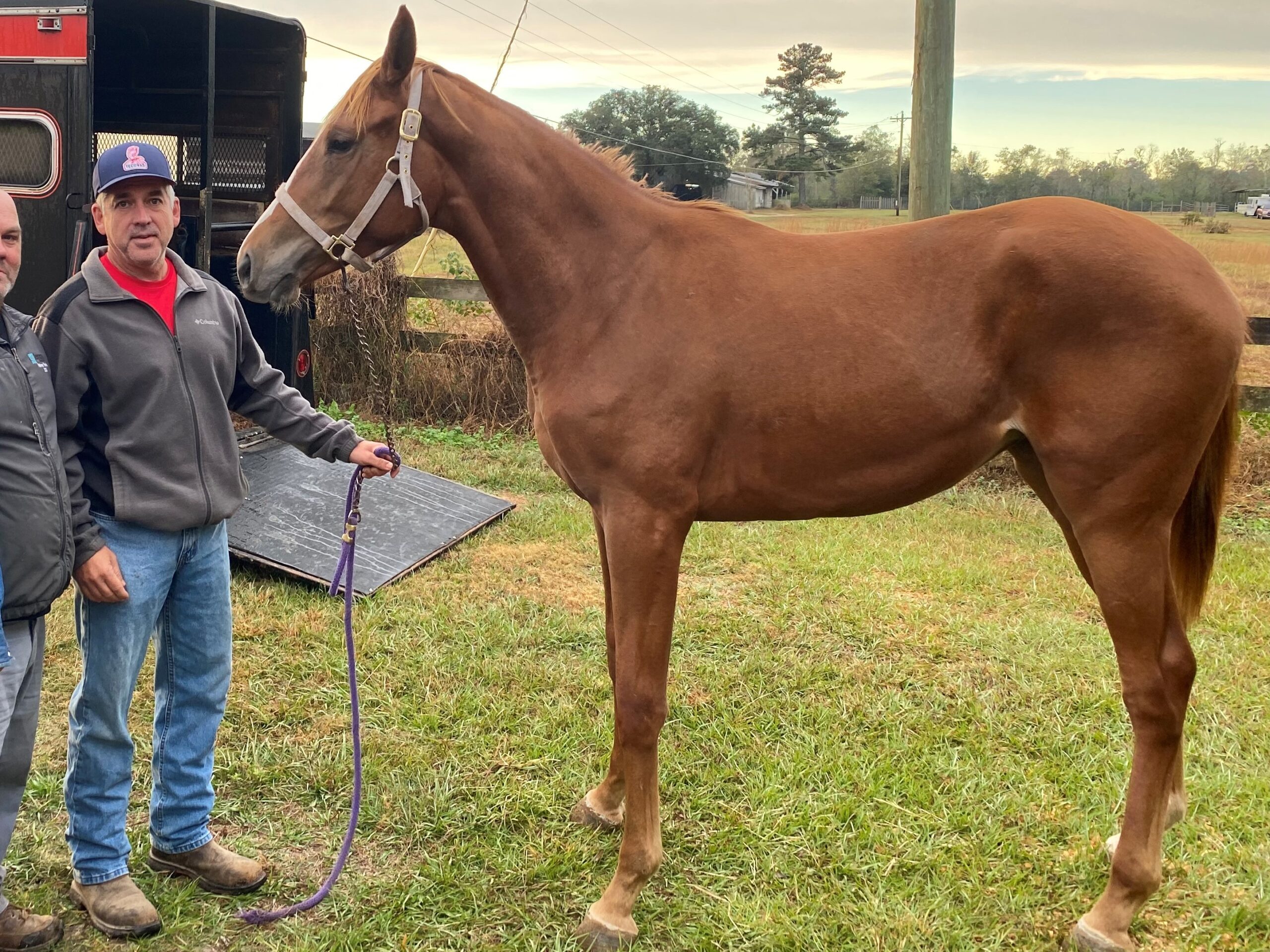
Miles Henry (legal name: William Bradley) is a professional horseman based in Folsom, Louisiana. He holds Louisiana Racing License #67012 and has spent over three decades managing Thoroughbreds at premier tracks including Fair Grounds, Delta Downs, and Evangeline Downs.
Expertise & Hands-On Experience: Beyond the track, Miles has decades of experience in specialized equine care, covering everything from hoof health and nutrition to training protocols for Quarter Horses, Friesians, and Paints. Every guide on Horse Racing Sense is rooted in this “boots-on-the-ground” perspective.
30 of their last 90 starts
Equibase Profile.

Connect with Miles: