
Last updated: May 28, 2026
Racehorse career length varies dramatically depending on breed, soundness, training, and economics. My Astrology colt, Astrologysprotege, has already made 45 starts over four seasons — from Evangeline Downs to Fair Grounds — and is still racing competitively today.
How long do racehorses race? A typical Thoroughbred career lasts about 3–4 years with 20–30 starts, peaking competitively around age 4–5. Careers are shorter or longer depending on breed — Standardbreds often race 4–6 years with 80–120+ starts, while Quarter Horses typically run 2–3 years. Three factors drive most retirements: injury, breeding value that exceeds racing earnings, and training costs that outpace purse returns at the horse’s competitive level.
About this guide: Career length data draws on the Jockey Club Fact Book, published equine research from the Equine Veterinary Journal and PMC, and my ownership experience. Individual horse examples are drawn from verified public records.
Table of Contents
Average Racing Career Length by Breed
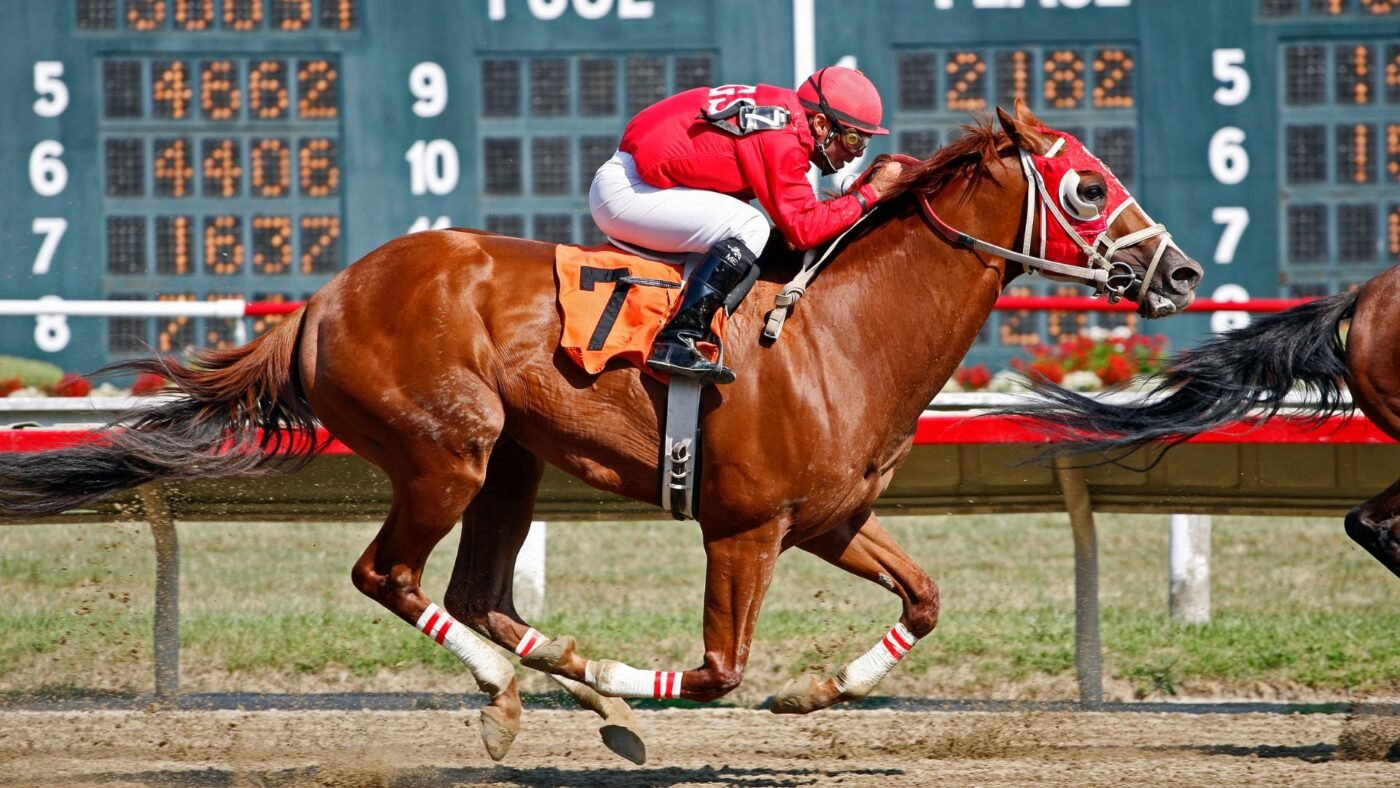
Career duration varies significantly by breed because the athletic demands, injury patterns, and industry economics of each discipline are fundamentally different. A Thoroughbred galloping on a firm dirt surface experiences different stresses than a Standardbred trotting at controlled pace, and those differences compound over time.
| Breed | Average Career | Typical Starts | Peak Age | Primary Retirement Drivers |
|---|---|---|---|---|
| Thoroughbred | 3–4 years | 20–30 | 4–5 | Injuries; breeding value exceeding race earnings; performance decline |
| Quarter Horse | 2–3 years | 15–25 | 3–4 | Sprint strain; early breeding opportunities; soft-tissue wear |
| Standardbred | 4–6 years | 80–120+ | 4–7 | Lower concussion load extends careers; age-related decline |
| Arabian | 4–5 years | 25–40 | 5–7 | Later physical maturity; endurance demands; metabolic issues |
Thoroughbred Racing Careers
Thoroughbred flat racing produces the shortest average careers among major racing breeds because high-speed galloping on firm surfaces creates the highest per-start injury risk. A 2012 Equine Veterinary Journal study places peak performance around age 4.5, with measurable decline thereafter. The sport’s emphasis on early speed also concentrates stress on developing skeletal systems during critical growth periods.
The breeding industry further shortens many careers. Successful colts often retire at 3–4 for stallion duties commanding $50,000–$200,000 per breeding season, while promising fillies may retire even earlier to maximize reproductive years. A horse that earns $200,000 annually racing but could command $150,000 per breeding cover for a decade is making its owner a straightforward economic calculation. My Astrologysprotege’s 45 starts over five years at regional tracks represents a longer-than-average career made possible by careful management and the different economics of the claiming and allowance levels he competed at.
Quarter Horse Sprint Careers
Quarter Horse racing over distances of 220 to 440 yards concentrates explosive forces into brief efforts, creating intense but abbreviated competitive windows. Most horses excel for 2–3 years before the physical demands of repeated sprint starts take their toll on stifles, hocks, and soft tissue. Champions like Dash For Cash (25 starts, 21 wins) and Special Effort (14 starts, 13 wins) exemplify successful but abbreviated careers at the top level. Some Quarter Horses extend their careers in amateur and bush track circuits into their late single digits, but the elite competitive window is narrow.
Standardbred Harness Racing Longevity
Standardbreds enjoy the longest careers in mainstream racing because harness racing’s controlled gaits — trotting and pacing — reduce concussion and allow more sustainable biomechanics than galloping. Horses maintain steady rhythms that create less peak stress on joints and soft tissues, enabling 80–120+ career starts across 4–6 seasons. Many Standardbreds compete productively past age 10, and some race into their teens. Mack Lobell’s 71 starts and the legendary Niatross, who retired undefeated after 37 starts, represent both ends of the Standardbred career spectrum.
Arabian Endurance Racing Duration
Arabian horses, bred for stamina over centuries, typically maintain 4–5 year careers in endurance competition. Their later physical maturity means many do not peak until ages 5–7, but this also extends their competitive window — the same late development that is a disadvantage in Thoroughbred juvenile racing is an asset in a discipline measured over 50 and 100 miles. Endurance champion Pieraz competed successfully past age 15, completing 100-mile rides with remarkable consistency. The discipline’s emphasis on metabolic fitness rather than pure speed supports extended careers when horses remain sound.
Key Factors That Determine Career Length
Training and Early Development
The relationship between early training and career length is more nuanced than the conventional “racing young damages horses” narrative. PMC research on progressive exercise programs demonstrates that gradual conditioning beginning at young ages can strengthen bones and soft tissues, potentially extending careers when properly implemented. Mississippi State University Extension research shows horses with pasture access and progressive exercise develop significantly stronger bone density than stalled horses. Astrologysprotege’s careful 6–9 month progression from breaking to racing debut was a deliberate part of his extended career — we did not rush the foundation work.
The opposite is equally true: rushed or improper early training produces stress fractures and soft tissue injuries that permanently compromise longevity. The variable is not whether a horse trains young, but whether the training load matches its developmental stage.

Injury — The Primary Career-Limiting Factor
Injury is the most common reason horses stop competing before their owners would prefer. Musculoskeletal problems are responsible for a substantial share of retirements across all breeds and class levels. Catastrophic fractures — cannon bones, pasterns, sesamoids — often require immediate retirement given the poor healing prognosis under athletic load. Chronic conditions are more insidious: arthritis affects a significant proportion of horses by age 6–7, while tendon and ligament injuries create ongoing soundness challenges that progressively limit competitive ability. Exercise-induced pulmonary hemorrhage (EIPH) increasingly affects older horses, reducing performance and endurance.
Modern veterinary advances — stem cell therapy, improved surgical techniques, better diagnostic imaging — now extend careers that would have ended in retirement two decades ago. The practical implication for owners is that regular monitoring every six months, rather than waiting for obvious lameness, can identify developing issues early enough to manage them rather than retire around them.
Economic Analysis — Class Level and Regional Circuits
Where a horse competes shapes how long it races — often more than soundness does.
Stakes Horses vs. Claiming Horses
Stakes-level competitors face the strongest early retirement pressure precisely because they are most successful. A Grade 1-winning colt earning $200,000 annually racing but commanding $150,000 per breeding season for a decade is not retired early because the connections are impatient — the math is simply decisive. At the top end of the sport, breeding value typically shortens careers.
Mid-level allowance horses occupy the middle ground, typically racing 4–6 years with monthly training costs of $4,000–$8,000 depending on circuit. Claiming horses often enjoy the longest careers because their limited breeding value makes racing their primary economic purpose. The calculation is simpler: can this horse continue to earn enough in purses to justify its training costs? If yes, it races. If no, it retires. Astrologysprotege competed at this level — eight wins from 45 starts — and was economically sustainable throughout because regional circuit purse structures reward consistency.
Regional Circuit Economics
The Kentucky and New York circuits feature higher purse structures that support extended careers for competitive horses, but also generate the breeding syndication pressure that cuts many careers short. At tracks like Evangeline Downs and Fair Grounds, the economics are different: lower training costs, purse structures that reward consistency over peak performance, and a claiming and allowance ladder that allows horses to find their appropriate competitive level and stay there. A horse that might be retired at a major circuit because it cannot compete for the purses needed to justify the costs can have a full career at regional tracks where the cost-purse equation balances differently.
The cost reality of holding a horse in training:
- Regional Louisiana tracks (Evangeline, Delta Downs): $3,000–$4,500/month, or $36,000–$54,000/year
- Major circuits (Churchill Downs, Keeneland, Saratoga): $6,000–$7,000+/month, or $72,000–$84,000/year
- County fair / bush track circuits: $1,500–$2,500/month — the viable option for horses that can no longer compete at higher levels but remain sound
The arithmetic of career length is largely this cost table set against realistic purse expectations at the level the horse can actually win at.
Case Studies — Long, Short, and Regional Careers
The Long Careers — John Henry, Kelso, and Winx
John Henry raced until age 9, accumulating 83 starts and $6.5 million in earnings across 8 seasons. His career was made possible by gelding status (eliminating breeding pressure entirely), exceptional natural soundness, and patient management that allowed strategic campaign planning rather than aggressive racing schedules. His versatility across surfaces and distances extended his competitive opportunities well beyond what a horse with narrower preferences could sustain. He remains the clearest example of what a well-managed career can look like when economics and biology align.

Kelso earned five consecutive Horse of the Year titles across 63 starts, competing until age 8. His longevity reflected late physical maturity that allowed peak performance at ages 5–8, careful spacing of major efforts with strategic rest periods, and a handicap division that provided appropriate competition levels throughout his career. Outstanding veterinary care for the era also contributed.
Winx (2014–2019, Australia) managed 43 starts including a world-record 33 consecutive victories through modern campaign management: strategic breaks between campaigns, home-base training that reduced travel stress, and exceptional team coordination among trainer, jockey, and veterinarian. The Australian racing calendar’s structure allowed measured progression in a way that maximized both longevity and sustained excellence.
The Short Careers — Justify and California Chrome
Justify retired after six career starts — all wins, including the 2018 Triple Crown — illustrating how extraordinary success creates immediate and decisive breeding value. His syndication was reportedly worth $60 million or more, a figure that made continued racing an irrational economic choice regardless of his soundness. A minor ankle issue provided a convenient retirement justification, but the decision was made by the spreadsheet well before the veterinary report.
California Chrome represented a more typical elite career arc — racing until age 6 with 27 starts and $14+ million in earnings before retirement for breeding. His connections balanced active racing against syndication timing, running international campaigns that maximized exposure and stud value while still competing at the highest levels. His retirement timing was a deliberate commercial decision, not a forced one.
A Regional Career — Astrologysprotege
Astrologysprotege ran from 2020 to 2024 at Evangeline Downs, Fair Grounds, and Delta Downs — 45 starts over five seasons, eight wins, consistently competitive in Louisiana claiming and allowance company. His career illustrates what sustainable management at the regional level looks like in practice.
Miles’s Take — What 45 starts actually took: Getting a horse to 45 starts is not complicated, but it requires discipline. We gave him a proper foundation — six to nine months from breaking to first start, no shortcuts. We placed him in races he could win or be competitive in rather than chasing purses in races above his level. When he had minor setbacks, we gave him time. When the class was too tough, we dropped him. The economics at regional tracks made that possible — training costs that justified the purse structure he was competing in.
He was not a stakes horse. But he gave us five seasons of racing, eight wins, and a career that paid for itself. At this level, that is what a well-managed horse looks like. Not every horse needs to be Justify to justify running.

Understanding Retirement Decisions
Most racehorses retire by age 6 and live 20–30 years. The gap between racing career and natural lifespan is substantial, and responsible retirement planning matters as much as the career itself.
Physical Decline Indicators
Performance typically peaks at 4–5 years, with measurable decline thereafter. In practice, trainers and owners watch for speed figures dropping consistently across a sample of races, win rates declining from peak-year levels, recovery time between races extending from weeks toward months, and minor injuries that require progressively longer healing periods. These patterns indicate the transition from competitive athlete to horse that is no longer able to compete at a level where training costs are justified. Veterinary monitoring through regular lameness examinations and diagnostic imaging helps identify this transition before it becomes obvious in the results.
Breeding Value Assessment
For colts with Grade 1 victories, retirement for stallion duties at 3–4 is often the economically rational decision. For fillies from successful families, retirement at 4–5 to maximize reproductive years is common even for horses that remain sound. Even modest performers may retire early if their bloodlines generate breeding interest. The economics of Thoroughbred breeding mean that the breeding calendar is never far from retirement discussions for any horse that shows talent.
Life After Racing
The Thoroughbred Aftercare Alliance supports accredited facilities with millions in grants, enabling transitions to second careers in show jumping, dressage, and therapy work. Most racehorses make this transition successfully — the same athleticism, trainability, and responsiveness that made them racehorses makes them good candidates for equestrian disciplines that require similar qualities. The retirement decision should account for the horse’s realistic aftercare options as well as its competitive outlook. For more on what happens after racing, see the retirement and aftercare guide.

FAQs About Racehorse Career Length
How long does the average racehorse career last?
Most Thoroughbreds race for 3–4 years with 20–30 career starts, typically from ages 2–3 to 5–6, per Jockey Club data. Exceptional horses with good soundness and favorable economic circumstances can race longer — geldings in particular, without breeding pressure, sometimes compete into their late single digits. The primary variable is not biology but the interaction of soundness, class level, and the economics of training costs versus purse earnings.
Why do some racehorses retire so early?
The two most common drivers of early retirement are injury and breeding value. Musculoskeletal injury is the most common single driver of retirement, with catastrophic fractures often requiring immediate exit from competition. Breeding value is the economic driver: a horse whose stud or broodmare value significantly exceeds what it can realistically earn in races will be retired early regardless of soundness. For elite colts with Grade 1 victories, syndication values can reach $50–$100 million — a figure that makes any racing risk irrational. Training costs ranging from $36,000 per year at regional tracks to $84,000 per year at major circuits also push retirement timing when a horse’s competitive level no longer supports those costs.
What is the longest racehorse career on record?
John Henry raced until age 9 with 83 starts, earning $6.5 million. His gelding status eliminated breeding pressure, and exceptional natural soundness supported patient management across 8 seasons. Kelso competed until age 8 with 63 starts and five consecutive Horse of the Year titles. In jump racing, Sonny Somers (Great Britain) was still winning prestigious races at age 18, demonstrating what skilled management and enthusiasm for the sport can sustain in lower-concussion disciplines.
Do different racing breeds have different career lengths?
Yes, significantly. Thoroughbreds average 3–4 years with 20–30 starts, peaking at 4–5 years. Quarter Horses average 2–3 years with 15–25 starts due to the physical demands of sprint racing. Standardbreds average 4–6 years with 80–120+ starts — harness racing’s controlled gaits create less concussion and support longer careers. Arabians average 4–5 years with 25–40 starts, with later physical maturity extending their competitive window but endurance demands eventually limiting longevity.
Does racing young shorten a horse’s career?
Not necessarily, and the research is more nuanced than the conventional assumption. Studies suggest that progressive exercise programs beginning at young ages can strengthen bones and soft tissues, potentially extending careers when properly implemented. Mississippi State University Extension research shows horses with early structured conditioning develop stronger bone density than those with delayed training. The variable is not the age of training but whether the workload matches the horse’s developmental stage. Rushed training causes injury and shortens careers; gradual conditioning can extend them.
How does racing class level affect career length?
Claiming and lower-level allowance horses often have the longest careers because their limited breeding value makes racing their primary economic purpose — they continue as long as purse earnings justify training costs. Stakes-level horses often have shorter careers because breeding value quickly exceeds racing earnings, making retirement the rational economic choice. A Grade 1-winning colt racing at $200,000 per year but worth $150,000 per breeding season for a decade will be retired as soon as connections can organize the syndication.
What happens to racehorses when they retire?
Most transition to second careers — show jumping, dressage, eventing, trail riding, or therapy work. The Thoroughbred Aftercare Alliance (TAA) accredits and funds facilities supporting these transitions. Many racehorses make excellent sport horses because the same athleticism, trainability, and responsiveness that made them competitive also makes them useful in equestrian disciplines. Horses without suitable second career prospects may retire to pasture. Most racehorses live 20–30 years after careers that ended at 5–6, meaning post-racing planning matters significantly.
Key Takeaways: How Long Do Racehorses Race?
- A typical Thoroughbred career runs 3–4 years and 20–30 starts — shorter than most other racing breeds due to high-speed galloping on firm surfaces and breeding economics that often end careers well before physical decline would
- Standardbreds have the longest careers — 4–6 years and 80–120+ starts because harness racing’s controlled gaits create significantly less concussion than galloping
- Injury is the most common reason careers end early — regular monitoring every six months catches developing issues early enough to manage rather than retire around them
- Breeding value is the dominant economic career-ender — at the top end, breeding value often shortens careers; geldings and regional claiming horses often have the longest because breeding pressure is absent or minimal
- Regional circuit economics support longer careers — lower training costs and purse structures that reward consistency rather than peak performance allow horses like Astrologysprotege to compete for five seasons at levels that would not be economically sustainable at major tracks
- Gradual early conditioning may extend careers — the relationship between early training and career length is more complex than the conventional narrative; properly structured progressive training can strengthen rather than damage developing bone
About Miles Henry
Racehorse Owner & Author | 30+ Years in Thoroughbred Racing
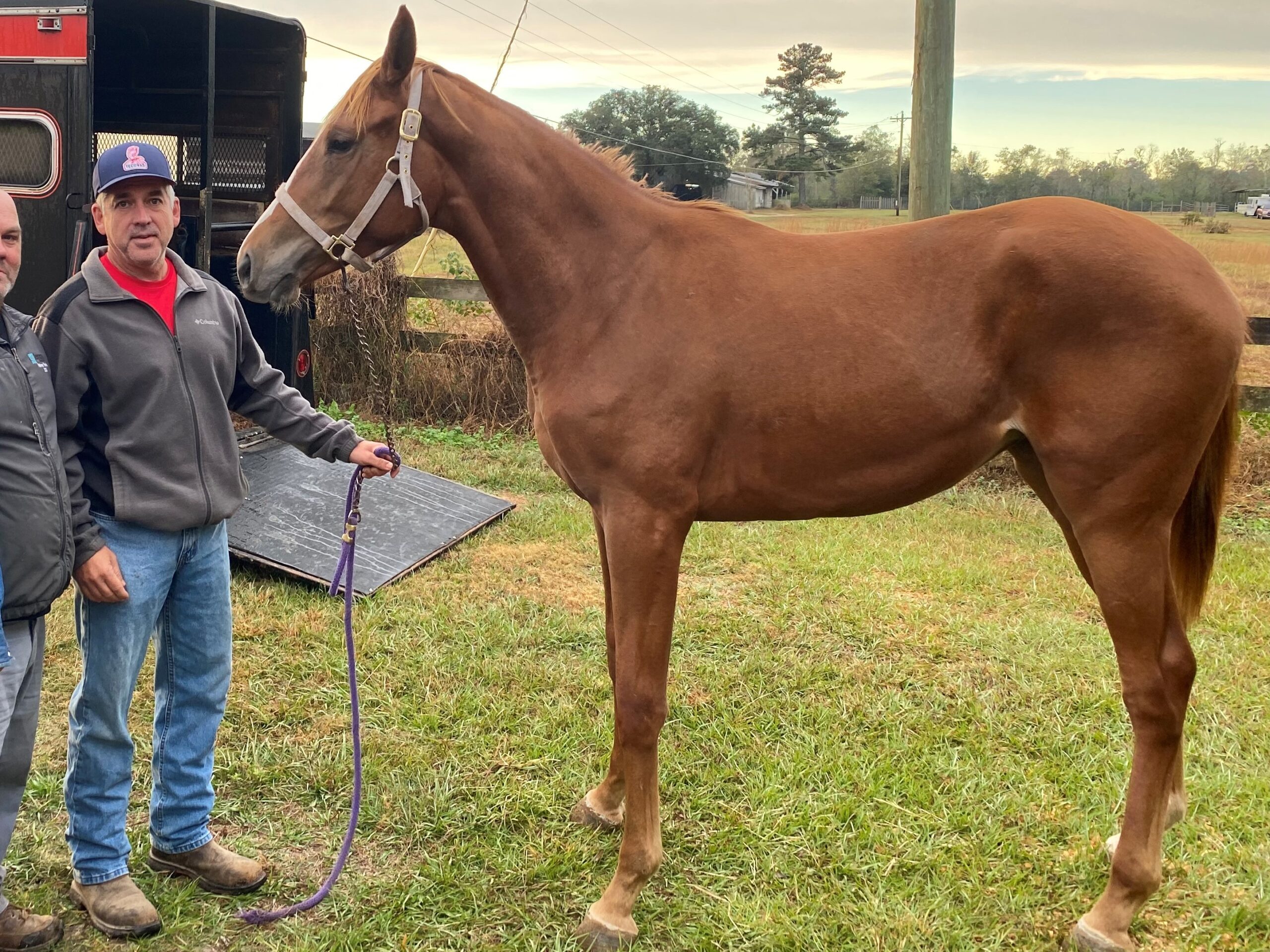
Miles Henry (legal name: William Bradley) is a professional horseman based in Folsom, Louisiana. He holds Louisiana Racing License #67012 and has spent over three decades managing Thoroughbreds at premier tracks including Fair Grounds, Delta Downs, and Evangeline Downs.
Expertise & Hands-On Experience: Beyond the track, Miles has decades of experience in specialized equine care, covering everything from hoof health and nutrition to training protocols for Quarter Horses, Friesians, and Paints. Every guide on Horse Racing Sense is rooted in this “boots-on-the-ground” perspective.
30 of their last 90 starts
Equibase Profile.

Connect with Miles: