
Last updated: September 13, 2026
Any links on this page that lead to products on Amazon are affiliate links and I earn a commission if you make a purchase. Thanks in advance – I really appreciate it!
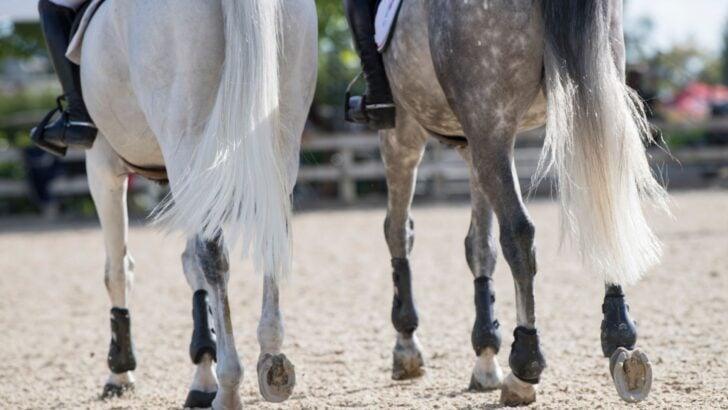
With so many types of horse leg boots available, it’s easy to buy more protection than your horse needs or choose a boot designed for the wrong problem.
The best horse leg boot depends on the job. Brushing boots help protect horses that interfere with their own legs; bell boots help protect against overreach injuries; tendon boots are commonly used for jumping; skid boots protect hind pasterns during sliding stops; and shipping boots or wraps protect legs during travel. A horse that doesn’t brush, overreach, or face a specific risk may not need boots for every ride.
In this guide, I’ll explain what each type of equine leg boot does, when it makes sense to use one, how to check the fit, and which boots I’d consider for trail riding, everyday schooling, jumping, Western performance work, and shipping. I’ll also cover common mistakes riders make, including using more protection than necessary, choosing the wrong boot for the job, and overlooking heat buildup, poor fit, or grit trapped underneath.
Table of Contents
Types of Equine Leg Boots and What They Protect
Before comparing brands, decide what you’re trying to protect. The names can be confusing because a single boot may offer more than one kind of coverage, but these categories cover the equipment most riders use.
| Boot type | Where it goes | Main job | Common use | What to watch |
|---|---|---|---|---|
| Brushing or splint boots | Front and/or hind legs | Protect the inside cannon bone and fetlock from interference | Schooling, trail riding, young or close-moving horses | Heat, trapped grit, and boots that rotate |
| Bell boots | Front feet, usually around the pastern and hoof | Protect heels and coronet bands from overreaching | Horses that step on front heels; turnout or riding when appropriate | Correct length and a secure fit that doesn’t rub |
| Tendon or open-front boots | Front legs | Protect the back and sides of the front leg from a hind-hoof strike | Jumping and hunter/jumper work | They are not full-coverage brushing boots |
| Fetlock boots | Hind fetlocks | Protect the back or inside of the hind fetlock from contact | Jumping and some flatwork or performance disciplines | Rules for your association or class |
| Sports-medicine-style boots | Front and/or hind legs | Broad cannon and fetlock coverage; some designs use a sling-style strap | Barrel racing, reining, and other fast turning work | Don’t treat them as injury prevention or rehabilitation equipment |
| Skid boots | Hind pasterns | Protect pasterns from abrasion during sliding stops | Reining, roping, and some cattle work | They are purpose-built, not all-purpose exercise boots |
| Shipping boots or wraps | All four legs | Protect legs from bumps, scrapes, and stepping on themselves in transit | Trailering and shipping | Introduce them at home; don’t haul in gear that shifts or alarms the horse |
| Therapy or ice boots | Varies by design | Cold therapy or other recovery use | Veterinarian-directed recovery and routine care when appropriate | They are not riding boots and are not a diagnosis or treatment plan |
Some owners also ask whether horse leg wraps or boots are better. Boots are generally faster to put on and easier for many riders to apply consistently. Wraps can be useful in the right hands, but poor wrapping technique can create pressure points or slip. I use whichever option fits the horse and job, and I don’t use either one as a substitute for evaluating why the horse needs protection in the first place.
8 Horse Leg Boots I’d Consider by Use
If you already know your horse needs boots and you’re comparing options, these are the models I’d consider. If you’re still deciding whether your horse needs boots at all, start with the sections above. A good boot is one that fits, stays where it belongs, protects the right area, and is practical enough that you’ll keep it clean and use it correctly.
How I evaluated these boots: I considered fit on the horses available to me, security of the closures, coverage of the strike area, ease of cleaning, how materials held up in regular Gulf Coast heat and humidity, and whether the boot stayed in position during its intended job. I haven’t laboratory-tested tendon temperature, impact absorption, or injury-prevention claims. I also don’t use boots as a replacement for conditioning, good footing, correct hoof care, or veterinary advice.
Affiliate disclosure: Some links below are affiliate links. If you buy through one, I may earn a commission at no additional cost to you. That doesn’t affect which products I include.
| Boot | Best for | Why I’d consider it | Price range |
|---|---|---|---|
| Kavallerie Pro-K Air-Mesh | Warm-weather schooling and dressage | Lightweight mesh construction for riders who prioritize ventilation | $$ |
| Iconoclast Orthopedic | Fast turning work when a rider prefers a sling-style design | Broad coverage with a distinctive double-sling fetlock design | $$$ |
| Shires ARMA Neoprene | Everyday brushing protection | Practical, easy-clean boots when several sets are useful | $ |
| Professional’s Choice Open Front | Jumping and hunters | Open-front configuration with protection behind the cannon | $$$ |
| Classic Equine Skid Boots | Reining, roping, and sliding stops | Pastern-focused design built for that specific work | $$ |
| Exselle Shipping Boots | Shipping horses accustomed to tall travel boots | Quick on-and-off coverage for trailering | $$ |
| Dura-Tech Extra Support | Riders wanting a lower-cost support-style option | Sling-style strap at a more accessible price point | $$ |
| WeatherBeeta Single-Lock | Light schooling and lesson programs | Simple brushing protection with broad sizing | $ |
1. My Pick for Warm Weather: Kavallerie Pro-K 3D Air-Mesh Boots
When heat and humidity are part of the decision, I look first for a boot that’s lighter and less closed-in than traditional neoprene. The Kavallerie Pro-K 3D Air-Mesh boots have performed well for me in Louisiana summer use because they are easy to rinse off, don’t feel as bulky as a heavy neoprene boot, and give a horse useful brushing protection without adding more material than necessary. They are the pair I would look at first for ordinary schooling, dressage work, and riders in warm climates who have a real reason to boot.
Best for: Warm-weather schooling, dressage, and horses that need light brushing protection.
Lightweight mesh construction with strike protection and hook-and-loop closures. A sensible choice when you want less bulk than a traditional closed neoprene boot.
Pros: Lightweight, easy to clean, ventilation-focused. Consider: Check closure security and sizing before a long ride.
Check price and availability →2. My Pick for a Sling-Style Design: Iconoclast Orthopedic Support Boots
Iconoclast boots are popular with riders who want broad coverage and a double-sling strap that cups around the fetlock more than a standard brushing boot does. I have found the design secure when fitted carefully for horses doing fast lateral work. I wouldn’t describe any boot as a cure for a suspensory problem or assume it prevents injury. If a horse has a current or prior tendon or suspensory issue, the treating veterinarian should be part of the decision about work, turnout, and any boot protocol.
Best for: Barrel racing, reining, and riders who prefer a double-sling fetlock design.
Double-sling configuration and broad lower-leg coverage. Keep the hook-and-loop closures clean so they continue to hold as intended.
Pros: Secure feel, broad coverage, distinctive strap design. Consider: More material means more attention to heat, fit, and prompt removal after work.
Check price and availability →3. My Everyday Brushing Pick: Shires ARMA Neoprene Brushing Boots
For a horse that regularly brushes and needs a straightforward everyday boot, I like the practicality of the Shires ARMA neoprene brushing boots. I keep more than one set of work boots in rotation because muddy or sweaty gear needs to be cleaned and dried before the next ride. These are a reasonable choice for shorter schooling sessions when the horse actually interferes, but I wouldn’t leave closed neoprene on longer than the job requires—especially in a Louisiana summer.
Best for: Daily schooling, ordinary brushing protection, and riders who need more than one set.
Contoured neoprene with a strike pad for routine interference protection. Easy to hose down after ordinary barn use.
Pros: Practical, durable feel, easy to clean. Consider: Closed neoprene isn’t my first choice for a long hot-weather ride.
Check price and availability →4. My Jumping Pick: Professional’s Choice Open-Front Tendon Boots
For jumping, an open-front boot is a specific kind of protection, not an incomplete brushing boot. It leaves the front of the leg open while guarding the back and sides of the front cannon area from a hind-hoof strike on landing. That is why I would choose this kind of boot for a horse jumping, rather than use it as general protection for flatwork or trail riding. Confirm the rules for your division, fit the boot carefully, and use hind fetlock protection only when it suits the horse and the class rules.
Best for: Hunters, jumpers, and riders who want open-front strike protection.
Open-front design with protective material behind the cannon area. Built for riders who need jumping-specific coverage rather than all-around brushing protection.
Pros: Jumping-specific layout, protective rear shell, familiar show-ring profile. Consider: Not designed to cover the inside of the leg like a brushing boot.
Check price and availability →5. My Western Pick: Classic Equine Skid Boots
Skid boots have one very particular job: protecting the hind pastern during sliding stops. That makes them worthwhile for reining, roping, and related work, but not as a general-purpose boot for an ordinary ride. I prefer a boot that stays centered through the maneuver and has material intended to stand up to arena abrasion. The Classic Equine design is one I would consider for riders doing that sort of work regularly.
Best for: Reining, roping, cattle work, and other sliding-stop disciplines.
Pastern-focused cups designed for abrasion associated with sliding work, with features intended to help the boot stay in position.
Pros: Purpose-built protection, durable-looking cup design, Western performance focus. Consider: This is specialized gear, not an English or everyday schooling boot.
Check price and availability →6. My Shipping Pick: Exselle Shipping Boots
For a horse that’s already comfortable wearing tall shipping boots, a full set can be quicker to put on than traditional wraps and gives broad coverage for travel. I use shipping protection for horses that tolerate it well, but I introduce it at home before asking a horse to wear it in a moving trailer. A horse that panics, steps on a loose boot, or feels restricted isn’t safer simply because he has more padding on his legs. The goal is secure, familiar protection that stays where it belongs.
Best for: Horses accustomed to tall shipping boots and routine show, track, or longer-haul travel.
Tall, padded travel boots designed to cover a large portion of each leg and apply quickly with broad closures.
Pros: Broad coverage, quick application, useful for experienced travelers. Consider: Practice at home first and check that the horse can move comfortably.
Check price and availability →7. A Value Support-Style Option: Dura-Tech Extra Support Boots
Dura-Tech’s Extra Support boots are an option for riders who like a sling-style strap but don’t want to spend as much as they would on a premium pair. I would put them in the category of broad coverage for active horses doing barrels, conditioning work, or other work with frequent turns—not as a prescription for a horse with a diagnosed injury. The important part is still fit: a support-style strap does no good if the boot creeps, twists, or traps footing underneath it.
Best for: Riders who want a lower-priced support-style boot for fast, turning work.
Neoprene boots with a contoured support-style strap and edge binding intended to help the boot wear well with regular use.
Pros: Accessible price, broad coverage, sling-style strap. Consider: Fit and heat management still matter, especially for longer work in warm weather.
Check price and availability →8. My Budget Pick: WeatherBeeta Single-Lock Brushing Boots
For light schooling, lesson programs, and riders who need a basic boot in several sizes, the WeatherBeeta Single-Lock is a sensible budget-minded brushing option. It’s not the boot I’d reach for when a horse has a serious interference pattern or a specialized job, but it can provide simple strike protection for a horse that occasionally catches himself. The practical advantage in a busy barn is straightforward cleanup and a design that’s easy for newer riders to understand.
Best for: Lesson horses, beginners, light schooling, and basic brushing protection on a budget.
Simple brushing boots with a strike area and adjustable closures in a range of sizes.
Pros: Accessible price, easy-care design, broad sizing. Consider: Match the boot to a genuine protection need rather than using it by default.
Check price and availability →From My Barn: Louisiana heat changes how I look at leg protection. I still use boots when a horse needs them, but I pay closer attention to how much material is on the leg, how long it stays there, and how quickly I can get it off and clean it after work. A boot can look good on a product page and still be the wrong choice for a long, humid summer ride. In this climate, I’d rather use a lighter boot for a real risk than a heavy boot out of routine.
Best Horse Leg Boots for Trail Riding
For most trail horses, lightweight brushing boots are the best starting point when the horse brushes, rides through thick cover, or regularly comes home with small cannon-bone or fetlock scrapes. They give useful protection against light contact without the bulk of a tall shipping boot or the specialized design of a tendon or skid boot.
If the horse overreaches and catches the front heels, bell boots are often the more direct answer. I wouldn’t try to solve an overreach problem with a taller brushing boot. If the horse doesn’t brush, the trail is open and forgiving, and the ride is easy, he may not need leg boots at all. On a hot day, particularly in Gulf Coast humidity, I’d avoid putting a heavy closed boot on for miles simply because it feels safer.
| Trail situation | Practical choice | What to watch |
|---|---|---|
| Horse brushes the inside of his fetlocks | Lightweight brushing boots, front legs first; add hinds only if he interferes behind | Correct fit, rotation, and grit under the boot |
| Horse overreaches and clips front heels | Bell boots, with brushing boots only if he also interferes | Length, spinning, rubbing, and whether the boot catches on footing |
| Young horse, thick brush, rocky or rough terrain | Brushing boots on the legs that need coverage; choose a light, secure option | Heat, sweat, debris, and boots that shift during a long ride |
For the trail rider who wants one simple answer, I’d start with the Shires ARMA for ordinary brushing protection or a lighter mesh-style boot when heat is the bigger concern. Then I’d watch the horse. If he finishes rides clean and never interferes, that’s useful information too.
Which Boot for Which Discipline?
| Discipline or situation | Likely concern | Common starting point |
|---|---|---|
| Daily schooling | Brushing or occasional interference | Brushing boots only if the horse needs them |
| Show jumping and hunters | Hind-hoof strikes on the front leg during jumping | Open-front tendon boots on the front legs; add hind fetlock boots when suitable and permitted |
| Barrel racing and reining | Fast turns and broad lower-leg coverage | Support-style or brushing-style boots selected for fit; skid boots for actual sliding-stop work |
| Trail riding | Brush, minor scrapes, interference, or overreaching | Lightweight brushing boots and, when needed, bell boots |
| Dressage and flatwork | Brushing during lateral work | Light brushing boots when the horse interferes |
| Endurance and long-distance work | Duration, debris, and heat management | Use the least coverage that solves a known problem; test gear on conditioning rides first |
| Shipping | Trailer bumps, stepping on a coronet, and leg scrapes | Shipping boots or wraps the horse has learned to travel in comfortably |
Fit, Heat, and Everyday Safety
A boot that slips or rubs can become its own problem. I don’t rely on a universal “one-finger rule” because patterns, padding, straps, and horse legs vary. Instead, I want the boot to sit flat over the area it is meant to protect, close securely without pinching, and stay in the same position once the horse walks and trots.
My practical fit check:
- Start with clean, dry legs: Sand and mud underneath a boot are an easy way to create a rub.
- Follow the maker’s closure direction: Put the boot on the correct leg and fasten straps as the manufacturer instructs.
- Check the edges: Nothing should dig in, gap away from the leg, or sit across a joint where it will rub.
- Walk and trot before real work: If the boot rotates, slides down, rides up, or changes position, adjust it or use a different size or model.
- Remove boots after work: Brush out debris, let the legs air, and clean the boots before the next use.
- Compare all four legs: Persistent uneven heat, swelling, pain, lameness, or a new rub deserves closer attention and, when appropriate, a call to your veterinarian.
Heat management matters most when the work is hard, the weather is hot and humid, or the boot is heavy and closed. A Middle Tennessee State University study measuring leg surface temperature during exercise found that every type of boot or wrap tested raised limb temperature well above a bare leg, with none of the covered legs returning to baseline even after three hours of recovery. I take that as a reason to use the least insulation that still gives the horse necessary protection, not as a reason to avoid every boot.
When to get professional help: Boots can protect against contact, but they can’t diagnose or fix lameness. If your horse develops persistent heat, swelling, pain on palpation, a change in gait, or a wound, stop the work and contact your veterinarian. For a horse with a diagnosed tendon or suspensory injury, let the veterinarian or rehabilitation professional guide any use of support boots, wraps, or cold therapy.
From My Barn: A young Thoroughbred colt once brushed a front fetlock badly during his first serious gallop. We used protective gear after that, but the bigger lesson was that I should have assessed his way of going more carefully before the work got fast. Now, when a new horse comes into the barn, I watch him walk and trot before deciding what protection he needs. The boot may protect the spot he hits; the observation tells me why he is hitting it.

Frequently Asked Questions
What are equine leg boots?
Equine leg boots, also called horse leg boots, are protective gear worn on the lower legs. Depending on the design, they may protect against brushing, overreaching, hoof strikes while jumping, trail scrapes, sliding-stop abrasion, or bumps during travel. The right type depends on the horse’s job and the area that needs coverage.
Do all horses need leg boots?
No. A horse with a clean gait doing easy work may not need boots at all. Boots are most useful when there is a specific risk, such as interference, overreaching, jumping strikes, trail hazards, or shipping. Use the least coverage that solves the actual problem.
What is the difference between brushing boots and tendon boots?
Brushing boots protect the inside of the cannon bone and fetlock when a horse strikes one leg with the other. Tendon boots are usually used on the front legs for jumping; they protect the back and sides of the front leg from a hind-hoof strike on landing. An open-front tendon boot is not designed to provide the same inside-leg coverage as a brushing boot.
What horse leg boots are best for trail riding?
Lightweight brushing boots are the usual starting point for a trail horse that brushes, travels through heavy cover, or picks up minor scrapes. If the horse overreaches and catches his front heels, bell boots may be the more direct answer. A horse that does not interfere and rides quiet, open trails may not need boots for every ride.
How should horse leg boots fit?
The boot should sit flat, cover the area it is designed to protect, and fasten securely without pinching, gapping, or rotating. Apply it to a clean, dry leg, follow the manufacturer’s instructions, then walk and trot the horse before beginning work. Stop using the boot if it slips, rubs, or causes discomfort.
Are sports medicine boots good for horses?
Sports-medicine-style boots are commonly used in fast, turning disciplines because they provide broad cannon and fetlock coverage. They may suit some horses and riders, but they should not be treated as proven injury prevention or a treatment for tendon or suspensory problems. Fit, conditioning, footing, hoof care, and veterinary guidance matter more than a brand name.
When should I use shipping boots on my horse?
Use shipping boots or wraps when they are appropriate for the horse and the trip, and only after the horse has learned to wear them comfortably. The protection should stay secure without restricting movement or alarming the horse. For some horses, properly applied wraps are a better choice than tall boots; the important point is familiar, well-fitted travel protection.
Key Takeaways: Horse Leg Boots
- Start with the risk: Choose boots for a specific problem such as brushing, overreaching, jumping strikes, trail hazards, sliding stops, or shipping.
- Use the right category: Brushing boots, bell boots, tendon boots, skid boots, and shipping boots do different jobs.
- Use the least coverage that works: A heavier boot isn’t automatically a better boot, especially during hard work in hot weather.
- Fit matters: A boot should stay flat and secure through a walk-and-trot check, with no pinching, rubbing, or rotation.
- Remove and inspect after work: Clean out dirt, let the leg air, and compare all four legs for unusual heat, swelling, soreness, or rubs.
- Keep medical decisions separate: A boot can protect from contact, but it can’t diagnose, cure, or rehabilitate a tendon or suspensory injury.


About Miles Henry
Racehorse Owner & Author | 30+ Years in Thoroughbred Racing
Miles Henry (legal name: William Bradley) is a professional horseman based in Folsom, Louisiana. He holds Louisiana Racing License #67012 and has spent over three decades managing Thoroughbreds at premier tracks including Fair Grounds, Delta Downs, and Evangeline Downs.
Expertise & Hands-On Experience: Beyond the track, Miles has decades of experience in specialized equine care, covering everything from hoof health and nutrition to training protocols for Quarter Horses, Friesians, and Paints. Every guide on Horse Racing Sense is rooted in this “boots-on-the-ground” perspective.
30 of their last 90 starts
Equibase Profile.

Connect with Miles: