

Last updated: October 8, 2026
Three miles into a trail ride on the Bogue Chitto, my gelding threw a front shoe on a cypress root. The way back was gravel and rock. Luckily, I had a hoof boot in my saddlebag to protect that foot.
Here’s when hoof boots help, how to fit them, and what to consider before buying. If you need leg protection instead, start with the main types of boots for horses.
Some links and product boxes on this page are affiliate links. If you buy through them, I may earn a small commission at no extra cost to you.
Table of Contents
When Do Horses Need Hoof Boots?
Not every horse needs hoof boots. A barefoot horse that’s sound on soft pasture or arena footing may never need them, and a sound, shod horse may not need them for routine riding. Whether your horse should be barefoot or shod in the first place is a conversation for you and your farrier.
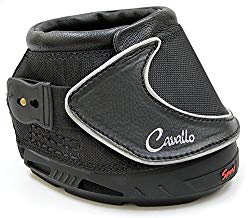
Hoof boots come in three main kinds. Riding boots fit snugly with a tread on the sole, and Dover Saddlery’s guide to choosing hoof boots compares them to hiking boots for people. Therapy boots are padded to support sore feet, and for laminitis or other medical problems they’re used under your vet’s direction, with your farrier helping with fit. Soaking boots hold a soak or poultice on the foot. Here’s where each one makes sense:
| Situation | Why boots help | Keep in mind |
|---|---|---|
| Barefoot trail riding | Protects against rocks, roots, gravel, and stone bruises | Choose which feet to boot based on comfort and fit |
| Lost shoe | Protects the bare hoof until the farrier can reset the shoe | The boot has to fit that horse, and the hoof should be undamaged |
| Barefoot transition | Protects tender soles while the feet adapt | Work out the plan with your farrier |
| Laminitis or other foot pain | Padded therapy boots can add comfort | Use only as your vet directs |
| Abscess or foot injury | Holds a soak or poultice and keeps the foot clean | Follow your vet’s treatment plan |
Hoof Boots for Trail Riding
Trail riding is where hoof boots earn their keep. A barefoot horse may be comfortable on soft trails but need protection when the route turns to roots, river rock, or gravel. Whether you need boots on the fronts or all four depends on your horse and the ground you’re riding, so work that out with your farrier rather than buying a set of four automatically.
Make sure the boot is designed for the kind of riding you do. A poor fit or the wrong design can shift or come off, and sticky mud can twist a boot or pack it full of muck. For long or muddy rides, HorseJournal’s review of hoof boots for riding recommends a gaiter or safety strap to help keep the boot on. Stop now and then to check for rubs and for grit working its way inside.
A spare boot is a useful backup if you ride a shod horse, but it isn’t a fix for every lost shoe. Try it on your horse at home before you need it, and check the hoof for damage before you put it on. If the boot won’t stay secure, don’t keep riding in it. If your horse is lame or you find an injury, stop riding and call your vet for advice before asking him to walk farther.
Hoof Boots During a Barefoot Transition
When a horse comes out of shoes, the soles and walls often need time to toughen up. Boots can help protect tender feet, but they aren’t a reason to ride through soreness. Work out the riding and turnout plan with your farrier, and call your vet if the horse goes lame or you feel heat in the hoof. Boots don’t replace regular trims or a feeding program that supports healthy hoof growth.
How to Fit Hoof Boots
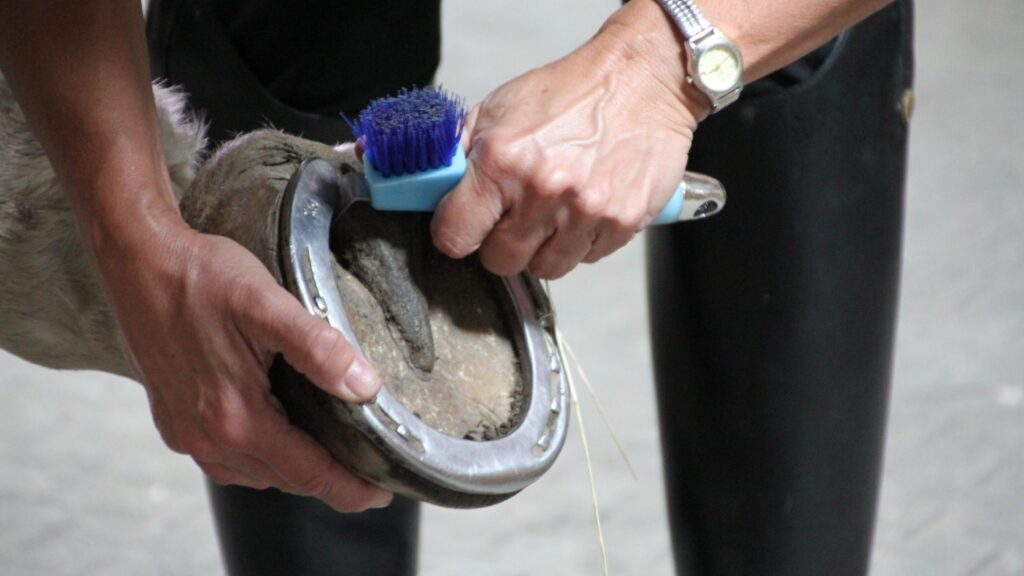
A boot that doesn’t fit can rub, twist, trip the horse, or come off on the trail. These steps help you get it right:
- Measure each foot right after a trim. Valley Vet’s hoof boot measuring guide says to measure immediately after a fresh trim. Measure the width across the bottom of the hoof at the widest point, and the length from the toe to the heel’s weight-bearing point, not the bulbs. Fronts and hinds are often different sizes, so measure all four.
- Use the size chart for that exact model. Brands don’t all size boots the same way, and many charts use millimeters. If your measurements don’t fit the chart cleanly, ask the manufacturer or a boot fitter before ordering. A different sole shape or model may fit better than simply going up a size.
- Check the fit. Follow the manufacturer’s fitting instructions. The boot shouldn’t twist on the hoof or change how your horse moves, and just because you can fasten it doesn’t mean it fits.
- Break them in slowly. Start with hand-walking, then short rides, before a long trail ride.
- Recheck between trims. As the hoof grows, a boot that fit well can start to rub or twist.
Hoof Boots to Consider for Trail Riding and Rehab
These include two riding boots and two options for hoof treatment. The Cloud and the Hoof Saver aren’t alternatives for a trail ride.
Cavallo Trek
The Cavallo Trek is the boot I had in my saddlebag when my gelding lost that front shoe. It fastens with hook-and-loop straps, so it went on in a couple of minutes, and we finished the ride without any trouble. That’s what I want in a trail spare. Before you buy, check your measurements against Cavallo’s chart and pick the right sole shape.

Easyboot Glove
The Easyboot Glove is worth considering if you want a close-fitting riding boot and are willing to spend time getting the fit right. Measure in millimeters using the chart for that exact model, then use EasyCare’s fit kit to check the fit before you buy. This isn’t a boot to order by guessing from another brand’s chart.

Easyboot Cloud
The Easyboot Cloud is a padded therapy boot for sore-footed horses, including some horses recovering from laminitis or abscesses. It’s designed for therapeutic use and limited turnout, not riding or exercise. Follow your vet’s plan and EasyCare’s instructions for how long to leave it on.
Tough 1 Hoof Saver
A soaking boot like the Tough 1 Hoof Saver holds a medicated soak or keeps a wrapped foot clean, which is handy during abscess treatment. It’s for the stall, not for riding, so check the product instructions and your vet’s directions before you use it.

Common Hoof Boot Mistakes
- Guessing the size: Measure, and remeasure if it’s been a while since the last trim.
- Skipping the cleanup: Pick out the hoof before the boot goes on, and check for debris on long rides.
- Leaving boots on too long: Take riding boots off after the ride. When you remove any boot, check the hoof for moisture, debris, rubs, or a bad smell, which can point to problems like thrush, and follow the manufacturer’s cleaning instructions.
- Riding through a problem: If your horse starts moving short or off, pull the boots and check for rubs, twisting, or debris.
Call your vet if you see swelling above the coronary band, heat in the hoof, sores that break the skin, a foul smell, or lameness that doesn’t go away once the boots are off. Regular hoof care and a farrier who knows your horse can help catch problems early.
Get the size right, pick the boot that fits the job, and take riding boots off when the ride’s over.
About Miles Henry
Racehorse Owner & Author | 30+ Years in Thoroughbred Racing
Miles Henry (legal name: William Bradley) is a professional horseman based in Folsom, Louisiana. He holds Louisiana Racing License #67012 and has spent over three decades managing Thoroughbreds at premier tracks including Fair Grounds, Delta Downs, and Evangeline Downs.
Expertise & Hands-On Experience: Beyond the track, Miles has decades of experience in specialized equine care, covering everything from hoof health and nutrition to training protocols for Quarter Horses, Friesians, and Paints. Every guide on Horse Racing Sense is rooted in this “boots-on-the-ground” perspective.
30 of their last 90 starts
Equibase Profile.

Connect with Miles: