
Published on: May 6, 2026
Any links on this page that lead to products on Amazon are affiliate links and I earn a commission if you make a purchase. Thanks in advance – I really appreciate it!
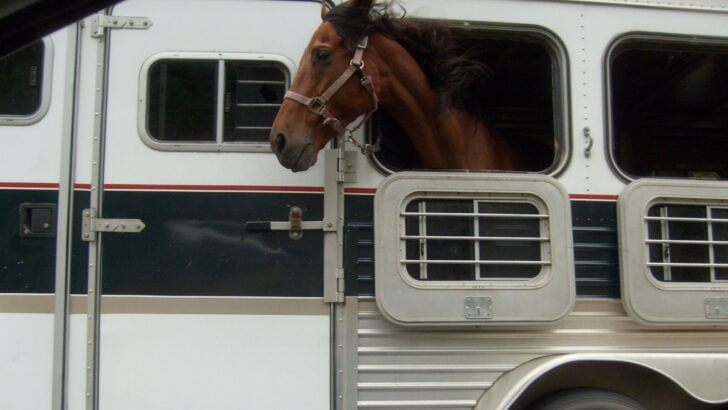
Do horses need shipping boots? For any haul over 30 minutes, yes—I recommend them. Shipping boots are designed to protect the coronet band, knees, and hocks from trailer strikes and scrambling injuries during hauling. Whether you are making a 45-minute run to Fair Grounds or a longer trip to Delta Downs, one hard brake or sharp turn can turn a routine haul into a veterinary emergency.
I learned that lesson the hard way. I once let a friend talk me into hauling his mare after he said she had shipped dozens of times without a problem and didn’t need travel boots for a two-hour haul. After a hard brake on I-10 to avoid a crash, the mare arrived with a swollen hock and was scratched from her race. That was the last time I left a trailer without making sure every horse was properly booted.
Shipping injuries aren’t about how well your horse travels—they are about road conditions you can’t control.
Do horses need shipping boots? For most horses and most hauls, yes—they are the default choice for protecting legs during trailer travel.
Use them when: You are hauling on the highway, traveling in traffic, moving a young or anxious horse, or shipping a horse that has scrambled before.
Look for: Full coverage from the coronet band to above the knee on the fronts and above the hock on the hinds, a smooth lining to reduce rubs, and secure hook-and-loop closures that won’t loosen in transit.
Table of Contents
What Are Horse Shipping Boots?
Horse shipping boots — also called horse trailer boots or travel boots for horses — are purpose-built coverings that protect the entire lower leg from the coronet band upward, reaching above the knee on the front legs and above the hock on the hind legs. That full coverage distinguishes them from every other boot type in the barn. Brushing boots, bell boots, and sports medicine boots are designed for controlled movement during exercise; none of them cover the vulnerable areas that get injured in a moving trailer.
The specific injuries shipping boots prevent are different from exercise boot injuries. In a trailer, horses shift their weight constantly to balance against braking, turning, and road vibration. That movement creates three primary injury scenarios: the leg striking the trailer wall at the cannon bone, knee, or hock; one hoof stepping onto the opposite coronet band during a scramble; and the leg getting caught in trailer hardware at the pastern or fetlock level. A well-fitted shipping boot addresses all three by providing padded coverage from the hoof up to the joint areas that have no natural protection against hard trailer surfaces.
Shipping boots are not interchangeable with exercise boots. Key differences:
- Coverage height: Shipping boots extend above the knee and hock — no exercise boot does this
- Lining material: Satin or smooth lining prevents friction rubs during extended stationary wear; exercise boot foam is not designed for hours of constant low-level movement against skin
- Purpose: Exercise boots manage dynamic impact; shipping boots manage prolonged low-intensity contact and scrambling during balance shifts
- Fit tolerance: Shipping boots can fit slightly looser than exercise boots — the horse is not galloping in them, and some freedom of movement reduces fatigue on long hauls
Do Horses Need Shipping Boots? When to Use Them
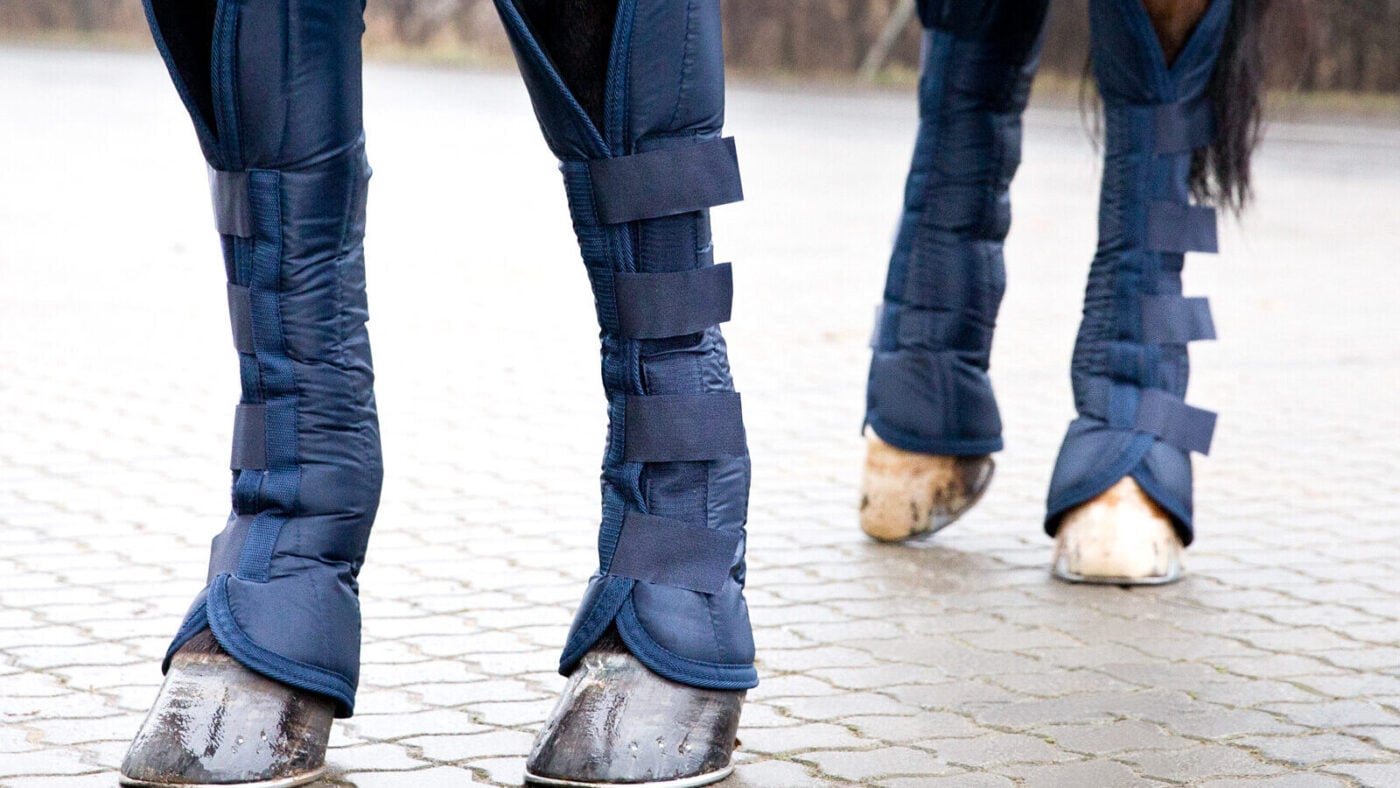
For most horses and most road hauling conditions, shipping boots are the right default for any haul over 30 minutes. Thirty minutes is a practical threshold because most short local moves stay below sustained road speeds — once you are on a highway or in traffic, braking forces and lateral movement increase significantly and the scrambling risk goes up with them.
The cost of a set of shipping boots is low enough relative to the cost of a shipping injury that the risk-benefit calculation almost always favors booting — regardless of how many uneventful trips the horse has made before. On most horses, a properly fitted shipping boot reaches roughly halfway up the cannon bone to the knee on the front legs and covers the hock joint fully on the hind legs — the areas that have no protection against trailer walls without boots.
| Situation | Use Shipping Boots? | Notes |
|---|---|---|
| Any haul over 30 minutes | Yes — strongly recommended | Distance does not predict injury; road conditions and driver behavior do |
| Young or anxious horses | Yes — highest priority | These horses scramble and shift far more than experienced travelers |
| Horses with previous shipping injuries | Yes — and consider standing wraps underneath | A horse that has scrambled before will scramble again under stress |
| Race horses shipping to the track | Yes — always | Must arrive sound; a shipping injury is a scratch and a lost entry fee at minimum |
| Short property moves (under 10 minutes at walking pace) | Optional | Hand-walked transfers are low-risk; trailer moves at any road speed increase it |
| Horses with therapeutic leg wraps already applied | Consult your vet | Do not layer shipping boots over standing wraps or medical bandaging without veterinary guidance |
Shipping Boots vs Shipping Wraps: Which Is Better?
Standing wraps — quilts with polo wraps or track bandages over them — were the standard before purpose-built shipping boots became widely available. Many experienced horsemen still use them for specific situations. Understanding when each is appropriate saves time, money, and horses.
Quick comparison:
| Factor | Shipping Boots | Standing Wraps + Quilts |
|---|---|---|
| Application time | Under 2 minutes per horse with touch-tape closures | 5 to 10 minutes per leg for proper wrapping technique |
| Coverage height | Coronet band to above knee and hock — full travel protection | Coronet band to just below knee — does not cover the hock |
| Skill required | Minimal — designed for quick barn application | Significant — improperly applied wraps bow tendons or cut off circulation |
| Rub risk on long hauls | Low with satin lining; higher with fleece lining on anxious horses | Low when applied correctly; high when they shift or loosen in transit |
| Best situations | All routine travel, any handler, any experience level | Horses with specific lower leg support needs under vet direction; experienced wrappers only |
For the vast majority of shipping situations — including all recreational and performance travel — shipping boots are the right choice. They apply faster, cover more area, and eliminate the risk of wrapping errors that can cause the very injuries you are trying to prevent. Standing wraps remain appropriate when a veterinarian has prescribed specific compression for a recovering leg and the handler has the skill to apply them correctly and consistently.
Miles’s Take — When I Use Wraps Instead: I do use standing leg wraps on a couple of our horses for short runs to Fair Grounds — familiar horses, familiar road, experienced handlers, under an hour. That works for us because we wrap correctly and consistently. For anyone who does not wrap regularly or for longer hauls with heavier traffic, shipping boots are the more reliable choice. If you are not confident your wraps will stay put and stay even for the full trip, the boots are safer every time. If in doubt, boot.
Top Shipping Boot Picks: Tested on the Folsom to Fair Grounds Run
If you haul regularly — whether to tracks, trail rides, or shows — having a reliable set of shipping boots in the trailer is one of the simplest ways to prevent avoidable injuries. The boots below are what I use on hauls ranging from 45-minute track runs to two-and-a-half-hour Mississippi trail trips.
Used across hundreds of hauls to Fair Grounds, Delta Downs, and Evangeline Downs — stayed in position during braking, came off clean. All affiliate links are labeled.
Pick by situation:
- Your horse has ever scrambled or is an anxious traveler → Professional’s Choice (reinforced strike zones, more straps)
- Most horses, most hauls, hauling alone → Exselle (fast application, satin lining, full coverage — covers 95% of situations)
- Budget matters or you want a permanent spare set in the trailer → Horze (solid coverage at a lower price point)

Extra-tall 600D outer shell covers from the coronet band to above the knee and hock. Satin lining prevents the friction rubs that fleece generates on long hauls. Large touch-tape closures apply in under two minutes per horse. Not as durable as premium options after very heavy daily use — but the best value per haul I have found for routine shipping.
Typically $60–$80 for the set of 4
Check Price on Amazon →
Reinforced outer shell at the hock and cannon bone absorbs repeated impact during scrambling. Multiple wide hook-and-loop closure straps distribute tension evenly and resist loosening on difficult travelers. Takes slightly longer to apply than the Exselle due to the additional straps — worth it for horses that move constantly in the trailer.
Typically $45–$65 per pair
Check Price on Amazon →
Full-coverage padded design with hook-and-loop closures at a lower per-boot cost than premium options. Good for experienced, calm travelers on routine hauls. Practical as a permanent spare set kept in the trailer — the Exselle or Professional’s Choice set stays clean at the barn for important hauls.
Typically $30–$45
Check Price on Amazon →What to Look For in Horse Shipping Boots
Coverage height and lining material matter more than brand name. The best shipping boot for your horse is the one that fits correctly, stays in place for the full journey, and does not cause rubs during extended wear.
| Feature | What to Look For | Why It Matters |
|---|---|---|
| Coverage height | Extends above the knee (fronts) and above the hock (hinds) | The knee and hock are the primary injury zones in trailer accidents — any boot that stops below these areas leaves the most vulnerable structures unprotected |
| Lining material | Satin or smooth lining preferred over thick fleece | Satin allows natural leg movement without friction during long hauls; fleece rubs on horses that shift weight continuously |
| Closure system | Multiple wide hook-and-loop straps (3 to 4 per boot minimum) | More straps distribute tension evenly and reduce the chance of the boot rotating or riding up during transit |
| Outer shell | 600D nylon or ballistic nylon — look for reinforcement at the hock and cannon | The outer shell takes direct contact with trailer walls; thin material degrades quickly and provides less impact absorption |
| Sizing | Measure from the bottom of the heel bulb to above the knee for fronts, above the hock for hinds; when between sizes, size up | Coverage gaps at the top leave the knee or hock exposed — better to have a slightly tall boot than a short one |
| Ease of application | Touch-tape closures that open and close with one hand | You are often applying boots alone while managing a horse — closures that require two hands or precise alignment slow you down and encourage shortcuts |
When Not to Use Horse Shipping Boots
Shipping boots are the default, but in these situations, they can actually create problems. If any of these apply, address the issue first or reconsider the boots entirely.
Skip shipping boots or address the issue first in these situations:
- Horse has never worn boots before: Introduce shipping boots during a quiet grooming session before the travel day. A horse that panics when it feels a boot on its hind leg for the first time while loading is a loading and safety problem. First exposure should never be at the trailer on departure day.
- Wet or muddy legs: Applying shipping boots over wet or muddy pasterns traps moisture and debris against the skin under the lining — the friction rub risk is significantly higher than on a clean, dry leg. In humid climates, trapped moisture on a long haul can also lead to skin infections like scratches or rain rot at the pastern. Brush and dry the leg before booting, or wait.
- Improperly fitted boots: A boot that is too short leaves the knee or hock exposed; a boot that is too loose rotates during transit and concentrates pressure at strap edges rather than distributing it evenly. Measure before buying and do not use a boot that does not fit correctly.
- Medical bandaging already in place: Do not layer shipping boots over therapeutic wraps, post-surgical bandaging, or wound dressings without veterinary guidance. The additional compression and heat can compromise the treatment underneath.
- Horse has panic history in boots: Some horses with strong negative associations with leg wrapping or boots become more dangerous to load and ship with boots than without. Address the desensitization issue before the trip, or consult your vet about travel sedation options for the immediate situation.
How to Apply Horse Shipping Boots Correctly
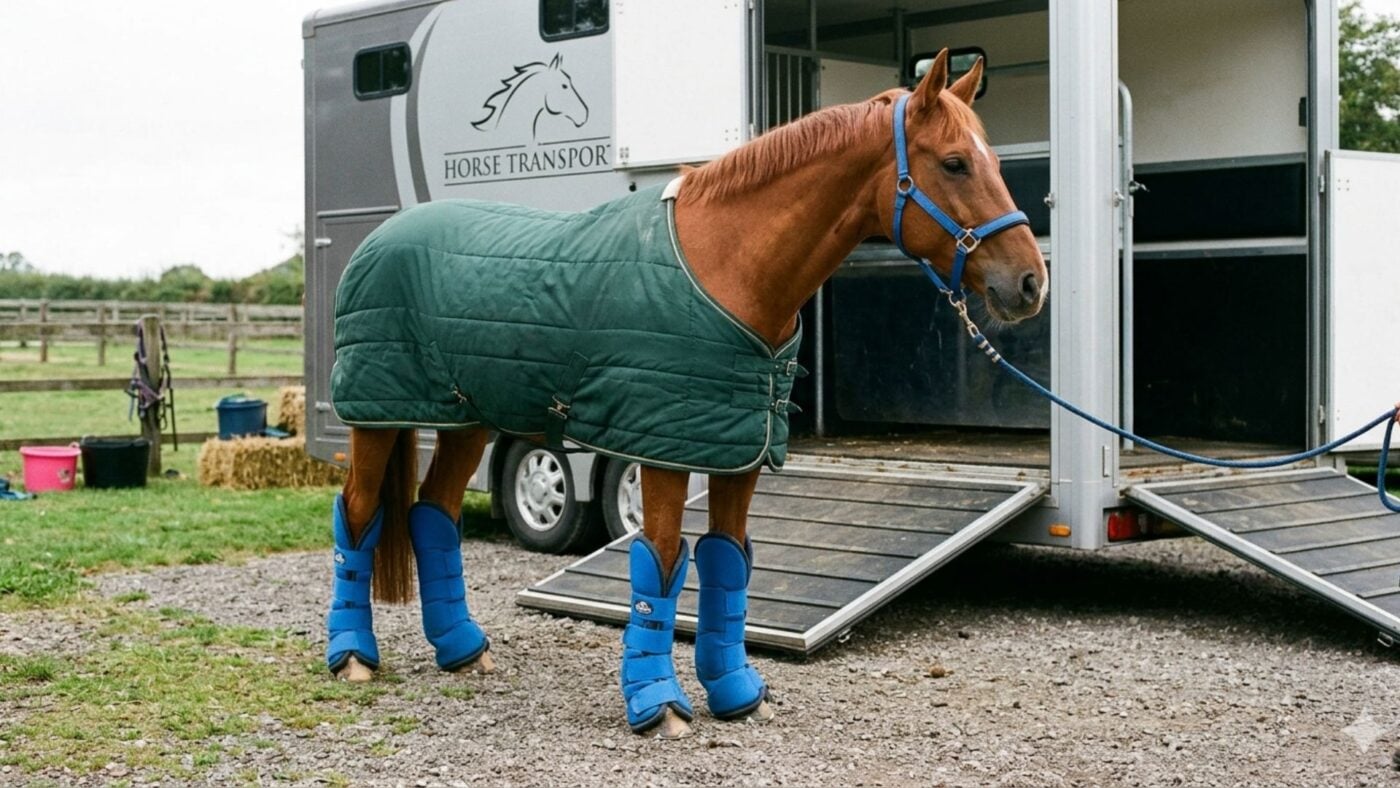
The most common application mistake is putting shipping boots on after the horse is already loaded. By the time a horse is standing in the trailer, it is stressed and moving — applying boots at that point is difficult, rushed, and often results in crooked straps or skipped closures. The correct sequence is boots on, then load.
- Apply before loading. Boot the horse in the barn aisle or at the trailer door while the horse is standing quietly. Never attempt to apply shipping boots inside a loaded trailer.
- Start at the front legs. Most horses accept front leg handling more readily than hind. Getting the fronts on smoothly sets a calm tone before moving to the hinds.
- Position correctly before closing straps. The boot should sit with the bottom edge covering the heel bulbs and the top edge reaching above the knee. Slide it into position before fastening any straps — a boot that starts misaligned will not self-correct when straps are tightened.
- Fasten from bottom to top. Start with the lowest strap at the pastern and work upward. This keeps the boot seated correctly as you close each strap rather than letting the top pull the boot out of position.
- Two-finger check on every strap. Each strap should be snug enough that the boot does not rotate on the leg, but loose enough to slide two fingers underneath. Shipping boots can be slightly looser than exercise boots — the horse is not cantering in them, and overly tight straps cause pressure and heat on a long haul.
- Trot test before loading. Walk the horse a few steps and watch for any boot that shifts, rotates, or rides up. Correct any strap before loading.
- Remove before exercise after arrival. Take shipping boots off before the horse works, grazes, or is turned out. Let the legs breathe and cool before putting on any exercise boots for schooling or competition.
What to check when shipping boots come off after arrival:
- Run both hands down each leg from the knee to the coronet band — any heat or swelling indicates the boot was too tight or the horse scrambled during travel
- Inspect the pastern and coronet band for rubs — any hair loss or redness means the boot moved during transit and needs to be adjusted or replaced before the next haul
- Check the boot interior for debris — sand and bedding that entered during loading can cause abrasion on the next trip if not cleaned out
Frequently Asked Questions
Do horses need shipping boots for short hauls?
Yes, for any haul over 30 minutes on public roads. The risk of a shipping injury is not proportional to distance — it is proportional to road conditions, traffic, and driver behavior. A 45-minute interstate haul through construction carries more injury risk than a two-hour rural highway trip. Horses that have shipped many times without incident are not exempt. The one exception is a very short property move at walking pace under constant supervision, where risk is genuinely low.
What is the difference between shipping boots and exercise boots?
Shipping boots cover from the coronet band to above the knee and hock — significantly taller than any exercise boot. They are designed for prolonged stationary wear during extended travel, not for dynamic movement under saddle. Exercise boots like brushing boots, tendon boots, and sports medicine boots do not provide the height or the lining material needed for safe trailering. Using exercise boots for shipping leaves the knee, hock, and coronary band unprotected — the three areas most commonly injured in trailer accidents.
Can I use standing wraps instead of shipping boots?
Standing wraps are an acceptable alternative when applied correctly by an experienced handler, but they do not cover the hock on the hind legs and require significantly more skill and time to apply safely. An improperly applied standing wrap can bow a tendon. For most horse owners and most shipping situations, purpose-built shipping boots are faster, safer, and provide more complete coverage. Standing wraps remain appropriate when a veterinarian has prescribed specific compression for a recovering leg.
How do horse shipping boots fit?
A correctly fitted shipping boot covers the heel bulbs at the bottom and extends above the knee on the front legs and above the hock on the hind legs. Two fingers should slide under each strap — snug enough to prevent the boot from rotating, loose enough to allow circulation during a long haul. Shipping boots can tolerate a slightly looser fit than exercise boots because the horse is not galloping in them. If between sizes, size up — a slightly tall boot that covers more area is better than a shorter boot with coverage gaps.
Should I leave shipping boots on after arrival?
No — remove shipping boots before any exercise, turnout, or paddock time after arrival. Shipping boots are not designed for sustained wear outside of transit. They trap heat and moisture during prolonged use, and the lining material that prevents friction rubs during travel creates different problems against a horse’s skin during exercise or grazing. Take them off, let the legs breathe and cool, and check for any heat or rubs before putting on any exercise boots.
How do I clean horse shipping boots?
Brush off dried bedding and debris after each use. Most shipping boots can be hosed off and hung to dry. Do not store them wet or folded — moisture trapped in the foam promotes mildew and degrades the material. Inspect the lining after each haul for rough spots, torn material, or areas where the lining is pulling away from the outer shell. Any rough interior surface causes abrasion on the next trip. The touch-tape closures should be checked monthly — debris in the hook side of Velcro reduces grip and allows straps to loosen during transit.
Are fleece or satin lining better for shipping boots?
Satin lining is generally better for horses that move frequently during transit — anxious travelers, young horses, or long hauls where the horse shifts weight continuously. Satin allows the leg to move against the boot without the friction that thick fleece generates over hours of constant low-level movement. Fleece lining is adequate for calm, experienced travelers on shorter hauls where movement is minimal. If your horse scrambles or is known to be a difficult traveler, satin lining is the more reliable choice.
Do racehorses need shipping boots?
Yes — racehorses are among the most important candidates for shipping boots. They must arrive at the track sound and ready to work, and a shipping injury means a scratch, lost entry fees, and potentially weeks of recovery during a training schedule with no slack. Young horses and horses new to the track environment are especially prone to scrambling. I ship every horse to Fair Grounds, Delta Downs, and Evangeline Downs in full shipping boots on all four legs regardless of how many times they have made the trip before.
Key Takeaways: Horse Shipping Boots
- Every horse, every haul over 30 minutes — past trips without incident do not predict future safety; one hard brake changes everything.
- Shipping boots are not exercise boots — they cover the knee and hock where exercise boots stop; nothing substitutes for full-coverage travel protection.
- Satin lining over fleece for anxious travelers — fleece rubs on horses that shift constantly; satin allows movement without friction over long hauls.
- Apply before loading, remove before exercise — boots on in the barn aisle while the horse is calm; off before schooling or turnout after arrival.
- Two-finger check on every strap — snug enough to prevent rotation, loose enough to allow circulation on a long trip; do a walk check before loading.
- Keep a set permanently in the trailer — the boots you have with you are more valuable than the better ones left in the barn.
More on Horse Boot Selection and Leg Protection
- For the full decision framework covering every boot type — including when to skip boots entirely — see the complete boots for horses guide.
- If your horse arrives from a haul with heat or swelling in a leg, the ice boots guide covers the 15-on/5-off cold therapy protocol for managing post-travel inflammation.
- For exercise leg protection during work, the horse leg boots guide covers brushing, tendon, sports medicine, and skid boots by discipline.

About Miles Henry
Racehorse Owner & Author | 30+ Years in Thoroughbred Racing
Miles Henry (legal name: William Bradley) is a professional horseman based in Folsom, Louisiana. He holds Louisiana Racing License #67012 and has spent over three decades managing Thoroughbreds at premier tracks including Fair Grounds, Delta Downs, and Evangeline Downs.
Expertise & Hands-On Experience: Beyond the track, Miles has decades of experience in specialized equine care, covering everything from hoof health and nutrition to training protocols for Quarter Horses, Friesians, and Paints. Every guide on Horse Racing Sense is rooted in this “boots-on-the-ground” perspective.
30 of their last 90 starts
Equibase Profile.

Connect with Miles: