
Last updated: September 29, 2026
Any links on this page that lead to products on Amazon are affiliate links and I earn a commission if you make a purchase. Thanks in advance – I really appreciate it!
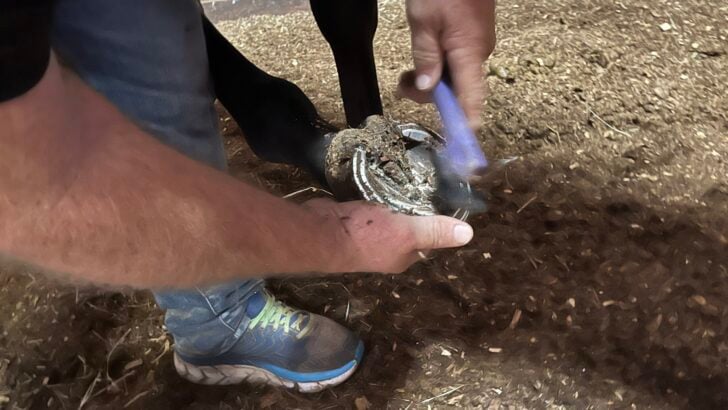
Learning how to clean horse hooves is one of the first hands-on jobs you’ll tackle as a new horse owner. It can feel a little intimidating at first, since you’re handling a large animal’s legs, working near their feet, and trying to figure out what’s normal underneath all that dirt and mud.
Quick answer: Ask for the foot calmly, pick from heel to toe with the pick moving away from you, and clean out the grooves beside the frog. Then look for anything different from the other feet: stones, a loose shoe, heat, a bad smell, tenderness, or damage. If you find a nail, wire, glass, or another object embedded in the hoof, leave it in place and call your veterinarian.
I’ve used this same routine for more than 30 years with backyard horses and Thoroughbreds in training around Louisiana. Below, I’ll show you how to do it safely, what tools you need, what to check each time, when to call your farrier or veterinarian, and how hoof care changes with the seasons.
Table of Contents
How to Clean Horse Hooves Safely
One morning at Fair Grounds, I had a promising two-year-old come out of the stall just a little “off.” When I picked up his near fore, I found a jagged piece of gravel packed deep in the collateral groove. It may never have become a serious problem, but there was no reason to gallop him with a stone pressing into his foot. We took care of it before training, which is why I treat hoof picking as an inspection, not just another chore.
Small stones, packed mud, manure, moisture, and damaged horn can all contribute to hoof trouble, but they don’t guarantee an abscess. Daily cleaning gives you the chance to remove debris and notice changes early, before you miss a loose shoe, a tender sole, black thrush material, or a puncture that needs prompt veterinary attention. For more on preventing these problems, see my complete hoof care guide.
Call your veterinarian promptly if you find:
- A nail, wire, glass, or other object is embedded in the hoof; don’t pull it out yourself. Keep the horse as quiet as possible and contact your veterinarian immediately.
- Sudden or marked lameness, reluctance to bear weight, or a strong pain response when the foot is handled
- Noticeable heat, swelling, a strong digital pulse, bleeding, or drainage from the foot
- A foul-smelling, deeply cracked, or badly deteriorated frog that’s making the horse sore
Call your farrier for: a loose or shifted shoe, a missing shoe, a new or worsening wall crack, or a hoof-balance concern. If the horse is painful or lame, involve your veterinarian too.
What You Need to Clean a Horse’s Hooves
Keep this simple. You don’t need a motorized scrubber or an elaborate grooming kit. A basic hoof pick and good light will handle most daily jobs.
- A sturdy hoof pick. Choose one with a comfortable grip and a solid metal pick that won’t bend easily. A brush on the opposite end is handy for sweeping away loose dirt after you remove the packed debris.
- A stiff hoof brush. After you’ve picked the debris, the brush sweeps away remaining dirt so you can see the hoof clearly. An old dandy brush works fine.
- Good lighting. Thrush and cracks hide in shadows. I often pick feet in dim light during early morning barn work, so a headlamp makes it much easier to see what’s going on.
- Clean hands and tools when needed. For ordinary daily hoof picking, wipe mud and manure off the pick as you go. If a foot has drainage, foul-smelling discharge, or a condition your veterinarian is treating, use separate or properly cleaned tools before moving to another horse, and follow your veterinarian’s guidance on cleaning and disinfection.
- Thrush treatment, if your horse needs it. Keep the frog and grooves clean, follow your veterinarian’s or farrier’s advice on a suitable product, and improve drainage, turnout conditions, and stall hygiene where needed. A strong odor, black discharge, a deep central groove, tenderness, or a horse that’s becoming sore deserves professional guidance rather than repeated home treatment.
- Hoof conditioner or oil (optional). These products aren’t a substitute for regular trimming, sound hoof balance, nutrition, or good footing. Whether one is useful depends on your horse’s hoof quality, climate, and your farrier’s approach. Ask your farrier before adding a product, especially if the horse has persistently dry, shelly, soft, or cracking feet.
If you’re buying your first one, I prefer a sturdy metal hoof pick with a rubber grip and a brush. This is the style I use. It’s an affiliate link, which means I may earn a commission if you buy through it, at no extra cost to you.

How to Pick Out a Horse’s Hooves Safely
Here’s the sequence I’ve used on hundreds of horses. It works for green horses and seasoned veterans alike.
Before you start, work on level footing when you can, wear closed-toe boots, and use a halter and lead rope if the horse isn’t reliably standing tied or being held. If you’re brand-new to handling feet, have an experienced horse person show you the first few times.
Step 1: Approach and Check for Heat
Stand at your horse’s shoulder, facing toward the rear, and run your hand down the leg before you ask for the foot. It tells the horse what you’re about to do and gives you a chance to notice swelling, tenderness, or unusual warmth compared with the matching leg before you pick the foot up. Watch the ears and body language while you do it. A tense, pinned-ear horse is more likely to pull away or strike, and taking a minute to settle him is safer than rushing into an avoidable injury. Never walk straight up behind a horse and reach for a hind leg without warning.
From my barn: Before I reach for any hoof, I run my hand down the leg first. That five-second habit has helped me catch warning signs before asking a horse to lift a foot. Heat or swelling anywhere along the lower leg or hoof is worth noting, especially when it’s different from the other legs. A sore horse doesn’t want you messing with that leg, and they’ll tell you with pinned ears or tension. If I feel heat, I inspect it carefully before proceeding rather than forcing it.
Step 2: Ask for the Foot
Run your hand down to the fetlock, give a clear cue – “foot,” “lift,” “give,” whatever your horse knows – and apply steady pressure while leaning your shoulder against the horse’s shoulder to shift weight off that leg. Most horses respond within a few seconds. If yours doesn’t, stay calm, repeat the cue, and increase pressure gradually rather than trying to pull the foot up. Stand at the shoulder or hip while you do this, never directly behind the hoof.
Step 3: Position Yourself
For a front foot, stay close to the horse’s shoulder. For a hind foot, stay close to the horse’s hindquarters rather than standing directly behind the horse, and keep your body positioned so you can step away if the horse moves. Stay aware of your horse’s body language.
If the horse repeatedly pulls the foot away, don’t escalate into a wrestling match. Release safely, reset, and determine whether the horse is confused, anxious, unbalanced, poorly trained, or experiencing pain. If the behavior persists, get help from an experienced trainer, farrier, or veterinarian.
Whatever position you use, you should always be able to release the foot quickly. Never trap the horse or fight for control, because that’s a fight you’ll lose. A hoof stand can make routine cleaning easier for a horse that’s already comfortable standing for its feet, especially on a hind hoof. It’s not a fix for a horse that’s painful, frightened, or kicking. In those cases, release safely and get experienced help.
Step 4: Pick Heel-to-Toe, Including the Grooves
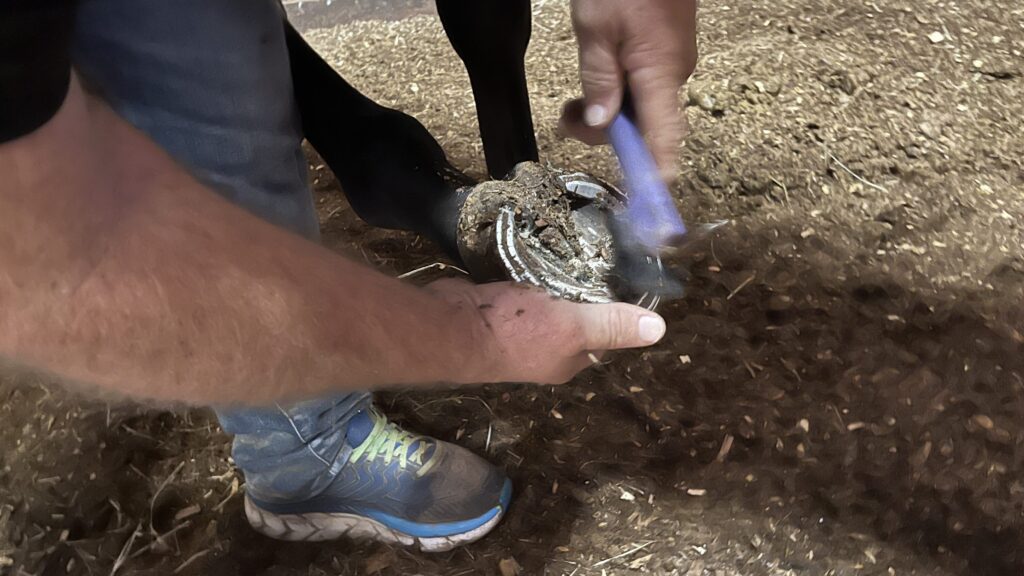
Start at the heel, on either side of the frog, and work toward the toe with firm, steady strokes – away from your body, never toward it. If the pick slips or the horse jerks, that direction carries the motion away from your hand, not into it. Work around the entire sole, along the inside edge of the wall if the horse is shod, and angle the pick so debris falls away from you.
Pay special attention to the collateral grooves, also called the collateral sulci – the channels on either side of the frog. Mud, manure, stones, and thrush material can collect there. Use the pick to remove loose packed debris, but don’t dig into soft, tender, bleeding, or damaged tissue. A healthy frog should generally be firm and resilient, although texture varies with environment and hoof condition; a strong odor, black discharge, unusually soft tissue, or tenderness is a reason to stop poking at it and get advice from your farrier or veterinarian.
What I watch for after wet weather: After a week of heavy rain and muddy turnout, I’m more deliberate about cleaning the grooves beside the frog. I once caught early thrush in both front feet on a mare because I was picking her feet morning and evening. We cleaned her feet, improved drainage and stall conditions, and followed the treatment plan we were given before she became lame. The lesson was simple: wet weather is a reason to inspect more closely, not to skip hoof care until things dry out.
Step 5: Inspect, Then Release Gently
Once the hoof is clean, inspect the sole, frog, hoof wall, and shoe for stones, foreign objects, cracks, loose or shifted shoes, drainage, soft spots, unusual discoloration, or new heat compared with the other feet. If you notice anything that looks like a puncture or another significant change, stop and assess the hoof before putting it back down. The next section explains which signs call for your farrier and which call for your veterinarian.
When you’re done, lower the foot gently rather than dropping it. If the horse pulls away mid-cleaning, release safely, reset, and consider whether he’s sore, tired, anxious, unbalanced, or unclear about the request. Then try again calmly. Repeat the process on all four feet.
What to Check Every Time You Pick a Hoof
It’s hard to spot a problem if you don’t know what a healthy hoof looks like. Keep this quick checklist in mind every time you pick a foot, then use the table below to sort out what’s normal from what needs a call.
Daily hoof checklist:
- Stones, gravel, or anything packed into the sole or grooves
- A bad smell or black, tarry material around the frog
- Heat in the hoof wall or coronary band compared with the other feet
- A loose, shifted, or missing shoe, or raised nail clinches
- New cracks, chips, or soft spots in the wall or sole
- Any flinch, pull-away, or sign of soreness when you handle the foot
| Part of the hoof | What’s normal | Call your farrier | Call your vet |
|---|---|---|---|
| Frog | Generally firm and resilient, without a strong foul odor or obvious soreness | Excess shedding or ragged material that needs trimming | Foul odor, black discharge, a deep painful central groove, swelling, or a horse that’s sore when the foot is handled |
| Sole | Generally firm, without a new soft spot, obvious damage, or marked tenderness | Thin or flat soles you’re concerned about | A puncture, embedded object, drainage, a dark spot that comes with soreness, or a strong pain response when the foot is handled |
| Hoof wall | Generally solid and intact; minor surface chips or growth rings are common | A new, worsening, deep, or recurring crack, excessive chipping, a loose wall, or a balance concern | A crack that bleeds, drains, reaches sensitive tissue, or comes with lameness |
| Shoe | Tight, in place, with clinches flat against the wall | Loose, shifted, or missing shoe, or raised clinches | A shoe problem that’s left the horse lame or sore |
| Temperature and digital pulse | No obvious difference from the matching foot; learn what’s normal for your horse | Not usually a farrier call by itself | A foot noticeably warmer than the others, a stronger-than-usual digital pulse, swelling, marked tenderness, or sudden lameness |
If something is stuck in the sole, leave it in place and call your vet immediately. Don’t pull it out yourself. Its position helps your vet judge which structures may be involved, and removing it can cause more damage and make the depth harder to assess. That matters most when the object is near the frog or the back of the hoof.
Hoof-Picking Mistakes to Avoid
- Picking toward yourself. If the pick slips, your hand is in the strike zone. Make heel-to-toe automatic – it’s one of the safest habits you can build.
- Skipping the frog grooves. This is a common spot for thrush to develop, and it’s the easiest spot to rush past.
- Forcing a foot when the horse refuses. Wrestling for it teaches your horse to plant even harder next time. Try again in a few minutes, and if the horse consistently refuses, talk to your farrier – there may be pain behind the resistance.
- Digging aggressively into the frog. Use the pick to remove loose material from the grooves and around the frog, but don’t carve into soft, damaged, bleeding, or tender tissue. If the central groove is deep, foul-smelling, deteriorated, or painful, ask your farrier or veterinarian to assess it.
- Not comparing all four feet. Something can look or feel “off” with nothing to compare it to. Clean all four every time and compare each to its opposite – is one hotter, smellier, more swollen?
- Dismissing slight heat or sensitivity. A small change can be the first sign of a developing problem. Recheck the hoof and compare it with the other feet; if the heat increases, the horse is sore or lame, you find a stronger digital pulse, or you’re uncertain, contact your veterinarian rather than waiting it out.
- Using a bent, damaged, or uncomfortable hoof pick. A sturdy pick that you can hold securely makes it easier to clear packed debris without rushing or overworking the foot.
What Racehorse Hoof Checks Can Teach Any Owner
Racehorses train and compete under enough athletic stress that a small foot problem can turn into lost training time quickly. A packed stone, a loose shoe, a tender sole, or early thrush may matter more for a horse galloping regularly than for one standing in a quiet pasture.
In a race barn, feet are commonly checked during morning work, around training, and again at evening chores. My rule is simple: use the same routine, in the same order, every time. That consistency is what catches the loose clinch, warm foot, packed gravel, or small change that’s easy to miss when you’re in a hurry, and it works just as well for a backyard horse. A pasture horse can develop the same hoof problems. The difference is that a racehorse’s workload makes small changes show up sooner.
How Often Should You Pick a Horse’s Hooves?
For most horses, checking and picking all four hooves daily is a practical routine. Many owners do it before riding, after turnout, or during evening barn chores. The right frequency depends on the horse’s footing, workload, hoof shape, and how much mud, manure, gravel, or bedding tends to pack into the feet.
Horses in work, racing, muddy turnout, or wet conditions: check them more than once a day when practical. In a race barn, our horses’ feet are checked as part of the morning routine, again around training, and during the evening check, because a packed stone, loose shoe, or tender spot can matter quickly when a horse is galloping regularly.
Pasture horses and horses in light work: daily inspection is still a good habit, with extra checks after heavy rain, rough turnout, trail riding, or any time the horse looks short-strided or uncomfortable. Don’t get hung up on a number. Check often enough that packed debris and changes don’t sit unnoticed.
Hoof Care Through the Seasons
What you find when you pick a hoof changes with the weather, so your routine should change a little too.
- Wet, muddy months. Constant moisture softens the sole and frog and gives thrush a foothold. In south Louisiana, that can be a big part of the year. Clean the grooves beside the frog more carefully, give horses a dry place to stand when you can, and keep stalls clean and dry. My guide to thrush in horses covers prevention and treatment.
- Dry, hard ground. Hot, dry stretches can leave hooves hard and brittle, and hard ground is more likely to bruise a sole. Watch for new cracks and chips, and ask your farrier whether your horse’s feet need anything different.
- Fly season. Horses stomp at flies all day, which can loosen shoes and crack walls. Check shoes and clinches a little more closely when the flies are bad.
- Winter ice and snow. In colder climates, snow can pack into the sole and freeze into slick balls that make a horse slip. Pick feet before and after turnout, and ask your farrier about options like snowball pads if it’s a regular problem.
Horse Hoof Cleaning FAQs
Does cleaning a horse’s hoof hurt them?
Routine hoof picking shouldn’t hurt a horse when you’re removing loose dirt and debris from the hard outer structures. But a horse may react if the sole, frog, or hoof wall is bruised, thin, infected, punctured, or otherwise sore. If your horse consistently pulls away, flinches, or reacts sharply when you clean one area, don’t assume your horse is being difficult – stop and have the foot evaluated.
Should I pick my horse’s hooves before or after riding?
Pick them before riding so you don’t start out with gravel, packed mud, a loose shoe, or a foreign object hidden in the sole. Check them again afterward if you rode in mud, gravel, water, rough ground, or anywhere debris may have packed into the hoof.
My horse won’t let me pick up their hind feet. What should I do?
Start with short sessions and build tolerance gradually – run your hand down the leg and reward any attempt to lift the foot, then build duration over time. If your horse is kicking, striking, or refusing completely, get a trainer involved, since this is a safety issue, and also consult your farrier or vet, since pain may be the underlying cause. Standing for hoof care is a basic, important skill worth the investment.
What’s the difference between thrush and an abscess?
Thrush usually affects the frog and the grooves beside it. Common signs include a foul odor, black discharge, soft or deteriorated frog tissue, and sometimes tenderness. A hoof abscess often causes sudden and sometimes severe lameness, and the foot may feel warmer or have a stronger-than-usual digital pulse. Those signs can overlap with other serious problems, including punctures and laminitis, so call your veterinarian promptly if your horse becomes suddenly lame.
Can I clean hooves on wet or muddy days, or should I wait until they dry?
Clean them even if they’re muddy – especially then. Use water and a stiff brush if needed, then dry the hoof as best you can. Wet, soiled conditions can contribute to hoof problems such as thrush, so keeping the hoof and environment clean and appropriately dry is important.
What should I do if my horse is sore after stepping on gravel or has a puncture wound?
If your horse is sore after stepping on gravel or you notice a dark, tender-looking area on the sole, remove loose debris, don’t ride, and compare that foot with the others for heat, a stronger digital pulse, or worsening lameness. Call your veterinarian if the horse is noticeably lame, gets more uncomfortable, or you’re not sure what you’re seeing. If an object is embedded in the foot, leave it in place, keep the horse as quiet as possible, and call your veterinarian right away, especially if it’s near the frog or the back half of the hoof.
Should I use hoof conditioner or oil after cleaning?
Some hoof moisturizers or conditioners may be useful for particular horses and conditions, especially during dry weather or when the hoof is becoming brittle. They’re not appropriate for every horse, so follow your farrier’s recommendation.
Cleaning your horse’s hooves is simple, but it’s not a throwaway barn chore. A calm, regular check helps you catch packed debris, early thrush, loose shoes, tenderness, and punctures before you miss something important. If the foot is hot, painful, suddenly lame, or has an object stuck in it, quit picking at it and call your veterinarian.
If you want to understand what you’re seeing when you pick a hoof, my complete hoof care guide breaks down the anatomy, common problems, and prevention.
About Miles Henry
Racehorse Owner & Author | 30+ Years in Thoroughbred Racing
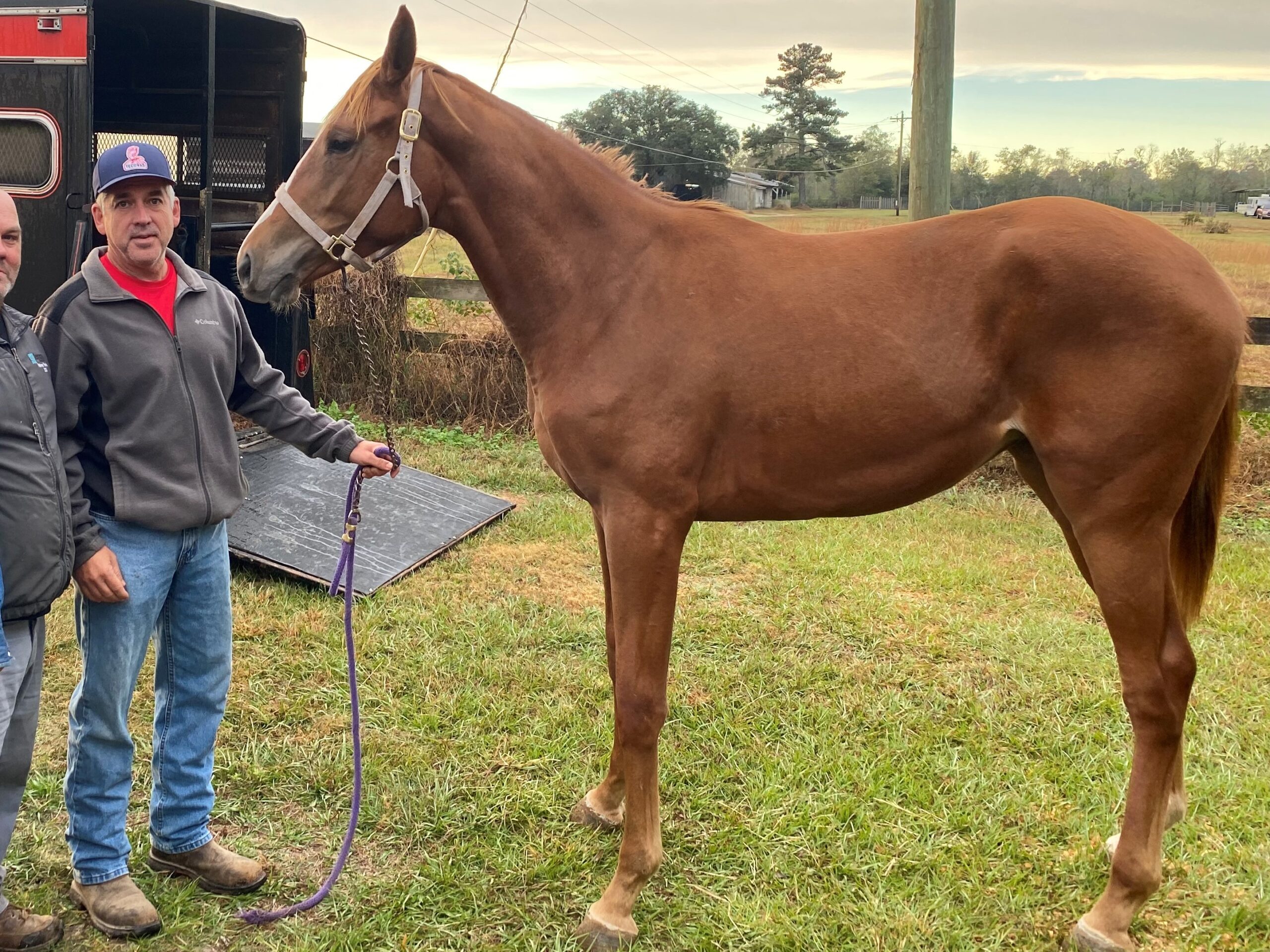
Miles Henry (legal name: William Bradley) is a professional horseman based in Folsom, Louisiana. He holds Louisiana Racing License #67012 and has spent over three decades managing Thoroughbreds at premier tracks including Fair Grounds, Delta Downs, and Evangeline Downs.
Expertise & Hands-On Experience: Beyond the track, Miles has decades of experience in specialized equine care, covering everything from hoof health and nutrition to training protocols for Quarter Horses, Friesians, and Paints. Every guide on Horse Racing Sense is rooted in this “boots-on-the-ground” perspective.
30 of their last 90 starts
Equibase Profile.

Connect with Miles: