
Last updated: May 17, 2026
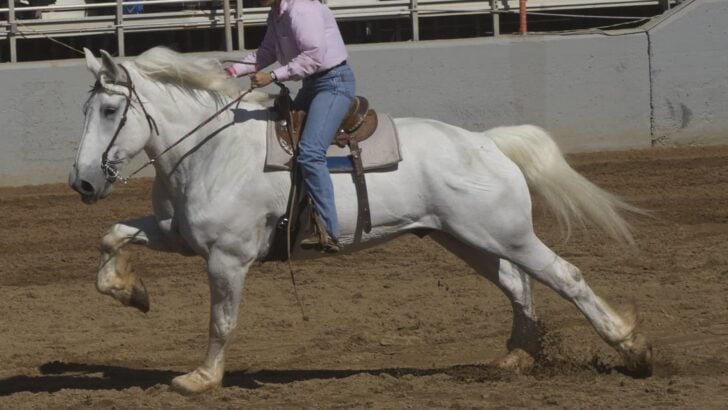
What is a Percheron horse? The Percheron is a French draft breed from the Le Perche region, standing 15–19 hands and weighing 1,800–2,600 lbs. They are distinguished from other draft breeds by clean legs with minimal feathering, agility inherited from 17th-century Arabian influence, and a calm, intelligent temperament. They are the most versatile of the major draft breeds — equally capable of heavy farm work, trail riding, and ceremonial service.
| Topic | Detail |
|---|---|
| Origin | Le Perche region, France; ancestors likely served as medieval warhorses |
| Height | 15–19 hands (60–76 inches) |
| Weight | 1,800–2,600 lbs |
| Colors | Gray and black (primary); bay, roan, and chestnut also registered in the US |
| Temperament | Calm, intelligent, and cooperative — “cold-blooded” with Arabian-influenced agility |
| Key distinction | Clean legs with minimal feathering — easier to groom and maintain than Clydesdales or Shires |
| Best uses | Farm work, trail riding, ceremonial service, therapeutic riding, sustainable forestry |
| Registry | Percheron Horse Association of America, founded 1876; 32,000+ registered worldwide as of 2013 |
About this guide: Written by Miles Henry, licensed Louisiana racehorse owner (#67012) with 30 years at Fair Grounds, Delta Downs, and Evangeline Downs. Miles has trained and worked with Percherons alongside Thoroughbreds and Quarter Horses, and recommends the breed specifically for humid Southern climates where the Percheron’s clean legs provide a practical maintenance advantage over feather-legged drafts.
Percherons, known as “gentle giants,” blend immense power with agility. From pulling 19th-century fire wagons to starring in modern parades, they are among the most versatile draft breeds available. With 30 years training horses, I’ve seen Percherons pull 5,000 lbs with ease and stay steady in chaos. This guide covers everything for enthusiasts, owners, or those comparing drafts.
Considering a Percheron vs Belgian or Clydesdale? See our full draft horse comparison guide.
Table of Contents
History and Origins of the Percheron Horse Breed
The Percheron horse originated in France and rose to global prominence through centuries of selective breeding and practical use.
Where the Percheron Originated
Percherons hail from Le Perche, France, a region famous for producing strong yet elegant horses. Their ancestors likely served as medieval warhorses, possibly carrying knights during the Norman Conquest of 1066.
Arabian Bloodline Influence
In the 17th century, Arabian stallions were introduced to the local draft stock. This infusion added agility and endurance, distinguishing Percherons from stockier draft breeds like Belgians and Shires. The Arabian influence is visible in the Percheron’s refined head, clean legs, and elastic movement — traits no other major draft breed shares to the same degree.
The Foundation Stallion
A stallion named Jean le Blanc, foaled in 1823, laid the genetic foundation for the modern Percheron. His line was promoted through France’s national stud program. Under Napoleon, Percherons were exported to the United States, where their calm temperament and pulling power made them ideal for fire brigades and agricultural purposes.
Peak Popularity in the U.S.
By 1900, Percherons pulled about 80% of urban fire wagons in the United States, thanks to their speed, strength, and composure under pressure. They became one of the most widely used draft breeds of the 19th and early 20th centuries. The Percheron Horse Association of America was founded in 1876, and in 1893 established a studbook to standardize breeding and preserve lineage records.
Decline and Resurgence
As tractors replaced horse labor in the mid-1900s, Percheron numbers declined to roughly 10,000 in the U.S. by the 1950s. However, renewed interest through hobby farming, draft horse shows, and sustainable agriculture sparked a resurgence. By 2013, over 32,000 Percherons were registered worldwide, and the breed saw 5% growth in U.S. registrations between 2010–2020, according to The Livestock Conservancy. In the UK, they are classified as “Not at Risk.”
Breed Characteristics of the Percheron Horse
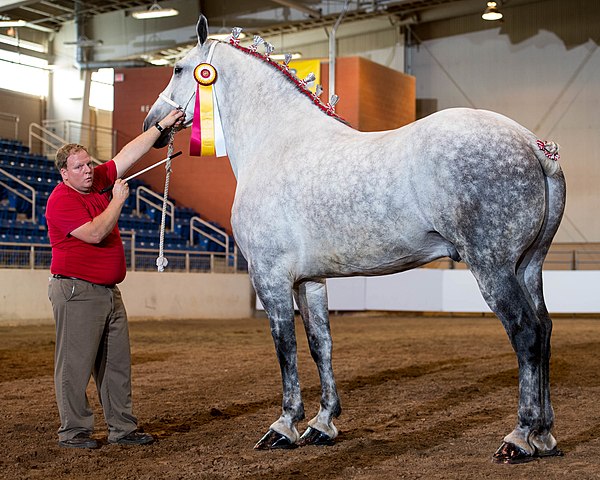
Percherons are known for combining raw power with refinement. Unlike heavier, slower-moving draft horses, they offer a smoother ride, minimal leg feathering for easier grooming, and surprising agility — traits enhanced by 17th-century Arabian influence.
Size and Conformation
- Height: 15–19 hands (60–76 inches)
- Weight: 1,800–2,600 lbs
- Build: Broad chest, short strong back, and muscular hindquarters
- Head: Refined, with expressive eyes and a calm expression
- Legs: Clean and powerful, with minimal feathering compared to Clydesdales
Colors
- Primary: Gray and black
- U.S. Registry Also Allows: Bay, roan, chestnut
These physical features make Percherons suitable for both heavy work and under-saddle disciplines. Their wide backs support larger riders, and their minimal feathering reduces grooming time — a practical advantage for owners. Curious about coat genetics? See our horse coat color guide.
Percheron Horse Temperament and Movement
Percherons are famously calm, intelligent, and cooperative — true “gentle giants.” In my experience training them, I’ve found they respond exceptionally well to groundwork. Starting with this foundation helps handlers manage their size safely while building trust. Their steady temperament makes them a good option for novice riders under proper guidance.
- Disposition: Steady, patient, and willing — well-suited for beginners who receive proper supervision
- Training: Use positive reinforcement techniques and begin with groundwork to safely introduce their 2,600-lb frame to new tasks
- Movement: Percherons have an elastic stride and powerful hock action, making them smoother under saddle than most expect — ideal for trail riding and even low-level dressage
Their agility, inherited from Arabian ancestors, gives them a clear advantage in responsiveness and versatility — especially when compared to stockier Belgian Draft Horses.
Modern Uses of the Percheron Horse
Percherons remain one of the most versatile draft breeds in the world. Their strength, composure, and smooth movement make them suitable for both traditional labor and modern performance roles.
- Work: Frequently used by Amish communities for plowing, logging, and sustainable farming
- Ceremonial use: Trusted for formal service — Percherons pull 3-ton trams at Disneyland Paris and have served in military funeral details at Arlington National Cemetery since the 1940s
- Shows: Regularly featured at the National Percheron Show, drawing crowds of 1,000+
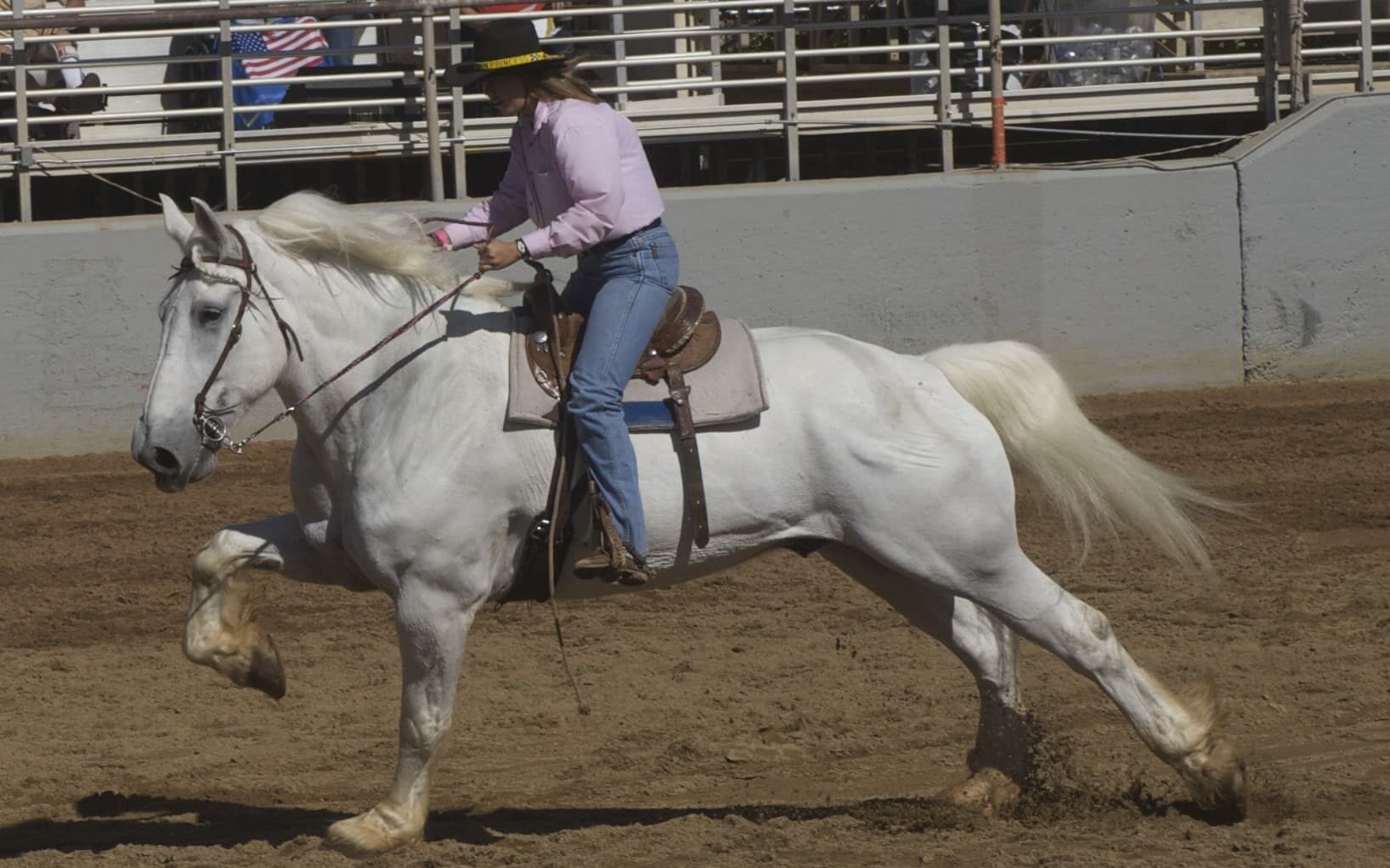
- Riding: Their smooth, ground-covering gaits make them popular for trail riding, therapeutic programs, and light dressage
- Crossbreeding: Percheron-Thoroughbred crosses perform well in eventing and sport; Percheron-Gypsy Vanner mixes add striking color and calm temperament
They also play an important role in eco-conscious agriculture, helping farmers reduce their carbon footprints by replacing machinery with horsepower.

Health and Care of the Percheron Horse
Percherons are hardy but prone to draft-specific health issues. Always consult a veterinarian for individual concerns.
Health Issues to Know
- EPSM (Equine Polysaccharide Storage Myopathy): Affects approximately 10% of draft horses, causing stiffness from glycogen buildup. Source: McCue et al., J Vet Intern Med, 2008
- Shivers: Neurological tremors when backing; managed with consistent exercise and veterinary oversight
- Obesity and laminitis: A 2022 study comparing obese and lean draft horses found significant structural differences in hoof lamellae, highlighting the importance of weight monitoring in heavy breeds
Miles’s Take — EPSM management: I’ve seen EPSM-managed Percherons thrive when transitioned to a controlled, high-fat diet with consistent turnout. The key is getting veterinary oversight early — before symptoms become entrenched. A Percheron that gets ahead of this condition with the right diet and exercise routine can have a full, productive career.
Daily and Monthly Care Requirements
- Stall: 12×12 ft minimum; 14×14 ft ideal. See the stall size guide
- Pasture: 1–2 acres per horse
- Feed: 25–30 lbs hay, 3–5 lbs grain daily, per National Research Council guidelines. See the nutrition guide
- Water and salt: Unlimited fresh water and a salt block at all times
- Grooming: Weekly leg brushing to prevent scratches — the Percheron’s clean legs make this significantly faster than feather-legged breeds. See grooming tips
- Monthly: Farrier visits every 6–8 weeks; routine vet checkups
A free Horse Care Checklist covering daily feed, weekly grooming, and monthly farrier tasks is available for download.
Cost of Owning a Percheron
The purchase price of a Percheron is modest compared to many light horse breeds, but the ongoing costs reflect their size — everything from feed to farrier to infrastructure is upsized. See our full guide to horse ownership costs.
| Expense | Typical Cost | Notes |
|---|---|---|
| Purchase price | $1,000–$10,000+ | Varies widely by training level and bloodline |
| Monthly feed | $250–$500 | Hay costs vary by region |
| Farrier (every 6–8 weeks) | $200–$450 | Requires specialized stocks and extra labor for large hooves |
| Annual vet care | $500–$1,000 | Standard vaccines, dental, and checkups |
| Emergency fund | $1,000+ | Essential for unexpected health issues — EPSM management can add cost |
| Custom saddle / tack | $1,500–$5,000+ | Draft builds require wide-tree saddles not found in standard tack shops |
| Harness gear | $500–$2,500 | Depends on work vs. show quality |
| Barn setup | $5,000+ | Requires oversized stalls (14×14 ideal) and heavy-duty fencing |
Ownership tip: Invest in quality tack early rather than buying standard equipment that won’t fit properly. A well-fitted wide-tree saddle on a Percheron performs far better and causes less soreness than a standard saddle forced onto a broad back. Explore cooperative vet services in your area to reduce annual costs without compromising care.
Percheron vs. Other Draft Horse Breeds
How does the Percheron stack up against the Clydesdale, Belgian, and Shire? The comparison below covers key traits from temperament to working ability. For a complete breed-by-breed breakdown, see our draft horse guide.
| Breed | Height (hands) | Weight (lbs) | Colors | Temperament | Common Uses | Unique Traits |
|---|---|---|---|---|---|---|
| Percheron | 15–19 | 1,800–2,600 | Gray, Black | Gentle, intelligent | Riding, work, shows | Minimal feathering; most agile of the major drafts |
| Clydesdale | 16–18 | 1,800–2,200 | Bay, Black, Gray | Docile, flashy | Parades, shows | Heavy feathering; high-stepping action |
| Belgian | 16–18 | 1,800–2,400 | Chestnut, Sorrel | Calm, powerful | Pulling, farming | Strongest pulling power of the major drafts |
| Shire | 17–19+ | 1,800–2,400 | Black, Bay, Gray | Steady, massive | Logging, ceremonial | Tallest breed; heaviest feathering |
Frequently Asked Questions About Percheron Horses
What is the lifespan of a Percheron?
Percherons typically live 25 to 30 years, benefiting from conscientious breeding and care.
Are Percherons good for beginners?
Yes, with guidance. Their calm nature suits beginners, but handling their size requires confidence. If you prefer a smaller, beginner-friendly draft-type horse, Haflingers are a good alternative.
Are Percherons good for dressage?
Yes. Their smooth stride suits low-level dressage well. Percherons have competed at the U.S. Dressage Finals, demonstrating the breed’s athletic ceiling beyond farm work.
Do Percherons handle hot climates?
Yes, but they need free access to fresh water, shade, and regular turnout to manage heat effectively. Their clean legs also reduce the risk of scratches and skin infections in humid conditions — an advantage over feather-legged drafts.
Are Percherons suitable for small farms?
Yes. Percherons can be kept on a small farm with a 12×12 stall and 1-acre pasture, though larger spaces are ideal for a horse of this size.
How do Percherons compare to Belgians?
Percherons are more agile and better suited to riding and versatility; Belgians are stockier and more powerful for raw pulling. For humid climates, Percherons have a grooming advantage. Learn more in our draft horse breeds guide.
Can Percherons be ridden daily?
Yes. Most Percherons can be ridden daily when in regular work and kept fit. Their calm temperament and strong build make them well-suited for trail riding, pleasure riding, and light dressage. Ensure proper conditioning, saddle fit, and scheduled rest days to prevent soreness or fatigue.
Do Percherons get along with other horses?
Generally, yes. Percherons are known for their steady, gentle disposition and integrate well into herd settings. Their size can be intimidating to smaller horses, but with proper introductions and adequate space, they tend to be sociable and non-aggressive. Their cooperative nature also makes them suitable for team driving and group turnout.
Are Percherons good for pulling competitions?
Yes. Their strength, low center of gravity, and intelligence make them top contenders in draft horse pulling events — often pulling 5,000+ lbs.
Conservation and Future of the Percheron
Current Population Status
The Percheron is growing. The breed saw a 5% increase in U.S. registrations between 2010 and 2020, according to The Livestock Conservancy, driven by interest in sustainable agriculture, hobby farming, and draft horse shows. In the UK, they are classified as “Not at Risk” by the Rare Breeds Survival Trust.
Who Supports Percheron Preservation
The Percheron Horse Association of America leads breed preservation — setting standards, maintaining the studbook, and organizing the National Percheron Show, which draws more than 1,000 attendees annually.
How to Support the Breed
- Attend or sponsor Percheron events — regional shows and demonstrations
- Join the Percheron Horse Association — supports education, promotion, and responsible breeding
- Support ethical breeders who prioritize conformation, temperament, and health screening
- Adopt retired Percherons, especially those coming from working farms or show teams
Historical footnote: Percherons were the preferred breed for 19th-century American fire brigades because they could move heavy equipment at surprising speed while staying calm under chaos. Their Arabian ancestry adds athleticism that is rare among heavy draft breeds. Historical evidence suggests the breed’s ancestors may have served as heavy cavalry mounts at the Battle of Hastings in 1066 — making the Percheron one of the oldest continuously documented working breeds in the Western world.
Key Takeaways: Percheron Horse Breed
- Most versatile of the major draft breeds — equally capable of heavy farm work, trail riding, therapeutic programs, and ceremonial service; no other draft matches this range
- Clean legs are a genuine practical advantage — less grooming time, fewer skin infections, lower scratches risk; the Percheron’s Arabian ancestry makes it the obvious choice for humid Southern climates over Clydesdales or Shires
- Calm and intelligent temperament — responds well to groundwork and positive reinforcement; suitable for beginners under proper guidance despite their 2,600-lb frame
- Historically dominant in the U.S. — pulled 80% of urban fire wagons by 1900; over 32,000 registered worldwide today and growing at 5% annually in the U.S.
- EPSM is the main health concern to monitor — affects approximately 10% of drafts; manageable with a high-fat diet and consistent turnout under veterinary oversight
- Budget for size-specific costs — feed ($250–$500/month), farrier ($200–$450 per visit), and oversized stall and tack requirements add up; plan these before purchase
- The Percheron is the best draft horse for riders — their elastic stride and powerful hock action make them smoother under saddle than any other major draft breed; Percheron-Thoroughbred crosses compete successfully in eventing
About Miles Henry
Racehorse Owner & Author | 30+ Years in Thoroughbred Racing
Miles Henry (legal name: William Bradley) is a professional horseman based in Folsom, Louisiana. He holds Louisiana Racing License #67012 and has spent over three decades managing Thoroughbreds at premier tracks including Fair Grounds, Delta Downs, and Evangeline Downs.
Expertise & Hands-On Experience: Beyond the track, Miles has decades of experience in specialized equine care, covering everything from hoof health and nutrition to training protocols for Quarter Horses, Friesians, and Paints. Every guide on Horse Racing Sense is rooted in this “boots-on-the-ground” perspective.
30 of their last 90 starts
Equibase Profile.

Connect with Miles: