
Last updated: August 17, 2026
In late August, Saratoga has a way of showing which three-year-olds are still improving and which ones have already given their best. The race that puts that question in front of the division is the Travers.
The Travers Stakes is a Grade 1 race for three-year-olds run every August at Saratoga Race Course in Saratoga Springs, New York, at 1 1/4 miles on dirt. Known as the Midsummer Derby, it is one of the oldest and most important U.S. stakes races restricted to three-year-olds and a major stepping stone toward the fall championships.
I’ve watched horses arrive at Saratoga with big reputations and leave with those reputations reshaped. At ten furlongs, late in a demanding campaign, this race tests a horse’s class, condition, timing, and ability to handle the best rivals who show up.
Below, I cover the race’s history and conditions, the records and upsets that built its reputation, how it fits a three-year-old’s campaign, and what I look for when evaluating a Travers contender.
What Is the Travers Stakes?
The easiest way to understand the Travers is to think of it as late summer’s answer to the spring classics. It does not belong to the Triple Crown, but it often brings together horses coming out of those races, horses using summer stakes such as the Jim Dandy or Haskell as a route to Saratoga, and later-developing three-year-olds that skipped the classics altogether.
That is why the race can change a division’s picture in one afternoon. By late August, a Derby horse may still be moving forward, a new horse may have caught up, and a lightly raced contender may arrive with a fresher campaign. At this point in the season, the better question is not who was best in May—it is who is ready to run ten furlongs at Saratoga today.
How the Travers Became a Saratoga Tradition
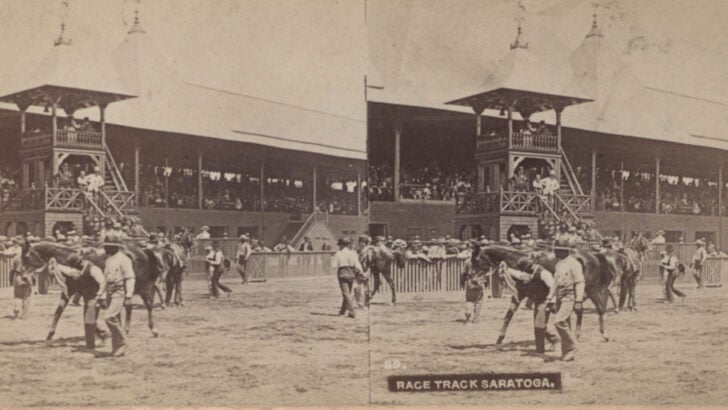
The Travers is named for William R. Travers, the first president of the Saratoga Racing Association. His horse, Kentucky, won the inaugural running in 1864. The race is the oldest U.S. stakes restricted to three-year-olds and predates the Kentucky Derby by 11 years.
What stands out to me is not just the race’s age, but how often its results have changed the way people viewed a generation of horses. The Travers has been the place where reputations are confirmed, questioned, and sometimes turned upside down for more than 150 years.
The race has not been run every year. It was skipped in 1896, 1898 through 1900, and 1911 through 1912. During World War II, the Travers was held at Belmont Park from 1943 through 1945 rather than at Saratoga. Its distance has changed as well: the first editions were run at 1 3/4 miles, and the race settled at its current 1 1/4-mile distance in 1904.
Travers Stakes Distance, Purse, and Race Conditions
| Detail | Information |
|---|---|
| Date | Typically the last Saturday in August |
| Track | Saratoga Race Course, Saratoga Springs, NY |
| Distance | 1¼ miles (10 furlongs), dirt, left-handed |
| Eligibility | 3-year-old Thoroughbreds, colts/geldings and fillies |
| Weights | 126 lbs colts/geldings, 121 lbs fillies (scale weight) |
| Purse | $1,250,000 |
| Trophy | Man o’ War Cup (Tiffany & Co.), plus a blanket of carnations |
The distance has shifted more than most people realize. The Travers opened at 1¾ miles in 1864, shortened to 1½ miles by 1890, briefly returned to 1¾ miles, ran at 1⅛ miles for one year in the mid-1890s, and finally settled into the 1¼-mile format it’s run at ever since — a configuration that’s now been standard for well over a century.
The purse has grown just as dramatically: the first Travers in 1864 paid $2,950 to the winner, worth roughly $43,000 today. That’s less than 4% of the $1.25 million purse on offer now. Winners get more than a trophy, too — tradition has the winning silks painted onto the infield canoe at Saratoga, a visual record of the race’s history that goes back decades.
How Horses Qualify for the Travers
Unlike the Kentucky Derby, the Travers does not use a points-based qualifying series. It is a stakes race with nomination, entry, and starting requirements set in NYRA’s official conditions for each edition.
Horses not nominated by the original deadline may sometimes be supplemented before entries close, subject to the current year’s conditions and fees. That leaves room for late-developing three-year-olds, but connections should always check the official NYRA or Equibase race conditions before making plans.
Why Fillies Sometimes Run
The Travers is open to fillies as well as colts and geldings — they simply carry 5 fewer pounds (121 lbs versus 126) under the race’s scale-weight conditions. It’s a rare enough occurrence that it’s genuinely notable when it happens, but it’s not a new phenomenon: three of the first five runnings were won by fillies.
The 1867 winner, Ruthless, had already won that year’s inaugural Belmont Stakes, making her one of the more accomplished fillies in the race’s early history. Since then, filly winners have gotten much rarer — Lady Rotha in 1915 remains the last filly to win the Travers outright, and it took until 2024 for one to come close again, when Thorpedo Anna finished a head behind Fierceness in one of the closer runnings in recent memory.
Why Saratoga Is Called the “Graveyard of Champions”
Saratoga’s “Graveyard of Champions” nickname is not literal. It reflects a long history of highly regarded horses and heavily backed favorites being beaten there, and the Travers has supplied some of the most memorable examples.
Gallant Fox lost the 1930 Travers to 100-1 shot Jim Dandy after sweeping the Triple Crown, and American Pharoah was beaten by Keen Ice in the 2015 Travers shortly after his own Triple Crown sweep. Those results are part of why Saratoga’s reputation still carries weight with horsemen and fans.
Man o’ War has his own piece of Travers history too: in 1920, he was pushed to his absolute limit by John P. Grier in a stretch duel that’s remembered as one of the greatest races of his career, even though he won.
Other Travers upsets worth knowing:
- 1982: Runaway Groom defeated that year’s Kentucky Derby, Preakness, and Belmont winners — all three Triple Crown races represented in one field, and none of them won
- 1962: Jaipur held off Ridan by a nose after the two dueled head-to-head for the full 1¼ miles, in track-record time — regarded as one of the greatest races ever run at Saratoga, and it decided that year’s champion 3-year-old
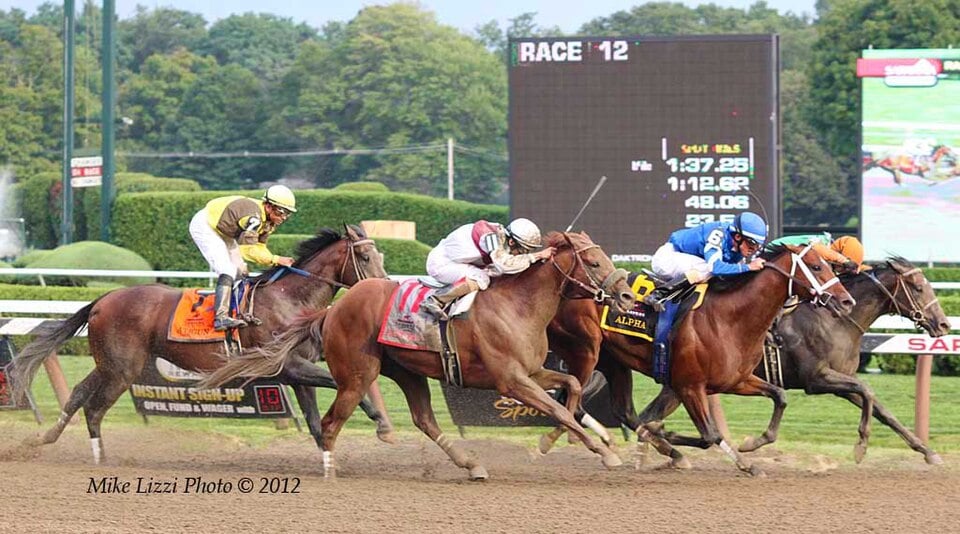
- 2012: Alpha and Golden Ticket crossed together in the only dead heat in modern Travers history
The Road to the Travers: Key Prep Races
The Grade 2 Jim Dandy Stakes, run at Saratoga about four weeks before the Travers, is the race’s most direct prep — same track, same surface, a dress rehearsal for the exact conditions horses will face on Travers Day. That matters more than it might seem: a horse that’s already shipped in and acclimated to Saratoga’s track surface and background noise has a real edge over one arriving fresh off a different circuit entirely.
It’s also why trainers frequently point specifically to this race rather than treating it as just another summer stakes — the Jim Dandy gives them a genuine read on whether a horse handles the track before committing to the bigger prize. Not every Travers winner comes through the Jim Dandy; plenty of horses skip it entirely and arrive off other summer form. But when you’re looking for the single most informative form line heading into late August, the Jim Dandy is consistently it. Since 2010, six Jim Dandy starters have gone on to win the Travers, and four of those — Stay Thirsty, Alpha, Essential Quality, and Epicenter — won both races in the same summer.
Beyond the Jim Dandy, horses arrive at the Travers from all directions — some straight from the Triple Crown trail, others from regional prep races around the country. That variety is part of what makes the field hard to handicap: you’re often comparing a horse that’s been racing against elite company all spring to one that’s been picking up easier wins regionally, and Saratoga has a habit of not caring which résumé looks better on paper.
Horseman’s perspective: A big résumé doesn’t win the Travers by itself. By late August, I want to know which horse is still progressing, which one has had the more manageable campaign, and whether the projected pace suits his running style. On race day, current condition and the trip can matter more than what a horse did months earlier.
Notable Travers Winners and Moments
| Year | Horse | Why It’s Remembered |
|---|---|---|
| 1920 | Man o’ War | Pushed to his limit by John P. Grier in one of his toughest career races |
| 1941 | Whirlaway | Completed the Triple Crown plus the Travers in the same year |
| 1962 | Jaipur | Won by a nose over Ridan after a full-race duel, in track-record time |
| 1967 | Damascus | Still holds the record margin of victory — 22 lengths |
| 2001 | Point Given | Drew a then-record crowd of 60,486 |
| 2012 | Alpha / Golden Ticket | The only dead heat in modern Travers history |
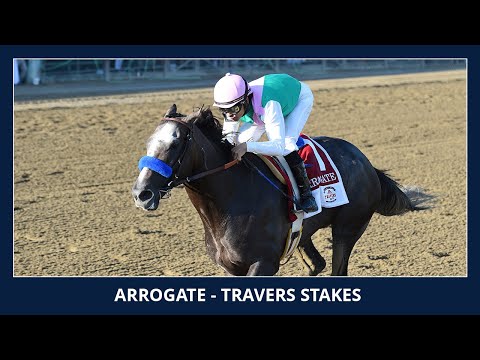
| 2016 | Arrogate | Set the current track record, 1:59.36, winning by 13½ lengths in his stakes debut |
What I Look for in a Travers Horse
By Travers time, I’m less interested in who had the best two-year-old resume or who was the biggest name back in May. I want to know which horse is still moving forward and which one has already had too many hard races. Owners learn quickly that talent alone doesn’t carry a horse through a long season. A horse that keeps improving through August has often handled the physical and mental demands of the season better than his past speed figures alone show.
A few things I watch closely: the horse’s recent form cycle, whether he’s already proven he can stay a mile and a quarter, how he handled Saratoga if he’s raced there before, and whether his running style fits the projected pace. A deep closer can be dangerous if the early fractions get hot, but a horse that gets comfortable near the lead can be hard to reel in when Saratoga’s playing kind to speed. My guide to pace and running styles gets into this in more detail if you want to dig deeper.
The paddock matters too. I’m not looking for a horse to be dead quiet; good horses can be on the muscle. But I do want to see one that’s focused, moving freely, and not wasting energy before a demanding ten furlongs.
How to Bet the Travers
Before I place a Travers bet, I want a clear opinion about how the race is likely to unfold. I start with recent form, whether each horse has shown he can stay 1 1/4 miles, the projected pace, and how demanding his campaign has been since spring. A big name or a strong Triple Crown résumé matters, but it does not replace current condition or a running style that fits the pace.
For a competitive Travers field, I usually decide first whether I have one horse I want to back to win or whether the pace and field depth make vertical exotics worth considering. Exactas, trifectas, and superfectas can offer bigger payouts, but they also require more things to go right. Do not build a complicated ticket just because it looks exciting.
If you are new to horse-race wagering, start with a small straight win, place, or show bet until you are comfortable reading odds and understanding value. My guide to betting on horse racing explains bet types, odds, and bankroll basics before you tackle a Grade 1 field like the Travers.
Bet responsibly. Horse racing wagering involves financial risk. This guide is for educational purposes and is not a guarantee of any result. Never wager more than you can afford to lose.
Why Winning the Travers Still Matters
The Travers sits in a specific spot on the calendar that gives it lasting significance: it’s the first major test after the Triple Crown series ends and before Breeders’ Cup season begins in the fall, which is exactly why it tends to reshuffle the division rather than just confirm what everyone already thought. Beyond the $1.25 million purse, a Travers win carries real weight into the rest of the season.
It’s one of the most heavily weighted results Eclipse Award voters consider when naming the year’s champion 3-year-old, especially in a season where the Triple Crown winner (if there is one) didn’t run at Saratoga. It’s also a genuine springboard toward the Breeders’ Cup Classic in the fall — a strong Travers performance against elite company is exactly the kind of form that positions a 3-year-old to take on older horses later in the year. For colts specifically, a Travers win — especially one that adds to an already good Triple Crown résumé — tends to matter to breeders evaluating stallion prospects once a horse’s racing career ends, since it’s one more data point on a track and surface that tests soundness and class simultaneously.
Key Takeaways: Travers Stakes
- The Travers is the oldest U.S. stakes race restricted to three-year-olds. First run in 1864, it predates the Kentucky Derby by 11 years.
- The Midsummer Derby is a major late-summer test. Its field can include Triple Crown veterans, Jim Dandy runners, and later-developing three-year-olds.
- Saratoga’s “Graveyard of Champions” reputation is rooted in real upsets. Gallant Fox in 1930 and American Pharoah in 2015 were both beaten in the Travers after Triple Crown sweeps.
- Arrogate holds the Travers and Saratoga track record. His 1:59.36 performance in 2016 remains the standard for 1 1/4 miles at Saratoga.
- Current condition matters as much as early-season reputation. When evaluating a Travers contender, consider recent form, stamina, pace, and the horse’s overall campaign.
FAQs: The Travers Stakes
What is the Travers Stakes?
The Travers Stakes is a Grade 1 race for 3-year-old Thoroughbreds run each August at Saratoga Race Course. First run in 1864, it’s the oldest stakes race in America run exclusively for 3-year-olds, nicknamed the “Midsummer Derby.”
Why isn’t the Travers part of the Triple Crown?
Simple timing: the Travers began in 1864, decades before “Triple Crown” existed as a concept in American racing. The term wasn’t popularized until 1930, after Gallant Fox swept the Derby, Preakness, and Belmont, and by then those three races were already established as the series. The Travers had spent over 60 years building its own identity as a separate, later-season test.
When is the Travers Stakes run?
The Travers Stakes runs annually in late August at Saratoga Race Course, roughly four weeks after the Jim Dandy Stakes, its most direct prep race.
Why is Saratoga called the Graveyard of Champions?
Because favorites lose there more often than they win — under 30% of Travers favorites have won over the last 20 years. The race has a long history of upsetting star horses.
How long is the Travers Stakes?
The Travers is run at 1¼ miles (10 furlongs) on dirt, a distance that’s been standard for well over a century. Earlier runnings were contested at several different distances, including 1½, 1¾, and briefly 1⅛ miles, before settling into its current format.
What is the Travers Stakes purse?
The Travers Stakes carries a purse of $1,250,000, making it one of the richest races in the country for 3-year-olds.
What horse holds the Travers Stakes record?
Arrogate holds the current track record, running the 1¼ miles in 1:59.36 while winning by 13½ lengths in 2016 — still the only Travers run in under two minutes.
About Miles Henry
Racehorse Owner & Author | 30+ Years in Thoroughbred Racing
Miles Henry (legal name: William Bradley) is a professional horseman based in Folsom, Louisiana. He holds Louisiana Racing License #67012 and has spent over three decades managing Thoroughbreds at premier tracks including Fair Grounds, Delta Downs, and Evangeline Downs.
Expertise & Hands-On Experience: Beyond the track, Miles has decades of experience in specialized equine care, covering everything from hoof health and nutrition to training protocols for Quarter Horses, Friesians, and Paints. Every guide on Horse Racing Sense is rooted in this “boots-on-the-ground” perspective.
30 of their last 90 starts
Equibase Profile.

Connect with Miles: