

Last updated: August 2, 2026
The fastest horse on paper does not always win the race. I have seen talented horses get beat because the pace worked against them before they reached the quarter pole — not because they lacked the ability, but because the race unfolded in a way that didn’t favor their running style.
Running styles describe where a horse usually wants to be during a race — on the lead, pressing, stalking, or closing. Pace describes how fast each stage of the race actually unfolds, and which of those running styles that pace favors. Understanding the two together explains most of what a final time alone does not show you.
In 30 years of racing horses in Louisiana, pace is the biggest thing I see people miss when they try to figure out why a race unfolded the way it did. Once you understand running styles and pace, you start seeing why the favorite faded, why a closer got there in time, and why a horse that looked outclassed on paper ran the best race of its life.
Written from the perspective of a racehorse owner with hands-on experience, this guide explains how pace actually shapes a race: what running styles mean, how early rhythm decides who gets the trip they need, and how to use that understanding when you bet.
Table of Contents
What Are Running Styles in Horse Racing?
Running style describes how a horse typically positions itself during the early stages of a race. Some horses need the lead. Some sit just off it. Others do their best work late. The four basic types are the front-runner (wants the lead or races right on it), the presser (sits just behind the leaders and applies pressure), the stalker (races in mid-pack and waits for the right moment), and the closer (drops back early and makes one run late).
Miles’s Take — Running style is not just a label: It tells you how a horse is most comfortable using its energy — and whether today’s race shape helps or hurts that preferred style. A closer in a field with no early pace is not a value bet no matter what its final speed figure shows.
| Running Style | Typical Position Early | Best Setup | Main Risk |
|---|---|---|---|
| Front-runner | 1st or pressing the lead | Loose lead, no serious pressure | Gets hooked in a speed duel |
| Presser | 2nd-3rd | Honest but not suicidal pace | Too far back or wide on the turn |
| Stalker | 3rd-5th | Contested pace up front | Traffic trouble, no clear lane |
| Closer | Near the rear | Fast pace and tired leaders | Slow pace, too much to do late |

Why Pace Matters More Than Most People Realize
Pace is not just about which horse is fastest. It is about how hard the race is run early, how much pressure the leaders face, and which horses are likely to have energy left when it counts. A horse can look dominant on paper and still lose if it gets dragged into fractions that are too fast for its distance and class. That is why favorites often get beat before the field reaches the far turn.
Simple mental model:
- Fast early + slow late — leaders used too much energy; stalkers and closers benefit
- Moderate early + steady late — best horses usually hold form; class and trip reliability matter
- Easy early pace — speed horses become dangerous; closers often cannot catch them
This is also why two horses with similar final times can be very different betting propositions. One may have earned that number on an easy lead. The other may have finished just as fast after chasing a demanding pace. Those are not equal efforts — and the pace figures reveal which is which.
What Are Pace Figures?
Pace figures are numerical ratings that measure how fast a horse ran during different segments of a race — usually early, middle, and late. Unlike a final speed figure, which summarizes the whole race, pace figures show how the horse used its speed. The three labels most handicappers encounter in the daily racing form are E1 (early pace, first call), E2 (middle pace, second call), and LP (late pace, from the stretch to the finish). The exact labels vary by data provider — DRF, Brisnet, and TimeformUS each use their own naming and scale — but the underlying idea is the same across all of them: measuring early energy, middle movement, and late acceleration separately instead of just the final time.
That distinction matters because a horse with an average final speed figure can still be dangerous if today’s pace setup suits its running style. Pace figures often explain why a horse looks better — or worse — than its final number suggests.
| Figure Type | What It Measures | Use Case |
|---|---|---|
| Speed Figure | Overall race performance based on final time | Compares total effort across races |
| Pace Figure | Sectional performance at key points in the race | Evaluates energy use and race shape |
A note on pace figures: Pace figures are useful because they standardize sectional speed across different tracks and distances. But they are still only part of the picture. Trip trouble, class, surface, and trainer intent all matter and are not captured in the number alone.
Understanding Furlongs and Fractional Times
A furlong is one-eighth of a mile. If you are new to racing, understanding why horse racing still uses furlongs will make pace charts much easier to read. The common distances are: 5 furlongs (5/8 mile sprint), 6 furlongs (3/4 mile sprint), 8 furlongs (1 mile route), and 10 furlongs (1 1/4 miles — the Kentucky Derby distance). For a deeper breakdown of all race distances, the horse racing distances guide covers every common sprint and route configuration.
As a quick benchmark for average pace: sprinters average around 12 seconds per furlong, distance horses average 13 to 14 seconds, and elite horses can run closer to 11 seconds per furlong in the early stages. Those benchmarks make more sense once you see how fast racehorses can actually run at top speed.

Approximate Sprint and Route Fraction Benchmarks
Use this table as a quick reality check when you are looking at recent race fractions. These ranges are broad educational examples, not universal standards — track profile, surface, class, and even altitude and weather all move the numbers. A :22 opening quarter at Saratoga on turf is not equivalent to a :22 quarter at a deep, tiring dirt track. The question is never just “was it fast?” It’s “was it fast for this race, at this track, on this surface?”
| Distance | Early Pace (2F) | Half-Mile (4F) | Final Time | Pace Type |
|---|---|---|---|---|
| 5F Sprint | :21.0-:22.0 | :44.0-:45.0 | :57-:58 | Fast |
| 5F Sprint | :22.5-:23.0 | :45.5-:46.5 | :58-:60 | Average |
| 5F Sprint | :23.5+ | :47.0+ | :60+ | Slow |
| 6F Sprint | :21.5-:22.5 | :44.5-:45.5 | 1:09-1:10 | Fast |
| 6F Sprint | :22.5-:23.5 | :46.0-:47.0 | 1:10-1:12 | Average |
| 6F Sprint | :23.5+ | :47.5+ | 1:12+ | Slow |
| 8F Route | :23.0-:24.0 | :46.0-:47.0 | 1:36-1:38 | Fast |
| 8F Route | :24.0-:25.0 | :47.5-:48.5 | 1:38-1:40 | Average |
| 8F Route | :25.5+ | :49.0+ | 1:41+ | Slow |
How to Calculate Pace Step by Step
You do not need premium software to start. You can pull fractional times from race charts on Equibase and do a basic pace read yourself. Here is a worked example from a 6-furlong race at Fair Grounds.
Race fractions: quarter-mile (2F): :22.6 — half-mile (4F): :45.8 — final (6F): 1:10.2
Step 1 — Break the race into segments: First 2F = :22.6. Second 2F = :45.8 minus :22.6 = :23.2. Last 2F = 1:10.2 minus :45.8 = :24.4.
Step 2 — Convert each segment to seconds per furlong: First 2F: 22.6 / 2 = 11.3 sec/furlong. Second 2F: 23.2 / 2 = 11.6 sec/furlong. Last 2F: 24.4 / 2 = 12.2 sec/furlong.
What it means in betting terms: the race was run hot early and slower late — a classic pace collapse pattern. That setup hurts horses who need the lead and helps horses sitting behind the pace. This is where stalkers and closers become live. If you see 11.3 -> 11.6 -> 12.2, do not just admire the early speed. Ask who benefited from that collapse and whether they come back against a softer setup next time.
Pace collapse defined: When early fractions are unusually fast, the horses who set or pressed that pace typically decelerate sharply in the final stages. Horses sitting 4th-6th who conserved energy through the middle of the race are the ones best positioned to sweep past tiring front-runners. Identifying a likely pace collapse before it happens is one of the clearest edges available to a bettor who does the work.
How Pace Figures Are Built
This section is optional for beginners. You do not need to understand figure construction to use pace well — but it helps to know where the published numbers come from. Most systems use a simplified formula: Pace Figure = (Par minus Actual) + Variant. The base scale is often around 80 for average-level claiming form. Faster-than-par segment times push the figure up; slower-than-par times pull it down. One point typically represents one-fifth of a second.
| Factor | Description |
|---|---|
| Par Time | Expected time for that class and distance |
| Actual Time | What the horse actually ran in that segment |
| Track Variant | Adjustment for track speed or condition that day |
| Base Scale | Reference level used to convert time difference into a rating |
Don’t let the math distract from the purpose: If the par E1 for a 6F race is :22.8 and the horse runs :22.4, that segment was 0.4 seconds faster than par — add the track variant and the result is the published early pace rating. But the formula matters less than correctly understanding whether the horse got an easy trip, a pressured trip, or a pace collapse in front of it. Pace analysis is useful because it improves interpretation, not because the numbers are precise.
Sprint vs. Route Pace — What Changes?
Distance changes the value of running style. A horse can look like a strong pace horse in a sprint and become vulnerable when stretched out. Pace should always be read in context of distance and race type.
Sprint Races (5 to 7 Furlongs)
Early speed matters more in sprints, bad position is harder to overcome, and post position plays a larger role at shorter trips. A pace duel can flip the race late, but in dirt sprints, uncontested speed is one of the most dangerous angles in racing. Speed under pressure is a very different animal from speed with a clear lead. The Kentucky Derby strategy guide covers how this plays out in the most extreme version of a sprint handicapping challenge — a 20-horse field at 1 1/4 miles.
Route Races (8 Furlongs and Up)
In routes, tactical speed becomes more important than pure speed. Horses sitting 2nd through 4th often get the best trip. Closers need an honest pace but have more time and ground to launch their run. Stamina and energy efficiency matter more than gate speed.
If you only remember one thing before the race: Figure out whether it is lone speed, a speed duel, or an honest pace. That single read explains most race outcomes.
The Three Race Shapes You Will See Again and Again
Most races fall into one of three basic pace scenarios. If you can identify which one you are looking at, you are already ahead of most beginners.
Lone Speed
Only one horse appears likely to make the lead without pressure. This is usually the most favorable setup for a speed horse — and the setup where closers are most dangerous to back. Give that horse extra respect, especially in dirt sprints and smaller fields. The public often underestimates the lone front-runner at medium prices.
Speed Duel
Multiple horses need the front and are likely to hook up early. This creates hot fractions and sets the race up for a stalker or closer. Upgrade horses who can sit just behind the speed and finish. Deep closers also become more playable when enough pace sets up in front of them. Betting horses caught in a destructive speed duel is usually a poor angle — they spend their energy fighting each other before the real running even begins.
From the rail — last night at Evangeline: My friend’s mare, Mary Claire, broke sharp and settled into an even rhythm early while two others fought for the lead. Her jockey didn’t chase — he let them go. Both speed horses burned out and came home last and second-to-last. Mary Claire got loose off the turn and looked like the winner, but the favorite, sitting way back the whole trip, ran her down late. Same pattern every time: the speed horses beat each other, the horse who stayed out of the fight moves forward, and the deepest closer often benefits most of all.
Honest Pace
The pace looks competitive but not destructive. In these races, the best horse on class and form usually gets a fair chance to show it. Lean more heavily on recent form, class, and trip reliability rather than trying to exploit a pace scenario that does not clearly favor any running style.
Miles’s Take — From the barn: One of my horses finished second after getting dragged into a pace battle through hot fractions. Next time out, in a race with only one other speed horse, we told the jockey to sit just off the pace instead of fighting for the top. Same horse, same class, different race shape — he won. That is the point of pace analysis in the real world. The horse did not get better between those races. The setup did.
How to Use Pace Analysis When Betting
Pace analysis is most useful before you ever look at odds. First map the likely race shape. Then ask which horses are helped, which ones are compromised, and whether the probable setup is already reflected in the price. If the public has already identified and bet the likely beneficiary of the pace scenario, the value is gone — you need to find the horse whose advantage is not priced in.
Pre-race pace framework — in order:
- Mark each horse as front-runner, presser, stalker, or closer
- Count how many horses want the lead
- Project whether the pace is soft, honest, or contested
- Check which horses have figures or form lines that fit that projected setup
- Only then compare your opinion to the odds
That order matters because most bettors start with price or final figure. If the horse’s preferred trip is unlikely to materialize, the number on the page is misleading.
Two beginner angles worth knowing: lone speed in a dirt sprint is especially dangerous when the horse breaks from a favorable post; and a class dropper with competitive pace figures is especially valuable when today’s field is slower early. For how to add another layer, the guide on using pedigree in handicapping is a natural companion read — pedigree helps explain which horses are more likely to sustain pace over distance.

How to Build a Pace Scenario From a Racing Form
Everything above is the theory. This is the actual workflow — what I go through on a racing form before I’ve made up my mind about a race.
The five-step read:
- Identify every horse with real early speed. Look at each horse’s last three or four races for how they broke and where they sat early — not just their best career effort.
- Mark the probable leader. If one horse clearly has the fastest recent break and no one else close to it, that’s your likely lone-speed scenario.
- Identify every horse that needs the lead. If two or more horses have shown they want the front and neither has a history of backing off, you’re probably looking at a duel.
- Find the horses with tactical flexibility. Some horses can win from the lead or sit just off it depending on how the race sets up — those are often the safest horses in a hard-to-read pace scenario.
- Look for the hidden pace advantage. A closer facing a soft pace and a stalker facing a duel are both getting help the crowd may not have fully priced in yet.
| Pace Scenario | Type of Horse Favored |
|---|---|
| Lone speed | The front-runner, uncontested |
| Honest pace | The best overall horse on class and form |
| Speed duel | Pressers and stalkers sitting just behind the fight |
| Extreme pace collapse | Deep closers |
Best Tools for Pace Analysis
You do not need to spend money immediately. Equibase provides fractional times, charts, and basic race data for free, and the Equibase app gives you quick access to race splits on mobile. DRF free content is limited but useful as supporting data. For beginners, Equibase alone gets you most of what you need to do a basic pace read.
Premium tools add depth: DRF includes Beyer and Moss pace figures, Brisnet integrates pace figures directly into the past performances, and TimeformUS offers strong pace projections and visual race-shape tools. I still use a basic spreadsheet to track pace trends over multiple races. Consistent application matters more than expensive software.
Common Pace Analysis Mistakes
Most pace mistakes come from reading the numbers without reading the race. Betting the best pace figure without context is the most common — always ask how it was earned. Ignoring the difference between a loose lead and a pace duel produces very different outcomes that the raw figure does not reveal. Using one race as proof of pace preference is another trap — look for repeatable style across multiple races. Forgetting trip trouble is costly because a bad figure can come from a bad trip, not bad ability. Treating turf and dirt the same is also wrong — turf is usually more forgiving of hot fractions than dirt.
Avoid overconfident pace claims: Pace is one of the most important handicapping tools, especially on dirt, but be skeptical of rigid formulas like “pace determines X% of winners.” The honest version is better: in many races — particularly dirt sprints and route fields with clear shape differences — pace strongly influences which horse gets the winning trip. Context always matters.
FAQ — Running Styles and Pace Analysis
What is a running style in horse racing?
A running style describes how a horse typically positions itself early and throughout a race. The main types are front-runner (wants the lead), presser (sits just behind), stalker (races mid-pack and waits), and closer (drops back early and makes one late run).
What is the difference between pace and speed in horse racing?
Speed refers to the overall performance or final time. Pace refers to how fast different parts of the race are run, especially the early and middle segments. A horse can have an average final speed figure but be dangerous if today’s pace setup suits its running style.
Why do pace figures matter for handicapping?
Pace figures help you see how a horse used its energy. They reveal whether a horse benefited from an easy lead, was compromised by pace pressure, or finished well into a pace collapse. Two horses with the same final speed figure can be very different risks depending on how they earned it.
What running style wins most often?
There is no universal best running style. Front-runners do well when lone on the lead. Stalkers and closers improve when the pace is contested. The right style depends entirely on the race shape — a closer in a field with no early pace is at severe structural disadvantage regardless of its speed figure.
Can beginners use pace analysis effectively?
Yes. Start by identifying each horse’s likely running style and asking whether the race sets up for speed, stalkers, or closers. That one read alone improves race interpretation significantly. The more advanced tools — pace figures, track variants, sectional comparisons — add precision, but the basic read is accessible to anyone.
Where can I find free pace data for horse racing?
Equibase provides free fractional times and race charts for every race in the US. DRF and Brisnet offer more detailed pace figures and projections on a subscription or per-card basis. TimeformUS is particularly strong for visual pace projections. Start with Equibase and add a premium tool once you are comfortable reading the raw fractions.
Key Takeaways: Running Styles and Pace Analysis
- Running styles tell you how a horse prefers to race — front-runner, presser, stalker, or closer.
- Pace tells you which running styles are helped today — map the race shape before you look at odds.
- Lone speed is dangerous in dirt sprints — especially when no one else wants the lead.
- Speed duels usually help stalkers and pressers — not always the deepest closers.
- In routes, position and stamina matter more than raw gate speed — energy use decides a lot of races.
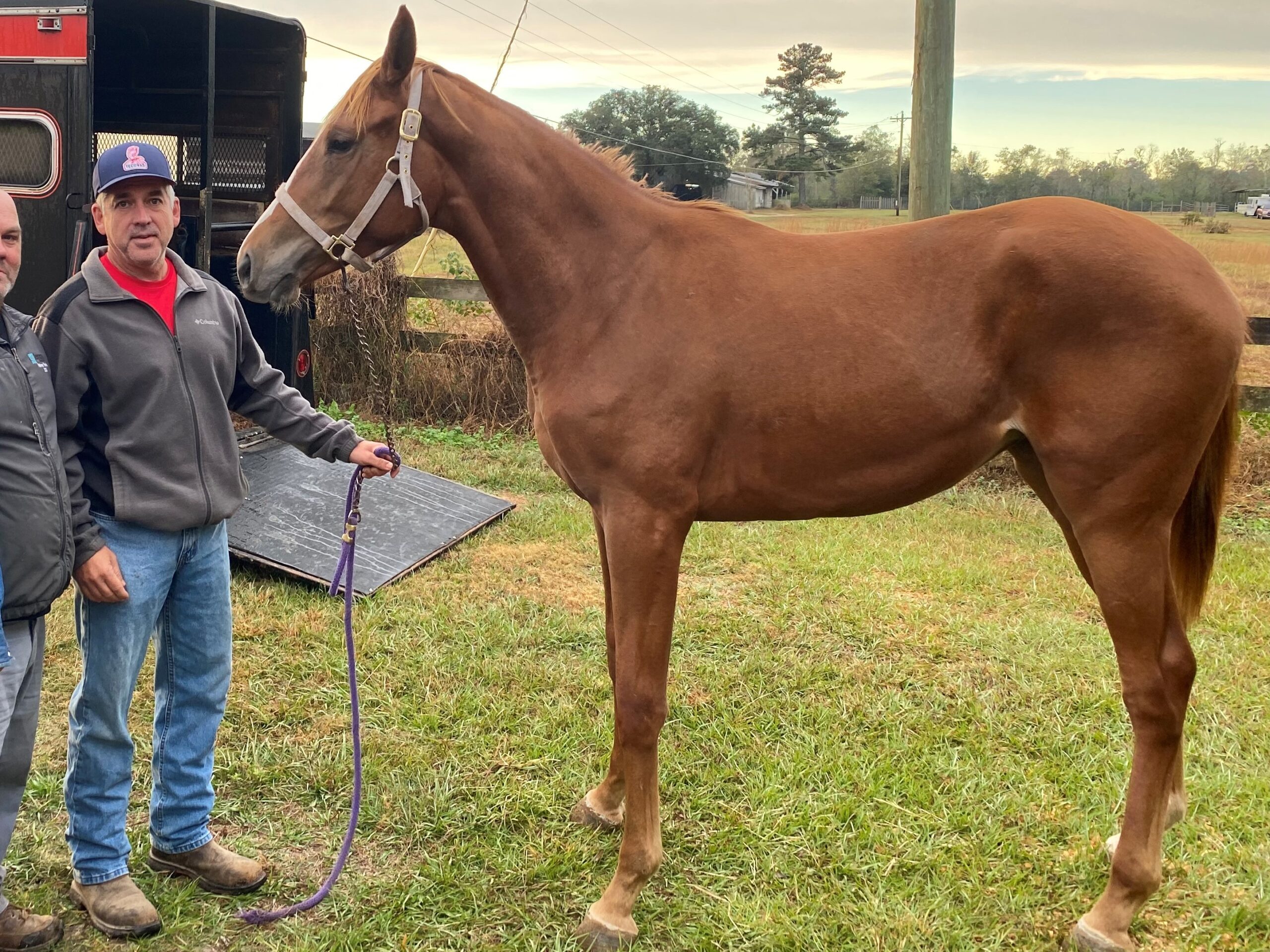
About Miles Henry
Racehorse Owner & Author | 30+ Years in Thoroughbred Racing
Miles Henry (legal name: William Bradley) is a professional horseman based in Folsom, Louisiana. He holds Louisiana Racing License #67012 and has spent over three decades managing Thoroughbreds at premier tracks including Fair Grounds, Delta Downs, and Evangeline Downs.
Expertise & Hands-On Experience: Beyond the track, Miles has decades of experience in specialized equine care, covering everything from hoof health and nutrition to training protocols for Quarter Horses, Friesians, and Paints. Every guide on Horse Racing Sense is rooted in this “boots-on-the-ground” perspective.
30 of their last 90 starts
Equibase Profile.

Connect with Miles: