
Last updated: July 3, 2026
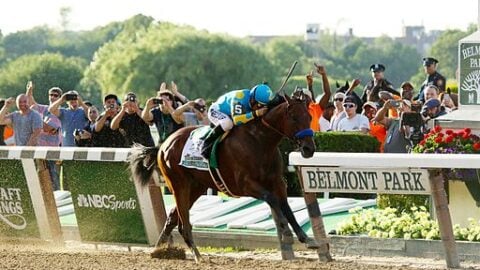
Golden Tempo won the 2026 Belmont Stakes at 6-1 odds, stumbling at the break from post 9, dropping to last, and then delivering a sweeping last-to-first rally to win the 158th running of the final Triple Crown leg at Saratoga Race Course. Commandment finished second under John Velazquez, and 8-5 favorite Renegade flattened to third after briefly showing the way in the stretch. Trainer Cherie DeVaux became the first female trainer to win two legs of the Triple Crown. Jockey José Ortiz was aboard for both Triple Crown wins this season.
The result validated the framework in my pre-race analysis and delivered the one outcome I ranked lowest — Golden Tempo ran exactly the race he ran in the Derby, and the horse I called “pace-dependent” proved he doesn’t need ideal conditions to run down a field. He needs José Ortiz, a fast final quarter, and enough track to unwind. He had all three at Saratoga.
Who won the 2026 Belmont Stakes?
Golden Tempo won the 158th Belmont Stakes at 6-1 odds, completing a Kentucky Derby–Belmont double for trainer Cherie DeVaux and jockey José Ortiz. Golden Tempo stumbled at the break from post 9, settled last, and rallied from outside to win going away. Commandment (6-1, Brad Cox / John Velazquez) finished second. Renegade, the 8-5 favorite trained by Todd Pletcher, finished third after briefly leading in the stretch. The race was run at 1¼ miles on a fast Saratoga dirt track in 2:03.49. Winner’s purse: $1.2 million. Winning margin: official chart not yet posted at time of publication — multiple sources describe Golden Tempo pulling clear in the final furlong.
All three podium finishers were identified in my pre-race picks. Commandment was my value contender at 6-1 and hit the board as predicted. Golden Tempo was listed as “use but not single” — he won. Renegade was my key horse — he finished third. The ranking was wrong. The horses were right.
Table of Contents
2026 Belmont Stakes Results: Full Order of Finish
| Finish | Horse | Odds | Margin |
|---|---|---|---|
| 1st | Golden Tempo | 6-1 | Pulled clear — official margin pending |
| 2nd | Commandment | 6-1 | — |
| 3rd | Renegade | 8-5 fav | — |
| 4th | Chief Wallabee | 5-1 | — |
| 5th–9th | Emerging Market, Growth Equity, Vitruvian Man, Ottinho, Powershift | — | — |
| Finish | Horse | Post | Odds | Jockey / Trainer | Notes |
|---|---|---|---|---|---|
| 1st | Golden Tempo | 9 | 6-1 | José Ortiz / Cherie DeVaux | Stumbled at break, dropped last, swept wide for commanding stretch victory |
| 2nd | Commandment | 7 | 6-1 | John Velazquez / Brad Cox | Closed willingly; best finish of Triple Crown season; value contender in pre-race picks |
| 3rd | Renegade | 4 | 8-5 fav | Irad Ortiz Jr. / Todd Pletcher | Briefly showed the lead in the stretch; flattened; second runner-up finish this Triple Crown season |
| 4th | Chief Wallabee | 3 | 5-1 | Junior Alvarado / Bill Mott | Led at the mile mark, emptied out late; top choice in pre-race picks |
| 5th | Emerging Market | 8 | 5-1 | Flavien Prat / Bob Baffert | Wide trip as projected; never a factor |
| 6th | Growth Equity | 6 | 13-1 | Manny Franco / Chad Brown | Pressed Powershift early; faded on schedule |
| 7th | Vitruvian Man | 1 | 24-1 | Antonio Fresu / Doug O’Neill | Tracked early; no response in stretch |
| 8th | Ottinho | 5 | 19-1 | Dylan Davis / Chad Brown | Never involved |
| 9th | Powershift | 2 | 11-1 | Luis Sáez / Todd Pletcher | Led on the front end through the first six furlongs; emptied completely |
158th Belmont Stakes — Key Facts
- Winner: Golden Tempo (6-1) — José Ortiz up, Cherie DeVaux trainer, Phipps Stable / St. Elias Stable owners
- Second: Commandment (6-1) — John Velazquez up, Brad Cox trainer
- Third: Renegade (8-5 favorite) — Irad Ortiz Jr. up, Todd Pletcher trainer
- Winner’s purse: $1.2 million of $2 million total
- Winning time: 2:03.49 | Distance: 1¼ miles | Track: Fast
- Venue: Saratoga Race Course — final Belmont at Saratoga before Belmont Park reopens 2027
- Fractions: :23.96 / :48.29 / 1:12.38
- DeVaux: First female trainer to win two legs of the Triple Crown
- Golden Tempo: Derby-Belmont double; skipped Preakness; only the 2nd horse in history to win Derby + Belmont while entirely skipping the Preakness (Sovereignty was first, 2025); total 2026 Triple Crown earnings $4.3 million
Official Race Chart: Fractions and Running Positions
The 2026 Belmont Stakes fractional times established the pace scenario that shaped every bet outcome. Powershift set fractions of :23.96, :48.29, and 1:12.38 — genuine early pace that ensured the front end burned up before the final turn. The mile was reached in 1:37.56, when Chief Wallabee had already taken over the lead from the fading Powershift.
| Fraction | Time | Leader | Notes |
|---|---|---|---|
| ¼ mile | :23.96 | Powershift | Broke on top from post 2; Growth Equity pressing from second; Golden Tempo last after stumbling at break |
| ½ mile | :48.29 | Powershift | Honest pace — growth equity and Vitruvian Man tracking; mid-pack horses settling; Golden Tempo beginning to pick off rivals |
| ¾ mile | 1:12.38 | Powershift | Front end starting to tire; Chief Wallabee tracking from third, poised to inherit lead |
| 1 mile | 1:37.56 | Chief Wallabee | Powershift emptied; Chief Wallabee took over; Renegade launched stretch bid; Golden Tempo widest of all, gaining ground rapidly |
| Finish | 2:03.49 | Golden Tempo | Swept past Chief Wallabee and Renegade; pulled clear; Commandment second; Renegade third |
The winning time of 2:03.49 at 1¼ miles on a fast Saratoga track — compared to Golden Tempo’s Derby win in 2:02.27 at Churchill Downs — reflects the difference in track configuration rather than a lesser effort. Saratoga’s tighter turns add time regardless of horse quality. Update: Winning margin will be added once the official NYRA chart is posted. Check back or see the official NYRA Belmont Stakes results page for the confirmed margin.
2026 Belmont Stakes Payouts and Exacta Results
Official order of finish: Golden Tempo first, Commandment second, Renegade third. The payouts were moderate — a 6-1 winner over a field where three horses clustered around 5-1 to 6-1 produces a tighter exotic pool than the Preakness, which paid $597 on the trifecta. The Belmont trifecta came back at $102.64 on a dollar.
| Bet Type | Combination | Payout |
|---|---|---|
| $2 Win | Golden Tempo (9) | $14.00 |
| $2 Place | Golden Tempo | $7.32 |
| $2 Show | Golden Tempo | $3.88 |
| $2 Place | Commandment (7) | $7.02 |
| $2 Show | Commandment | $4.08 |
| $2 Show | Renegade (4) | $2.52 |
| $2 Exacta | 9-7 (Golden Tempo / Commandment) | $111.34 |
| $1 Trifecta | 9-7-4 (Golden Tempo / Commandment / Renegade) | $102.64 |
| $1 Superfecta | 9-7-4-3 (Golden Tempo / Commandment / Renegade / Chief Wallabee) | $2,379.00 |
| Winner’s purse | Golden Tempo connections | $1.2 million |
The Belmont payouts were dramatically lower than the Preakness, which returned $107.20 on the exacta and $597.10 on the trifecta. The reason is straightforward: the Preakness had a 7.90-1 winner over a 9-2 second. The Belmont had a 6-1 winner over another 6-1 horse, with the favorite running third. When the field compresses around similar odds, the exotics compress with it. Compare this to the Derby, where Golden Tempo paid $48.24 to win at 23-1 and the trifecta cleared $5,600.
How the Race Unfolded: Powershift, Chief Wallabee, and the Pace Collapse
The pre-race analysis identified Powershift as the lone speed from post 2 and flagged the central question: if he gets away uncontested and the fractions are soft, does Golden Tempo have enough track at Saratoga to run them down? The fractions were not soft. Powershift went :23.96, :48.29, 1:12.38 — genuine early pace that set up the closers exactly as projected. What the analysis underestimated was the extent to which Chief Wallabee, not Powershift, would be the horse setting the table for the winner.
Powershift led through six furlongs and was done. Growth Equity pressed from second and faded with him. Chief Wallabee, tracking in third from his ideal post 3 draw, ranged up to grab the lead past the mile in 1:37.56 — exactly the tactical move the pre-race breakdown anticipated. He had two lengths in hand at that point. Renegade launched his bid in the lane. Emerging Market came wide. And Golden Tempo, last by multiple lengths after stumbling at the break, was already running past horses on the outside.
What happened next was not a photo finish. Golden Tempo ran through Chief Wallabee, past Renegade, and drew clear. The final margin was not tight. This was not a race where the winner survived — it was a race where the winner dominated once he found running room, and the only drama was whether the stumble at the break had cost him too much ground to make up. It hadn’t.
Miles’s Take — Reading the Fractions: I wrote before the race that Golden Tempo’s central vulnerability was a setup where Powershift got loose on the lead without honest competition. What actually happened was the opposite — Powershift went :23.96 to the first quarter, which is genuine pace. Growth Equity pressed. The front end burned itself up by the half-mile pole. Chief Wallabee then inherited the lead and held it until Golden Tempo got there. The pace scenario I identified as Golden Tempo’s requirement materialized exactly as described — and the horse who benefited from it wasn’t my top pick.
Golden Tempo: Derby-Belmont Double on Two Different Tracks
What makes Golden Tempo’s Belmont win more significant than the Derby is what he overcame to get there. At Churchill Downs, he came from last in a field of eighteen with extreme early pace doing the work for him — a scenario that produces longshot winners with some regularity. At Saratoga, he stumbled out of a nine-horse gate from the outside post, was immediately last again, and still found enough horses ahead of him burning out early to manufacture the same result. The stumble mattered. A lesser horse loses four lengths at the break and never recovers. Golden Tempo shook it off and made the same run he made in the Derby on a tighter track with less room to work with.
Golden Tempo is now only the second horse in racing history to win both the Kentucky Derby and the Belmont Stakes while entirely skipping the Preakness — following Sovereignty, who became the first to do it in 2025. That distinction is more significant than simply winning two of three classics. Before Sovereignty, any horse that won the Derby and Belmont without winning the Preakness had actually run in the Preakness and lost — horses like Thunder Gulch in 1995 or Swale in 1984. DeVaux and Mott didn’t just find a new path. They found one that hadn’t existed before, and now it’s worked twice in a row.
The fresh horse framework that won 4 of the last 6 Belmonts has a named, repeatable mechanism behind it now. Healthy Derby winners who skip the Preakness to arrive fresh at the Belmont have gone 2-for-2. That’s a small sample and it will attract imitators — which means the edge will compress over time as the field adjusts. But right now it represents a genuine strategic advantage for trainers willing to absorb the public criticism of passing on a Triple Crown attempt.
Miles’s Take — On DeVaux’s Decision: The criticism of skipping the Preakness was loud when it happened. You don’t give up a Triple Crown chance, the argument went. The counterargument — that a horse asked to run three Grade 1 races in five weeks is a horse at risk — is the argument DeVaux made. She made it twice. She was right twice. Cherie DeVaux is the first female trainer to win two Triple Crown legs and she did it by making the correct racing decision when the obvious one would have been to run. That’s what good horsemen do. They read their horse and they ignore the noise.
DeVaux and Ortiz: History at Saratoga
Cherie DeVaux is a Saratoga Springs native. She won the Belmont in her hometown. That’s a detail worth noting — not because home advantage changes how horses run, but because it’s a complete story and this was a complete performance. DeVaux trains at Saratoga through the summer meet and knows the track’s configuration, its surface tendencies, and what horses need to handle the tighter turns. Golden Tempo drew the outside post and still won. That’s partly the horse, partly the jockey, and partly a trainer who understood exactly where to put her best horse and when.
José Ortiz rode Golden Tempo with the same patience he showed in the Derby. The stumble at the break could have panicked a less experienced jockey into asking early — using energy to make up ground before the horse had found his footing. Ortiz waited. He let Golden Tempo settle, let him find his stride, and made the decision to swing outside when the path opened. The run from last to first at Saratoga is a harder move than it looks on video. Ortiz made it look routine because he’s done it before and because he trusted the horse beneath him.
Picks Review: What I Got Right and What I Got Wrong
The honest ledger from the pre-race strategy guide, horse by horse.
| Horse | My Role | Result | Assessment |
|---|---|---|---|
| Chief Wallabee (3) | Top Choice | 4th — faded after leading at the mile | The structural analysis was right — best draw, ideal trip, led at the mile. He ran exactly the race projected and still got run down. That’s not a bad pick; that’s a horse that needed better class to hold the lead in the stretch. |
| Renegade (4) | Key Horse — most tactically versatile | 3rd — briefly led, flattened | He was on the board. Third behind two horses who both beat him this season is not a disqualifying result, but two runner-up finishes (Derby second, Belmont third) as the favorite both times raises a legitimate question about his ceiling in this company. |
| Commandment (7) | Value Contender at 6-1 | 2nd ✅ | Best call of the card. John Velazquez upgrade identified, Brad Cox’s Belmont placement noted, 6-1 flagged as the best odds among live horses. Hit the board exactly as projected. |
| Powershift (2) | Longshot — exotic inclusion if fractions soft | 9th — led, collapsed completely | The caveat was “if fractions soft.” They weren’t — he went :23.96 and was done. The exotic dart qualifier protected this from being a straight-up miss. |
| Golden Tempo (9) | “Use but not single” — pace-dependent concern | 1st ✅ — WON | Had him on the ticket in the wrong role. The pace-dependency concern was real — what I underestimated was his ability to manufacture his run even when conditions weren’t ideal. The stumble at the break would have buried the profile horse I described. Golden Tempo isn’t the profile horse. |
Miles’s Take — The Pick I Should Have Made: The pre-race analysis built a strong case for Chief Wallabee — best draw, ideal trip, Bill Mott, 3-1. Every word of that case was accurate. Chief Wallabee ran exactly the race described and finished fourth. What that tells me is that Golden Tempo isn’t a horse you can dismiss on pace-setup logic the way you can dismiss most closers. He stumbled at the break, dropped to last in a nine-horse field at Saratoga’s tight track, and still won with daylight to spare. A horse that can do that at the Derby and the Belmont — on two different surfaces, from two different post positions — isn’t pace-dependent. He’s simply better than the field. The lesson: the framework was sound, the horses were right. What was wrong was underrating how much Golden Tempo’s margin of ability over this field exceeded the normal pace-setup calculus. Rank him accordingly going forward.
Renegade: Two Runner-Up Finishes, One Question
Renegade finished second in the Derby and third in the Belmont — as the favorite both times. That’s a specific pattern worth naming: a horse good enough to be the betting choice in two classics, fast enough to be in contention at the stretch, but not good enough to hold on when the best closer arrives. The question the Triple Crown season leaves is whether Renegade’s ceiling is genuinely below Golden Tempo and the eventual second-place finishers, or whether the race scenarios simply haven’t favored him.
The honest answer is probably both. Golden Tempo is a generational closer on the current evidence. Renegade is a very good 3-year-old who had the misfortune of running against one in both races he was favored to win. That’s not a disqualifying assessment — it’s a realistic one. The summer and fall will test both horses at different distances and surfaces. Renegade at a mile in the Haskell or the Whitney would be a different conversation than Renegade at 10 furlongs against Golden Tempo twice in five weeks.
What the Triple Crown season produced: Three races, three different winners. Golden Tempo won the Derby and the Belmont. Napoleon Solo won the Preakness. No Triple Crown bid was alive and no single horse dominated the season’s narrative the way a potential Triple Crown contender would have. What actually emerged is more interesting — a horse in Golden Tempo who proved his Derby win was not a fluke, and a Preakness winner in Napoleon Solo whose connections correctly identified the Belmont as the wrong race. The sport gets an honest summer with two legitimate horses at the top of the 3-year-old division. That’s better racing than a coronation.

Bottom Line: Golden Tempo stumbled at the break, dropped to last, and won by enough to make it look easy. The Derby-Belmont double is complete. Cherie DeVaux made the right call skipping the Preakness twice in a row. Commandment was the value call. The ranking had the winner fifth. That’s the one to file away.
Key Takeaways: 2026 Belmont Stakes Results
- Golden Tempo won at 6-1 — stumbled at the break, dropped to last, delivered a sweeping last-to-first rally to complete the Derby-Belmont double; trainer Cherie DeVaux became the first female trainer to win two Triple Crown legs
- Commandment hit the board at 6-1 — the pre-race value contender call; John Velazquez upgrade and Brad Cox Belmont placement were both correctly identified
- Renegade finished third as the 8-5 favorite — second runner-up finish as the Triple Crown season favorite; briefly led in the stretch and flattened; the ceiling question is legitimate and fair
- Chief Wallabee led at the mile and faded to fourth — the pre-race top choice ran exactly the projected race and still got run down; a structural analysis problem, not a framework problem
- Powershift’s fractions were not soft — went :23.96 to the quarter; the pace scenario that Golden Tempo needed materialized through Powershift burning himself up early, not through a leisurely front
- DeVaux’s Preakness skip was the right call, twice — Sovereignty in 2025, Golden Tempo in 2026; fresh horses targeting the Belmont specifically have won 4 of the last 6 runnings including both Saratoga editions
- Golden Tempo’s 2026 Triple Crown earnings: $4.3 million — two wins from two starts in classics; this horse isn’t pace-dependent, he’s the best horse in the division
Frequently Asked Questions About the Belmont 2026 Results
Who won the 2026 Belmont Stakes?
Golden Tempo won the 158th Belmont Stakes at 6-1 odds, ridden by José Ortiz for trainer Cherie DeVaux and owners Phipps Stable and St. Elias Stable. Golden Tempo stumbled at the break from post 9, settled at the back of the nine-horse field, and delivered a sweeping last-to-first rally to win in 2:03.49 on a fast Saratoga dirt track. The victory completed a Kentucky Derby–Belmont double and earned the connections $1.2 million from the $2 million total purse.
Who finished second and third in the 2026 Belmont Stakes?
Commandment finished second under jockey John Velazquez for trainer Brad Cox. Renegade, the 8-5 betting favorite trained by Todd Pletcher and ridden by Irad Ortiz Jr., finished third after briefly showing the lead in the stretch. Chief Wallabee faded to fourth after leading at the mile mark.
What were the 2026 Belmont Stakes payouts?
Golden Tempo paid $14.00 to win, $7.32 to place, and $3.88 to show. Commandment paid $7.02 to place and $4.08 to show. Renegade paid $2.52 to show. The $2 exacta (9-7) paid $111.34. The $1 trifecta (9-7-4) paid $102.64. The $1 superfecta (9-7-4-3) paid $2,379.
Did Golden Tempo win the Triple Crown?
No. Golden Tempo won the Kentucky Derby and the Belmont Stakes but skipped the Preakness Stakes, so no Triple Crown was attempted or achieved. Napoleon Solo won the 2026 Preakness at 7.90-1. For a horse to win the Triple Crown it must win all three races — Derby, Preakness, and Belmont — in the same season.
Is Golden Tempo the first horse to win the Derby and Belmont while skipping the Preakness?
No — Golden Tempo is the second. Sovereignty was the first in 2025, trained by Bill Mott and ridden by Junior Alvarado. Before Sovereignty, any horse that won both the Derby and Belmont without winning the Preakness had actually run in the Preakness and lost (such as Thunder Gulch in 1995 or Swale in 1984). The deliberate skip — a healthy Derby winner intentionally bypassing Pimlico to arrive fresh at the Belmont — was essentially unprecedented before Mott made the call with Sovereignty. DeVaux followed the same path with Golden Tempo in 2026, and it worked twice in a row.
Why did Golden Tempo skip the Preakness?
Trainer Cherie DeVaux chose to bypass the Preakness Stakes to protect Golden Tempo’s freshness and target the Belmont specifically. The decision sacrificed any Triple Crown opportunity but allowed the horse to arrive at Saratoga physically ready rather than carrying the fatigue of three Grade 1 races in five weeks. The strategy proved correct — Golden Tempo won the Belmont despite stumbling at the break and running from last place.
Who is Cherie DeVaux?
Cherie DeVaux is a Saratoga Springs, New York native who trained Golden Tempo to victories in both the 2026 Kentucky Derby and the 2026 Belmont Stakes. With the Belmont win she became the first female trainer to win two legs of the Triple Crown. She made two consecutive correct decisions to skip the Preakness — with Sovereignty in 2025 and Golden Tempo in 2026 — prioritizing horse welfare and strategic freshness over Triple Crown narrative pressure.
What happened to Renegade in the 2026 Belmont?
Renegade, the 8-5 betting favorite trained by Todd Pletcher, finished third after briefly showing the lead in the stretch before Golden Tempo ran past him. It was Renegade’s second runner-up Triple Crown finish — he was second in the Derby and third in the Belmont, as the market favorite both times. The result leaves an open question about his ceiling against Golden Tempo specifically, but his overall Triple Crown season was competitive and he remains a legitimate contender at other distances.
Where was the 2026 Belmont Stakes held?
The 2026 Belmont Stakes was held at Saratoga Race Course in Saratoga Springs, New York — the final Belmont at Saratoga before new Belmont Park opens September 18, 2026, with the race returning to Long Island in 2027. The race was run at 1¼ miles, the same distance as the Kentucky Derby rather than the traditional 1½ miles at Belmont Park.
What does Golden Tempo’s Belmont win mean for the rest of the 2026 season?
Golden Tempo enters the second half of the 2026 racing season as the dominant 3-year-old in North America — Derby winner, Belmont winner, $4.3 million in Triple Crown earnings, and two victories using the same last-to-first running style on different tracks. Future targets will likely include major fall races at distance. Renegade and Napoleon Solo, the Preakness winner who is targeting the Haskell, represent the primary competition in the division for the remainder of the year.
Gambling Warning: Horse racing wagering involves real financial risk. Past race results do not guarantee future outcomes — never bet more than you can afford to lose. If gambling is affecting you or someone you know, contact the National Problem Gambling Helpline at 1-800-522-4700.
About Miles Henry
Racehorse Owner & Author | 30+ Years in Thoroughbred Racing
Miles Henry (legal name: William Bradley) is a professional horseman based in Folsom, Louisiana. He holds Louisiana Racing License #67012 and has spent over three decades managing Thoroughbreds at premier tracks including Fair Grounds, Delta Downs, and Evangeline Downs.
Expertise & Hands-On Experience: Beyond the track, Miles has decades of experience in specialized equine care, covering everything from hoof health and nutrition to training protocols for Quarter Horses, Friesians, and Paints. Every guide on Horse Racing Sense is rooted in this “boots-on-the-ground” perspective.
30 of their last 90 starts
Equibase Profile.

Connect with Miles: