
Last updated: July 13, 2026
The Belmont Stakes winner profile has always depended on more than raw talent, but Saratoga made the key variables easier to spot. At 1¼ miles instead of the traditional 1½, the race places more weight on tactical speed, trip efficiency, and whether a horse arrives with enough left after a demanding spring campaign.
That shift changes how recent winners should be read — and how the 2026 field should be judged. This article covers the patterns that have held across both eras, with the data behind each angle.
The Belmont Stakes winning profile — what it means for handicapping:
- Fresh horses have the edge — Belmont winners at Saratoga have been shaped by recovery and prep path as much as ability; horses skipping at least one Triple Crown leg have won 6 of 9 competitive Belmonts since 2015
- Inside-to-middle posts matter more now — Saratoga’s tighter oval makes wide draws more costly than the traditional Belmont Park setup; Posts 1–7 account for virtually all recent winners
- Stalkers and pressers fit the race best — horses that can stay close without being forced early are better positioned than deep closers at the shorter Saratoga distance
- Favorites are vulnerable — only 3 favorites won in the last decade; the Belmont consistently produces prices, especially when a fresh challenger gets the right trip
- Elite trainer experience still matters — the best connections know how to target this race and preserve a horse’s best effort for it; Todd Pletcher, Bill Mott, Brad Cox, and Bob Baffert dominate the winner’s circle
For the current 2026 contenders and picks, see the 2026 Belmont Stakes contenders and analysis.
About this analysis: Written by Miles Henry, licensed Louisiana racehorse owner with 30 years of experience at Fair Grounds, Evangeline Downs, and Delta Downs. I have tracked Belmont Stakes results and prep patterns since the 1990s. Historical data sourced from Equibase, Blood Horse, and NYRA official charts. All figures verified against official results. Running styles and pace positioning were verified using official chart calls and published race replays.
Table of Contents
The Saratoga Era — What Changed in 2024

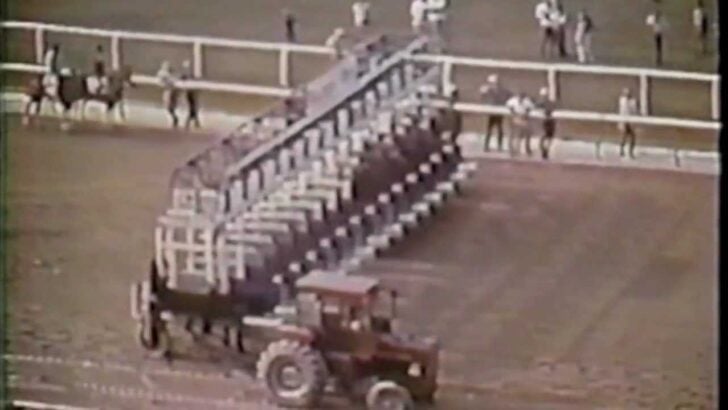
Belmont Park closed for a complete reconstruction in late 2023. The Belmont Stakes moved to Saratoga Race Course for 2024 and 2025, with 2026 being the third and final year at Saratoga before the race returns to a rebuilt Belmont Park in 2027. This venue change matters more than most coverage acknowledges.
The traditional Belmont at 1½ miles was genuinely different — a test of stamina that separated horses with real staying power from those whose speed had simply not been exposed at longer distances. The first turn at old Belmont Park came late, giving wide draws room to find position without burning energy. The long stretch rewarded deep closers. At Saratoga, the race runs 1¼ miles — the same distance as the Kentucky Derby — on a tighter oval with a shorter stretch. The pace is more compressed, the first turn arrives sooner, and a horse that draws outside in a full field has less track to overcome the disadvantage.
The distance difference matters more than it looks: The quarter-mile difference between 1¼ and 1½ miles is not just a distance adjustment — it changes which type of horse wins. At 1¼ miles, a fast but not truly stamina-tested horse can still get home. At 1½ miles, the ones without genuine distance ability get found out between the half-mile and quarter poles. Two years of data at Saratoga show that horses with tactical speed and a stalking style have an advantage the old Belmont Park setup did not give them. Deep closers who need a hot pace and a long run have struggled.
Belmont Stakes Winners — Last 10 Years
The table below covers 2015–2025, separating the traditional Belmont Park runnings (1½ miles) from the Saratoga runnings (1¼ miles) and the shortened 2020 race (1⅛ miles due to COVID scheduling). The patterns in prep path, odds, and post position tell most of the story.
| Year | Winner | Venue / Distance | Trainer | Post | Odds | Prep Path |
|---|---|---|---|---|---|---|
| 2025 | Sovereignty | Saratoga / 1¼ mi | William Mott | 2 | 2.50-1 | Derby winner, skipped Preakness |
| 2024 | Dornoch | Saratoga / 1¼ mi | Danny Gargan | 6 | 15-1 | Ran Derby (10th); skipped Preakness |
| 2023 | Arcangelo | Belmont Park / 1½ mi | Jena Antonucci | 3 | 7.90-1 | Skipped Derby; targeted Belmont |
| 2022 | Mo Donegal | Belmont Park / 1½ mi | Todd Pletcher | 6 | 3.50-1 | Derby 5th; skipped Preakness |
| 2021 | Essential Quality | Belmont Park / 1½ mi | Brad Cox | 2 | 2-1 | Derby 4th; skipped Preakness |
| 2020 | Tiz the Law | Belmont Park / 1⅛ mi* | Barclay Tagg | 3 | 4-5 | Raced as first Triple Crown leg (COVID) |
| 2019 | Sir Winston | Belmont Park / 1½ mi | Mark Casse | 7 | 10-1 | Derby 10th; skipped Preakness |
| 2018 | Justify | Belmont Park / 1½ mi | Bob Baffert | 1 | 3-5 | Triple Crown — Derby and Preakness winner |
| 2017 | Tapwrit | Belmont Park / 1½ mi | Todd Pletcher | 4 | 5-1 | Skipped Derby; targeted Belmont |
| 2016 | Creator | Belmont Park / 1½ mi | Steve Asmussen | 11 | 13-1 | Derby 5th; ran Preakness (3rd) |
| 2015 | American Pharoah | Belmont Park / 1½ mi | Bob Baffert | 5 | 3-5 | Triple Crown — Derby and Preakness winner |
*2020 race run at 1⅛ miles as the first of the three Triple Crown races due to COVID-19 schedule restructuring. Excluded from most pattern analyses.
The Fresh Horse Advantage Has Defined the Modern Belmont
The strongest recent Belmont pattern is straightforward: horses that arrive with less fatigue have a measurable edge. Since the race moved to Saratoga, the shortened 1¼-mile configuration has made that advantage easier to see — the winner needs both fitness and tactical efficiency, not stamina alone. A horse that skipped the Derby, the Preakness, or both has more recovery time and usually arrives sharper than a horse that has already run twice in five weeks. The final fractions tend to expose horses carrying too much spring fatigue, even when their class is comparable.
The Derby-to-Belmont path: Derby winners that skip the Preakness and target the Belmont have been the most successful recent angle. Horse Racing Nation‘s data shows a 13.4% win rate on that path overall. Since 2021, that figure rises to 23.5% — four wins from 17 starters — according to Blood Horse. Sovereignty in 2025 was the clearest example: Derby winner, skipped Preakness, won Belmont by three lengths over Journalism, who had run the full Triple Crown schedule. The physical advantage of those extra three weeks is real and measurable in the final fractions.
The logic is not complicated. A horse that ran the Derby on the first Saturday of May and the Preakness two weeks later arrives at the Belmont having spent three weeks recovering from two Grade 1 efforts while also training toward a third. The 2016 winner Creator is the only horse in the last decade to win after running all three races as a Triple Crown contender, and he was neither the Derby winner nor the Preakness winner — he was a fresh-enough Derby fifth who ran a modest Preakness and came back sharp.
| Prep Path | Winners | Examples |
|---|---|---|
| Skipped Derby entirely, targeted Belmont | 2 of 9 | Arcangelo (2023), Tapwrit (2017) |
| Ran Derby, skipped Preakness — arrived fresher than full TC horses | 4 of 9 | Sovereignty (2025), Dornoch (2024), Mo Donegal (2022), Sir Winston (2019) |
| Ran Derby and Preakness (full Triple Crown attempt) | 3 of 9 | American Pharoah (2015), Justify (2018), Creator (2016) |
6 of 9 competitive Belmonts since 2015 were won by horses that skipped at least one Triple Crown leg. 3 of 9 winners ran all three races — and two of those were American Pharoah and Justify, exceptional horses completing a Triple Crown sweep. Creator (2016) is the only non-Triple Crown winner to have run all three legs and still won the Belmont in this period.
Miles’s Take — The Triple Crown Grind: In 30 years of watching horses come off hard races, I’ve seen how much a Grade 1 effort takes out of a three-year-old. A horse that ran a competitive Kentucky Derby has been asked for everything it has in a 20-horse field at a mile and a quarter. Two weeks later at the Preakness, it runs another mile and three-sixteenths. The horses that win the Belmont after doing all three are exceptions — American Pharoah and Justify were exceptional horses. What I watch for now is the fresh shooter who trained specifically toward the Belmont and arrives with something in reserve that the Triple Crown horses simply don’t have. In recent years, that horse has been on the board at a price far more often than it should be.
Post Position Analysis
Post position matters differently at Saratoga than it did at Belmont Park because the tighter oval makes outside trips more expensive. At Belmont Park, the long run to the first turn gave horses more time to establish position without burning energy; at Saratoga, that margin is smaller, so a clean draw is more valuable and a bad draw is harder to overcome.
At Belmont Park (1½ miles, 2015–2023 traditional distance): The long run to the first turn gave wide draws room to maneuver. Post 1 historically held the all-time record with 24 wins, though that trend had weakened in recent decades — only one winner from Post 1 in the 22 years before Justify’s 2018 win. Posts 3, 5, and 6 produced multiple winners in the modern era. Post 11 was enough for Creator in 2016, showing the long track could absorb a wide draw. The general pattern favored inside to middle — Posts 1 through 7 — with success dropping off sharply beyond that.
At Saratoga (1¼ miles, 2024–2026): The tighter oval changes the calculus. With less straight track before the first bend, a horse breaking from the outside has significantly less time to find a good position without burning energy. The first two Saratoga Belmonts were both won from inside posts — Post 6 for Dornoch in 2024, Post 2 for Sovereignty in 2025. The sample is small, but the structural argument for favoring inside-to-middle draws is stronger at Saratoga than it was at Belmont Park.
| Year | Venue | Winning Post | Winner | Field Size |
|---|---|---|---|---|
| 2025 | Saratoga | 2 | Sovereignty | 5 |
| 2024 | Saratoga | 6 | Dornoch | 10 |
| 2023 | Belmont Park | 3 | Arcangelo | 7 |
| 2022 | Belmont Park | 6 | Mo Donegal | 8 |
| 2021 | Belmont Park | 2 | Essential Quality | 8 |
| 2019 | Belmont Park | 7 | Sir Winston | 10 |
| 2018 | Belmont Park | 1 | Justify | 10 |
| 2017 | Belmont Park | 4 | Tapwrit | 11 |
| 2016 | Belmont Park | 11 | Creator | 11 |
| 2015 | Belmont Park | 5 | American Pharoah | 8 |
Outside posts at Saratoga carry real risk: In the 2024 and 2025 Saratoga Belmonts, no horse starting from Post 7 or wider hit the board. That is a small sample but a structurally consistent result — the tighter track punishes wide draws more than the traditional Belmont Park setup did. A horse with a perfect profile that draws outside at Saratoga requires a meaningful discount in ticket weight.
Running Style — What Wins and What Doesn’t
Running style is one of the clearest ways to separate the Saratoga Belmont from the classic Belmont Park version. At Belmont Park, the long stretch gave deep closers more room to launch a late run. At Saratoga, that margin shrinks — horses sitting closer to the pace have a better chance to stay involved when it matters most. Sovereignty tracked within 3 lengths in 2025 and drove clear in the stretch. Dornoch in 2024 was mid-pack but had a direct, unobstructed trip. The Saratoga Belmont is no longer a deep closer’s race by default — a horse still needs stamina, but position and timing matter more than a late comeback from far back.
At the traditional Belmont Park, the profile was more forgiving of closers — the long stretch and open oval allowed horses to gain a clear run late. Summer Bird (2009), Ruler on Ice (2011), and Da’ Tara (2008) all won as late closers at long prices on the classic track. That closing style is harder to execute at Saratoga.
| Winner | Year | Style | Position at Half-Mile Call |
|---|---|---|---|
| Sovereignty | 2025 | Stalker / presser | 2nd, within 1 length |
| Dornoch | 2024 | Mid-pack | 5th, within 4 lengths in 10-horse field |
| Arcangelo | 2023 | Stalker | 3rd, within 2 lengths |
| Mo Donegal | 2022 | Presser / stalker | 2nd, within 1 length |
| Essential Quality | 2021 | Presser | 2nd, within 1 length |
| Sir Winston | 2019 | Mid-pack | 5th in 10-horse field |
| Justify | 2018 | Presser / front | 1st through most of race |
| Tapwrit | 2017 | Closer | 5th in 11-horse field |
| American Pharoah | 2015 | Presser / front | 1st or 2nd throughout |
The pattern that emerges is consistent with the broader Belmont Stakes winning profile: the winner either led or tracked within 4 lengths through the critical early fractions. In smaller fields — which is typical at the Belmont — the pace scenario becomes even more important. A field of five or six horses running a moderate pace benefits the horse with tactical speed over the horse waiting last. For how to apply pace analysis to the current field, see the Belmont Stakes betting strategy guide.
Trainer and Jockey Patterns
The Belmont is not a race where the trainer and jockey angles are as decisive as they are in, say, a sprint at a specific track. But the historical distribution of wins is skewed heavily toward a small group of elite trainers, and that pattern has accelerated in the modern era of concentrated ownership.
| Trainer | Wins (2000–2025) | Notable Winners |
|---|---|---|
| Todd Pletcher | 4 | Rags to Riches (2007), Palace Malice (2013), Tapwrit (2017), Mo Donegal (2022) |
| Bob Baffert | 3 | Point Given (2001), Justify (2018), American Pharoah (2015) |
| William Mott | 2 | Drosselmeyer (2010), Sovereignty (2025) |
| Brad Cox | 1 | Essential Quality (2021) |
| Chad Brown | 0 wins, multiple top-3 finishes | Consistent threat in recent years |
The Pletcher factor: Todd Pletcher has entered more Belmont horses than any trainer in the modern era and has won it four times. His horses routinely fit the stalker profile — well-prepared, tactically versatile, and often arriving off a targeted prep rather than a full Triple Crown grind. When Pletcher has a horse whose prep path matches the fresh-horse profile and whose post position is favorable, that combination deserves serious weight regardless of the odds.
On the jockey side, the pattern is less concentrated than the trainer data. Luis Saez, Irad Ortiz Jr., Junior Alvarado, and Flavien Prat have all been aboard recent winners. The common thread is not a single rider but rather the combination of an elite jockey on a horse with a favorable post and a clear pace scenario. At the Saratoga Belmont specifically, the jockey’s ability to find position early without using the horse is critical — the shorter stretch leaves less room for a late correction.
Pace Scenarios — How the Race Sets Up
The pace scenario at the Belmont Stakes has historically been more moderate than at the Derby or Preakness. Fields are typically smaller — often 8 to 11 horses — with fewer speed horses and more tactically versatile runners. That moderate pace has historically benefited pressers and stalkers over front-runners and deep closers.
Both Saratoga Belmonts ran at moderate tempos — approximately 46–47 seconds at the half-mile — which benefited horses tracking near the lead rather than those waiting off a fast pace. That is the expected pattern given smaller fields and the distance, and it reinforces the running-style argument in the section above.
What to watch in the early fractions: If the opening half-mile runs 47 seconds or slower, the pace setup strongly favors any horse tracking in the first three. If the pace is faster — mid-46s or below — a closer with a clear run has a better chance than the historical pattern suggests. The number of pace horses in the field is the first thing to assess after the post draw. A field of three or fewer pace horses typically means a moderate pace that benefits tactical runners. A field with four or five horses likely to contest the lead means a faster pace and a potential closing bias.
How to Apply This Profile Each Year
The profile described in this article applies to every Belmont, not just a single year. The specific horses change annually, but the questions to answer remain the same: Which contenders skipped the Derby or Preakness, arriving fresher than horses that ran the full sequence? What post did they draw — inside, middle, or outside? Does their running style match the pressing and stalking pattern that wins this race? Who is the trainer and does that connection have a record of targeting this specific race?
In recent years, the field composition has tended to fall into three groups: horses attempting a Triple Crown sweep after winning both the Derby and the Preakness; horses that ran the Derby and skipped the Preakness specifically to target the Belmont; and fresh shooters that bypassed both earlier legs entirely. The first group wins when the horse is exceptional. The second and third groups have won more often, particularly when the public over-focuses on the Triple Crown narrative and underprices the fresh horse’s physical advantage.
Miles’s Take — How I Apply This Profile: Each year before the Belmont, I run the same checklist. First, which horses are arriving off just one leg — or none — of the Triple Crown? Second, where did they draw, and does that post support their running style? Third, is there an elite trainer behind them who has won this race before? If those three answers point at the same horse, and that horse is available at a price that reflects the public’s over-focus on the Triple Crown favorite, that is where my ticket starts. The market consistently underweights freshness because the Derby and Preakness narrative dominates the conversation for five weeks. That gap is where the value lives almost every year.
For the current year’s contenders, post positions, and picks applying this framework to the specific field, see the 2026 Belmont Stakes contenders and analysis. For the pace and betting strategy framework applied to the current field, see the Belmont Stakes betting strategy guide.
Belmont Angles That Are Overrated
Most Belmont preview coverage repeats the same angles every year. Some are genuinely useful. Others sound analytical but have weak predictive value in the modern race setup.
Four things that matter less than coverage suggests:
- Workout bullet hype — a sharp five-furlong move in the final week is routine preparation; it reflects a horse is doing well but does not differentiate one contender from another at this level. Almost every Belmont entrant drills well before the race
- Speed figures from a collapse pace — a horse that ran a gaudy number because the pace fell apart in a prep race has not proven it can replicate that figure in a legitimate Grade 1 competition; Derby figures especially are pace-inflated in some years
- Stamina pedigree emphasis at Saratoga’s distance — at 1½ miles, deep staying bloodlines were a meaningful angle; at 1¼ miles, the race is much closer to a Derby distance test; a horse bred to stay two miles does not have an inherent advantage over a horse bred for a mile and a quarter at Saratoga
- Triple Crown fatigue narratives without pace context — the fatigue argument is real, but it matters more when the pace was honest and less when the Derby and Preakness were run at comfortable fractions; a horse that had easy trips in both prior races may arrive physically closer to the fresh shooters than the narrative suggests
FAQs: Belmont Stakes Winning Profile
What is the winning profile for the Belmont Stakes?
The Belmont Stakes winning profile in recent years centers on three factors: freshness (horses that skipped the Derby, Preakness, or both win more often than horses running all three), post position (inside-to-middle posts have the best record, especially at Saratoga’s tighter oval), and running style (pressers and stalkers within 4 lengths of the lead at the half-mile call have won the last several editions). Favorites win less often than in any other Triple Crown race — only 3 favorites have won in the last decade.
Do fresh horses really have an advantage in the Belmont Stakes?
Yes, and the data is clear. Of the nine competitive Belmont Stakes from 2015 to 2025, six were won by horses that did not run the full Derby-Preakness-Belmont sequence. The Derby-to-Belmont path — skipping the Preakness specifically — has a 23.5% win rate since 2021 according to Blood Horse. The physical toll of running two Grade 1 races in five weeks is measurable in final fractions, and horses arriving fresh consistently outperform their odds.
What post position wins the Belmont Stakes most often?
Historically, Post 1 holds the all-time record with 24 wins since 1905, though that advantage weakened in recent decades. Posts 3, 5, and 6 have produced the most winners in the modern era. At Saratoga (2024–2025), Post 2 and Post 6 won. The key principle is that inside-to-middle posts (1–7) hold a meaningful advantage over outside posts, which becomes more pronounced at Saratoga’s tighter oval than it was at the traditional Belmont Park.
How is the Belmont Stakes different at Saratoga vs Belmont Park?
The race at Saratoga runs 1¼ miles — the same distance as the Kentucky Derby — rather than the traditional 1½ miles at Belmont Park. The shorter distance means less stamina is required, pace is more compressed, and deep closers have less room to make up ground. The first turn arrives sooner, making wide post draws more costly. The Saratoga Belmont is a different test than the classic version and rewards tactical speed more than pure staying power.
Which trainers win the Belmont Stakes most often?
Todd Pletcher leads active trainers with 4 Belmont wins (2007, 2013, 2017, 2022). Bob Baffert has 3 wins (2001, 2015, 2018). William Mott has 2 wins including Sovereignty in 2025. Brad Cox won with Essential Quality in 2021. These four trainers have combined for the majority of wins in the last 25 years and their horses consistently fit the stalker or presser profile that the race rewards.
Do favorites win the Belmont Stakes?
Less often than bettors expect. Only 3 favorites have won in the last decade: American Pharoah (2015, 3-5), Justify (2018, 3-5), and Mo Donegal (2022, 3.50-1). Every other year since 2015, a price horse has won. Dornoch won at 15-1 in 2024. Creator won at 13-1 in 2016. Sir Winston won at 10-1 in 2019. The Belmont has historically been the Triple Crown race most likely to produce an upset, in part because fresh horses targeting this specific race often go off at prices that don’t fully reflect their physical advantage.
What running style wins the Belmont Stakes?
Pressers and stalkers — horses that track within 3 to 4 lengths of the lead through the first half-mile — have the strongest record in recent editions. This is especially true at the Saratoga Belmont, where the tighter oval and shorter stretch limit the room available for deep closers to mount a late charge. Front-runners have won when the pace scenario sets up favorably (Justify, American Pharoah), but pure deep closers have struggled at Saratoga specifically.
Should I use the Triple Crown winner as the Belmont favorite?
Only if the horse is genuinely exceptional. Of the two most recent Triple Crown attempts, American Pharoah and Justify were correctly installed as heavy favorites and both won easily. But between 2015 and 2025, only those two horses completed the Triple Crown — meaning 8 of 10 years, the horse that won the Derby and Preakness did not also win the Belmont. The physical toll of the Triple Crown schedule is the primary reason. Historically, fresh horses beat tired favorites in this race more often than the market prices in.
Why does the Belmont Stakes produce so many upsets?
The Belmont produces more upsets than the Derby or Preakness because fresh horses regularly face tired Triple Crown favorites, and the public systematically underprices that physical advantage. Smaller fields and moderate pace scenarios also create more tactical variability than bettors typically account for. Since 2015, only 3 favorites have won — making the Belmont the most reliable race in the Triple Crown for finding value at double-digit odds.
Key Takeaways: Belmont Stakes Winning Profile
- Fresh horses win this race — 6 of 9 competitive Belmonts since 2015 were won by horses that skipped at least one Triple Crown leg; 4 of those 6 ran the Derby then skipped the Preakness, arriving fresher than full Triple Crown horses
- Favorites get beaten more here than anywhere else — only 3 favorites won in the last decade; price horses win regularly and should not be dismissed
- Inside-to-middle posts are the target — Posts 1–7 account for the vast majority of winners; at Saratoga specifically, outside posts have struggled across both 2024 and 2025
- Pressers and stalkers, not deep closers — horses tracking within 4 lengths at the half-mile call have won consistently; the Saratoga oval makes deep closing harder than the traditional Belmont Park setup allowed
- Elite trainers dominate — Pletcher (4 wins), Baffert (3), Mott (2), Cox (1) account for most of the modern era; when these trainers have a horse with a favorable prep path, it warrants serious consideration regardless of odds
- Apply the checklist each year — which horses skipped at least one leg? What post did they draw? Does their running style match the stalking/pressing pattern? That framework has identified value in 6 of the last 9 Belmonts
The Kentucky Derby tells you whether a horse is brilliant. The Preakness tells you whether that brilliance can endure. The Belmont tells you whether the horse — and the connections behind it — were smart enough to arrive with something left.
About Miles Henry
Racehorse Owner & Author | 30+ Years in Thoroughbred Racing
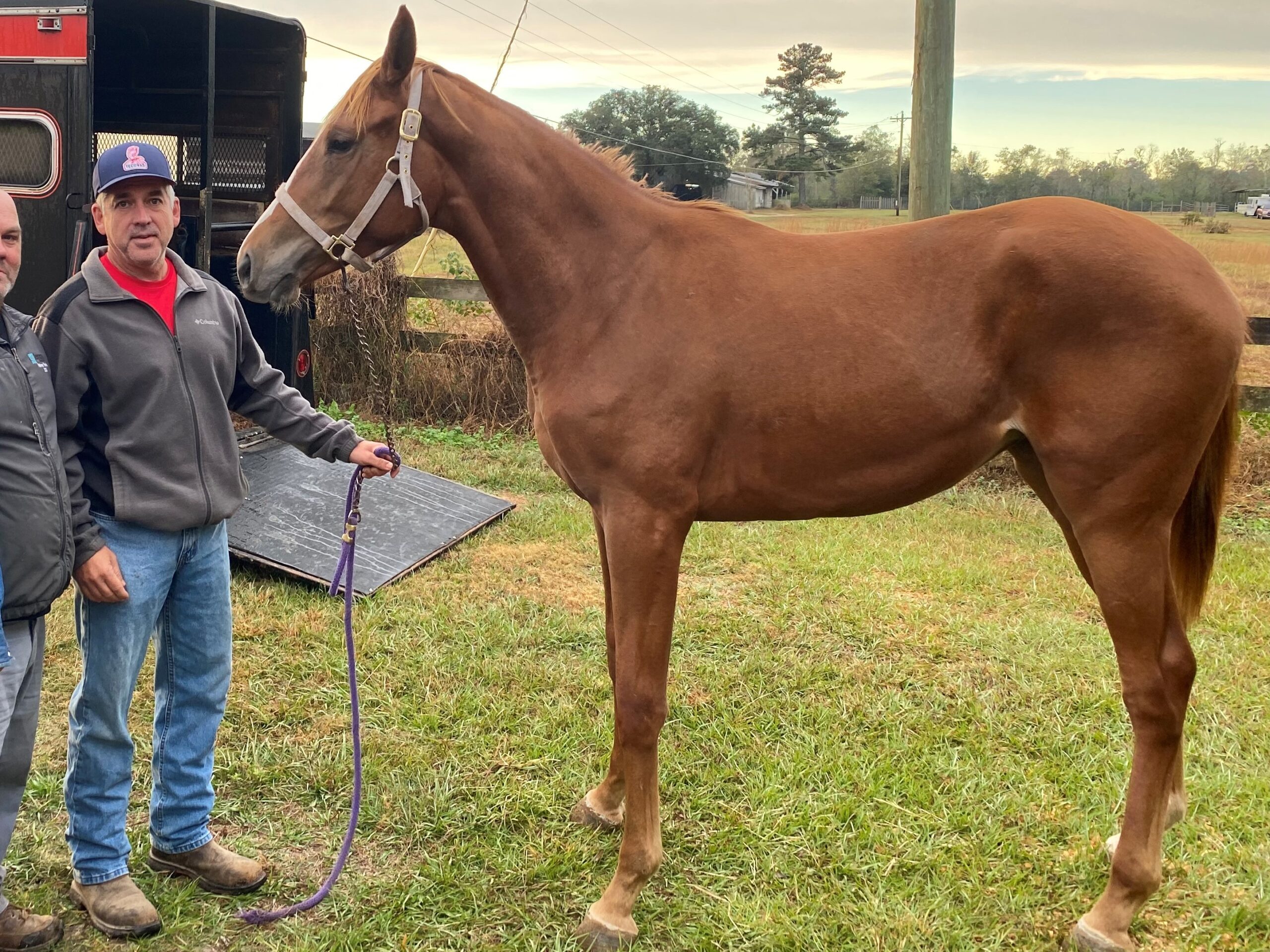
Miles Henry (legal name: William Bradley) is a professional horseman based in Folsom, Louisiana. He holds Louisiana Racing License #67012 and has spent over three decades managing Thoroughbreds at premier tracks including Fair Grounds, Delta Downs, and Evangeline Downs.
Expertise & Hands-On Experience: Beyond the track, Miles has decades of experience in specialized equine care, covering everything from hoof health and nutrition to training protocols for Quarter Horses, Friesians, and Paints. Every guide on Horse Racing Sense is rooted in this “boots-on-the-ground” perspective.
30 of their last 90 starts
Equibase Profile.

Connect with Miles: