
Last updated: June 1, 2026
Early betting outlook: Morning-line favorite Iron Honor headlines a tightly packed field, but Laurel Park’s tighter first turn and longer stretch may favor tactical runners like Taj Mahal and Chip Honcho, while Talkin (20-1) stands out as the strongest value play on the board.
This 2026 Preakness Stakes handicapping guide covers everything you need to bet the 151st running of the race — the full field, post positions, pace analysis, and my top picks. Morning-line favorite Iron Honor (9-2) leads a full field of 14, while Incredibolt (5-1), Taj Mahal (5-1), and Chip Honcho (5-1) headline one of the most wide-open fields in recent memory. Talkin (20-1) is the strongest value play on the board, drawing Irad Ortiz Jr. from a favorable Post 5.
With Kentucky Derby winner Golden Tempo skipping the race and the historic move to Laurel Park due to Pimlico renovations, this year’s Preakness shapes up very differently. Laurel’s shorter run to the first turn and wider racing surface place a much greater premium on tactical speed, positioning, and trip management than bettors typically see at Pimlico — key factors behind my 4-Point Filter approach to this race.
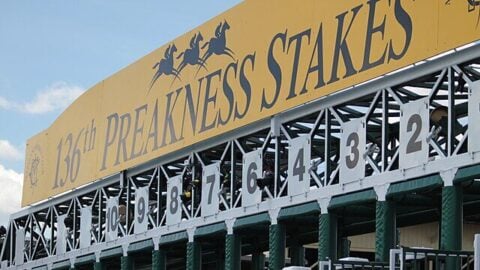
2026 Preakness Stakes — race essentials: Saturday, May 16 at Laurel Park, Maryland. 151st running of the Middle Jewel of the Triple Crown. Post time approximately 6:50 PM ET. NBC broadcast from 4:00–7:30 PM ET; Peacock and NBCSN coverage from 1:00 PM ET. $2 million purse, Grade 1, 1 3/16 miles. First time at Laurel Park after 108 consecutive years at Pimlico.
The handicapping read in one sentence: This race belongs to the horse that fits Laurel Park specifically — not the horse that looked best at Churchill Downs two weeks ago.
About this guide: Written by Miles Henry, Louisiana racehorse owner with 30 years of experience at Fair Grounds, Evangeline Downs, and Delta Downs. I have covered every Preakness since the mid-1990s and have a specific interest in pace handicapping and trainer intent. For full post-position history, winning profiles, and how the Preakness sets up differently from the Derby, see my Preakness Stakes winning profile guide.
Table of Contents
2026 Preakness Stakes Full Field and Post Positions
Here is the complete 14-horse field as drawn on May 11, 2026, with morning line odds and assigned jockeys.
| Post | Horse | ML Odds | Jockey | Quick Note |
|---|---|---|---|---|
| 1 | Taj Mahal | 5-1 | Sheldon Russell | Tesio winner; 3-for-3 at Laurel; Brittany Russell trainer |
| 2 | Ocelli | 6-1 | TBD | Still a maiden; big late kick in Derby preps |
| 3 | Crupper | 30-1 | Junior Alvarado | Won Bath House Row; likely over his head here |
| 4 | Robusta | 30-1 | TBD | Derby runner who didn’t fire; pass |
| 5 | Talkin | 20-1 | Irad Ortiz Jr. | Best price in the field; 3rd in Bluegrass; should be 6-1 to 8-1 |
| 6 | Chip Honcho | 5-1 | Jose Ortiz | Post 6 is statistically the best in Preakness history; Jose won Derby |
| 7 | The Hell We Did | 15-1 | Luis Saez | Limited form at this level |
| 8 | Bull by the Horns | 30-1 | Micah Husbands | Scratched from Peter Pan to run here |
| 9 | Iron Honor | 9-2 | Flavien Prat | ML favorite; 7th in Wood Memorial; no two-turn win or placing |
| 10 | Napoleon Solo | 8-1 | Paco Lopez | Grade 1 winner as 2YO; finished ahead of Iron Honor in Wood |
| 11 | Corona De Oro | 30-1 | John Velazquez | Insufficient form at this level |
| 12 | Incredibolt | 5-1 | Jaime Torres | Only horse in field with graded stakes win at two turns |
| 13 | Great White | 15-1 | Alex Achard | Scratched from Derby after gate incident; breezed fine since |
| 14 | Pretty Boy Maya | 15-1 | Ricardo Santana Jr. | Post 14 has produced zero Preakness winners in race history |
Why Golden Tempo’s Absence Changes Everything
In most years the Kentucky Derby winner enters the Preakness as the clear favorite and anchors the morning line at 2-1 or shorter. That is not the case in 2026. Golden Tempo — trained by Cherie DeVaux and widely considered the best 3-year-old in training — bypassed the Preakness entirely, pointed straight to the Belmont. Crude Velocity was scratched by Bob Baffert on Friday. Silent Tactic, a Mark Casse-trained colt who drew significant pre-entry buzz, never entered because of a persistent foot bruise.
Three of the most prominent names pointing toward this race are not in it. That explains why the morning line maker clustered multiple horses at 5-1 and had to install Iron Honor — a horse off a seventh-place finish with no two-turn win — as the chalk at 9-2. This is a legitimately wide-open field, and the value opportunities throughout it are real.
There is a historical footnote here that most national outlets are missing. In 1917, Laurel Park hosted a defining match race between Omar Khayyam (that year’s Kentucky Derby winner) and Hourless (the Belmont winner). Because the Preakness and Derby were run on the same day that year, the Triple Crown never settled which horse was best — so they came to Laurel Park as neutral ground. In 2026, Laurel is again the place where the three-year-old division gets sorted when the normal schedule fails. It is not a temporary detour. It is a return to form. (Laurel Park history). For how trainer intent and prep paths have historically shaped Preakness outcomes, see my Preakness winning profile analysis.
Miles’s 4-Point Filter
I rely on a 4-Point Filter to handicap major races. It does not replace pace analysis or form study — it is the lens I use to sort horses before I go deeper. Every point is a genuine question, not a box-checking exercise.
The 4-Point Filter — applied to this field:
- Fitness: Did the horse run within the last 21 days and show something? Favors Incredibolt and Ocelli as Derby returners. Favors Talkin off the Bluegrass. Hurts Iron Honor, who has had time but showed nothing in his last run.
- Surface and distance: Has the horse won or placed at 1 3/16 miles or further? Incredibolt is the only horse in this field with a graded stakes win at two turns — a significant distinction. Taj Mahal’s Tesio win was at 1 1/8 miles.
- Trainer intent: Is this a deliberate target or a “ship and hope”? Chip Honcho skipped the Derby specifically to point here. Chad Brown freshened Iron Honor for this spot. Brittany Russell has been training Taj Mahal at Laurel all year. All three pass this test.
- Value: Is the morning line price higher than the horse’s actual talent level suggests? Napoleon Solo at 8-1 versus Iron Honor at 9-2 — when Napoleon Solo finished ahead of Iron Honor — is the most obvious overlay in the field. Talkin at 20-1 is the most extreme value opportunity.
Miles’s Take — What This Filter Tells Me: Running the 4-Point Filter on this field, two horses clear all four points: Chip Honcho and Incredibolt. Napoleon Solo clears three. Taj Mahal clears three. Those four are where my money is concentrated. Iron Honor clears two — trainer intent and jockey — and fails on fitness and distance. At 9-2, that is not a price I want.
Top Contenders to Win
Taj Mahal (Post 1, 5-1) — The Three-Layer Home Advantage
This is the storyline most national analysts are undervaluing. Taj Mahal is 3-for-3 lifetime — all three wins at Laurel Park. He trains at Laurel. He is trained by Brittany Russell, who has been the dominant trainer at this circuit for three consecutive years. And he is the only horse in this field ridden by a jockey who rides Laurel regularly — Sheldon Russell is the local king here. In contrast, Flavien Prat, Jose Ortiz, Irad Ortiz Jr., Luis Saez, and Paco Lopez have ridden at Laurel rarely, if ever.
That is three layers of home advantage that no other horse in this field can match. He does not need to ship. He does not need to learn the track. His trainer knows every quirk of this oval. This is not a contrarian pick — national handicappers who have hit the last two Preakness trifectas are landing on the same angle.
There is one more angle that most national handicappers have not connected: a Maryland-bred horse has not won the Preakness since Deputed Testimony in 1983 — a 43-year drought on their home track. Now that the race has moved to Laurel Park, the literal home of Maryland racing, Taj Mahal is not just a local hope. He represents the best opportunity Maryland has had in nearly half a century to break that drought, in a year when the home track has never mattered more.
The historical hurdle is real — only one horse in 42 years has won the Preakness off the Tesio — but at 5-1 in a field this wide open, with three distinct layers of home advantage and a shot at ending a 43-year Maryland drought, Taj Mahal is my top selection.
Incredibolt (Post 12, 5-1) — The Two-Turn Edge
Incredibolt is the only horse in this field with a graded stakes win at two turns. He ran a gutsy sixth in the Kentucky Derby and is the most likely horse to be bet down close to favoritism by post time. There is a secondary angle worth noting: Ocelli (Post 2, 6-1) ran past Incredibolt in a previous race before getting caught late. If Incredibolt improves off his Derby effort — which is common for horses who benefit from the conditioning of a Derby run — the rematch goes differently. Post 12 is the only concern. Outside of Post 8, post position data for the Preakness at Pimlico historically becomes less predictive once you’re in the 9-14 range — but Laurel’s wider track may partially offset that.
Chip Honcho (Post 6, 5-1) — Best Post in the Race
Post 6 is the most successful gate in Preakness history at Pimlico — 17 winners, a win rate of approximately 14.9%. This year’s race is at Laurel, so treat this as directional rather than definitive. Chip Honcho drew it. Jose Ortiz, who won the Kentucky Derby, is back on him here — Jose knows this horse well from Fair Grounds, a circuit I follow closely, and they have shown real chemistry when Chip Honcho is at his best. The concern is pace: with Talkin (5) and possibly Taj Mahal (1) also wanting to be near the front, Chip Honcho could get into a contested pace battle. If Jose can rate him off the speed and put him into a stalking position through the first turn, the setup is ideal.
Napoleon Solo (Post 10, 8-1) — The Logical Overlay
Napoleon Solo finished ahead of Iron Honor in the Wood Memorial. Iron Honor is 9-2. Napoleon Solo is 8-1. That relationship does not make sense, and the morning line confirms it — the Racing Dudes host noted the same disconnect live at the draw. Napoleon Solo owns a Grade 1 win as a two-year-old in the Champagne Stakes and has legitimate class. The fair point against him: he has not replicated that Champagne form at three, broke poorly in the Fountain of Youth, and went too fast in the Wood. Those are real concerns. But at 8-1, you are getting paid to take the risk, and I think he goes off lower than that by post time.
Talkin (Post 5, 20-1) — The Value Play
This price feels several points too high. Talkin came off a third in the Grade 1 Blue Grass Stakes and is trained by Danny Gargan, who pointed this horse deliberately at the Preakness rather than the Derby — that is exactly the trainer intent signal my 4-Point Filter rewards. He drew Post 5 with Irad Ortiz Jr. in the irons and is sitting at 20-1.
Horses to Eliminate
Pass list — reasons to eliminate:
- Iron Honor (9, 9-2): Morning line favorite with no two-turn win or placing, seventh in the Wood Memorial, and a 9-2 price that makes no sense given Napoleon Solo is 8-1. Chad Brown and Flavien Prat are the only things recommending him. Use underneath in exotics, not on top.
- Crupper (3, 30-1): Won the Bath House Row with heart, but is over his head at this level. Price is appropriate.
- Robusta (4, 30-1): Kentucky Derby runner who did not fire at Churchill. Pass.
- Bull by the Horns (8, 30-1): Scratched from the Peter Pan to run here. Connections believe in him but the price reflects reality.
- Corona De Oro (11, 30-1): Insufficient form at this level. John Velazquez is aboard — he won the 2023 Preakness with National Treasure — but this horse is not that horse.
- Great White (13, 15-1): Trainer breezed him after the Derby gate incident and he reportedly came back fine. But Post 13 and the gate question add enough uncertainty that I want him underneath at longshot prices rather than on top.
- Pretty Boy Maya (14, 15-1): Post 14 has produced zero Preakness winners in the history of the starting gate. Hard pass as a win bet.
- Ocelli (2, 6-1): The maiden angle is fascinating — the last maiden to win the Preakness was 1888 — but at 6-1 you are not getting value for a horse that has never won a race. He showed a big late kick in Derby preps and if this race turns into a complete pace meltdown he could shock. Underneath only.
Pace Scenario and Trip Analysis
This race has early speed. Talkin (5), Chip Honcho (6), and Taj Mahal (1) all want to be near the front through the first turn. If those three engage in a contested early pace, the race will set up for the deep closers — Incredibolt and Napoleon Solo are the most likely beneficiaries of a pace collapse. Both horses have shown the ability to pass tired rivals late.
The Laurel Park track profile is critical context this year. Laurel’s dirt track is 95 feet wide versus Pimlico’s 70 feet — 25 feet of additional width that gives horses more room to maneuver and reduces the rail advantage that historically shapes Preakness trips. More significantly, Laurel’s stretch from the final turn to the finish line is 1,419 feet — versus Pimlico’s 1,152 feet — a difference of 267 feet (Maryland Jockey Club Media Guide). That is a dramatically longer run home, which gives closers meaningful additional ground to build momentum. Pure speed horses who press hard early historically fade in the Preakness, and that tendency may be even more pronounced on Laurel’s longer stretch.
Watch the early fractions. If the opening quarter is in the 22s and the half in the 46s, the pace will likely collapse and favor Incredibolt and Napoleon Solo. If the pace is more moderate — mid-47s at the half — Taj Mahal’s stalking style and Chip Honcho’s forward position become more dangerous. For how pace has historically shaped Preakness outcomes, see my Preakness winning profile.
Historical Hurdles Worth Knowing
The data points that matter for this field:
- The Tesio Trap (Taj Mahal): Only one horse in 42 years — Deputed Testimony in 1983 — has won both the Federico Tesio Stakes and the Preakness. Taj Mahal is attempting to be the second. The sample is small and the home track context this year is different from any previous Tesio-to-Preakness attempt, but the historical headwind is real.
- The Maiden Curse (Ocelli): The last maiden to win the Preakness was in 1888 — over 130 years ago. Ocelli is still looking for his first win. You cannot seriously make him a win bet at 6-1 given that history, but his late kick means he is worth a small exotic play if you like the chaos scenario.
- Post 6 Historical Record: Post 6 is the most successful gate in Preakness history — 17 winners and a 14.9% win rate. Chip Honcho drew it. Posts 4 through 7 collectively represent the statistically favored zone. Post 14 has produced zero winners since the starting gate was introduced.
- The Female Trainer Milestone (Taj Mahal): Brittany Russell has a chance to become the first female trainer to win back-to-back Triple Crown legs. With Cherie DeVaux pointing Golden Tempo toward the Belmont, a Russell win here would set up a compelling story heading into the third jewel.
My 2026 Preakness Stakes Picks
My 2026 Preakness picks — based on the 4-Point Filter, pace analysis, and post position data:
- Win: Taj Mahal (1, 5-1) — Three layers of home advantage, ideal post position, improving form, and a trainer who knows every inch of this track. My top selection if the pace is honest and the rail is not a problem.
- Win alternate: Chip Honcho (6, 5-1) — Post 6 historical edge, Jose Ortiz, and a deliberate Derby skip to target this race specifically. If Taj Mahal gets traffic on the rail, Chip Honcho is my first alternate.
- Place: Incredibolt (12, 5-1) — Most likely to be bet down to favoritism by post time; use him in all multi-race wagers. Only horse with a graded two-turn win.
- Value/exotic play: Talkin (5, 20-1) — Best price in the field for the talent level. Irad Ortiz Jr. on a horse I would have made 6-1 to 8-1. Strong for exactas, trifectas, and superfectas.
- Trifecta key: 1 or 6 on top / 12, 10, 5 in the middle / 1, 6, 12, 10, 9 on the bottom
- Longshot to watch: Napoleon Solo (10, 8-1) — More logical than his stablemate Iron Honor at half the morning line price. Grade 1 winner with late kick; beat Iron Honor already.
- Underneath only: Iron Honor (9, 9-2) — Chad Brown and Flavien Prat demand respect, but this price is too short for a horse with no two-turn form. Use in exotics, not as a win bet.
Miles’s Final Read: This is the kind of race I have seen dozens of times — no clear superstar, a morning line that raises more questions than it answers, and at least five horses with a legitimate shot. That is the ideal scenario for a handicapper who does the homework. The home track angle for Taj Mahal is the strongest logical thread in the race. The value angle for Talkin is the best pure price. Stick to the form, trust the pace setup, and do not let the historical novelty angles override what the numbers say.
I will update this article with any late scratches and final odds before Saturday’s first post. For my previous handicapping on this year’s Triple Crown, see my Kentucky Derby final contenders breakdown and my pre-draw Preakness contenders article.

Frequently Asked Questions About Preakness Stakes Picks 2026
Who is the favorite for the 2026 Preakness Stakes?
Iron Honor (Post 9) is the morning line favorite at 9-2, trained by Chad Brown and ridden by Flavien Prat. However, many handicappers expect Incredibolt (Post 12, 5-1) to take the most money by post time — he is the only horse in the field with a graded stakes win at two turns and is coming off a creditable Kentucky Derby effort.
Why is the 2026 Preakness at Laurel Park instead of Pimlico?
Pimlico Race Course in Baltimore is undergoing a major reconstruction project. The 2026 Preakness is being run at Laurel Park, approximately 30 miles away in Laurel, Maryland, while Pimlico is renovated. The race is scheduled to return to the rebuilt Pimlico in 2027. Laurel’s wider 95-foot dirt track and longer final stretch make it a meaningfully different race course from the Pimlico oval where the Preakness has been run for 108 consecutive years.
What post position wins the most in the Preakness Stakes?
Post 6 is the most successful starting gate in Preakness history at Pimlico, producing 17 winners at approximately a 14.9% win rate. Note that this year’s race is at Laurel Park for the first time, so all post position data is based on Pimlico’s track configuration. Posts 4 through 7 collectively represent the statistically favored zone. Post 14 has produced zero Preakness winners since the starting gate was introduced — a hard negative for Pretty Boy Maya. For a complete post position breakdown and winning profiles, see the Preakness Stakes winning profile guide.
Why did Golden Tempo skip the 2026 Preakness?
Golden Tempo’s trainer Cherie DeVaux decided to bypass the Preakness and point the Kentucky Derby winner directly toward the Belmont Stakes. The two-week turnaround between the Derby and Preakness is considered by many modern trainers to be too short for a horse that ran a hard race at Churchill Downs. Golden Tempo is expected to be the Belmont favorite.
Can a maiden win the Preakness Stakes?
It is extremely rare. The last maiden to win the Preakness was in 1888 — over 130 years ago. Ocelli (Post 2) enters the 2026 Preakness as a maiden, which is a significant historical headwind. His late-running style gives him a chance in a pace-collapse scenario, but at 6-1 the price does not compensate for the degree of difficulty.
Gambling disclaimer: Horse racing wagering involves significant financial risk. All picks are for informational and entertainment purposes only. Past performance does not guarantee future results. Please wager responsibly. If you or someone you know has a gambling problem, call 1-800-GAMBLER.
About Miles Henry
Racehorse Owner & Author | 30+ Years in Thoroughbred Racing
Miles Henry (legal name: William Bradley) is a professional horseman based in Folsom, Louisiana. He holds Louisiana Racing License #67012 and has spent over three decades managing Thoroughbreds at premier tracks including Fair Grounds, Delta Downs, and Evangeline Downs.
Expertise & Hands-On Experience: Beyond the track, Miles has decades of experience in specialized equine care, covering everything from hoof health and nutrition to training protocols for Quarter Horses, Friesians, and Paints. Every guide on Horse Racing Sense is rooted in this “boots-on-the-ground” perspective.
30 of their last 90 starts
Equibase Profile.

Connect with Miles: