Last updated: October 7, 2026
Any links on this page that lead to products on Amazon are affiliate links and I earn a commission if you make a purchase. Thanks in advance – I really appreciate it!
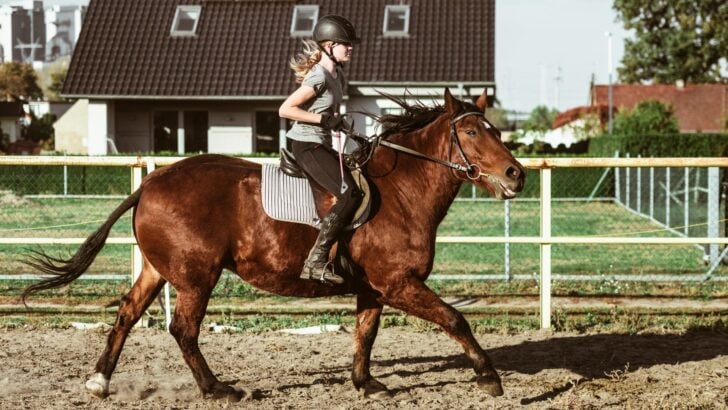
Wondering what to wear horseback riding? Whether you’ve booked your first lesson, planned a vacation trail ride, or entered a show, start with safety and comfort. The safety basics are the same for English and Western riding, but everyday outfits and show attire differ.
Here’s what I’d wear for everyday riding, how English and Western clothes differ, what changes when you’re showing, and what I’d leave at home.
Table of Contents
What to Wear Horseback Riding: The Basics
Start with a properly fitted equestrian helmet that meets the current ASTM F1163 standard and carries the appropriate safety certification. In the U.S., that’s usually SEI, and the SEI seal and manufacture date are under the liner inside the helmet. Don’t substitute a bike helmet. Replace a riding helmet after a significant impact, even if it looks fine afterward.
Then look at your boots. You want a defined heel and a smooth or lightly treaded sole, because the heel helps keep your foot from sliding through the stirrup and the sole should let it come back out easily. Your boot also needs some room in the stirrup so it can’t get wedged, which is something the British Horse Society’s footwear advice stresses, too. You don’t need a fancy pair of riding boots for your first lesson, but I wouldn’t get on a horse in sneakers.
Wear long pants that fit close without binding. Loose pants bunch up under your knees, and heavy inside seams can rub you raw after an hour in the saddle. A fitted shirt beats anything baggy.
Dress for the weather, but keep the same basic rules. In the heat, a lightweight, moisture-wicking shirt and breeches or riding tights work well. When it’s cold, layer up instead of throwing on a bulky coat that restricts your arms or flaps around the horse. Gloves help with grip on the reins in heat, rain, or cold.
If you’re headed to your first riding lesson, ask the barn what footwear they accept, whether they provide a helmet, and what other riding safety gear you’ll need before you buy anything. You don’t need a full show outfit to get started.
English vs. Western Riding Clothes
The differences between English and Western riding show up in the clothes just as much as they do in the tack:
| Item | English | Western |
|---|---|---|
| Headgear | Riding helmet | Riding helmet recommended; a cowboy hat isn’t protective |
| Pants | Breeches, jodhpurs, or riding tights | Riding jeans; chaps for some disciplines |
| Boots | Tall boots, or paddock boots with half chaps | Cowboy or roper-style riding boots |
| Shirt | Fitted shirt or riding top | Long-sleeved Western or riding shirt |
| Show attire | Depends on discipline | Depends on class and organization |
English Riding Attire
For everyday schooling, most English riders wear breeches or riding tights, a fitted shirt, gloves, and either tall boots or paddock boots with half chaps. Breeches stop at the calf so they fit inside tall boots, and they have grip patches on the knees or across the full seat. Jodhpurs run to the ankle and go over paddock boots, often with straps under the boot, which is why you see them on so many kids. Knee-high boot socks under tall boots keep them from rubbing.
If you’re just taking lessons, don’t feel like you need to dress for the show ring. With your helmet, a pair of riding pants, paddock boots, and a fitted shirt are enough for most lessons.
Show attire depends on the discipline. In the hunter ring, the traditional look is a navy, dark green, or black coat, a white collared show shirt, beige or tan breeches, polished tall boots, gloves, and a certified helmet, as Dover Saddlery’s hunter attire guide lays out.
Dressage attire depends on the level and the competition. At USEF-licensed shows, riders generally wear a riding jacket, a show shirt with a tie, choker, stock tie, or stand-up collar, breeches, and riding boots. Through Fourth Level, paddock boots with matching smooth leather or leather-like half chaps are allowed. Check the current USEF dressage attire rules before you compete. A certified helmet is required any time you’re mounted on the show grounds.
Western Riding Clothes
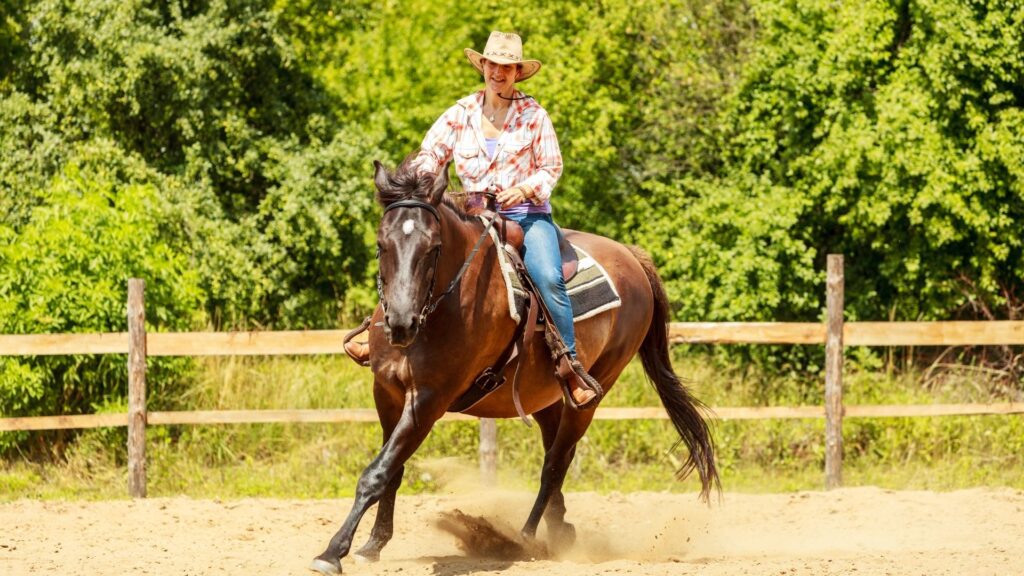
For everyday Western riding, jeans, boots, and a comfortable shirt are usually enough. Look for riding jeans with flatter inside seams to cut down on rubbing, not fashion jeans with heavy, raised seams inside the thigh. Bootcut is the standard, since jeans that fit right over cowboy boots won’t bunch at the ankle or ride up your leg.
Ropers have a lower, flatter heel and a shorter shaft, so they’re easier to walk in. Traditional cowboy boots generally have a taller heel. Whichever style you pick, check the sole and make sure the boot fits your stirrup without catching. The best riding boots for beginners depend on your discipline and budget.
A long-sleeved shirt gives your arms some cover from sun and brush. Snap shirts are the traditional Western choice. For a short ride around the place on a cool day, a comfortable T-shirt works fine, too.
Showing is different. At USEF Western Division competitions, the required headwear is a suitable Western hat, although protective headgear may be worn without penalty. Riders also need a long-sleeved collared shirt, pants, and boots. Check your show’s rules, since requirements differ by organization and class.
What Not to Wear Horseback Riding
A few clothing choices can make a ride uncomfortable or create a safety problem:
- Sneakers and flat shoes: Without a heel, your foot can slide through the stirrup and get hung up if you fall.
- Boots with heavy tread: Deep lugs on hiking or work boots can catch in a stirrup.
- Shorts: They’re a bad choice for most riding because your legs rub against the saddle and stirrup leathers.
- Anything that can catch on tack: Ponchos, big scarves, open jackets, and loose shirttails can snag or flap and spook a horse.
- Dangling jewelry: Hoop earrings, long necklaces, and rings can catch on reins, manes, or fences.
What to Wear on a Trail or Vacation Ride
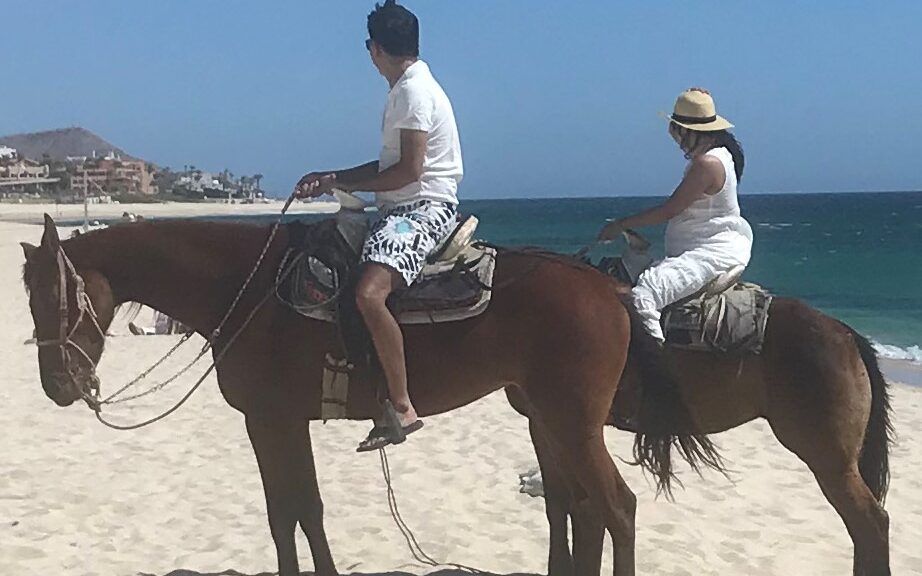
Vacation trail rides catch a lot of people off guard, especially at the beach or in the mountains. Check the outfitter’s clothing requirements before you go, and ask whether they provide a properly fitted riding helmet.
Wear long pants and riding-appropriate boots, not sandals or sneakers, even if other riders show up in them. A light long-sleeved shirt and some sunscreen will save you a sunburn, and it’s worth bringing water on a long ride.
About Miles Henry
Racehorse Owner & Author | 30+ Years in Thoroughbred Racing
Miles Henry (legal name: William Bradley) is a professional horseman based in Folsom, Louisiana. He holds Louisiana Racing License #67012 and has spent over three decades managing Thoroughbreds at premier tracks including Fair Grounds, Delta Downs, and Evangeline Downs.
Expertise & Hands-On Experience: Beyond the track, Miles has decades of experience in specialized equine care, covering everything from hoof health and nutrition to training protocols for Quarter Horses, Friesians, and Paints. Every guide on Horse Racing Sense is rooted in this “boots-on-the-ground” perspective.
30 of their last 90 starts
Equibase Profile.

Connect with Miles: