

Last updated: November 10, 2026
Any links on this page that lead to products on Amazon are affiliate links and I earn a commission if you make a purchase. Thanks in advance – I really appreciate it!
It only takes one spook, stumble, or buck to put a rider on the ground, even on a quiet horse you know well. You can’t take every risk out of riding, but the right gear can help reduce the severity of an injury. Beyond a helmet, what safety gear do you need?
The table below separates the everyday basics from gear to consider for jumping, trail riding, and other situations.
Table of Contents

Equestrian Safety Gear at a Glance
| Gear | What it does | When to wear it |
|---|---|---|
| Certified helmet | Reduces the risk and severity of head injuries | Every ride, every time |
| Boots with a heel | Helps prevent your foot from sliding through the stirrup | Every ride |
| Body protector | Padding designed to reduce impact on the chest, back, and ribs | Jumping, cross-country, and young or unpredictable horses |
| Air vest | Designed to add impact protection when it inflates | As the maker and your discipline’s rules direct |
| Safety stirrups | Designed to help your foot release in a fall | Any rider; check boot fit and how the release works |
| Gloves | Improve rein grip and protect your hands | Most rides |
| Reflective or hi-vis gear | Helps drivers see you sooner | Riding on or near roads, or in low light |
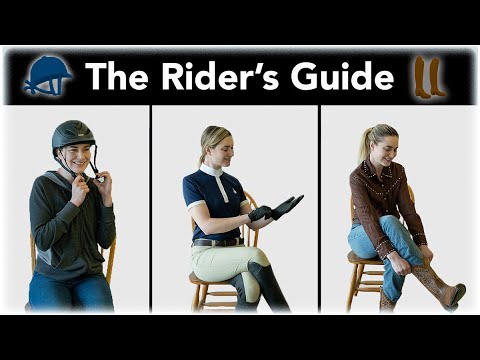
This video covers helmets, boots, gloves, and safety vests:
A Certified Riding Helmet
If there’s one piece of gear you should never ride without, it’s a properly fitted helmet. Penn State Extension notes that about 70,000 people are treated in U.S. emergency rooms each year for equestrian injuries, and that 60% or more of horse-related deaths are caused by head injuries. No helmet can prevent every head injury, but wearing one can reduce how serious it is.
Look for a helmet certified to the ASTM F1163 standard, with the SEI tag inside. A bike or ski helmet isn’t certified for riding. A good fit matters just as much as the label. The helmet should sit level and snug without rocking, with the harness fastened every time. I cover styles and fit in more detail in the types of riding helmets, and there are separate picks for kids’ riding helmets.
Replace your helmet after a fall or hard impact, even if you can’t see any damage, since the foam inside can be compromised without showing it. Helmets also wear out with age, so follow the maker’s replacement advice. Troxel, for example, recommends replacing its helmets at least every five years from purchase, sooner if you ride often.
Riding Boots With a Heel

Your boots should have a defined heel to help keep your foot from sliding too far through the stirrup, and a fairly smooth sole that helps your foot come free if you fall. The University of Kentucky’s Saddle Up Safely program puts it simply: wear footwear that lets your foot come out of the stirrup easily. Sneakers, hiking boots with lug soles, and sandals don’t meet that test.
Tall boots or paddock boots with half chaps are common for English riding, and cowboy boots are common for Western riding. Whatever you wear, check that your boots fit your stirrups and slide out easily. I compare options in the best English and Western riding boots.
Safety Vests and Air Vests

A body protector, often just called a safety vest, pads your chest, back, and ribs to help reduce the force of an impact. It won’t prevent every injury, but it gives you another layer of protection when a fall happens. Saddle Up Safely calls a vest an absolute must for cross-country schooling, and it’s worth wearing any time you’re jumping or riding a green horse. If your kids ride, there are body protectors made for children.
Check the label for a recognized standard. In the U.S., look for ASTM F1937 with SEI certification. You may also see EN 13158 certification and BETA ratings on body protectors. According to Charles Owen, BETA Level 3 gives the most protection and suits all riding, Level 2 is for lower-risk riding, and Level 1 is meant only for licensed jockeys while racing.
An air vest usually attaches to the saddle with a lanyard and inflates when you separate from the horse. Follow your model’s instructions for fit, attachment, replacement cartridges, and whether it needs to be worn over a body protector. Check which testing standard the vest meets. The French NF S72-800 standard, published in 2022, specifically covers equestrian airbag vests.
Safety Stirrups
Getting hung up in a stirrup is one of the worst things that can happen in a fall. If the horse keeps moving, you can be dragged instead of getting clear. Safety stirrups are designed to reduce that risk. Some have a rubber band or hinged side that releases, and others have a curved or open side. No design removes the risk completely, so learn how yours works and keep it in good repair.
Western riders should pay attention to stirrup fit and design, too. Tapaderos, the leather hoods over the front of some Western stirrups, help protect your foot, but they aren’t a substitute for a breakaway safety stirrup. Whatever style you use, make sure your boots fit and understand how your stirrups are designed to work in a fall.
Gloves and Riding Clothes

Gloves give you a better grip on the reins, especially when they’re wet or your hands are sweaty, and they protect your hands from rope burns and blisters. Saddle Up Safely also recommends gloves for opening gates or lifting chains.
Your clothes matter, too. Wear fitted clothing that won’t snag on tack or branches, and skip dangling jewelry. Proper riding pants help prevent rubbing, and full-seat riding breeches give you more grip in the saddle.
Visibility on Roads and Trails
If you ride on or near roads, or out on the trail early or late in the day, make sure drivers and other trail users can see you. A bright or reflective vest, reflective bands on your horse’s legs, and a helmet cover all help. Reflective tape on your existing gear is a cheap place to start. Don’t assume a driver can see you just because you can see the vehicle, and give yourself plenty of room around curves and hills.

Riding sunglasses with impact-resistant lenses can help keep dust and bugs out of your eyes and cut glare.
Check Your Tack Before You Ride
Protective gear doesn’t replace sound tack. Saddle Up Safely recommends checking your tack and equipment regularly for safety and needed repairs. Before you get on, look over your girth or cinch, the stitching around the billets, your stirrup leathers, reins, and bridle for cracked leather, worn stitching, or loose buckles. A worn strap is something you want to find while your horse is standing in the barn, not after you’re in the saddle.
If you’re just getting started, what to expect at your first riding lesson covers what most barns will ask you to wear. Many lesson programs provide helmets, but it’s worth having your own once you ride regularly.
About Miles Henry
Racehorse Owner & Author | 30+ Years in Thoroughbred Racing
Miles Henry (legal name: William Bradley) is a professional horseman based in Folsom, Louisiana. He holds Louisiana Racing License #67012 and has spent over three decades managing Thoroughbreds at premier tracks including Fair Grounds, Delta Downs, and Evangeline Downs.
Expertise & Hands-On Experience: Beyond the track, Miles has decades of experience in specialized equine care, covering everything from hoof health and nutrition to training protocols for Quarter Horses, Friesians, and Paints. Every guide on Horse Racing Sense is rooted in this “boots-on-the-ground” perspective.
30 of their last 90 starts
Equibase Profile.

Connect with Miles: