Skip to Content

Horse Racing 101: A Beginner’s Guide to the Sport

Last updated: November 20, 2025

By: Miles HenryFact Checked

The 60-Second Answer

Horse racing is a competitive sport where Thoroughbred horses, guided by jockeys, race at speeds up to 40 mph to cross the finish line first.

Whether you’re watching the Kentucky Derby on TV or visiting your local track for the first time, this complete guide teaches you everything you need to understand and enjoy horse racing—no prior knowledge required.

Quick Navigation
What is Horse Racing? | Your First Track Visit | How Races Work | Types of Races | Understanding Results | Major Events | Horse Welfare | Getting Started Guide | FAQ

The Moment That Hooks You

The starting gate doors snap open with a metallic CLANG. Twelve Thoroughbreds explode forward, hooves thundering against the dirt. The crowd erupts. You’re standing close enough to feel the ground shake, watching 1,000 pounds of muscle and speed flash past at 40 mph.

Two minutes later, it’s over. The winner crosses by a neck. The crowd roars or groans depending on which horse they picked. But your heart’s still pounding, hands still shaking from the rush.

This is horse racing.

I experienced this moment for the first time over 30 years ago at the Fair Grounds in New Orleans. I wasn’t an owner yet—just a spectator holding a $2 ticket, barely understanding what I was watching. I couldn’t tell you the difference between a furlong and a finish line, didn’t know why some horses wore blinkers, had no clue the jockey’s colorful uniform meant something specific.

But something about the raw power, the impossible speed, the sheer unpredictability hooked me completely.

Now, after 30+ years as a Louisiana licensed owner (License #67012), having campaigned horses like Mickey’s Mularkey (78 starts, claimed away in 2008) and Corked (claimed December 2023, maiden winner April 2024), I’ve learned this sport from every angle—as a fan in the grandstand, a bettor at the window, and an owner in the barn at 5 a.m. wrapping legs and writing feed charts.

This guide starts at absolute zero. Whether you’ve never seen a live horse race, caught the Kentucky Derby once on TV, or you’re planning your first track visit, I’ll walk you through everything you need to know to understand, appreciate, and enjoy this 300-year-old sport.

No confusing jargon. No betting pressure. Just the pure fundamentals that make horse racing one of the world’s most captivating spectacles.

Thoroughbred racehorses breaking from the starting gate at Fair Grounds in New Orleans, a thrilling start for horse racing beginners.
The excitement begins as horses break from the gate—a moment every racing fan remembers.

What is Horse Racing? The Sport Explained

The Basics in Plain English

Horse racing is an organized competitive sport where:

  • Thoroughbred horses (a specific breed known for speed and stamina) compete against each other
  • Jockeys (professional riders weighing 108-118 pounds) guide and strategize aboard the horses
  • Races cover set distances on designated tracks
  • The first horse to cross the finish line wins
  • Spectators watch live at racetracks or via television/streaming
  • Betting is optional but adds excitement for many fans

Think of it like NASCAR for horses—speed, strategy, competition, and the constant threat that anything can happen in the final seconds.

Why Horse Racing Captivates Millions

On the surface, it’s simple: horses run, someone wins. But the depth beneath that simplicity is what hooks people for life.

The Athletic Spectacle: A Thoroughbred racehorse is one of nature’s most magnificent athletes. They can accelerate from 0 to 40 mph in seconds, maintain 35+ mph for over a mile, and jump from a standing position in a starting gate to full gallop in three strides. The average racehorse weighs 1,000 pounds of pure muscle, with a heart twice the size of a human’s pumping 75 gallons of blood per minute during a race. To learn more about how fast they are, check out How Fast Can a Horse Run?

The Strategy: Every race is a chess match at 40 mph. Jockeys must decide: Go for the lead early and risk tiring out? Sit back and wait, risking getting boxed in with nowhere to go? Navigate through traffic or swing wide and lose ground? These split-second decisions, made while crouched on a thousand-pound animal thundering down a track, determine winners and losers.

The Uncertainty: On any given day, the favorite might win—or a 50-1 longshot nobody saw coming might steal the show. Weather changes everything. Post position matters. A bad step at the start can end a race before it begins. This unpredictability is why we keep coming back.

The Human-Animal Partnership: Unlike most sports, racing isn’t human vs. human—it’s human and horse working as one unit. The trust between a jockey and horse, built over training sessions and previous races, can make the difference between winning and finishing fifth.

The History & Tradition: Horse racing dates back to ancient civilizations (Greeks, Romans, Egyptians all raced horses). Modern Thoroughbred racing began in 17th-century England and came to America in the 1660s. The Kentucky Derby has run continuously since 1875—through wars, depressions, pandemics. That continuity connects you to centuries of sporting history.

💡 Owner’s Perspective: The morning Mickey’s Mularkey won his first claiming race at Louisiana Downs in 1996, I understood why people spend decades in this sport. It wasn’t just that he won—it was watching the plan we’d worked on for weeks (teaching him to rate behind the speed, save energy, and finish) actually execute perfectly. When he hit the wire first, I felt like we’d solved a puzzle together. That feeling never gets old.

Your First Day at the Races: What to Expect

Before we dive into how races work, let’s walk through the actual experience of attending a live race. This is what happens from the moment you arrive to the moment you leave.

Getting There: Arrival & Entry

When to Arrive
Most racetracks open gates 1-2 hours before “first post” (the first race of the day). Typical race day schedules:

  • First post: 12:00 PM – 2:00 PM depending on track and day
  • Last race: Usually 8-10 races later (around 5:00-7:00 PM)

💡 My Recommendation: Arrive 45 minutes before first post. This gives you time to buy a program, grab food, find good seats, and soak in the pre-race atmosphere without rushing.

Parking

  • General parking: $5-15 at most tracks, free at some
  • Valet parking: $20-40 at major tracks
  • Peak days (Kentucky Derby, Breeders’ Cup): Parking can reach $50-100

Admission Requirements

  • Age: 18+ at most tracks, 21+ in some states (gambling laws vary)
  • ID: Bring government-issued photo ID
  • Dress code:
    • General admission: Casual attire is fine (jeans, polo shirts, sneakers)
    • Clubhouse/premium areas: Business casual (collared shirts, no torn jeans)
    • Major events (Derby, Royal Ascot): Formal wear often required (suits, dresses, hats)

Admission Cost

  • General admission: Free to $10 at most tracks
  • Clubhouse seating: $20-50
  • Premium areas (Turf Club, suites): $75-300+
  • Kentucky Derby infield: $80+ (party atmosphere, harder to see races)

Betting Basics: Should You Bet Your First Visit?

One question every first-timer asks: “Do I need to bet to enjoy racing?”

Short answer: Absolutely not. Betting is optional. Many fans attend purely for the athletic spectacle, the social atmosphere, or to follow specific horses and jockeys.

That said, about 70% of track attendees place at least one wager—it adds a personal stake in the outcome and heightens the excitement of watching races unfold.

My Recommendation for First-Timers

Visit #1: Skip betting entirely. Just observe. Watch 4-5 races, study horses in the paddock, get comfortable with the rhythm of race day. You’ll learn more without the distraction of worrying about money.

Visit #2: If you enjoyed your first visit and want to try betting, start with simple $2 “place” bets (your horse must finish 1st or 2nd). Budget $20 total—that’s 10 races worth of action.

Visit #3+: Once you understand the basics, explore our complete betting guide below.

Understanding Betting Types and Strategy

For comprehensive coverage of:

  • How pari-mutuel betting works
  • Win, Place, Show, Exacta, Trifecta explained
  • How to place bets at windows, kiosks, and mobile apps
  • Understanding odds and payouts
  • Bankroll management strategies
  • Common betting mistakes to avoid

See our dedicated guide: Horse Racing Betting for Beginners

Next: Now let’s walk through your first day at the races…

Layout: Understanding the Racetrack Facility

Once inside, you’ll navigate several key areas:

The Grandstand
Multi-level seating overlooking the racetrack, typically divided into:

  • Ground level: Closest to the track, can see horses up close
  • Second/third levels: Better overall view of entire race
  • Boxes: Reserved seating with tables (premium cost)

The Track Itself
The oval racing surface—usually dirt, turf, or synthetic—where horses actually race. Tracks range from 1 mile to 1⅛ miles in circumference. You’ll see:

  • Rail: Inside barrier (white or colored fence)
  • Stretch: Final straightaway to finish line
  • Turns: Curved sections connecting straightaways
  • Starting gate: Mechanical device where horses load before each race

The Paddock
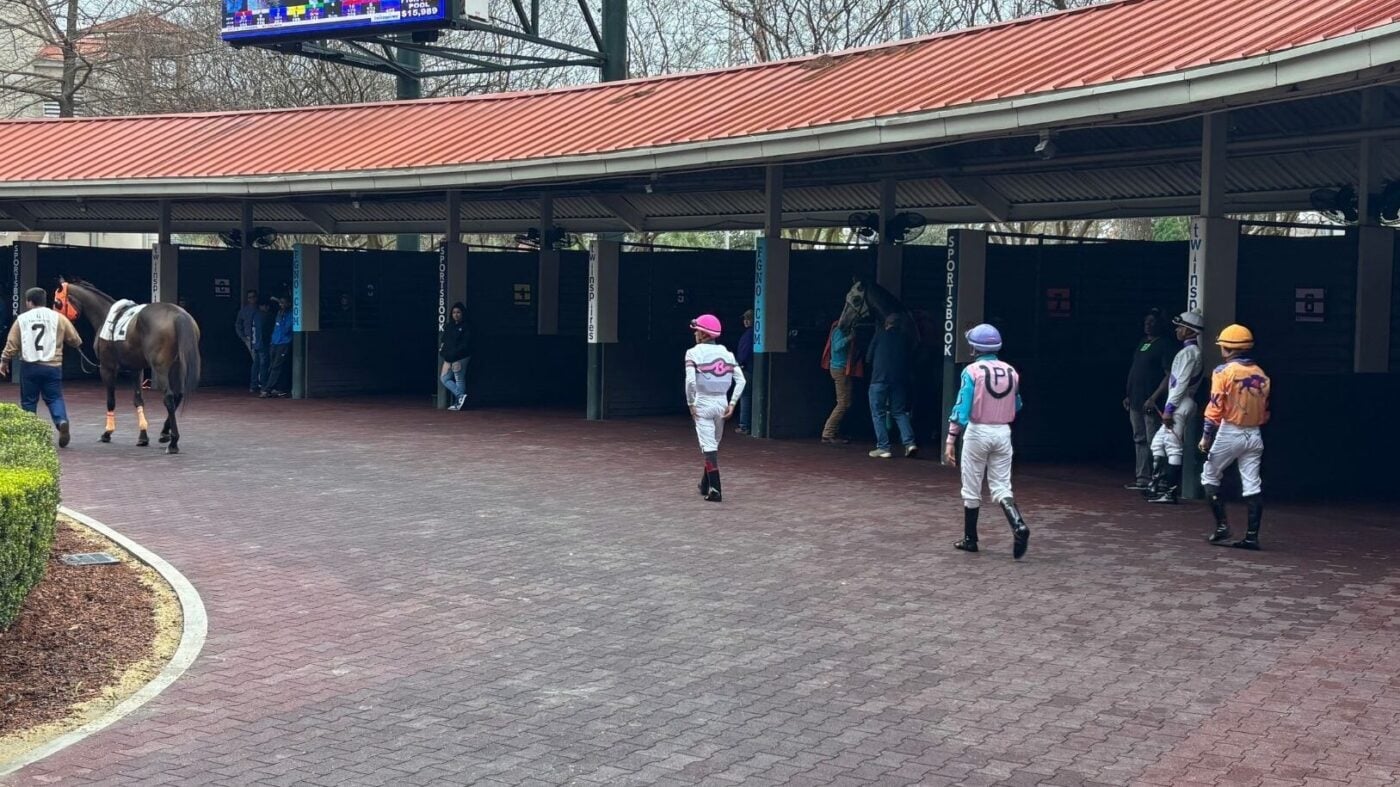
An enclosed walking area where horses are saddled 20-25 minutes before each race. This is completely open to spectators—you can walk right up to the rail and watch trainers saddle horses, jockeys receive last-minute instructions, and horses parade before being led to the track.

⚠️ Don’t Skip This: The paddock is where you learn the most. I’ve been doing this 30 years and still study every horse in the paddock before races. Watch for:

  • Alert, pricked ears (horse is focused and ready)
  • Calm, easy walking (confident horses walk smoothly)
  • Excessive sweating or nervousness (horse might waste energy before the race even starts)
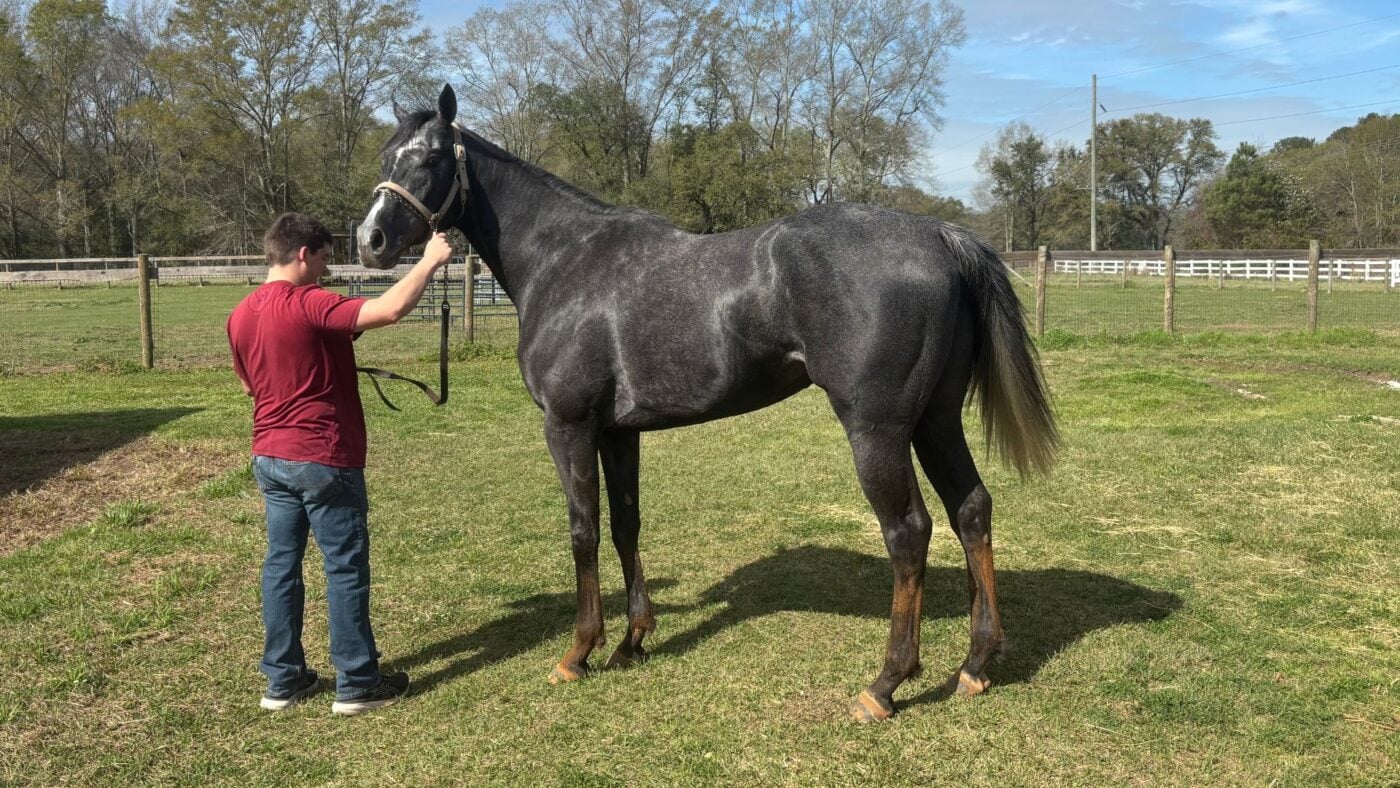
My horse Little Millie walking in the paddock before her first race.
A young Thoroughbred in the paddock at the New Orleans Fairgrounds.

Betting Windows/Kiosks
Clearly marked areas where you place wagers. Most tracks now have:

  • Traditional windows with human clerks
  • Self-service betting kiosks (touch screens)
  • Mobile betting apps (bet from your seat)

Don’t worry if you’re not betting your first visit—watching races is completely free and just as exciting.

The Tote Board
A massive electronic display showing:

  • Current odds for each horse
  • Time until next race
  • Results and payouts after each race

Concessions
Food and beverage stands throughout the facility. Most tracks offer:

  • Standard stadium fare (hot dogs, nachos, beer)
  • Sit-down restaurants in premium areas
  • Race day programs for sale ($3-6)

Simulcast Areas
Rooms with TV screens showing races from other tracks around the country (for off-track betting). First-timers should focus on live racing at your track—it’s the real experience.

The Race Day Timeline: How Your Day Unfolds

Let’s walk through a typical race day from arrival to departure.

1:00 PM – You Arrive (45 min before first post)
Park, enter facility, buy a race program, find seats in the grandstand overlooking the finish line.

1:15 PM – Study the Program
The racing program lists all horses running today, their past performances, jockey names, and trainer information. For your first day, just focus on learning horses’ names and post positions (their starting spot numbered 1-12).

1:25 PM – Walk to the Paddock
The first race horses enter the paddock area for saddling. Walk down and watch this process—it’s fascinating. Trainers give final instructions to jockeys, owners nervously watch, and horses get a last-minute once-over.

1:35 PM – Return to Your Seat
Horses leave the paddock and walk onto the track for the “post parade”—a warm-up where they jog/gallop past the grandstand. This lets you see them up close before betting closes.

1:45 PM – First Race (“First Post”)
Horses load into the starting gate. Gates open. The race begins. For your first race ever, I recommend just watching—don’t bet. Notice:

  • How explosively horses leave the gate
  • How some horses sprint to the lead immediately while others hang back
  • The incredible speed (even on a TV screen, it’s fast—in person it’s breathtaking)
  • How jockeys navigate through traffic
  • The final stretch run where positions change rapidly

The race lasts 1-3 minutes depending on distance.

1:48 PM – Winner Declared
The order of finish appears on the tote board and screens. If it’s very close, you’ll see “PHOTO” indicating a photo finish review. Within 2-3 minutes, the result becomes “OFFICIAL.”

1:50 PM – Payouts Posted
The tote board displays what winning bets paid. You’ll see numbers like:

  • #5 horse (winner): $12.40 (means a $2 win bet paid $12.40)
  • Exacta (first two horses): $87.60
  • Trifecta (first three horses): $432.20

1:55 PM – Winner’s Circle Photo
The winning horse, jockey, trainer, and owners pose for the official winner’s circle photo. This is a fun tradition to watch—you’ll see genuine emotion (joy, relief, sometimes tears).

2:00 PM – 30-Minute Break Until Race 2
Horses for Race 2 begin entering the paddock. The cycle repeats.

Throughout the Day
This pattern continues for 8-10 races, each spaced 25-35 minutes apart. By Race 3 or 4, you’ll start noticing patterns—certain jockeys ride aggressively, certain trainers always have fit horses, certain post positions seem to win more often.

5:30 PM – Last Race of the Day
After the final race, crowds disperse. Some people head to the paddock area for one last look, others cash winning tickets, most head to parking lots discussing the day’s surprises.

Your Mission for Day One: Pure Observation

For your absolute first track visit, I have one strong recommendation: Don’t bet. Just watch.

I know betting is tempting—it’s a huge part of the culture. But you’ll learn far more by spending your first day simply observing:

  • Watch 3-4 races without any financial stake
  • Study horses in the paddock before each race
  • Listen to the track announcer call races
  • Notice which running styles win (early speed vs. closers)
  • Get comfortable reading the tote board
  • Absorb the atmosphere, the crowd energy, the rhythm of race day

By Race 5 or 6, you’ll have opinions: “That horse looks ready” or “That jockey rides really well.” That’s when racing gets addictive—when you start seeing things others miss.

On your second visit, armed with this observational foundation, you’ll be ready to make small $2 bets with actual reasoning behind them. But there’s zero rush. The horses will still be racing next week, next month, next year.

The crown at Churchill Downs on Kentucky Derby day. I took this photo from the infield.
The electric atmosphere of race day—what keeps fans coming back

How Horse Races Actually Work: The Mechanics

Now that you understand the track visit experience, let’s break down the race itself—from gate to wire.

The Starting Gate: Where Every Race Begins

Modern horse races start using a mechanical starting gate—a metal structure with individual stalls for each horse. Key facts:

  • Each horse has an assigned post position (starting spot): #1, #2, #3, etc.
  • Post #1 is innermost (right against the rail)
  • Post #12 (or higher in large fields) is outermost (widest spot)
  • Gates are loaded one by one, with gate crew assisting
  • Once all horses are loaded and standing calmly, the starter (official) presses a button
  • All gates spring open simultaneously with a loud CLANG
  • Horses that break through gates early cause a “false start” (race is restarted—rare but it happens)

💡 Why Post Position Matters: In sprint races (short distances), inside post positions (#1-3) have a significant advantage—they run the shortest distance around turns. In longer races (routes), post position matters less because jockeys have time to maneuver into ideal positions. This is one of many variables that makes handicapping fascinating.

🏇 Real Example: When my horse Corked drew post position #1 in his maiden win at Oaklawn (April 2024), it was a huge advantage. In a 6-furlong sprint with three speed horses fighting for the lead, being on the rail let our jockey save ground on both turns—probably worth 2-3 lengths, which mattered in a race decided by a neck.

Race Distances: Understanding Furlongs

American racetracks measure distances in furlongs—a unit dating back to medieval English farming (the length of a plowed furrow).

1 furlong = ⅛ mile = 220 yards = 660 feet

Common Racing Distances

Furlongs Miles Approx. Time Classification
4.5F 9/16 mile 0:52 Very short sprint
5F ⅝ mile 0:58 Sprint
6F ¾ mile 1:10 Sprint
7F ⅞ mile 1:23 Sprint
8F 1 mile 1:36 Middle distance
8.5F 1⅟₁₆ miles 1:49 Classic distance (Kentucky Derby)
9F 1⅛ miles 1:50 Route
10F 1¼ miles 2:02 Route
12F 1½ miles 2:28 Marathon (Belmont Stakes)

Sprints vs. Routes:

  • Sprints (under 1 mile): Favor speed horses that can accelerate quickly and maintain pace
  • Routes (1 mile+): Favor horses with stamina and tactical patience
  • Middle distance (exactly 1 mile): Requires both speed and some stamina

🤔 “Why Not Just Use Miles?“: Valid question. It’s purely tradition. The Jockey Club (Thoroughbred racing’s governing body) has used furlongs since the 1700s, and the industry never switched. You’ll get used to it quickly—just remember 8 furlongs = 1 mile, and you can calculate from there.

Track Surfaces: Dirt, Turf, or Synthetic

Races run on one of three surface types, each requiring different skills from horses:

Dirt (Most Common in U.S.)

What it is: Crushed stone, sand, and clay mixture, typically reddish-brown in color

Characteristics:

  • Fast on dry days (“fast track”)
  • Becomes sloppy, muddy, or heavy after rain
  • Demands raw power and a grinding running style
  • Kickback (dirt flying up) can hit trailing horses in the face—some horses hate it

Best for: Powerful, physical horses with strong hindquarters

Worst for: Horses with breathing issues (dirt dust) or sensitive temperaments

💡 Track Condition Terminology:

  • Fast = dry, ideal racing surface
  • Good = slightly moist but still firm
  • Muddy = wet and holding water
  • Sloppy = standing water on surface (surprisingly, some horses run faster on sloppy tracks)
  • Sealed = track crew packed and rolled the surface to prevent water absorption

Turf / Grass

What it is: Natural grass surface, maintained like a golf course, bright green

Characteristics:

  • Softer, more forgiving on horses’ legs
  • Requires agility, balance, and nimble footwork
  • More tactical racing (harder to make up ground from behind)
  • Weather-dependent (races moved to dirt if turf is too soft)

Best for: Horses with smooth, efficient stride and good foot coordination

Worst for: Heavy, plodding horses that rely on raw power

Turf Racing in U.S.: Less common than dirt, but nearly every major track has a turf course. Roughly 25% of U.S. races run on turf. In Europe, turf is the dominant surface.

💡 Turf Condition Terminology:

  • Firm = dry, fast grass (ideal)
  • Good = slightly soft
  • Yielding = soft, moist
  • Soft = very wet, horses sink in noticeably
  • Heavy = waterlogged (rare—usually races are canceled)

🏇 Real Example: My horse Astrology’s Protege ran his first 8 races on dirt with mixed results (three wins, several seconds/thirds). When we tried him on turf, he finished 9th of 10—he just doesn’t have the footwork for it. His stride is powerful but heavy. Some horses thrive on both surfaces (we call them “versatile“), but most have a clear preference.

Synthetic / All-Weather

What it is: Artificial surface made from rubber, fiber, sand, and wax, dark brown in color

Characteristics:

  • Consistent in all weather conditions
  • Safer (fewer injuries statistically)
  • Doesn’t get muddy
  • Less common—mainly California tracks (Golden Gate Fields, Del Mar used to be synthetic)

Best for: All horse types (designed to be “neutral“)

Controversies: Some trainers/owners dislike synthetics, claiming horses develop different muscle patterns. Several tracks ripped out synthetic surfaces and returned to dirt (Santa Anita, Del Mar).

Positions During the Race: Understanding Running Styles

At any moment in a race, each horse occupies a position that reflects their running style—their preferred racing strategy.

Front-Runner (Early Speed)

Position: Running first, on the lead from the start

Strategy: Break fast from the gate, grab the lead, control the pace, try to hold on through the finish

Advantages:

  • Avoids traffic problems
  • Can set comfortable fractions (slow down if no one pressures them)
  • Psychological edge (other horses chasing you)

Disadvantages:

  • Uses more energy fighting for the lead
  • Vulnerable if multiple speed horses duel early (they tire each other out)

Famous Example: Secretariat (1973 Triple Crown winner) was a devastating front-runner—he’d grab the lead and just keep accelerating, breaking rivals’ spirits.

Presser / Stalker

Position: 2nd-4th place, tucking in right behind the leader(s)

Strategy: Sit close to the pace, conserve energy, pounce when the leader tires (usually in the final furlong)

Advantages:

  • Best of both worlds (close to the action but not burning maximum energy)
  • Can react to any move the leader makes
  • Often wins when pace is fast (leader gets tired, presser inherits the lead)

Disadvantages:

  • Risk getting boxed in by horses on all sides
  • Completely dependent on the pace being honest (if it’s too slow, they have no advantage)

💡 Owner’s Insight: We always say pace makes the race. Pressers require the most skilled jockeys. They need perfect timing—move too early and you become the target; move too late and you run out of racetrack.

Mid-Pack / Tracker

Position: 5th-7th, middle of the field

Strategy: Settle in mid-pack, save ground, make a gradual move on the turn

Advantages:

  • Very energy-efficient (drafting behind horses blocks wind)
  • Can pick which path to take in the stretch (inside, outside, split horses)

Disadvantages:

  • Traffic nightmares (horses everywhere blocking your path)
  • Needs racing luck (need holes to open at the right moment)

Closer / Deep Closer

Position: 8th or farther back, near the rear of the field

Strategy: Intentionally stay behind everyone, let the field spread out, then unleash a big finishing kick in the final 2-3 furlongs

Advantages:

  • Saves maximum energy early
  • Benefits enormously when the pace is fast (everyone ahead is tired)
  • Exciting to watch (the come-from-behind rush)

Disadvantages:

  • Gives away huge head starts (sometimes too much to overcome)
  • Completely dependent on fast early pace
  • Psychological: hard to rate a horse that far back (they want to run)

Famous Example: Zenyatta (2008-2010) was one of racing’s greatest closers—she’d be dead last at the halfway point, then surge past everyone in the stretch. Won 19 of 20 career races with this style.

🏇 Real Example from My Barn: Teaching Mickey’s Mularkey to rate (settle behind the pace) took six months of training. He naturally wanted to sprint to the front immediately. But in claiming races, if you burn all your energy in the first half-mile, you’ll get swallowed up in the stretch. We finally got him to relax in 4th-5th position, and he started winning regularly.

The Race Itself: What Happens During Those 1-3 Minutes

Let’s walk through a typical race from a spectator’s viewpoint:

0:00 – Gates Open
Horses explode forward. The crowd roars. The track announcer begins calling positions:

“And they’re off in the 5th race! Number 7 Gun Runner breaks sharply and grabs the lead, with Midnight Storm pressing in second, Golden Dancer in third…”

First Quarter-Mile (0:00-0:22)
The “scramble” phase. Horses sort themselves out—some sprint for the lead, others immediately drop back to their preferred positions. Jockeys are positioning aggressively, trying to avoid getting blocked early.

You’ll hear the first fractional time called: “The opening quarter in 22 and three” means the leaders covered the first ¼ mile in 22.3 seconds. This information, along with pace figures, is critical for handicapping.

💡 Why This Matters: Fast early fractions (21 seconds for ¼ mile) mean horses are burning energy. Slow fractions (24 seconds) mean they’re conserving energy. This dictates how the race will finish.

Second Quarter-Mile (0:22-0:45)
The race settles into rhythm. Running positions stabilize. The announcer updates standings:

“It’s Gun Runner on top by a length and a half, with Midnight Storm tracking in second, Golden Dancer third, and here comes Thunder Bolt making a move on the outside…”

Jockeys are thinking three moves ahead—if I swing wide now, will I lose too much ground? If I stay inside, will I get trapped?

Entering the Final Turn (0:45-1:00)
The critical phase. Jockeys start asking their horses for speed. Some horses respond eagerly, others are already struggling.

The announcer’s voice raises in excitement:

“Turning for home it’s Gun Runner still on top, but Midnight Storm is closing the gap! Thunder Bolt four-wide on the outside! Golden Dancer trying to split horses!”

The Homestretch (1:00-1:10)
Pure chaos. 5-6 horses hitting full speed, all trying to reach the wire first. This is where races are won and lost.

Jockeys go to the whip (within regulated limits) to ask for maximum effort. Horses shift gears. The crowd reaches peak noise.

“Here comes Midnight Storm! He’s got Gun Runner measured! Thunder Bolt charging on the outside! These three are separating from the field!”

The Wire (1:10)
They flash across the finish line. Often so close you can’t tell who won without instant replay.

Photo Finish Review (1:11-1:13)
If it’s very close, the tote board shows “PHOTO” and officials review the high-speed camera image—a literal photograph of the finish line instant. Within 30-60 seconds, the official order is posted.

Official Result (1:13)
The tote board shows the final order:

  1. Midnight Storm
  2. Thunder Bolt (by a neck)
  3. Gun Runner (by a head)

Payouts Posted (1:15-1:16)
The board displays what winning tickets paid:

  • Win (Midnight Storm): $18.60 for a $2 bet
  • Place (top 2): $8.40, $4.20
  • Show (top 3): $5.80, $3.40, $2.80
  • Exacta (Midnight Storm/Thunder Bolt): $87.40

And that’s it. Two minutes of intensity. Thirty minutes until the next race.

Objections, Inquiries, and Disqualifications

Sometimes the drama doesn’t end at the wire.

Inquiry (Red Light on Tote Board):
Stewards (racing officials) review video because they suspect a jockey interfered with another horse—bumping, blocking, or causing another horse to check (slow down suddenly).

Objection (Also Red Light):
A jockey files a complaint immediately after the race, claiming another jockey fouled them.

Possible Outcomes:

  • No change: The original order stands
  • Disqualification: The offending horse is placed behind the horse they interfered with
  • Rare: In extreme cases, a horse can be disqualified entirely and placed last

🏇 Real Example: In the 2019 Kentucky Derby, Maximum Security crossed the wire first but was disqualified for interference in the stretch (he drifted out and impeded another horse’s path). Country House, who finished second, was declared the winner. It was the first time in Derby history the winner was disqualified for interference. Controversial, emotional, and a reminder that the order at the wire isn’t always final.

💡 What to Do as a Spectator: When you see “INQUIRY” or “PHOTO” on the board, don’t leave your seat. Don’t celebrate a win until it’s official. And definitely don’t tear up a ticket until the word “OFFICIAL” appears—I’ve seen people rip up winning tickets because they thought they lost, only to watch an inquiry reverse the result.

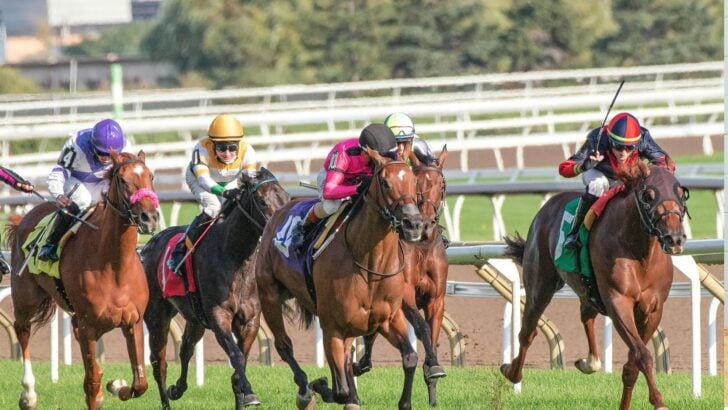
Thoroughbred racehorses spreadout and competing on a turf track.
Each horse has a unique running style—front-runner, presser, stalker, or closer—influencing their strategy on the track.

Types of Horse Races: Understanding Race Classifications

Not all horse races are created equal. Races are classified by the quality of horses competing, prize money offered, and eligibility requirements. Here’s how the hierarchy works.


    The Horse Racing Class Ladder  


    Think of race classes like divisions in sports — high school, college, minor league, major league.      Horses compete at levels matching their ability.  

   
                1. Maiden Claiming (Lowest Class)        
     
           
  • Who runs: Horses that have never won a race AND can be claimed (purchased) for a set price after the race.
  •        
  • Claiming price range: $5,000 – $25,000
  •        
  • Why it exists: These are horses with either little talent or significant problems (injuries, poor training, bad attitudes). Connections want to win a race — any race — to get the “maiden” monkey off the horse’s back.
  •        
  • Purse: $10,000 – $25,000 to the winner
  •      
     

Owner’s Insight: I claimed Diamond Country out of a $5,000 maiden claimer in December 2024. She’d run 7 times without winning, but I saw something others missed — she was improving every race, just needed a slight change in tactics. Four months later she won by a neck at 8-1 odds.


                2. Maiden Special Weight        
     
           
  • Who runs: Horses that have never won a race, but are NOT for sale (no claiming)
  •        
  • Why it’s higher class: Owners believe their horses have potential and don’t want to risk losing them. Typically better-bred horses.
  •        
  • Purse: $30,000 – $75,000
  •        
  • Graduates: American Pharoah, Justify, Secretariat all won their debuts in maiden special weights
  •      


                3. Claiming Races ($5,000 – $100,000)        
     

Who runs: Horses that have won before, entered at set claiming prices.


The claiming system: Every horse is for sale at the stated price. Any licensed owner can claim them before the race.


  • $5,000–$10,000: Low-level claimers
  •        
  • $12,500–$25,000: Bread-and-butter level (≈70% of U.S. racing)
  •        
  • $40,000–$62,500: Solid mid-level
  •        
  • $80,000–$100,000: Top-level claimers
  •      
     

Purse: $15,000 – $100,000
      Real Example: Mickey’s Mularkey ran 78 starts, mostly $12,500–$25,000 claimers. Claimed away from us in 2008 for $20,000 — part of the game.


→ Dive deeper: What is a Claiming Race?


                4. Starter Allowance        
     
           
  • Who runs: Horses that have previously run in claiming races
  •        
  • Why it exists: Protects former claimers from being claimed again
  •        
  • Purse: $25,000 – $60,000
  •        
  • Example condition: “Started for $40,000 or less in last 12 months”
  •      


                5. Allowance Races (N1X, N2X, N3X)        
     
           
  • Who runs: Horses never entered in claiming races — the “protected” class
  •        
  • Conditions:          
                 
    • N1X = Non-winners of 1 race other than maiden/claiming
    •            
    • N2X = Non-winners of 2 races…
    •            
    • N3X = Non-winners of 3 races…
    •          
           
  •        
  • Purse: $50,000 – $150,000
  •      
     

Most future stakes stars develop through allowance ranks.


                6. Overnight Stakes (Non-Graded)        
     
           
  • Purse: $75,000 – $200,000
  •        
  • Prestige: Track-level championships
  •        
  • Example: Local derbies, track series races
  •      


                7. Listed Stakes        
     
           
  • Who runs: Horses just below graded-stakes quality
  •        
  • Purse: $100,000 – $300,000
  •      


                8. Graded Stakes (The Elite – Grade 1, 2, 3)        
     

The highest level of competition.


Grade 3: $150k–$400k → Ohio Derby, Lecomte Stakes
         Grade 2: $250k–$750k → Blue Grass, San Felipe
         Grade 1 (the pinnacle): $500k–$20 million
         → Kentucky Derby, Breeders’ Cup Classic, Saudi Cup ($20M – richest race in the world)


Grading: Determined annually by a committee based on past winners and quality.


    Other Race Type Classifications  


    Beyond the class ladder, races are categorized by other factors like age, sex, and geographic breeding location.  

   
                1. Classification By Age        
     
           
  • 2-year-olds only: Also called **juveniles**, these are horses in their first year of racing.
  •        
  • 3-year-olds only: The **classic generation** and the only age group eligible for the American Triple Crown races (Kentucky Derby, Preakness, Belmont).
  •        
  • 3-year-olds and up: A common race type that allows three-year-olds to compete against older, more seasoned horses.
  •        
  • Older horses (4+): Seasoned veterans competing at maturity.
  •      


                2. Classification By Sex        
     
           
  • Colts/Geldings: Races for male horses, whether neutered (**Geldings**) or intact (**Colts**).
  •        
  • Fillies: Female horses under the age of 4.
  •        
  • Mares: Female horses aged 4 and older.
  •        
  • Fillies & Mares only: Races restricted to female horses—these races are typically less competitive than open-sex races.
  •      


                3. Classification By Geography        
     
           
  • State-bred races: Races restricted to horses born or bred in that specific state (e.g., Texas-bred, New York-bred). These races are often easier than open races and are used to encourage local breeding programs.
  •      


Why Understanding Race Types Matters

Even if you never bet, understanding race classification helps you appreciate what you’re watching:

  • A $10,000 claiming race with a $12,000 purse? You’re watching blue-collar horses grinding it out.
  • A Grade 1 stakes with $2 million on the line? You’re watching the absolute elite—future Hall of Famers.
  • A maiden special weight? You might be watching the future Kentucky Derby winner in their debut.

The drama, stakes, and pressure escalate as you climb the ladder. That’s part of the beauty—every level has its own compelling stories.

Winner's circle celebrations—from claiming races to Grade 1 stakes, every win matters
Winner’s circle celebrations—from claiming races to Grade 1 stakes, every win matters

Understanding Race Results: Reading the Chart

After each race, an official “chart” is published showing exactly what happened. Learning to read charts helps you understand races beyond just “who won.”

The Racing Program: Your Pre-Race Guide

Before the race, you’ll use the racing program (or “Daily Racing Form”) which lists:

For Each Horse:

  1. Program number (1-12, matches saddle cloth number)
  2. Horse’s name and age
  3. Jockey name and weight carried
  4. Trainer name
  5. Owner name
  6. Morning line odds (track handicapper’s prediction of betting odds)
  7. Past performances (last 6-10 races with dates, distances, finishes)
  8. Speed figures (Beyer Speed Figures—numerical rating of performance)
  9. Workout lines (recent training sessions)

💡 Start Simple: For your first few track visits, just focus on:

  • Horse’s name
  • Program number (so you can identify which horse is which)
  • Jockey name (after a few visits, you’ll recognize the best riders)
  • Last race finish position and date (is this horse in form?)

The rest comes with experience. Don’t overwhelm yourself trying to decode every statistic on day one.

Churchill Downs race program showing past performances, odds, and key handicapping data for beginners
A race program is your essential trackside tool.

After the Race: The Official Chart

Once the race is official, a detailed chart is published (available online at Equibase.com). Here’s what it shows:

Header Information:

  • Track name, date, race number
  • Race classification ($25,000 claiming, maiden special weight, etc.)
  • Distance and surface (6 furlongs, dirt, fast)
  • Purse distribution
  • Weather and track condition

Race Description (narrative): A paragraph written by the chart caller describing how the race unfolded—who had the lead, where trouble occurred, who made moves when.

Example:

“GUN RUNNER broke alertly and showed the way under pressure from MIDNIGHT STORM through swift fractions. THUNDER BOLT raced three wide on both turns while advancing steadily. MIDNIGHT STORM wore down GUN RUNNER in deep stretch to prevail. THUNDER BOLT closed willingly but came up a neck short. GUN RUNNER had no answers late after setting a fast pace.”

Order of Finish Table: Shows each horse’s:

  • Finish position
  • Running positions at each point of call (start, ¼ mile, ½ mile, stretch, finish)
  • Lengths behind the winner
  • Final time
  • Jockey name
  • Odds
  • Comments (trouble encountered, type of trip)

Fractional Times: How fast the leaders were running at each quarter-mile marker:

  • First ¼ in 22.3 seconds
  • First ½ in 45.1 seconds
  • Final time: 1:10.2 for 6 furlongs

💡 Why This Matters for Learning: By reading charts after races you watched, you can verify your observations. “I thought that horse got a bad trip”—and the chart confirms “CHECKED SHARPLY 3/16TH, ALTERED COURSE” proving your eye was correct.

Common Chart Abbreviations

When reading past performances or charts, you’ll see shorthand:

  • 1st/2nd/3rd = finish positions
  • = lengths behind (3¼ means 3.25 lengths behind leader)
  • nk = neck (less than ¼ length)
  • hd = head (less than a neck)
  • no = nose (smallest margin)
  • dq = disqualified
  • PU = pulled up (horse stopped during race, usually injury)
  • F = fell (rare but serious)
  • BE = broke slowly/badly from gate

Trip Comments (what happened during the race):

  • Bumped start = contacted another horse at the break
  • Steadied = jockey had to pull horse back to avoid collision
  • Checked = forced to slow down suddenly (traffic problem)
  • Wide trip = ran on the outside, covering extra ground
  • Rail trip = ran along the inside rail (saved ground)
  • No room = boxed in, couldn’t find racing room
  • Eased = jockey stopped asking for run (horse was done)

🏇 Real Example: Looking back at Corked’s April 2024 maiden win, the chart reads: “CORKED pressed the pace from the inside, angled out into the two path at the quarter pole, collared the leader at the eighth pole and edged clear under a drive.” Translation: He stalked the leader, moved to better racing room on the turn, caught the leader with ⅛ mile left, and won going away. That’s exactly the trip we wanted him to run.

Major Horse Racing Events: The Races That Define the Sport

While thousands of races run annually across hundreds of tracks, certain events transcend the sport and capture mainstream attention. Here are the races every beginner should know.

The Triple Crown (U.S. – 3-Year-Olds Only)

The most prestigious series in American racing, consisting of three races over five weeks each spring:

Kentucky Derby

When: First Saturday in May
Where: Churchill Downs, Louisville, Kentucky
Distance: 1¼ miles (10 furlongs)
Surface: Dirt
Purse: $3 million (2024)
Attendance: 150,000+ (largest spectator event in racing)

Why it matters: “The Run for the Roses” is the most famous horse race in America. It’s been run continuously since 1875, making it the longest-running sporting event in U.S. history. The winner receives a garland of 554 red roses, the track band plays “My Old Kentucky Home,” and millions watch on NBC—even people who never watch horse racing.

The spectacle: Women wear elaborate hats, men wear suits, mint juleps flow, and the atmosphere is pure celebration mixed with intense competition.

Recent winners:

  • 2024: Mystik Dan
  • 2023: Mage
  • 2022: Rich Strike (80-1 longshot—one of racing’s greatest upsets)
  • 2015: American Pharoah (went on to win Triple Crown)

💡 Beginner Tip: The Derby is spectacular but overwhelming for first-timers. The infield is a massive party (155,000 people) but you can barely see the race. If attending, spring for grandstand tickets.

A view of the Kentucky Derby from the infield
A view of the Kentucky Derby from the infield. The thrill of horse racing is best experienced in person—join the crowd and feel the energy!

Preakness Stakes

When: Third Saturday in May (two weeks after Derby)
Where: Pimlico Race Course, Baltimore, Maryland
Distance: 1 3/16 miles (9.5 furlongs)
Surface: Dirt
Purse: $1.65 million

Why it matters: The “middle jewel” of the Triple Crown. If a horse wins the Derby, all eyes turn to the Preakness—can they keep the Triple Crown dream alive?

The tradition: Winner is draped in a blanket of black-eyed susans (Maryland’s state flower)

The challenge: Only two weeks of rest after the grueling Derby. Horses must recover quickly.

Belmont Stakes

When: Second Saturday in June (three weeks after Preakness)
Where: Currently at Saratoga Race Course while Belmont Park rebuilds (returns to Belmont 2026)
Distance: Traditionally 1½ miles (12 furlongs)—temporarily shortened during reconstruction
Surface: Dirt
Purse: $1.5 million

Why it matters: “The Test of the Champion”—the longest and most demanding of the three Triple Crown races. Stamina is everything.

Historical significance: Only 13 horses have won the Triple Crown (Derby + Preakness + Belmont) in 150+ years:

  • Sir Barton (1919)
  • Gallant Fox (1930)
  • Omaha (1935)
  • War Admiral (1937)
  • Whirlaway (1941)
  • Count Fleet (1943)
  • Assault (1946)
  • Citation (1948)
  • Secretariat (1973) – set track record that still stands
  • Seattle Slew (1977)
  • Affirmed (1978)
  • American Pharoah (2015) – first in 37 years
  • Justify (2018)

The 37-year drought: Between 1978 and 2015, thirteen horses won the Derby and Preakness but failed in the Belmont. The Belmont is that difficult.

Breeders’ Cup World Championships (U.S.)

When: First Friday & Saturday in November
Where: Rotates among major tracks annually
Format: 14 races over two days, $31 million total purses
Significance: “The World Championships of Horse Racing”

Key Races:

  • Breeders’ Cup Classic (G1, $7 million, 1¼ miles, dirt) – determines Horse of the Year
  • Breeders’ Cup Turf (G1, $5 million, 1½ miles, turf)
  • Breeders’ Cup Juvenile (G1, $2 million, 2-year-olds) – Derby prep
  • Breeders’ Cup Distaff (G1, $2 million, fillies/mares)

Why it matters: Brings together the best horses from North America, Europe, and beyond for direct competition. It’s like the World Cup of horse racing.

2024 Host: Del Mar (California)
2025 Host: To be announced

💡 International Flavor: You’ll see horses with names you can’t pronounce, trained in Ireland, France, or Japan, competing against American stars. It’s genuinely global.

Other Major U.S. Stakes

Travers Stakes (Saratoga, August) – “The Mid-Summer Derby,” often where 3-year-olds redeem Derby losses

Pegasus World Cup (Gulfstream, January, $3 million) – rich early-season race

Haskell Stakes (Monmouth Park, July) – summer showcase

Whitney Stakes (Saratoga, August) – top older horses

International Racing Events

Horse racing is a global sport. Here are marquee events worldwide:

Royal Ascot (England, June)
Five-day festival attended by British royalty, featuring top European horses. The fashion (elaborate hats, formal dress) is as famous as the racing.

Prix de l’Arc de Triomphe (France, October)
Europe’s richest race (€5 million), 1½ miles on turf at Longchamp in Paris. Often determines European Horse of the Year.

Dubai World Cup (UAE, March)
$12 million purse—one of the world’s richest races. Run on dirt at Meydan Racecourse under lights in the desert.

Melbourne Cup (Australia, November)
“The race that stops a nation”—Australia’s most famous horse race. Two miles on turf. The entire country effectively shuts down to watch.

Japan Cup (Japan, November)
$3 million, showcases Japan’s elite racing program (one of the strongest in the world)

Hong Kong International Races (Hong Kong, December)
Four Group 1 races on one card, attracting global competition

Saudi Cup (Saudi Arabia, February)
$20 million purse—currently the world’s richest horse race

How to Watch Major Races

Television: NBC Sports broadcasts Triple Crown races, Breeders’ Cup, and select major stakes. Fox Sports covers some stakes racing.

Streaming:

  • TVG (TV and app) – covers racing nationwide daily
  • NYRA (New York Racing Association) – streams Belmont, Saratoga, Aqueduct races
  • Track websites – most major tracks stream their races free

In Person: Attending a major race is bucket-list worthy. But book early—Derby tickets sell out months in advance, hotels triple their rates.

Spectator Tip: If you’re new, watch the Kentucky Derby for a taste of racing’s energy—check out our race schedule for major events.

💡 My Recommendation for Beginners: Start by watching the Triple Crown races on TV (they’re free on NBC). You’ll get professional commentary explaining strategies, historical context, and you’ll feel the magnitude of these events. Then visit your local track for the hands-on experience.

Horse Welfare & Safety in Modern Racing

One question I hear constantly from newcomers: “Is horse racing safe? Do horses get hurt?”

It’s a legitimate concern that deserves an honest, detailed answer.

The Reality: Racing Has Risks

Let’s start with truth: horse racing is a physically demanding sport. Horses run at 35-40 mph, weigh 1,000+ pounds, and land on legs the circumference of a baseball bat. Injuries can and do happen—to horses and jockeys.

Historically, racing had serious welfare issues:

  • Inadequate veterinary oversight
  • Medication abuse
  • Horses racing when injured
  • Inconsistent safety standards across states
  • Limited retirement planning for horses

The good news: The industry has undergone massive reforms in the last decade, particularly since 2020.

HISA: The Game-Changer (2022-Present)

In 2022, the Horseracing Integrity and Safety Authority (HISA) became operational—the most significant regulatory reform in American racing history.

What HISA does:

  • Creates uniform national safety and medication rules (previously each state had different rules)
  • Mandates pre-race veterinary examinations
  • Tracks injury data nationwide
  • Enforces jockey safety equipment standards
  • Regulates medication and banned substances
  • Investigates violations with serious penalties

The Results:

According to HISA’s Q2 2025 Metrics Report:

  • Fatality rate: 0.85 per 1,000 starts (historic low)
  • Down from 2.00 per 1,000 starts in 2009
  • That’s a 57% reduction in 16 years

Put in perspective: In 2025, 99.915% of horses completed races safely.

What changed:

  • Pre-race exams: Horses are examined by track veterinarians within 24 hours of racing. Any lameness, respiratory issues, or concerning signs = scratched from the race.
  • Necropsy requirements: All fatalities undergo full examination to determine cause and identify preventable factors.
  • Surface maintenance: Tracks must meet specific safety standards—moisture content, cushioning depth, consistency.
  • Voided claims: If a horse is claimed and injured/dies within 30 days, the claim can be voided and original owner compensated.

🏇 Owner’s Perspective: HISA has changed how I operate. Before running Corked in any race, he gets a thorough check up and has to pass a vet check. If anything seems off—even slightly—we scratch. No race is worth risking a horse’s long-term health. HISA regulations formalize what ethical horsemen already practiced, while forcing bad actors to comply or leave the sport.

Medication Rules: The Zero-Tolerance Approach

One of HISA’s most controversial but necessary reforms: race-day medication bans.

The old system (pre-HISA): Horses could race with medications in their system—anti-inflammatories, bronchodilators, even some painkillers (within limits). The argument: “It’s therapeutic, not performance-enhancing.”

The problem: Horses racing with pain masked by medication led to catastrophic breakdowns.

HISA’s rule: Zero race-day medications allowed (with extremely limited exceptions for documented conditions).

Pushback & Reality: Some trainers complained this was too restrictive. But the data doesn’t lie—injury rates dropped significantly after implementation.

Track Surface Safety

Modern tracks invest heavily in surface science:

Dirt tracks:

  • Continuous moisture monitoring
  • Daily harrowing (breaking up and leveling surface)
  • Cushion depth measurements
  • Weather-based adjustments

Turf courses:

  • Professional groundskeeping (similar to golf courses)
  • Regular aeration and fertilization
  • Rotation of racing paths to prevent wear
  • Turf quality testing

Weather protocols: If conditions are deemed unsafe (frozen ground, excessive water, lightning), races are canceled or moved. This wasn’t always the case—20 years ago, racing happened in nearly all conditions.

Jockey Safety Improvements

Jockeys face serious injury risks—falls at 35 mph are life-threatening.

Modern protections:

  • Safety vests: Mandatory protective vests that cushion impacts and protect organs
  • Helmets: Advanced helmet technology far beyond old leather caps
  • Concussion protocols: Jockeys are evaluated after falls; must pass tests before riding again
  • Track ambulances: EMTs and ambulances positioned at tracks during racing

Statistics: Jockey injury rates have decreased 35% since 2000 due to these measures.

Veterinary Care: World-Class Standards

Racehorses receive better medical care than most human athletes:

Regular care:

  • Daily observation by trainers/grooms
  • Weekly veterinary checks during training
  • Monthly farrier (horseshoeing) appointments
  • Access to equine hospitals, MRI, X-ray, ultrasound
  • Sports medicine specialists (like human physical therapists)

Cost reality: Keeping a racehorse healthy costs $35,000-50,000 annually in training fees, vet care, and supplies. Owners invest heavily in horse welfare—not from regulation, but because healthy horses perform better and last longer.

🏇 From My Barn: My horses see the vet regularly. We X-ray ankles and knees quarterly to catch any developing issues before they become serious. When Seeking a Soldier had a minor suspensory strain in May of 2025, we gave him 90 days off—no racing, just pasture rest and rehab. It cost us three months of potential race earnings, but protecting his long-term soundness was non-negotiable.

What Happens to Horses After Racing?

This is perhaps the most important welfare question: What happens when horses retire?

The Thoroughbred Aftercare Alliance (TAA)

Founded in 2012, the TAA accredits and funds organizations that retrain and rehome retired racehorses.

Current statistics (TAA 2024 Annual Report):

Second careers for retired racehorses:

  • Show jumping: Their athleticism translates beautifully
  • Eventing: Cross-country and dressage
  • Dressage: Precision movement work
  • Pleasure riding: Trail horses, lesson horses
  • Polo: High-energy sport perfect for ex-racehorses
  • Therapy horses: Working with children and adults with disabilities
  • Breeding: Successful runners become parents to next generation

OTTB (Off-Track Thoroughbred) programs: Over 200 organizations nationwide specialize in retraining ex-racehorses:

  • New Vocations Racehorse Adoption Program (largest in U.S.)
  • CANTER (Communication Alliance to Network Thoroughbred Ex-Racehorses)
  • ReRun
  • Maker’s Mark Secretariat Center (Kentucky)

💡 Real Example: After Mickey’s Mularkey retired from racing in 2008 (age 10), he was adopted by a family in Mississippi and spent his final years as a trail horse. I visited him twice—he was healthy, happy, and loved his new job of leisurely rides through the countryside. He lived to age 24.

Industry Funding of Aftercare

Many major racing organizations now contribute to aftercare:

  • Breeders’ Cup: Donates portion of purses to TAA
  • Churchill Downs: Significant annual contributions
  • NYRA (New York Racing): Mandatory contributions from all owners/trainers
  • Keeneland: Hosts charity auctions benefiting aftercare

Choosing Ethical Tracks as a Spectator

When deciding where to attend racing, look for:

HISA-accredited tracks (all major U.S. tracks now comply)
TAA partnerships (track contributes to aftercare)
Transparent safety records (published on track websites)
Active aftercare programs (track-sponsored OTTB events)

Avoid: Unlicensed or unsanctioned racing events

The Bottom Line on Welfare

Is racing 100% safe? No—no sport involving animals or humans is completely without risk.

Has racing made dramatic safety improvements? Absolutely—the data proves it.

Do horses enjoy racing? This is subjective, but behavioral experts note that horses display positive indicators:

  • Eagerness at the gate (most horses load willingly and break alertly)
  • Competitive behavior (horses naturally establish pecking orders and race each other in pastures)
  • Post-race behavior (tired but not distressed in most cases)

My position as an owner: I would never race a horse that wasn’t sound, fit, and showing eagerness to run. The moment Corked indicates he’s not enjoying it—through behavior, performance decline, or reluctance—he’ll be retired to a second career. Racing should be a partnership, not exploitation.

For more on this topic, see the American Association of Equine Practitioners’ Thoroughbred Race Day Injury Management Guidelines and HISA’s quarterly safety reports at HISAus.org.

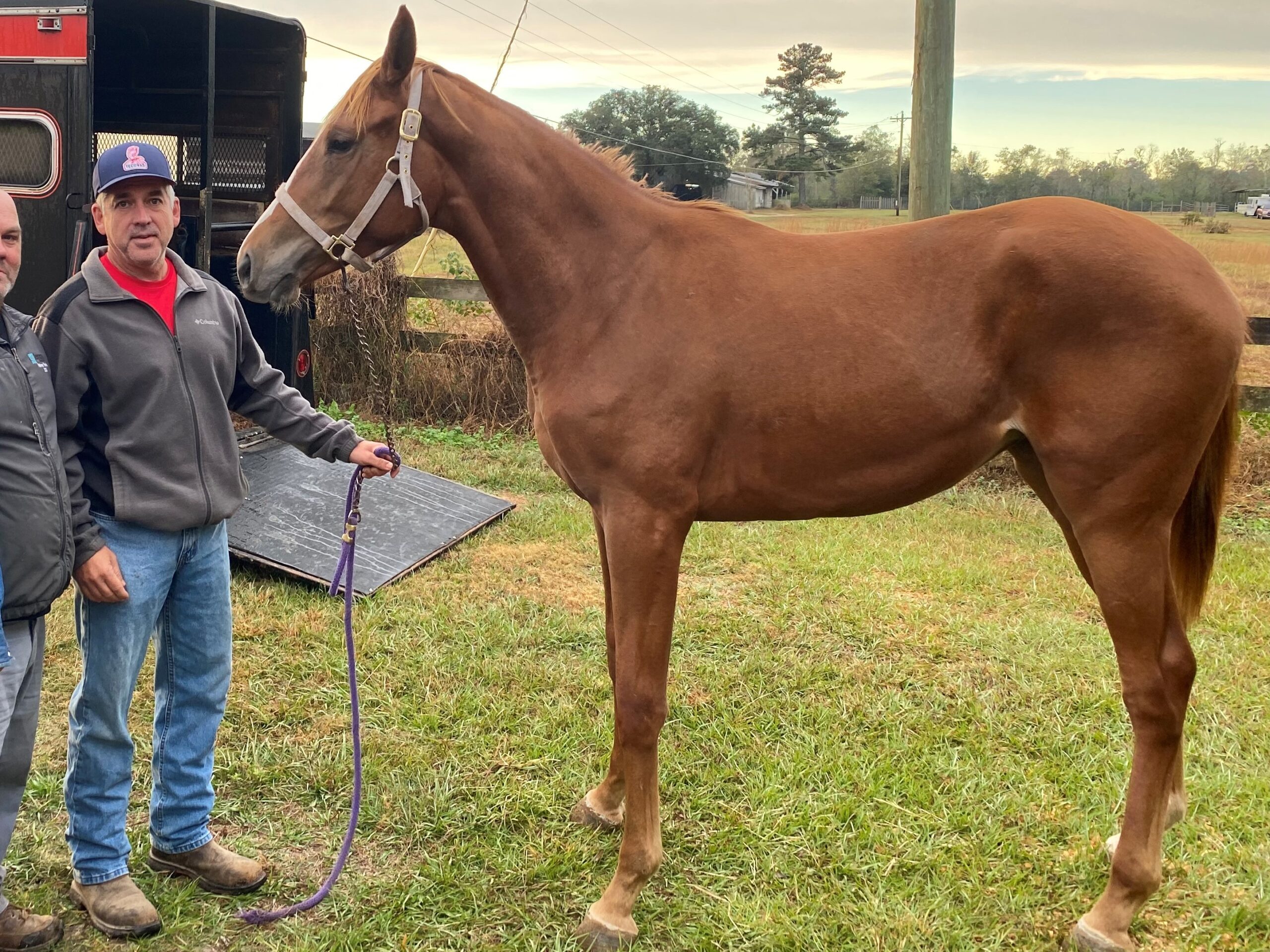
Horse owner gently interacting with their horse in a pasture.
Regular visits and attentive care help ensure a horse’s well-being and happiness.

Getting Started: Your Beginner’s Action Plan

You’ve absorbed a lot of information. Now let’s create a practical roadmap for actually experiencing horse racing.

Step 1: Find Your Local Racetrack

Major U.S. racetracks by region:

Northeast:

  • Saratoga Race Course (Saratoga Springs, NY) – July-September
  • Belmont Park (Elmont, NY) – April-July, September-October
  • Monmouth Park (Oceanport, NJ) – May-September
  • Parx Racing (Bensalem, PA) – Year-round
  • Suffolk Downs (Boston, MA) – Closed 2019, now simulcasting only

Mid-Atlantic:

  • Pimlico Race Course (Baltimore, MD) – April-May, October
  • Laurel Park (Laurel, MD) – Year-round
  • Charles Town (Charles Town, WV) – Year-round

Southeast:

  • Churchill Downs (Louisville, KY) – April-July, September-November
  • Keeneland (Lexington, KY) – April, October only
  • Oaklawn Park (Hot Springs, AR) – January-May
  • Fair Grounds (New Orleans, LA) – November-March
  • Tampa Bay Downs (Tampa, FL) – December-May
  • Gulfstream Park (Hallandale Beach, FL) – December-April

Midwest:

  • Arlington Park (Chicago, IL) – Closed 2021
  • Hawthorne Race Course (Chicago, IL) – Year-round
  • Canterbury Park (Shakopee, MN) – May-September

West Coast:

  • Santa Anita Park (Arcadia, CA) – December-June
  • Del Mar (Del Mar, CA) – July-September, November
  • Golden Gate Fields (Berkeley, CA) – Year-round
  • Los Alamitos (Los Alamitos, CA) – Year-round (mixed Thoroughbred/Quarter Horse)

Southwest:

  • Lone Star Park (Grand Prairie, TX) – April-July
  • Remington Park (Oklahoma City, OK) – August-December
  • Ruidoso Downs (Ruidoso, NM) – May-September

💡 Find your nearest track: Visit NTRA.com (National Thoroughbred Racing Association) and search by your location.

Step 2: Choose Your First Race Day

Best days for beginners:

Avoid your first visit on:

  • Kentucky Derby / Preakness / Belmont (too crowded, overwhelming)
  • Opening day / closing day (too busy)
  • Major stakes days at premier tracks (expensive tickets, massive crowds)

Ideal first visits:

  • Mid-week racing (Wednesday/Thursday) – smaller crowds, relaxed atmosphere
  • Mid-season Saturday afternoon cards – good racing, reasonable crowds
  • Family days (many tracks host kids’ events with pony rides, face painting)
  • Opening week of a meet (excitement without chaos)

Check the schedule: Visit the track’s website, find the racing calendar, and pick a regular non-stakes day with 8-10 races.

Step 3: Plan Your Visit

What to bring:

  • Government-issued ID (required for entry)
  • Cash ($50-100 for betting, food, program)
  • Credit card (accepted most places now)
  • Sunscreen (grandstands are mostly uncovered)
  • Binoculars (helpful for tracking horses)
  • Sunglasses and hat
  • Phone/camera (capture the memories)
  • Light jacket (evening races can get cool)

What NOT to bring:

  • Large bags (security restrictions)
  • Coolers (outside food/drink usually prohibited)
  • Expectations of winning money (treat it as entertainment cost)

Parking & arrival:

  • Arrive 45 minutes before first post
  • Park in general lot ($5-15 typically)
  • Budget 10-15 minutes for parking and walking to gates

Where to sit (first-time recommendation):

  • General admission grandstand, main stretch
  • Aim for seats near the finish line (best view of race endings)
  • Second or third level (see entire track, not just horses passing your spot)
  • Near a TV screen (helps follow races with large fields)
  • Avoid: Infield (too far from races), clubhouse turn (only see horses briefly)

Step 4: Arrive and Acclimate

First 30 minutes at the track:

  1. Buy a racing program ($3-6) at entrance or nearby stands
  2. Find your seats – stake your claim, set down belongings
  3. Walk the facility (15 minutes):
    • Locate betting windows
    • Find bathrooms
    • Check out food options
    • Walk to the paddock (see where you’ll watch saddling)
  4. Buy food (eat before Race 1—you don’t want to miss races standing in line)
  5. Settle in and read program for Race 1

Step 5: Watch Your First Race (No Betting)

For Race #1, I strongly recommend don’t bet—just watch and learn:

20 minutes before post:

  • Walk to the paddock
  • Watch horses get saddled
  • Notice horse behavior (alert vs. anxious)
  • See jockeys receive instructions from trainers

10 minutes before post:

  • Return to your seat
  • Watch horses walk onto track (post parade)
  • Listen to track announcer introduce horses
  • Notice which horses look strong and ready

Post time:

  • Watch the entire race
  • Try to follow one or two horses you liked in the paddock
  • Listen to the announcer call positions
  • Feel the crowd energy
  • Notice the speed—it’s much faster in person than on TV

After the race:

  • Check the tote board for official results
  • Notice the winning payouts
  • Watch the winner’s circle ceremony (if you want)

Debrief with yourself:

  • Did the horse you liked run well?
  • What surprised you?
  • Did you understand what the announcer was saying?

Step 6: Engage More Deeply (Races 2-4)

Now that you’ve seen one race, dig deeper:

For Race 2:

  • Study the program (pick the horse whose recent record looks best)
  • Walk to paddock again
  • Compare your program pick to how horses look in person
  • Return to seat and watch the race
  • Still no betting (unless you’re genuinely ready)

For Races 3-4:

  • Start noticing patterns: Which jockeys ride aggressively? Which trainers’ horses look fit?
  • Try to predict winners before races run
  • Keep mental score of your picks

Step 7: Make Your First Bet (If Ready)

If you’ve watched 3-4 races and feel confident, try a $2 place bet (your horse must finish 1st or 2nd):

How to bet at the window:

Walk up to the clerk and say clearly:

“Two dollars to PLACE on number 5 in race 7.”

The clerk will repeat it back: “Two dollars place, number 5, race 7?”

You say: “Yes.”

They print your ticket. HOLD ONTO IT until after the race. Check it immediately to ensure it’s correct.

If your horse finishes 1st or 2nd: Take your ticket to any window after results are official and say “Cash please.” They’ll pay you.

If your horse finishes 3rd or worse: The ticket is worthless. Don’t throw it away immediately—occasionally results change due to disqualifications.

💡 My Recommendation: Budget $20 total for betting your first day. Make ten $2 place bets across the card. This keeps the financial pressure low while letting you participate in the betting experience.

Step 8: End Your Day Right

After the last race:

  • Cash any winning tickets
  • Don’t chase losses by heading to the simulcast room
  • Review your day: What did you learn? What surprised you?
  • Buy a racing program to take home as a souvenir
  • Plan your next visit

Avoid beginner mistakes:

  • ❌ Don’t increase bet size trying to “win back” losses
  • ❌ Don’t bet every race (selective betting wins long-term)
  • ❌ Don’t follow the crowd blindly (favorites win only 33% of the time)
  • ❌ Don’t expect to profit (treat it as entertainment cost)

Step 9: Continue Learning

After your first track visit:

  1. Watch the Triple Crown races on TV (May-June) – NBC broadcasts free
  2. Read race charts online at Equibase.com for races you watched
  3. Follow horse racing news: BloodHorse.com, Paulick Report, Daily Racing Form
  4. Learn about handicapping (picking winners systematically) – check out our Horse Racing Handicapping for Beginners guide
  5. Visit different tracks to experience various racing cultures

Progressive learning path:

  • Visits 1-3: Pure observation, light betting ($2 place bets)
  • Visits 4-6: Start studying past performances, try win bets
  • Visits 7-10: Experiment with exactas (pick first two horses)
  • Visit 11+: You’re no longer a beginner—you’re a horseplayer
 

    Essential Horse Racing Terms Every Beginner Should Know  


    Racing has its own language. Here are the 30 most important terms for beginners, broken down by category.  

   
                1. Race Basics (Distance, Start, Field, Betting)        
     
           
  • Furlong: $\frac{1}{8}$ mile (the standard unit of distance measurement in racing).
  •        
  • Post Position: The numbered starting spot assigned to each horse (e.g., **#1 is the inside rail**).
  •        
  • Post Time: The scheduled **start time** for a race.
  •        
  • Scratched: A horse **withdrawn** from a race before it starts (due to injury, weather, or trainer decision).
  •        
  • Field: All the horses entered in a single race.
  •        
  • Odds: The betting ratio showing potential payout (e.g., **5-2** means bet $2 to win $5 profit).
  •      


                2. Horse Terms (Sex and Status)        
     
           
  • Thoroughbred: The breed of horse used in flat racing.
  •        
  • Colt: Male horse **under age 4** that has not been gelded.
  •        
  • Filly: Female horse **under age 4**.
  •        
  • Mare: Female horse **age 4+**.
  •        
  • Gelding: Neutered male horse (can race at any age).
  •        
  • Maiden: A horse that has **never won** a race.
  •      


                3. Race Day & The Start        
     
           
  • Paddock: The **saddling area** where horses are prepared before each race.
  •        
  • Post Parade: The warm-up walk/jog horses do on the track before loading into the gate.
  •        
  • Starting Gate: The mechanical device horses load into before the race starts.
  •        
  • Break: The moment the starting gate opens and horses leave.
  •        
  • Off Track: The race has officially started (you’ll hear **”They’re off!”**).
  •      


                4. The Finish & Official Results        
     
           
  • Lengths: Distance between horses (one length $\approx$ one horse’s body length, or 8-9 feet).
  •        
  • Neck/Head/Nose: Smaller margins than a length.
  •        
  • Front-Runner: A horse that runs in the **lead** from start to finish.
  •        
  • Closer: A horse that runs from behind and finishes **strongly**.
  •        
  • Stretch: The final **straightaway** to the finish line.
  •        
  • Wire: The **finish line**.
  •        
  • Photo Finish: When the finish is too close to call without a high-speed camera review.
  •        
  • Winner’s Circle: Where the winning connections pose for an official photo.
  •        
  • Inquiry/Objection: When officials/jockeys review the race for potential **interference**.
  •        
  • Disqualification: When a horse’s finish position is reduced due to interference.
  •        
  • Official: The sign that appears when results are **finalized** and payouts begin.
  •        
  • Purse: The total **prize money** for a race.
  •      


                5. People Involved (Roles)        
     
           
  • Jockey: The professional rider (weighs roughly 108–118 lbs).
  •        
  • Trainer: The person responsible for preparing horses for racing (supervises training, feeding, conditioning).
  •        
  • Owner: The person or group who owns the horse (pays bills, receives purse earnings).
  •        
  • Groom: The person who cares for horses daily (feeding, cleaning, grooming).
  •        
  • Silks: The colorful uniform jockeys wear (represents the owner’s registered colors).
  •      


Frequently Asked Questions About Horse Racing

Essential Horse Racing FAQs

Answers to the most common questions first-time visitors ask about betting, track etiquette, and the horses.

How much money should I bring to a horse race?

For your first visit, bring $75-150 total:

  • $20-40 for betting (stick to $2 bets = 10-20 races)
  • $30-50 for food and drinks
  • $5-10 for parking
  • $5 for a racing program
  • $20 buffer for extras

Leave credit cards at home to avoid overspending. Treat the betting money as entertainment cost, not investment.

Can you make money betting on horse racing?

Short answer: Long-term profitability is extremely difficult for casual bettors.

Reality check:

  • The **track takeout** (the track’s cut) ranges from **15-25%** of every dollar wagered
  • Even winning bettors must overcome this built-in disadvantage
  • Professional handicappers win **30-40%** of bets—meaning they lose 60-70%
  • Fewer than **5%** of bettors profit long-term

Treat racing as entertainment with occasional wins, not an income strategy. In my 30 years, I’ve seen hundreds try to “beat the game”—very few succeed. The track, not other bettors, is your real opponent.

Do you have to bet to enjoy horse racing?

Absolutely not. Betting adds excitement for many fans, but it’s completely optional.

You can enjoy racing by:

  • Appreciating the athletic spectacle
  • Studying horse behavior and training
  • Following horses and jockeys across their careers
  • Enjoying the social atmosphere
  • Learning about breeding and bloodlines
  • Attending for the tradition and pageantry

Many owners (myself included) attend races without betting on horses we don’t own. The competition itself is thrilling enough.

What should I wear to a horse race?

General admission at most tracks: Casual attire is perfectly fine

  • Jeans and polo shirt
  • Sundress or casual skirt
  • Comfortable shoes (you’ll walk a lot)

Clubhouse or premium seating: Business casual

  • Collared shirt for men
  • No torn or excessively casual clothing
  • Closed-toe shoes

Major events (Kentucky Derby, Royal Ascot, Breeders’ Cup):

  • Suits and dresses strongly recommended for premium areas
  • Hats are traditional (especially for women at the Derby)
  • Some areas have formal dress codes

💡 Check the track’s website before attending—dress codes vary by track and seating area.

What does 5-2 odds mean in horse racing?

5-2 odds mean you win $5 for every $2 bet.

Example: A $2 bet at 5-2 odds pays $7 total ($5 profit + $2 original bet returned)

Common odds translation:

  • 1-1 (even money): Bet $2, collect $4 total
  • 2-1: Bet $2, collect $6 total
  • 5-2: Bet $2, collect $7 total
  • 10-1: Bet $2, collect $22 total
  • 20-1: Bet $2, collect $42 total

Lower odds = favorite (heavy betting, lower payout)
Higher odds = longshot (light betting, higher payout)

The odds reflect how much money has been bet on each horse, not the track’s opinion of who will win.

How long does a horse race last?

Race duration: **1-3 minutes** depending on distance

Typical times:

  • 5 furlongs (sprint): ~58 seconds
  • 1¼ miles (Kentucky Derby): ~2 minutes
  • 1½ miles (Belmont): ~2 minutes 30 seconds

Total time at track: Most people stay **3-5 hours** to watch the full race card (8-10 races spaced 25-35 minutes apart).

Is horse racing cruel? Are horses treated well?

Modern Thoroughbred racing has made **significant welfare improvements**.

Current safety standards:

  • HISA oversight (2022-present) ensures uniform national safety rules
  • 2025 fatality rate: **0.85 per 1,000 starts** (historic low, down 57% since 2009)
  • Mandatory pre-race veterinary examinations and zero race-day medication policy
  • Improved track surfaces and maintenance

Quality of care:

  • Racehorses receive world-class veterinary care (better than most human athletes)
  • Annual care costs **$35,000-50,000+** per horse
  • Access to MRI, X-ray, ultrasound, equine hospitals

After racing:

  • ~80% of retired U.S. Thoroughbreds enter aftercare programs
  • Second careers in show jumping, eventing, pleasure riding, therapy work
Do horses enjoy racing? Behavioral indicators suggest many do:
  • Most horses load into the gate willingly and display competitive behavior naturally.
  • They show eagerness pre-race (alert ears, strong walk).

My position as an owner: I never race a horse unless they’re sound, fit, and showing positive behavior. The moment a horse indicates they’re not enjoying it—through reluctance, performance decline, or behavioral changes—they should be retired to a second career.

What’s the difference between Thoroughbred racing and other types?

Thoroughbred Racing (what this guide covers):

  • Breed: Thoroughbreds (tall, lean, built for speed)
  • Style: Jockey on back, running at full gallop
  • Major events: Kentucky Derby, Breeders’ Cup

Quarter Horse Racing:

  • Breed: American Quarter Horses (compact, heavily muscled)
  • Distances: Very short sprints (220-870 yards)
  • Claim to fame: Fastest acceleration in horse racing (reach 55 mph in short bursts)

Standardbred Racing (Harness Racing):

  • Breed: Standardbreds (more heavily built)
  • Style: Driver in a two-wheeled cart (sulky) behind the horse
  • Gait: **Trotting or pacing** (not galloping)

Steeplechase:

  • Style: Jockey on back, **jumping over obstacles** (fences, hedges, water)
  • Distances: 2-4 miles

This guide focuses exclusively on Thoroughbred flat racing—the most popular form in the United States.

How do I pick a horse to bet on?

For absolute beginners, start with these simple factors:

  • Recent form: Finished 1st-3rd in their last race within 45 days
  • Jockey/Trainer quality: Top connections win more often
  • Class level: Horses dropping in class have an advantage

Avoid these beginner mistakes:

  • ❌ Betting only on favorites (they win just **33%** of the time)
  • ❌ Picking based on horse names you like or following tips from strangers
  • ❌ Betting every race instead of being selective

For systematic handicapping strategies, see our Horse Racing Handicapping for Beginners guide.

What happens if it rains on race day?

Track conditions change:

  • Dirt tracks: Become **”sloppy,” “muddy,”** or **”sealed”** (packed to prevent water absorption)
  • Turf races: Often moved to dirt if grass is too soft (prevents injuries)

Race impact:

  • Some horses LOVE mud (“mudders”)—they run faster on wet tracks
  • Others hate it and run poorly

Racing continues in most rain (unless lightning or extremely heavy downpour). Check past performance charts for horses that have run well on “off tracks.”

Can I tour the backside (barn area)?

Most tracks offer backside tours where you can see horses in their stalls, watch morning training, and meet trainers/grooms.

Typical tour details:

  • Usually early morning (6:00-8:00 AM)
  • Free or low cost ($5-20)
  • **Must book in advance** (check track website)

💡 **Highly recommended for serious fans**: Backside tours transform your understanding of the immense work behind every 2-minute race.

How old do you have to be to attend/bet?

Attendance:

  • General admission: Usually **no age restriction** (family-friendly)
  • Betting areas: Must be **18+ or 21+** depending on state laws

Betting age:

  • **18+** in most states
  • **21+** in some states (particularly those with casino-style gaming)

Children are welcome to watch races, visit the paddock, and enjoy the atmosphere—they just can’t bet. Always bring government-issued photo ID.

What if I lose my winning ticket?

Unfortunately, there’s no recovery system. Racing tickets are “bearer instruments”—whoever holds the physical ticket owns it.

Protect your tickets:

  • ✅ Check every ticket immediately after purchase
  • ✅ Hold tickets until race is official (disqualifications can reverse results)
  • ✅ Keep tickets organized (wallet or designated pocket)
  • ✅ Sign the back of large-value tickets

Large payouts ($600+) may require IRS paperwork and ID verification. Winning tickets usually expire after **60-365 days** (varies by state).

Infographic of six common beginner horse racing mistakes with cartoon icons and brief descriptions.
Visual guide to avoiding rookie errors at the track.

Common Beginner Mistakes (And How to Avoid Them)

After 30+ years in racing, I’ve seen every mistake beginners make. Here are the top 10—and how to avoid them:

1. Betting Too Much, Too Fast

The Mistake: Showing up with $200 and betting $20-50 per race, burning through the bankroll by Race 4.

The Fix:

  • Budget **$20-40 total** for betting your first day.
  • Stick to **$2 bets** (10-20 races worth).
  • Treat the money as **education cost**, not investment.
2. Chasing Losses

The Mistake: Losing the first three bets, then doubling bet size to “win it back.”

Why it happens: Emotional response to losing, gambler’s fallacy (“I’m due for a win”).

The Fix:

  • Set a **loss limit** before arriving. When you hit it, stop betting.
  • Never visit the ATM for “just one more race.”
  • Understand that variance is normal—even great handicappers **lose 60-70%** of bets.
3. Betting Every Race (FOMO)

The Mistake: Feeling compelled to have action on all 10 races.

The Fix:

  • Be selective—only bet races where you have strong conviction.
  • Professional bettors often **pass 60-70% of races**.
  • Watching races without betting is completely valid and often more educational.
4. Blindly Betting Favorites

The Mistake: Betting the lowest-odds horse (favorite) in every race, assuming they are “sure things.”

The Reality:

  • Favorites win approximately **33%** of races nationwide.
  • That means favorites **LOSE 67%** of the time.

The Fix:

  • Look for value in overlooked horses at higher odds.
  • Only bet the favorite if your analysis confirms they are legitimate.
5. Ignoring the Paddock

The Mistake: Staying in your seats until post time, never visiting the saddling area.

The Reality: The paddock reveals critical information:

  • Nervous, sweating horses waste energy.
  • Alert horses with pricked ears show focus.
  • You can check the horse’s physical condition (muscle tone, coat quality).

The Fix: Walk to the paddock 20 minutes before every race you’re considering betting.

6. Overlooking Weather and Track Conditions

The Mistake: Betting based on past performances without checking today’s track condition (fast, sloppy, muddy).

The Reality:

  • Some horses love mud (“mudders”), others hate it.
  • Track condition completely changes which horses have advantages.
  • Turf races moved to dirt benefit horses with dirt experience.

The Fix:

  • Check the tote board for the current track condition.
  • Review past performances for how horses ran on similar conditions.
7. Betting Complex Exotics Without Understanding

The Mistake: Jumping straight into trifectas (pick first three horses in order) or superfectas (first four) on day one.

The Reality:

  • These bets are exponentially harder to hit.
  • They require deeper handicapping knowledge.
  • The risk outweighs the reward for beginners.

The Fix:

  • Start with **win/place/show** bets.
  • Progress to **exactas** (first two horses) after several visits.
  • Save trifectas/superfectas for when you understand pace, class, and running styles.
8. Following Crowd Mentality

The Mistake: Betting horses because “everyone’s talking about them” or following random tips from strangers.

The Reality:

  • The crowd is wrong more often than right.
  • Tips from strangers are worthless **95%** of the time.
  • Public perception often creates value in overlooked horses.

The Fix:

  • Do your own research (even simple research).
  • Trust your observations from the paddock over hearsay.
9. Throwing Away Tickets Too Soon

The Mistake: Tossing your ticket after your horse finishes 4th, only to watch an inquiry reverse the order and place your horse 2nd.

The Reality:

  • Inquiries and objections can change the official results.
  • Dead heats (ties) happen.

The Fix:

  • Hold **ALL** tickets until **”OFFICIAL”** appears on the tote board.
  • Don’t celebrate or despair until results are confirmed.
10. Not Setting Time/Money Limits

The Mistake: Arriving at noon, staying until 8 PM, running up $300 in losses, and exhausting yourself.

The Fix:

  • Set a **departure time** before arriving.
  • Set a total **budget** (betting + food) and stick to it.
  • If you’re not having fun anymore, leave—there’s always next week.

Understanding Responsible Gambling: Your Financial Safety Comes First

Before you ever place a bet, you must understand this: Horse racing betting should never risk money you need for bills, savings, or emergencies.

The Reality of Track Takeout

Every pari-mutuel bet you make includes a takeout—the percentage the track and state remove before paying winners.

Typical takeout rates:

  • Win/Place/Show: 15-17%
  • Exacta/Daily Double: 20-22%
  • Trifecta/Superfecta: 25-26%

What this means: If $100,000 is bet on win wagers in a race, the track removes $17,000. Only $83,000 is returned to winning bettors. You’re not betting against other people—you’re betting against a built-in disadvantage.

To profit long-term, you must not only pick winners better than the crowd, you must overcome this 15-26% deficit.

Reality check: Even professional handicappers win 30-40% of their bets. That means they lose 60-70% of the time. They profit only because they identify value—betting horses at higher odds than their true winning probability justifies.

The 1% Rule: Your Safety Net

Never risk more than 1% of your monthly entertainment budget on a single race.

If you have $200 budgeted for entertainment this month, your maximum single-race bet is $2.

Why this works:

  • Prevents catastrophic losses
  • Allows you to bet 50-100 races before depleting your bankroll
  • Keeps racing fun instead of stressful
  • Protects against emotional “revenge betting”

Essential Bankroll Rules

  1. Set a loss limit before arriving: Decide how much you’re willing to lose that day. When you hit that number, you’re done—no exceptions, no ATM visits.
  2. Never chase losses: The biggest mistake beginners make is increasing bet size after losses to “win back” money. This is how entertainment becomes a gambling problem.
  3. Take breaks: After 3-4 races, step away. Grab food, walk around, clear your head. Fatigue leads to poor decisions.
  4. Track your results: Keep a simple log of bets made, outcomes, and net profit/loss. This creates awareness and prevents self-deception.
  5. Treat winnings as entertainment profit, not income: If you win $100, great—but don’t view it as “free money” to re-bet recklessly.

Warning Signs of Problem Gambling

If you experience any of these, seek help immediately:

  • Betting more than you planned repeatedly
  • Hiding gambling activity from family/friends
  • Borrowing money to gamble
  • Feeling anxious or irritable when not gambling
  • Missing work or important obligations due to gambling
  • Chasing losses compulsively
  • Gambling to escape problems or negative emotions

According to the National Council on Problem Gambling, approximately 2-3% of adults experience gambling problems. You are not alone if you need help.

Get Help Now

If you or someone you know shows signs of problem gambling:

National Problem Gambling Helpline
1-800-GAMBLER (1-800-426-2537)
24/7 confidential support

Online resources:
ncpgambling.org

Text support:
Text “GAMBLER” to 53342

The Bottom Line

Horse racing is entertainment. The betting component adds excitement, but it should never create financial stress, relationship problems, or emotional distress.

If gambling stops being fun, stop gambling.

The horses will still race tomorrow. The track will still be there next week. Your financial and mental health are infinitely more important than any bet.

Your Next Steps: Building on This Foundation

Congratulations—you’ve completed the foundational crash course in horse racing. You now know more than 80% of first-time attendees.

Immediate Action Items

This week:

  1. ✅ Find your nearest racetrack and check their racing schedule
  2. ✅ Pick a race day 1-2 weeks from now (mid-week for smaller crowds)
  3. ✅ Watch one horse race on YouTube to see what you’ve learned in action

Race day preparation:

  1. ✅ Check weather forecast 24 hours before
  2. ✅ Review track website for parking, gate times, and any special events
  3. ✅ Withdraw $75-100 cash (betting, food, program, parking)
  4. ✅ Plan to arrive 45 minutes before first post
  5. ✅ Set your departure time and budget limit

After your first visit:

  1. ✅ Review what you learned—what surprised you?
  2. ✅ Study the race charts online (Equibase.com) for races you watched
  3. ✅ Plan your second visit within 2-3 weeks (repetition builds understanding)

Progressive Learning Path

After visits 1-3 (Pure Beginner Phase):

  • Focus on observation and absorbing the atmosphere
  • Make small $2 place bets only
  • Learn to read the tote board and program basics
  • Get comfortable with paddock viewing

After visits 4-6 (Developing Phase):

  • Start studying past performances in detail
  • Try win bets on horses you’ve researched
  • Notice patterns in which jockeys/trainers win consistently
  • Learn to identify pace scenarios

After visits 7-10 (Intermediate Phase):

  • Begin experimenting with exactas (first two horses)
  • Develop your own handicapping preferences
  • Follow specific horses across multiple races
  • Consider attending a stakes race

Visit 11+ (You’re Now a Horseplayer):

  • You’re no longer a beginner—you’re part of the community
  • Consider joining online forums (Pace Advantage, Daily Racing Form community)
  • Study advanced handicapping techniques
  • Maybe even consider ownership partnerships

Recommended Resources for Continued Learning

Books:

  • “Bet with the Best” by Daily Racing Form
  • “Picking Winners” by Andrew Beyer (classic handicapping text)
  • “Betting Thoroughbreds” by Steven Crist

Websites:

  • Equibase.com – Official race charts and statistics
  • DRF.com (Daily Racing Form) – Industry news and analysis
  • BloodHorse.com – Thoroughbred news and breeding information
  • PaulickReport.com – Industry news and welfare coverage

Our complementary guides:

YouTube channels:

  • “Horse Racing Nation” – Race highlights and analysis
  • Track-specific channels (NYRA, TVG, Churchill Downs)

Apps:

  • TVG – Watch live racing nationwide, bet from your phone
  • 1/ST BET – Santa Anita and other tracks
  • FanDuel Racing – Multi-track betting platform
  • Equibase – Official stats and charts

Join the Community

Horse racing has a vibrant, welcoming community. Ways to connect:

At the track:

  • Chat with regulars—most are happy to explain their approach
  • Attend owner/trainer events (many tracks host meet-and-greets)
  • Join track membership programs (discounts, special events)

Online:

  • Twitter/X has an active horse racing community (#HorseRacing)
  • Reddit: r/horseracing (friendly beginner community)
  • Pace Advantage forum (serious handicapping discussions)

Ownership opportunities:

  • Micro-share partnerships ($100-500 to own small percentage of a racehorse)
  • Claiming partnerships (pool money with others to claim horses)
  • Full ownership (expensive but ultimate involvement)

Final Thoughts: Why This Sport Endures

Horse racing has survived for over 300 years because it offers something no other sport can replicate:

The fusion of nature and competition. These aren’t machines or humans alone—they’re 1,000-pound athletes with personalities, preferences, and bad days. A champion on paper can lose to a 50-1 longshot because they woke up cranky. That unpredictability keeps us coming back.

The democratization of access. For $2 and a cheap program, you can participate in the same race as millionaire owners. Your bet counts exactly the same as theirs. Few sports offer that level playing field.

The layers of complexity. On the surface, it’s simple—horses run, someone wins. But beneath that lies breeding science, pace analysis, track biases, jockey tactics, trainer patterns, workout analysis, and more. You can enjoy racing at whatever depth you choose.

The human-animal partnership. Watching a jockey and horse work as one unit—communicating through subtle cues at 40 mph—is genuinely beautiful. When it works perfectly, it’s athletic artistry.

The stories. Every horse has a story. Secretariat’s 31-length Belmont Stakes victory. Seabiscuit’s Depression-era heroism. Zenyatta’s 19 straight wins from impossible positions. Mine That Bird’s 50-1 Kentucky Derby upset. These narratives transcend sport and become cultural touchstones.

The tradition and continuity. The Kentucky Derby has run since 1875—through two world wars, the Great Depression, pandemics, and societal transformation. When you attend the Derby, you’re participating in the same ritual your great-grandparents might have experienced. That connection to history is rare in modern life.

When I stand in the paddock before a race—whether it’s my own horse or one I’m betting on—I still feel the same electricity I felt 30 years ago at the Fair Grounds. The anticipation never fades. The possibility that you’re about to witness something extraordinary never diminishes.

That’s the magic of horse racing. And now you’re part of it.

See you at the track.

For a full list of this year’s highlights, see our major horse racing worldwide.

Loading poll ...

🚨 Understanding Responsible Gambling: Your Financial Safety Comes First

Horse racing betting should never risk money you need for bills, savings, or emergencies. Before your first visit to the track, establish these non-negotiable rules:

  • The 1% Rule: Never risk more than 1% of your monthly entertainment budget on a single race. If you have $200 for entertainment this month, your maximum single-race bet is $2.
  • Loss Limits: Decide before you arrive how much you’re willing to lose that day. When you hit that number, you’re done—no ATM trips, no “one more race.”
  • Never Chase Losses: The biggest mistake beginners make is trying to “win back” money they’ve lost. This is how entertainment becomes a problem.

📊 Reality Check: Track statistics show that even professional handicappers have winning percentages of 30-40%. Expecting to “beat the system” consistently is unrealistic.

Warning Signs: If you find yourself betting more than planned, or feeling anxious about gambling, reach out immediately:

  • National Problem Gambling Helpline: 1-800-GAMBLER (1-800-426-2537)
  • 24/7 confidential support at ncpgambling.org

According to the National Council on Problem Gambling, approximately 2-3% of adults experience gambling problems. You’re not alone if you need help.

How much money should I bring to a horse race?

For your first visit, bring $75-150 total:
$20-40 for betting (stick to $2 bets = 10-20 races)
$30-50 for food and drinks
$5-10 for parking
$5 for a racing program
$20 buffer for extras
Leave credit cards at home to avoid overspending. Treat the betting money as entertainment cost, not investment.

Can you make money betting on horse racing?

Short answer: Long-term profitability is extremely difficult for casual bettors.
Reality check:
The track takeout (the track’s cut) ranges from 15-25% of every dollar wagered
Even winning bettors must overcome this built-in disadvantage
Professional handicappers win 30-40% of bets—meaning they lose 60-70%
Fewer than 5% of bettors profit long-term
Treat racing as entertainment with occasional wins, not an income strategy. In my 30 years, I’ve seen hundreds try to “beat the game”—very few succeed. The track, not other bettors, is your real opponent.

Do you have to bet to enjoy horse racing?

Absolutely not. Betting adds excitement for many fans, but it’s completely optional.
You can enjoy racing by:
Appreciating the athletic spectacle
Studying horse behavior and training
Following horses and jockeys across their careers
Enjoying the social atmosphere
Learning about breeding and bloodlines
Attending for the tradition and pageantry
Many owners (myself included) attend races without betting on horses we don’t own. The competition itself is thrilling enough.

What should I wear to a horse race?

General admission at most tracks: Casual attire is perfectly fine
Jeans and polo shirt
Sundress or casual skirt
Shorts (at some tracks during hot weather)
Comfortable shoes (you’ll walk a lot)
Clubhouse or premium seating: Business casual
Collared shirt for men
No torn or excessively casual clothing
Closed-toe shoes
Major events (Kentucky Derby, Royal Ascot, Breeders’ Cup):
Suits and dresses strongly recommended for premium areas
Hats are traditional (especially for women at the Derby)
Some areas have formal dress codes
💡 Check the track’s website before attending—dress codes vary by track and seating area.

What does 5-2 odds mean in horse racing?

5-2 odds mean you win $5 for every $2 bet.
Example: $2 bet at 5-2 odds pays $7 total ($5 profit + $2 original bet returned)
Common odds translation:
1-1 (even money): Bet $2, collect $4 total
2-1: Bet $2, collect $6 total
3-1: Bet $2, collect $8 total
5-2: Bet $2, collect $7 total
9-2: Bet $2, collect $11 total
10-1: Bet $2, collect $22 total
20-1: Bet $2, collect $42 total
Lower odds = favorite (heavy betting, lower payout)
Higher odds = longshot (light betting, higher payout)
The odds reflect how much money has been bet on each horse, not the track’s opinion of who will win.

How long does a horse race last?

Race duration: 1-3 minutes depending on distance
Typical times:
5 furlongs (sprint): ~58 seconds
6 furlongs (sprint): ~1 minute 10 seconds
1 mile: ~1 minute 36 seconds
1¼ miles (Kentucky Derby): ~2 minutes
1½ miles (Belmont): ~2 minutes 30 seconds
Total time at track: Most people stay 3-5 hours to watch the full race card (8-10 races spaced 25-35 minutes apart).

Is horse racing cruel? Are horses treated well?

Modern Thoroughbred racing has made significant welfare improvements:
Current safety standards:
HISA oversight (2022-present) ensures uniform national safety rules
2025 fatality rate: 0.85 per 1,000 starts (historic low, down 57% since 2009)
Mandatory pre-race veterinary examinations
Zero race-day medication policy
Improved track surfaces and maintenance
Quality of care:
Racehorses receive world-class veterinary care (better than most human athletes)
Annual care costs $35,000-50,000+ per horse
Daily observation by trainers and grooms
Access to MRI, X-ray, ultrasound, equine hospitals
After racing:
~80% of retired U.S. Thoroughbreds enter aftercare programs
Second careers in show jumping, eventing, pleasure riding, therapy work
Thoroughbred Aftercare Alliance funds 200+ rehoming organizations

Do horses enjoy racing? Behavioral indicators suggest many do:

Most horses load into the gate willingly
Display competitive behavior naturally (race each other in pastures)
Show eagerness pre-race (alert ears, strong walk)
My position as an owner: I never race a horse unless they’re sound, fit, and showing positive behavior. The moment a horse indicates they’re not enjoying it—through reluctance, performance decline, or behavioral changes—they should be retired to a second career.

What’s the difference between Thoroughbred racing and other types?

Thoroughbred Racing (what this guide covers):
Breed: Thoroughbreds (tall, lean, built for speed)
Style: Jockey on back, running at full gallop
Distances: Sprints to routes (5-12 furlongs)
Surfaces: Dirt, turf, synthetic
Major events: Kentucky Derby, Breeders’ Cup
Quarter Horse Racing:
Breed: American Quarter Horses (compact, heavily muscled)
Style: Jockey on back
Distances: Very short sprints (220-870 yards)
Claim to fame: Fastest acceleration in horse racing (reach 55 mph in short bursts)
Popular in: Southwest U.S., especially Texas and Oklahoma
Standardbred Racing (Harness Racing):
Breed: Standardbreds (more heavily built than Thoroughbreds)
Style: Driver in a two-wheeled cart (sulky) behind the horse
Gait: Trotting or pacing (not galloping)
Tracks: Typically smaller, 5/8 to 1 mile ovals
Popular in: Northeast and Midwest U.S., Canada
Steeplechase:
Horses: Usually Thoroughbreds
Style: Jockey on back, jumping over obstacles (fences, hedges, water)
Distances: 2-4 miles
Where: More popular in UK/Ireland, limited U.S. presence
This guide focuses exclusively on Thoroughbred flat racing—the most popular form in the United States.

How do I pick a horse to bet on?

For absolute beginners, start with these simple factors:
Recent form: Look for horses that finished 1st-3rd in their last race within 45 days
Jockey quality: Top jockeys win more often—look for familiar names in the program
Trainer reputation: Successful trainers consistently run fit horses
Workout patterns: Recent workouts show fitness (look for “bullet” works = fastest of the day)
Class level: Horses dropping in class (moving from tougher competition to easier) have an advantage
Avoid these beginner mistakes:
❌ Betting only on favorites (they win just 33% of the time)
❌ Picking based on horse names you like
❌ Following tips from strangers at the track
❌ Betting every race instead of being selective
For systematic handicapping strategies, see our Horse Racing Handicapping for Beginners guide.

What happens if it rains on race day?

Track conditions change:
Dirt tracks: Become “sloppy” (standing water), “muddy” (wet and holding), or “sealed” (packed to prevent water absorption)
Turf races: Often moved to dirt if grass is too soft (prevents injuries)
Race impact:
Some horses LOVE mud (“mudders”)—they run faster on wet tracks
Others hate it and run poorly
Past performance charts show how horses performed on off tracks
What you should do:
Check weather forecast before attending
Bring rain gear if storms are predicted
Racing continues in most rain (unless lightning or extremely heavy downpour)
Some bettors love sloppy tracks—crowd is smaller, off-track specialists offer value

Can I tour the backside (barn area)?

Most tracks offer backside tours where you can:
See horses in their stalls
Watch morning training sessions
Meet trainers and grooms
Learn about daily horse care
Watch horses being exercised
Typical tour details:
Usually early morning (6:00-8:00 AM)
Free or low cost ($5-20)
Must book in advance (check track website)
Some tracks require closed-toe shoes
Recommended tracks for backside tours:
Churchill Downs (Kentucky)
Keeneland (Kentucky)
Saratoga (New York)
Santa Anita (California)
Del Mar (California)
💡 Highly recommended for serious fans: Backside tours transform your understanding of what goes into preparing horses for racing. You’ll see the 5 a.m. feed routines, watch gallops, and realize the immense work behind every 2-minute race.

How old do you have to be to attend/bet?

Attendance:
General admission: Usually no age restriction (family-friendly)
Betting areas: Must be 18+ or 21+ depending on state laws
Betting age:
18+ in most states
21+ in some states (particularly those with casino-style gaming)
Children at the track:
Many tracks welcome families and host kids’ days with pony rides, face painting, playgrounds
Some tracks have dedicated family sections
Kids can watch races, visit paddock, enjoy the atmosphere—they just can’t bet
Always bring government-issued photo ID—required to enter betting areas.

What if I lose my winning ticket?

Unfortunately, there’s no recovery system.
Racing tickets are “bearer instruments”—whoever holds the physical ticket owns it. If you lose a winning ticket, you cannot claim the payout, even if you remember your bet.
Protect your tickets:
✅ Check every ticket immediately after purchase
✅ Hold tickets until race is official
✅ Keep tickets organized (folded in wallet or designated pocket)
✅ Sign the back of large-value tickets (won’t prevent theft, but shows ownership)
❌ Don’t throw away tickets until race is official (disqualifications can reverse results)
Cashing windows:
Small payouts: Cash immediately at any window
Large payouts ($600+): May require IRS paperwork and ID verification
Winning tickets usually expire after 60-365 days (varies by state)