
Last updated: April 3, 2026
Any links on this page that lead to products on Amazon are affiliate links and I earn a commission if you make a purchase. Thanks in advance – I really appreciate it!
This guide draws on 30+ years of managing racehorses and pleasure horses in Louisiana — a state where mosquito-borne diseases like EEE and West Nile are not theoretical risks but annual realities I deal with every spring. I am not a veterinarian. Vaccination schedules should always be finalized with your equine vet, who can account for your horse’s health history, geographic risk, and competition or travel schedule.
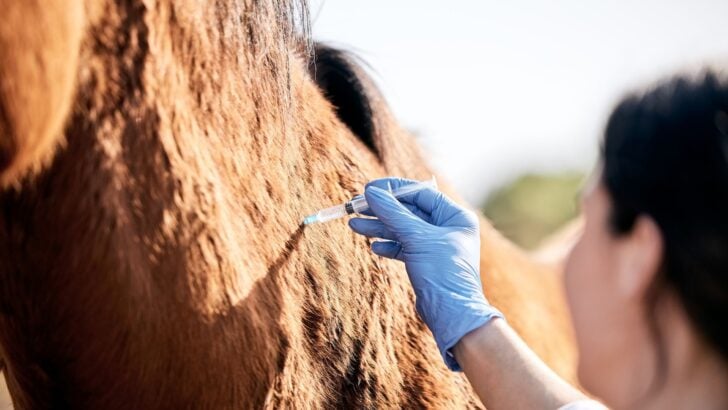
Getting your horse vaccination schedule right is the cheapest insurance you can buy. I’ve seen what EEE does to an unvaccinated horse — it’s fast, brutal, and usually fatal. After 30 years managing Thoroughbreds in Louisiana, this is the exact protocol I use to keep horses protected year-round.
A horse vaccination schedule is more than a list of shots — it’s a timed program built around your horse’s age, location, and real-world exposure risk. What protects a backyard horse in the Midwest won’t fully cover a racehorse on the Gulf Coast, and that difference matters.
Whether you’re building a program from scratch or tightening up your current routine, this guide gives you the exact schedule, timing, and regional adjustments needed to get it right.
- 4 core vaccines required for every horse in North America, regardless of use or location
- Risk-based vaccines added based on geography, exposure, and competition schedule
- Gulf Coast priority: EEE, West Nile, and tetanus are non-negotiable; Potomac Horse Fever and strangles are strong regional additions
- Spring timing is critical — vaccinate before mosquito season begins, not after
- New horses and foals need a primary series before the annual booster schedule applies

Table of Contents
Core Vaccines: Required for Every Horse
The American Association of Equine Practitioners (AAEP) identifies four vaccines as “core” — meaning every horse in North America should receive them regardless of age, use, breed, or location. These diseases are endemic, life-threatening, and in some cases have public health implications.
| Vaccine | Disease / Threat | Transmission | Mortality Rate | Schedule (Adult) |
|---|---|---|---|---|
| Eastern Equine Encephalomyelitis (EEE) | Viral brain inflammation; rapid neurological decline | Mosquitoes | 75–90% in horses | Annual (spring); semi-annual in high-risk regions |
| Western Equine Encephalomyelitis (WEE) | Viral encephalitis; similar presentation to EEE | Mosquitoes | 20–50% | Annual (spring); typically combined with EEE |
| West Nile Virus (WNV) | Neurological disease ranging from mild to fatal | Mosquitoes (Culex spp.) | 30–40% with severe neurologic disease | Annual; semi-annual recommended in Gulf Coast states |
| Tetanus | Clostridium tetani toxin; painful muscle rigidity, death | Soil contamination of wounds | ~80% if untreated | Annual; booster at penetrating injury or surgery |
| Rabies | Fatal viral encephalitis; zoonotic risk to humans | Bite of infected animal (raccoons, bats, foxes) | 100% once symptomatic | Annual |
Source: AAEP Vaccination Guidelines and AAEP Adult Horse Vaccination Chart (2026)
EEE / WEE (Encephalomyelitis)
EEE and WEE vaccines are almost always delivered as a combination product, typically alongside tetanus toxoid in a single injection. In the Gulf South — Louisiana, Mississippi, Florida, Alabama — EEE is not a “might happen” disease. It kills horses in this region every year. The AAEP recommends annual vaccination in spring; semi-annual vaccination is strongly advised in high-risk areas like Louisiana, where mosquito season stretches from early spring through late fall.
- EEE mortality in horses is 75–90% — the vast majority of horses that develop clinical EEE do not survive
- No antiviral treatment exists; supportive care may extend survival but rarely changes the outcome
- Previously unvaccinated adults need a primary 2-dose series (4–6 weeks apart) before moving to annual boosters
- Timing matters: vaccinate in early spring, before the first significant rainfall and warming that triggers mosquito activity
West Nile Virus (WNV)
West Nile virus has been actively transmitted in Louisiana every year since it was first detected in the state in 2002. The AAEP’s WNV vaccination guidelines recommend a primary 2-dose series for naïve horses (4–6 weeks between doses) followed by annual revaccination — with semi-annual intervals recommended for horses under age 5, performance horses, and horses in high-exposure regions like the Gulf Coast.
- Multiple vaccine types exist: inactivated whole virus, recombinant canarypox vector, and inactivated flavivirus chimera — all are effective when administered correctly
- WNV has no cure. Some horses recover with supportive care; approximately 30–40% of horses with severe neurologic disease do not
- Horses that survive severe WNV infection may have permanent neurological deficits
- In Louisiana, I vaccinate for WNV in February/March AND again in August — the late-summer booster aligns with peak Culex mosquito activity
Tetanus
Horses are among the most susceptible domestic animals to tetanus. The Clostridium tetani bacterium lives in soil everywhere horses live — any wound, puncture, or surgical incision is a potential exposure point. Annual vaccination with tetanus toxoid is inexpensive, highly effective, and should never be skipped.
- Annual booster covers routine protection; horses that sustain a penetrating injury or go into surgery should receive an additional booster if their last dose was more than 6 months ago
- A horse that has never been vaccinated or has unknown history should receive a primary 2-dose series (4–6 weeks apart) before moving to the annual schedule
- Tetanus is nearly always fatal in horses if not caught and treated within hours of first symptoms — and clinical tetanus is difficult to treat even with antitoxin
Rabies
Rabies is invariably fatal once symptoms appear — in horses and in humans exposed to an infected horse. Louisiana has a significant wildlife rabies population (raccoons, skunks, bats, foxes), and horses kept on pasture with access to wooded areas are at real risk. Annual vaccination is inexpensive and the consequences of skipping it are catastrophic.
- Any horse that bites or scratches a human may trigger a public health investigation — vaccination history matters in these situations
- Horses in wooded or semi-rural areas (essentially all of south Louisiana) face higher exposure risk from infected wildlife
- A single annual dose provides full protection; no booster is needed at injury
Miles’ Take — Core vaccines are non-negotiable: I’ve had barn help ask me why I spend money vaccinating horses that “never go anywhere.” The answer is that EEE, West Nile, tetanus, and rabies don’t need your horse to go anywhere — they come to your pasture. Every horse I’ve ever owned or managed gets all four core vaccines every single spring, without exception. That’s 30 years and hundreds of horses. I’ve never lost one to any of these four diseases.
Risk-Based Vaccines: Gulf Coast & Southeast
Risk-based vaccines are recommended based on a horse’s individual exposure risk — where they live, how much contact they have with other horses, whether they travel to shows or events, and regional disease prevalence. In Louisiana and the Gulf Coast, several risk-based vaccines effectively function as de facto necessities given local conditions.
| Vaccine | Who Needs It | Gulf Coast Priority | Typical Schedule |
|---|---|---|---|
| Equine Influenza | Any horse in contact with other horses; show, trail, boarding | High — large show circuits, rodeos, sales | Every 6 months for at-risk; annual for low-exposure |
| Equine Herpesvirus (EHV-1/4) | Performance horses; broodmares; horses in group settings | High — boarding facilities, fairgrounds, racetracks | Every 3–6 months (performance); semi-annual (pleasure) |
| Strangles | Horses exposed to new animals; boarding; sales | Moderate–High — endemic in regional horse population | Semi-annual (high risk); annual (lower risk) |
| Potomac Horse Fever (PHF) | Horses near rivers, floodplains, creek-bottom pastures | High — Louisiana river parishes, bayou regions | Semi-annual (spring + late summer) |
| Venezuelan EEE (VEE) | Horses in border regions; imported horses; travel to Mexico/Central America | Moderate — periodic incursion risk | Annual; combined EEE/WEE/VEE products available |
| Botulism | Horses fed round bales, silage, or hay in type B-endemic areas; foals; broodmares | Moderate — round bale feeding is common in Louisiana | Annual (3-dose primary series if naive) |
| Equine Viral Arteritis (EVA) | Breeding stallions; horses traveling to breeding facilities | Low–Moderate — targeted at breeding operations | Annual (intact male colts/stallions); consult vet for mares |
Risk assessment should be conducted with your veterinarian annually. Exposure risk changes with horse use, travel, and local disease activity.
Equine Influenza
Equine influenza spreads rapidly through respiratory droplets — one coughing horse at a sale barn, show, or fairground can infect dozens of horses within hours. Any horse that leaves your property for any reason, or comes into contact with horses that travel, is at meaningful risk.
- The AAEP recommends vaccination every 6 months for horses at risk of exposure — which in practice means most horses in Louisiana that attend any events or share facilities with other horses
- Two formats are available: injectable inactivated vaccine and intranasal modified-live vaccine (FluAvert). Many vets prefer the intranasal for performance horses as it produces stronger mucosal immunity
- Low-exposure horses (permanently pastured, no contact with outside horses) may be adequately covered with annual vaccination
Equine Herpesvirus (Rhinopneumonitis — EHV-1 and EHV-4)
EHV-1 and EHV-4 cause respiratory disease, abortion in pregnant mares, and in rare but devastating cases, equine herpesvirus myeloencephalopathy (EHM) — a neurological form that can cause paralysis and death. EHV is endemic in the horse population and reactivates under stress.
- Performance horses: Boost every 3–4 months — the stress of competition and travel suppresses immunity and triggers latent infections
- Broodmares: Vaccinate at months 5, 7, and 9 of pregnancy with the EHV-1 abortion vaccine (not all EHV products are labeled for this purpose — confirm with your vet)
- Pleasure horses with low exposure: Semi-annual vaccination is generally adequate
- Note: existing EHV vaccines provide protection against respiratory disease and reduce abortion risk, but do not fully prevent neurological EHM — biosecurity remains critical
Strangles (Streptococcus equi)
Strangles is one of the most common equine infectious diseases in the world — highly contagious, extremely persistent in the environment, and capable of shutting down a barn for months if it gets in. I’ve seen it move through a 30-horse facility and infect 80% of the horses because one new arrival wasn’t properly quarantined.
- Injectable vaccine: Reduces severity of disease but doesn’t prevent infection in all horses
- Intranasal modified-live vaccine (Pinnacle I.N.): Produces stronger mucosal immunity at the point of entry; generally preferred for horses with high exposure risk
- Important: Don’t vaccinate horses that have been recently exposed or are in an active outbreak — the intranasal vaccine can cause disease in immunocompromised or recently infected horses. Always consult your vet about timing
- New horses entering a property should be quarantined for a minimum of 2–3 weeks and ideally titer-tested before introduction to the herd
Potomac Horse Fever (PHF)
Potomac Horse Fever is caused by Neorickettsia risticii — transmitted when horses accidentally ingest infected aquatic insects (caddisflies, mayflies, damselflies) that emerge near standing water. In Louisiana, this is highly relevant. Bayous, creeks, flooded pastures, and the proximity of most Louisiana horse properties to water mean PHF exposure risk is real and recurring.
- Clinical signs include severe diarrhea, fever, depression, and laminitis — PHF can be fatal if not treated promptly
- Vaccinate in early spring before aquatic insect emergence (February–March in Louisiana) and again in late summer (August) when a second insect emergence peak occurs
- Vaccine efficacy is moderate — PHF vaccination reduces severity but does not prevent all infections. Keep turnout away from creek banks and standing water during peak emergence
Complete Vaccination Schedule by Horse Type
Adult Horses (Previously Vaccinated, Known History)
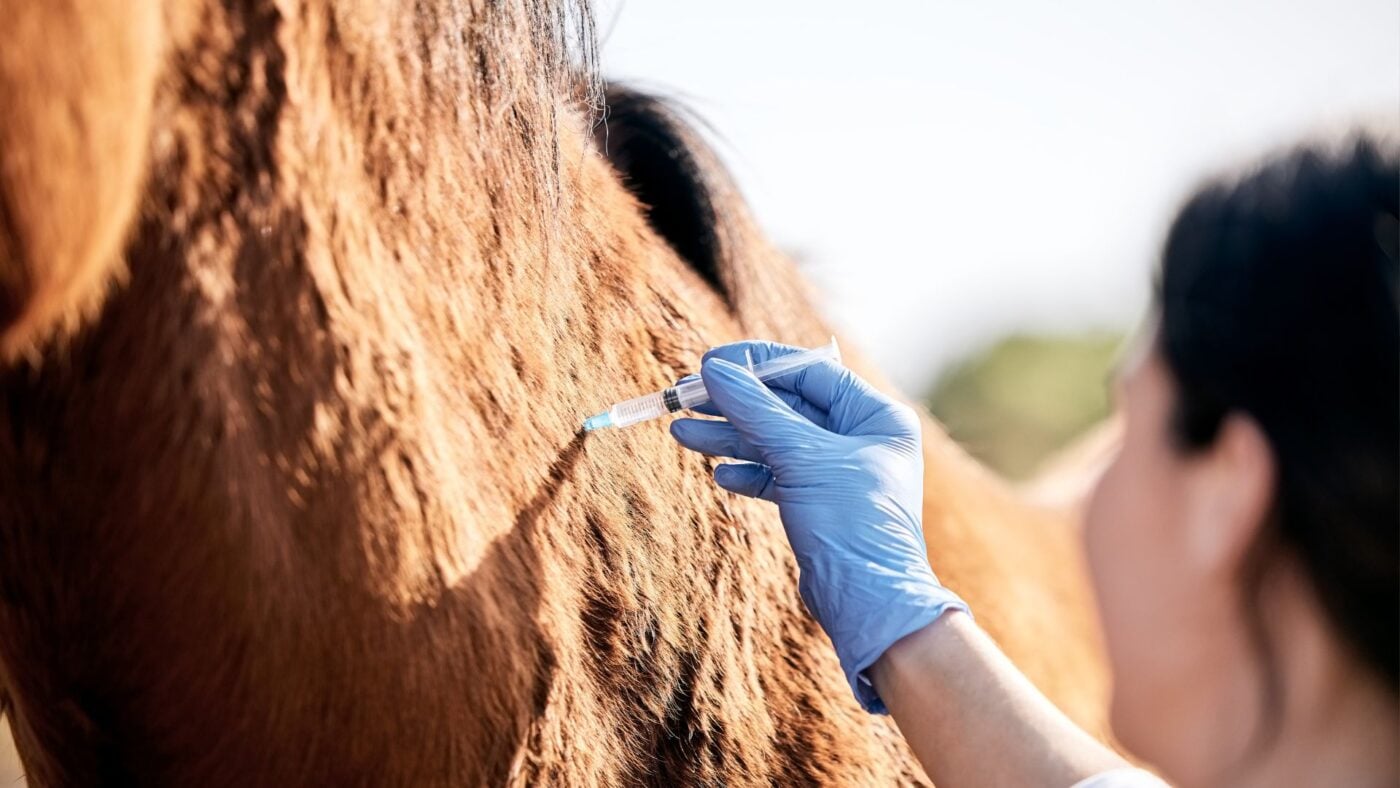
The simplest scenario: an adult horse with a documented vaccination history and a current program in place. The goal is to maintain protective immunity by keeping boosters on schedule and adjusting risk-based vaccines when the horse’s use or exposure changes.
| Vaccine | Timing | Louisiana Notes |
|---|---|---|
| EEE / WEE / Tetanus (combination) | February–March (before mosquito season) | Semi-annual recommended — add a fall booster (Sept) for EEE/WNV due to extended mosquito season |
| West Nile Virus | February–March primary; August booster | Semi-annual strongly recommended; peak Culex activity is July–October |
| Rabies | Annual (any time; spring is convenient) | Wildlife contact risk is high in rural Louisiana — do not skip |
| Equine Influenza / EHV | Every 6 months (performance); annual (low exposure) | Any horse attending fairs, shows, sales, or trail events: every 6 months minimum |
| Potomac Horse Fever | February–March and August | Strongly recommended for all horses in south Louisiana; river/bayou pastures especially |
| Strangles | Semi-annual (high exposure); annual (low exposure) | Any horse that attends events or shares facilities with horses of unknown history |
Senior Horses (15+ Years)
Senior horses often have reduced immune function — their response to vaccines may be less robust than younger horses, and they may be more susceptible to diseases even with vaccination in place. This doesn’t mean vaccinating less; it means vaccinating consistently and building a complete health program around it.
- Follow the same core vaccine schedule as adult horses — do not reduce frequency based on age
- Horses with PPID (Cushing’s disease) have suppressed immune function and may need semi-annual vaccination across the board — discuss with your vet
- Pre-vaccination bloodwork (including ACTH for PPID screening) is worthwhile for senior horses to confirm no underlying condition is compromising vaccine response
- Time vaccinations away from other stressors — dental procedures, major feed changes, or new herd introductions within the same week can suppress immune response
- For more on managing senior horses holistically: feeding senior horses, best senior feeds, and what actually determines lifespan
Broodmares
Broodmares have the most carefully timed vaccination schedule of any horse category. Pre-foaling vaccination is critical because foals are born without meaningful immunity of their own — they depend entirely on the antibodies in the mare’s colostrum for protection in their first weeks of life.
- 4–6 weeks before foaling: Booster all core vaccines (EEE/WEE, WNV, tetanus, rabies) — this primes the mare’s antibody levels at their highest point just before colostrum production
- 5th, 7th, and 9th months of pregnancy: EHV-1 abortion vaccine (use products specifically labeled for this purpose)
- Avoid vaccination in the first 90 days of pregnancy unless disease risk outweighs concern — first trimester is the period of highest susceptibility to vaccine-associated complications
- Mares vaccinated on schedule produce colostrum with high levels of antibodies that protect foals for their first 3–4 months of life
Foals
Foal vaccination timing depends entirely on whether the dam was properly vaccinated before foaling. Foals from vaccinated mares carry maternal antibodies that interfere with vaccine response in early life — those antibodies protect the foal but also block the foal’s immune system from responding to early vaccines.
| Vaccine | Foal from Vaccinated Mare | Foal from Unvaccinated Mare |
|---|---|---|
| EEE / WEE / Tetanus | 3-dose series: 4–5, 5–6, and 7–8 months | Begin at 3–4 months; 3-dose primary series |
| West Nile Virus | Primary series: 4–5 months; 2nd dose 4–6 weeks later; 3rd dose at ~10–12 months | Begin at 3–4 months; same 3-dose series |
| Rabies | 6 months of age | As early as 3–4 months; repeat at 6 months |
| Equine Influenza / EHV | Begin injectable series at 6 months; 3 doses 4 weeks apart | Begin at 4–6 months; same schedule |
See the AAEP Foal Vaccination Chart for complete current guidance. Schedules vary by product — always confirm with your vet and follow label directions.
For the full foal management context around these vaccine windows — including colostrum, passive transfer, and weaning timing — see our foal care guide for the first year.
Performance and Show Horses
Any horse attending shows, rodeos, fairs, sales, or events faces dramatically higher disease exposure risk than a horse that stays home. Travel stress suppresses the immune system, and exposure to hundreds of horses from different regions happens every weekend at active circuits.
- Influenza and EHV: every 3–6 months — the most important interval to tighten for active show horses
- All core vaccines: follow the standard adult schedule but consider semi-annual for WNV and EEE given additional stress and travel
- Many show facilities, horse shows, and competitions in Louisiana and surrounding states require documentation of current influenza and EHV vaccination for entry — keep vaccine records with your Coggins and health papers
- Time boosters 2–3 weeks before major events so full immunity develops before competition stress hits
EEE and West Nile: A Louisiana Owner’s Warning

I want to spend a moment on this specifically — not as a general vaccination discussion, but as something I’ve lived with for 30 years in south Louisiana.
In 2025, 11 horses in Louisiana tested positive for EEE across multiple parishes. One of those horses also tested positive for West Nile virus. These weren’t horses in some far-off state where the disease is unusual — they were in the same region where most of my readers keep horses, fed by the same waterways, bitten by the same mosquitoes. LSU Veterinary Medicine has called EEE one of the most underappreciated lethal equine threats in the region.
EEE onset in horses is rapid. A horse may show only subtle behavioral changes or mild fever on Day 1. By Day 2–3, severe neurological signs — propulsive walking, inability to stand, blindness — are common. Most horses with EEE die within 2–5 days of showing the first neurological signs. There is no treatment that reliably changes the outcome.
West Nile progresses more slowly and has a slightly better prognosis with supportive care, but 30–40% of horses with severe neurological WNV still die, and survivors may have permanent deficits. Neither of these diseases gives you a long window to respond.
The Louisiana Department of Health has documented active West Nile transmission every year since 2002 — and the human case data severely undercounts animal exposure because most horses aren’t tested unless they’re showing clear neurological signs. The mosquito population that carries WNV and EEE in Louisiana is not seasonal in the same way as northern states — activity begins in February and doesn’t end until December in mild years.
My protocol for Louisiana horses: EEE/WEE/Tetanus and WNV in February, before the first major warming event. A second WNV booster in August, before peak late-summer mosquito activity. This is not excessive — it’s the minimum I’d recommend for any horse kept outdoors in the Gulf South.
Mosquito Reduction Alongside Vaccination
Vaccination is the primary defense, but reducing mosquito breeding on your property meaningfully lowers exposure. In Louisiana, complete elimination isn’t possible — but you can reduce the population around your barn and paddocks:
- Eliminate standing water: overturn buckets, clean water troughs weekly, and address low spots that hold water after rain
- Use quality fly sheets and fly masks during peak hours (dusk and dawn) — they don’t prevent all mosquito contact but reduce it significantly
- Consider stalling horses overnight during active outbreak alerts in your parish
- Report suspected EEE or WNV cases to your state veterinarian immediately — early surveillance data helps neighboring owners take preventive action
New Horses and First-Year Protocols
Any horse arriving at your property with unknown vaccination history — or whose last vaccines you can’t verify — should be treated as unvaccinated and started on a primary series. This is one of the most commonly skipped steps in horse management, and it’s how diseases like strangles and influenza enter established herds.
- Quarantine first: Isolate the new arrival from your existing horses for a minimum of 2 weeks — ideally 4 weeks. Observe for respiratory signs, nasal discharge, fever, and swollen lymph nodes before any herd contact
- Vet check on arrival: Schedule a veterinary examination that includes a physical assessment, Coggins test (required by law for equine transport in Louisiana), and vaccination planning
- Primary series for all core vaccines: Naïve adult horses need a 2-dose primary series (4–6 weeks apart) for EEE/WEE, WNV, and rabies before moving to the annual schedule. Tetanus toxoid follows the same protocol
- Risk-based vaccines: Assess exposure history, intended use, and regional risk to determine which additional vaccines are needed
- Document everything: Start a vaccination record the day the horse arrives. This record is required for many show entries, interstate transport, and competition events — and it protects you legally if a disease question arises
Horse Vaccination Schedule and Your Annual Health Program
Vaccination doesn’t exist in isolation. An effective equine preventive health program combines vaccination with parasite management, dental care, hoof care, and nutrition into a coordinated annual schedule. These components reinforce each other — a horse carrying a heavy parasite load will have a diminished immune response to vaccines; a horse with painful dental problems won’t maintain the body condition that supports good health overall.
Parasite Management
Strategic deworming based on fecal egg counts has largely replaced the old calendar-based rotation approach. The goal is to target the specific parasites present in your horse at meaningful levels, rather than blanket-treating on a fixed schedule that builds resistance. Learn the signs that your horse may need deworming and discuss a fecal egg count program with your vet.
In Louisiana, the warm, humid climate supports year-round parasite activity — strongyles, tapeworms, and bots all have active periods that require targeted treatment. See our complete guides to horse digestive health and parasite control for a full breakdown.
Dental Care
Annual dental exams — and floating as needed — are as fundamental to equine health as vaccination. A horse that can’t properly chew can’t adequately absorb the nutrients it needs to support immune function. Senior horses often need dental work every 6 months. Dental exams are typically coordinated with spring vet visits, making them easy to schedule alongside vaccinations and parasite management.
Coggins Testing
Equine Infectious Anemia (EIA) testing via the Coggins test is required by Louisiana law for all horses being transported across state lines or attending public events. Annual Coggins testing is standard practice — your vet will typically run it at the spring health visit alongside vaccinations. Keep a current Coggins certificate in your trailer at all times.
Spring Health Visit: What to Combine
The annual spring vet visit is the most efficient opportunity to address multiple preventive health needs at once. Here’s what I coordinate in a single visit:
- Core vaccines (EEE/WEE/Tetanus, WNV, Rabies)
- Risk-based vaccines (Flu/EHV, Strangles, PHF)
- Coggins test
- Fecal egg count for parasite baseline
- Physical examination — weight, body condition score, eyes, teeth, limbs
- Dental float if needed (may require separate appointment depending on sedation logistics)
- Bloodwork for senior horses (ACTH, metabolic panel) — see our guide to Cushing’s disease in horses for why early PPID screening matters
Miles’ Take — One visit, one record, no gaps: I keep a laminated vaccine card for every horse I own. It lives in the barn with the horse’s file — not in a drawer somewhere. Spring visit: everything goes on the card. Any mid-year boosters go on the card. New horse arrives: first thing I do is start a card. When I’m trying to pull a horse to a show at 6 AM and the event requires vaccine documentation, I don’t want to be looking through a filing cabinet. The record is right there. Thirty years, never missed an event entry because of missing records.
Frequently Asked Questions About Horse Vaccinations
What vaccines does my horse absolutely need every year?
The AAEP identifies four core vaccines as mandatory for every horse in North America, regardless of use or location: Eastern and Western Equine Encephalomyelitis (EEE/WEE), West Nile Virus, Tetanus, and Rabies. In Louisiana and the Gulf South, these are treated as non-negotiable minimums — and semi-annual vaccination for EEE and WNV is strongly advised given the extended mosquito season.
When should I vaccinate my horse each year?
In Louisiana and the Gulf South, vaccinate in late February to early March — before the first significant warming event that triggers mosquito activity. A second booster for West Nile Virus (and EEE in high-risk areas) should follow in August to cover peak late-summer mosquito activity. For influenza and EHV, follow a 6-month interval for any horse with regular exposure to other horses.
Can I give my horse’s vaccines myself?
Some horse vaccines are available over-the-counter and can legally be administered by owners in most states, including Louisiana. However, several — including rabies — should be administered by a licensed veterinarian in most states. Owner-administered vaccines also don’t carry the same legal protection as vet-administered vaccines if a disease question or liability issue arises. For horses that travel or compete, vet-administered vaccines are preferred for documentation purposes. Consult your vet before starting a self-administration program.
What vaccines does a new horse with unknown history need?
Treat any horse with unknown vaccination history as unvaccinated. Begin a primary 2-dose series for all core vaccines (EEE/WEE, WNV, Tetanus, Rabies) with doses 4–6 weeks apart, then move to the annual schedule after the primary series is complete. Quarantine the horse for a minimum of 2 weeks before introducing it to your existing horses, and schedule a full veterinary examination including Coggins testing on arrival.
Are there vaccines specific to the Gulf Coast and Louisiana?
While the core vaccines are universal, Gulf Coast and Louisiana horses face elevated risk from EEE, West Nile Virus, and Potomac Horse Fever given the climate, mosquito populations, and proximity to water. Semi-annual EEE and WNV vaccination (rather than the national minimum of annual) is the standard recommendation for horses in Louisiana. PHF vaccination is also strongly recommended for horses with access to creek or bayou pastures.
How long after vaccination before my horse is protected?
Most vaccines require 7–14 days after the final dose in a primary series to provide significant protection. For this reason, timing matters: vaccinate at least 2 weeks before the start of mosquito season, before attending shows or events, and before foaling. Annual boosters typically provide protection within 7–10 days of administration in horses with an established vaccination history.
What are the signs of a vaccine reaction in horses?
Mild vaccine reactions are common and typically include localized swelling, heat, or soreness at the injection site and mild lethargy for 24–48 hours. These resolve on their own. Serious reactions — hives, facial swelling, difficulty breathing, collapse, or fever above 103°F — are rare but require immediate veterinary attention. If your horse has had a previous reaction, inform your vet before the next vaccination so they can pre-treat or monitor appropriately.
Do senior horses need more or fewer vaccines?
Senior horses need the same core vaccine protocol as adult horses — do not reduce frequency based on age. In fact, horses with PPID (Cushing’s disease) or other immune-suppressing conditions may benefit from semi-annual vaccination across all categories due to reduced immune response. Discuss your senior horse’s specific health status with your vet to ensure the vaccination program accounts for any underlying conditions. See also our guide to Cushing’s disease in horses.
- Horse Worming Guide — Signs, schedule, and strategy
- Horse Digestive Health — Colic, parasites, and prevention
- Cushing’s Disease in Horses — Management and care guide
- Feeding Senior Horses — Best practices and meal plans
- Best Senior Horse Feeds — Top-rated options compared
- Signs of Pain in Horses — What to watch for
- Equine Arthritis — Detection and treatment guide
- How Long Do Horses Live? — Lifespan, longevity, and care
Have questions about your horse’s vaccination schedule, or a story about EEE or West Nile from your region? Drop a comment below — this is exactly the kind of experience-sharing that helps other horse owners make better decisions for their animals.
About Miles Henry
Racehorse Owner & Author | 30+ Years in Thoroughbred Racing
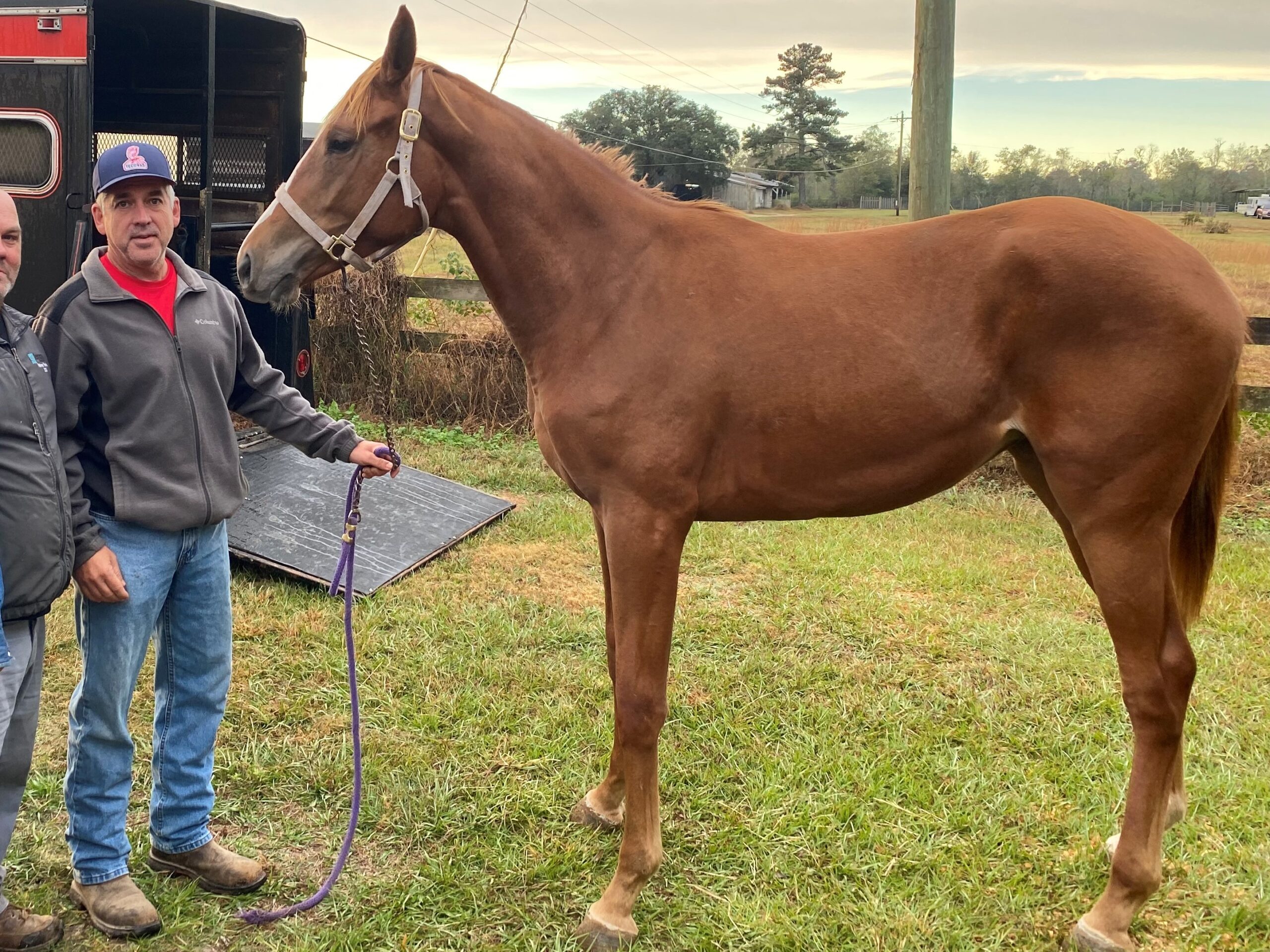
Miles Henry (legal name: William Bradley) is a professional horseman based in Folsom, Louisiana. He holds Louisiana Racing License #67012 and has spent over three decades managing Thoroughbreds at premier tracks including Fair Grounds, Delta Downs, and Evangeline Downs.
Expertise & Hands-On Experience: Beyond the track, Miles has decades of experience in specialized equine care, covering everything from hoof health and nutrition to training protocols for Quarter Horses, Friesians, and Paints. Every guide on Horse Racing Sense is rooted in this “boots-on-the-ground” perspective.
30 of their last 90 starts
Equibase Profile.

Connect with Miles: