
Last updated: July 6, 2026
Horse racing distances — what you need to know:
- One furlong = one-eighth of a mile (660 feet) — eight furlongs equal exactly one mile; memorize this and all other conversions follow
- Sprints: 4.5–7 furlongs — explosive speed tests favoring fast-twitch horses with early gate speed
- Routes: 1 mile or longer — stamina and tactical intelligence matter more than raw gate speed
- Most horses show a clear preference for a distance range — some exceptional horses succeed across multiple categories, but one common mistake is assuming a horse will transfer success at one distance to a very different one without accounting for running style, pedigree, pace, and surface
- Track configuration changes how distance races — six furlongs at a tight bullring like Delta Downs plays completely differently than six furlongs at a sweeping one-mile oval
- Pace scenario is the most overlooked route variable — a slow pace turns a route into a front-runner’s race; honest fractions set up closers
Table of Contents
Common Horse Racing Distances — Sprints vs. Routes
Different distances require fundamentally different types of horses and different tactical approaches from jockeys. The interaction between a horse’s stamina, muscle composition, and race distance determines both competitive speed and injury risk. A horse that thrives at six furlongs is often physiologically distinct from one that wins routes — and treating them interchangeably at the betting window is one of the most common mistakes recreational handicappers make.
| Category | Distance | Furlongs | Best For | Example Races |
|---|---|---|---|---|
| Short Sprint | 4.5–5.5 furlongs | 4.5–5.5 | Two-year-olds, pure speed horses | Juvenile maiden races |
| Standard Sprint | 6–7 furlongs | 6–7 | Most claiming and allowance races | Breeders’ Cup Sprint (6F) |
| Middle Distance | 1–1 1/16 miles | 8–8.5 | Derby preps, developing three-year-olds | Arkansas Derby (1 1/16 mi) |
| Classic Distance | 1 1/8–1 1/4 miles | 9–10 | Championship races | Kentucky Derby (1 1/4 mi) |
| Extended Route | 1 1/2+ miles | 12+ | True stamina tests | Belmont Stakes (traditional 1½ mi) |
I categorize each horse as either a sprinter or a route horse based on performance, not just breeding. Pedigree suggests tendencies, but the track tells the truth.
Sprint Races (4.5–7 Furlongs)
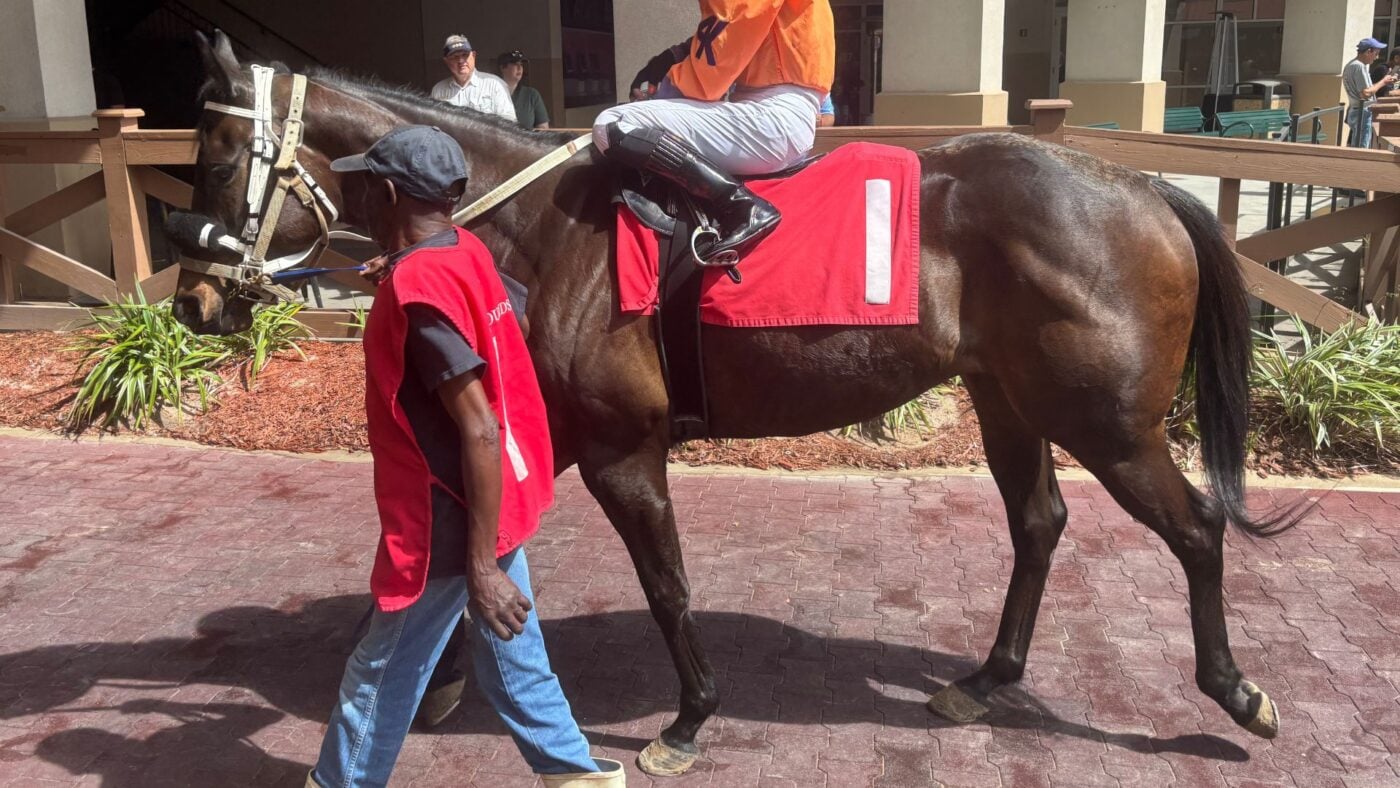
Sprints are explosive tests of pure speed. Horses run at near-maximum velocity throughout, leaving little margin for tactical error. Gate position is critical — a fast start is nearly mandatory, especially on shorter ovals where the first turn comes quickly. Sprinters typically rely more heavily on fast-twitch muscle fibers and explosive acceleration, while route horses depend more on aerobic capacity and pace management. Watch for horses bred by speed sires (Storm Cat, Mr. Greeley, Speightstown lines) returning to sprint distances after unsuccessful route tries.
Route Races (1 Mile or Longer)
Routes reward stamina, tactical intelligence, and pace management. Closers have more ground to work with, and raw gate speed matters far less than a horse’s ability to rate early and fire late. I have watched horses with modest speed figures consistently outperform in routes simply because their stride efficiency does not deteriorate at the mile-and-an-eighth mark the way sprint-bred horses’ does.
Pace scenario matters enormously in routes. A single honest pace can turn a route into a slog that punishes closers, while a soft pace with multiple stalkers sets up a front-end bias. Always project the pace shape before committing to a route play. A legitimate closer needs either honest early fractions that set up a late kick, or a track that historically favors late runners — preferably both. In a pace-collapse scenario where speed horses tire and fall apart through the far turn, a closer’s staying power becomes decisive. In a slow-pace route with a lone front-runner who gets a comfortable trip, that same closer may never find the turn of foot needed to close the gap.
I once had a gelding named Bayou Rocket who illustrated this perfectly. At six furlongs, he was unstoppable — three straight wins. Stretch him to one mile? He ran brilliantly for seven furlongs, then his tank hit empty. Understanding his limitations saved me from costly entries in unsuitable races. For more on how physical capacity shapes performance, see the guide on how fast horses run at each distance.
Horseman’s Perspective: I recently tested my horse Corked at seven furlongs, trying to see if he could stretch out from his preferred six. He broke sharp and took the lead early, looking comfortable through the half-mile. But at the three-quarter pole, the extra furlong caught up with him — he couldn’t hold his pace and faded to second-to-last. It was a textbook confirmation of a pure sprinter being pushed beyond his ceiling. His conformation tells the same story: a short, powerful back and muscular hindquarters built for explosive acceleration, not sustained output. Know your horse’s natural distance ceiling — pushing a horse beyond its preferred distance can lead to fatigue, inefficient movement, and a poor finish.
Why Race Distances Matter — Strategy, Breeding, and Performance
Distance changes the race from the start. In a sprint, early speed and position are critical; in a route, pace control, stamina, and the ability to finish strongly matter more. That is why the same horse can look brilliant at six furlongs and ordinary at a mile. The connection between distance and how often horses can race is also significant — sprinters typically handle higher frequency than horses grinding through routes.
Pedigree can help identify distance tendencies, but it should be treated as a guide, not a guarantee. Certain sire lines are more often associated with speed, while others are more often associated with stamina, yet individual horses can easily outperform or contradict those patterns. Research on the equine myostatin gene from the National Center for Biotechnology Information has added another layer to distance analysis, but the practical test is still what the horse shows on the track. According to The Jockey Club, pedigree analysis remains one of the most reliable predictors of distance aptitude, though individual variation is significant.
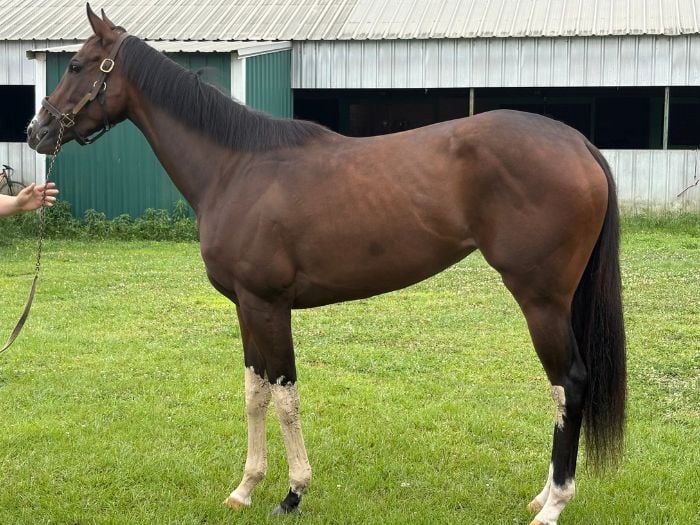
I bred a filly by Tapit out of a mare who won at 1⅛ miles. Before she ever raced, I expected her to want more ground, and that proved true when she won at 1 1/16 miles as a three-year-old. Pedigree pointed the way, but performance confirmed it. Always give horses the chance to prove or disprove their breeding.
Distance Conversions — Quick Reference
| Furlongs | Miles | Meters | Common Examples |
|---|---|---|---|
| 5 | 0.625 | 1,006 | Short sprints, two-year-old races |
| 6 | 0.75 | 1,207 | Standard sprint distance |
| 7 | 0.875 | 1,408 | Long sprint / short route |
| 8 | 1.0 | 1,609 | One mile, classic test |
| 8.5 | 1.063 | 1,710 | Middle distance routes |
| 9.5 | 1.188 | 1,911 | Preakness Stakes distance |
| 10 | 1.25 | 2,012 | Kentucky Derby distance |
| 12 | 1.5 | 2,414 | Belmont Stakes (traditional distance) |
Distance Differences by Breed and Surface
Thoroughbreds race across a wide range of distances, but most races fall between 6 furlongs and 1¼ miles. Quarter Horses are far more specialized, built for pure acceleration over much shorter trips — usually a quarter mile or less.
Surface matters just as much as distance. Dirt sprints often place a premium on early speed, while turf races frequently reward efficiency, balance, and the ability to accelerate late. Some horses transform completely when switched surfaces — a mediocre dirt record occasionally masks genuine turf ability. That surface switch is one of the better-value angles in handicapping because it is underweighted in the market. For a full breakdown of how dirt, turf, and synthetic surfaces affect performance, see the dedicated surface guide.
How Track Configuration Impacts Distance
Not all racetracks play the same. A six-furlong race at a tight track feels very different from the same distance at a wider, more open oval because the run to the first turn, the shape of the turns, and the length of the stretch all change how the race unfolds.
At tight tracks like Delta Downs, inside posts often become more valuable because horses drawn outside face a greater risk of losing ground into the first turn. At larger tracks like Fair Grounds, horses have more room to settle and make their move, so post position matters less than trip, pace, and race shape. A horse that wins from an inside post at one track may not get the same trip at another, even at the same distance. Track configuration is one of the easiest variables to overlook and one of the most important to understand.
Distance Comparison Data
These times are broad reference points, not universal pars. Track speed, class level, age, weather, and daily variant can move winning times several seconds, so use the table as a starting point rather than a final answer. Use Equibase par times for the specific track you are handicapping.
| Distance | Furlongs | Avg. Winning Time (Fast Dirt) | Turf Note |
|---|---|---|---|
| 5 Furlongs | 5 | :57.0 | Rarely run on turf |
| 6 Furlongs | 6 | 1:09.5 | Turf 6F typically 1–2 sec slower |
| 7 Furlongs | 7 | 1:22.5 | Turf 7F: ~1:23–1:25 |
| 1 Mile | 8 | 1:36.0 | Turf mile: ~1:33–1:35 (often faster) |
| 1 1/16 Miles | 8.5 | 1:43.0 | Turf: ~1:40–1:42 |
| 1 1/4 Miles | 10 | 2:02.0 | Turf routes at this distance: ~1:58–2:00 |
Betting Smart — How Distance Shapes Handicapping
Distance is one of the most useful handicapping tools because it changes how a race is run, which horses fit, and how pace will unfold. A horse that excels at six furlongs may not handle a mile, and a runner that needs time to settle may be compromised in a short sprint.
One of the most common mistakes handicappers make is assuming a horse will repeat its last effort at a very different distance without accounting for running style, pedigree, surface, and pace. Proven success at today’s exact distance matters, but so does the shape of the race — a lone front-runner can control a soft pace, while a pace duel sets things up for a closer. Class changes and distance changes should also be read together: stretching out while dropping in class can signal uncertainty, while cutting back after a route try can indicate a more suitable setup. The first start at a new distance often teaches more than it wins; the second start at that distance is frequently the better betting opportunity. For how to apply distance analysis to exotic bet structures, see the exotic horse racing bets guide. Distance is also directly tied to racehorse career length — horses that find their optimal distance tend to race longer.
Post position matters, but its value changes with distance and track configuration. In sprints, inside posts can be an advantage because the run to the first turn is short. In routes, post position matters less than trip, pace, and position going into the far turn. On turf, middle posts often play well because horses have more time to settle before the first bend. Weight post position as part of the full distance picture, not as a standalone stat. See our full analysis of post positions and which gates win by distance and track type.

Distance analysis checklist — apply before every race:
- Check past performances for success at today’s specific distance — not just “sprints” or “routes” generically
- Compare the horse’s running style with the new distance — a horse that needs time to settle may not fit a short sprint
- Project pace pressure: too much early speed helps closers; a lone front-runner can wire the field
- Treat surface changes and distance changes as a combined factor — a horse trying both simultaneously is higher risk
- Be cautious when a horse faces a new distance and a class change at the same time — that is two unknowns at once
Horseman’s Perspective: Distance is only one piece of the puzzle. The edge comes from combining distance with surface, pace, and post position — that is where the market often misses the real setup, because most bettors are only looking at one or two of those variables at a time.

Frequently Asked Questions About Horse Racing Distances
How many furlongs are in a mile of horse racing?
Eight furlongs equal one mile. Once you memorize this, all other distance calculations become easier — divide furlongs by 8 to get miles, multiply miles by 8 to get furlongs.
What is considered a sprint race in horse racing?
A sprint is generally any race shorter than one mile. The most common sprint distances are six and seven furlongs. Anything at one mile or longer is a route.
Why is the Kentucky Derby 1 1/4 miles?
The Derby has been run at 1 1/4 miles (10 furlongs) since 1896. Originally established at 1.5 miles in 1875, it was shortened to better suit American-bred three-year-olds. This distance has become the gold standard for testing classic horses in America — long enough to require genuine stamina, short enough that speed-bred horses can still compete.
How fast do racehorses run per furlong?
Top racehorses often average about 12 seconds per furlong in sprints and 13–14 seconds in longer routes. Elite Kentucky Derby times approach 2:00 for 1¼ miles — Secretariat’s 1973 record of 1:59.40 remains the standard.
Do different countries measure horse racing distances differently?
Yes. Many international races use meters instead of furlongs. A 2000-meter race common in Europe and Japan equals approximately 1.24 miles or just under 10 furlongs.
What is the longest Thoroughbred horse race in the United States?
The Belmont Stakes is traditionally the longest of the American Triple Crown races at 1.5 miles (12 furlongs). The race was temporarily run at Saratoga at 1.25 miles while Belmont Park underwent reconstruction, before returning to its traditional 1.5-mile distance at the rebuilt Long Island facility. European races like the Ascot Gold Cup at 2.5 miles are significantly longer.
How do you determine the best distance for a horse?
Look at the horse’s body type, pedigree, running style, and how it finishes in past races. A horse will show you its best distance if you pay attention to when it finishes strongly versus when it flattens out.
Key Takeaways: Horse Racing Distances
- Eight furlongs = one mile — the single most important conversion; all other calculations follow from this
- Sprints reward speed, routes demand stamina — most horses optimize at one distance type, not both; forcing a sprinter into routes is one of the most common and costly mistakes
- Breeding influences distance, but performance proves it — pedigree suggests tendencies; the track confirms or denies them
- Track configuration changes how distance races — six furlongs at a tight bullring and six furlongs at a sweeping one-mile oval are fundamentally different races
- Pace scenario is the most overlooked route variable — a slow pace turns any route into a front-runner’s race; always project the pace shape before committing to a play
- Surface can transform a horse’s results — never give up on a horse until you have tried every surface and distance combination that fits its profile
- Post position weight changes with distance — inside posts matter far more in sprints than in routes; factor this into every post-draw evaluation
- Second start at a new distance often shows the real response — the first attempt provides education; bet on the second
About Miles Henry
Racehorse Owner & Author | 30+ Years in Thoroughbred Racing
Miles Henry (legal name: William Bradley) is a professional horseman based in Folsom, Louisiana. He holds Louisiana Racing License #67012 and has spent over three decades managing Thoroughbreds at premier tracks including Fair Grounds, Delta Downs, and Evangeline Downs.
Expertise & Hands-On Experience: Beyond the track, Miles has decades of experience in specialized equine care, covering everything from hoof health and nutrition to training protocols for Quarter Horses, Friesians, and Paints. Every guide on Horse Racing Sense is rooted in this “boots-on-the-ground” perspective.
30 of their last 90 starts
Equibase Profile.

Connect with Miles: