
Last updated: August 6, 2026
Any links on this page that lead to products on Amazon are affiliate links and I earn a commission if you make a purchase. Thanks in advance – I really appreciate it!
Buying a horse trailer isn’t about finding the “best” one – it’s about matching the trailer to your horses, your tow vehicle, and the miles you actually haul.
Horse trailers are classified several different ways, and those categories overlap – a single trailer might be a two-horse bumper pull, a three-horse slant-load gooseneck, or a four-horse living-quarters trailer. The main classifications are towing style (gooseneck or bumper pull), loading style (slant load or straight load), capacity, material (aluminum or steel), and whether the trailer includes living quarters. The right combination depends on how many horses you haul, how far, how often, and what your tow vehicle can handle.
I started with a two-horse straight-load bumper pull trailer. It was simple to maintain and handled everything I needed for local trips, but once I started hauling farther and carrying multiple Thoroughbreds, the added stability and storage of a gooseneck became worth the tradeoff. I moved into aluminum gooseneck trailers, including both two- and three-horse slant loads, for the longer hauls. Here’s how the major types break down, and what I’ve found matters most in actual use.
| Trailer Type | Best For | Main Advantage |
|---|---|---|
| Two-Horse Bumper Pull | Local hauling | Affordable and versatile |
| Gooseneck | Frequent hauling | Stability and storage |
| Slant Load | Multiple horses | More capacity in less length |
| Straight Load | Simple horse access | Direct loading |
| Living Quarters | Multi-day travel | Stay with your horses |
Table of Contents
Gooseneck vs. Bumper Pull
This is the first fork in the road for most buyers, since it determines what tow vehicle you need. A gooseneck trailer connects to a ball mounted in the bed of a pickup truck. That hitch position generally improves stability and maneuverability compared with a similarly sized bumper pull trailer (technically a tag-along, connected through a properly rated, frame-mounted receiver hitch rather than literally the vehicle’s bumper), which is one reason goosenecks are common for larger trailers, multiple horses, and long-distance hauling. The tow vehicle’s ratings still determine whether the combination is safe and appropriate – hitch position alone doesn’t make a trailer suitable for a given load. See my full guide on towing a two-horse bumper pull for the basics of matching a trailer to your tow vehicle.
I hauled a two-horse bumper pull for years before moving to a gooseneck, and the difference was obvious the first time I pulled a loaded gooseneck on the interstate – the trailer felt planted instead of shifting with every steering correction. For the full comparison of cost, towing capacity, and storage, see my gooseneck vs. bumper pull breakdown.
Slant Load vs. Straight Load
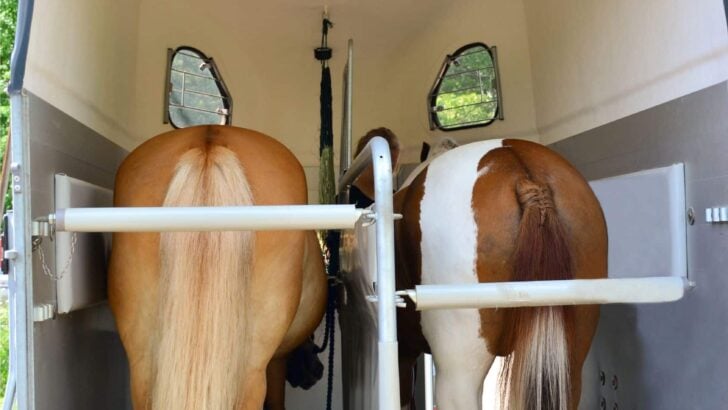
Straight load trailers position horses side-by-side, facing forward. Slant load trailers angle horses diagonally, which usually fits more horses into a shorter trailer length.
| Feature | Slant Load | Straight Load |
|---|---|---|
| Horse Position | Angled diagonally | Side-by-side, facing forward |
| Space Efficiency | Fits more horses in a shorter trailer | Better suited to one or two horses |
| Loading & Unloading | May require unloading rear-most horses first, unless the trailer has side-exit doors | Direct access to each horse |
| Safety Access | Divider gates secure each horse | Escape doors let a handler exit without walking the horse out |
| Common With | Frequent haulers, multiple horses | New haulers, some nervous or inexperienced horses |

In a rear-entry slant load, unloading a horse near the front may mean moving the horses behind it out first, unless the trailer has individual stall or side-exit doors – worth checking before you assume every slant load works the same way.
With my Thoroughbreds, I’ve found many young horses settle into a straight load more easily on their first few trips, since the open, forward-facing space feels less restrictive. That’s my experience, though – a well-adjusted horse can travel comfortably in either style, and some settle into a slant load just as well once they’re used to it. Reading a horse’s individual loading and hauling history tells you more than the trailer style alone. For more on how a horse’s instincts shape its reaction to travel, see my horse behavior and body language guide.
Escape doors are the detail I’d never go without on a straight load again. I once loaded a nervous horse in a friend’s trailer that didn’t have one, and having to walk the horse back out alongside me instead of stepping through a side door made an already tense loading harder than it needed to be.
Miles’s Take: When we hauled two young Thoroughbreds to the Fair Grounds for their first official works, one hesitated loading. Letting her take her time, without rushing or forcing it, made the difference. That’s true regardless of which trailer type you own – a calm, patient loading routine matters more than the trailer design itself.
Aluminum vs. Steel Trailers
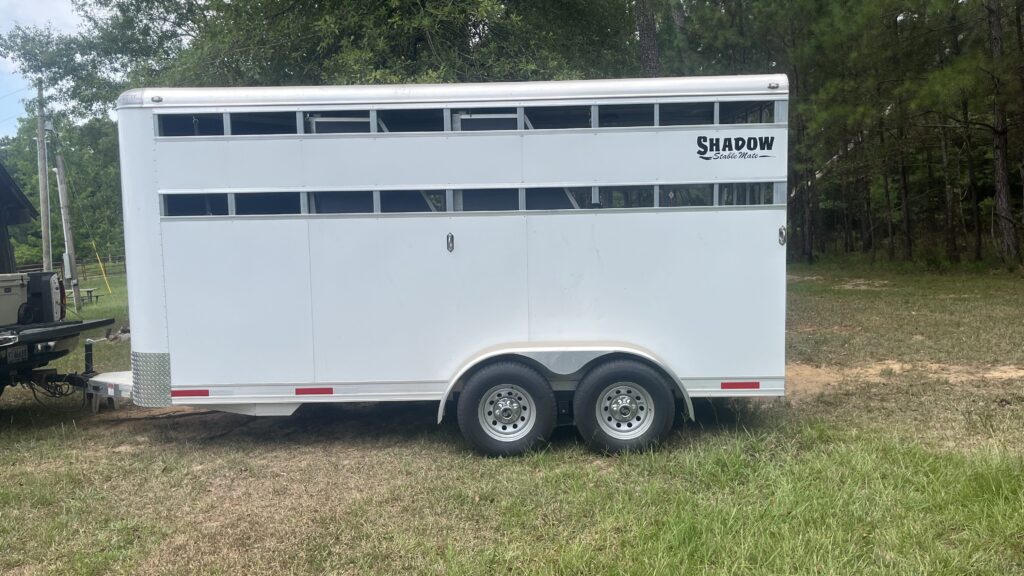
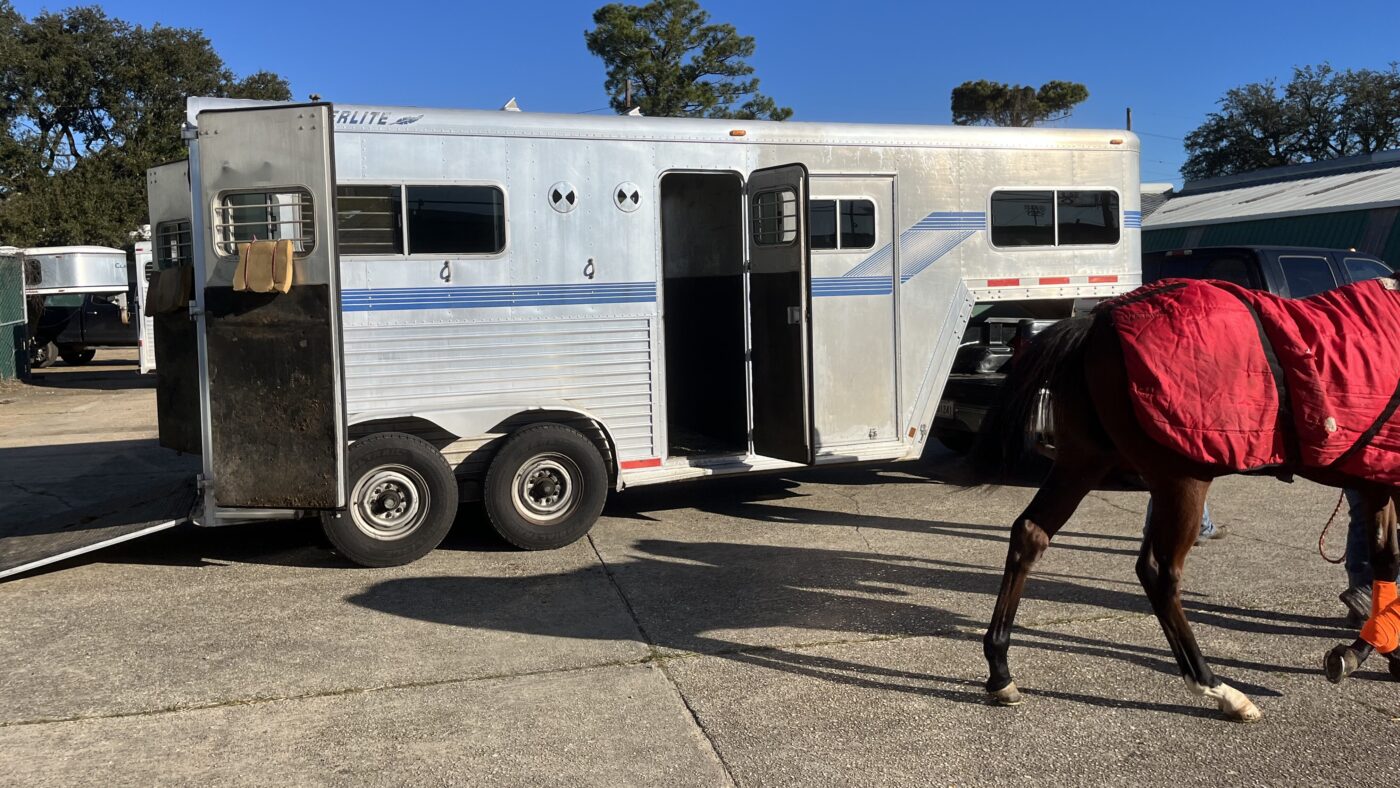
Material is another difference that a “types of horse trailers” search often turns up. Aluminum trailers are popular because they’re often lighter and resist rusting, although aluminum can still corrode and may cost more to purchase or repair. Steel trailers are often less expensive upfront and have a long track record of durability, but need more attention to rust prevention over time. After moving into aluminum goosenecks myself, the weight savings were noticeable, especially hauling longer distances – a lighter trailer means less strain on the tow vehicle and generally better fuel economy over a long haul. See my breakdown of gooseneck trailer weight for how material affects the numbers.
Horse Trailer Sizes and Capacity
Two-horse trailers are common in both bumper-pull and gooseneck configurations, and remain the most common starting point. Three- and four-horse trailers are commonly built as slant-load goosenecks, since that combination provides room for horses, tack, and sometimes living quarters – but multi-horse bumper pulls exist too. The real question isn’t just how many stalls a trailer has; it’s whether the loaded trailer, horses and all, falls within your tow vehicle’s ratings. For more than four or five horses, buyers commonly look at larger goosenecks, stock-combination trailers, horse vans, or specialized commercial-style trailers.
Living Quarters vs. Standard Trailers
A living quarters trailer adds a small living space at the front – sleeping area, kitchenette, sometimes a bathroom – built onto a gooseneck horse trailer. They’re aimed at owners who travel to multi-day shows, rodeos, or races and want to stay near their horses instead of booking a hotel. The tradeoff is real: more weight, more cost, and a bigger tow vehicle requirement. A standard trailer without living quarters is lighter, cheaper, and simpler to maintain, and it’s the right call for most day-trip or single-overnight hauling.
Stock Trailers vs. Horse Trailers
Stock trailers are designed for livestock and typically have open-slatted sides, which provide excellent airflow but less control over temperature and weather. Some are equipped with dividers, mats, or horse-specific features, while others lack the padding and individual-stall protection found in dedicated horse trailers. If you haul horses regularly, compare the trailer’s height, width, flooring, dividers, ventilation, and interior hazards rather than assuming every stock trailer is alike.
Other Trailer Types
A few other configurations show up less often but are worth knowing about. Reverse-load trailers carry horses facing backward – some owners believe this helps a horse brace more naturally under braking and acceleration, though opinions vary. Side-load trailers load through a side door instead of only the rear, often paired with a slant-load layout.
Horse vans are motorized horse-transport vehicles that do not require a separate tow vehicle. They are more common in commercial operations and some overseas markets than among typical U.S. private owners. Stock-combination trailers start as open livestock trailers modified with dividers, tack storage, or other horse-specific features, splitting the difference between a stock trailer and a purpose-built horse trailer.
Trailers also differ in how a horse enters. A ramp lets the horse walk up gradually, while a step-up trailer requires stepping over a raised rear threshold – neither is automatically better, and traction, the horse’s loading habits, and trailer condition matter more than which one you pick. Larger commercial rigs sometimes use a fifth-wheel hitch, which resembles a gooseneck but connects differently – a less common setup for most owners, but worth knowing if you’re looking at bigger rigs.
What Matters More Than Layout
Before comparing slant load against straight load too closely, check the parts that actually determine whether a trailer is safe: floor condition under the mats, tire age, brakes and the breakaway battery, and the trailer’s GVWR and tongue weight against your tow vehicle’s ratings. A well-maintained basic trailer beats a poorly maintained premium one every time. Get the hitch setup right too, and follow the tow vehicle and trailer manufacturers’ guidance before using a weight-distributing hitch – these can help some bumper-pull combinations, but they’re not a universal fix for an undersized tow vehicle.
The Rutgers Equine Science Center’s trailering safety guide covers this well, including a reminder that a horse falling through a rotted floor is one of the more preventable trailer failures. Calm, unhurried loading matters as much as the trailer itself.

How to Choose the Right Horse Trailer Type
Start with how many horses you’re actually hauling most of the time, not the occasional exception. Then match your tow vehicle to the trailer, not the other way around – towing capacity should never be an afterthought. Where you land often depends on where you are in owning horses:
First-time owners hauling one or two horses locally: A two-horse bumper pull is usually the easiest, least expensive entry point.
Regular competitors hauling multiple horses to shows or races: A gooseneck slant load offers the stability and capacity frequent hauling calls for.
Owners traveling to multi-day events: Living quarters become worth the added weight and cost.
Whatever you land on, the maintenance checklist above matters as much as the type you choose – a well-kept basic trailer will serve your horse better than a neglected premium one.
FAQs
What are the main types of horse trailers?
The main types of horse trailers are classified by towing style (gooseneck or bumper pull), loading style (slant load or straight load), capacity, material (aluminum or steel), and whether they include living quarters. A single trailer typically combines several of these categories.
What is the difference between a slant load and straight load trailer?
A straight load trailer positions horses side-by-side facing forward. A slant load angles horses diagonally, which typically fits more horses into a shorter trailer.
What is a slant load trailer?
A slant load trailer loads horses at a diagonal angle rather than straight ahead, which generally allows more horses to fit in a shorter trailer length.
Is a gooseneck or bumper pull trailer better?
Gooseneck trailers generally tow more stably and handle more horses or weight. Bumper pull trailers are lighter, less expensive, and work with a wider range of tow vehicles. The better option depends on how many horses you haul and what your tow vehicle can handle.
What size horse trailer do I need?
Most owners start with a two-horse trailer, but the right size depends on horse size, how many horses you haul, your tow vehicle’s capacity, and whether you need room for tack and equipment.
Do I need a living quarters trailer?
Only if you regularly travel to multi-day events and want to stay near your horses instead of booking separate lodging. For day trips or single overnight hauls, a standard trailer without living quarters is lighter, cheaper, and easier to maintain.
What is the most popular type of horse trailer?
Two-horse bumper pull trailers are among the most common starting points because they are affordable, versatile, and work with many tow vehicles. Owners who haul frequently or travel long distances often move toward gooseneck setups.
The Right Trailer Is the One That Fits Your Actual Hauling
There’s no single best horse trailer – only the one that matches your horses, your rig, and how often you’re actually on the road. Start with the horses you haul most often, the loaded weight, and your tow vehicle’s ratings. Then let your horses’ temperament, your loading routine, and your own hauling experience guide the choice between layouts and features.
Whatever you tow, arrive with a horse that’s calm and ready – that starts with picking a trailer that suits how your horse actually travels, not just what’s parked next door.
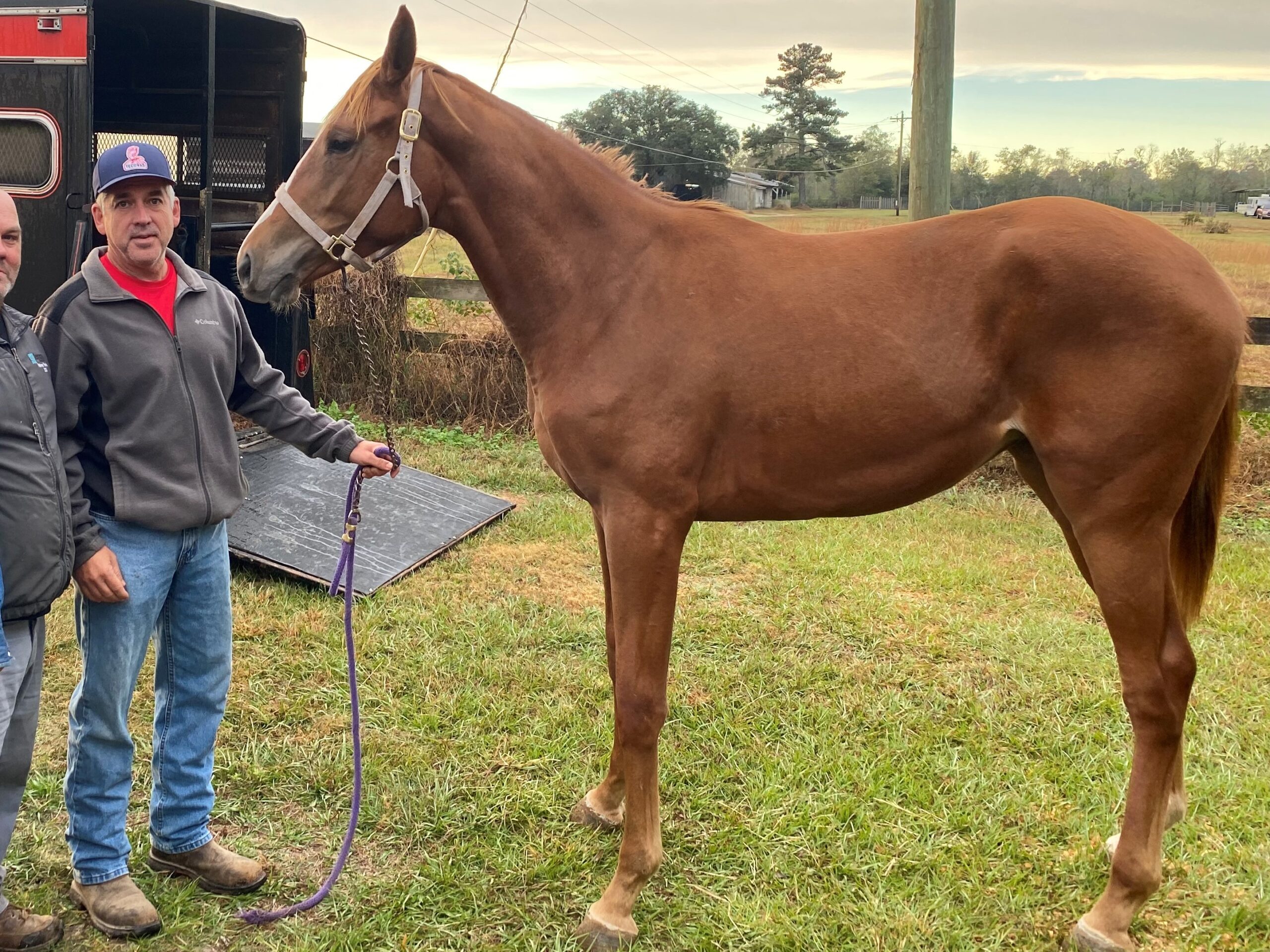
About Miles Henry
Racehorse Owner & Author | 30+ Years in Thoroughbred Racing
Miles Henry (legal name: William Bradley) is a professional horseman based in Folsom, Louisiana. He holds Louisiana Racing License #67012 and has spent over three decades managing Thoroughbreds at premier tracks including Fair Grounds, Delta Downs, and Evangeline Downs.
Expertise & Hands-On Experience: Beyond the track, Miles has decades of experience in specialized equine care, covering everything from hoof health and nutrition to training protocols for Quarter Horses, Friesians, and Paints. Every guide on Horse Racing Sense is rooted in this “boots-on-the-ground” perspective.
30 of their last 90 starts
Equibase Profile.

Connect with Miles: