
Published on: July 22, 2026
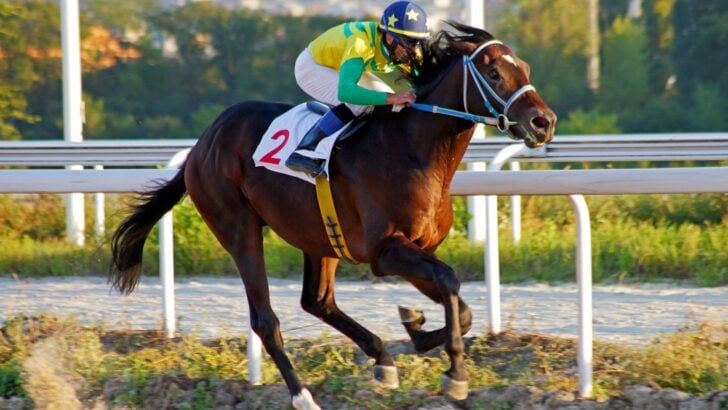
The Whitney Stakes is a Grade 1 race for horses age four and older, run each August at Saratoga Race Course. First run in 1928 and named for the Whitney family, it’s one of the few truly elite races reserved for older horses rather than the sport’s usual focus on 3-year-olds. Unlike the Triple Crown races, the Whitney tests horses that have already established themselves against mature competition. The winner earns an automatic berth to the Breeders’ Cup Classic. That “Win and You’re In” slot often shapes the horse’s entire fall campaign.
The Whitney Stakes answers a question the Triple Crown trail never asks: which older horse is genuinely the best in training right now, not just the best of one crop of 3-year-olds. After 30+ years around Thoroughbreds at Louisiana tracks, I’ve come to appreciate the Whitney precisely because it skips the hype and gets straight to that question every August at Saratoga. It’s one of America’s most important dirt races for older horses and a major stepping stone toward the Breeders’ Cup Classic.
Looking for this year’s Whitney field? This guide covers the history, format, and big-picture insights that apply every season. For current entries, odds, and my race-day notes, check my homepage for the Saratoga Whitney preview, which I update as post positions are announced.
Table of Contents
Whitney Stakes: History, Eligibility, and What It Really Tests
The Whitney Stakes was first run in 1928, named for the Whitney family — one of American racing’s founding dynasties, dating back to William Collins Whitney’s first Thoroughbred purchases. Saratoga’s Whitney Day traditions, including fans wearing pink, now honor Marylou Whitney’s own impact on the track in a later generation.
What sets the Whitney apart from nearly every other marquee summer race is who’s eligible to run in it: horses age four and older, a restriction that’s been in place continuously since 2020 (the race was also 4-and-up only from 1957 to 1969, with 3-year-olds able to enter in the decades between). Almost the entire spring and summer racing calendar — the Triple Crown races, the Haskell, the Jim Dandy, the Travers — exists to crown the best 3-year-old.
The Whitney asks a different question entirely: which older horse, already proven over a full campaign or more, is genuinely the best horse in training right now? I’ve watched more than one older horse come into form mid-summer, skip past the 3-year-old hype entirely, and turn the Whitney into its true coming-out party.
Whitney Stakes Timeline
- 1928 — First running of the Whitney Stakes
- 1950s-1960s — Establishes itself as a premier older-horse race, with champions like Tom Fool, Kelso, and Dr. Fager all winning
- 1973 — Onion defeats Secretariat, fresh off his Triple Crown sweep, in one of racing’s biggest upsets
- 2007 — The Whitney joins the Breeders’ Cup Challenge “Win and You’re In” series
- 2017 — Gun Runner uses a dominant Whitney win as the launch point for a Horse of the Year season
- 2020 — Eligibility restricted to horses age four and older, where it remains today
Whitney Stakes Distance, Purse, and Format
| Detail | Information |
|---|---|
| Date | Typically the first or second Saturday in August |
| Track | Saratoga Race Course, Saratoga Springs, NY |
| Distance | 1⅛ miles (9 furlongs), dirt |
| Eligibility | Horses age 4 and older (continuously since 2020) |
| Purse | Typically around $1,000,000 (recent editions have offered seven-figure purses) |
| Breeders’ Cup Challenge | Winner earns an automatic “Win and You’re In” berth to the Breeders’ Cup Classic |
Why the Whitney Matters
Racing’s spotlight follows 3-year-olds for most of the year — the entire Triple Crown trail, the Haskell, the Travers — because that’s where the sport’s biggest stories and richest purses tend to concentrate.
The Whitney is one of the few points on the calendar where the conversation shifts entirely to older horses, and it carries real weight in that conversation: strong Whitney form is one of the key results Eclipse Award voters look at when naming Horse of the Year, and the automatic Breeders’ Cup Classic berth means a Whitney win can define a horse’s entire fall campaign before it’s even run. Since the Whitney joined the “Win and You’re In” series in 2007, five of its winners have gone on to win the Classic itself, including Gun Runner (2017) and Knicks Go (2021) — both also Horse of the Year that same season.
From an owner’s perspective, the Whitney is where you find out if your horse belongs in the top shelf of the handicap division, not just against its own age group. The race exists, fundamentally, because racing needs a real measuring stick for older horses once the Triple Crown spotlight moves on to the next crop of 3-year-olds every spring — without something like the Whitney, the sport’s best proven horses would have no equivalent championship stage of their own.
Miles’ Take: I understand why casual fans skip past the Whitney — there’s no Derby-winner storyline to hook onto. But if you actually want to know who the best horse in the country is, right now, today, this is a better test than anything the spring classics can tell you. When Gun Runner used the 2017 Whitney as his springboard to a Horse of the Year campaign — romping by 5¼ lengths before going on to win the Woodward and the Breeders’ Cup Classic that same season — that told you more about his quality than any Derby storyline ever could. A 3-year-old winning the Derby has beaten other lightly-raced 3-year-olds. A Whitney winner has usually already proven itself across a full season or more against the toughest older horses in training.
Notable Whitney Winners
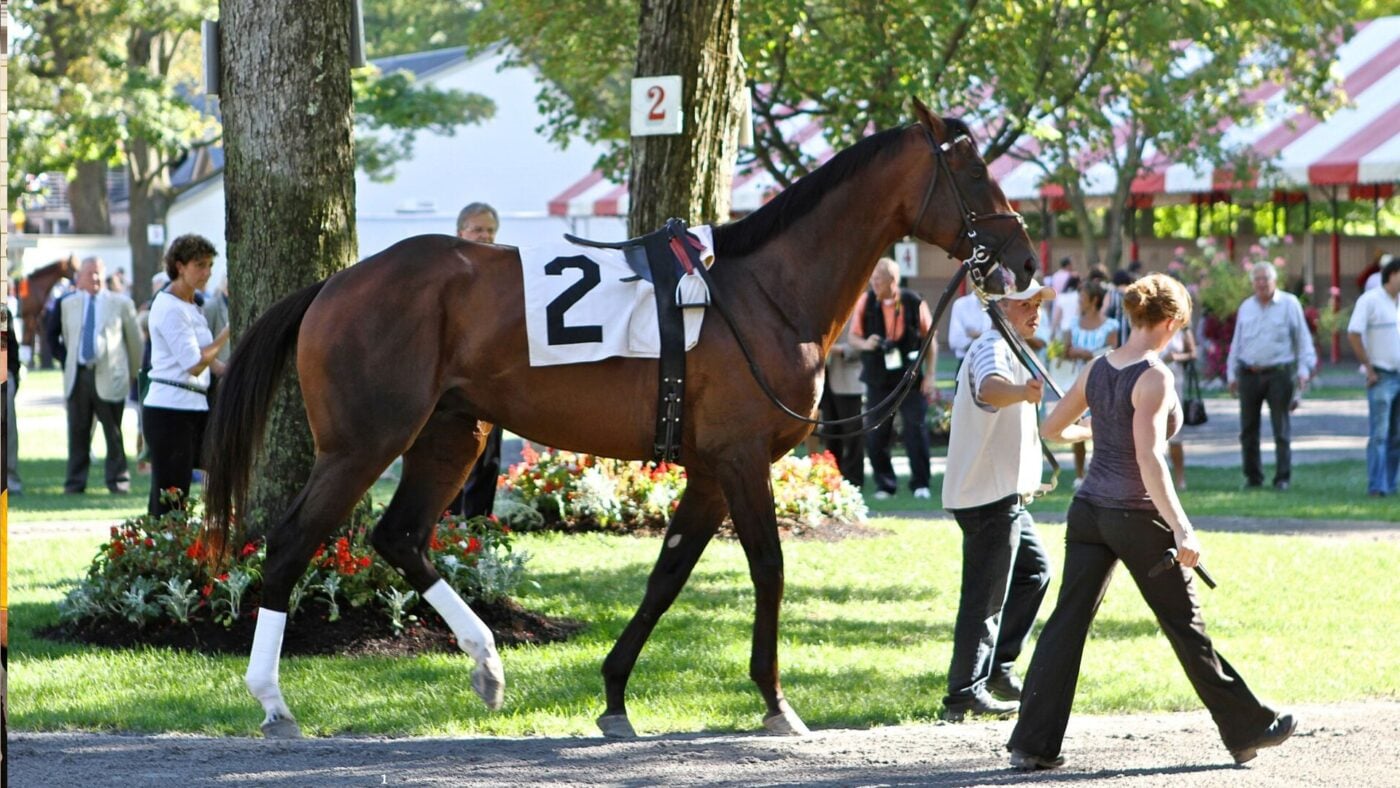
The Whitney’s roll call of past winners reads like a list of the sport’s genuine legends rather than one-season wonders: Kelso, Alydar, Easy Goer, Invasor, Gun Runner, and Knicks Go have all won it. Most of those names are Hall of Famers, and several — Gun Runner and Knicks Go among them — used a Whitney win as the springboard to a Horse of the Year season.
More recently, Sierra Leone — himself sired by Gun Runner — won the 2025 Whitney with a come-from-last stretch run, securing his own Breeders’ Cup Classic berth in the process. The race has also produced one of the biggest upsets in racing history: in 1973, Secretariat — fresh off his Triple Crown sweep — was beaten in the Whitney by Allen Jerkens’s colt Onion, one of the most stunning results of that entire era.
| Horse | Year | Why It Matters |
|---|---|---|
| Kelso | 1961, 1963, 1965 | Five-time Horse of the Year and one of racing’s greatest champions; won the Whitney three times, including at age 8 |
| Easy Goer | 1989 | Saratoga legend and Hall of Fame runner |
| Invasor | 2006 | Same-year Breeders’ Cup Classic and Horse of the Year winner |
| Gun Runner | 2017 | Whitney win launched his Horse of the Year season, capped by a Breeders’ Cup Classic win |
| Knicks Go | 2021 | Whitney → Breeders’ Cup Classic → Horse of the Year, same season |
| Sierra Leone | 2025 | Gun Runner’s leading earner; Whitney win secured his Classic berth |
The Road to the Whitney: Key Prep Races
Because the Whitney draws from the entire older-horse division rather than a single crop of 3-year-olds, its prep races are more scattered across the country than the Travers’ single Jim Dandy pipeline. The most common lead-ins are the Grade 1 Stephen Foster Stakes at Churchill Downs, the Grade 1 Met Mile at Belmont, and the Grade 2 Oaklawn Handicap — all races that let older horses build form earlier in the year before converging on Saratoga in August.
Recent Whitney fields have regularly drawn from Dubai World Cup and other major international older-horse races too, since the Whitney is genuinely one of the best American tests available for a top older horse regardless of where it started its year.
When I’m evaluating a Whitney contender, one thing I watch closely is whether the horse actually improved against elite older company or simply benefited from an easier spot. A big figure against a weak field doesn’t tell me nearly as much as a horse fighting through a demanding Grade 1 race like the Stephen Foster or Met Mile.
What Makes a Good Whitney Horse?
A few traits separate genuine Whitney contenders from horses just along for the ride. Tactical speed matters — 1⅛ miles rewards a horse that can sit close to the pace without burning itself out, rather than either a pure sprinter or a horse that needs a mile and a half to get rolling. Maturity matters just as much: this is a race for horses that have already absorbed a full campaign or more of top-level competition, not one still figuring out how to handle pace pressure. And prior Grade 1 experience specifically against older horses — not just other 3-year-olds — tells you far more about whether a horse is ready for this field than any single fast workout.
Saratoga’s dirt surface itself is also a real factor. It tends to play fair but demanding, and horses that have already handled it well in an earlier start at the meet carry a real, tangible edge over shippers seeing it for the first time.
The Whitney From an Owner’s Perspective
Getting a horse to Whitney-caliber form takes a different kind of patience than the Triple Crown trail demands. Older horses mature and peak on their own schedule, not on a fixed calendar built around a horse’s 3-year-old spring — some hit their absolute best at five or six, well after their Derby-eligible window has closed. That changes how you plan a campaign: skipping a race entirely, even a good one, can be the smarter move if it protects a horse for the target that actually matters.
I’ve seen connections pass on a decent purse specifically because the trip or the competition wasn’t going to tell them anything useful heading into the Whitney or the Classic beyond it. Knowing when not to run is just as much a part of getting a horse to this level as knowing when to.
Whitney vs. Travers: What’s the Difference?
Both races run at Saratoga in August, both carry Grade 1 status and a $1 million-plus purse, and both get discussed in the same breath by fans planning a trip to the meet — but they’re answering completely different questions. The best 3-year-old at Saratoga is decided in the Travers — exclusively for 3-year-olds, the same horses that ran the Triple Crown trail all spring. The Whitney is open to horses four and older, and it exists specifically to test proven, established horses against each other.
The two races do intersect in one notable way: a 3-year-old star from one summer sometimes becomes a Whitney contender the very next year, once it’s aged into eligibility. A horse that won the Travers as a 3-year-old returning to win the Whitney as a 4-year-old is one of the more satisfying storylines Saratoga can produce in back-to-back seasons.
How Serious Fans Use the Whitney
Handicappers and serious fans treat the Whitney as a checkpoint, not just a race result. A dominant Whitney win reshapes the Horse of the Year conversation almost overnight, since it’s one of the clearest head-to-head tests against genuine top-class company all season. If a horse crushes the Whitney by open lengths, most serious fans immediately bump it to the top of their Breeders’ Cup Classic short list. It also directly resets expectations for the Classic in the fall — a horse that wins the Whitney convincingly walks into Classic season as a legitimate favorite, while a disappointing run raises real questions before the bigger race even gets discussed.
Key Takeaways
- The Whitney is for older horses, not 3-year-olds — the defining difference from nearly every other major summer race
- First run in 1928 and named for the Whitney family; modern Whitney Day traditions at Saratoga honor Marylou Whitney’s impact on the track
- The winner gets an automatic Breeders’ Cup Classic berth, making it a genuine fall-campaign-defining race
- Past winners include Kelso, Alydar, Easy Goer, Gun Runner, and Knicks Go — a list of legitimate all-time greats, not just strong 3-year-olds
- Whitney and Travers run the same month at the same track but test completely different horses
FAQs: The Whitney Stakes
What is the Whitney Stakes?
A Grade 1 race at Saratoga for horses age four and older, first run in 1928. It’s one of the few top-level American races restricted to older, proven horses rather than 3-year-olds.
How is the Whitney different from the Travers?
The Travers is exclusively for 3-year-olds, while the Whitney is open to horses four and older. Both run at Saratoga in August with similar purses, but they test completely different groups of horses.
Why is the Whitney Stakes important?
It’s one of the key races Eclipse Award voters weigh for Horse of the Year, and the winner earns an automatic berth to the Breeders’ Cup Classic, often shaping a horse’s entire fall campaign.
Why does the Whitney matter for Horse of the Year voting?
A strong showing against genuine top-class older company is one of the clearest, most direct tests Eclipse Award voters can point to — unlike a 3-year-old’s résumé, a Whitney win comes against horses who’ve already proven themselves over a full season or more.
Who are some notable Whitney Stakes winners?
Kelso, Alydar, Easy Goer, Invasor, Gun Runner, Knicks Go, and Sierra Leone have all won the Whitney — a list dominated by Hall of Famers and Horse of the Year winners.
Can 3-year-olds run in the Whitney Stakes?
No, not currently. The Whitney has been restricted to horses age four and older continuously since 2020. The race’s eligibility has changed over the decades — it was also 4-and-up only from 1957 to 1969 — but as it stands today, 3-year-olds cannot enter.
What makes a Whitney Stakes contender different from a Triple Crown horse?
A Whitney contender has usually already proven itself over a full campaign or more against mature, top-class competition. A Triple Crown horse, by contrast, is often still lightly raced and largely untested against the very best of its own generation, let alone older horses.
About Miles Henry
Racehorse Owner & Author | 30+ Years in Thoroughbred Racing
Miles Henry (legal name: William Bradley) is a professional horseman based in Folsom, Louisiana. He holds Louisiana Racing License #67012 and has spent over three decades managing Thoroughbreds at premier tracks including Fair Grounds, Delta Downs, and Evangeline Downs.
Expertise & Hands-On Experience: Beyond the track, Miles has decades of experience in specialized equine care, covering everything from hoof health and nutrition to training protocols for Quarter Horses, Friesians, and Paints. Every guide on Horse Racing Sense is rooted in this “boots-on-the-ground” perspective.
30 of their last 90 starts
Equibase Profile.

Connect with Miles: