
Last updated: September 18, 2026
Buying the wrong first horse can drain your savings, shake your confidence, and make a hobby you love feel unsafe. The safest first horse usually isn’t the youngest, prettiest, or cheapest one. It’s the steady, well-trained horse that genuinely matches your current riding and handling skills.
Buying your first horse – the short version: Choose temperament and training over looks, breed, and future potential. Budget for monthly care and emergencies, not just the purchase price. Bring an experienced horseperson, use your own veterinarian for a pre-purchase exam, and don’t rush the decision.
I bought my first horse in 1994, a $1,500 Quarter Horse mare who taught me plenty about what not to do. Since then, I’ve owned and managed recreational horses, barrel horses, and racehorses, including Thoroughbreds raced at Fair Grounds. This is the buying process I’d use today, with my own money on the line.
Table of Contents
Who Should Buy a Horse (and Who Should Wait)
Before looking at a single horse, assess whether this is the right time. Horse ownership is a long-term commitment – before you shop, make sure you can provide consistent daily care, reliable finances, and a plan for the horse even if your work, family, housing, or riding goals change. It’s more than the purchase price.
I’ve watched plenty of people buy their dream horse only to realize six months later they’d bought a horse that didn’t fit their life. The horse wasn’t bad – the match was wrong.
You’re ready if you have:
- A dependable routine: Time for daily checks, grooming, exercise or lessons, appointments, and the unexpected. How many hours that takes varies a lot depending on whether you board or keep the horse at home.
- Handling skills: Can lead, groom, and tack up confidently without assistance
- Transportation access: A trailer, access to reliable hauling, or an emergency transport plan if the horse needs to leave the property for referral care, evacuation, or another urgent reason.
- A realistic monthly budget for ongoing care – see the cost breakdown below
- Land or boarding: A safe, reliable boarding arrangement, or a home setup with appropriate fencing, water, shelter, footing, manure management, and enough space for your local conditions
- An emergency fund that can absorb an unexpected vet bill without financial stress
If several of those pieces aren’t in place yet, waiting is usually the kinder and less expensive choice for both you and the horse.

Rule #1: Don’t Pair a Green Rider With a Green Horse
A newer rider generally has the best chance of success with a horse that has proven experience and a forgiving temperament. When both horse and rider are still learning, small mistakes can escalate quickly, and neither partner has enough experience to steady the other. See our guide to green-broke horses and green riders for more on this pairing specifically.
A practical starting range for first-time buyers
- Age: Often a mature horse, commonly around 10 to 18, with enough life experience to be settled in its job – though plenty of suitable beginner horses fall outside that range too.
- Sex: A gelding is often a straightforward choice, but a dependable mare can be just as suitable. Individual temperament matters more than sex.
- Experience: Demonstrated success in the job you want to do, ideally under more than one competent rider.
- Miles: Enough safe trail, lesson, show, ranch, or recreational experience to show the horse handles normal surprises sensibly.
Common beginner mistake: Buying a young or “cheap project” horse, assuming 30 days of training will fix significant behavioral or physical issues. A three-year-old off-track Thoroughbred might cost $2,000, but the total investment can quickly become much higher once you add professional retraining, maintenance, and time. A lower purchase price doesn’t always mean a lower total cost.
Define the Job Before You Shop
Most first-time buyers fall in love with a horse’s appearance, then try to make it fit their needs. That’s backwards, and it’s expensive. Define the job first.
| Buying Factor | Questions to Ask | Why It Matters |
|---|---|---|
| Primary use | Trail only? Lessons? Ranch work? Showing? | Each discipline calls for a specific temperament and training foundation |
| Rider level | True beginner? Intermediate? Advanced? | Beginners need a forgiving, steady horse; advanced riders can handle a more forward one |
| Environment | Climate? Terrain? Turnout availability? | Heat, ground conditions, and turnout all affect what type of horse thrives on your property |
| Support system | Access to a trainer? Experienced friends? A vet? | First-time owners need real oversight, especially if the horse has any quirks |
Breed matters less than most new buyers assume. If you haven’t settled on a type yet, my guide to choosing a beginner-friendly horse explains what to look for beyond a breed label.
Budget for Ownership, Not Just Purchase Price
A horse’s purchase price is only the first check you write. Board or feed, hay, hoof care, routine veterinary care, dental work, tack, training, hauling, insurance if you carry it, and emergencies continue long after you bring the horse home. A well-trained $8,000 horse and an undertrained $3,000 horse may cost similar amounts to keep – the cheaper horse may also require more training. For detailed numbers, see my first-year horse ownership cost guide, boarding cost guide, and horse purchase price guide.
Phone Screening: Filter Before You Drive
I once drove two hours to look at a horse advertised as “kid safe” – within five minutes, I could see the seller and I had very different definitions of safe. Vague labels like “kid safe,” “bombproof,” and “beginner-safe” should always lead to more questions, not less. Ask these before scheduling a visit:
- “Why are you selling, and how long have you owned the horse?” Look for a clear answer and ask for trainer, prior-owner, or veterinary references when appropriate.
- “What does the horse do well, and what does it struggle with?” Ask directly about behavior under saddle, on trails, in turnout, and around other horses.
- “How does it handle daily care?” Ask about catching, tying, grooming, feet, bathing, loading, farrier work, and veterinary care.
- “What’s its soundness and treatment history?” Ask about prior injuries, lameness, medication, maintenance, colic, laminitis, surgeries, and injections; discuss anything relevant with your veterinarian.
- “Can I see it ridden and bring my trainer?” A reasonable seller should expect you to evaluate a major purchase carefully.
Ask for a recent, unedited video when possible, but treat it as a screening tool – not a substitute for seeing the horse handled and ridden in person.
On-Site Evaluation: What to Look For
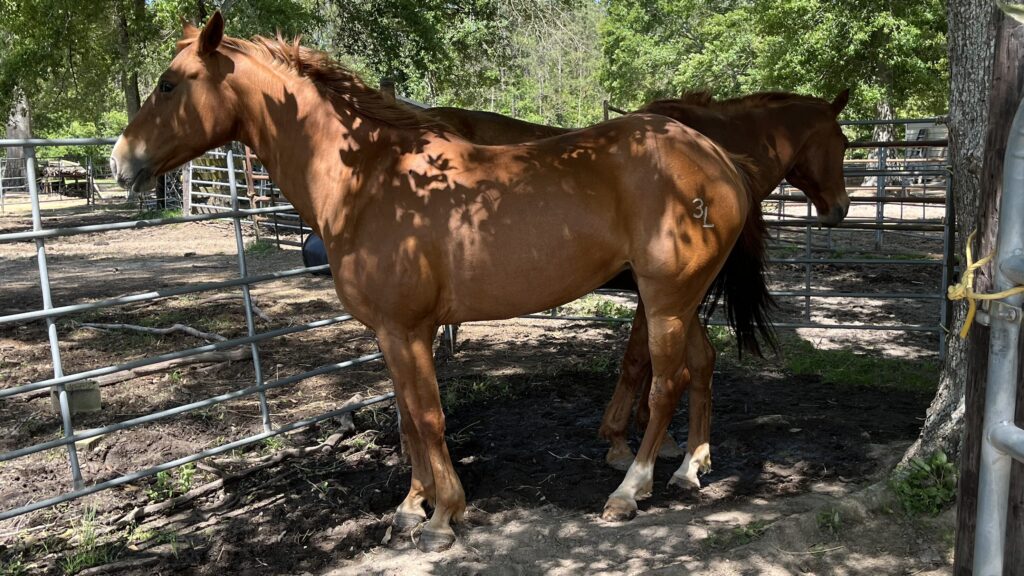
Ask to see the horse handled and ridden before you ride it yourself. Watch it being caught, led, groomed, picked up, tacked up, mounted, ridden, cooled out, and loaded if hauling matters to you. The seller, regular rider, or another competent rider should demonstrate basic steering, transitions, stopping, and the horse’s behavior after work. If you’re a new rider, you don’t have to test ride every horse – let your trainer or instructor ride first, and don’t let anyone pressure you to get on a horse that feels beyond your ability.
| What You Notice | Possible Meaning | What to Do |
|---|---|---|
| Cloudy, blue, or unusual-looking eye | Could reflect an old injury, active irritation, or an eye condition that needs professional evaluation | Ask about the horse’s eye history and have your independent veterinarian examine it during the PPE; an ophthalmology referral may be appropriate |
| Sweaty horse on arrival | The horse may have been worked before you arrived, or it may simply be hot, nervous, or naturally sweaty | Ask when and how the horse was last exercised; if you can’t fairly evaluate it fresh, schedule another visit and see it brought in from its normal routine |
| Scars, swelling, heat, or thickened areas on a limb | May reflect an old injury, prior treatment, or a harmless scar – you need context before drawing conclusions | Ask for the horse’s history and point the area out to the veterinarian during the PPE; discuss whether further imaging is worthwhile for the job you plan to do |
| Frequent cribbing | A management consideration that may affect facilities, turnout choices, teeth, feeding, and resale appeal | See our guide on why horses crib; decide whether you’re prepared for the management commitment before proceeding |
| Poor ground manners | Biting, crowding, striking, pulling back, or refusing to stand tied can make routine care unsafe for an inexperienced owner | Don’t assume you’ll quickly train it away; bring a qualified trainer, and pass if the horse is outside your current handling ability |
| Uneven movement or head-bobbing at the walk or trot | Can indicate discomfort or lameness, but the cause and significance require a veterinary assessment | Pause the purchase process; ask your independent veterinarian whether a PPE and any additional diagnostics make sense before spending more money |
These are prompts for more questions and, when warranted, a veterinary assessment – not diagnoses. Don’t buy a horse assuming training will solve a problem you haven’t fully understood.
The Pre-Purchase Exam
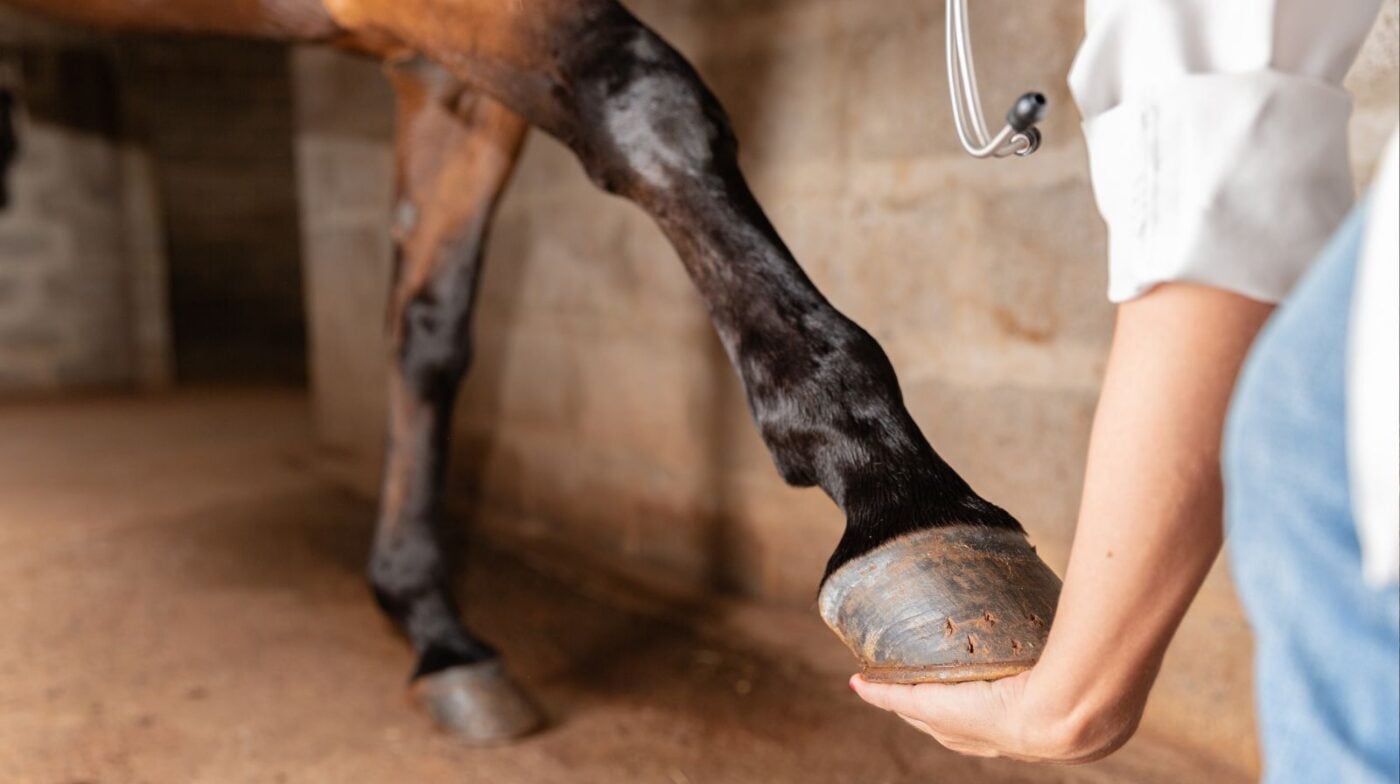
Skipping a PPE is one of those decisions that feels like saving money until the day it costs you thousands. Use a veterinarian you choose, ideally one with no financial connection to the seller or the seller’s regular program. A PPE isn’t a guarantee that a horse will never go lame or get sick – it’s a professional assessment of the horse’s condition and suitability for the job you plan to do, based on the exam and diagnostics you authorize.
For a first horse, ask your veterinarian what level of exam fits the horse and the job you have in mind. Depending on the history and findings, that may include a physical and lameness evaluation, flexion tests, selected radiographs, bloodwork or medication screening, and other diagnostics. My pre-purchase exam guide and PPE red flags guide cover what to discuss before the appointment.
Real example: I bought Rusty, a plain $4,500 gelding who vetted clean, stayed sound for more than a decade, and taught my kids to ride. Later, a seller offered me a discount to skip a PPE on a calm mare priced below market. I had her examined anyway, the vet raised soundness concerns, and I passed. That exam probably saved me from buying a horse I wasn’t equipped to take on.
Bringing Your Horse Home
Transport, isolating a new horse from your resident herd, and transitioning feed all deserve real attention, and I’ve written about each in detail – see my full guide to bringing a new horse home for the complete first-week checklist. What I want to add here is specific to a first horse and a new rider.
Give yourselves time to settle in
For the first few days, focus on routine: grooming, leading, turnout, feeding, and watching how the horse settles into the new place. If you’re a newer rider, it is smart to have a trainer or experienced horseperson assess the horse before you start riding regularly. A horse can behave differently after transport and a change of herd, feed, and surroundings.
Final Decision Framework
Before you commit, make sure these are true:
- A temperament you’ve seen hold up in normal situations: Observe the horse in more than one setting, such as the arena, barn, turnout area, or trail, and on more than one day when possible.
- A completed PPE: With no findings beyond your personal risk tolerance, discussed honestly with your vet.
- A financial fit for the long term: Your budget includes a real emergency buffer, and you can sustain the monthly cost for 10+ years.
- A realistic skill match: The horse fits your land, your available time, and your current skill level – not your aspirations.
The 48-hour rule
The 48-hour rule: This is my own discipline, not a universal rule – step away for two days before you sign, so excitement doesn’t make the decision for you.
First-Time Horse Buyer Questions
What’s the biggest mistake first-time horse buyers make?
Buying based on asking price instead of the full ownership cost and the horse’s fit for the rider. Budget for routine care, emergencies, a pre-purchase exam, and any training or lessons you’ll need after the sale.
Can I find a good first horse for under $5,000?
Yes, it is possible, but a low asking price should make you more careful, not less. A sound, well-matched horse under $5,000 is not automatically a bad buy, but the price may reflect age, limited training, a narrow use, local market conditions, or a problem that needs investigation. Evaluate the individual horse, bring experienced help, and use an independent pre-purchase exam
How much land do I need to keep a horse at home?
There isn’t one acreage number that works everywhere. A commonly quoted starting point is roughly 1 to 2 acres per horse, but pasture productivity, rainfall, drainage, turnout setup, soil, local regulations, herd size, and hay availability matter just as much. Some small properties work with careful dry-lot management and purchased forage; some larger properties still need hay for much of the year. At minimum, plan for safe fencing, dependable water, shelter, manure management, mud control, and enough space to manage horses safely.
What’s more important: breed or temperament?
Individual temperament matters more than breed. Calm Thoroughbreds make excellent first horses, and some Quarter Horses are too much horse for a true beginner. Some breeds statistically produce more beginner-safe horses on average, but you still have to evaluate the specific horse in front of you, not a breed stereotype.
Should I buy a mare, gelding, or stallion?
For many first-time owners, a well-trained gelding is a practical place to start because there’s no estrous cycle to manage. But a quiet, well-matched mare can be an excellent first horse, and individual temperament, training, health, and handling history matter more than sex. Stallions require knowledgeable, confident handling and specialized management, so they’re rarely an appropriate choice for a beginner’s first horse.
Should I buy an OTTB as my first horse?
It depends more on the individual horse, your riding background, and your support system than on the horse being a Thoroughbred. An off-track Thoroughbred is an athlete transitioning from a racing career to a new job, and that transition can take time, patience, and professional help. With an experienced trainer involved and realistic expectations, some OTTBs suit newer owners very well. Without that support, a horse with a proven lesson or trail record is usually the safer first choice.
What happens next
I’ve owned horses that cost $1,500 and horses that cost $15,000. The expensive ones weren’t always better. The best horse I ever owned was a $3,500 Quarter Horse mare who taught three kids to ride, stayed sound for 16 years, and retired peacefully in our pasture. She was never fancy, but she was exactly what we needed.
From Miles: I wrote this guide from more than 30 years of buying, owning, managing, and evaluating recreational horses, Quarter Horses, and Thoroughbreds in Louisiana. It reflects the questions and mistakes I’d want a first-time buyer to consider before committing to a horse.
About Miles Henry
Racehorse Owner & Author | 30+ Years in Thoroughbred Racing
Miles Henry (legal name: William Bradley) is a professional horseman based in Folsom, Louisiana. He holds Louisiana Racing License #67012 and has spent over three decades managing Thoroughbreds at premier tracks including Fair Grounds, Delta Downs, and Evangeline Downs.
Expertise & Hands-On Experience: Beyond the track, Miles has decades of experience in specialized equine care, covering everything from hoof health and nutrition to training protocols for Quarter Horses, Friesians, and Paints. Every guide on Horse Racing Sense is rooted in this “boots-on-the-ground” perspective.
30 of their last 90 starts
Equibase Profile.

Connect with Miles: