
Last updated: September 29, 2026
Any links on this page that lead to products on Amazon are affiliate links and I earn a commission if you make a purchase. Thanks in advance – I really appreciate it!
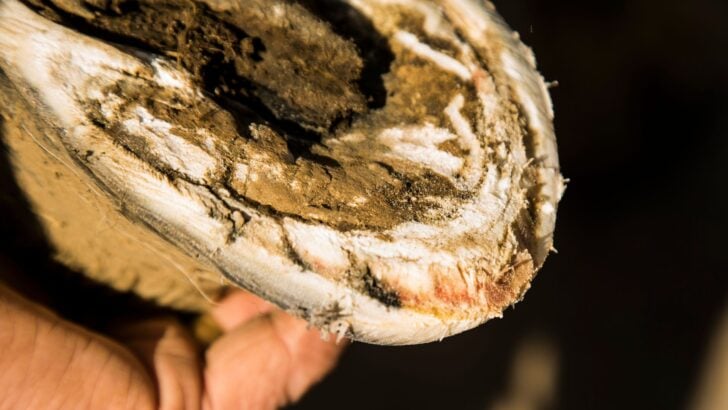
Your horse is suddenly off, taking short steps, or refusing to put weight on a foot. The question is whether it can wait for the farrier or whether you need your veterinarian out today.
Quick answer: Call your veterinarian right away if your horse won’t bear weight, stands rocked back on his heels, has heat and a strong digital pulse in more than one foot, or has a nail, screw, wire, or other object stuck in the sole. For milder soreness, pick out the foot, compare all four feet for heat and pulse, keep him quiet, and call your vet or farrier for guidance. A sore foot can come from something as simple as a stone bruise or as serious as laminitis, and several of those problems look alike at first.
I’ve dealt with hoof problems in racehorses and my own horses for more than 30 years. The foot is often the first place to look, but guessing is where owners get in trouble. So start with the warning signs that shouldn’t wait, then check what you safely can. After that, I’ll cover the common causes, how vets find the source, where your farrier fits in, and the daily habits that head off a lot of hoof trouble. This article is here to help you give your vet useful information, not diagnose your horse from the barn aisle.
Table of Contents
When to Call the Vet Right Away
Call your veterinarian now if you see:
- A horse that won’t bear weight on a foot or is severely lame at the walk
- A rocked-back “sawhorse” stance, constant weight shifting, or reluctance to move
- Heat and a strong, bounding digital pulse, especially in more than one foot
- A nail, screw, wire, or other object stuck in the sole. Leave it in place, since your vet may need to see exactly where it went in.
- A sudden crack or separation with bleeding, a badly distorted hoof, or tissue coming through the sole
- Lameness along with fever, depression, or not eating
Call your farrier for a loose, shifted, or missing shoe, a new crack, or soreness right after a trim, but don’t assume every sore foot after a trim is just a shoeing problem. Call your vet too if the horse is noticeably lame, the foot is hot, or the digital pulse is much stronger than normal.
Some of these problems get harder to treat the longer they go, especially laminitis and punctures in the frog or the back half of the sole, where important structures sit close under the surface. When in doubt, call. A vet would rather talk you through a false alarm than see a horse a day late.
What You Can Safely Check While You Wait
- Put the horse in a quiet, deeply bedded area. Don’t make him walk to “see how bad it is.”
- Gently pick out the foot and look for a lodged rock, a shifted shoe, a loose nail, a fresh hole, or obvious damage. If something’s embedded in the sole, leave it where it is and call your veterinarian. If you find a fresh puncture hole but no object, treat that as urgent too, and tell your vet exactly where it is. My guide to cleaning horse hooves covers the basics.
- Compare all four feet for heat and for the digital pulse, which you can feel at the back of the fetlock. What matters is whether one foot feels different from its partner.
- Take a short video of the horse standing. If he’s willing and can walk without being forced, record a few steps on level ground before any medication. That gives your vet a clearer picture of what you saw.
- Note what you know: when it started, whether one foot or several are involved, recent trims or shoeing, diet changes, and what the footing’s been like.
What not to do: Don’t dig into the sole or pull out an embedded object. And don’t give Bute, Banamine, or other medication unless your veterinarian tells you to. Your vet may want to examine the horse first, and the right medication and dose depend on what’s causing the pain.
Horseman’s Take: I never guess about a limp until I’ve cleaned the foot. I’ve seen owners panic about a “broken leg” when it turned out to be a rock wedged between the shoe and the frog. Rule out the obvious first, then give your vet the full picture.
A Lesson From the Track
In 2018, I had a filly at Fair Grounds who was training beautifully. One Tuesday morning, she came out of her stall practically carrying her off front leg. To anyone watching from the outside, it looked like a catastrophic breakdown. I kept my cool, used hoof testers the way I’d learned to over the years, and found a sore spot near the toe. It was a big abscess under the sole. Once it drained, she was back on the track in four days.
That’s the point of the story. It’s also the caution. Hoof testers aren’t something I’d hand a new owner and tell them to start guessing with. A serious injury can look like an abscess at first, and an abscess can look far worse than it really is. The difference between a four-day setback and a disaster can be getting the right person on that foot quickly.

Why Racehorses Can Hide Hoof Pain
Racehorses are athletes, and athletes are good at compensating. A horse can shift weight and protect a sore foot for a while before he looks obviously lame. That’s why, around a race barn, small changes matter: a shorter stride in the morning, a horse that’s less eager to train, one that leaves feed, or one that walks out of the stall carefully and loosens up after a few steps. The same goes for any horse. The earlier you notice a change, the sooner you can get the right eyes on it.
Common Causes of Hoof Pain
- Hoof abscess. A pocket of infection that builds pressure inside the hoof and often causes sudden, severe lameness in one foot. Once a vet or farrier opens it and it drains, many horses feel better quickly. See my guide to hoof abscesses.
- Stone bruise. Bruising of the sole from landing hard on a rock or hard ground. It can make a horse sore on firm footing and sometimes turns into an abscess.
- Puncture wound. A nail or sharp object driven into the sole is a veterinary emergency, even if the horse doesn’t look very lame at first. How serious it is depends on where it went in and how deep.
- Laminitis (founder). Inflammation and damage in the laminae, the tissues that hold the coffin bone inside the hoof. It often affects both front feet, and it’s always an emergency. The Cornell University College of Veterinary Medicine links many cases to obesity and equine metabolic syndrome.
- Thrush. Usually a smelly frog problem, but a bad case can eat deep enough to make a horse sore. It’s a constant battle in wet footing like we have in south Louisiana. See my guide to thrush in horses.
- Heel pain, including navicular syndrome. This usually comes on gradually. Horses may take shorter steps, land toe-first, or point a front foot at rest. “Navicular” isn’t one simple diagnosis, so sorting out pain in the back of the foot takes a proper lameness workup.
- Shoeing or trimming problems. A close trim, a hot nail, a shifted shoe, or a foot that’s grown out of balance can all cause soreness.
These often show up in familiar patterns, but the patterns overlap, and they’re not a way to diagnose a horse from home:
| Condition | Typical onset | Common pattern | Common signs |
|---|---|---|---|
| Hoof abscess | Often sudden | Often one foot | Marked lameness; heat and a stronger pulse in that foot; may drain at the sole or coronary band |
| Stone bruise | After work, or over a day or two | Often one foot | Soreness on hard ground; discoloration may show later |
| Puncture wound | Sudden or soon after injury | Often one foot | An object or fresh hole in the sole; lameness can range from mild to severe |
| Laminitis | Hours to days | Often both front feet, sometimes all four | Weight shifting, rocked-back stance, “walking on eggshells,” heat and strong pulses |
| Heel pain / navicular | Usually gradual | Often both front feet | Shortened stride, toe-first landing, pointing a foot, lameness that comes and goes |

How Vets Find the Source
A lameness exam usually works from the outside in. Your vet will ask about the history, watch the horse stand and move, and check the feet and legs for heat, pulse, and swelling. From there, the workup may include:
- Grading the lameness. Vets often use the AAEP lameness scale, from 0 (no lameness seen) to 5 (minimal weight-bearing or unable to move), so everyone describes severity the same way.
- Hoof testers to find a sore area in the sole or frog.
- Nerve blocks, which numb one area at a time to show where the pain is coming from.
- X-rays to look at the coffin bone, check for a fracture or gas pocket, or see how far laminitis has progressed.
- Other imaging, such as ultrasound or MRI, for problems that X-rays don’t show, especially in the back of the foot.
Who Does What: Your Vet and Your Farrier
Many hoof problems need both your veterinarian and your farrier. Your vet diagnoses the problem, handles emergencies such as punctures and laminitis, prescribes medication when needed, and uses X-rays or other imaging to see what’s happening inside the foot. Your farrier trims, balances, and shoes the foot, and may help manage an uncomplicated abscess once the cause is clear. For laminitis, heel pain, recurring abscesses, and other long-term problems, the best results usually come when the vet and farrier work from the same X-rays and the same plan. A good owner doesn’t choose between a vet and a farrier. The goal is getting the right people involved at the right time.
Preventing Hoof Pain
- Pick and check feet every day. A lot of hoof trouble starts as a small change somebody noticed but hoped would go away.
- Keep a regular farrier schedule. Feet get out of balance before they look long. See my guide to how often to reshoe a horse.
- Give horses dry footing and clean stalls, especially in wet weather.
- Manage sugar and starch for easy keepers and metabolic horses. The University of Minnesota Extension explains how forage carbohydrate content affects laminitis risk. My guide to preventing laminitis goes further.
- Match hoof protection to the job. Plenty of horses do fine barefoot, while thin soles, hard or rocky footing, and heavy work may call for shoes or boots. My barefoot vs. shod guide covers the tradeoffs.
Horseman’s Take: The best hoof care program is the boring one that happens every day. The horses that stay sound aren’t usually the ones with the fanciest program. They’re the ones whose owners notice when a horse that normally walks out square suddenly takes two careful steps first. A lot of hoof trouble gives you small warning signs like that before a horse comes up lame.
This article draws on guidance from the Cornell University College of Veterinary Medicine, the University of Minnesota Extension, and the AAEP lameness scale, along with my own experience. It isn’t a substitute for an exam by your veterinarian.
Hoof Pain in Horses FAQ
How can I tell an abscess from laminitis?
You usually can’t know for certain at home. Abscesses often cause sudden, severe lameness in one foot, while laminitis more often involves both front feet and a rocked-back stance. Because they need different treatment, call your vet if you’re unsure.
Where do I feel a horse’s digital pulse?
Press lightly at the back of the fetlock, where the artery runs down each side. In many horses it’s faint and hard to find. What matters most is whether it’s noticeably stronger in one foot than its partner, or stronger than usual for your horse.
Can I give my horse Bute for hoof pain?
Only if your veterinarian tells you to. Your vet may want to examine the horse first, and the right medication and dose depend on what’s causing the pain.
My horse is sore after a trim. Is that normal?
A horse shouldn’t be noticeably lame after a routine trim. Mild tenderness can happen in a thin-soled horse, but clear soreness deserves a call to your farrier, and a call to your vet if the horse is very lame or has warmth in the foot or an unusually strong pulse.
How often should a horse be trimmed?
Many horses are trimmed or reset every 4 to 8 weeks, but the right schedule depends on hoof growth, workload, footing, and whether the horse wears shoes. Your farrier can help you set it.
In 30 years, I’ve never seen a horse win a race or enjoy a trail ride on sore feet. Learn what normal looks like for your horse, watch for changes, and call your vet or farrier early instead of waiting to see if it gets better on its own.
About Miles Henry
Racehorse Owner & Author | 30+ Years in Thoroughbred Racing
Miles Henry (legal name: William Bradley) is a professional horseman based in Folsom, Louisiana. He holds Louisiana Racing License #67012 and has spent over three decades managing Thoroughbreds at premier tracks including Fair Grounds, Delta Downs, and Evangeline Downs.
Expertise & Hands-On Experience: Beyond the track, Miles has decades of experience in specialized equine care, covering everything from hoof health and nutrition to training protocols for Quarter Horses, Friesians, and Paints. Every guide on Horse Racing Sense is rooted in this “boots-on-the-ground” perspective.
30 of their last 90 starts
Equibase Profile.

Connect with Miles: