

Last updated: November 5, 2026
Any links on this page that lead to products on Amazon are affiliate links and I earn a commission if you make a purchase. Thanks in advance – I really appreciate it!
Wrapping a horse’s legs looks simple until you see a wrap that’s slipped down around a fetlock or a leg that’s puffy above a bandage that was too tight. Done right, leg wraps protect a horse in the stall, on the trailer, and under saddle. Done wrong, they can cause the very injury you were trying to prevent.
Here’s what each type of wrap is used for, how to put on a standing wrap, how tight it should be, how long to leave it on, which wraps I keep in the barn, and when boots or a vet call make more sense.
Table of Contents
Types of Horse Leg Wraps
Most barns use three kinds of leg wraps, and each one has a different job.
| Wrap | What It’s For | Padding | Watch For |
|---|---|---|---|
| Standing wrap | Stall rest, overnight, covering a poultice or sweat | Quilt or sheet cotton | Slipping or uneven tension |
| Shipping wrap | Hauling | Thick quilt down over the coronary band | Padding too short to cover the coronary band |
| Polo wrap | Light protection during exercise | None; fleece goes on the bare leg | Heat buildup; take off after work |
Standing wraps go on over a quilt or sheet cotton from just below the knee or hock to the fetlock. They’re used for stall rest, to hold a poultice or sweat in place, and on horses that stock up. They don’t give as much support as many owners think, according to equine vet Michael Ball, DVM, writing in The Horse.
Shipping wraps are applied like standing wraps, but the padding runs lower. Ball likes thick quilts that run from just below the knee or hock to an inch over the coronary band, because coronary band cuts are common on the trailer. If you add bell boots, they have to fit. He’s seen coronary cuts happen under bell boots that were too big. So a standing wrap on its own isn’t a shipping wrap, because its padding stops at the fetlock.
Polo wraps are fleece wraps that go straight on the leg with no padding. They give light protection against a horse hitting itself during work, but they aren’t meant to support a lame horse, and they should come off after the ride, according to PetMD.

How to Wrap a Horse’s Leg
These steps are for a standing wrap over a quilt or pillow wrap, and a shipping wrap goes on the same way. They aren’t for a wound bandage, which your vet should show you how to do. The steps follow PetMD‘s vet-reviewed guide, and it’s worth having your vet or an experienced horseman show you in person and check your work while you’re learning.
1. Start with a clean, dry leg
Brush off dirt and shavings, and make sure the leg is dry. Wet legs increase friction and trap heat against the skin, and grit under a wrap rubs.
2. Put the padding on smooth
Center the quilt over the cannon bone and wrap it flat against the leg with no wrinkles, from just below the knee or hock down over the fetlock. A wrinkle or a thick seam turns into a pressure point. Roll the padding the same direction you’ll roll the wrap.
3. Pull across the front, not the back
Viewed from above, wrap counterclockwise on the left legs and clockwise on the right, so the wrap runs from front to back along the outside of the leg. Put your tension on as the wrap crosses the front of the cannon bone, then lay it smoothly around the back without an extra tug over the tendons, the same way the University of Missouri Veterinary Health Center describes for its leg bandages.
4. Overlap each turn by half
Start the outer wrap in the middle of the padding, not at the top or bottom. Work down the leg and back up, overlapping each turn by about half, and stop within about half an inch of the padding’s edge at the top and bottom so the wrap’s edge doesn’t dig in.
5. Finish on the outside
Close the wrap on the outside of the leg, not over the tendons on the back, and never over a joint. Smooth the hook-and-loop closure down flat.
6. Check it
Run your hands up and down the whole wrap to feel for lumps, ridges, or loose spots, and slide a finger or two in at the top. A finger check at the top doesn’t tell you the pressure is even lower down, so feel the whole leg. If anything’s uneven, take it off and start over instead of pulling the next turn tighter to fix it. Wrap both legs of a pair with the same pressure, then walk the horse a few steps and check again for slipping or bunching.
This video walks through putting on a standing wrap.

How Tight Should a Leg Wrap Be?
A standing wrap should feel snug and even, without loose sections, ridges, or a tight band at either edge. If you’re not sure about the fit, have someone experienced check it before you leave it on.
Too tight is dangerous. A bandage pulled too tight can put pressure on the tendons, which can lead to swelling and a bowed tendon, often called a bandage bow, and it can restrict blood flow to the lower leg, according to Virginia Tech‘s equine medical center. But Ball says most badly applied wraps he sees are too loose, not too tight. A loose wrap slips and bunches, and that can cause a bandage bow or tendon damage, too. Wrinkles and bunches are what make a bandage dangerous, he writes.
How Long Can Leg Wraps Stay On?
There’s no set number of hours. Take standing wraps off at least twice a day to check the legs, and if the horse still needs them, put them back on with clean, dry padding, according to PetMD. Change them sooner if they get wet, loose, or uneven. If your horse has never worn wraps, start with a few hours while you’re around rather than leaving them on all night.
If your vet put on a bandage over a wound, follow their schedule. Bandages over open wounds are often changed daily, and any bandage that gets wet or slips should be changed right away, according to Virginia Tech.
The Wraps I Use
These are the three I keep in the barn.

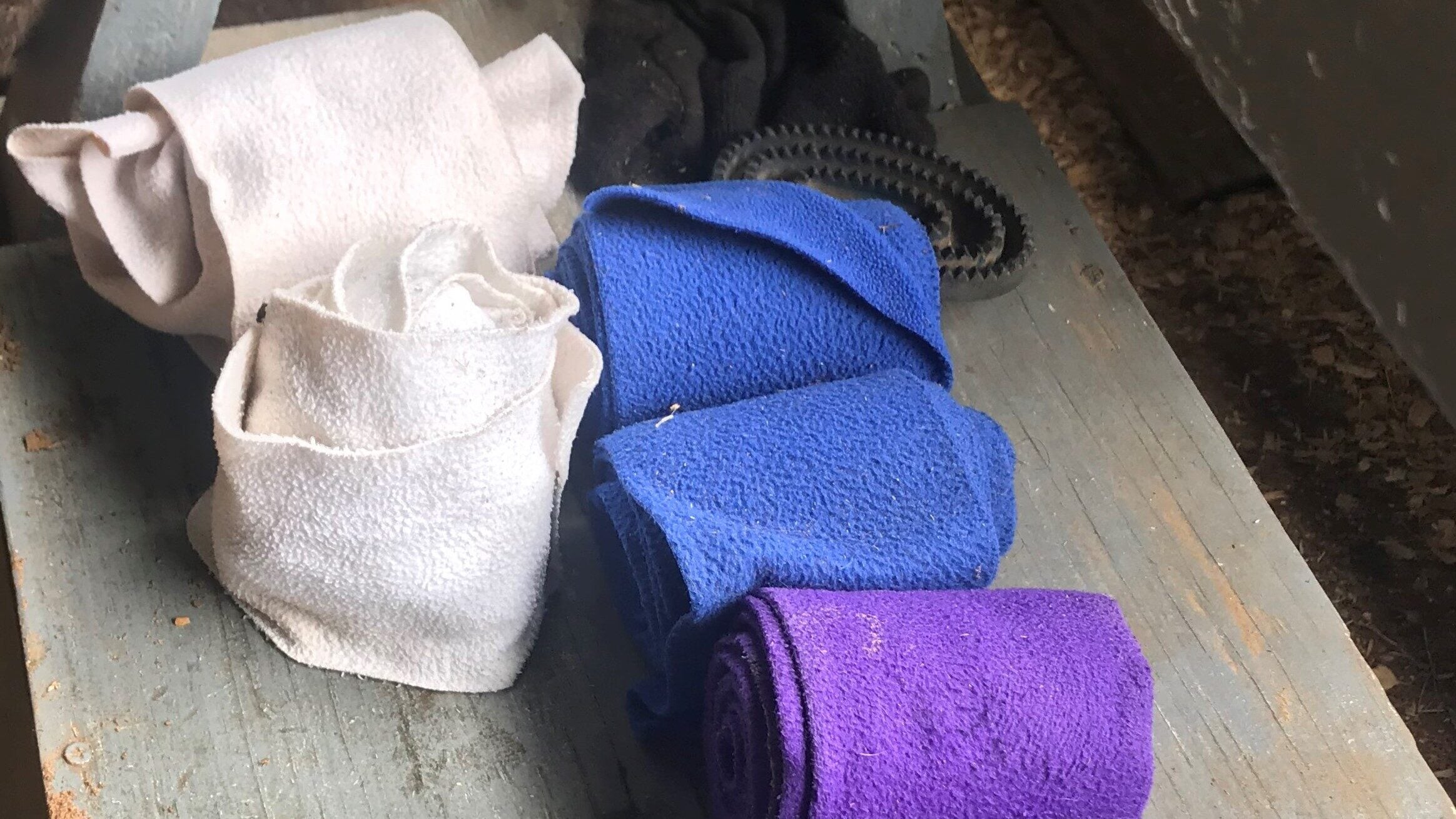
Tough1 Polo Wraps are soft fleece wraps with hook-and-loop closures. They provide light protection during exercise and go directly on a clean, dry leg without a separate quilt underneath. Take them off after work rather than leaving them on as standing wraps.

Weaver polo wraps are what we use under saddle when a horse needs light protection, and they come off as soon as the horse is done.

3M Vetrap is a cohesive bandage that sticks to itself instead of the hair, which makes it handy for holding a poultice or a dressing in place. It isn’t a substitute for a padded standing wrap, though. Use it over appropriate padding and follow your vet’s instructions for tension. It’s easy to stretch it tighter than you mean to.
Wraps vs. Boots
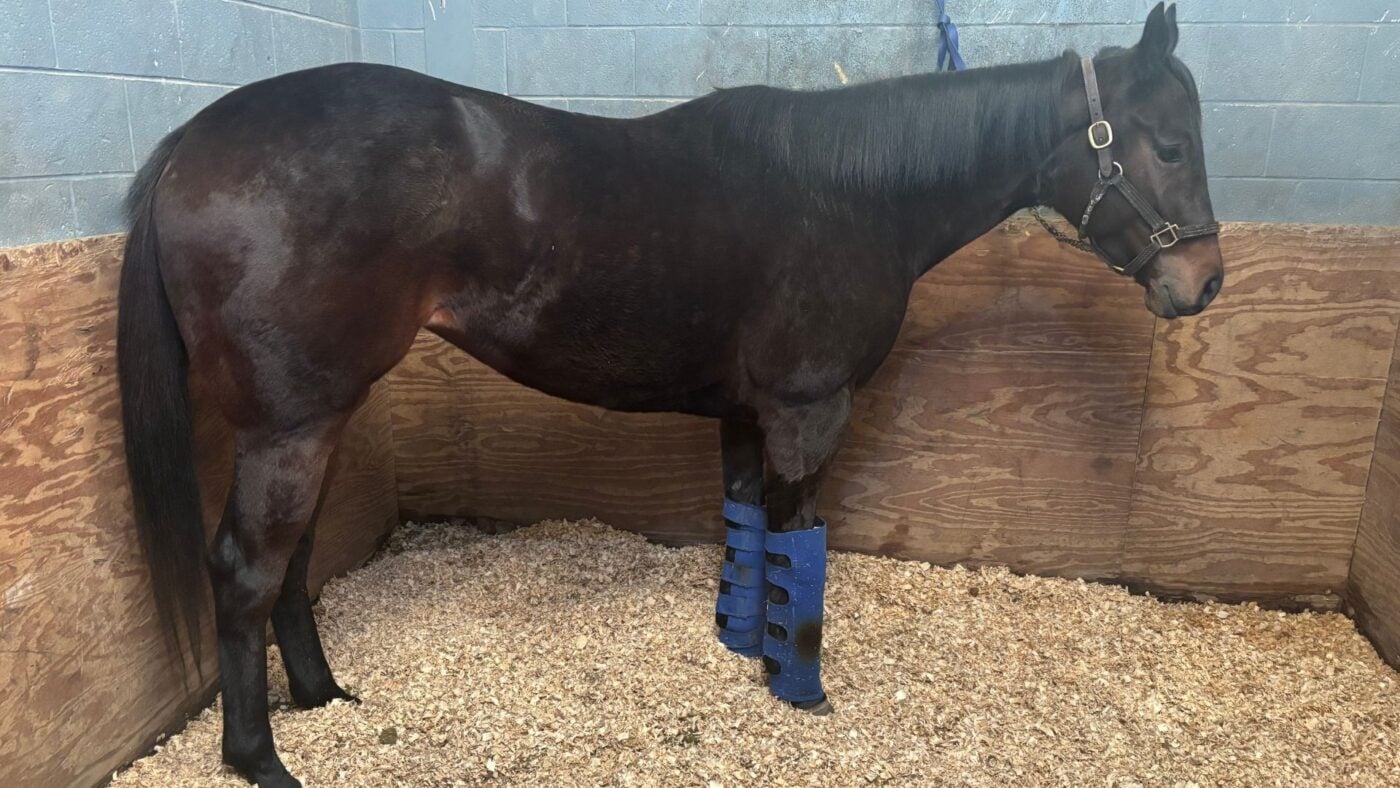
If your horse needs leg protection for riding or turnout, properly fitted boots are often simpler than wraps, especially if you’re still learning to wrap. They still need checking for fit, rubbing, and trapped dirt. Leg boots and bell boots protect against knocks and overreaching, and shipping boots go on in seconds with hook-and-loop straps. For the trailer, pick whatever fits your horse, stays put, and covers the coronary band.
Wraps make more sense in the stall, for holding a poultice, and when you want even compression on a horse that stocks up. Boots and wraps both hold heat during exercise. In a small Middle Tennessee State University study of six horses, all six kinds of leg protection tested kept the legs warmer than bare legs, the fleece polo ran hottest, and the covered legs still hadn’t returned to their starting temperature after three hours of rest, according to The Horse. The researchers said to take exercise protection off as soon as you can after work and cold hose the legs. It was a small study, but it’s a good reminder not to leave exercise wraps on longer than you need to.
When Not to Wrap
Don’t wrap a leg to cover up a problem. Call your vet for a wound, puncture, drainage, sudden swelling, heat, pain, or lameness, according to PetMD. Call, too, if your horse is more uncomfortable after you wrap, or if a wrap keeps slipping or rubbing even when you’re doing it right. Ask what to do while you wait, rather than rewrapping and hoping the problem settles down.
About Miles Henry
Racehorse Owner & Author | 30+ Years in Thoroughbred Racing
Miles Henry (legal name: William Bradley) is a professional horseman based in Folsom, Louisiana. He holds Louisiana Racing License #67012 and has spent over three decades managing Thoroughbreds at premier tracks including Fair Grounds, Delta Downs, and Evangeline Downs.
Expertise & Hands-On Experience: Beyond the track, Miles has decades of experience in specialized equine care, covering everything from hoof health and nutrition to training protocols for Quarter Horses, Friesians, and Paints. Every guide on Horse Racing Sense is rooted in this “boots-on-the-ground” perspective.
30 of their last 90 starts
Equibase Profile.

Connect with Miles: