
Last updated: June 6, 2026
Napoleon Solo won the 2026 Preakness Stakes at 7.90-1 odds, surging past race favorite Taj Mahal around the final turn at Laurel Park and holding off Iron Honor in the stretch to capture the 151st running of the Middle Jewel of the Triple Crown. Chip Honcho finished third, while jockey Paco Lopez earned his first Classic victory and the winning connections collected the $1.2 million winner’s share.
The 151st Preakness unfolded almost exactly as projected in my pre-race analysis: a tactical closer with more stamina than the betting public priced in ran down an overbet front-running favorite. Napoleon Solo, identified beforehand as the key longshot, tracked Taj Mahal before sweeping past at the turn. Napoleon Solo belonged on top rather than underneath, but all three finishers were in the original picks.
Napoleon Solo won the 151st Preakness Stakes at 7.90-1, giving jockey Paco Lopez his first Classic victory. Trained for connections earning a $1.2 million payout, Napoleon Solo tracked Taj Mahal — the race favorite who held the lead from post 1 through most of the race — before sweeping past around the final turn. Iron Honor, the Chad Brown / Flavien Prat entry, finished second. Chip Honcho, ridden by Jose Ortiz, crossed third.
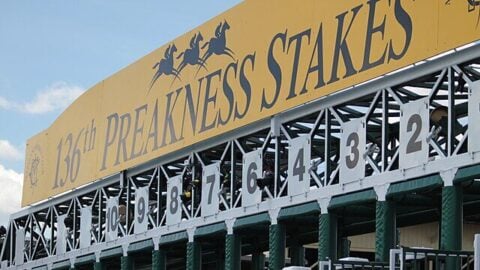
The race was run at Laurel Park outside Baltimore. Pimlico Race Course, the traditional Preakness venue, is currently under construction. The surface and configuration differences at Laurel mattered — and the pace scenario validated what the pre-race projection called for.
All three podium horses were identified in the pre-race picks. Napoleon Solo was listed as the longshot to watch. Iron Honor was an exotic-only play. Chip Honcho was the win alternate. The analysis got the horses right. It got the order wrong.
Table of Contents
2026 Preakness Stakes Results: Full Order of Finish
| Finish | Horse | Odds | Jockey | Notes |
|---|---|---|---|---|
| 1st | Napoleon Solo | 7.90-1 | Paco Lopez | Swept past Taj Mahal at the turn; held Iron Honor late — trainer Chad Summers |
| 2nd | Iron Honor | 9-2 | Flavien Prat | Chad Brown trainee; strong late run; couldn’t reach Napoleon Solo |
| 3rd | Chip Honcho | 5-1 | Jose Ortiz | Win alternate in pre-race picks; ran creditably |
| 4th | Ocelli | 6-1 | — | Completed the $2,377.80 Superfecta; late-running maiden |
| 5th | Taj Mahal | Favorite | — | Led most of the race from post 1; passed at the turn; faded |
151st Preakness Stakes — Key Facts
- Winner: Napoleon Solo (7.90-1) — Paco Lopez up
- Second: Iron Honor — Flavien Prat up (Chad Brown trainer)
- Third: Chip Honcho — Jose Ortiz up
- Winner’s purse: $1.2 million
- Venue: Laurel Park, Maryland — Pimlico under construction
- Race shape: Taj Mahal led from post 1 through the final turn; Napoleon Solo passed at the bend; Iron Honor closed from off the pace
- Paco Lopez: First Classic win of his career
2026 Preakness Stakes — Results at a Glance
- Winner: Napoleon Solo (7.90-1) — $17.80 win / $9.80 place / $7.40 show
- Margin: 1¼ lengths | Distance: 1 3/16 miles | Track: Fast
- Jockey: Paco Lopez — first Classic win | Trainer: Chad Summers
- Winning Time: 1:58.69
- Second: Iron Honor — $9.20 place / $6.60 show (Chad Brown / Flavien Prat)
- Third: Chip Honcho — $8.20 show (Jose Ortiz)
- Exacta (10-9): $107.20 | Trifecta (10-9-6): $597.10 | Superfecta (10-9-6-2): $2,377.80
- Favorite: Taj Mahal — led most of the race, beaten at the turn
- Venue: Laurel Park, Maryland (Pimlico under construction)
- Next: Belmont Stakes — June 6, Saratoga Race Course
2026 Preakness Stakes Payouts and Exacta Results
Official order of finish for the 151st Preakness Stakes: Napoleon Solo first, Iron Honor second, Chip Honcho third. Taj Mahal, the post-time favorite, faded after setting the pace from the rail and did not finish in the top three.
| Bet Type | Combination | Payout |
|---|---|---|
| $2 Win | Napoleon Solo (7.90-1) | $17.80 |
| $2 Place | Napoleon Solo | $9.80 |
| $2 Show | Napoleon Solo | $7.40 |
| $2 Place | Iron Honor | $9.20 |
| $2 Show | Iron Honor | $6.60 |
| $2 Show | Chip Honcho | $8.20 |
| $2 Exacta | 10-9 (Napoleon Solo / Iron Honor) | $107.20 |
| $1 Trifecta | 10-9-6 (Napoleon Solo / Iron Honor / Chip Honcho) | $597.10 |
| $1 Superfecta | 10-9-6-2 (Napoleon Solo / Iron Honor / Chip Honcho / Ocelli) | $2,377.80 |
| Winner’s purse | Napoleon Solo connections | $1.2 million |
Napoleon Solo’s win followed the same structural logic that produced Golden Tempo in the Derby. A single pace-setter — Taj Mahal — controlling the race from the front is not the same as a dominant horse. It is an opportunity. If the front-runner does not have the class and stamina to sustain a lead under pressure around a final turn, a horse with a late kick and a patient rider will run past it. That is exactly what Napoleon Solo did. Trainer Chad Summers deserves direct credit for the result. Napoleon Solo had broken poorly and gone too fast in the Wood Memorial — a difficult race that could have shaken confidence in the horse’s Preakness viability. Summers made a deliberate decision to reset the horse rather than chase the problem: he brought Napoleon Solo back patient, targeted Laurel Park specifically, and put Paco Lopez on him knowing Lopez understood the mid-Atlantic circuit better than the high-profile jockeys who attracted more public attention. That is not luck. That is a trainer reading his horse correctly and executing.
What separated Napoleon Solo from Iron Honor — his stablemate — was what the pre-race analysis identified before the gate opened: Napoleon Solo had already beaten Iron Honor and was available at twice the price. Iron Honor’s reputation came partly from the Chad Brown association and Flavien Prat in the saddle, both of which commanded respect that moved money into the win pool. Napoleon Solo was the quieter play in the same barn, with a Grade 1 win on his record and a running style built for exactly this kind of setup.
The race in three moments: Taj Mahal led at the turn. Napoleon Solo swept past. Iron Honor couldn’t get there. The closer with more reserves ran down the speed horse — exactly the race shape the pre-race analysis projected.
This makes it back-to-back Triple Crown legs won by horses at 7.90-1 or longer. Golden Tempo won the Derby at 23-1. Napoleon Solo won the Preakness at 7.90-1. No Triple Crown bid is alive heading into the Belmont.
How the Race Unfolded: Taj Mahal and the Pace Scenario
Taj Mahal drew post 1 and used it exactly the way the favorite from a good post should — establishing the lead immediately, controlling the fractions through the first turn and down the backstretch, and holding off early pressure. The problem with that scenario is that post 1 at a Preakness is a trap as much as it is an advantage. It requires the horse to sustain the lead through the final turn against fresher, wider runners who haven’t spent energy fighting for position in the early chaos.
Taj Mahal took the field through unsustainable fractions — :22.66, :46.66, 1:12.08 — that made the front-end collapse inevitable. He gave it away around the turn — not because of a poor ride, but because the colt, patient through the backstretch under Paco Lopez, simply had more left. By the time Lopez asked for the run, the gap between Napoleon Solo’s reserves and Taj Mahal’s was the gap between a horse that ran the race correctly and one that ran it on the front end..
Miles’s Take — Reading Taj Mahal’s Finish: Taj Mahal was my top selection and he did nothing wrong tactically. He got to the lead, he controlled the pace, and he held it longer than most favorites do from that position. What he could not do was outrun a horse coming at him with fully fresh legs around a final turn at a track where he had no particular home advantage. That is not a reflection of his ability. It is a reflection of what happens when pace-forward horses meet patient closers in a race where the fractions let the closers stay within striking distance. I will not be fading Taj Mahal at the Belmont without more information — this was a loss, not an exposure.
Racing at Laurel Park Instead of Pimlico
The 2026 Preakness was the first run at Laurel Park, a course outside Baltimore, while Pimlico Race Course undergoes construction. This is not a trivial change. Laurel’s configuration, surface characteristics, and sightlines differ from Pimlico in ways that matter to pace analysis and running style evaluation. Historical Preakness data from Pimlico — post position records, pace scenarios, rail tendencies — does not transfer cleanly to Laurel.
The practical effect for handicappers: any historical Preakness research built on Pimlico patterns required reassessment. Horses with specific form at Pimlico had no particular edge. Trainers who know Pimlico well did not have the same advantage they usually carry into the race. The playing field was somewhat leveled by the venue change, which may partially explain why a near-8-1 longshot found a cleaner lane than the public expected.
What the Laurel Park switch meant for handicapping:
- Historical Pimlico post position data — which shows a strong bias toward inside posts — does not apply directly at Laurel
- Trainers and jockeys who ride Pimlico regularly did not carry their usual home-track edge
- Pace shape and running room at Laurel may differ meaningfully from Pimlico’s configuration
- This was year one of an experiment — the next Preakness at Laurel will have its own emerging data set
- The Belmont at Saratoga returns June 6 — the third Classic at a non-traditional venue in a three-year run
Paco Lopez Earns His First Classic Win
Paco Lopez is not a name most casual racing fans associate with the Triple Crown. He has spent the bulk of his career in the mid-Atlantic circuit — a productive, respected rider who has not ridden in the Derby or Preakness with the frequency of a Prat, an Ortiz, or a Velazquez. Saturday changed that. He rode Napoleon Solo with the patience the horse requires, tracking Taj Mahal without overcommitting, and finding the right moment to ask around the final turn.
What Lopez did in that stretch was straightforward in description and very difficult in practice: he waited. He did not panic when Napoleon Solo was behind Taj Mahal through the backstretch. He did not commit wide too early and burn ground. He picked his moment at the turn, asked once, and the horse gave him everything he had. That is the ride of a jockey who has spent years at this level without always getting the marquee mount — and who knows exactly what to do when he finally gets one.
Miles’s Take — On Lopez and the Patient Ride: The two Triple Crown winners this year — Golden Tempo and Napoleon Solo — were both won by jockeys making decisions that required confidence under pressure. Jose Ortiz came from dead last. Paco Lopez tracked the leader and passed him at the right moment. Neither of those is a lucky trip. Those are tactical decisions made by riders who know their horse, knew the race, and trusted the plan. That is what separates journeymen who ride well at their level from riders who can win anywhere when given the right horse.
Picks Review: What I Got Right and What I Got Wrong
The honest ledger on the pre-race analysis, horse by horse.
| Horse | My Pick | Result | Assessment |
|---|---|---|---|
| Napoleon Solo (10) | Longshot to watch | 1st — WON | Identified. “More logical than Iron Honor at half the price.” Had him on the ticket. Wrong position — should have been on top. |
| Iron Honor (9) | Underneath only — exotics | 2nd | Used correctly. Price was too short for a win bet. Finished exactly where the analysis placed him. |
| Chip Honcho (6) | Win alternate | 3rd | All three top finishers were identified in the pre-race picks — but Napoleon Solo needed to be on top of the trifecta, not in the middle of it. |
| Taj Mahal (1) | Win — top selection | Beaten by Napoleon Solo at the turn | Was the right structural choice given post and form. Ran his race. Lost to a fresher horse with a better late kick. Not a disqualifying performance for future races. |
| Incredibolt (12) | Place / multi-race | Not in top 3 | The graded two-turn win case didn’t materialize in the result. Move on. |
Miles’s Take — The Pick I Should Have Made: Napoleon Solo was the right call and I had him on the ticket in the wrong role. I wrote: “More logical than his stablemate Iron Honor at half the morning line price. Grade 1 winner with late kick; beat Iron Honor already.” Every word of that was correct. What the pre-race analysis didn’t fully credit was Chad Summers — he took a horse that broke poorly and went too fast in the Wood Memorial and reset him completely for this spot. That kind of trainer decision is exactly what the 4-Point Filter is designed to catch under “trainer intent,” and Summers passed it clearly. I then put Taj Mahal on top and dropped Napoleon Solo into the middle of the trifecta key, which is exactly backwards from how this race played out. The structure of the analysis got all three horses right. The ranking got the winner wrong. That is the kind of result you file away — the logic was sound, the execution was timid. When your own pre-race analysis tells you a 7.90-1 horse beat the 9-2 horse already and has the right running style for the pace scenario, back it accordingly.
Looking Ahead to the 2026 Belmont Stakes
The 2026 Belmont Stakes runs June 6 at Saratoga Race Course — the third consecutive year the race is held at the Saratoga oval at 1¼ miles before the rebuilt Belmont Park reopens in 2027. No Triple Crown bid is alive. The Derby and Preakness went to different horses, neither of whom has confirmed a Belmont entry. That matters because the Belmont field typically shifts significantly when there is no Triple Crown narrative to draw entries from the Derby-Preakness trail.
The horses to watch for the Belmont are not the ones who ran the Preakness — it is the fresh horses who bypassed the first two legs and specifically targeted the Belmont. The fresh horse angle has won 4 of the last 6 Belmonts, including both Saratoga editions. A field without a Triple Crown favorite and without a dominant entry from the Derby-Preakness trail is exactly the scenario where a horse trained specifically for 1¼ miles on Saratoga’s tighter oval emerges at a price the public has not properly evaluated.
For a full breakdown of the Belmont handicapping framework, post position data at Saratoga, and the fresh horse framework, see the 2026 Belmont Stakes strategy guide. The post draw is typically the week before the race — that is when the pace projection becomes actionable.
Miles’s Take — The Belmont Opportunity: Two longshots in two races. No Triple Crown alive. The public will enter the Belmont with half its usual conviction because there is no narrative horse to pile money onto. That is a better environment for value bets than either the Derby or the Preakness offered. The horse that targeted the Belmont specifically — arriving through patient preps, arriving with reserves the Derby-Preakness horses don’t have — is the same profile that has won this race repeatedly. I will be building my Belmont card around that framework. The pace setup at Saratoga will tell me which specific horse to press it on.
Bottom Line: Napoleon Solo was the right horse at the right price. The structure of the analysis got all three podium horses correct. The ranking got the winner wrong. The lesson: when pace setup and value align, the stronger horse belongs on top of the ticket.
Frequently Asked Questions About the 2026 Preakness Results
Who won the 2026 Preakness Stakes?
Napoleon Solo won the 151st Preakness Stakes at 7.90-1 odds, ridden by Paco Lopez in his first Classic victory. Napoleon Solo tracked race favorite Taj Mahal through the backstretch, swept past at the final turn at Laurel Park, and held off a late challenge from Iron Honor to win by 1¼ lengths. The winning connections earned a $1.2 million payout.
Where was the 2026 Preakness Stakes held?
The 2026 Preakness Stakes was held at Laurel Park outside Baltimore, Maryland. Pimlico Race Course — the traditional Preakness venue — is currently under construction. Laurel Park served as the substitute venue, with different surface characteristics and configuration than the traditional Pimlico setup. Historical Pimlico post position and pace data does not transfer directly to Laurel.
Who finished second and third in the 2026 Preakness?
Iron Honor finished second under jockey Flavien Prat, trained by Chad Brown. Chip Honcho finished third under Jose Ortiz. Taj Mahal, the race favorite who had led most of the race from post 1, was passed at the final turn by Napoleon Solo and did not finish in the top three.
Is there a Triple Crown contender for the 2026 Belmont Stakes?
No. The 2026 Derby and Preakness were won by different horses — Golden Tempo and Napoleon Solo respectively — so no horse is attempting to complete the Triple Crown at the Belmont Stakes on June 6. The absence of a Triple Crown bid typically produces a different Belmont field composition, with more fresh horses targeting the race specifically rather than following the Derby-Preakness trail.
Who rode Napoleon Solo in the 2026 Preakness?
Paco Lopez rode Napoleon Solo to victory, earning his first Classic win. Lopez is a respected mid-Atlantic circuit rider who executed a patient race — tracking Taj Mahal without overcommitting, finding the right moment at the final turn, and asking once before the winner swept past the leader and held off Iron Honor at the wire.
What happened to Taj Mahal in the 2026 Preakness?
Taj Mahal, the race favorite, led from post 1 through most of the race before being passed by Napoleon Solo at the final turn. Taj Mahal had controlled the fractions through the backstretch but could not sustain the lead against Napoleon Solo’s late kick. The result does not necessarily indicate a limitation in ability — a horse that led most of the Preakness and lost to a well-timed closer at the turn is still a legitimate Belmont contender if the connections choose to run.
Why did Napoleon Solo win at such a long price?
Napoleon Solo was lightly regarded by the public partly because his stablemate Iron Honor — trained by Chad Brown and ridden by Flavien Prat — attracted more betting attention at shorter odds despite Napoleon Solo having already beaten Iron Honor in a previous race. The public’s preference for the more prominent connections left Napoleon Solo at a price that underrepresented his actual ability relative to the field.
How does the 2026 Preakness result affect Belmont betting?
With no Triple Crown bid alive, that field will attract horses that bypassed the Derby and Preakness specifically to target the 1¼-mile distance at Saratoga. Horses that targeted the Belmont specifically — skipping one or both earlier legs — have won 4 of the last 6 runnings, including both Saratoga editions. Without a public narrative horse to inflate the favorite’s odds, value bets on patient closers and fresh entrants are worth building a ticket around.
Will Golden Tempo run in the 2026 Belmont?
Golden Tempo’s Belmont entry is trainer Cherie DeVaux’s decision. Deep closers who win on a pace collapse — as Golden Tempo did in the Derby — do not always thrive at Pimlico-style distances or at Saratoga’s 1¼-mile configuration. DeVaux will make the call based on what the horse tells her rather than Triple Crown narrative pressure. The Belmont at a mile and a quarter on Saratoga’s tighter oval could suit him, but a fresher horse specifically trained for this race may have a structural advantage.
What is the best handicapping framework for the 2026 Belmont Stakes?
The fresh horse framework has the strongest recent track record at the Saratoga Belmont — horses that skipped the Derby, the Preakness, or both arrive physically ready against horses carrying the cumulative fatigue of two hard races in five weeks. Pace projection is the second critical factor: Saratoga’s shorter stretch gives deep closers less room to close than the traditional Belmont Park setup. A fresh horse with a stalking style from an inside-to-middle post has the strongest historical profile at the Saratoga Belmont.
Key Takeaways: 2026 Preakness Stakes Results and Analysis
- Napoleon Solo won at 7.90-1 — tracked Taj Mahal through the backstretch, swept past at the final turn at Laurel Park, held off Iron Honor late; Paco Lopez earned his first Classic win
- Laurel Park, not Pimlico — the venue substitution matters; historical Pimlico post position and pace tendencies do not apply cleanly; the next Preakness at Laurel builds its own emerging dataset
- All three top finishers were identified pre-race — Napoleon Solo (longshot to watch), Iron Honor (underneath only), Chip Honcho (win alternate); the ranking was wrong, the horses were right
- Taj Mahal is not disqualified for the Belmont — he led most of the race and lost to a well-timed closer; that is a different story from a horse that never competed; his Belmont eligibility depends on connections’ decision
- No Triple Crown bid at the Belmont — Golden Tempo and Saturday’s Preakness winner are two separate horses; the absence of a narrative favorite creates a better value environment for pace-focused handicapping
- Back-to-back longshot winners — 23-1 in the Derby, 7.90-1 in the Preakness; pace-focused handicapping has been the common thread both times
- The Belmont fresh horse framework applies directly — no Triple Crown pressure, smaller field, fresh horses targeting Saratoga’s 1¼ miles; the pre-race strategy guide applies; the post draw the week before the race is when the actionable ticket gets built
I’ll publish Belmont pace projections, post-draw analysis, and longshot angles before June 6. If you want the full breakdown in your inbox, join the free newsletter here.
Gambling Warning: Horse racing wagering involves real financial risk. Past race results do not guarantee future outcomes — never bet more than you can afford to lose. If gambling is affecting you or someone you know, contact the National Problem Gambling Helpline at 1-800-522-4700.
About Miles Henry
Racehorse Owner & Author | 30+ Years in Thoroughbred Racing
Miles Henry (legal name: William Bradley) is a professional horseman based in Folsom, Louisiana. He holds Louisiana Racing License #67012 and has spent over three decades managing Thoroughbreds at premier tracks including Fair Grounds, Delta Downs, and Evangeline Downs.
Expertise & Hands-On Experience: Beyond the track, Miles has decades of experience in specialized equine care, covering everything from hoof health and nutrition to training protocols for Quarter Horses, Friesians, and Paints. Every guide on Horse Racing Sense is rooted in this “boots-on-the-ground” perspective.
30 of their last 90 starts
Equibase Profile.

Connect with Miles: